Cleveland, OH
Cleveland Browns’ quest for a domed stadium starts an NFL fight for Ohio dollars


COLUMBUS, Ohio (AP) — A political battle fit for the gridiron is underway in Ohio, where state Republican leaders are clashing over whether to single out the Cleveland Browns for help building a new suburban domed stadium or impose tax hikes to fund stadium upgrades for the Cincinnati Bengals and other teams longer term.
Neither idea is without critics in both parties, who argue that underwriting National Football League stadiums siphons money from the state’s policy priorities, including funding infrastructure and public schools.
The most heated debate centers on a proposal by Haslam Sports Group, which owns the Browns, to relocate from the team’s existing open-air stadium on downtown Cleveland’s lakeshore — where they have played since 1999 — to a new $2.4 billion complex in Brook Park, about 15 miles (24.14 kilometers) south. The team has proposed a private-public partnership to which the state would contribute $600 million.
After the money was approved by the Ohio House last week, commissioners in Hamilton County, home to the Bengals, balked. They moved swiftly to re-up their request for $350 million for Paycor Stadium, where the Bengals’ lease is up June 30, 2026. The ask follows Bengals Executive Vice President Katie Blackburn’s comments at recent NFL meetings in Florida, where she said, “We could, I guess, go wherever we wanted after this year” — while noting negotiations are progressing.
The stadium debate heads to the Ohio Senate after their two-week spring break.
Browns dream big, Cleveland recalls Modell nightmare
Dee and Jimmy Haslam, generous Republican campaign donors, say they want a facility “consistent with other world-class NFL stadiums.” With the addition of a dome, the Browns could host year-round events during northeast Ohio’s severe winters and “catalyze meaningful economic impact” at an adjacent entertainment complex. They point out that eight in 10 home game attendees live outside city limits.
Leaders in Cleveland, where Browns games draw coveted economic activity to downtown and the tourism district along Lake Erie, are livid. The existing $247 million Huntington Bank Field was primarily funded by city and county tax dollars. To many, it’s a symbol of the hard-luck sports town’s commitment to the team it nearly lost when then-owner Art Modell notoriously packed off to Baltimore in 1996.
Modell’s messy exit, also hitched to a stadium dispute, led to a state law that says no owner of an Ohio professional sports team that plays most of its home games at a tax-supported stadium can go elsewhere without an agreement with its host city or unless the host city is given six months’ notice with an opportunity to buy the team.
Democratic Cleveland Mayor Justin Bibb and members of the city council have threatened for months to invoke the “Modell Law” to prevent the Browns from leaving their current location, where the lease runs through the 2028 season. The city plans to remake the so-called “North Shore” with an eye toward accessibility, economic development and environmental protection. The team has filed a constitutional challenge to the law, and the city sued it back.
Meanwhile, the clock for allocating dollars toward the project is running down: Lawmakers face a June 30 deadline to finalize the state budget for the next two years.
Governor and House have different funding ideas
Republican Gov. Mike DeWine’s budget proposal called for raising the $600 million by doubling the tax on sports betting companies from 20% to 40%. The idea was to create a long-term revenue stream that could help both the Browns and the Bengals, and other teams.
“The governor’s plan goes beyond one team,” DeWine spokesman Dan Tierney said. “The general revenue fund can’t afford that. Therefore, we need to look at something that is more sustainable and can help all the teams.”
The GOP-led Ohio House, however, rejected DeWine’s plan in a vote last week. Its version of the operating budget calls for issuing $600 million in general obligation bonds to pay for the Browns project instead. Paying off the bonds would cost the state about $1 billion over 30 years.
House Finance Chairman Brian Stewart told reporters that the “metrics” of bonds are better for Ohio taxpayers because officials project that tax revenue from the Browns’ “megaproject” will be ample to cover the $40 million a year it will take to repay the bonds.
Senate must work through the opposition
As the Senate takes up the bill, it must weigh opposition to the current plan from all quarters: DeWine, the city of Cleveland, the Bengals, legislative Democrats and Republican Attorney General Dave Yost, who is running to succeed DeWine next year.
“Ohio is getting ready to spend more money on a new stadium in one city for one football team than it will spend on new highway construction for the next two years in the entire state,” Yost wrote in a recent Columbus Dispatch op-ed. He called state money for the project a “spendthrift gift to a billionaire.”
House Democrats unsuccessfully fought to pause the funding proposal altogether, citing unanswered questions about revenue projections, economic impacts and commitments by private developers. Cleveland Rep. Terrence Upchurch told reporters that lawmakers have more important priorities than helping the Browns’ owners, “especially since they only won three (expletive) games last year,” referring to the team’s 3-14 record.
A fellow Democrat in the Republican-supermajority Senate has proposed prohibiting public dollars from going to any professional sports franchise without a winning record in three of its five past seasons.
___
AP Sports Writer Joe Reedy in Cleveland contributed to this report.
Copyright 2025 The Associated Press. All rights reserved. This material may not be published, broadcast, rewritten or redistributed without permission.



Watch live newscasts, stream breaking coverage, and catch up on the top stories shaping Cleveland, Akron, Canton, and surrounding communities.
Subscribe for:
• Cleveland breaking news + live updates
• Northeast Ohio weather forecasts and severe weather alerts
• Investigations and accountability reporting
• Community stories across the region
• Major events, sports, and local explainers
WKYC — Cleveland news and weather, live and on demand.
🔗 More: https://www.wkyc.com/
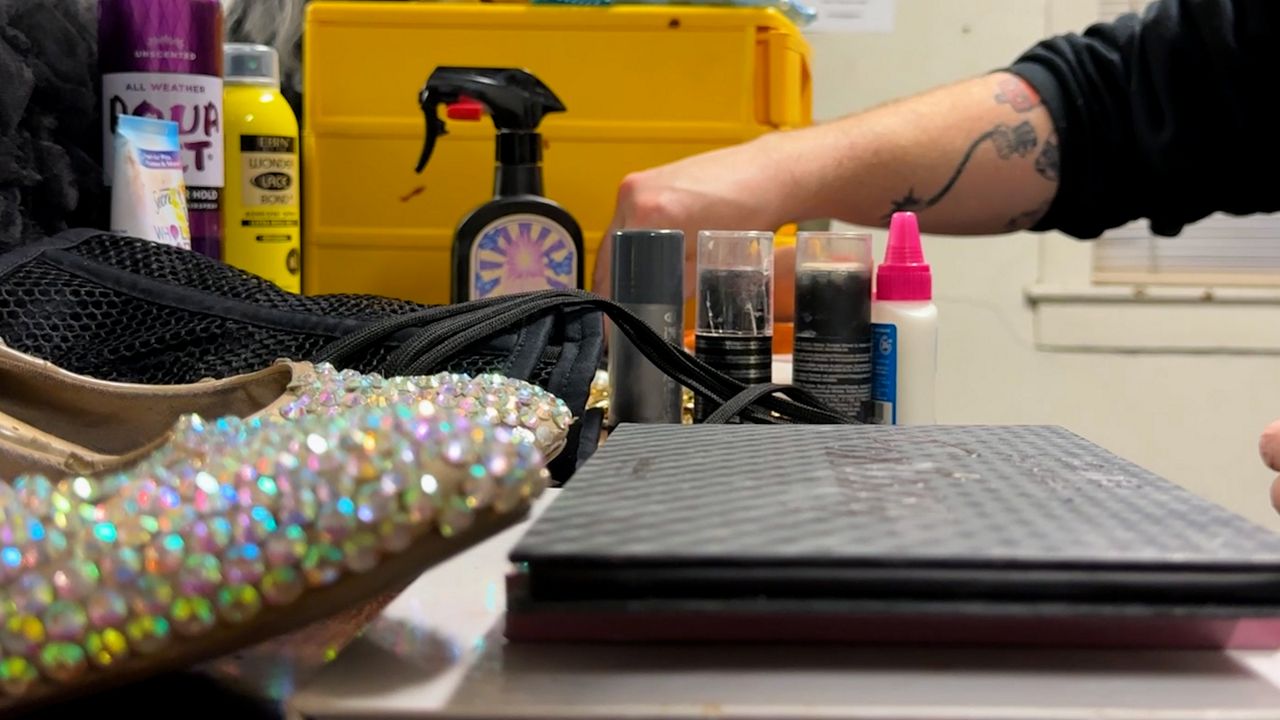
CLEVELAND — For Kyle Burnett, drag is more than just a hobby, discovering the art form after falling into a deep depression during the COVID-19 pandemic.
Burnett, who is nonbinary, has been living in Ohio for more than a decade and has performed as “Zoey Zegai” for five of those years.
“It was a tough time … I found drag not only as a way of entertainment, but embracing myself as a queer member of the LGBTQ+ community,” said Burnett, who uses he/they pronouns.
While Burnett has been met with substantial support, he said, he’s noticed a recent shift in societal attitudes toward the LGBTQ+ community over the last year.
“I had my purse and was wearing short shorts because Ohio gets hot in the summertime, and I had a beer bottle thrown at me from outside of someone’s car window,” Burnett said.
“Zoey Zegai,” which Burnett said, is influenced by old-school divas like Joan Crawford and newer divas like Jinkx Monsoons.
According to the American Civil Liberties Union (ACLU), 500 anti-LGBTQ bills have been proposed during the 2026 legislative session nationwide.
One of these bills is HB 249, or the “Indecent Exposure Modernization Act,” which would restrict drag performances to adult entertainment venues. The policy also changes the definition of public indecency to include “performers or entertainers who exhibit a gender identity that is different from the performer’s or entertainer’s biological sex using clothing, makeup, prosthetic or imitation genitals or breasts, or other physical markers.”
TransOhio Executive Director Dara Adkison said the bill uses broad language and could criminalize gender-diverse expression.
“It’s really making a statute that law enforcement professionals get to enforce their personal ideas about what is and isn’t appropriate gender representation, what is and isn’t performance. You know, is it singing karaoke? Is it being and drag queen? I know, is it a trans person walking down?” said Adkison, who uses they/them pronouns.
While many Ohioans are expressing concerns about the bill targeting transgender people and drag performers, nonprofit Equality Ohio said, the legislation’s impact expands to athletes and countless others.
The bill revises a previous code banning the exposure of “private parts” to now ban the exposure of “private areas,” said Dwayne Steward, Executive Director of Equality Ohio.
“Because the language they use is so vague, it really can apply to anyone, really. The language has been shifted from ‘obscenity’ … someone showing their genitals … to anyone showing their ‘genital area’, which could mean anyone who’s wearing a sports bra, a cheerleader who may be showing their midriff. “
Supporters of HB 249 said the bill is meant to protect children, while others have said this argument reinforces a harmful narrative surrounding drag performances.
“People, immediately when they see drag, they think that it is something that is sexual, something that is trying to indoctrinate children, to expose them to sexual content. And that’s not the case in any capacity,” Olivia Kowslowski.
Kowslowski is born and raised in northeast Ohio, now performing as “Monica Mod.”

Kowslowski, who started first started performing drag in Jan. 2022.
“I think that my perspective is important because it just shows that the bill is harmful to many people, including people that they were not expecting to be impacted by this,” she said. “… Most people don’t realize that when I’m in drag, I am, I’m a cisgender woman.”
While she’s become well known around her college campus’ drag scene, Kowslowski said, she and other performers are facing additional barriers.
“I have found that finding bookings is much more difficult because many venues are a lot more hesitant to host drag events at their spaces, or even support drag entertainers and their venues. Mainly from HB 249,” she said.
The Democratic Society of America’s Cleveland chapter recently announced it is launching a Gender Freedom Policy Petition that would go against “recent legislation calling to limit and ban drag performances,” calling it, “an injustice to not only the drag scene but also the broader Cleveland community.”
The petitions also includes provisions “that safeguard drag performers” and call for city-backed gender-affirming care services.
HB 249 now remains under review by the Ohio Senate and would require the governor’s signature before going into effect.
While the future remains uncertain, Burnett said, he and others in the drag community are hoping to build wider solidarity across all Ohio populations.
“We’re all just trying to live the same day-to-day life, get groceries, pay bills, drive to-and-from work. But there’s no room for hate,” Burnett said. “There’s no room for violence. We just want to feel like Ohio citizens.”

Getty
CLEVELAND, OH – NOVEMBER 01: Roberto Perez #55 of the Cleveland Indians reacts after Addison Russell #27 of the Chicago Cubs , hit a two-run RBI double during the first inning in Game Six of the 2016 World Series at Progressive Field on November 1, 2016 in Cleveland, Ohio. (Photo by Jason Miller/Getty Images)
On Thursday evening, the Cleveland Guardians will play their first game of the 2026 regular season when they visit the Mariners in Seattle.
Before Opening Day, a franchise legend announced that he is calling it quits on his baseball career.
Cleveland Guardians Legend Announces Retirement

GettyCLEVELAND, OHIO – APRIL 10: Roberto Perez #55 of the Cleveland Indians hits a two-run home run against the Detroit Tigers in the second inning during a game at Progressive Field on April 10, 2021 in Cleveland, Ohio. (Photo by Emilee Chinn/Getty Images)
Roberto Perez (who last played in 2023) announced his retirement from baseball (h/t MLB Trade Rumors).
Perez wrote (via Instagram): “After much thought and reflection, I have decided to officially retire from baseball. This game has been a major part of my life and has shaped me both on and off the field. Through baseball, I’ve learned discipline, resilience, teamwork, and the importance of commitment. I am deeply grateful for every coach, teammate, trainer, and supporter who helped me along the way and believed in me throughout my journey. While this decision was not an easy one, I feel confident that it is the right time to step away and begin the next chapter of my life. I leave the game with nothing but respect and appreciation for everything it has given me. Thank you to everyone who has been part of this experience and for the opportunities, lessons, and memories that will stay with me forever. Sincerely, Roberto Bebo Perez🙏🏻⚾️”
Perez’s MLB Career

GettyCHICAGO, IL – OCTOBER 29: Roberto Perez #55 of the Cleveland Indians walks across the field in the first inning against the Chicago Cubs in Game Four of the 2016 World Series at Wrigley Field on October 29, 2016 in Chicago, Illinois. (Photo by Jamie Squire/Getty Images)
Perez was picked in the 33rd round of the 2008 MLB Draft.
He spent the first eight seasons of his career with the Guardians.
In that span, the 37-year-old won two Gold Glove Awards (and helped the franchise reach the World Series).

GettyMINNEAPOLIS, MN – JULY 31: Roberto Perez #55 and Brad Hand #33 of the Cleveland Indians hug at the mound after defeating the Minnesota Twins 6-2 at Target Field on July 31, 2018 in Minneapolis, Minnesota. (Photo by Adam Bettcher/Getty Images)
Perez also spent the final two seasons of his ten-year career with the Pittsburgh Pirates and San Francisco Giants.
Over 516 career games, he batted .207 with 55 home runs, 193 RBI’s and 165 runs.

GettyNEW YORK, NY – MARCH 30: Roberto Perez #1 of the San Francisco Giants hits a single during the fifth inning against the New York Yankees on Opening Day at Yankee Stadium on March 30, 2023 in the Bronx borough of New York City. (Photo by Sarah Stier/Getty Images)
Current Guardians

GettyCLEVELAND, OHIO – SEPTEMBER 30: Manager Stephen Vogt #12 of the Cleveland Guardians speaks with the media following game one of the American League Wild Card Series against the Detroit Tigers at Progressive Field on September 30, 2025 in Cleveland, Ohio. (Photo by Nick Cammett/Getty Images)
The Guardians are coming off a season where they won the AL Central with an 88-74 record.
They lost to the Detroit Tigers in the Wild Card Round.
Ben Stinar Ben Stinar has been covering the NBA for over seven years.
He has written for OnSI, Forbes, Amico Hoops, The Big Lead and had a podcast with former All-Star Jameer Nelson. More about Ben Stinar
More Heavy on Guardians
Loading more stories

Retired Detroit sergeant faces new sexual assault charge involving 14-year-old victim from 2002

Trump floats sending federal agents to San Francisco to tackle crime

Dallas ISD will offer free pre-K starting next school year

Norwegian Cruise Line offers a first look at Luna, new cruise ship setting sail from PortMiami – WSVN 7News | Miami News, Weather, Sports | Fort Lauderdale

Live: CPAC 2026 Day 2

Florida High School Football Rankings: Top 25 teams – Oct. 21

How old is Bo Nix? What to know about Oregon quarterback ahead of 2024 NFL Draft

Cleary's 21 help Le Moyne down Central Connecticut State 69-64 in OT

99th annual Pony Swim held in Virginia

Indiana Members Credit Union announced as new anchor tenant at Bottleworks District
Live: CPAC 2026 Day 2

Video: Will ICE Change Under Its New Leader?

DHS shutdown breakthrough comes at cost for Republicans as funding fights nears end

Rubio joins crucial G7 talks as Iran war set to dominate second day

A surprise resignation could open the door for an independent to win a Montana Senate seat
-

 Detroit, MI1 week ago
Drummer Brian Pastoria, longtime Detroit music advocate, dies at 68
-

 Science1 week ago
How a Melting Glacier in Antarctica Could Affect Tens of Millions Around the Globe
-
 Science1 week ago
I had to man up and get a mammogram
-

 Movie Reviews1 week ago
‘Youth’ Twitter review: Ken Karunaas impresses audiences; Suraj Venjaramoodu adds charm; music wins praise | – The Times of India
-

 Sports6 days ago
IOC addresses execution of 19-year-old Iranian wrestler Saleh Mohammadi
-

 New Mexico5 days ago
Clovis shooting leaves one dead, four injured
-
 Business1 week ago
Disney’s new CEO says his focus is on storytelling and creativity
-

 Technology5 days ago
YouTube job scam text: How to spot it fast