Cleveland, OH
Abrupt funding freeze leaves Ohio manufacturing programs with uncertain future

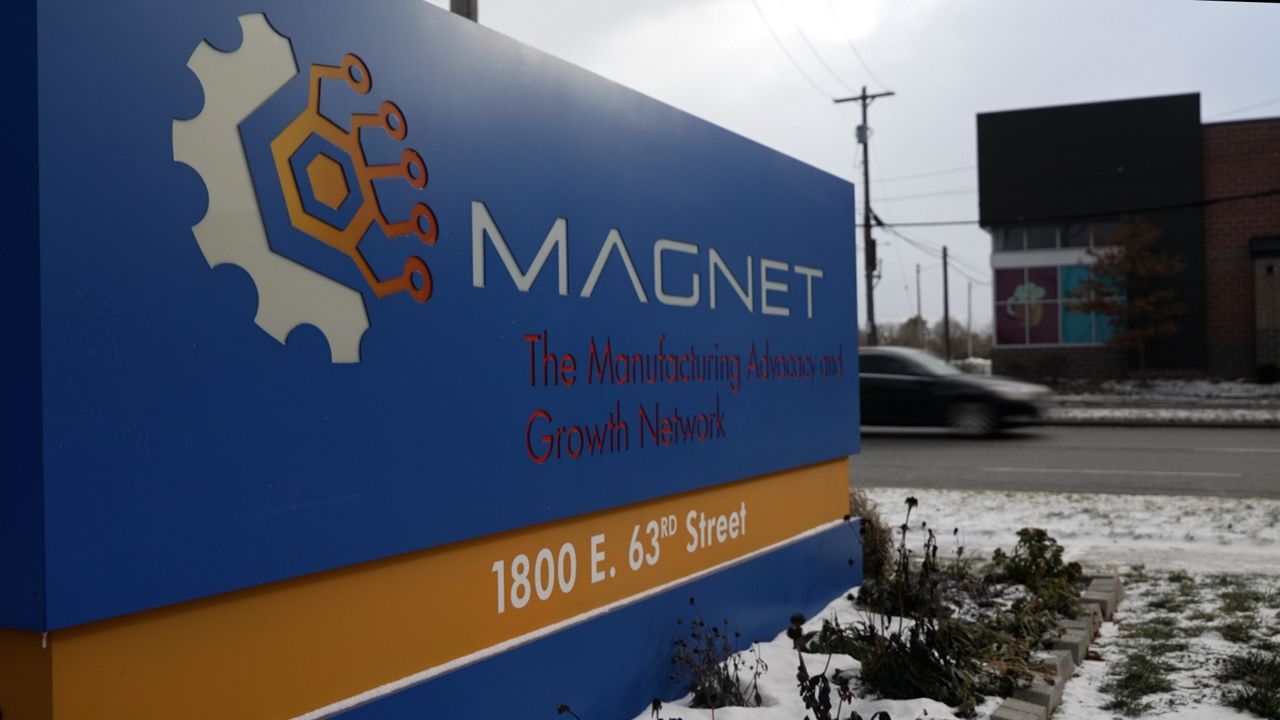
CLEVELAND — On Friday, Ohio’s Manufacturing Advocacy and Growth Network, known as MAGNET, learned that its public funding had been frozen, effective immediately.
“I was initially shocked. Immediately after it, it was action mode: how do we get to all the people that understand how important it is and what’s at stake?” said Ethan Karp, President and CEO of MAGNET.
“We help small and medium manufacturers, as a nonprofit, grow,” Karp explained.
The Cleveland-based nonprofit has assisted local manufacturers for over 40 years. This includes helping them implement new technology to stay competitive, providing workforce training to help fill positions in manufacturing, and helping companies create prototypes.
“That’s a start-up who has an idea on the back of their napkin that makes changing air filters easier,” Karp said. “This space we would actually prototype for those companies.”
They get state and federal funding through Ohio’s Manufacturing Extension Partnership Program, or MEP program, which funds six similar organizations throughout the state that aim to assist local manufacturers.
The funding freeze was announced in a letter from the National Institute of Standards and Technology, the federal agency that funds Ohio’s Department of Development. The Ohio Department of Development is the department that runs the MEP program.
In the letter, the NIST cites an ongoing audit as the reason for the freeze.
“Preliminary findings in connection with an active financial assistance audit being performed by the DOC Office of Inspector General (OIG) which identifies various instances of material noncompliance by the Recipient and/or its Subrecipients, several of which were confirmed by the Recipient or the applicable Subrecipient.” – Letter from NIST to Ohio’s Department of Development announces funding freeze
The audit of Ohio’s MEP program started over a year ago, and the results aren’t set to be published until Spring 2026.
The letter specifically cites three MEP programs for misreporting income. MAGNET is not one of the programs mentioned specifically in the letter.
One program that is mentioned is the Center for Innovative Food Technology (CIFT). In the letter announcing the freeze, CIFT states:
“CIFT did not report 2.3 million in unreported program income on the earlier five-year award. CIFT has acknowledged at least 1.8 million is unreported program income.”
CIFT President and CEO Rebecca Singer denies any wrongdoing and says the discrepancy is because of unclear guidelines about what a program should report as income.
“CIFT has fully cooperated with the audit and the statements are misleading and inaccurate,” Singer said in a statement. “Any issues that occurred were administrative in nature and we are prepared to address them once a drafted report is provided. There is consistency in the findings among the organizations further demonstrating lack of clarity and understanding on administrative reporting. Several OIG audits of other state programs have noted under-reporting of program income but they have been given the opportunity to counter findings.”
Singer said that the typical process of an audit has not been followed, and CIFT did not see a draft of the audit and respond, which she said is the standard process for a financial audit.
According to Singer, because of the freeze CIFT lost $1.6 million in public funding and, as a result, they are suspending operations on Monday, Dec. 15. Singer said 13 employees will be affected as well as 22 businesses that rely on CIFT’s mini food processing kitchen, which allows them to make their products to sell at retail outlets.
With the freeze of federal funds, the state of Ohio has also frozen its portion of funding to the MEP program.
In a statement, Mason Waldvogel, the Deputy Chief of Media Relations for Ohio’s Department of Development, explains that the state funding is tied to federal funding.
“The majority of state funding provided to Ohio MEP partner organizations consists of matching dollars, which cannot be spent without corresponding federal funds. Therefore, the Department of Development has suspended the program at the state level.”
The freeze affects roughly $14 million in funds to Ohio manufacturing nonprofits over the next year, with MAGNET receiving $5.9 million of those funds.
Karp said MAGNET has been complying with the audit and is frustrated the freeze was started before there had been communication with the MEP programs about the findings.
“If there is an issue, then you need to tell somebody there is an issue and give somebody a chance to fix it. In this case, there’s nothing for us to fix because we don’t know what, or if, there are findings and a report. That lack of transparency, that lack of process makes no sense,” Karp said.
Karp said the funding cut-off will change how MAGNET functions, prompting decisions to be made about potential lay-offs of their staff of roughly 75 people.
“We’re going to have to structurally make huge changes at MAGNET to continue at a much smaller scale,” Karp said.
According to Karp, approximately 35% of their budget comes from state and federal funding. The rest is from a private industry that pays for MAGNET’s services. However, Karp said they can only provide many of those services because of their public funding.
“Helping people understand that the investment that the state and federal governments have been making for 40 years, this is a 40-year partnership — shouldn’t be turned off at a moment’s notice, depriving all these people and companies of necessary support.”
This funding freeze could impact the manufacturing sector in Ohio.
“We’re saying we want to restore manufacturing? Well this is not how you restore manufacturing. This is not how you bring jobs back from overseas; we are actually going to be cutting Ohio jobs as a result of this decision,” said Jack Schron, President of Jergens Incorporated, a Cleveland-based manufacturer.
Schron sits on MAGENT’s board and has used its resources to test out Jergens products.
Micheal Canty, president and CEO of Alloy Precision Technologies, said the freeze will impact small and medium-size companies the most.
“I think it will be devastating to manufacturing,” Canty said. “If MAGNET and all the MEP’s are gone, then a lot of those projects to develop and promote smart manufacturing and manufacturing in general go away.”
Karp said the irony is that MAGNET’s goals align with the current administration’s efforts to make U. S manufacturing more competitive.
“I desperately want tariffs to help companies. Every single day I am out there talking about how we need to compete against international sources and how our companies need to be the most technologically advanced in the world. It is the same thing the Trump administration says, and we are totally aligned. So it is ironic that this is happening to us now,” Karp said.



CLEVELAND, Ohio (WOIO) – A man was shot in Cleveland’s Cudell neighborhood Tuesday night.
Cleveland Police 1st District officers responded to the 10100 block of Madison Ave around 9:00 P.M.
A man approximately 45 years of age was found with a gunshot wound.
EMS took the victim to MetroHealth Hospital. This incident remains under investigation.
There is no information on any suspects or arrests.
Copyright 2026 WOIO. All rights reserved.

CLEVELAND — Ahead of her Third Annual Housing Expo this Saturday at Tri-C Corporate College East, Rep. Shontel Brown (D-OH) rolled out her Safe and Affordable Housing Agenda on Tuesday. It’s a series of four bills aimed at lowering home costs while strengthening lead paint and pipe abatement.
“We wanted to bring something forward that would improve the living conditions, to make things more affordable and more accessible for not only the constituents of Ohio’s 11th Congressional District but those who are experiencing the same challenge across the country,” Brown told News 5.
The Housing Supply Fund Act is legislation that encourages the building of more affordable housing by filling financing gaps that are holding back construction. The legislation would establish a competitive program within the Treasury’s Community Development Financial Institutions (CDFI) Fund to address financing gaps that prevent otherwise viable housing projects from moving forward.
“We want to make sure we do not give up on affordable housing; we want to make sure that it is more accessible,” Brown said.
There is also the Affordable Housing Preservation and Protection Act, which is legislation to maintain and preserve existing HUD-assisted housing. This legislation establishes a new HUD preservation authority to provide targeted financing and intervention tools for distressed HUD-assisted multifamily properties at risk of deterioration, foreclosure, or loss of affordability.
The bill is designed to help preserve affordable housing, facilitate responsible ownership transitions, and protect existing federal housing investments serving seniors, working families, and vulnerable residents.
The other two bills introduced deal with the issue of lead abatement. The GET THE LEAD OUT Act of 2026 would create a new federal grant program to replace lead pipes, fixtures, and taps. The legislation would create a broad federal framework to address lead in drinking water and housing by funding removal of lead-based pipe and tap hazards, establishing training and certification requirements, directing federal standards and state programs, and integrating lead plumbing remediation into major housing programs. Brown’s legislation creates new authorities and financing mechanisms to drive national action on residential lead plumbing hazards.
The Removing Existing Pipes with Lead and Advancing Clean Environments (or REPLACE) Act improves existing lead paint and lead pipe removal programs within the federal government. This legislation would amend existing HUD and Safe Drinking Water Act authorities to strengthen lead-paint hazard remediation in housing, improve local implementation capacity, and better coordinate paint and pipe removal efforts.
“We know that this has been a longstanding issue in the City of Cleveland,” she said. “What we’re doing is trying to supplement and amplify the opportunities to be able to address these issues that have long-standing impacts in our community.”
Brown’s announcement comes on the heels of the Bibb administration’s announcement of the creation of the Housing Innovation District, a 1,500-acre swath of land covering St. Clair, Superior and Hough where efforts will begin this summer to repopulate streets that have lost more than half of their homes in recent decades with new housing starting on East 67th south of St. Clair, where ten homes will go up later this year.
A recent New York Times piece cited that among the barriers to building more housing are restrictive zoning and permitting, something the city addresses in this district.
“One of the big things that we’re doing is eliminating permit fees for single-family home construction, which is again a real sort of barrier to this sort of work,” said Tom McNair, Mayor Justin Bibb’s Chief of Integrated Development.
They also established what they call a “Pattern Book,” where they’ve pre-approved designs for certain types of homes in this district to speed up the process.
“When there’s a vacant lot that the city owns, it will be like this is the home you want, this is the lot you want to build on, here’s your permit,” he said.
Congresswoman Brown sees their efforts helping citizens towards the same goal.
“Our legislation would dovetail perfectly into what the mayor is putting forth as well,” she said. “People are doing all of the right things, they’re working hard, but they’re still having trouble getting ahead, and we want to be able to again address that gap as it relates to the opportunity to build wealth in our community, and this legislation will certainly help put people on a pathway to do that.”
Part of that pathway includes Brown’s Housing Expo for constituents of the 11th Congressional District. “It’s a one-stop shop for everything housing, so whether you are a renter or whether you are a first-time home buyer, whether you are looking to renovate, whether you are a senior that’s aging in place. We wanted to bring every aspect of the housing industry under one umbrella, and so we will do that.”
Constituents can register for the free event here.

CLEVELAND, Ohio (WOIO) – The Cleveland Division of Fire responded to a 2 1/2 story side-by-side duplex fire Monday afternoon.
According to Cleveland Fire, the call came in just after 5 p.m. at 2154 and 2156 W 98th St.
The fire started in a second floor bedroom that spread to the attic.
Due to the size of the house and the volume of the fire, an extra engine and ladder companies were called to assist.
Cleveland Fire said a total of eight adults and three children were displaced from the fire and the Red Cross was called to assist.
Firearms were inside the structure and firefighters said they could hear ammunition going off as they fought the fire.
The fire also extended to an old tree that caught fire.
Total estimated loss is $120,000, Cleveland Fire said.
The cause of the fire is still under investigation and no injuries were reported.
Copyright 2026 WOIO. All rights reserved.
-

 Alabama2 minutes ago
Is Tommy Tuberville an Alabama resident? GOP candidate challenges status
-

 Alaska9 minutes ago
University of Alaska names U.S. Army commander as new UAF chancellor
-

 Arizona12 minutes ago
Diamondbacks Fans Can Now Vote for Arizona’s All-Stars
-

 Arkansas17 minutes ago
Arkansas DFA Agents seize illegal products in Corning
-

 California24 minutes ago
California may take weeks to finalize primary results. ‘This is normal’
-

 Colorado27 minutes ago
Colorado governor vetoes block on surveillance pricing as other states push for bans
-

 Connecticut32 minutes ago
Afternoon forecast for June 3
-
Delaware39 minutes ago
FOX43 News


