Lifestyle
You know it when you see it: Here are some movies that got sex scenes right


It is a happy coincidence that our “What makes a good sex scene?” episode came out in the same week as Challengers, a film about a romance triangle in the tennis world starring Josh O’Connor, Zendaya and (not pictured) Mike Faist.
Niko Tavernise/Metro-Goldwyn-Mayer Pictures
hide caption
toggle caption
Niko Tavernise/Metro-Goldwyn-Mayer Pictures

It is a happy coincidence that our “What makes a good sex scene?” episode came out in the same week as Challengers, a film about a romance triangle in the tennis world starring Josh O’Connor, Zendaya and (not pictured) Mike Faist.
Niko Tavernise/Metro-Goldwyn-Mayer Pictures
What makes a good sex scene? It can be easier spot bad sex, but Aisha Harris, Christina Tucker, Ronald Young, Jr. and I tried to focus on the good this week on Pop Culture Happy Hour. You can listen to our full conversation here. (We didn’t originally plan for this episode to run the same week as our episode about Challengers, which is out in theaters now, but it’s a happy coincidence, since that film has gotten a lot of attention — probably too much, relative to its other merits — for the sex scenes involving its three leads. It’s really very good.)
It’s often very obvious when a sex scene is bad, just like when a sex scene in a book is bad. It can get so uncomfortable to watch that you have to leave the room (and not in a way that feels true to the story). One of my personal tells for a bad sex scene is when all I can think about is how hard the actors are trying to persuade me that the characters are having a good time. For example, there has been much good discussion in recent years about Showgirls being a more interesting and competent project than it originally got credit for, but in that one pool scene (if you know it, you know it), all I can see is the effort.
It’s not always as clear which scenes are good. That’s partly because they serve so many different functions, all of which look different, and all of which can be effective. Furthermore, you don’t want to confuse whether a sex scene is used well in a film with whether it’s hot to you personally, despite the fact that there is overlap between those considerations.
Here’s what I mean: When Aisha talks about the sequence near the beginning of Magic Mike’s Last Dance, it’s not irrelevant that the scene is, to her (and to me), hot. But it also makes sense in the context of the film and the franchise, partly because of the way it sets up the power dynamic between Mike (Channing Tatum) and Max (Salma Hayek Pinault). Mike is older now, he knows more, and the way he approaches a lap dance is actually different than in earlier movies.
And not all good sex scenes are hot in the same ways. The one I mentioned in the episode, from the romantic drama Love & Basketball, is sexy, yes. But it’s also a scene between young adults (the talented basketball players Monica and Quincy, played by Sanaa Lathan and Omar Epps), and as such, it incorporates a tentativeness that’s not present in Magic Mike’s Last Dance, to say the least. As Ronald pointed out during our discussion, that sex scene is quite different from one that takes place later in Monica and Quincy’s relationship, when they’re older and know each other better. That certainly feels true to real life, but it’s not always reflected in Hollywood films, where I would tentatively estimate that 90% of on-screen sex is more idealized and thus less intimate than real-life sex, in part because it isn’t allowed to change over the course of a relationship.
Even further from the hotness of the lap dance scene is Ronald’s pick: the imagination of Kitty Oppenheimer (Emily Blunt) running wild in Oppenheimer. While her husband (Cillian Murphy) is being interrogated, she pictures him having sex with his mistress, Jean Tatlock (Florence Pugh). It goes by quickly enough that it might seem like a Christopher Nolan flourish for flourish’s sake, but it serves the purpose of letting you feel her pain over her husband’s affair. Her relationship with Robert doesn’t look especially romantic in the film, let alone sexually charged; she finds herself consumed by the idea that he was having hot sex with this other woman, and she locks eyes with her vision of a naked Tatlock and finds herself tormented. It’s not really the intent of the scene to titillate the audience, just to give specificity to the shape of Kitty’s preoccupation with the affair.
Christina raised another really important point, which is that sex scenes also collide with viewers at very specific moments. Her example from Bound, and the scenes between Violet (Jennifer Tilly) and Corky (Gina Gershon), touches on (among other things) her own history. It’s an underappreciated aspect of the sex-in-movies discourse: representation matters in these scenes as much as anywhere else. I always wish I saw more sex scenes in movies that featured a broader variety of body types; it’s still really rare to see ones that feature anybody who is even average sized. This is one of the reasons I’m curious about the upcoming season of Bridgerton, which places its focus on the gorgeous and curvaceous Penelope (Nicola Coughlan).
Good sex scenes are like any other kind of good filmmaking, honestly: it comes down to execution with purpose and care, done relative to whatever the function of the scene might be.
Whether that’s spiciness or conflict or relationship growth or (as in the case of Bound) setting up a steamy neo-noir story that wouldn’t be the same if it weren’t hot as heck, form follows function, ideally.
This piece also appeared in NPR’s Pop Culture Happy Hour newsletter. Sign up for the newsletter so you don’t miss the next one, plus get weekly recommendations about what’s making us happy.
Listen to Pop Culture Happy Hour on Apple Podcasts and Spotify.



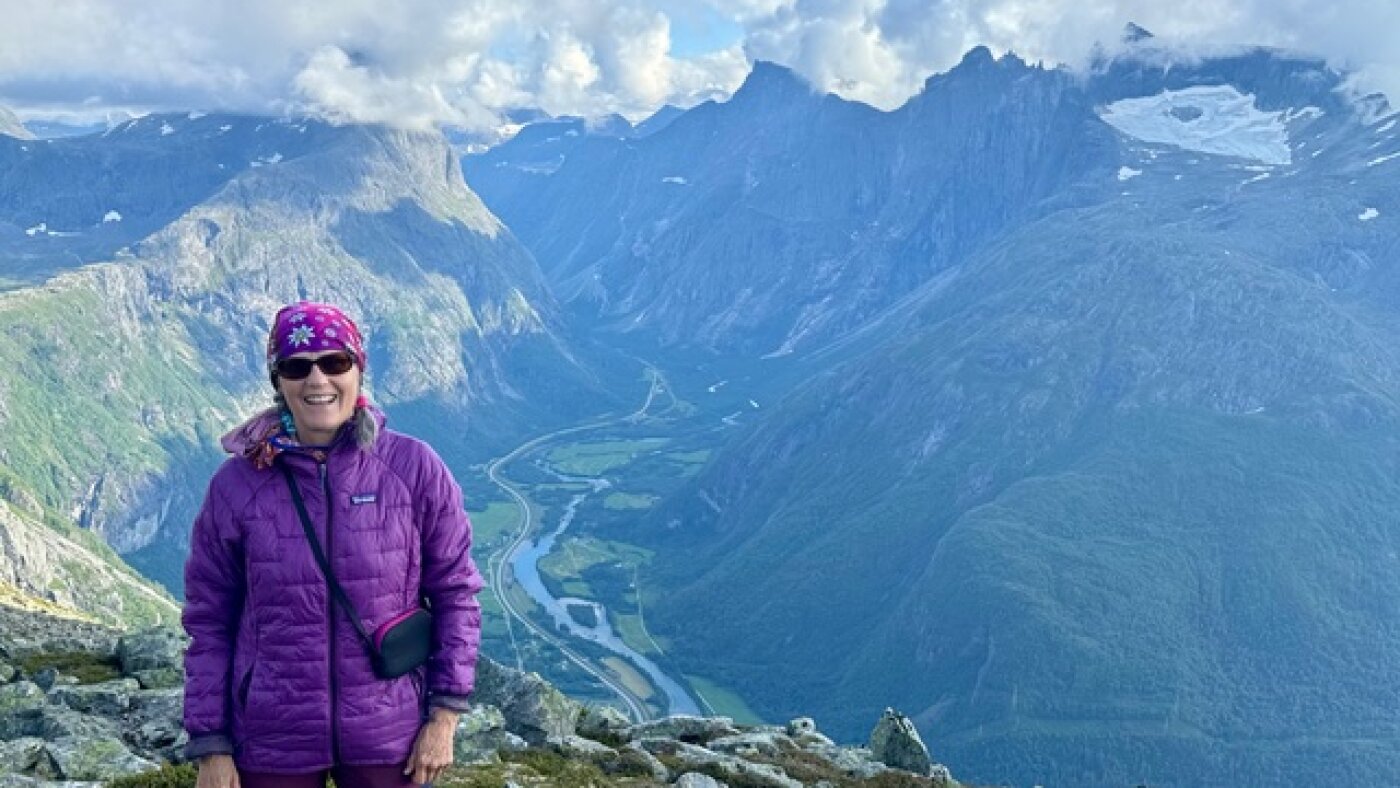
In 1982, Jean Muenchrath was injured in a mountaineering accident and on the brink of death when a stranger and his family went out of their way to save her life.
Jean Muenchrath
hide caption
toggle caption
Jean Muenchrath
In early May 1982, Jean Muenchrath and her boyfriend set out on a mountaineering trip in the Sierra Nevada, a mountain range in California. They had done many backcountry trips in the area before, so the terrain was somewhat familiar to both of them. But after they reached one of the summits, a violent storm swept in. It began to snow heavily, and soon the pair was engulfed in a blizzard, with thunder and lightning reverberating around them.
“Getting struck and killed by lightning was a real possibility since we were the highest thing around for miles and lightning was striking all around us,” Muenchrath said.
To reach safer ground, they decided to abandon their plan of taking a trail back. Instead, using their ice axes, they climbed down the face of the mountain through steep and icy snow chutes.
They were both skilled at this type of descent, but at one particularly difficult part of the route, Muenchrath slipped and tumbled over 100 feet down the rocky mountain face. She barely survived the fall and suffered life-threatening injuries.

This was before cellular or satellite phones, so calling for help wasn’t an option. The couple was forced to hike through deep snow back to the trailhead. Once they arrived, Muenchrath collapsed in the parking lot. It had been five days since she’d fallen.
”My clothes were bloody. I had multiple fractures in my spine and pelvis, a head injury and gangrene from a deep wound,” Muenchrath said.
Not long after they reached the trailhead parking lot, a car pulled in. A man was driving, with his wife in the passenger seat and their baby in the back. As soon as the man saw Muenchrath’s condition, he ran over to help.
”He gently stroked my head, and he held my face [and] reassured me by saying something like, ‘You’re going to be OK now. I’ll be right back to get you,’” Muenchrath remembered.
For the first time in days, her panic began to lift.
“My unsung hero gave me hope that I’d reach a hospital and I’d survive. He took away my fears.”
Within a few minutes, the man had unpacked his car. His wife agreed to stay back in the parking lot with their baby in order to make room for Muenchrath, her boyfriend and their backpacks.
The man drove them to a nearby town so that the couple could get medical treatment.
“I remember looking into the eyes of my unsung hero as he carried me into the emergency room in Lone Pine, California. I was so weak, I couldn’t find the words to express the gratitude I felt in my heart.”

The gratitude she felt that day only grew. Now, nearly 45 years later, she still thinks about the man and his family.
”He gave me the gift of allowing me to live my life and my dreams,” Muenchrath said.
At some point along the way, the man gave Muenchrath his contact information. But in the chaos of the day, she lost it and has never been able to find him.
”If I knew where my unsung hero was today, I would fly across the country to meet him again. I’d hug him, buy him a meal and tell him how much he continues to mean to me by saving my life. Wherever you are, I say thank you from the depths of my being.”
My Unsung Hero is also a podcast — new episodes are released every Tuesday. To share the story of your unsung hero with the Hidden Brain team, record a voice memo on your phone and send it to myunsunghero@hiddenbrain.org.

By day, you’d be forgiven for walking past the newest theater in downtown L.A.
It isn’t hidden in an alley or obscured via a nameless door. No, this performance space is essentially a theater in disguise, as it’s designed to look like an electrical box — a fabrication so real that when artist S.C. Mero was installing it in the Arts District, police stopped her, concerned she was ripping out its copper wire. (There is no copper wire inside this wooden nook.)
Open the door to the theater, and discover a place of urban enchantment, where a red velvet door and crimson wallpaper beckon guests to come closer and sit inside. That is, if they can fit.
With a mirror on its side and a clock in its back, Mero’s creation, about 6 feet tall and 3 feet deep yet smaller on its interior, looks something akin to an intimate, private boudoir — the sort of dressing room that wouldn’t be out of place in one of Broadway’s historic downtown theaters. That’s by design, says Mero, who cites the ornately romanticized vibe and color palette of the Los Angeles Theatre as prime inspiration. Mero, a longtime street artist whose guerrilla art regularly dots the downtown landscape, likes to inject whimsy into her work: a drainage pipe that gives birth, a ball pit for rats or the transformation of a dilapidated building into a “castle.” But there’s just as often some hidden social commentary.
With her Electrical Box Theatre, situated across from the historic American Hotel and sausage restaurant and bar Wurstküche, Mero set out to create an impromptu performance space for the sort of experimental artists who no longer have an outlet in downtown’s galleries or more refined stages. The American Hotel, for instance, subject of 2018 documentary “Tales of the American” and once home to the anything-goes punk rock ethos of Al’s Bar, still stands, but it isn’t lost on Mero that most of the neighborhood’s artist platforms today are softer around the edges.
Ethan Marks inside S.C. Mero’s theater inside a fake electrical box. The guerrilla art piece is near the American Hotel.
(Kayla Bartkowski / Los Angeles Times)
“A lot of galleries are for what can sell,” Mero says. “Usually that’s paintings and wall art.”
She dreamed, however, of an anti-establishment place that could feel inviting and erase boundaries between audience and perfomer. “People may be intimidated to get up on a stage or at a coffee shop, but here it’s right on street level.”
It’s already working as intended, says Mero. I visited the box early last week when Mero invited a pair of experimental musicians to perform. Shortly after trumpeter Ethan Marks took to the sidewalk, one of the American Hotel’s current residents leaned out his window and began vocally and jovially mimicking the fragmented and angular notes coming from the instrument. In this moment, “the box,” as Mero casually refers to it, became a true communal stage, a participatory call-and-response pulpit for the neighborhood.

Clown Lars Adams, 38, peers out of S.C. Mero’s theater inside a fake electrical box. Mero modeled the space off of Broadway’s historic theaters.
(Kayla Bartkowski / Los Angeles Times)
A few days prior, a rideshare driver noticed a crowd and pulled over to read his poetry. He told Mero it was his first time. The unscripted occurrence, she says, was “one of the best moments I’ve ever experienced in making art.”
“That’s literally what this space is,” Mero says. “It’s for people to try something new or to experiment.”
Marks jumped at the chance to perform for free inside the theater, his brassy freewheeling equally complementing and contrasting the sounds of the intersection. “I was delighted,” he says, when Mero told him about the stage. “There’s so much unexpectedness to it that as an improviser, it really keeps you in the moment.”
A downtown resident for more than a decade, Mero has become something of an advocate for the neighborhood. The area arguably hasn’t returned to its pre-pandemic heights, as many office floors sit empty and a string of high-profile restaurant closures struck the community. Mero’s own gallery at the corner of Spring and Seventh streets shuttered in 2024. Downtown also saw its perception take a hit last year when ICE descended on the city center and national media incorrectly portrayed the hood as a hub of chaos.

Artist S.C. Mero looks into her latest project, a fake electrical box in the Arts District. Mero has long been associated with street art in the neighborhood.
(Kayla Bartkowski / Los Angeles Times)
“A lot has changed in the 13 years when I first got down here,” Mero says. “Everybody felt like it was magic, like we were going to be part of this renaissance and L.A. was going to have this epicenter again. Then it descended. A lot of my friends left. But I still see the same beauty in it. The architecture. The history. Downtown is the most populous neighborhood in all of L.A. because it belongs to everybody. It’s everybody’s downtown, whether they love it or not. And I feel we are part of history.”
Art today in downtown ranges from high-end galleries such as Hauser & Wirth to the graffiti-covered towers of Oceanwide Plaza. Gritty spaces, such as Superchief Gallery, have been vocal about struggles to stay afloat. Mero’s art, meanwhile, remains a source of optimism throughout downtown’s streets.
At Pershing Square, for instance, sits her “Spike Cafe,” a mini tropical hideaway atop a parking garage sign where umbrellas and finger food props have become a prettier nesting spot for pigeons. Seen potentially as a vision for beautification, a contrast, for instance, from the nature intrusive barbs that aim to deter wildlife, “Spike Cafe” has become a statement of harmony.
Elsewhere, on the corner of Broadway and Fourth streets, Mero has commandeered a once historic building that’s been burned and left to rot. Mero, in collaboration with fellow street artist Wild Life, has turned the blighted space into a fantastical haven with a knight, a dragon and more — a decaying castle from a bygone era.
“A lot of times people are like, ‘I can’t believe you get away with that!’ But most people haven’t tried to do it, you know?” Mero says. “It can be moved easily. It’s not impeding on anyone. I don’t feel I do anything bad. Not having a permit is just a technicality. I believe what I’m doing is right.”

Musician Jeonghyeon Joo, 31, plays the haegeum outside of S.C. Mero’s latest art project, a theater in a faux electrical box.
(Kayla Bartkowski / Los Angeles Times)
After initially posting her electrical box on her social media, Mero says she almost instantly received more than 20 requests to perform at the venue. Two combination locks keep it closed, and Mero will give out the code to those she trusts. “Some people want to come and play their accordion. Another is a tour guide,” Mero says.
Ultimately, it’s an idea, she says, that she’s had for about a decade. “Everything has to come together, right? You have to have enough funds to buy the supplies, and then the skills to to have it come together.”
And while it isn’t designed to be forever, it is bolted to the sidewalk. As for why now was the right time to unleash it, Mero is direct: “I needed the space,” she says.
There are concerns. Perhaps, Mero speculates, someone will change the lock combination, knocking her out of her own creation. And the more attention brought to the box via media interviews means more scrutiny may be placed on it, risking its confiscation by city authorities.
As a street artist, however, Mero has had to embrace impermanence, although she acknowledges it can be a bummer when a piece disappears in a day or two. And unlike a gallerist, she feels an obligation to tweak her work once it’s out in the world. Though her “Spike Cafe” is about a year old, she says she has to “continue to babysit it,” as pigeons aren’t exactly known for their tidiness.
But Mero hopes the box has a life of its own, and considers it a conversation between her, local artists and downtown itself. “I still think we’re part of something special,” Mero says of living and working downtown.
And, at least for now, it’s the neighborhood with arguably the city’s most unique performance venue.
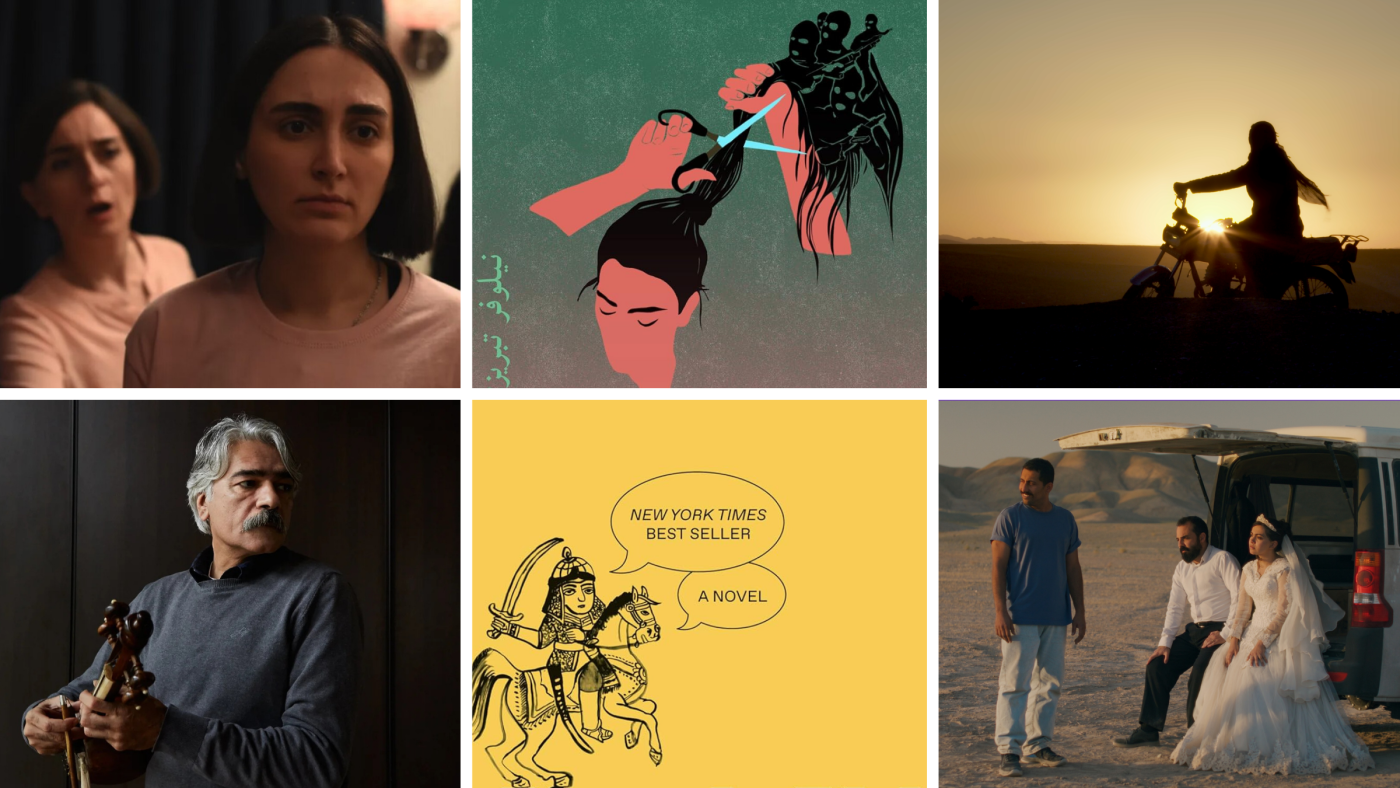
Understanding one of the world’s oldest civilizations can’t be achieved through a single film or book. But recent works of literature, journalism, music and film by Iranians are a powerful starting point. Clockwise from top left: The Seed of the Sacred Fig, For The Sun After Long Nights, Cutting Through Rocks, It Was Just an Accident, Martyr!, and Kayhan Kalhor.
NEON; Pantheon; Gandom Films Production; NEON; Vintage; Julia Gunther for NPR
hide caption
toggle caption
NEON; Pantheon; Gandom Films Production; NEON; Vintage; Julia Gunther for NPR
Few Americans have had the opportunity to visit or explore Iran, an ethnically diverse nation of over 90 million people which has been effectively shut off from the United States since the Iranian revolution of 1979. Now, with a U.S. and Israeli-led war on Iran underway, the ideas, feelings and opinions of Iranians may feel less accessible. However, some recent books, films and music made by artists and journalists in Iran and from the Iranian diaspora can help illuminate this ancient culture and its contemporary politics.
These suggestions are just a starting point, of course — with an emphasis on recent works made by Iranians themselves, rather than by outsiders looking in.
Books
For the Sun After Long Nights: The Story of Iran’s Women-Led Uprising, by Fatemeh Jamalpour and Nilo Tabrizy
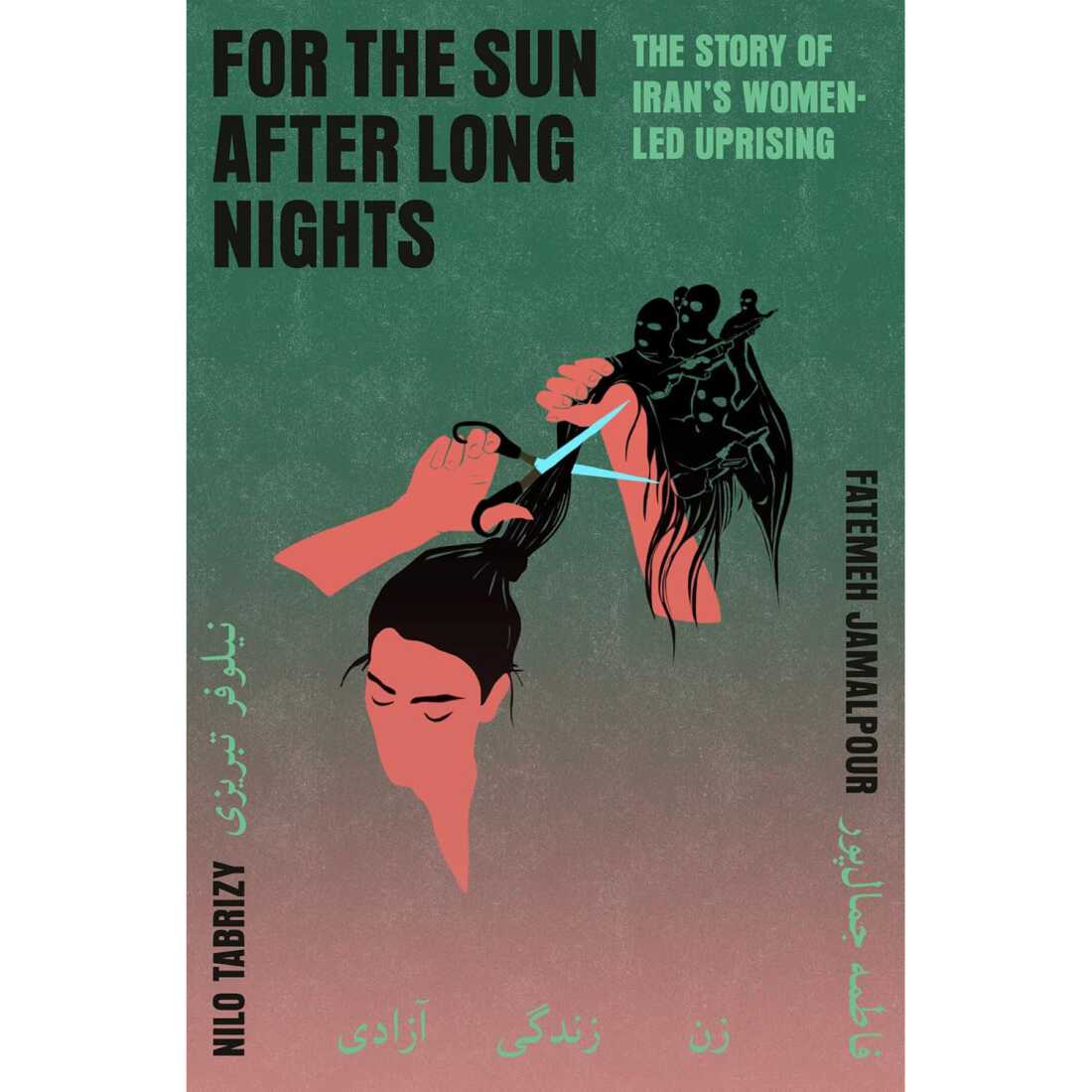
There are quite a few excellent titles that deconstruct the history of Iran from ancient times through the rule of the Pahlavi Dynasty to the Iranian Revolution. But there are far fewer books that help us understand the Iran of 2026 and the people who live there now. One standout is the National Book Award-nominated For the Sun After Long Nights: The Story of Iran’s Women-Led Uprising by journalists Fatemeh Jamalpour and Nilo Tabrizy, which chronicles — almost in real time — the Woman, Life, Freedom movement that began in 2022, during which Jamalpour was working secretly as a journalist in Tehran. In 2024-25, Jamalpour (who is now living in exile in the U.S.) and I spent a year together at the University of Michigan’s Knight-Wallace fellowship for journalists; her insights into contemporary Iran are among the best.
Gold, by Rumi, translated by Haleh Liza Gafori

If Americans are familiar with Persian poetry at all, it may well be through popular “translations” of the 13th-century Sufi poet Jalaluddin Rumi done by the late American poet Coleman Barks, who neither read nor spoke the Persian language and detached the works of Molana (“our master”), as Iranians call him, of references to Islam. (Instead, Barks “interpreted” preexisting English translations.)
In 2022, Iranian-American poet, performance artist and singer Haleh Liza Gafori offered the first volume of a corrective, in the form of fresh Rumi translations that are at once accessible, deeply contemplative and immediate. A second volume, Water, followed last year.
Martyr!: A Novel, by Kaveh Akbar
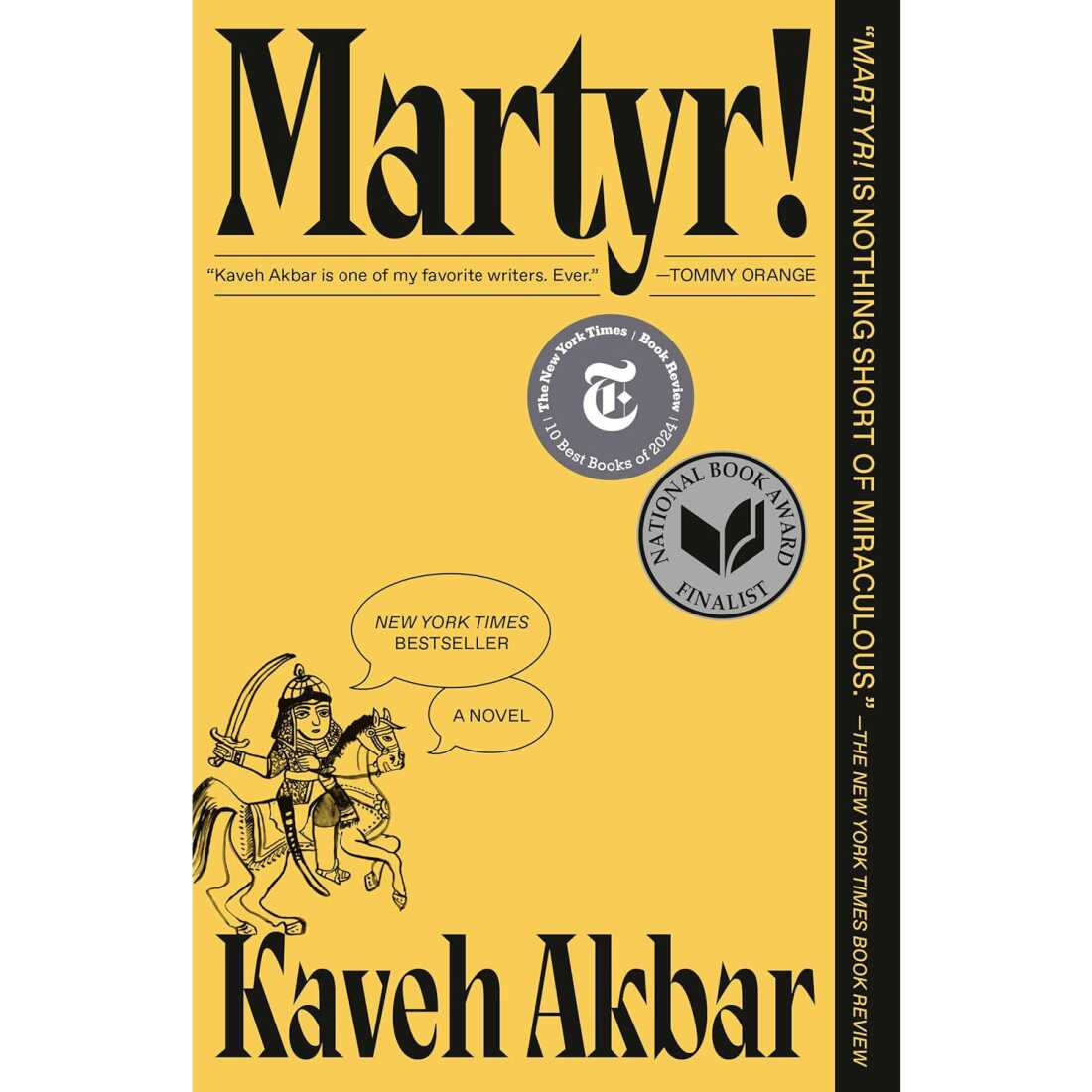
This 2024 debut novel by Kaveh Akbar, the poetry editor at The Nation, is an unflinching tour-de-force bursting with wit and insight into the complications of diaspora, the nature of identity in a post-War on Terror world and the inter-generational impact of the 1979 Revolution on Iranians. The protagonist, the Iran-born but American-raised Cyrus Shams, has struggled with addiction, depression and insomnia his whole life, and is trying his best to make sense of a world at the “intersection of Iranian-ness and Midwestern-ness.” As with so many other of the titles here, fiction and fact are woven together: the story centers around the true story of the U.S. downing an Iranian passenger plane in 1988 during the Iran-Iraq war.
The Stationery Shop: A Novel, by Marjan Kamali
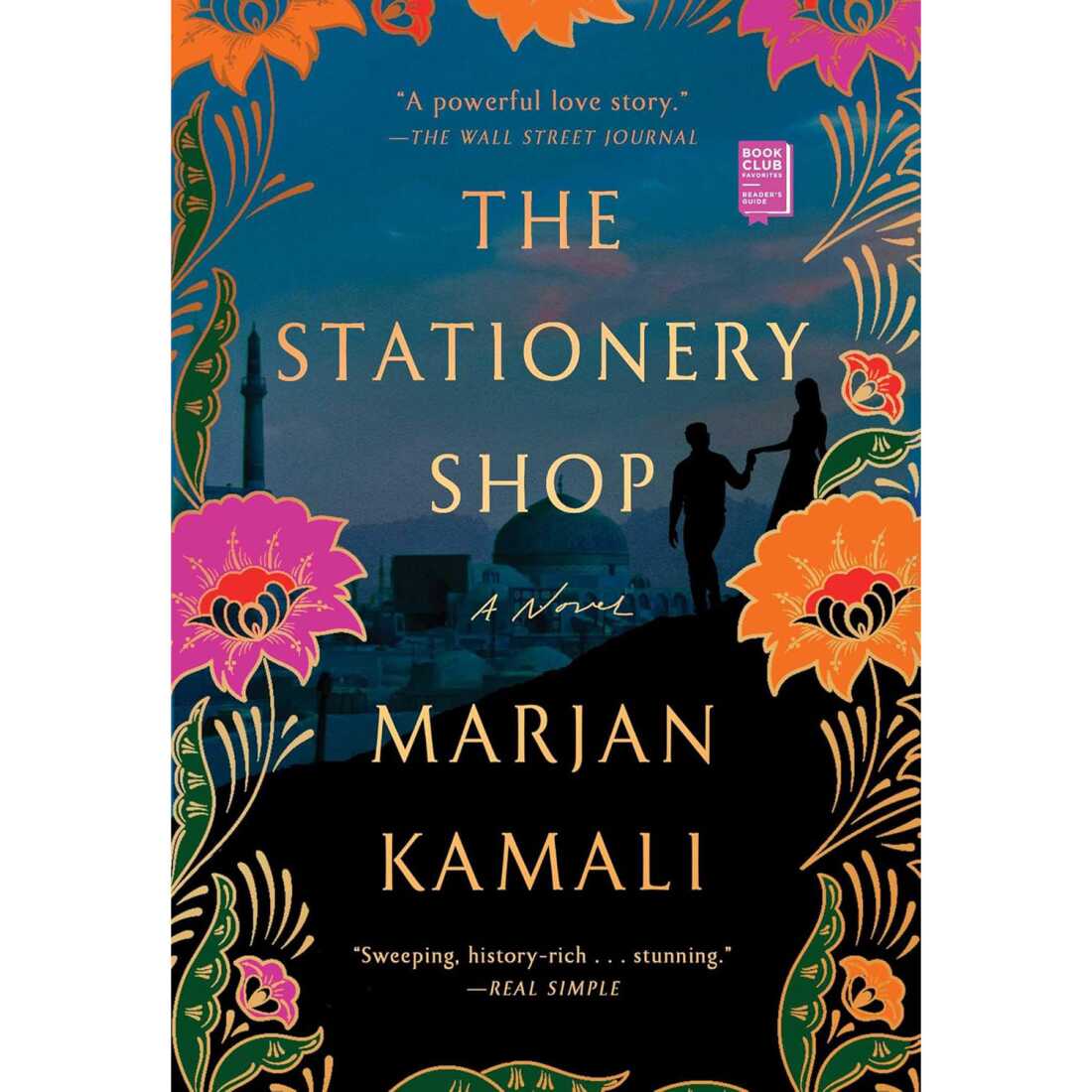
Marjan Kamali’s 2019 love story is the wistful tale of a young woman named Roya and an idealistic activist named Bahman, who meet cute in a Tehran store in the 1950s, but whose planned marriage falls apart due to turmoil both familial and political, as Iran’s democratically elected government falls in a U.S.-British lead coup that ends with the installation of the Shah. Roya flees to the U.S. for a fresh start, but the two reunite in 2013, wondering: what if life had spun out in a different direction?
Movies
Coup 53
This 2019 documentary directed by Iranian film maker Taghi Amirani and co-written by Walter Murch recounts Operation Ajax, in which the CIA and Britain’s MI6 engineered the removal of Mohammad Mossadegh, Iran’s democratically elected prime minister, and installed a friendly ruler, Shah Mohammad Reza Pahlavi, in his place. (The Shah was ousted in the 1979 revolution.) As Fresh Air critic John Powers noted in his review, “What emerges first is the backstory of the coup, which like so much in the modern Middle East is predicated on oil. Shortly after the black gold was discovered in early 20th century Iran, a British oil company now known as BP locked up a sweetheart deal for its exploitation. Iran not only got a mere 16% of the oil money before British taxes, but the books were kept by the British — and the Iranians weren’t allowed to see them.”
YouTube
Cutting Through Rocks
Sara Khaki and Mohammadreza Eyni’s film Cutting Through Rocks is up for an Oscar this season after premiering at the 2025 Sundance Film Festival. This inspiring documentary follows Sara Shahverdi — a divorced, childless motorcyclist — as she campaigns to become the first woman elected to the city council of her remote village, and who dreams of teaching girls to ride and to end child marriage.
YouTube
It Was Just an Accident
The latest film from acclaimed director Jafar Panahi — who has officially been banned from making films in Iran — is 2025’s It Was Just an Accident. Panahi, who has been jailed multiple times for his work and was recently sentenced again in absentia, has said in interviews that his inspiration for this brutal – and shockingly funny – thriller was people he met while in prison: an auto mechanic named Vahid finds himself face-to-face with the man who he is fairly certain was his torturer in jail, and eventually assembles other victims to try to confirm his suspicions. Fresh Air critic Justin Chang called It Was Just an Accident “a blast of pure anti-authoritarian rage.”
YouTube
The Seed of the Sacred Fig
This 2024 thriller — shot in secret by director Mohammad Rasoulof — centers on a family whose father, Iman, is appointed as an investigating judge in Tehran. But it soon becomes clear that his job has nothing to do with actually investigating. Iman, his wife, and two daughters come to suspect each other in our age of mass surveillance, as the city streets below erupt into the real-life Woman, Life, Freedom protests.
YouTube
Music
Kayhan Kalhor
One of the primary ambassadors of Persian classical music has been the composer and kamancheh (an Iranian bowed-instrument) virtuoso Kayhan Kalhor. Although music, like poetry, has been central to Iranian culture for centuries, all kinds of music were initially banned after the 1979 revolution. Since then, however, Iranian classical musicians have ridden many looping cycles of official condemnation, grudging tolerance, censorship and attempts at co-option by the regime.
Despite those difficulties, Kalhor has built a thriving career both inside Iran and abroad, including winning a Grammy Award as part of the Silkroad Ensemble and earning three nominations as a solo artist. Back in 2012, I invited him to our Tiny Desk to perform solo. “Didn’t know I could have goosebumps for 12 minutes straight,” a YouTube commenter recently wrote; I couldn’t put it any better.
YouTube
Saeid Shanbehzadeh
Among Iran’s 92 million people, about 40% of come from various ethnic minorities, including Azeris, Kurds and Armenians among many others. One of the most fascinating communities is the Afro-Iranians in the Iranian south, many of whose ancestors were brought to Iran as enslaved people from east Africa. Multi-instrumentalist and dancer Saeid Shanbehzadeh, who traces his ancestry to Zanzibar, celebrates that heritage with his band, and specializes in the Iranian bagpipe and percussion.
YouTube
The underground metal scene
Despite ongoing restrictions on music — including the continued ban on female singers performing in mixed-gender public settings — Iran is home to a thriving underground scene for metal and punk. Though it’s fictional, Farbod Ardebelli’s 2020 short drama Forbidden to See Us Scream in Tehran — which was secretly filmed in Tehran, with the director giving instructions remotely from the U.S. via WhatsApp — gives a flavor of that real-life scene and the dangers those artists face.
YouTube

MPD officer accused of using Flock cameras to monitor dating partner resigns

Same DNA, new address: Muchacho expands to West Midtown

What is a data center?

Indianapolis Colts’ Best and Worst Free-Agent Signings of Last Decade

Can Pittsburgh Handle an NFL Draft Crowd?

Florida High School Football Rankings: Top 25 teams – Oct. 21

Cleary's 21 help Le Moyne down Central Connecticut State 69-64 in OT

How old is Bo Nix? What to know about Oregon quarterback ahead of 2024 NFL Draft

99th annual Pony Swim held in Virginia

Indiana Members Credit Union announced as new anchor tenant at Bottleworks District

US submarine sinks Iranian warship by torpedo in a first since World War II

Which oil and gas facilities in the Gulf have been attacked?

Mojtaba Khamenei, son of former supreme leader, tipped to become Iran’s next head of state

Video: Senators Question Kristi Noem on ICE Immigration Tactics

Combustible Republican Senate primary in Texas heading into overtime
-

 World7 days ago
Exclusive: DeepSeek withholds latest AI model from US chipmakers including Nvidia, sources say
-

 Massachusetts1 week ago
Mother and daughter injured in Taunton house explosion
-

 Denver, CO1 week ago
10 acres charred, 5 injured in Thornton grass fire, evacuation orders lifted
-

 Louisiana1 week ago
Wildfire near Gum Swamp Road in Livingston Parish now under control; more than 200 acres burned
-

 Florida4 days ago
Florida man rescued after being stuck in shoulder-deep mud for days
-

 Wisconsin3 days ago
Setting sail on iceboats across a frozen lake in Wisconsin
-

 Maryland4 days ago
AM showers Sunday in Maryland
-

 Oregon5 days ago
2026 OSAA Oregon Wrestling State Championship Results And Brackets – FloWrestling