Lifestyle
What's Making Us Happy: A guide to your weekend snacking, viewing and listening

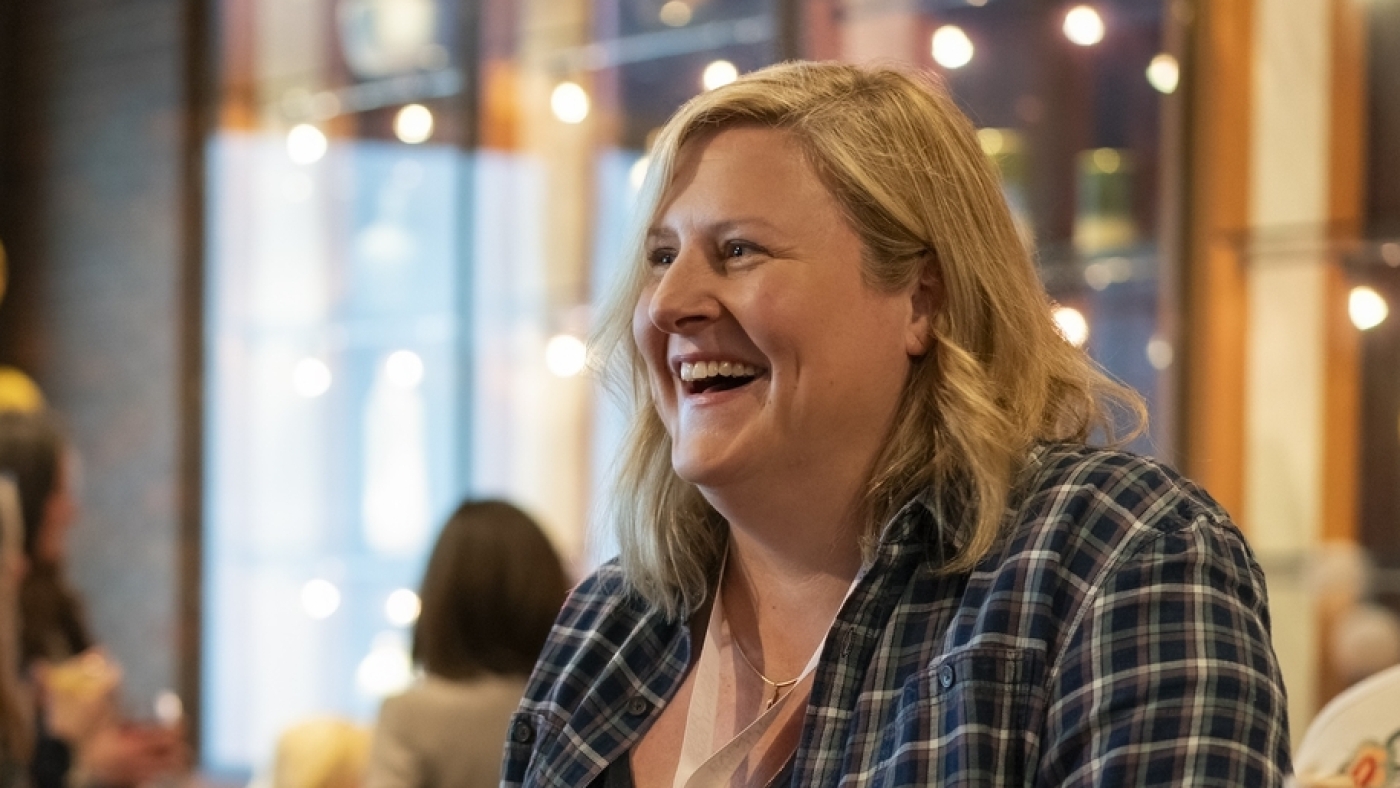
Bridget Everett as Sam in Somebody Somewhere
Sandy Morris/HBO
hide caption
toggle caption
Sandy Morris/HBO
This week, live-action remakes kept coming, labor conditions might be changing in reality TV and an iconic poet left us.
Here’s what NPR’s Pop Culture Happy Hour crew was paying attention to — and what you should check out this weekend.
A tried-and-true Bourbon Ball recipe

When I was a kid, I always made Bourbon Balls with my mom at this time of year. I still have the recipe that she had in her little box of cards. I made Bourbon Balls the other day — they are just amazing. They’re delicious, brownie-like things and I make way too many every year.
What I remember most about them was two weeks later, when we finally ate them, me at 5 or 6-years-old would have a little bit of one then make a terrible face because it tasted like alcohol and then pretend to be drunk for the next five minutes. And everybody at whatever party would just think that was adorable. That’s what I’m going for. — Bob Mondello
Bob’s Mom’s recipe for Bourbon Balls
Ingredients
2 cups vanilla wafer crumbs (rolled fine)
1 cup chopped pecans or walnuts
1 cup powdered sugar (and extra to roll balls in)
2 teaspoons cocoa
2 teaspoons corn syrup
1/3 cup bourbon (or rum, or brandy)
Directions
- Mix all ingredients well.
- Form into 1-inch balls.
- Roll into the extra powdered sugar.
- Store in an air-tight container for at least one week before serving (the hardest part).
Somebody Somewhere
YouTube
I’m obsessed with Somebody Somewhere on Max. It took me a minute to get into, I remember watching the first season and the first episode thinking this moves really slow, but for some reason it just clicked for me recently. I’ve binged it and I’m so sad that it’s in its third and final season. Bridget Everett and that entire cast is absolutely incredible and it’s actually become a comfort show for me. It’s this exploration of being an outsider in a small rural town. And as someone who grew up in the South and in a small, suburban, rural town, it really hits in all the best ways. — Ryan Mitchell
The Amazing Race
YouTube
I recently started a rewatch of The Amazing Race on Paramount+. A throwback from another time. We were in a different world back then. It is so beautiful just to see regular people traversing the world and conquering their fears. I find it quite entertaining and calming. So check it out. — Tre’vell Anderson
A Christmas Carol: A Signature Performance by Tim Curry

I’ve been listening to the great Tim Curry reading a story that has been co-opted by Big Christmas for far too long: A Christmas Carol. It’s sappy, sentimental, treacly. Yes. That’s why you need Tim Curry in the mix. He cuts through the treacle. He does not milk the sentiment. What he leans into is the language and the voice of the narration, it’s my favorite thing. I just started my annual listening and I always forget how much funny throat clearing there is in those opening pages where Dickens is like: Why is it dead as a doornail and not dead as a coffin nail? And he goes into this tangent about Hamlet’s father’s ghost. It’s just the best. — Glen Weldon
More recommendations from the Pop Culture Happy Hour newsletter
by Linda Holmes
I enjoyed Kelsey McKinney’s piece at Defector about the challenges of writing a book and the things that can’t be replicated by robots.
The Netflix action movie Carry-On wants very badly to be Die Hard (as Sam Adams has noted in Slate), and it is very much not Die Hard. It’s not as witty, and I don’t think I’m shocking anyone by saying that Jason Bateman is not Alan Rickman. However! With that said, it’s an entertaining and silly little diversion, nicely shot and choreographed, and featuring another good supporting performance from the terrific Danielle Deadwyler. Worth your time on a weekend evening or afternoon.
The funniest thing I read this week was Kathryn VanArendonk at Vulture, talking about what Taylor Sheridan is currently doing with Yellowstone. Truly, it is much weirder than whatever you’re thinking if you don’t watch.
I hope you’ll spend some time with the list of best TV and movies of 2024 that was assembled by some NPR critics: me, Glen, Aisha, Bob Mondello and Eric Deggans. Lots to love.
Dhanika Pineda adapted the Pop Culture Happy Hour segment “What’s Making Us Happy” for the Web. If you like these suggestions, consider signing up for our newsletter to get recommendations every week. And listen to Pop Culture Happy Hour on Apple Podcasts and Spotify.



For Iris van Herpen, couture is a laboratory as much as a runway. Our chief fashion critic, Vanessa Friedman, takes us inside this Dutch designer’s latest Paris show — from sci-fi-inspired gowns to an audacious attempt at a dress made of charged plasma.
Lifestyle
The BoF Podcast | Decoding Paris Haute Couture: Wonder, Restraint and the Call of the Void


-

 Washington, D.C21 seconds ago
Storm Team4 Forecast: Scattered showers and storms possible Saturday PM
-

 Cleveland, OH7 minutes ago
Cleveland’s First Round woes must end with the 2026 class
-

 Austin, TX10 minutes ago
Texas reports dozens of cyclosporiasis cases tied to contaminated fresh produce
-

 Alabama22 minutes ago
Small Plane Makes Emergency Landing In Peanut Field Near Florida-Alabama Line : NorthEscambia.com
-
Alaska25 minutes ago
An Alaska vacation can remind Israelis the world doesn’t revolve around them | The Jerusalem Post
-
 Arizona30 minutes ago
Arizona AG continues to investigate Glendale apartment complex after Friday deadline to fix A/C
-

 Arkansas37 minutes ago
Office of Keep Arkansas Beautiful Now Part of the ARDOT
-

 California40 minutes ago
Amber Alert issued for 3-year-old out of California City in Kern County

