Lifestyle
'Under Paris' is a Seine-sational French shark movie


Sharks in the Seine — mon dieu!
Netflix
/Sofie Gheysens
hide caption
toggle caption
Netflix
/Sofie Gheysens
I will be the first to admit I didn’t even know there was a French shark movie until I saw it appear at the very top of Netflix’s top 10 movies. And it’s not as if it’s hiding anything about its topic: It’s called Under Paris. You know why? Because it’s all about sharks under Paris. Specifically, it’s about sharks in the Seine. Initially, there are just a couple of sharks. But then, there are a lot of sharks. And the movie is apparently an enormous hit, although/because it is, while not as silly as Sharknado, very silly.

Under Paris (aka, to me at least, Sharknadeau) begins as a standard menacing-creature story. Sophia (Bérénice Bejo, Oscar nominee for The Artist) is a scientist studying sharks in the vicinity of the Great Pacific Garbage Patch (a real, depressing thing). She and her team get a signal from one of their tagged sharks, named Lilith, and several members of the team go on a dive to obtain a blood sample. This dive does not go well (I mean, I suppose it goes OK for Lilith), leaving Sophia traumatized.
A few years later, a shark-saving group in Paris alerts Sophia that they know where Lilith is: in the Seine. Now, sharks in the Seine are not a real thing, but perhaps the only upside of climate change is the expansion of options for disaster movies. After all, a movie like this can throw its hands in the air and say, “Honestly, you don’t know what’s possible now that you can go to the beach on Christmas, do you?” So: sharks in the Seine. Not just that, but multiplying sharks in the Seine.

Bérénice Bejo stars as Sophia, a shark scientist.
Sofie Gheysens/Netflix
hide caption
toggle caption
Sofie Gheysens/Netflix
Of course, Paris has an arrogant, careless mayor who, like all government officials in shark movies, suffers from a pathological failure to be adequately afraid of sharks. She has only one priority: making sure that the upcoming triathlon goes off without a hitch. That’s right: The Seine is infested with ravenous sharks at the very moment when crowds of swimmers are about to throw themselves into the Seine at a highly public event. Mon dieu! Now, if it were you or me, perhaps we think to ourselves, “Better to cancel the event in advance than have it canceled on account of all the swimmers being devoured,” but no, the mayor of Paris has no such caution.
For the first half or so, Under Paris unfolds like a fairly classy suspense film about a rarely seen threat. It does not look cheap in the way Sharknado did, for instance. It’s quite competently shot and edited, it’s tense, and it’s frightening. In other words, it gets the job done.
In the second half, the movie goes fully bazoo. Certain arguments about the sharks’ intentions are resolved when some participants in those arguments are eaten. You get your first of a couple of overhead shots of a shark leaping out of the water, mouth first, the better to show you someone in its jaws (heh) who is thinking, “This seems bad.” Crowds run in terror. Blood gushes. If you are watching the movie in the original French (which I recommend) and you have the English subtitles on, you will see a lot of the caption “[panicked screams].”
All this to say: It’s not hard to understand why this is such a hot property at the moment. It gives you half of a fairly normal movie and half of an absolutely wacky one. About half of it is suspense, and about half of it is full-on creature horror, incredibly bloody and with a very (very) high body count. And at the end, there’s no question that just as these sharks are under Paris, the next ones will be under London (or New York, or wherever). If you’re looking for a popcorn movie and you don’t mind a lot of cartoonish gore, you could do a lot worse.
This piece also appeared in NPR’s Pop Culture Happy Hour newsletter. Sign up for the newsletter so you don’t miss the next one, plus get weekly recommendations about what’s making us happy.
Listen to Pop Culture Happy Hour on Apple Podcasts and Spotify.

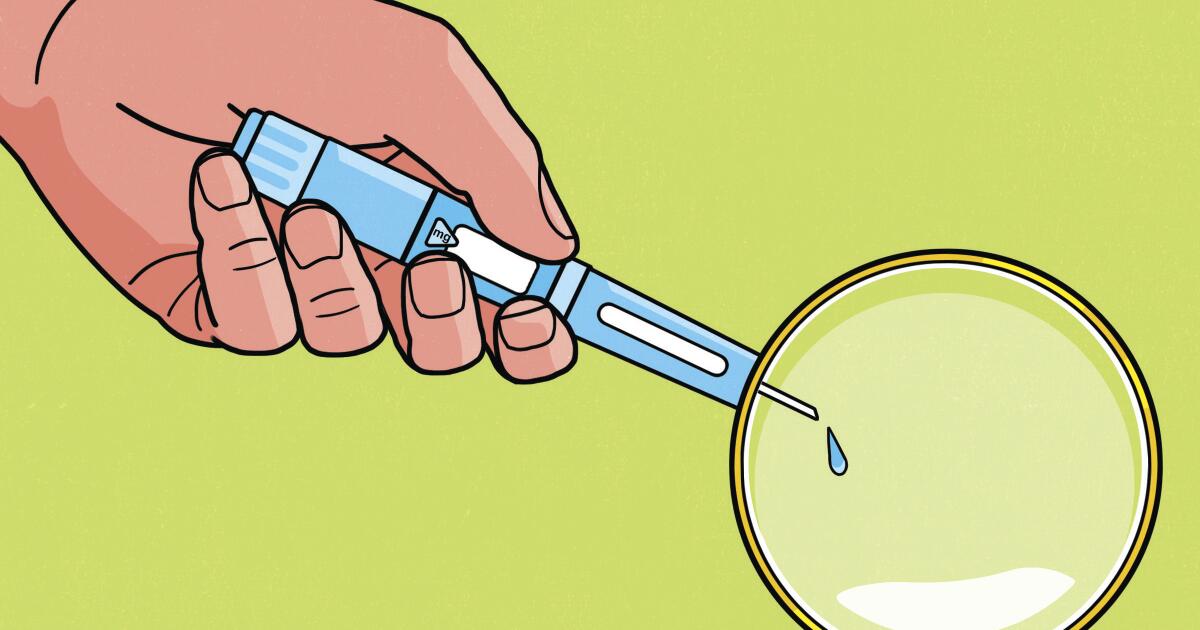
It doesn’t take much these days to fall down a GLP-1 rabbit hole on the internet. TikTok, Instagram, Facebook and Reddit all feature streams of testimonials from people touting the miracle — and warning of the risks — of GLP-1 drugs like Ozempic and Wegovy.
In recent years, microdosing — taking smaller doses than what’s generally prescribed for obesity and diabetes — has also cultivated a cult-like following online. Microdosing advocates claim it can help with weight loss by reducing cravings, better metabolic health, reduce inflammation, enhance mood and cognitive function, and even potentially improve longevity, all while coming with less side effects and being more affordable than larger doses.
Microdosing GLP-1s began emerging as a trend after Wegovy, an Ozempic competitor, was approved by the FDA for obesity in 2021. (Previously, Ozempic was being used for weight loss, but had only been approved for diabetes.) In the years following approval, a growing number of household names from Oprah to Elon Musk spoke publicly about their positive experiences using GLP-1s for weight loss. This fueled an exponential growth in interest among the public, but not everyone qualifies for GLP-1s through their insurance or can afford them, even if they do.
All of the major brand-name medications people currently use for weight loss are based on one of two molecules: semaglutide or tirzepatide, and most are self-injected weekly. Ozempic and Wegovy contain semaglutide, which works by mimicking a hormone called GLP-1 that helps regulate appetite and blood sugar. Mounjaro and Zepbound contain tirzepatide, which targets that hormone plus another one involved in metabolism.
The price of weight loss
Brand name GLP-1s cost around $10,000 per year or more if paid for out of pocket, and around $300 to $1,200 per year if covered by insurance. Many insurance plans, however, will only pay for GLP-1s if a person has a diagnosis of diabetes, not obesity. On top of that, one of the biggest complaints about GLP-1s, when taken according to the standard doses approved by the FDA — is that they cause side effects such as nausea, diarrhea and fatigue. Influencers, everyday people and even some medical professionals online now recommend microdosing as a potential solution.
“In three weeks, I have lost 7 pounds and [have] very few side effects. Before now I was terrified of them. They put my husband on [a] standard dose for diabetes and he was just so sick,” reads a Reddit post by MenloShark25, who says they’re receiving their prescription through telehealth provider Midi.
“I’m microdosing. I’m on week 4 of [semaglutide] and my mind is blown,” reads another Reddit post by palenesslitethesky. “I feel so much better than I expected to. The microdosing is great for me because I was super scared about getting constipated. I am down 9 pounds and my tastes changed. I was addicted to sugar!! Addicted. Now I hardly want sugar.”
The DIY injections boom
In 2025, following the surge of anecdotal reports online about microdosing, a number of telehealth companies such as Fridays, Noom and Found Health started offering GLP-1 protocols at lower doses and lower costs. Previously, people who were taking smaller doses of GLP-1s were either getting them “off label” from a physician — which means they were prescribed, but not based on the protocols approved by the FDA — or getting them illegally online and figuring out how to take them on their own. One controversial aspect of microdosing GLP-1s is that, when they’re taken in smaller doses, they often come from compounding pharmacies that make their own versions of FDA-approved drugs. This allows for dose customization but isn’t subject to the same reviews for safety, efficacy or consistency, and may carry added risks related to quality control, potency variation or contamination.
For people like Monika Awadalla, however, they feel they have no choice but to find GLP-1s on their own, unable to afford the cost of treatment through a physician. Awadalla, a 31-year-old caretaker living in Huntington Beach, has been buying a compounded tirzepatide from an illegal manufacturer in China that she connected with through a Facebook group about a year and a half ago. In that time, she’s gone from 245 pounds to 140 pounds.
“I’m extremely happy now,” she says. “I don’t need to stay home, I’m not embarrassed, I’m already looking forward to summer. Everything is just in its right place.” The manufacturer, who communicates on encrypted messaging boards such as Telegram and Signal, charges $290 for 10 vials of compounded tirzepatide, which will last Awadalla about a year.
Based on stories like Awadalla’s, it’s no wonder so many people are curious about microdosing GLP-1s through their doctor, telehealth companies and illegal suppliers. But do we have enough information yet on the benefits and risks? Here’s the deal.
A doctor’s take
For now, there’s no scientific studies looking at the efficacy and safety of microdosing GLP-1s. Dr. Shauna Levy, medical director for the Tulane Weight Loss Center, says that doesn’t mean it doesn’t work, but that the medical community just doesn’t know. Even if it does cause weight loss or a reduction in inflammation, she says, it’s unclear whether those results will persist long-term or whether the practice causes harm.
One of the biggest problems with the term “microdosing,” as it pertains to GLP-1s, Levy says, is that it’s “vague,” and there’s no consensus on what it’s referring to. “Microdosing GLP-1s is almost becoming this buzz word that carries inconsistent meaning. I think there are many people who are using it as a marketing tool because they want people to think you’re not on a full dose of a GLP-1,” she says. “But if we’re really talking about treating obesity, those microdosing doses are not going to be effective for most people, and so I worry people are going to pay for it cause it’s cheaper and then it’s not going to work for them and they’re going to think ‘here’s one more thing that’s not working for me.’”
Levy says GLP-1s, when prescribed correctly, are “fantastic” for treating obesity. In her patients, gastrointestinal effects are common but generally tolerable. She also believes that it’s important to expand the criteria for obesity so that more people qualify for these drugs through the proper channels, but says it’s crucial that patients receive ongoing care from a medical professional who has been licensed by the American Board of Obesity Medicine. “A lot of GLP-1s are being prescribed by untrained in obesity professionals,” Levy says. “My No. 1 issue is who is prescribing it.”
Dr. Sara Siavoshi, a board-certified obesity, neurology and headache specialist, treats about 5,000 patients in her practice. She estimates 30 to 40% of them are microdosing either tirzepatide or semaglutide. Siavoshi defines a microdose as “the lowest dose of a GLP-1 that lowers food noise without causing any significant weight loss.” Food noise, a term used in obesity medicine, refers to chronic unwanted thoughts that make healthful choices (both about how much to eat and what to eat) difficult. If the GLP-1 dosage leads to more weight loss than 3 or 4 pounds, she says, then she doesn’t define it as a microdose. She says most people seem to think a microdose means an amount that’s lower than what’s commercially available, but in her practice, she hasn’t seen it benefit most of her patients when doing that. Generally, she’s found success in putting people on the lowest commercially available dose of a GLP-1. “I’ll tell you the patient satisfaction rate is extremely high and patients are very, very happy on these meds,” Siavoshi says. In addition to reducing food noise, her primary goal is to lower inflammation in patients with autoimmune conditions.
Recommended: continuous, certified care
Siavoshi emphasizes the importance of working with someone who has been trained in obesity medicine, pointing to the American Board of Obesity Medicine’s website, where patients can look up their providers and make sure that they’re certified. She’s not opposed, she said, to all online platforms providing care, but says it’s essential to be getting consistent support from someone who can put together a treatment plan and be there throughout the process.

Alan Greenspan and Ayn Rand are pictured in the Oval Office on Sept. 4, 1974, after Greenspan’s swearing in as Chairman of the Council of Economic Advisors.
David Hume Kennerly/Getty Images/Hulton Archive
hide caption
toggle caption
David Hume Kennerly/Getty Images/Hulton Archive
One of the most important intellectual relationships in the life of Alan Greenspan, the prominent former central banker who died Monday, was with author Ayn Rand, whose 1957 novel Atlas Shrugged has become a perennial favorite among conservatives and which the Library of Congress named as one of the books that has shaped America.
The two first met when he was in his mid-twenties and she was in her forties, and already well-established via her 1943 novel The Fountainhead, which had been a best-seller. They were introduced through Greenspan’s then-wife, the Canadian art historian Joan Mitchell. Mitchell was a close friend of the wife of Nathaniel Branden. Branden was Rand’s protege and longtime lover.
Greenspan and Mitchell wed in 1952, but divorced within a year. By contrast, Greenspan’s relationship with Rand was far more lasting: they remained friends until her death in 1982.

Through the Branden connection, Greenspan joined Rand’s “Collective,” a small group of friends and thinkers who would gather regularly at Rand’s midtown Manhattan apartment to discuss politics, world events and ideas. He became a Collective regular.
According to Greenspan’s 2007 memoir, The Age of Turbulence: Adventures in a New World, Rand nicknamed Greenspan “the undertaker” early on in their friendship, thanks to his penchant for dark suits and his sober demeanor.
His dour reputation was at odds with his early artistic pursuits. He was a talented musician. Before pursuing an economics degree at New York University, he enrolled at Juilliard to study clarinet, and as a teenager played in a swing band alongside jazz legend-to-be Stan Getz. His musical tastes were just as conservative as his politics, however: in his memoir, he dismissed almost every form of post-big band popular music as “on the edge of noise.”

Greenspan wrote for Rand’s magazine, The Objectivist, including contributing an influential essay on the gold standard in 1966 that was later reprinted in her book Capitalism: The Unknown Ideal. When he was sworn in as chairman of the Council of Economic Advisers during the Ford administration, it was Rand who stood with him, along with Rand’s husband, Frank O’Connor, and Greenspan’s mother Rose Goldsmith.
“Ayn Rand became a stabilizing force in my life,” he wrote in his memoir. “She was a wholly original thinker, sharply analytical, strong-willed, highly principled, and very insistent on rationality as the highest value. In that regard, our values were congruent – we agreed on the importance of mathematics and intellectual rigor.”


-

 Health3 minutes ago
Want to age better? Researchers say 4-minute routine may help prevent dangerous falls
-

 Sports6 minutes ago
Wyndham Clark pens emotional message after winning second US Open in hostile territory
-
 Business18 minutes ago
The other anti-data center movement: California’s sky-high electricity prices
-
 Entertainment21 minutes ago
‘All My Children’ actor Paul Avery and wife Sheila killed in house fire
-
Lifestyle26 minutes ago
What’s the deal with … microdosing Ozempic?
-
 Politics33 minutes ago
Battle over single-use plastics erupts as 17 states move to block California law
-
 Science34 minutes ago
Health concerns mount as Boyle Heights warehouse fire stretches into a week
-
 Sports41 minutes ago
‘A great vibe.’ Pacific Northwest joins Los Angeles in an embrace of World Cup fever

