Lifestyle
‘TODAY’ Show Dylan Dreyer Says Savannah Guthrie Will Likely Return, Not Sure When


Dylan Dreyer
Savannah Will Likely Come Back … Just Not Sure When
Published
TMZ.com
Dylan Dreyer is giving a small update on her embattled “Today” co-host, Savannah Guthrie, as the search continues for Savannah’s mom, Nancy — telling TMZ she does believe she’ll likely return to the show at some point.
We caught Dylan leaving NBC Tuesday afternoon, and she said while she thinks Savannah will come back, the timing is totally unclear — adding everyone at the show is simply giving her the space she needs because they care about her so much.

TMZ.com
Dylan also reflected on Savannah’s emotional visit to the “TODAY” studio last Thursday, saying the hug they shared was something they both really needed in that moment.
Catch the full clip — Dylan says the visit was incredibly emotional, adding Savannah clearly wants to get back to some sense of normal life … she just doesn’t quite know how yet.
Still, Savannah managed a few smiles during the brief stop by the studio, doing her best to keep moving forward during an incredibly tough time.
TMZ.com
As we reported, Nancy was taken from her Tucson home in the middle of the night on February 1. She was last seen entering the house just before 10 PM on January 31 after dinner with her daughter Annie and Annie’s husband, Tommaso Cioni.



Mara is a single mother of two in Minnesota. She and her family have depended on SNAP benefits to make ends meet.
Caroline Yang for NPR
hide caption
toggle caption
Caroline Yang for NPR
Although Mara is unemployed, she is busier than ever.
When she is not taking care of her two children, Mara is at her desk applying for jobs. She is surveying her belongings to see what she can pawn off to buy toiletries. Or she is sifting through bills, calculating which ones can wait and which need to be paid right away.
Soon, Mara, a single mom in Minnesota, may have another task on her busy schedule: figuring out how to afford food for her and her family.
That’s because of new work requirements for people receiving aid from the Supplemental Nutrition Assistance Program, also known as SNAP or food stamps.

“It would be so beyond hard” to lose SNAP benefits, Mara said. “Without SNAP, there’s no funds for food.” Mara asked for her last name to be withheld given the stigma tied to receiving government assistance. She is also worried that speaking publicly will affect her chances of getting a job.
Previously, SNAP recipients with children under 18 were exempt from work requirements mandating that recipients work, volunteer or participate in job training at least 80 hours a month. But now, under President Trump’s One Big Beautiful Bill Act, that exemption only applies to those with children under 14 — which is how old Mara’s youngest child turned in December.

“It would be so beyond hard” to lose SNAP benefits, Mara said.
Caroline Yang for NPR
hide caption
toggle caption
Caroline Yang for NPR
The Trump administration has argued that the mission of the nation’s largest anti-hunger program has failed.
“SNAP was intended to be temporary help for those who encounter tough times. Now, it’s become so bloated that it is leaving fewer resources for those who truly need help,” the White House said in a statement in June.
But policy experts say the SNAP changes do not fully take into account the unique challenges faced by single parents like Mara or the sluggish job market in many parts of the country. They argue that losing food assistance will only create more barriers for recipients struggling to find work.
The timeline for implementing the new SNAP policy varies based on state and county. In Mara’s home state of Minnesota, recipients who don’t qualify for an exemption or meet work requirements will be at risk of losing assistance as early as April 1. Others may have more months depending on when they next need to certify they are eligible for benefits.
Over 100 job applications
Mara imagined she would have a job by now.
It was August when she was let go from her part-time administrative assistant role due to her workplace restructuring. Since then, Mara estimates that she has applied for over 100 positions. She has also attended job fairs and taken free workshops on resume writing.
She has been working since high school, she said, but “ I’ve never been out of work for more than one month, so it’s very difficult.”

Mara spends time working at the computer at CareerForce, a resource for job seekers in Minnesota, on March 4.
Caroline Yang for NPR
hide caption
toggle caption
Caroline Yang for NPR
Although she misses her old job, Mara said it didn’t pay enough to support her and her kids, so she relied on SNAP benefits.

Many recipients are part of the low-wage labor market, where job security is often unpredictable and turnover tends to be high, according to Lauren Bauer, a researcher at the Brookings Institution who has studied SNAP extensively.
“SNAP is supposed to be there to help people smooth that and not let the bottom fall out when they experience job loss,” she said. “And this policy doesn’t account for that at all.”
Mara’s lowest point came in November when the government shutdown led to disruptions in SNAP benefits. Not only was she searching for a new job, but she was constantly figuring out where to get her family’s next meal.
“I might be looking for food stuff during the day when I should have been looking for a job,” she said. “Then, I’m trying to make up that time in the evening after my kids go to bed.”
During the pause, Mara turned to food banks, which revealed other challenges. First, food pantries do not always provide enough for an adult and two growing teenagers, she said. Second, they often lack gluten-free foods, which is essential for her daughter who has celiac disease, an autoimmune disorder that causes digestive problems if gluten is consumed. Gluten-free products tend to be more expensive.
If Mara loses access to SNAP again because of the new work requirements, she fears another stretch of long days spent looking for the right food and enough to feed her family.
“I would be so reliant on looking for food shelves or food banks,” she said. “There would not be time to even live.”
“We’re going to see increases in poverty. We’re going to see increases in food insecurity”
The Congressional Budget Office estimates that roughly 2.4 million people will lose food benefits in a typical month over the next decade as a result of the new SNAP requirements — including 300,000 parents like Mara with children 14 or older.
Gina Plata-Nino, the SNAP director at the nonprofit Food Research & Action Center, says many of the affected recipients will be single mothers who make up a majority of single parent households in the U.S. She added that the changes target a group that often lacks or struggles to afford a support system to help care for their children.
“How can they have a full-time job when they need to pick up their children [for] various activities?” she said. “And they are working — just not enough hours because they need to be there present for their children.”

Mara shops for groceries at a local discount grocery store.
Caroline Yang for NPR
hide caption
toggle caption
Caroline Yang for NPR
The new law also imposes work requirements on veterans, homeless people, young adults aging out of foster care, and able-bodied adults without dependents from ages 55 to 64.
It also toughened the criteria for waiving work requirements for recipients in areas with high unemployment. Previously, there were multiple ways to determine a weak labor market and secure a waiver. Now, it only applies to places with an unemployment rate above 10%. (Alaska and Hawaii have a different measure.)
For those who fail to meet the work requirement, SNAP provides assistance for up to three months within a three-year span. But Bauer from the Brookings Institution argues that it is not enough and the impact of SNAP changes will be widespread.
“We’re going to see increases in poverty. We’re going to see increases in food insecurity. We’re going to see increasing strain on the charitable food sector,” she said.
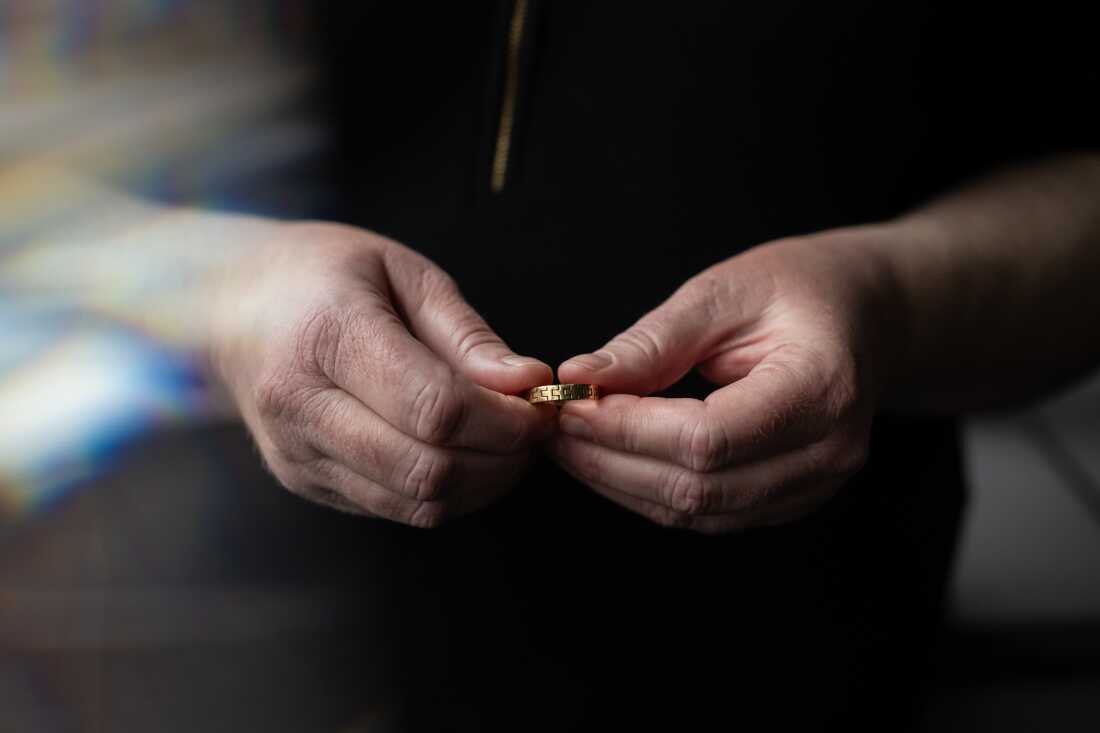
Mara holds her favorite anchor ring, which carries the inscription, “God for me provide thee.”
Caroline Yang for NPR
hide caption
toggle caption
Caroline Yang for NPR
As anxiety hangs over her head, Mara tries to put on a brave face for her children. She does not want them to worry, explaining that her recent struggles have reminded her how tough life can get as an adult.
“I remind them it’s not their responsibility and they’re not accountable for me or for what’s happening,” she said. “I say, just know you get to be a kid.”

Kevin Kline plays actor Richard Bean, and Laura Linney is his sister-in-law Kristen, in American Classic.
David Giesbrecht/MGM+
hide caption
toggle caption
David Giesbrecht/MGM+
American Classic is a hidden gem, in more ways than one. It’s hidden because it’s on MGM+, a stand-alone streaming service that, let’s face it, most people don’t have. But MGM+ is available without subscription for a seven-day free trial, on its website or through Prime Video and Roku. And you should find and watch American Classic, because it’s an absolutely charming and wonderful TV jewel.
Charming, in the way it brings small towns and ordinary people to life, as in Northern Exposure. Wonderful, in the way it reflects the joys of local theater productions, as in Slings & Arrows, and the American Playhouse production of Kurt Vonnegut’s Who Am I This Time?
The creators of American Classic are Michael Hoffman and Bob Martin. Martin co-wrote and co-created Slings & Arrows, so that comparison comes easily. And back in the early 1980s, Who Am I This Time? was about people who transformed onstage from ordinary citizens into extraordinary performers. It’s a conceit that works only if you have brilliant actors to bring it to life convincingly. That American Playhouse production had two young actors — Christopher Walken and Susan Sarandon — so yes, it worked. And American Classic, with its mix of veteran and young actors, does, too.

American Classic begins with Kevin Kline, as Shakespearean actor Richard Bean, confronting a New York Times drama critic about his negative opening-night review of Richard’s King Lear. The next day, Richard’s agent, played by Tony Shalhoub, calls Richard in to tell him his tantrum was captured by cellphone and went viral, and that he has to lay low for a while.
Richard returns home to the small town of Millersburg, Pa., where his parents ran a local theater. Almost everyone we meet is a treasure. His father, who has bouts of dementia, is played by Len Cariou, who starred on Broadway in Sweeney Todd. Richard’s brother, Jon, is played by Jon Tenney of The Closer, and his wife, Kristen, is played by the great Laura Linney, from Ozark and John Adams.
Things get even more complicated because the old theater is now a dinner theater, filling its schedule with performances by touring regional companies. Its survival is at risk, so Richard decides to save the theater by mounting a new production of Thornton Wilder’s Our Town, casting the local small-town residents to play … local small-town residents.
Miranda, Richard’s college-bound niece, continues the family theatrical tradition — and Nell Verlaque, the young actress who plays her, has a breakout role here. She’s terrific — funny, touching, totally natural. And when she takes the stage as Emily in Our Town, she’s heart-wrenching. Playwright Wilder is served magnificently here — and so is William Shakespeare, whose works and words Kline tackles in more than one inspirational scene in this series.
I don’t want to reveal too much about the conflicts, and surprises, in American Classic, but please trust me: The more episodes you watch, the better it gets. The characters evolve, and go in unexpected directions and pairings. Kline’s Richard starts out thinking about only himself, but ends up just the opposite. And if, as Shakespeare wrote, the play’s the thing, the thing here is, the plays we see, and the soliloquies we hear, are spellbinding.
And there’s plenty of fun to be had outside the classics in American Classic. The table reads are the most delightful since the ones in Only Murders in the Building. The dinner-table arguments are the most explosive since the ones in The Bear. Some scenes are take-your-breath-away dramatic. Others are infectiously silly, as when Richard works with a cast member forced upon him by the angel of this new Our Town production.
Take the effort to find, and watch, American Classic. It’ll remind you why, when it’s this good, it’s easy to love the theater. And television.



The ritual of meeting up and hanging out at a coffee shop in L.A. is a showcase of style filled with a subtle site-specific tension. Don’t you see it? Comfort battles formality fighting to break free. Hiding out chafes against being perceived. In the end, we make ourselves at home at all costs — and pull a look while doing it.
It’s the morning after a night out. Two friends meet up at Chainsaw in Melrose Hill, the cafe with the flan lattes, crispy arepas and sorbet-colored wall everybody and their mom has been talking about.
Miraculously, the line of people that usually snakes down Melrose yearning for a slice of chef Karla Subero Pittol’s passion lime fruit icebox pie is nonexistent today. Thank God, because the party was sick last night — the DJ mixed Nelly Furtado’s “Promiscuous” into Peaches’ “F— the Pain Away” and the walls were sweating — so making it to the cafe’s front door alone is like wading through viscous, knee-high water. Senses dull and blunt in that special way where it feels like your brain is wearing a weighted vest. The sun, an oppressor. Caffeine needed via IV drip.
The mood: “Don’t look at me,” as they look around furtively, still waking up. “But wait, do. I’m wearing the new Dries Van Noten from head to toe.”

Daniel, left, wears Dries Van Noten mac, henley, pants, oxford shoes, necklace and socks. Sirena wears Dries Van Noten blouse, micro shorts, sneakers, shell charm necklace, cuff and bag and Los Angeles Apparel socks.


If a fit is fire and no one is around to see it, does it make a sound? A certain kind of L.A. coffee shop is (blessedly) one of the few everyday runways we have, followed up by the Los Feliz post office and the Alvarado Car Wash in Echo Park. We come to a coffee shop like Chainsaw for strawberry matchas the color of emeralds and rubies and crackling papas fritas that come with a tamarind barbecue sauce so good it may as well be categorized as a Schedule 1. But we stay for something else.
There is a game we play at the L.A. coffee shop. We’re all in on it — the deniers especially. It can best be summed up by that mood: “Don’t look at me. But wait, do.” Do. Do. Do. Do. We go to a coffee shop to see each other, to be seen. And we pretend we’re not doing it. How cute. Yes, I’m peering at you from behind my hoodie and my sunglasses but the hoodie is a niche L.A. brand and the glasses are vintage designer. I wore them just for you. One time I was sitting at what is to me amazing and to some an insufferable coffee shop in the Arts District where a regular was wearing a headpiece made entirely of plastic sunglasses that covered every inch of his face — at least a foot long in all directions — jangling with every movement he made. Respect, I thought.
Dries Van Noten’s spring/summer 2026 collection feels so right in a place like this. The women’s show, titled “Wavelength,” is about “balancing hard and soft, stiff and fluid, casual and refined, simple and complex,” writes designer Julian Klausner in the show notes. While for the men’s show, titled “A Perfect Day,” Klausner contextualizes: “A man in love, on a stroll at the beach at dawn, after a party. Shirt unbuttoned, sleeves rolled up, the silhouette takes on a new life. I asked myself: What is formal? What is casual? How do these feel?” What is formal or casual? How do you balance hard and soft? The L.A. coffee shop is a container for this spectrum. A dynamic that works because of the tension. A master class in this beautiful dance. There is no more fitting place to wear the SS26 Dries beige tuxedo jacket with heather gray capri sweats and pink satin boxing boots, no better audience for the floor-length striped sheer gown worn with satin sneakers — because even though no one will bat an eye, you trust that your contribution has been clocked and appreciated.

Daniel wears Dries Van Noten coat, shorts, sneakers and socks. Sirena wears Dries Van Noten jacket, micro shorts and sneakers.


Back at Chainsaw the friends drink their iced lattes, they eat their beautiful chocolate milk tres leches in a coupe. They’re revived — buzzing, even; at the glorious point in the caffeinated beverage where everything is beautiful, nothing hurts and at least one of them feels like a creative genius. The longer they stay, the more their style reveals itself. Before they were flexing in a secret way. Now they’re just flexing. Looking back at you looking at them, the contract understood. Doing it for the show. Wait, when did they change? How long have they been here? It doesn’t matter. They have all day. Time ceases to exist in a place like this.


Daniel wears Dries Van Noten tuxedo coat, pants, scarf, sneakers and necklace and Hanes tank top. Sirena wears Dries Van Noten jacket, micro shorts, sneakers and socks.


Creative direction Julissa James
Photography and video direction Alejandra Washington
Styling Keyla Marquez
Hair and makeup Jaime Diaz
Cinematographer Joshua D. Pankiw
1st AC Ruben Plascencia
Gaffer Luis Angel Herrera
Production Mere Studios
Styling assistant Ronben
Production assistant Benjamin Turner
Models Sirena Warren, Daniel Aguilera
Location Chainsaw
Special thanks Kevin Silva and Miguel Maldonado from Next Management

Wyoming Coaches Pick the Best of 1A & 2A Boys Basketball in 2026

Bitcoin has mined 20 million coins: why the last of the remaining 1 million won’t arrive until 2140 | Fortune

By the Numbers: Financial report reveals scale of financial costs, growth

Business News Today: Stock and Share Market News, Economy and Finance News, Sensex, Nifty, Global Market, NSE, BSE Live IPO News – Moneycontrol.com

“Resurrection” Movie Review: To Burn, Anyway

Florida High School Football Rankings: Top 25 teams – Oct. 21

Cleary's 21 help Le Moyne down Central Connecticut State 69-64 in OT

How old is Bo Nix? What to know about Oregon quarterback ahead of 2024 NFL Draft

99th annual Pony Swim held in Virginia

Indiana Members Credit Union announced as new anchor tenant at Bottleworks District

EXCLUSIVE: ICE says El Paso detention facility will stay open under new contractor after $1.2B deal scrapped

Von der Leyen ‘acting outside of competence,’ Araud tells Euronews

Wheelchair curler Steve Emt’s path from drunk driver to three-time Paralympian

Map: 2.3-Magnitude Earthquake Reported North of New York City

Trump stirs GOP primary drama with visit to Massie’s Kentucky home turf
-

 Wisconsin1 week ago
Setting sail on iceboats across a frozen lake in Wisconsin
-

 Massachusetts1 week ago
Massachusetts man awaits word from family in Iran after attacks
-

 Pennsylvania6 days ago
Pa. man found guilty of raping teen girl who he took to Mexico
-

 Florida1 week ago
Florida man rescued after being stuck in shoulder-deep mud for days
-

 Detroit, MI5 days ago
U.S. Postal Service could run out of money within a year
-

 Miami, FL6 days ago
City of Miami celebrates reopening of Flagler Street as part of beautification project
-

 Sports6 days ago
Keith Olbermann under fire for calling Lou Holtz a ‘scumbag’ after legendary coach’s death
-

 Virginia7 days ago
Giants will hold 2026 training camp in West Virginia