Lifestyle
The Windsor Knot Takes Washington


On Tuesday, as news piled up about the Trump administration’s use of a Signal group chat to discuss military strikes, Kash Patel, the F.B.I. director, found himself facing the Senate Committee on Intelligence. He looked like a prep schooler sitting in detention.
His striped tie was yanked off center, and the top button of his dress shirt was conspicuously unfastened, as if too constricting for his neck.
But by the standards of President Trump’s cabinet, there was nothing off about Mr. Patel’s Dorito-shaped tie. After all, the wide Windsor knot, a symmetrical loop about the size of a Labrador’s paw, has become the standard in the administration.
Defense Secretary Pete Hegseth, the central character in the group chat debacle, favors plump knots that lack a dimple, giving them the look of a tie drawn by a child. Transportation Secretary Sean Duffy, Secretary of State Marco Rubio and the E.P.A. administrator Lee Zeldin similarly favor knots scaled somewhere between meatballs and dinner rolls.
For Mr. Trump’s congressional address in early March, when Elon Musk, the DOGE leader, finally traded his graphic T-shirts for a suit, his satiny blue tie was looped into a flat, broadsided knot. He may not officially be in Mr. Trump’s cabinet, but on that evening he knew the dress code.
The style transcends the West Wing. In their official portraits, Senators Jim Justice of West Virginia, Bernie Moreno of Ohio and Markwayne Mullin of Oklahoma demonstrate that they’re devotees of a fanned out V-shaped tie. The look is less common across the aisle, but some Democrats are Windsor sticklers, predating this administration. In fact, Senators Mark Kelly of Arizona and Chris Coons of Delaware flaunt two of the fattest, monkey-fisted knots on the Hill.
“It’s the new power look,” said G. Bruce Boyer, a former fashion editor of Town & Country magazine, said.
The 1999 book “The 85 Ways to Tie a Tie” illustrates many of the more esoteric methods for roping silk around one’s neck, but we really use only a handful of the knots today. The Windsor, and its brawnier brother, the double Windsor, are on the all-business end of that spectrum, according to Michelle Kohanzo, the president of the Tie Bar in Chicago. (The Windsor knot is named for the Duke of Windsor, though he didn’t actually employ the knot; he just wore thicker ties.)
“Historically, you would wear it to really formal or important events,” Ms. Kohanzo said. But today, as even ex-presidents forgo ties in public, most men wear a tie only for formal events or to workplaces clinging to a dated level of decorum. The Windsor has thus become the default.
It wasn’t always so in the White House.
In 2001, The Los Angeles Times noted that George W. Bush wore “his necktie with a rather trim knot that yields a dimple, a staple of contemporary dress.” Barack Obama and Joseph R. Biden likewise favored reedier, asymmetrical knots that didn’t fill the full cavity of their shirt collars.
There are outliers in Mr. Trump’s cabinet, especially among those who came of age when preppy fashions prevailed. The skinny ties that Robert F. Kennedy Jr., the health and human services secretary, wears are looped in a compact hold, about the size of an immature tulip.
But among the comparatively younger members of Trump’s administration — those roughly 55 and under — there appears to be a shared thinking that broad knots convey authority.
“There’s a brashness to it that kind of says, ‘We’re taking over and what are you going to do about it?’” Mr. Boyer said. He even ventured that there is something “Freudian” going on with these tie knots. “Mine is bigger than yours,” he offered.
As someone old enough to recall that John F. Kennedy’s cabinet caused a commotion by wearing tweed sport coats, Mr. Boyer believes that the only tie technique anyone really needs is the unboastful four-in-hand loop.
Mr. Trump himself may not wear the widest tie in Washington, but he favors large, simple, bright clothes that recall the 1980s.
“This kind of ’80s, ’90s power dressing is coming back,” Ms. Kohanzo said. If men are wearing ties at all, they’re embracing them at Gordon Gekko scale.
The Tie Bar’s best seller is a three-inch “moderately fat tie,” Ms. Kohanzo said, and increasingly the company is selling even larger ties, as well as shirts with conspicuous collars.
Business leaders like Jeff Bezos and Sundar Pichai wore Windsor knots when they attended Mr. Trump’s inauguration in January. Mr. Bezos rarely wears a tie in public, but when he does, he tends to favor the Windsor. On NBC, sports commentators like Tim Howard are employing this knot. And Jamie Dimon’s tie loop looks not that dissimilar to those worn in the White House.
“There’s no subtlety to it,” Mr. Boyer said. “Everything is just a little oversize, glossy, showy, shiny.”



In the year since his death, there has been no hard pivot at Armani. The shadow of the founder has stayed in place over the Milan HQ, where the brand seems happy to leave it. Armani is not just plumbing the past for continued inspiration, it’s reselling it.
Today, Giorgio Armani is announcing Archivio, a grouping of 13 men’s and women’s looks, plucked from the brand’s back catalog and remade for today. (And, yes, at today’s prices.) There’s a jacket in pinstriped alpaca of 1979 vintage; a buttery one-and-a-half breasted jacket with a maitre d’s flair that first appeared in 1987; and an unstructured silk-linen suit that will activate ’90s flashbacks for die-hard Armani clients and those who want to capture that era’s nostalgia. The advertising campaign was shot and styled by Eli Russell Linnetz, who has his own label, ERL, but always seems to be the first call brands make when they want sultry photos with the aura of Details magazine circa 1995. (He did a similar thing for Guess recently.)
Linnetz’s images are a reminder of how Armani’s work still reverberates decades later.
Archivio is also a canny recognition of what shoppers crave now. On the resale market, Armani wares are as coveted as can be. Every week it seems as if I get an email from Ndwc0, a British vintage store, announcing a new drop of meaty-shouldered ’90s Armani power suits. They sell for less than $500. At Sorbara’s in Brooklyn, you can buy a tan Giorgio Armani vest for $225.
That vintage-mad audience is in Armani’s sights: To introduce the collection, it’s staging an installation, opening today, at Giorgio Armani’s Milan boutique. It will feature the hosts of “Throwing Fits,” a New York-based podcast whose hosts wear vintage Armani button-ups and shout out stores like Sorbara’s.
It’s prudent, if a bit disconnected. Part of the charm of old Armani is that it can be found on the cheap. I’m wearing a pair of vintage Giorgio Armani corduroys as I write this. I bought them for $76 on eBay. Archivio is reverent, but its prices, which range from $1,025 to $12,000, may scare off shoppers willing to do the searching themselves.
If you ask me, the next frontier of this archive fixation is that a brand — and a big one — will release a mountain of genuine vintage pieces. J. Crew and Banana Republic have tried this at a small scale, but a luxury house like Armani hasn’t gone there. Yet. Eventually, Armani (or a brand like it) is going to grab hold of the market that exists around its brand, but through which it gets no cut.
Other things worth knowing about:
Lifestyle
The story behind this rare architectural speaker from cult Japanese fashion brand TheSoloist
This story is part of Image’s April’s Thresholds issue, a tour of L.A. architecture as it’s actually experienced.
You hear it before you see it.
Turning the corner of the 15th floor corridor of the historic American Cement Building, a low thrum of electronic sounds seeps through the door of Archived, an L.A. luxury vintage curator. Inside, standing 43 inches tall, a silver speaker from Takahiro Miyashita’s brand TheSoloist vibrates high fidelity through the showroom.
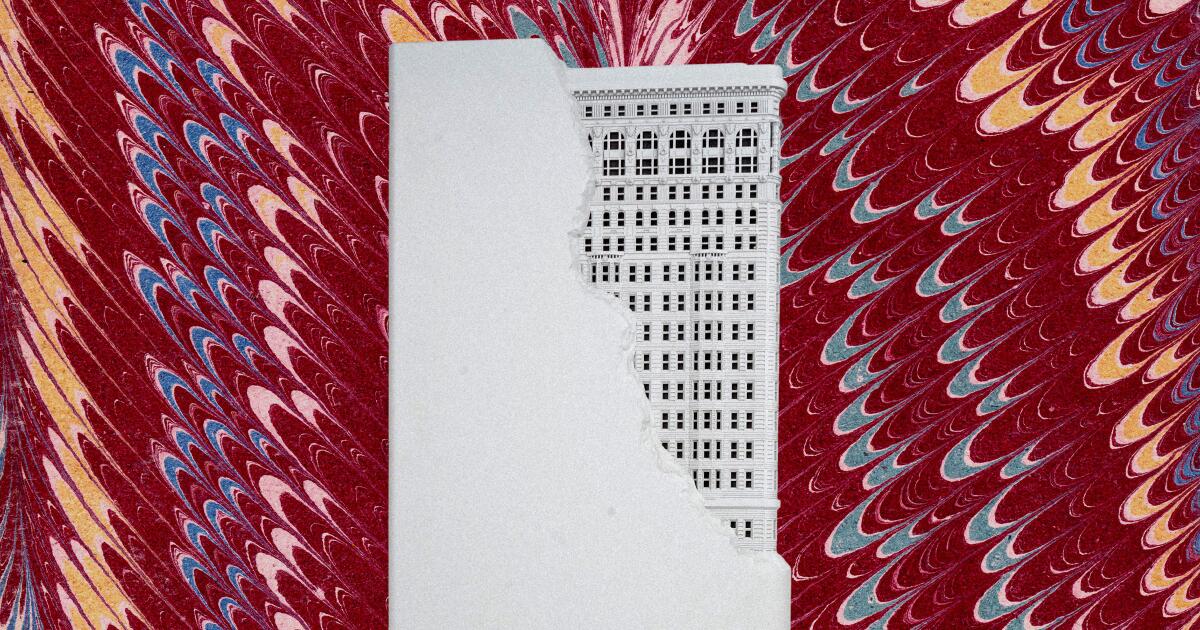
Constructed of 3D-printed polycarbonate resin and aluminum, with a wide amp frequency range of 20Hz to 25KHz, the object looks less like a speaker and more like a relic of time. It is an artifact set in concrete, chiseled away to reveal a replica of the Flatiron Building in New York City. Containing seven audio channels and two bass speakers, its vibrations can be felt against the skin.
Dream Liu, along with his partner Marquel Williams, founded Archived in 2019 to resell rare vintage collectibles. Their designer wardrobe houses some of the most sought after pieces in the industry — like a 1990 Chrome Hearts biker jacket— but the collection of homeware, including a Giovanni Tommaso Garattoni glass chair or a Saint Laurent arcade machine, is what greets you when you walk in. “That’s one way we stand out from all the other archival brands,” Liu says. “We’re very much deep into everything design-related, not just fashion.”
Liu first encountered TheSoloist speaker a few years ago at the home of a friend, a lighting designer working in music who he admired. The speaker, he says, lived at the back of his mind ever since. Archived eventually sourced it directly through TheSoloist’s manufacturer, now acting as an intermediary seller. Only a few hundred of the silver color-way, on display in the showroom, were produced. Even fewer exist of the black, for sale on their website for $9,500.
Miyashita, the cult Japanese designer behind early-2000s punk label Number (N)ine and later TheSoloist, is known for fusing meticulous Japanese craftsmanship with distinctly American motifs. The speaker, for instance, pays homage to New York City, where he opened his original store. Without even seeing a single garment, his style is clear: avant-garde, grunge and very rock ’n’ roll.


(Archived)
Six months ago, Archived opened its MacArthur Park showroom, a brightly lit loft with exposed beams, floor-to-ceiling windows and a panoramic view of downtown. Today they are a team of about six people. Distinctive objects like TheSoloist speaker are an extension of not only the brand’s imprint, but the architecture that houses it. “The speaker fits perfectly into this space.”
Archived, whose clientele consists mostly of celebrities and high-profile curators such as Timothée Chalamet, Travis Scott and Don Toliver, sources its pieces through consignments from sellers and endless hours spent hunting across international marketplaces. When it comes to selecting which piece makes it to the floor, Liu looks for collectible items and whatever fits the brand’s taste, which can be described as minimal avant-garde with a touch of fine craftsmanship.
“Nothing is random,” Liu says. Every item at Archived has a story, from the Giseok Kim aluminum shelf where an unworn pair of 2005 reconstructed Nike Dunks are displayed, to the Marc Newson racks which archival Rick Owens hangs off.
The speaker is valuable, Liu admits, because of Miyashita’s reputation as one of the greats, placing him alongside designers like Jun Takahashi and Yohji Yamamoto. “Our audience knows his designs and all of his great collections,” he says. “So the speaker itself speaks volumes.”
Originally from West Palm Beach, Fla., Liu moved to California to study fashion merchandising at FIDM in San Diego. Before that, he had dabbled in architecture. “It’s always been in the back of my mind,” he says.
Liu said he recognizes that designers, after a time, get fatigued with profit-driven conglomerates and begin to delve into other art forms. “Fashion is just another art form, and I think eventually, when [designers] tire of making clothes — Helmut Lang as an example, even Tom Ford — they transition to art.”
If the nature of design is building upon and taking from existing works, then creating an archival space is collecting pieces of history. “Everything is a reference point,” Liu says. “Every piece here has made an impact on the current climate of fashion.”
To Liu, items like the speaker are worthy of preservation because some of them are only getting rarer and rarer to find. “Pieces like this deserve to be presented properly, and be in spaces that reflect the caliber of the clothing,” he says. “You can put random objects in a beautiful space and that object becomes important.”


The scene recalled the frenzy that unfolds backstage during fashion week: On a recent Monday, in a room full of clothing racks, the stylist Micaela Erlanger was working alongside a team of tailors and assistants. But they were not preparing for your average fashion show.
Ms. Erlanger and the group had assembled at her studio in Manhattan to prepare looks for the actress Meryl Streep, Ms. Erlanger’s client of 11 years, to wear during the press tour for “The Devil Wears Prada 2,” the buzzy sequel to a beloved film set at a fictionalized version of a certain glossy fashion magazine.
In the sequel, Ms. Streep steps back into the stilettos of Miranda Priestly, the publication’s glamorous editor in chief. She stars alongside Anne Hathaway and Emily Blunt, who also reprise their roles as Andrea Sachs and Emily Charlton, characters who served as Miranda’s assistants in the original film. Based on a novel and released in 2006, it has become a cult favorite among serious and casual followers of fashion alike.
To prime fans for the sequel, Ms. Streep has appeared on the cover of Vogue and, along with some of her co-stars, has traveled to Mexico, South Korea, China and Japan in recent weeks for premieres. On Monday, cast members appeared in New York, and they will travel to London for more events before “The Devil Wears Prada 2” is widely released on May 1.
Each affair has offered the cast members a chance to turn heads in finery on par with the clothing worn by the characters they play in the movie. Balenciaga, Chanel, Valentino and — yes — Prada are just some of the labels they have sported as they have traveled the globe.
To pull off this fashion feat — and to avoid any style faux pas — Ms. Erlanger, 40, has been in constant communication with Erin Walsh, 43, Ms. Hathaway’s stylist of seven years, and Jessica Paster, 60, who has been styling Ms. Blunt for going on two decades. The women have been operating as something of a hive mind for months, sharing details of the actresses’ looks — the brands, the accessories, the color palettes — in group chats, calls and conversations on the sidelines of runway shows.
“I got to see Erin and Micaela at fashion shows,” Ms. Paster said. “We would whisper: ‘I like that. I like that. I like this. I like that.’”
In a conversation that has been edited and condensed, Ms. Paster, Ms. Erlanger and Ms. Walsh discussed their collaborative relationship, the stakes of styling press tours and the ways they have used fashion to build hype for “The Devil Wears Prada 2.”
How have you each approached dressing your client for the press tour?
MICAELA ERLANGER With Meryl, we leaned into this idea of powerful silhouettes and shapes that you haven’t necessarily seen her in. This is a fashion movie — we’re leaning into it. I would say that there are a lot of references that the fashion community will appreciate and enjoy. We have not just been referencing the first film, but referencing references within the film. I call it “meta dressing.”
JESSICA PASTER You have to remember that Emily Charlton was an assistant 20 years ago. She has evolved. So I’m approaching her as a little stronger — a girl with power. She doesn’t need to borrow clothes anymore. Designers are now giving her the clothes, and she’s out buying clothes.
ERIN WALSH I guess I am hesitant to tell you a theme. I don’t want to encapsulate it. Ultimately, it’s always about how we make a person feel their very best.
You said you communicate via group text. What are you saying to one another?
ERLANGER We have been, from logistics to creative, kind of strategizing among ourselves. What look works best here or there? What’s the other person wearing? Will they look great together?
PASTER I remember one text among us was like: “I’m thinking red. I’m thinking a little burgundy red. And I’m thinking red, too. Is it weird that they’re all wearing red?” I said, “No, let’s lean into that, and let’s do it all in red.”
What we do is make a picture more beautiful. If we have two people who are wearing red, and one is wearing white or purple or black, that is the girl that should be in the middle of a photo. It’s not about, “My girl needs to be in the middle.” If something goes viral, it’s going to help Erin; it’s going to help me; it’s going to help Micaela; and it’s going to help the movie because it gets everyone buzzing and excited.
WALSH With our job, there are always curveballs thrown your way. By working together, we can better navigate any kind of situation in a joyful way without having breakdowns.
Styling has a competitive aspect, in that there are only so many looks, and everyone can’t always get what she wants. How are you navigating that together?
PASTER There are a lot of stories about stylists competing with each other. We’re not. We are so busy. We do not have time. Micaela is calling me because she needs something. I have so many questions to ask Erin and Micaela. If one of these two girls needs me, I will be there for them.
WALSH Removing anything competitive or not collaborative from the equation makes us stronger. It makes our work better.
ERLANGER Collaboration also benefits our clients. Everybody wins when we are aligned.
I’m curious, where were you in your careers when the original “The Devil Wears Prada” premiered?
ERLANGER We have stages of our careers that directly relate back to the first movie. I was an intern at Condé Nast, the company that owns Vogue.
WALSH I was an assistant at Vogue when it came out. I watched Anne onscreen. “The Devil Wears Prada” I knew, you know, in my skin.
PASTER I was a stylist, and, in fact, I was trying to get Emily Blunt as a client.
Modern press tours can involve several premieres in addition to other events. How has that changed how you work?
ERLANGER Social media has made every moment a photo op. Even if it is a junket day when your clients are sitting in a room for on-camera interviews, those pictures get picked up. So every single moment has become press-worthy. And, therefore, there’s more intentionality behind what clients are wearing.
PASTER People forget that we just can’t bring in a dress or two, bust out a look and call it a day. Micaela and Erin are going with nine suitcases all over the world to fit their girls, and I have two trips of fittings in Ireland.
What clothes have you been wearing during the press tour?
WALSH You’ve got to look the part. I tend to, in these situations, reach for more empowering pieces, like a shoulder pad and heels. I don’t work in flats.
ERLANGER I need a flat, and I kind of want to be more comfortable. I’m in jeans and a blazer and a button down and a flat.
PASTER I’m working in sweats and with my hair in a bun.
-

 New York32 minutes ago
Trump’s Immigration Crackdown Pervades Long Island Suburbs
-

 Detroit, MI1 hour ago
Chris Simms projects Detroit Lions first-round NFL draft pick
-

 San Francisco, CA1 hour ago
San Francisco sets $3.4B price tag for public takeover of PG&E
-

 Dallas, TX1 hour ago
Game Day Guide: Stars at Wild | Dallas Stars
-

 Miami, FL1 hour ago
May a steadying presence as Cards hold off Marlins in Miami
-

 Boston, MA2 hours ago
Tyrese Maxey, VJ Edgecombe flex in Boston: Takeaways from Celtics-76ers Game 2
-

 Denver, CO2 hours ago
Motorcyclist seriously injured in Denver hit-and-run crash – AOL
-

 Seattle, WA2 hours ago
Brock: 2 drafts fits at edge rusher for Seattle Seahawks