Lifestyle
The other Angelenos: What a naturalist's survey of Los Angeles wildlife reveals

Book Review
Unnatural Habitat: The Native and Exotic Wildlife of Los Angeles
By Craig Stanford
Heyday: 264 pages, $24
If you buy books linked on our site, The Times may earn a commission from Bookshop.org, whose fees support independent bookstores.
Los Angeles tends to strike outsiders as a borderless mishmash of suburbs spread over an unfriendly landscape with no significant natural source of water. When it’s not on fire, it seems to be sliding into the ocean or collapsing under the weight of its own untamable development.
And yet Los Angeles transplants will still brag to their loved ones across the country that they could go skiing and surfing in the same day (if for some reason they felt so inclined). As the conservationist Craig Stanford reminds us, however, you don’t have to drive to Big Bear or the beach to feel the pulse of nature in L.A.
In “Unnatural Habitat: The Native and Exotic Wildlife of Los Angeles,” Stanford offers Angelenos — and anyone interested in the function and dysfunction of (sub)urban ecosystems — a guide to the natural life that teems beneath our freeways, wanders into our backyards and fights for survival in the deserts and mountains that surround our city.
Stanford, who has conducted field research around the world, lives in Pasadena, in the foothills of the San Gabriel Mountains. As he details more than 150 species of L.A. flora and fauna — from native mountain lions to exotic earthworms, weeds that occur naturally and palm trees that, surprisingly, don’t — he evokes a portrait of an unusual city’s special, bizarre and unexpectedly fragile wildlife. He conjures up evolutionary histories, stories of foreign species’ arrival and their effects on an ecosystem that is massively and continuously altered by human influence.
But Stanford’s mission here isn’t simply to describe the creatures at hand — though he does do plenty of that, never hesitating to anthropomorphize even the most inhuman of them; to him, snakes are “secretive,” tarantulas “ominously deliberate.” The book excels — feels necessary, even — when it unravels the intricate interplay between human and animal habits; societal institutions and nature; common sense and our desire to decorate and navigate Los Angeles however we please.
He also offers prescriptions, micro and macro, private and public, for better stewardship of our environs. We can decide what we plant in our own gardens, for example, so Stanford advises readers to fill their yards with something native and drought-tolerant that can contribute to a more robust, stable and diverse ecosystem. (Of course, most of our city’s residents probably won’t get the memo.)
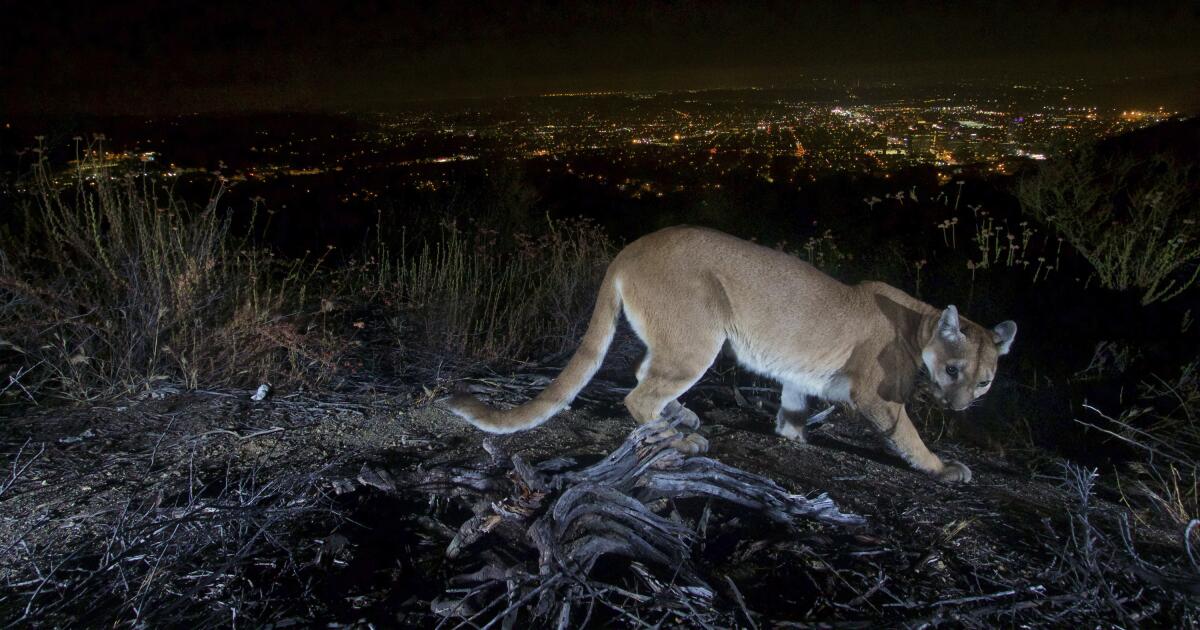
On the public front, Stanford highlights potential institutional improvements as well as bureaucratic roadblocks. In what is perhaps the book’s most compelling chapter, he writes about the man-made challenges to L.A.’s mountain lions. The gravest threat to these magnificent animals is our ubiquitous freeway system: Since 2015, more than 500 California cougars have become roadkill. Perhaps anyone could guess as much, but what a layman might never know without Stanford’s book is that our busy roads severely circumscribe the territory cougars can roam, leading to isolation and inbreeding.
A wildlife crossing is under construction over the 101 to allow cougars to traverse the freeway safely, expanding the territory they can access. But the cost of the project is high (about $90 million), as is competition for land that might otherwise serve as sanctuary for wildlife. Stanford, who usually comes across as optimistic, can wax cynical in the face of such frustrations.
His unexpected insights range from comical to shocking. He offers a snapshot of his cat having a field day with the finches in his backyard birdbath — and then explains the vicious cycle that creates invasive populations of feral cats that kill literally billions of birds across North America every year.
Stanford’s self-proclaimed ecological purism doesn’t mean he believes we should do away with nonnative species altogether, though. In fact, human interference has helped many species worth keeping around. Hummingbirds, for example, stay in L.A. year-round because our backyard feeders preclude any need for them to migrate in search of sugary plants. With that comes the responsibility to care for the wildlife we cultivate in this landscape that he acknowledges is “beautiful but largely nonfunctional.” It’s not clear whether he thinks we’re up to the task.
At his best, Stanford interweaves vivid prose, a reverence for nature and a seasoned Angeleno’s eye for what makes this city unique. At times, however, he fails to draw a connection between a species and the city, punctuating the book with vignettes laden with contextless taxonomy.
Regardless, the overall effect is a worthy and illuminating entry in the tradition of works exploring urbanization’s effect on the environment. (Stanford references Rachel Carson’s “Silent Spring,” and that author’s influence is felt throughout his book.) Moral questions abound, ranging from animal rights to humanity’s role in nature. Stanford’s fundamental message is clear and simple (and oft-repeated): To preserve a Los Angeles in which humans and nature benefit from one another, we must increase our understanding of our city’s fragile wildlife mosaic.
Stanford is heavy-handed only when he has to be, and his subtlety often hits harder. One chapter concerns a succulent so common in Los Angeles that I never knew its name: It’s called the live-forever (genus Dudleya), and, ironically, it’s at risk of extinction due to poaching. You can buy the plants at Home Depot, and yet they’re disappearing from our cliff faces and hiking paths. At the chapter’s close, Stanford articulates a profoundly upsetting truth: “Each generation grows up accustomed to the scope of Nature that surrounds it.”
Despite all he has to say about it, L.A.’s biodiversity is waning before our eyes. Fortunately, with Stanford’s help, we can acquire some of his vision for preserving our native species while effectively introducing exotic ones. Los Angeles is, after all, a city of transplants.
Daniel Vitale is a writer in Los Angeles and the author of the novel “Orphans of Canland.”



Mara is a single mother of two in Minnesota. She and her family have depended on SNAP benefits to make ends meet.
Caroline Yang for NPR
hide caption
toggle caption
Caroline Yang for NPR
Although Mara is unemployed, she is busier than ever.
When she is not taking care of her two children, Mara is at her desk applying for jobs. She is surveying her belongings to see what she can pawn off to buy toiletries. Or she is sifting through bills, calculating which ones can wait and which need to be paid right away.
Soon, Mara, a single mom in Minnesota, may have another task on her busy schedule: figuring out how to afford food for her and her family.
That’s because of new work requirements for people receiving aid from the Supplemental Nutrition Assistance Program, also known as SNAP or food stamps.

“It would be so beyond hard” to lose SNAP benefits, Mara said. “Without SNAP, there’s no funds for food.” Mara asked for her last name to be withheld given the stigma tied to receiving government assistance. She is also worried that speaking publicly will affect her chances of getting a job.
Previously, SNAP recipients with children under 18 were exempt from work requirements mandating that recipients work, volunteer or participate in job training at least 80 hours a month. But now, under President Trump’s One Big Beautiful Bill Act, that exemption only applies to those with children under 14 — which is how old Mara’s youngest child turned in December.

“It would be so beyond hard” to lose SNAP benefits, Mara said.
Caroline Yang for NPR
hide caption
toggle caption
Caroline Yang for NPR
The Trump administration has argued that the mission of the nation’s largest anti-hunger program has failed.
“SNAP was intended to be temporary help for those who encounter tough times. Now, it’s become so bloated that it is leaving fewer resources for those who truly need help,” the White House said in a statement in June.
But policy experts say the SNAP changes do not fully take into account the unique challenges faced by single parents like Mara or the sluggish job market in many parts of the country. They argue that losing food assistance will only create more barriers for recipients struggling to find work.
The timeline for implementing the new SNAP policy varies based on state and county. In Mara’s home state of Minnesota, recipients who don’t qualify for an exemption or meet work requirements will be at risk of losing assistance as early as April 1. Others may have more months depending on when they next need to certify they are eligible for benefits.
Over 100 job applications
Mara imagined she would have a job by now.
It was August when she was let go from her part-time administrative assistant role due to her workplace restructuring. Since then, Mara estimates that she has applied for over 100 positions. She has also attended job fairs and taken free workshops on resume writing.
She has been working since high school, she said, but “ I’ve never been out of work for more than one month, so it’s very difficult.”

Mara spends time working at the computer at CareerForce, a resource for job seekers in Minnesota, on March 4.
Caroline Yang for NPR
hide caption
toggle caption
Caroline Yang for NPR
Although she misses her old job, Mara said it didn’t pay enough to support her and her kids, so she relied on SNAP benefits.
Many recipients are part of the low-wage labor market, where job security is often unpredictable and turnover tends to be high, according to Lauren Bauer, a researcher at the Brookings Institution who has studied SNAP extensively.
“SNAP is supposed to be there to help people smooth that and not let the bottom fall out when they experience job loss,” she said. “And this policy doesn’t account for that at all.”
Mara’s lowest point came in November when the government shutdown led to disruptions in SNAP benefits. Not only was she searching for a new job, but she was constantly figuring out where to get her family’s next meal.
“I might be looking for food stuff during the day when I should have been looking for a job,” she said. “Then, I’m trying to make up that time in the evening after my kids go to bed.”
During the pause, Mara turned to food banks, which revealed other challenges. First, food pantries do not always provide enough for an adult and two growing teenagers, she said. Second, they often lack gluten-free foods, which is essential for her daughter who has celiac disease, an autoimmune disorder that causes digestive problems if gluten is consumed. Gluten-free products tend to be more expensive.
If Mara loses access to SNAP again because of the new work requirements, she fears another stretch of long days spent looking for the right food and enough to feed her family.
“I would be so reliant on looking for food shelves or food banks,” she said. “There would not be time to even live.”
“We’re going to see increases in poverty. We’re going to see increases in food insecurity”
The Congressional Budget Office estimates that roughly 2.4 million people will lose food benefits in a typical month over the next decade as a result of the new SNAP requirements — including 300,000 parents like Mara with children 14 or older.
Gina Plata-Nino, the SNAP director at the nonprofit Food Research & Action Center, says many of the affected recipients will be single mothers who make up a majority of single parent households in the U.S. She added that the changes target a group that often lacks or struggles to afford a support system to help care for their children.
“How can they have a full-time job when they need to pick up their children [for] various activities?” she said. “And they are working — just not enough hours because they need to be there present for their children.”

Mara shops for groceries at a local discount grocery store.
Caroline Yang for NPR
hide caption
toggle caption
Caroline Yang for NPR
The new law also imposes work requirements on veterans, homeless people, young adults aging out of foster care, and able-bodied adults without dependents from ages 55 to 64.
It also toughened the criteria for waiving work requirements for recipients in areas with high unemployment. Previously, there were multiple ways to determine a weak labor market and secure a waiver. Now, it only applies to places with an unemployment rate above 10%. (Alaska and Hawaii have a different measure.)
For those who fail to meet the work requirement, SNAP provides assistance for up to three months within a three-year span. But Bauer from the Brookings Institution argues that it is not enough and the impact of SNAP changes will be widespread.
“We’re going to see increases in poverty. We’re going to see increases in food insecurity. We’re going to see increasing strain on the charitable food sector,” she said.
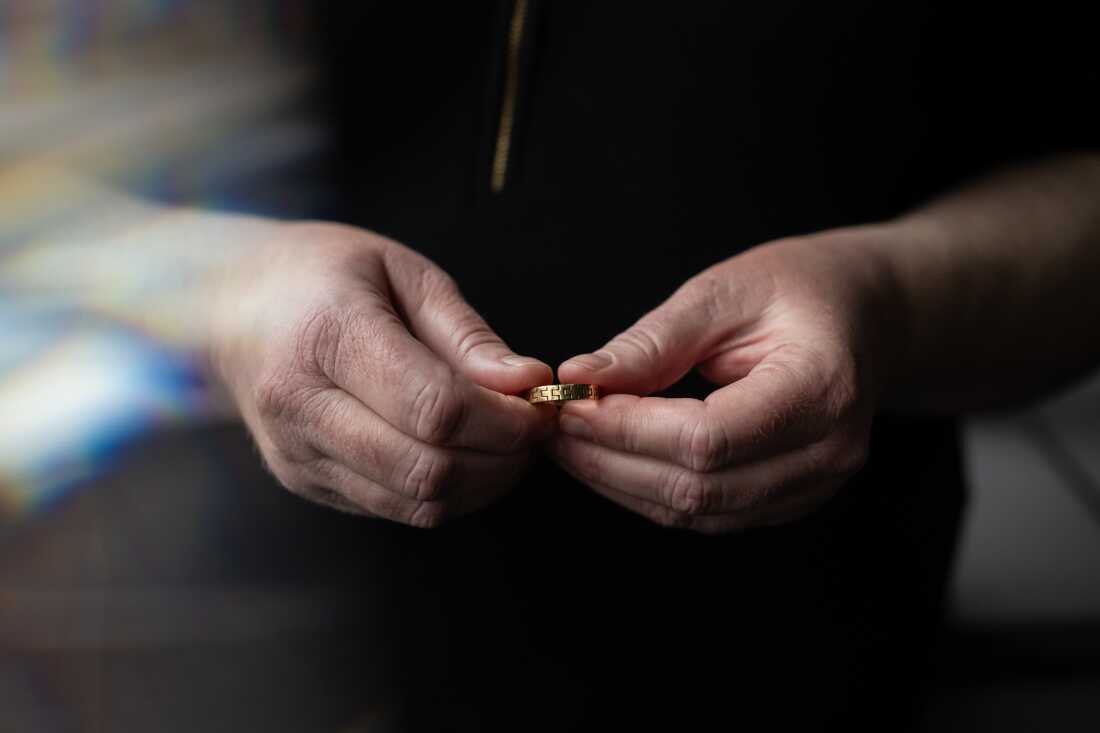
Mara holds her favorite anchor ring, which carries the inscription, “God for me provide thee.”
Caroline Yang for NPR
hide caption
toggle caption
Caroline Yang for NPR
As anxiety hangs over her head, Mara tries to put on a brave face for her children. She does not want them to worry, explaining that her recent struggles have reminded her how tough life can get as an adult.
“I remind them it’s not their responsibility and they’re not accountable for me or for what’s happening,” she said. “I say, just know you get to be a kid.”

Dylan Dreyer
Savannah Will Likely Come Back … Just Not Sure When
Published
TMZ.com
Dylan Dreyer is giving a small update on her embattled “Today” co-host, Savannah Guthrie, as the search continues for Savannah’s mom, Nancy — telling TMZ she does believe she’ll likely return to the show at some point.
We caught Dylan leaving NBC Tuesday afternoon, and she said while she thinks Savannah will come back, the timing is totally unclear — adding everyone at the show is simply giving her the space she needs because they care about her so much.

TMZ.com
Dylan also reflected on Savannah’s emotional visit to the “TODAY” studio last Thursday, saying the hug they shared was something they both really needed in that moment.
Catch the full clip — Dylan says the visit was incredibly emotional, adding Savannah clearly wants to get back to some sense of normal life … she just doesn’t quite know how yet.
Still, Savannah managed a few smiles during the brief stop by the studio, doing her best to keep moving forward during an incredibly tough time.
TMZ.com
As we reported, Nancy was taken from her Tucson home in the middle of the night on February 1. She was last seen entering the house just before 10 PM on January 31 after dinner with her daughter Annie and Annie’s husband, Tommaso Cioni.

Kevin Kline plays actor Richard Bean, and Laura Linney is his sister-in-law Kristen, in American Classic.
David Giesbrecht/MGM+
hide caption
toggle caption
David Giesbrecht/MGM+
American Classic is a hidden gem, in more ways than one. It’s hidden because it’s on MGM+, a stand-alone streaming service that, let’s face it, most people don’t have. But MGM+ is available without subscription for a seven-day free trial, on its website or through Prime Video and Roku. And you should find and watch American Classic, because it’s an absolutely charming and wonderful TV jewel.
Charming, in the way it brings small towns and ordinary people to life, as in Northern Exposure. Wonderful, in the way it reflects the joys of local theater productions, as in Slings & Arrows, and the American Playhouse production of Kurt Vonnegut’s Who Am I This Time?
The creators of American Classic are Michael Hoffman and Bob Martin. Martin co-wrote and co-created Slings & Arrows, so that comparison comes easily. And back in the early 1980s, Who Am I This Time? was about people who transformed onstage from ordinary citizens into extraordinary performers. It’s a conceit that works only if you have brilliant actors to bring it to life convincingly. That American Playhouse production had two young actors — Christopher Walken and Susan Sarandon — so yes, it worked. And American Classic, with its mix of veteran and young actors, does, too.

American Classic begins with Kevin Kline, as Shakespearean actor Richard Bean, confronting a New York Times drama critic about his negative opening-night review of Richard’s King Lear. The next day, Richard’s agent, played by Tony Shalhoub, calls Richard in to tell him his tantrum was captured by cellphone and went viral, and that he has to lay low for a while.
Richard returns home to the small town of Millersburg, Pa., where his parents ran a local theater. Almost everyone we meet is a treasure. His father, who has bouts of dementia, is played by Len Cariou, who starred on Broadway in Sweeney Todd. Richard’s brother, Jon, is played by Jon Tenney of The Closer, and his wife, Kristen, is played by the great Laura Linney, from Ozark and John Adams.
Things get even more complicated because the old theater is now a dinner theater, filling its schedule with performances by touring regional companies. Its survival is at risk, so Richard decides to save the theater by mounting a new production of Thornton Wilder’s Our Town, casting the local small-town residents to play … local small-town residents.
Miranda, Richard’s college-bound niece, continues the family theatrical tradition — and Nell Verlaque, the young actress who plays her, has a breakout role here. She’s terrific — funny, touching, totally natural. And when she takes the stage as Emily in Our Town, she’s heart-wrenching. Playwright Wilder is served magnificently here — and so is William Shakespeare, whose works and words Kline tackles in more than one inspirational scene in this series.
I don’t want to reveal too much about the conflicts, and surprises, in American Classic, but please trust me: The more episodes you watch, the better it gets. The characters evolve, and go in unexpected directions and pairings. Kline’s Richard starts out thinking about only himself, but ends up just the opposite. And if, as Shakespeare wrote, the play’s the thing, the thing here is, the plays we see, and the soliloquies we hear, are spellbinding.
And there’s plenty of fun to be had outside the classics in American Classic. The table reads are the most delightful since the ones in Only Murders in the Building. The dinner-table arguments are the most explosive since the ones in The Bear. Some scenes are take-your-breath-away dramatic. Others are infectiously silly, as when Richard works with a cast member forced upon him by the angel of this new Our Town production.
Take the effort to find, and watch, American Classic. It’ll remind you why, when it’s this good, it’s easy to love the theater. And television.


VT Lottery Mega Millions, Gimme 5 results for March 10, 2026

The Good, the Bad and the Ugly from Virginia Tech’s 95-89 Loss to Wake Forest

Western Washington braces for wind, rain and hazardous Cascade travel through Thursday

‘Not a hiding place’: Ogden police lauded for role in catching Nevada, Wisconsin murder suspects

W.Va. lawmakers push through multiple bills as Saturday deadline nears

Florida High School Football Rankings: Top 25 teams – Oct. 21

Cleary's 21 help Le Moyne down Central Connecticut State 69-64 in OT

How old is Bo Nix? What to know about Oregon quarterback ahead of 2024 NFL Draft

99th annual Pony Swim held in Virginia

Indiana Members Credit Union announced as new anchor tenant at Bottleworks District

EXCLUSIVE: ICE says El Paso detention facility will stay open under new contractor after $1.2B deal scrapped

Von der Leyen ‘acting outside of competence,’ Araud tells Euronews

Wheelchair curler Steve Emt’s path from drunk driver to three-time Paralympian

Map: 2.3-Magnitude Earthquake Reported North of New York City

Trump stirs GOP primary drama with visit to Massie’s Kentucky home turf
-

 Wisconsin1 week ago
Setting sail on iceboats across a frozen lake in Wisconsin
-

 Massachusetts1 week ago
Massachusetts man awaits word from family in Iran after attacks
-

 Pennsylvania6 days ago
Pa. man found guilty of raping teen girl who he took to Mexico
-

 Florida1 week ago
Florida man rescued after being stuck in shoulder-deep mud for days
-

 Detroit, MI5 days ago
U.S. Postal Service could run out of money within a year
-

 Miami, FL6 days ago
City of Miami celebrates reopening of Flagler Street as part of beautification project
-

 Sports6 days ago
Keith Olbermann under fire for calling Lou Holtz a ‘scumbag’ after legendary coach’s death
-

 Virginia7 days ago
Giants will hold 2026 training camp in West Virginia