Lifestyle
The benefits of dressing up to stay in — and why they outweigh dressing up to go out


I only sleep in silk. It’s a bit of a dirty secret.
This isn’t the type of thing you want to admit to a friend, much less a stranger. It’s undemocratic. Polyester isn’t good enough for you? Rayon, viscose, all the leaps and bounds made in synthetics — don’t you believe in science?
Fine silk runs through the fingers like soft water. It drapes without hiding your lines or curves — but can, if woven with enough heft, still deliver on structure. In the right color, it is impervious to sweat. With a little Woolite — and the stomach to ignore the tsk-tsk of “dry clean only” — it’ll survive a hundred washings. Silk comforts and cocoons, so light it practically hovers. I sleep in silk. I cook in silk. I clean in silk. I live in silk — it’s all I wear when I’m at home. (And, often, an apron.) Why dress up to go out when you can dress to stay in?
Pamela wears Versace briefs and robe , Justine Clenquet earrings and necklace.
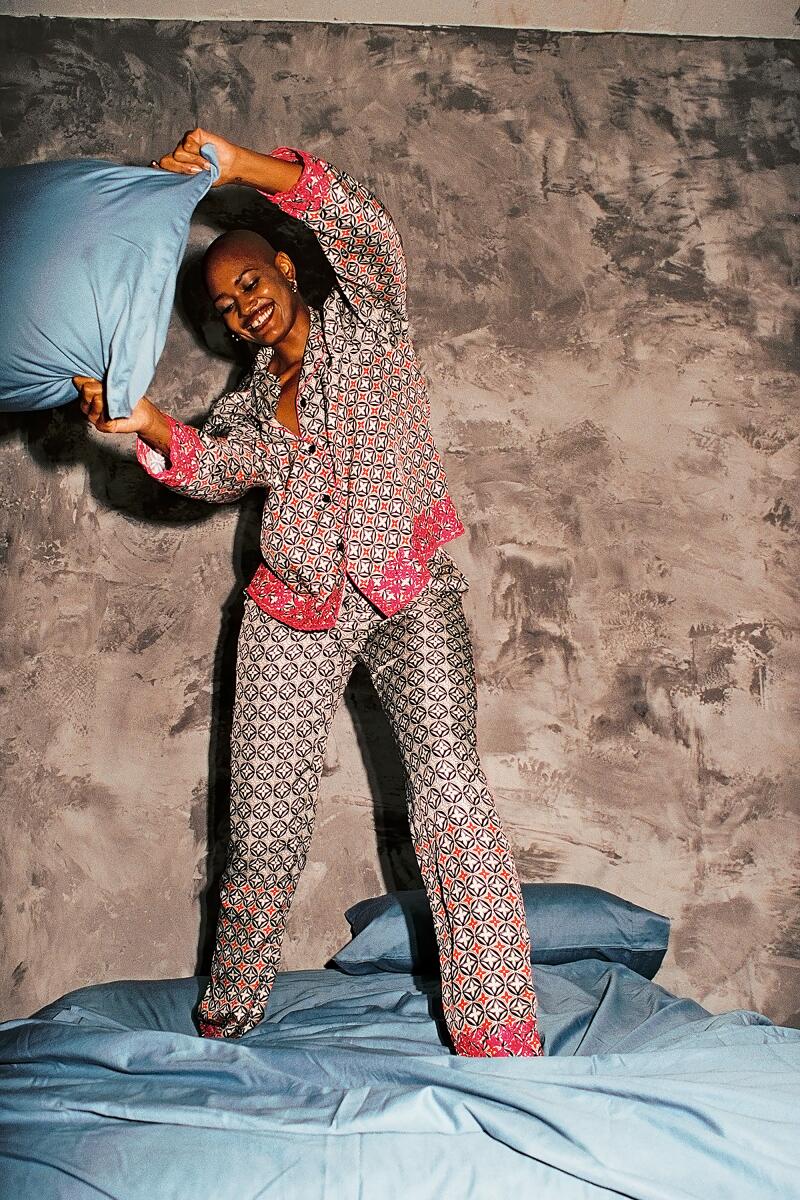
Louis Vuitton pajamas, Justine Clenquet earrings.
Like many immigrant families, the one I grew up in drew a hard line between inside clothes and outside clothes. (Or maybe it’s not about hyphens but just having some manners; as Phoebe Robinson says, “Please Don’t Sit on My Bed in Your Outside Clothes.”) Outside, the world is covered in dog s—. Plus a good deal of pollen that will have me up all night hacking. Inside, my bare feet walk on the qilim my mother “lent” me 15 years ago, and the air’s laced with cardamom from my decaf-black virgin nightcap. Inside, there’s a candle burning and a ban on overhead lighting. Inside, one rule reigns: respect the sanctity of Inside.
Pajamas, you see, aren’t just for sleeping. They’re inside clothes. This is a lesson the pandemic brought home to everyone, but for some of us it’s always been so.
The word “pajama” stems from Persian/Farsi, as I learned in my medieval Persian seminar in college after a life of speaking Farsi at home but somehow never registering the echo of this particular cognate. A compound of “pay,” or leg, and “jāma,” cloth (as in, clothes), the term first traveled to India via the Mughals, who spoke Persian at court. We’re talking the 1500s. A few centuries later — as a Dolce & Gabbana blog post on “the pyjama” also so kindly explains — the word, and corresponding style of loose pants coupled with a matching top, then went West via the Raj: colonial Brits stole the breezy unisex look from their subjects. In short, as an Iranian, I come from a long uninterrupted line of pajamas. Though probably in cotton.
When I was a kid, I also had a few nightgowns. My favorite my mother had sewn for me. Puff sleeves, peach and brown stripes. Memorialized, these days, in a snapshot of me and my childhood best friend on her family’s pullout couch, Nick at Nite on the TV.
Historically, nightgowns, opposite from pajamas, traveled from West to East. And they didn’t start out femme — in medieval Europe, men and women alike retired for the night in long, loose shirts. Today nightgowns are pretty much dead. But there was a time when Dior could dress you so good in lace and pastels it’d make you want to wear makeup to bed. Now few luxury brands bother, including Dior. (Albeit the occasional exception, like this truly wild floor-length, rhinestone-encrusted sheer getup by Dolce & Gabbana.) Probably for the same reason, I no longer have any nightgowns. First Wave feminism-slash-medieval Muslim culture has finally crashed on the shores of fashion, and women wear pants. Dresses can be restrictive. I like to lounge with one leg up.
Since those childhood days of puffs sleeves past, I’ve accrued a small collection of adult pajama sets. Window-shopping for my next set, I come back across the garment’s colonial lineage. A matching set by Dior — clearly I’m dreaming — features a generic jungle scene as the house’s take on Toile de Jouy (i.e., fussy French pastoral). Prints of “exotic” flora and fauna have become such a mainstay of luxury pajamas (see: Olivia von Halle) that we don’t even notice the history behind them. I’m not calling for a boycott, but every now and then, I like to see how the sausage gets made.
Inside you are your main audience. The joy lies in the freedom. Be extra. Go bold.
Me, I like it simple. But always in silk.
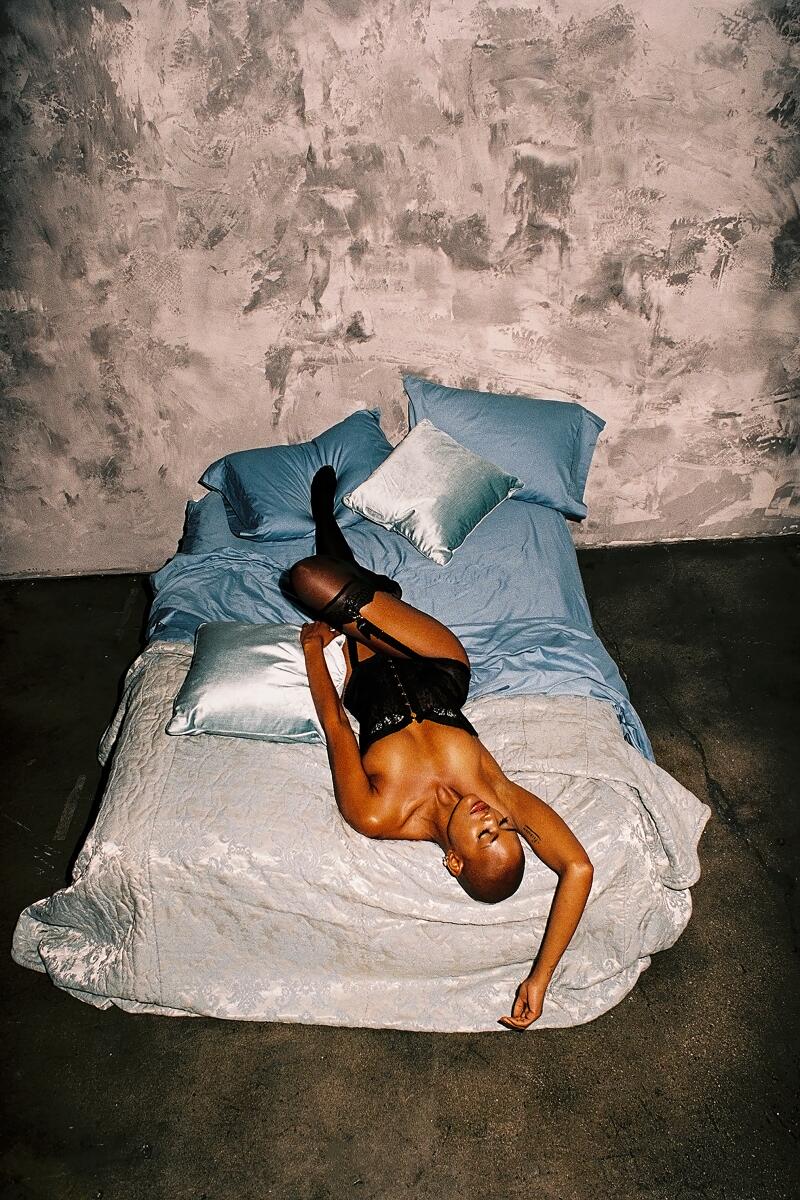
Pamela wears Agent Provocateur lingerie, Wolford stockings.
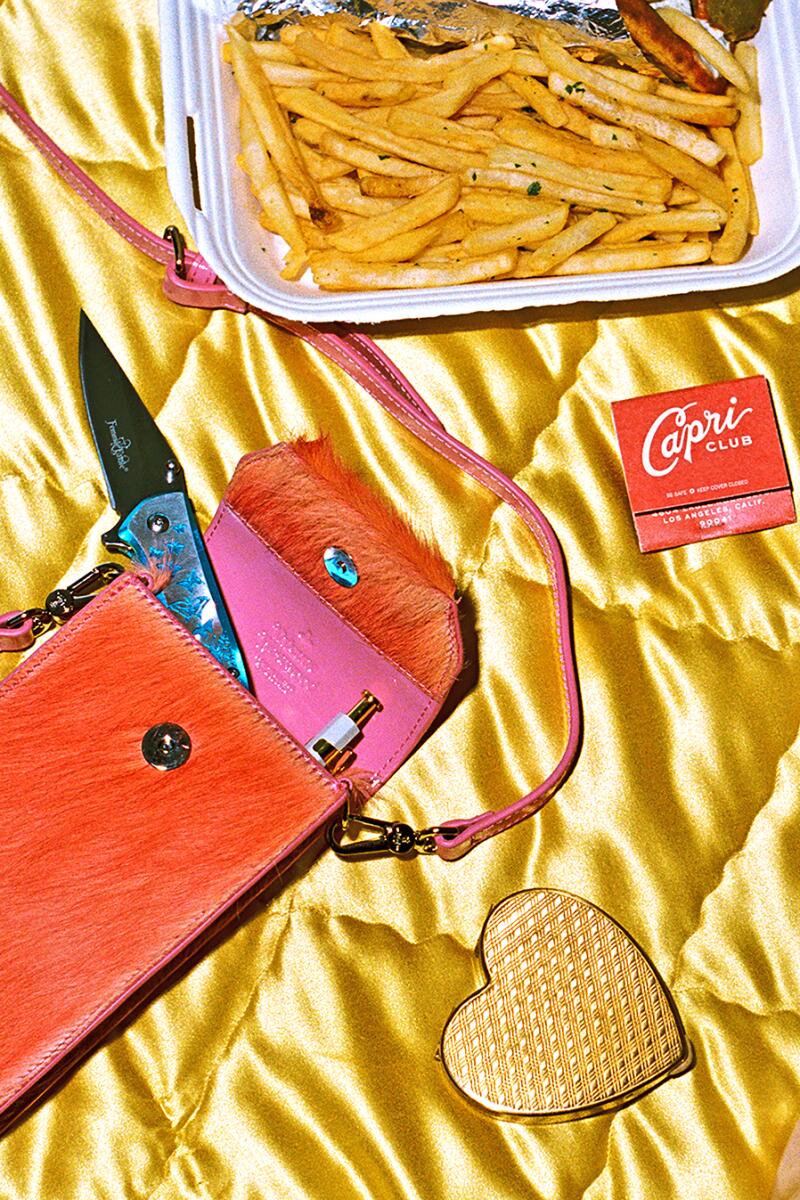
Vivienne Westwood phone purse.
My first set of silk pajamas came relatively late in life. Christmas in Fort Greene, my mid-20s. It was snowing. The kind of snow that feels like the first snow even when it isn’t, those light bright flakes that hang in the air so mournfully and beautifully you’d think you were on set for the holiday special except you can feel them melting on your chapped lips. There were so many firsts that year. My first apartment shared by an “us” that wasn’t simply financial, wasn’t me and a roommate. My first — in the form of our first — Christmas tree. (I didn’t grow up celebrating.) And, surely just as momentous, my first foray into pure silk.
Black silk with black piping. Fat black buttons, curved lapels. Long sleeves, long pants. Men’s. We’d gone Christmas shopping in the snow at the Brooklyn flea. When the scrawny guy draped over a folding chair across the stall saw me thumbing the package, he assured me that all his “girlfriends” wore them in an S, as if I needed an excuse to shop menswear and women only came in one size. He quoted 50 dollars for the set, a price that seemed at once fair and substantial. Back in the apartment that night, too lazy to iron out folds creased by time, I let more time and the wet heat of my body shake out the fabric.
Going silk is like what I imagine it felt like to step into the ’70s and burn (i.e., toss) your bras — there’s no way back. Now I have silk for every season — just a piece or two. Princesse tam tam cami and shorts in cherry red — not the skin but the flesh, which is redder. Another Princesse tam tam cami (black, bustle button detail) whose matching bottom I spent hours searching for in vain (such are sales). Thrifted and gifted to my beau before I took it back, a silk men’s tee by Cos big enough to serve as a micro-dress. Actually gifted to myself for a pandemic birthday, a classic Sleeper set in high-shine satin, the color an indulgence in itself: cream, as in farm-fresh and organic. And, I must say, way too high-maintenance. Like after I’ve done my own mani — for hours, I can hardly lift a finger without fear of effing something up.
True luxury lies in ease. As in donning that old black pajama set, day after gray rainy day, this past L.A. winter. Silk lasts. After over a decade of sitting cross-legged on the sofa in these silk pajama pants, reading or watching something; after over a decade of tossing and turning in them as I made and remade myself in cities and careers that were miles and miles apart; after over a decade of washing them, not by hand like my other silks, but by throwing them in the monstrous machine at the laundromat with regular detergent, and yes, sometimes, even machine-drying them (come out soft as a caterpillar) — after over a decade of use and abuse, I only just recently had to have a couple seams resewn. This stuff is ox-strong. Twelve years of sweat and soap, and now when the fabric ripples, black fades to gray, thick with light. You can’t buy patina like this.
Clothes are our closest homes, our first layers of shelter. I guess most folks think they’re only worth investing in when there are strangers to impress. But I want to say that being inside, being alone, is important. Maybe you’re no raja or rani, but your skin might like the touch of silk.

Pamela wears Vivienne Westwood corset, vintage purple briefs, Justine Clenquet choker.
Production: Mere Studios
Model: Pamela Holmes
Prop stylist: Gina Caravan
Makeup: Carla Perez
Photo assistant: Nicholas Mora
Prop assistant: Jessica Ayala
Mariam Rahmani is a writer and translator. Her first novel, “Liquid, A Love Story,” comes out in March from Algonquin. It takes place between L.A. and Tehran.




Mara is a single mother of two in Minnesota. She and her family have depended on SNAP benefits to make ends meet.
Caroline Yang for NPR
hide caption
toggle caption
Caroline Yang for NPR
Although Mara is unemployed, she is busier than ever.
When she is not taking care of her two children, Mara is at her desk applying for jobs. She is surveying her belongings to see what she can pawn off to buy toiletries. Or she is sifting through bills, calculating which ones can wait and which need to be paid right away.
Soon, Mara, a single mom in Minnesota, may have another task on her busy schedule: figuring out how to afford food for her and her family.
That’s because of new work requirements for people receiving aid from the Supplemental Nutrition Assistance Program, also known as SNAP or food stamps.

“It would be so beyond hard” to lose SNAP benefits, Mara said. “Without SNAP, there’s no funds for food.” Mara asked for her last name to be withheld given the stigma tied to receiving government assistance. She is also worried that speaking publicly will affect her chances of getting a job.
Previously, SNAP recipients with children under 18 were exempt from work requirements mandating that recipients work, volunteer or participate in job training at least 80 hours a month. But now, under President Trump’s One Big Beautiful Bill Act, that exemption only applies to those with children under 14 — which is how old Mara’s youngest child turned in December.

“It would be so beyond hard” to lose SNAP benefits, Mara said.
Caroline Yang for NPR
hide caption
toggle caption
Caroline Yang for NPR
The Trump administration has argued that the mission of the nation’s largest anti-hunger program has failed.
“SNAP was intended to be temporary help for those who encounter tough times. Now, it’s become so bloated that it is leaving fewer resources for those who truly need help,” the White House said in a statement in June.
But policy experts say the SNAP changes do not fully take into account the unique challenges faced by single parents like Mara or the sluggish job market in many parts of the country. They argue that losing food assistance will only create more barriers for recipients struggling to find work.
The timeline for implementing the new SNAP policy varies based on state and county. In Mara’s home state of Minnesota, recipients who don’t qualify for an exemption or meet work requirements will be at risk of losing assistance as early as April 1. Others may have more months depending on when they next need to certify they are eligible for benefits.
Over 100 job applications
Mara imagined she would have a job by now.
It was August when she was let go from her part-time administrative assistant role due to her workplace restructuring. Since then, Mara estimates that she has applied for over 100 positions. She has also attended job fairs and taken free workshops on resume writing.
She has been working since high school, she said, but “ I’ve never been out of work for more than one month, so it’s very difficult.”

Mara spends time working at the computer at CareerForce, a resource for job seekers in Minnesota, on March 4.
Caroline Yang for NPR
hide caption
toggle caption
Caroline Yang for NPR
Although she misses her old job, Mara said it didn’t pay enough to support her and her kids, so she relied on SNAP benefits.

Many recipients are part of the low-wage labor market, where job security is often unpredictable and turnover tends to be high, according to Lauren Bauer, a researcher at the Brookings Institution who has studied SNAP extensively.
“SNAP is supposed to be there to help people smooth that and not let the bottom fall out when they experience job loss,” she said. “And this policy doesn’t account for that at all.”
Mara’s lowest point came in November when the government shutdown led to disruptions in SNAP benefits. Not only was she searching for a new job, but she was constantly figuring out where to get her family’s next meal.
“I might be looking for food stuff during the day when I should have been looking for a job,” she said. “Then, I’m trying to make up that time in the evening after my kids go to bed.”
During the pause, Mara turned to food banks, which revealed other challenges. First, food pantries do not always provide enough for an adult and two growing teenagers, she said. Second, they often lack gluten-free foods, which is essential for her daughter who has celiac disease, an autoimmune disorder that causes digestive problems if gluten is consumed. Gluten-free products tend to be more expensive.
If Mara loses access to SNAP again because of the new work requirements, she fears another stretch of long days spent looking for the right food and enough to feed her family.
“I would be so reliant on looking for food shelves or food banks,” she said. “There would not be time to even live.”
“We’re going to see increases in poverty. We’re going to see increases in food insecurity”
The Congressional Budget Office estimates that roughly 2.4 million people will lose food benefits in a typical month over the next decade as a result of the new SNAP requirements — including 300,000 parents like Mara with children 14 or older.
Gina Plata-Nino, the SNAP director at the nonprofit Food Research & Action Center, says many of the affected recipients will be single mothers who make up a majority of single parent households in the U.S. She added that the changes target a group that often lacks or struggles to afford a support system to help care for their children.
“How can they have a full-time job when they need to pick up their children [for] various activities?” she said. “And they are working — just not enough hours because they need to be there present for their children.”

Mara shops for groceries at a local discount grocery store.
Caroline Yang for NPR
hide caption
toggle caption
Caroline Yang for NPR
The new law also imposes work requirements on veterans, homeless people, young adults aging out of foster care, and able-bodied adults without dependents from ages 55 to 64.
It also toughened the criteria for waiving work requirements for recipients in areas with high unemployment. Previously, there were multiple ways to determine a weak labor market and secure a waiver. Now, it only applies to places with an unemployment rate above 10%. (Alaska and Hawaii have a different measure.)
For those who fail to meet the work requirement, SNAP provides assistance for up to three months within a three-year span. But Bauer from the Brookings Institution argues that it is not enough and the impact of SNAP changes will be widespread.
“We’re going to see increases in poverty. We’re going to see increases in food insecurity. We’re going to see increasing strain on the charitable food sector,” she said.
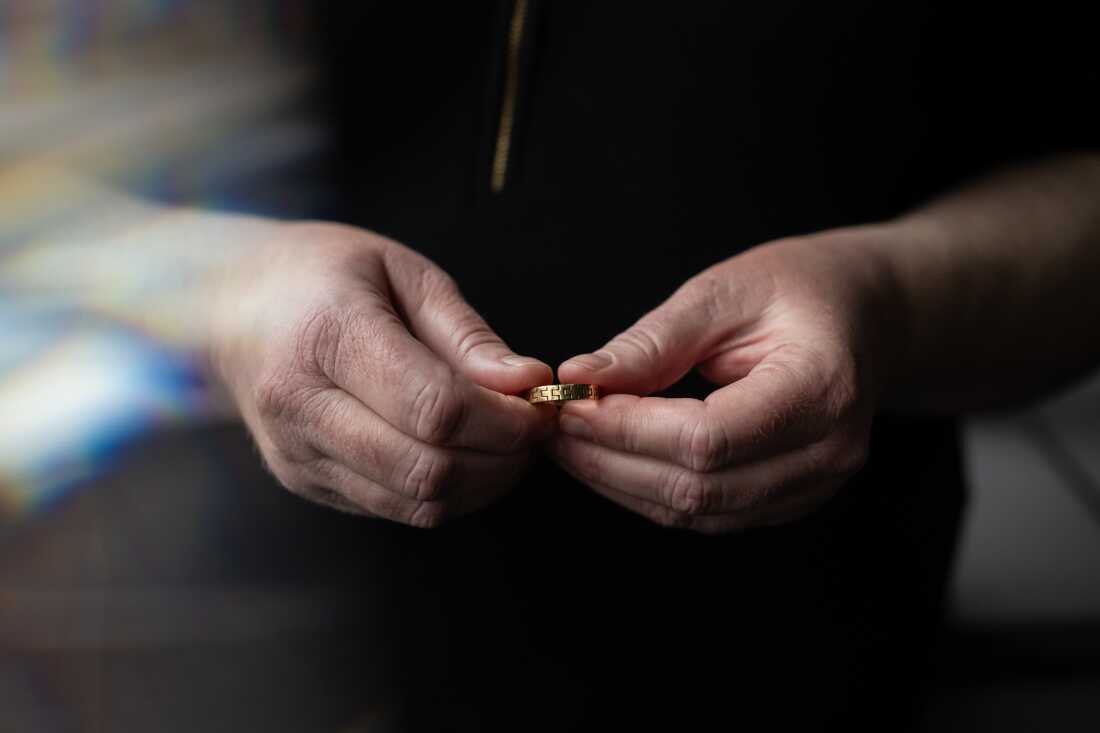
Mara holds her favorite anchor ring, which carries the inscription, “God for me provide thee.”
Caroline Yang for NPR
hide caption
toggle caption
Caroline Yang for NPR
As anxiety hangs over her head, Mara tries to put on a brave face for her children. She does not want them to worry, explaining that her recent struggles have reminded her how tough life can get as an adult.
“I remind them it’s not their responsibility and they’re not accountable for me or for what’s happening,” she said. “I say, just know you get to be a kid.”

Dylan Dreyer
Savannah Will Likely Come Back … Just Not Sure When
Published
TMZ.com
Dylan Dreyer is giving a small update on her embattled “Today” co-host, Savannah Guthrie, as the search continues for Savannah’s mom, Nancy — telling TMZ she does believe she’ll likely return to the show at some point.
We caught Dylan leaving NBC Tuesday afternoon, and she said while she thinks Savannah will come back, the timing is totally unclear — adding everyone at the show is simply giving her the space she needs because they care about her so much.

TMZ.com
Dylan also reflected on Savannah’s emotional visit to the “TODAY” studio last Thursday, saying the hug they shared was something they both really needed in that moment.
Catch the full clip — Dylan says the visit was incredibly emotional, adding Savannah clearly wants to get back to some sense of normal life … she just doesn’t quite know how yet.
Still, Savannah managed a few smiles during the brief stop by the studio, doing her best to keep moving forward during an incredibly tough time.
TMZ.com
As we reported, Nancy was taken from her Tucson home in the middle of the night on February 1. She was last seen entering the house just before 10 PM on January 31 after dinner with her daughter Annie and Annie’s husband, Tommaso Cioni.

Kevin Kline plays actor Richard Bean, and Laura Linney is his sister-in-law Kristen, in American Classic.
David Giesbrecht/MGM+
hide caption
toggle caption
David Giesbrecht/MGM+
American Classic is a hidden gem, in more ways than one. It’s hidden because it’s on MGM+, a stand-alone streaming service that, let’s face it, most people don’t have. But MGM+ is available without subscription for a seven-day free trial, on its website or through Prime Video and Roku. And you should find and watch American Classic, because it’s an absolutely charming and wonderful TV jewel.
Charming, in the way it brings small towns and ordinary people to life, as in Northern Exposure. Wonderful, in the way it reflects the joys of local theater productions, as in Slings & Arrows, and the American Playhouse production of Kurt Vonnegut’s Who Am I This Time?
The creators of American Classic are Michael Hoffman and Bob Martin. Martin co-wrote and co-created Slings & Arrows, so that comparison comes easily. And back in the early 1980s, Who Am I This Time? was about people who transformed onstage from ordinary citizens into extraordinary performers. It’s a conceit that works only if you have brilliant actors to bring it to life convincingly. That American Playhouse production had two young actors — Christopher Walken and Susan Sarandon — so yes, it worked. And American Classic, with its mix of veteran and young actors, does, too.

American Classic begins with Kevin Kline, as Shakespearean actor Richard Bean, confronting a New York Times drama critic about his negative opening-night review of Richard’s King Lear. The next day, Richard’s agent, played by Tony Shalhoub, calls Richard in to tell him his tantrum was captured by cellphone and went viral, and that he has to lay low for a while.
Richard returns home to the small town of Millersburg, Pa., where his parents ran a local theater. Almost everyone we meet is a treasure. His father, who has bouts of dementia, is played by Len Cariou, who starred on Broadway in Sweeney Todd. Richard’s brother, Jon, is played by Jon Tenney of The Closer, and his wife, Kristen, is played by the great Laura Linney, from Ozark and John Adams.
Things get even more complicated because the old theater is now a dinner theater, filling its schedule with performances by touring regional companies. Its survival is at risk, so Richard decides to save the theater by mounting a new production of Thornton Wilder’s Our Town, casting the local small-town residents to play … local small-town residents.
Miranda, Richard’s college-bound niece, continues the family theatrical tradition — and Nell Verlaque, the young actress who plays her, has a breakout role here. She’s terrific — funny, touching, totally natural. And when she takes the stage as Emily in Our Town, she’s heart-wrenching. Playwright Wilder is served magnificently here — and so is William Shakespeare, whose works and words Kline tackles in more than one inspirational scene in this series.
I don’t want to reveal too much about the conflicts, and surprises, in American Classic, but please trust me: The more episodes you watch, the better it gets. The characters evolve, and go in unexpected directions and pairings. Kline’s Richard starts out thinking about only himself, but ends up just the opposite. And if, as Shakespeare wrote, the play’s the thing, the thing here is, the plays we see, and the soliloquies we hear, are spellbinding.
And there’s plenty of fun to be had outside the classics in American Classic. The table reads are the most delightful since the ones in Only Murders in the Building. The dinner-table arguments are the most explosive since the ones in The Bear. Some scenes are take-your-breath-away dramatic. Others are infectiously silly, as when Richard works with a cast member forced upon him by the angel of this new Our Town production.
Take the effort to find, and watch, American Classic. It’ll remind you why, when it’s this good, it’s easy to love the theater. And television.


Officials confirm devices recovered at NYC protest near Gracie Mansion were both IEDs

4Warn Weather Alert issued for Wednesday morning in Metro Detroit — What this means

Court document details attack on SF mayor’s bodyguard as Lurie responds to incident

Cowboys Team Doctor Played Role in Maxx Crosby-Ravens Trade Debacle

2-year-old boy bitten in face by two pit bulls in Miami Gardens backyard, police say

Florida High School Football Rankings: Top 25 teams – Oct. 21

Cleary's 21 help Le Moyne down Central Connecticut State 69-64 in OT

How old is Bo Nix? What to know about Oregon quarterback ahead of 2024 NFL Draft

99th annual Pony Swim held in Virginia

Indiana Members Credit Union announced as new anchor tenant at Bottleworks District

EXCLUSIVE: ICE says El Paso detention facility will stay open under new contractor after $1.2B deal scrapped

Von der Leyen ‘acting outside of competence,’ Araud tells Euronews

Wheelchair curler Steve Emt’s path from drunk driver to three-time Paralympian

Map: 2.3-Magnitude Earthquake Reported North of New York City

Trump stirs GOP primary drama with visit to Massie’s Kentucky home turf
-

 Wisconsin1 week ago
Setting sail on iceboats across a frozen lake in Wisconsin
-

 Massachusetts1 week ago
Massachusetts man awaits word from family in Iran after attacks
-

 Pennsylvania6 days ago
Pa. man found guilty of raping teen girl who he took to Mexico
-

 Detroit, MI5 days ago
U.S. Postal Service could run out of money within a year
-

 Miami, FL7 days ago
City of Miami celebrates reopening of Flagler Street as part of beautification project
-

 Sports7 days ago
Keith Olbermann under fire for calling Lou Holtz a ‘scumbag’ after legendary coach’s death
-

 Virginia7 days ago
Giants will hold 2026 training camp in West Virginia
-

 Culture1 week ago
Try This Quiz on the Real Locations in These Magical and Mysterious Novels