Lifestyle
Strangers needed help near Mt. Whitney’s summit. Would we share our tent on a stormy night?


It was August 2013, and we were clambering up the majestic and regal unrealness that is Mt. Whitney, a mountain both inviting and unforgiving in its margin for errors.
That was the first time we’d done it — my buddy Jesus, my buddy Fernando and me. They’re childhood friends of mine, and we were excited to try to bag the tallest mountain in the continental United States.

Between a Rock is a Los Angeles Times series that shares survival stories from the California wilderness.
We got into hiking in our early 20s. On weekends, we had nothing to do, so we started hiking bigger and longer. Eventually, we started thru-hiking, taking long-distance backpacking trips. We do a lot of international travel as well in terms of hiking.
We did a lot of conditioning hikes beforehand: Mt. Baldy, Gorgonio, Mt. Wilson, pretty much all the major peaks in Southern California. It’s hardly training, but we tried to condition our bodies to make sure they would be able to take the dramatic altitude climb and the cold temperatures.
Jesus got one of those Mt. Whitney books, and he was very well-read about the perils of Whitney. We were mindful to rest up beforehand and not stay up too late and also to carb load beforehand. A minor misstep or bout of ill-preparation comes with dire consequences, from the slightest of ankle sprains to bygone absent frostbitten fingers. It’s a no-nonsense endeavor up those 99 switchbacks.
We camped at Trail Camp, which has an approximate altitude of 12,000 feet. We didn’t do that single-day thing where you have to get up at 10 p.m. to begin to go to the summit.
When you get to a certain altitude at Whitney, there are little microclimates, so it’s really hard to anticipate what it’s going to be like. All you have to do is be a Boy Scout and plan for the worst, which we did. Everything was waterproof, and we had emergency supplies. We even planned in case we were stranded up there, which luckily we weren’t.
The weather was bad, so there was a good chance of your tent being washed away. We were approached by two hikers who were — teeth clattering incessantly and clothes soaked — ill-equipped for the evening.
When we set up our tent, we had to do it on a boulder and high up, high ground. They didn’t, and their tent was washed away, which was why they had to share our tent. It was really the most dangerous part of that trip.

Tommy Vinh Bui with friends Fernando, left, and Jesus, right, at the Mt. Whitney summit.
(Tommy Vinh Bui)
We brought a tent for three people, but because their tent had washed away and all their supplies were soaked, we invited them in — really, to save their lives.
There are no strangers in the great outdoors. I’ve learned over the years that what’s mine is yours and usually likewise in the spirit of hiker comity. We look out for one another — we give water if someone is low on water, granola bars if someone is low. There’s a lot of plenitude on the trail.
So it was five grown adults in a tent made for three people, the polyester fabric straining and holding its shape by a thread. It was like a head-to-toe situation, kind of like sleepaway camp. We were in a very intimate situation.
It was hailing. Not huge softball-size hail, but good enough to have you running for cover. An icy gale blew incessantly in concert with a torrential deluge. If we had wind chimes, it would’ve been a Lollapalooza monsoon of surly zephyrs all the livelong night.
We saw tons of lightning strikes. Whitney is notorious for lightning. That’s a big part of why you have to get off the mountain before noon. Lightning becomes more frequent. You can see the atmospheric pressure drop pretty quick before noon.
With the braggadocio of youth, I was probably too dumb to be scared. Looking back on it now, under the circumstances, I should have been.
One of the strangers had a Garmin, and he was pretty close to pressing that SOS button just to get off the mountain. We had headlamps and we were able to keep spirits up. I remember one guy was particularly not feeling great. He was a newlywed, and his new wife was going to kill him because of the situation.
It wasn’t super comfortable inside. My friends and I had alpine winter bags that were thick and insulated. But things were wet just from walking around and having the water build up inside our shoes and then by taking them off. We had waterproof jackets on, so the water beaded off.
My friends and I brought books, which we thought we’d be able to read at night. We tried to keep spirits up and enjoy ourselves. We knew it was perilous, but we also knew it was a unique experience.
By morning, the clouds parted, and we found we survived the meteorological maelstrom relatively intact. Our little makeshift ark hadn’t washed away in the night lagoon, much to our collective relief.
We were under-slept, over-fatigued and waterlogged. I guess we were so miserable that my group and the other hikers didn’t make attempts to give each other contact information. They were like, “We’re gonna hike back down” and wished us the best of luck.
I want to say they weren’t from L.A., but maybe from Arizona. This was their first go at the mountain as well. They must have had some hiking experience but they may have just found themselves in over their heads. It would suck to make an attempt at Whitney and have to turn back because of weather. We’re only a couple miles from the summit.
We were able to get to the top before noon. And when you’re at the top, you’re above the clouds. You can see out to Badwater Basin in Death Valley. It looks like a Windows screensaver. It looks Photoshopped, like AI made it. It’s a beautiful tableau — panoramic, sublime, transcendent.
That’s why we go out there, to commune with nature. I don’t want to use the word “spiritual,” but it’s something akin to that. If the outdoors can be a religion, then hiking is Sunday service.
Whitney is not a mountain to be trifled with, and a lot of people lack respect for it and find themselves in dangerous situations. My advice? Perform meticulous research and try to have a contingency for all possible scenarios. Check the weather forecasts, download all the maps on your Garmin, notify people of your plans, pack enough food and water and have emergency supplies at the ready.
Be receptive to the restorative powers of the wilderness, and let it be a catalyst for your journey toward wellness and oneness with the great outdoors.
Solvitur ambulando, amigos. Let the sky slather your spirit with serenity.

Tommy Vinh Bui is an L.A. County librarian and avid hiker and runner. He has competed in marathons around the world, including a recent race in Antarctica. He recently became a father to twins, a boy and a girl. This retelling has been edited and condensed for length and clarity.
Do you have a California wilderness survival story? We’d love to hear from you. Share your close encounter here.







Neve Campbell in Scream 7.
Paramount Pictures
hide caption
toggle caption
Paramount Pictures
The OG Scream Queen Neve Campbell returns. Scream 7 re-centers the franchise back on Sidney Prescott. She has a new life, a family, and lots of baggage. You know the drill: Someone dressing up as the masked slasher Ghostface comes for her, her family and friends. There’s lots of stabbing and murder and so many red herrings it’s practically a smorgasbord.
Follow Pop Culture Happy Hour on Letterboxd at letterboxd.com/nprpopculture

Abriana Vicioso is the host of the Flower Hour, which takes place monthly.
(Jennifer McCord / For The Times)
Each flower carries a personal history. For Abriana Vicioso, the calla lily was her parents’ wedding flower — a symbol of her mother’s beauty. “She had this big, beautiful white calla lily in her hair,” Vicioso says. “I love my parents. They’re the reason I’m here. I’ll never forget where I came from.”
The Flower Hour begins with Vicioso announcing, with a warm smile: “Today is about touching grass.” The florist-by-trade gestures behind her to hundreds of flowers contained in buckets — blue thistles, ivory anemones and calla lilies painted silver — all twisted and unfurling into the air. “Tonight is going to be so sweet and intimate,” Vicioso says, eyeing the beautiful chaos at her feet. A grin buds across her face.
Moments before the workshop, participants sit at candlelit tables exchanging horoscopes and comparing their favorite flowers. A mention of the illustrious bird-of-paradise flower elicits coos and awe from the women. Izamar Vazquez, who is from Jalisco, Mexico, reveals her fondness for roses, which make her feel connected to her Mexican roots.
Vicioso hosts her flower-themed wellness workshop near the iconic Original Los Angeles Flower Market in downtown L.A. In January, the first Flower Hour event sold out, prompting her to make it a monthly series. Vicioso describes the event as a “three-part journey” where participants are invited to drink herbal tea, smoke rose-petal-rolled cannabis joints and create a floral arrangement. “The guide is to connect with the medicine of flowers,” Vicioso says.


Rose petal joints, tea and flower arranging are all part of The Flower Hour event’s offerings.
The event is hosted at the Art Club, a membership-based co-working space. “The Flower Hour is really beautiful. Everyone gets to explore their creativity while meeting new people,” says Lindsay Williams, the co-owner of the Art Club.
The idea for Flower Hour came to Vicioso during a conversation with her mother. “We joke all the time that flowers were destined to make their way into my life,” she says. She works as a florist and models on the side, even appearing in the pages of Vogue. Vicioso grew up in a Caribbean household, where flowers and offerings were part of daily life. “In my culture and religion, a lot of my family practices — an Afro-Caribbean religion — we build altars.”
Like many cultures, flowers carry sentimental value in her religion. “I’m Caribbean, so a lot of my family practices a Yoruba religion, which comes from Africa. In the Caribbean, it’s well known as Santería.”

-
Share via
After a difficult year and a breakup, Vicioso wanted to marry her love of flowers with community building. Because Vicioso uses cannabis medicinally, the workshop naturally includes a smoking component. “My family has smoked cannabis for a lot of reasons for a long time. It’s a really healing plant,” she explains.
In the workshop, even the cannabis gets the floral treatment. Vicioso presents her rose-petal-wrapped joints on a silver platter at each table. She rolled each by hand. “If you’ve never smoked a rose-petal-rolled joint, the difference with this is it’s going to have roses that have a slight tobacco effect,” she announces.
During the workshop, Vicioso stresses the importance of buying cannabis from local vendors. The cannabis provided was purchased from a Northern Californian vendor. The wellness workshop aims to reclaim the healing ritual of smoking cannabis. “This is a plant that has been commercialized,” Vicioso says. “There’s a lot of Black and Brown people who are in jail for this plant.”
The resulting workshop is what Vicioso describes as “an immersive wellness experience that is the intersection of wellness, creativity, community and an appreciation of flowers.” The workshop serves as a reminder to enjoy Earth’s innate beauty in the form of flowers — including cannabis. “It’s this gift that the universe gave us for free and that I have this deep connection with,” Vicioso says.


Conversation cards to generate discussion among participants (top, letf). The workshop serves as a “third space” for Angelenos to engage in tactile creativity and community building outside of traditional nightlife settings.
After enjoying lavender chamomile tea and smoking a joint, Vicioso introduces the flowers to the group before inviting them to pick their own. She emphasizes each flower’s personality traits, describing green dianthus as a “Dr. Seuss” plant. Then, there are calla lilies with their “main character moment.” It gets personal. “Start thinking of a flower in your life that you can discover,” she says. “If you’re feeling like you need inspiration, you can always remember that these flowers have stories.”
Vicioso infuses wisdom into her instruction on floral arrangements: There are no mistakes. Let the flowers tell you where they want to go, she urges. Intuition will be your guide — the wilder, the better.
“Hecho in Mexico” reads a sticker on a bunch of green stems. “Like me,” says Vazquez with a laugh. “They’re all doing their own thing. Like a family,” she says later, arranging stems.

The Flower Hour participants and Vicioso, center, chat as they build their own floral arrangements at the sold-out event.
Two participants — Vazquez and Rebeca Alvarado — are friends who run a floral design company together called Izza Rose. Like Vicioso, the friends have a connection to flowers through their Latin American culture. They met Vicioso in the floral industry and were overjoyed to discover her workshop.
“This is a great way to connect with other people,” says Vazquez.
Alvarado agrees, adding: “You’re getting to know people outside of going to bars. You can connect in different ways when there’s an activity.”
Vazquez uses flowers to stay connected to her Mexican heritage, adding that she prefers to support Mexican vendors. In recent months, the downtown L.A. flower market has struggled to recover from ongoing ICE raids. “Some are scared to come back,” says Vazquez.


Hand-rolled cannabis joints wrapped in rose petals are presented on a silver platter at The ArtClub (top, right). The Flower Hour aims to reclaim the healing rituals of cannabis and flowers.
Another participant, Barbara Rios, was attracted to the workshop for stress relief. “You can hang out with your friends, but it’s nice to do things with your hands,” she says. “I work a stressful job, and it’s nice to have that third space that we’re all craving.”
On this February night, the participants were predominantly women, save for one man. In the future, Vicioso hopes that more men learn to engage with flowers. “There’s a statistic about men receiving flowers for the first time at their funerals, and I think we have changed that,” she says.
To conclude the workshop, Vicioso encourages participants to build lasting friendships and incorporate flower arranging into their daily practice — even if it’s just with a small, inexpensive bouquet.
“Get some flowers together, go to the park, hang out with each other and hang out with me,” she says. Participants leave with flower arrangements in hand. In the darkness of the night air, it briefly looks as though the women carry silver calla lilies that are blooming from their palms.

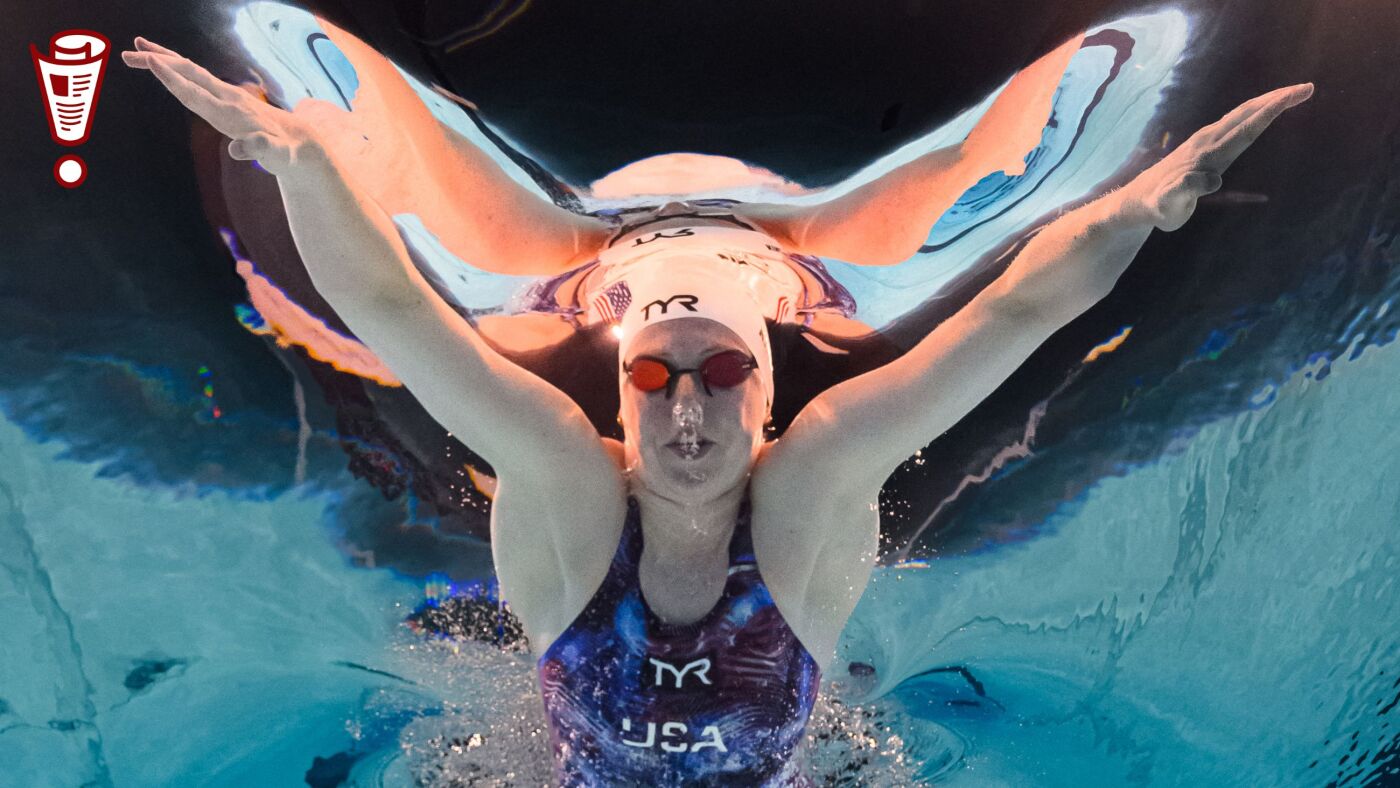
An underwater view shows US’ Lilly King competing in a heat of the women’s 200m breaststroke swimming event during the Paris 2024 Olympic Games at the Paris La Defense Arena in Nanterre, west of Paris, on July 31, 2024. (Photo by François-Xavier MARIT / AFP) (Photo by FRANCOIS-XAVIER MARIT/AFP via Getty Images)
François-Xavier Marit/Getty Images
hide caption
toggle caption
François-Xavier Marit/Getty Images
This week’s show was recorded in Bloomington, Indiana with host Peter Sagal, judge and scorekeeper Bill Kurtis, Not My Job guest Lilly King and panelists Alonzo Bodden, Josh Gondelman, and Faith Salie. Click the audio link above to hear the whole show.
Who’s Bill This Time
State of the Union is Hot; The Tribal Council Convenes Again; A Glow Up In the Doll Aisle
Panel Questions
The Toot Tracker
Bluff The Listener
Our panelists tell three stories about a travel hack in the news, only one of which is true.
Not My Job: Olympic Swimmer Lilly King answers our questions about Lil’ Kings
Olympic Swimmer Lilly King plays our game called, “Lilly King meet these Lil’ Kings” Three questions about short kings.
Panel Questions
Cleaning Out The Cabinet; Bedtime Stacking
Limericks
Bill Kurtis reads three news-related limericks: Getting Cozy With Cross Country Skiing; Pickleball’s New Competition; Bees Get Freaky
Lightning Fill In The Blank
All the news we couldn’t fit anywhere else
Predictions
Our panelists predict, after American Girls, what’ll be the next toy to get an update.

Oregon Dems block effort to alert ICE before illegal immigrant murderers are released

Terrifying moment caught on camera as road collapse suddenly swallows vehicles at busy intersection

Jasmine Crockett campaign reportedly kicked Atlantic writer out of rally for being a ‘top-notch hater’

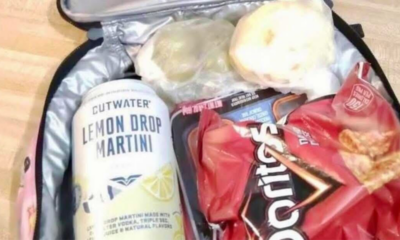
Atlanta-area police blast parents over vodka martini packed in school lunch: ‘That is NOT apple juice’

Murder suspect in Baltimore robbery spree was on probation, records show

Florida High School Football Rankings: Top 25 teams – Oct. 21

Cleary's 21 help Le Moyne down Central Connecticut State 69-64 in OT

How old is Bo Nix? What to know about Oregon quarterback ahead of 2024 NFL Draft

99th annual Pony Swim held in Virginia

Indiana Members Credit Union announced as new anchor tenant at Bottleworks District

Map: Earthquake Shakes Central California

Gas prices could jump as Middle East tensions threaten global oil supply

Pakistan calls troops, orders 3-day curfew as 24 killed in pro-Iran rallies

US says Kuwait accidentally shot down 3 American jets

House Republicans push Johnson to go to war with Senate over SAVE Act
-

 World5 days ago
Exclusive: DeepSeek withholds latest AI model from US chipmakers including Nvidia, sources say
-

 Massachusetts5 days ago
Mother and daughter injured in Taunton house explosion
-

 Denver, CO5 days ago
10 acres charred, 5 injured in Thornton grass fire, evacuation orders lifted
-

 Louisiana1 week ago
Wildfire near Gum Swamp Road in Livingston Parish now under control; more than 200 acres burned
-

 Technology1 week ago
YouTube TV billing scam emails are hitting inboxes
-

 Politics1 week ago
OpenAI didn’t contact police despite employees flagging mass shooter’s concerning chatbot interactions: REPORT
-

 Technology1 week ago
Stellantis is in a crisis of its own making
-

 News1 week ago
World reacts as US top court limits Trump’s tariff powers