Lifestyle
Six takeaways from the return of the Emmys


From left to right: Christopher Storer, Joanna Calo, Ayo Edebiri, Matty Matheson, Jeremy Allen White, Tyson Bidner, Edwin Lee Gibson, Liza Colón-Zayas, Oliver Platt, and Ebon Moss-Bachrach accept the Outstanding Comedy Series award for The Bear onstage during the 75th Primetime Emmy Awards at Peacock Theater in Los Angeles on Jan. 15, 2024.
Kevin Winter/Getty Images
hide caption
toggle caption
Kevin Winter/Getty Images

From left to right: Christopher Storer, Joanna Calo, Ayo Edebiri, Matty Matheson, Jeremy Allen White, Tyson Bidner, Edwin Lee Gibson, Liza Colón-Zayas, Oliver Platt, and Ebon Moss-Bachrach accept the Outstanding Comedy Series award for The Bear onstage during the 75th Primetime Emmy Awards at Peacock Theater in Los Angeles on Jan. 15, 2024.
Kevin Winter/Getty Images
The 75th Emmy Awards offered up nothing in the way of real surprise; practically every prize went to the frontrunner. Perhaps the closest the night came to a moment worth an eyebrow-raise was the In Memoriam segment that included a mournful rendition of the Friends theme song. Obviously, a very well-meaning attempt to recognize Matthew Perry, but that is not a song that translates into tears. The delay of this ceremony from September to now also meant that a lot of these frontrunners are fresh off Golden Globe and Critics’ Choice awards, making their wins seem even a little more obvious.
Still, like every Emmy night, there were some notable developments.
1. Three big shows dominated the major categories given out Monday night: Succession in drama, The Bear in comedy, and Beef in limited series. All three won the big prize in their category as best series. All three won both directing and writing awards. All three won multiple acting awards — two for Beef (its two leads), three for The Bear (its three principals), and three for Succession (three members of its gazillion-person cast). Only four wins out of the 21 handed out in these three categories went to any other shows: Jennifer Coolidge for The White Lotus, Paul Walter Hauser for Black Bird, Quinta Brunson for Abbott Elementary and Niecy Nash-Betts for Dahmer — Monster: The Jeffrey Dahmer Story. It seemed like maybe Ted Lasso might be in the race for its (likely) final season, or The Last Of Us might make a strong showing for its adaptation of a stunning video game. But it was not to be. This was a night for the favorites to fully dominate.
2. Coolidge’s win for her supporting work in The White Lotus wasn’t unexpected, given that she won last year, but along with the rest of the night, it did come as a real blow to Better Call Saul fans, myself included. Many people who hoped against hope that Rhea Seehorn would win the trophy in her last shot for the work she did as Kim Wexler. In fact, Saul — a show a lot of its admirers think is better than Breaking Bad, from which it was spun off — won no Emmys at all. It ends an acclaimed six-season run with 53 nominations and no awards. Perhaps that’s only fitting for a show that’s about a bottom-feeder and repeat loser like Jimmy McGill, but those who know, know. Especially about Rhea Seehorn.
3. In place of the orchestra playing people off to trim runaway speeches, they decided this year to have host Anthony Anderson’s mother stand up in the audience and start yelling at them. The moment she did it to Jennifer Coolidge, it was more than clear that this was going to be terribly awkward. The producers didn’t continue with it, fortunately. It’s not clear whether they ever intended to. Perhaps they didn’t, or perhaps they instantly realized it was not going to land the way they hoped. Seriously, just play the music.
4. It’s often been the case that awards shows include a good number of Black actors as presenters, or as hosts like Anderson, but then don’t actually reward their work. Not so with these Emmys. Three of the first four women to take the stage as winners — Ayo Edebiri, Quinta Brunson, and Niecy Nash-Betts — were Black, and the ceremony’s look back at 75 years of Emmys included beloved icons like Arsenio Hall and Marla Gibbs as well as influential shows like Good Times and Martin. Anderson called it “like MLK Day and Juneteenth rolled into one.”
5. Most coverage of the Emmys goes to a handful of major categories, but there’s always plenty going on up and down the list. One story of note: With a win for his special Elton John Live: Farewell from Dodger Stadium, Elton John reached a made-up status that it’s hard not to admire anyway — the EGOT.
6. At the 75th Emmys, it made sense to do a lot of remembering of the TV of the past. Some of this worked really well, like getting to see old sets (or rough approximations of old sets) or reunions, like the one between Rob Reiner and Sally Struthers. Some of it was a little effortful, like Anderson doing a skit with Dylan McDermott about American Horror Story. But on a generous curve of how “and now, we salute television!” stuff usually goes, it gets a solid B-plus.



Lifestyle
L.A. Times Concierge: I live in O.C. My kids live in Santa Clarita. Looking for nice spots to meet halfway.
My husband and I live in Mission Viejo. Our older son, his wife and two children (ages 5 and nearly 4) live in Newhall. We love spending time together, but it’s quite a trek on the 5 Freeway. Last year, we went to the aquarium in Long Beach, which was great fun. Another day, we enjoyed a day of hiking and a picnic at Placerita Canyon Nature Center near my son’s home. We would love some suggestions about other places to visit which would maybe be a little more centrally located and fun for the whole family. Thanks
— Cathy McCoy
Looking for things to do in L.A.? Ask us your questions and our expert guides will share highly specific recommendations.
Here’s what we suggest:
Cathy, I understand your pain. Driving 80 miles can feel like an odyssey, especially in SoCal. Thankfully, there are loads of fun places where your family can meet in the middle (or close to it). I’ve rounded up some solid options. By the way, the driving times mentioned here are a rough estimate for a weekend day without traffic, but as you probably know, your actual time may vary.
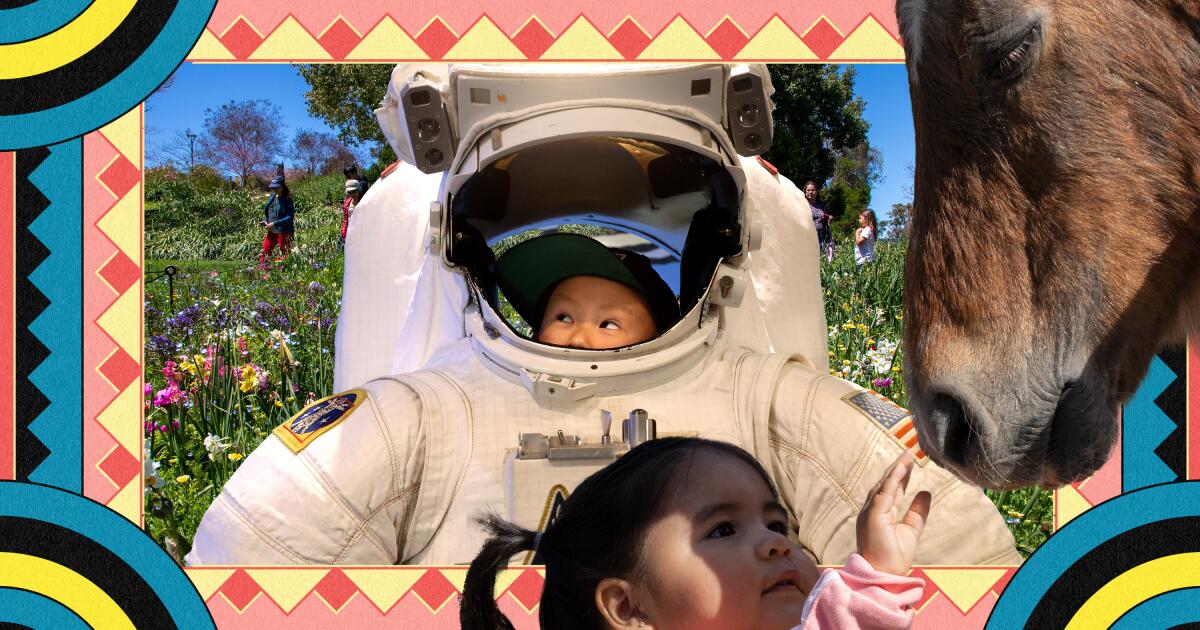
Since you all enjoyed the Aquarium of the Pacific in Long Beach, how about switching it up and spending the day with a different set of animals at the Montebello Barnyard Zoo for your next outing? That would be about a 40- to 50-minute drive for both of you. Open since 1968, the zoo is home to horses, goats, sheep and donkeys that you can pet (and feed for an extra $3). If you’re feeling adventurous, you can ride a pony or take a leisurely trip on a John Deere tractor train. “It’s a great place for young ones to learn that animals outside the home need and deserve the same kind of care that we show our pets,” Etan Rosenbloom writes in a Times guide to things to do with kids around L.A. General admission is $11, and you can sometimes find deals on Groupon as well. Afterward, head to Blvd Mrkt, a food hall in downtown Montebello that sells a variety of food so everyone can get what they want.
Another great option is the South Coast Botanic Garden on the Palos Verdes Peninsula, which might be about an hour drive for both of you. I learned about this spot from my dear late colleague Jeanette Marantos, who was a gardening expert in her own right. The garden, which has more than 2,500 species of plants and five miles of trails, also includes a kids area, which features “a nursery rhyme theme with a large dollhouse, a charming bridge and plants matched to the stories,” Marantos wrote. My editor Michelle Woo also loves this garden. “You can take a leisurely walk along the accessible loop trail or get really into the nooks and crannies of the place, discovering trees with giant roots that kids love to climb on and koi fish swimming in a shaded pond,” she says, adding that she’s excited for Thomas Dambo’s trolls exhibit that opens Sunday. If you get hungry, you can stop by Dottie’s at the Koi Pond, which sells food, beer, wine and specialty cocktails on Saturdays and Sundays. Carry-in food is permitted if pre-prepared.
If you’re interested in space travel, you should visit the Columbia Memorial Space Center, which is the ultimate cosmic playground. Located in Downey (known as “home of the Apollo”) — about a 40-minute drive for you and a 50-minute drive for your son’s family — the recently renovated museum features a play area, robotics lab and interactive exhibits on space exploration, including a shuttle landing simulator. Admission is $5 for adults and kids, $3 for seniors ages 65 and up and free for children ages 3 and under.
Speaking of aviation, another spot worth checking out is the Proud Bird in El Segundo, about a 45- to 50-minute drive for both of you. Here, you can enjoy delicious bites as you watch planes land at Los Angeles International Airport, which is just a couple of miles away. Woo calls it “the perfect spot for a multigeneration gathering.” “Our extended family once celebrated Christmas there when everyone was too tired to cook,” she adds. “You can order solid barbecue from Bludso’s, have a drink by a bonfire pit and let the kids play on the playground as planes fly by.” She also suggests the Point in El Segundo. It’s an open-air shopping and dining center that has a large lawn where the kids can play and the grownups can grab a drink from Lil’ Simmzy’s.
I hope these recommendations are useful as you plan your next family outing (and that they also save you some gas money). Whatever you end up doing together, I’m sure that your family, especially the little ones, will just be grateful to spend quality time with you. Have fun!

Sunday Puzzle
NPR
hide caption
toggle caption
NPR
On air challenge
I’m going to give you some seven-letter words. For each one, change one consonant to a vowel to spell a new word.
Ex. CONCEPT –> CONCEIT
1. REVENGE
2. TRACTOR
3. PLASTIC
4. CAPTION
5. SCUFFLE
6. POMPOMS
7. MOBSTER
8. LINKAGE
9. TEMPERS
Last week’s challenge
Last week’s challenge came from Joseph Young, of St. Cloud, Minn. Name an animal. The first five letters of its name spell a place where you may find it. The last four letters of this animal will name another animal — but one that would ordinarily not be found in this place. What animals are these?
Challenge answer
Stallion —> Stall, Lion
This week’s challenge
This week’s challenge comes from Peter Gordon, of Great Neck, N.Y. Name some tools used by shoemakers. After this word place part of a shoe. The result will be the subject of a famous painting. What is it?
If you know the answer to the challenge, submit it below by Thursday, April 2 at 3 p.m. ET. Listeners whose answers are selected win a chance to play the on-air puzzle.
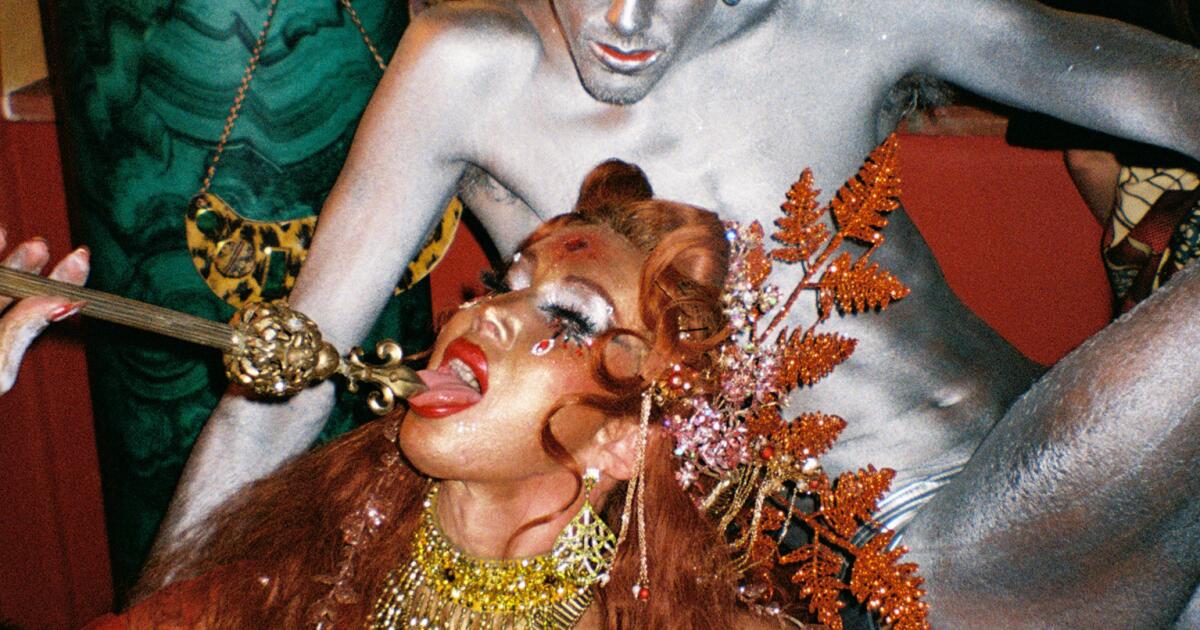
The sun, played by Love Bailey, and the moon, played by Logan Wolfe.

He has been described as a magician and “being of light.” As Salvador Dalí’s kindred spirit and protégé. As the Andy Warhol of the West Coast. The artist Steven Arnold ought to be a household name. The exhibition “Cocktails in Heaven” at Del Vaz Projects in Santa Monica, which opened this week with a party co-hosted by Karen Hillenburg and Christine Messineo of Frieze, is a hopeful step in this direction.
On Monday night, the gallery transformed into a replica of Arnold’s legendary home and studio in Los Angeles, known as Zanzabar, which has been compared to Warhol’s Factory for the luminaries it attracted (Timothy Leary, Debbie Harry, Ellen Burstyn) and the creative synergy it inspired. Throughout the ’80s and into the early ’90s, Zanzabar was host to queer gatherings and parties, as well as surrealist photoshoots with exquisite paper-cut set designs that Arnold entirely made from hand. “My house is a temple for me. It’s a religious space, it’s where the creativity happens,” he says in the 2019 documentary made on him, “Heavenly Bodies.” Arnold died at the age of 51 in 1994, from AIDS-related complications, and left behind a mind-bending body of work that is now housed by ONE Archives at the USC Libraries.


Steven Arnold “Cocktails in Heaven” exhibition at Del Vaz Projects. First row: Jay Ezra Nayssan of Del Vaz Projects, performance director Tyler Matthew Oyer, exhibition design and artistic director Orrin Whalen, Donna Marcus Duke of Del Vaz Projects, Channing Moore of Del Vaz Projects, chef Gerardo Gonzalez; Second row: Bria Purdy, Anna Bane and Sabine Paris of Del Vaz Projects.
At Del Vaz, characters from Arnold’s ethereal photographs and films came to life in performances directed by artist Tyler Matthew Oyer: At the door, two French waiters, dressed in Mozart wigs and original coats hand-painted by Arnold, checked off guest names from an 8-foot scroll. Inside, performers dressed as the sun and moon — their mostly nude bodies spray-painted gold and silver — languorously laid over a banquet table abundant with crudités, conjuring a scene from Arnold’s most famous film, “Luminous Procuress,” which was projected on the wall. In the courtyard, a bodybuilder posed as a live version of Michelangelo’s “David” sculpture. It was an ode to the joyous, maximalist world that Arnold meticulously and affectionately built in both life and art — because for him there was no distinction, art was life.

Steven Arnold, “Angel of Night,” 1982, featuring model Juan Fernandez.
(Courtesy Del Vaz Projects © ONE)

Steven Arnold, “Untitled,” 1974
(Courtesy Del Vaz Projects © ONE)

Steven Arnold, “Intersection of Dreams,” 1985
(Courtesy Del Vaz Projects © ONE)
Every detail of the party came from something found in Arnold’s archive. The artistic director of the exhibition, Orrin Whalen, planted a few of Arnold’s actual belongings in the warm room where his photographs and drawings hung: his ornate metal bracelet rested on a seashell, and replicas of his red leopard print business cards fanned open on the front table. “Cocktails in Heaven” is also the title of Arnold’s unpublished memoir and became the source material for the party’s chef, Gerardo Gonzalez, who scanned for passages where the artist mentioned his favorite foods — mainly hors d’oeuvres and copious glasses of Vermouth.
Guests on Monday included fashion and art world luminaries, including artists Ron Athey and Joey Terrill, designer Zana Bayne, former Hammer Museum director Ann Philbin, and jewelry designer Sophie Buhai, who mingled under the dangling grapevines and in a tent where upside-down paper umbrellas suspended from the ceiling. The dress code was “Complete Fantasy Conglomerata Divina Magnificata,” and the crowd did their part wearing feathered hats, leopard-print tops, golden sequinned dresses and polka-dotted face paint. It was only fitting to pay homage to Arnold this way, a fashion icon in his own right who was once voted the best dressed man of Los Angeles by L.A. Weekly.
The evening signaled that this is not the type of show that will deaden an artist behind glass vitrines. “We can summon artists’ spirits through gatherings,” says Jay Ezra Nayssan, founding director and chief curator of Del Vaz Projects, which is also Nayssan’s home. “This opening is an aspect of a project that should be equally important as the exhibition itself … Queer culture is carried not only through scholarship but through laughter, perfume, embrace and touch, through dinners and concerts — and whatever forms are waiting to be invented.”


Christine Messineo, director of Frieze Americas, and Jay Ezra Nayssan, founding director and chief curator of Del Vaz Projects.


William Escalera and Francisco George


Waseem Salahi, left, and Elisa Wouk Almino, Editor in chief of Image Magazine.

French waiters Stella Felice and Kabo check in the guests, wearing original coats hand-painted by Steve Arnold.


Joey Kuhn, left, and Jessica Simmons.


Miles Greenberg and Vidar Logi.


Actor Charlie Besso, left, and director Luke Gilford.


Roman Smith as the live Michelangelo “David” statue.


UConn’s Braylon Mullins hits game-winning 3-pointer to shock Duke, advance to men’s Final Four

Are robots coming to a McDonald’s near you?
As oil prices rise, airfares are surging and some airlines might not survive
‘Fences’ and ‘Dog Man: The Musical’: Center Theatre Group pulls out all the stops in new season
L.A. Times Concierge: I live in O.C. My kids live in Santa Clarita. Looking for nice spots to meet halfway.

Florida High School Football Rankings: Top 25 teams – Oct. 21

How old is Bo Nix? What to know about Oregon quarterback ahead of 2024 NFL Draft

Cleary's 21 help Le Moyne down Central Connecticut State 69-64 in OT

99th annual Pony Swim held in Virginia

Indiana Members Credit Union announced as new anchor tenant at Bottleworks District

Newsletter: G7 ministers to hold talks on war’s economic fallout
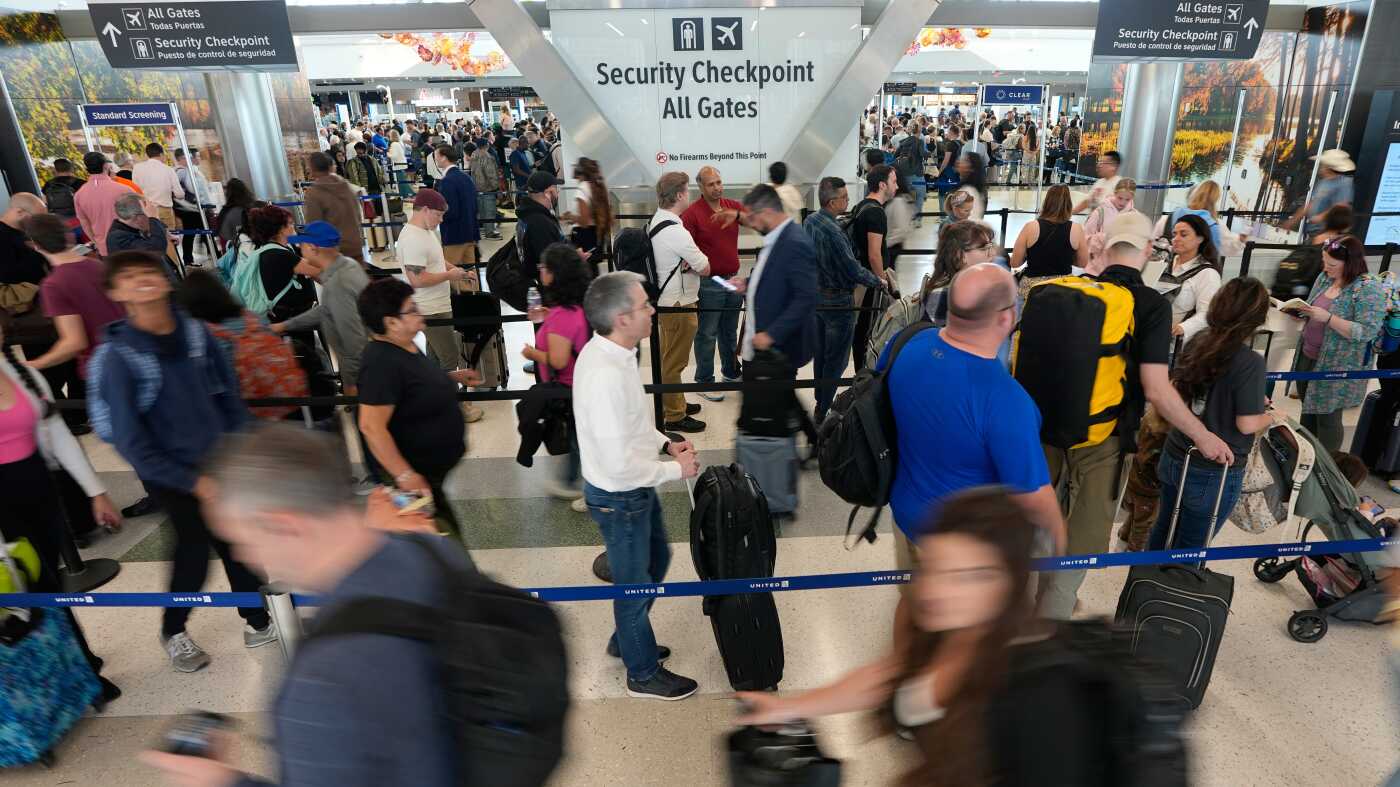
ICE officers could remain at airports after TSA workers are paid

Scathing report claims nation’s oldest labor union ‘betrayed’ MAGA members through ‘shocking’ spending

Republican US lawmaker demands Congress vote on any Iran troop deployment

So you went to a No Kings protest. Now what?
-

 Sports1 week ago
IOC addresses execution of 19-year-old Iranian wrestler Saleh Mohammadi
-

 New Mexico1 week ago
Clovis shooting leaves one dead, four injured
-

 Miami, FL4 days ago
Jannik Sinner’s Girlfriend Laila Hasanovic Stuns in Ab-Revealing Post Amid Miami Open
-

 Tennessee6 days ago
Tennessee Police Investigating Alleged Assault Involving ‘Reacher’ Star Alan Ritchson
-

 Minneapolis, MN4 days ago
Boy who shielded classmate during school shooting receives Medal of Honor
-

 Politics1 week ago
Schumer gambit fails as DHS shutdown hits 36 days and airport lines grow
-

 Science1 week ago
Record Heat Meets a Major Snow Drought Across the West
-

 Technology1 week ago
YouTube job scam text: How to spot it fast