Lifestyle
'Reclaiming red, white and blue': What fans wore to Beyoncé’s ‘Cowboy Carter’ show in L.A.


Beyoncé kicked off her highly anticipated “Cowboy Carter” tour this week in Los Angeles at the SoFi Stadium, where she’ll be gracing the stage five times through May 9.
-
Share via
As expected, the Beyhive (a.k.a. her most dedicated fans) showed out with their western-inspired outfits, which were heavily influenced by the Grammy Award-winning country album. Attendees wore bedazzled cowboy boots and hats; chaps; fringe and leather; red, white and blue; outfits inspired by Beyoncé’s past tours and video looks; and, of course, denim on denim on denim.
Before the second show on Thursday night, we caught up with some of Beyoncé’s fans to ask them about their outfit inspiration, why “Cowboy Carter” resonates with them and what cowboy culture means today. Here’s what they had to say.
Responses have been lightly edited for length and clarity.

Kylia and Kyana Harrison, 24, of Santa Barbara
Tell us about your outfits.
Kylia: She actually bought our tickets Monday night and surprised me while I was at work and was like, “Are you down?” I was like, “OK, I’m so down.” And then we kind of just put this together.
Kyana: She had everything already. We do Stagecoach and Coachella, so we already had those pieces. So then we kind of just put everything together.
What is your favorite part of your look?
Kylia: Mine is definitely my cowboy hat. I’ve had it for two-ish years. I go to NFR [National Finals Rodeo] every year, so I wore it. I feel like it’s just kind of my thing.
Kyana: My body chain.
What song are you most excited to hear tonight?
Kylia: I want to hear “I’m That Girl.” It’s very sensual and just like that moment.
Kyana: I want to hear “Tyrant.” I feel like it puts me in a “bad girl” energy, like real boss. I love that song.
Cowboy and western culture have evolved significantly over the years, and it feels like Beyoncé is showcasing what it means to her and it’s history. What does cowboy culture mean to you?
Kyana: Personally, I love it because … I know that cowboys first were African American, so I think that she’s taking control of that and putting her twang on it.

Hope Smith, 31, of Vancouver, Wash.
Tell us about your outfits.
I love DIYing and I never learned my lesson on taking too big of a project, so I redid her Dolce & Gabbana outfit [from] “Renaissance.” I went for the hardest option. This is my favorite outfit that Beyoncé wore during “Renaissance.” She had a blue and a red [version]. It was hours and hours of rhinestoning, multiple seasons of “Love Is Blind” and a lot of podcasts. I was rhinestoning last night, actually, and there is glue in my purse and rhinestones just in case. I’m hoping it holds it together. So, yes, I loved “Renaissance” and I am overjoyed to be here. I turned 30 with Beyoncé at “Renaissance,” and it was like my my coming of age. Hopefully, [my outfit] makes it to D.C. in a few weeks.
What is your favorite part of your look?
This fan came to two “Renaissance” shows with me. It’s really cheesy. She’s inspired me as an artist. I’m a teacher and I’ve been pursuing art outside of teaching, and it’s, like, brought me into the person that I am. So this is designed after her opening screen for “Renaissance,” and she later sold a version of it online, so Beyoncé has copied me. Thank you, Beyoncé. You can credit me later with tickets, and so, yes, it is being held together with tape because I was clacking it too much in Vegas and Seattle.

What song are you most excited to hear tonight?
I feel like “II Hands II Heaven” is going to just kill it live, but I’m going to cry the whole time. I had to buy tissues on the way over because I will sob.
What does cowboy culture mean to you?
I feel like she’s tapping into the original cowboy culture. Like, as a white woman, I’ve learned a lot from this album, like Beyoncé has really tapped into the history. The origin of the word “cowboy” was used to be derogatory towards Black men and these are things that, like, we didn’t learn in school, especially growing up in Oklahoma, and I just have loved the history and the commentary through it. I have loved watching people’s responses and I’m really excited to see them respond more to this show certain parts of it on Monday were just amazing and I love her pushing against the norms and the white narrative that we tend to fall into. She’s forcing us to think — if you stop and think — but then a lot of people are coming to judgments without doing their research.

Johnathan Rojas, 34, and Oscar Saucedo, 32, of Orange County
Tell us about your outfits.
Rojas: My inspiration is like Amazon, but make it look like not Amazon. I love to sparkle. Cheap but not cheap. Expensive.
Saucedo: For me, I just went with the red, white and blue with the boots.
What is your favorite part of your look today?
Rojas: Definitely the shirt. Can’t get enough, and the pink Cubans on the wrist like get into it.
Saucedo: For me, definitely my hat with the rhinestones, and my boots have the American flag.
What song are you most excited to hear tonight?
Rojas: I love a good ol’ classic like “Diva.” You know, “female version of a hustler.” I love to hear the classics and then anything from “Renaissance.”
Saucedo: “Cozy.” That’s my song.
What does cowboy culture mean to you?
Rojas: It’s cool that Beyoncé, like, took it over, because it’s become more of like a mainstream and less conservative. We can all kind of can put our twist and our spin on it and really be creative with it.
Saucedo: Being Mexican, it comes from my culture. I’m glad that she’s making it part of it, that she’s making it more mainstream so everyone can see just other cultures and not just whatever is popular at the moment.

Ronny G., 28, of Salt Lake City
Tell us about your outfit.
I want to do a real country one, so I got the boots from Mexico, got the Levi bootcuts, fringe on the top and the back. I had to show off for Beyoncé. I love [her].
Which part of your outfit are you most proud of?
It took me 20 minutes to get these [bootcuts] on and I did it.
What song are you most excited to hear tonight?
All of them. I just don’t want her to point to me and say, “She ain’t no diva.” That’s all I am concerned about, honestly.
What does cowboy culture mean to you?
Just getting down and dirty.

Chris Golson, 32, of West Adams; Marquis Phifer, 36, of Houston; Jason Richardson, 39, of Los Angeles
Tell us about your outfits.
Richardson: As much of my personality is upbeat, I’m actually pretty severe with my look, so I love all black. [I have] an Ottolinger vest. I like a high, low [moment]. Cargos. The boots — I don’t know the actual brand, but I do know they hurt, so pray for me.
Golson: My look is giving “Renaissance” meets “Cowboy Carter.” I’m a little bit of cowboy on top, little bit of disco on the bottom, a little bit ghetto country on the bottom, on my feet.
Phifer: I’m giving rich plantation owner. I’m sorry, but in the terms of, like, “I’m from Texas,” so owning a farm, that’s kind of what you do. So it’s giving ownership.
Which part of your outfit are you most proud of?
Phifer: The jacket. It was flown in from Pakistan. I’m from Texas, so there’s like synergy, but I just wanted, like, a little bit of shimmy. [I planned my outfit] for only two weeks. I don’t think too much. Not too much thought. Just execution.
Richardson: My favorite part will probably be the cowboy hat. I mean, I know everybody’s going to have a cowboy hat, but, you know, sometimes you gotta lean into the theme. But I will say I’m a Texan as well. Born in Houston, then moved to Dallas, so we just need to let everybody know that Destiny’s Child has been wearing cowboy hats. They’ve been wearing the denim, been having the nod to country. So I will enjoy this tour because I am Black, I am country, I am from Texas, born and raised. So I’m super excited to enjoy the show.
Golson: My favorite part of my look is honestly the glow. It’s time for Beyoncé to shine. I’m here for it.
What song are you most excited to hear?
Richardson: It’s not even a full song but something about “Flamenco.” Ugh, [it] does something in my spirit. I love the the vocal acrobatics, you know, just reminding people that even though it’s a country genre, she could still skate on the track and get the vocals that she needs. If it’s a full song — let me stick to the theme — I’ma say “Texas Hold ’Em.”
Phifer: We would say “Desert Eagle.”
Golson: That’s our favorite song. It’s f— hot. It’s a moment.
What does cowboy culture mean to you?
Richardson: What I’ll say about cowboy culture is that she is democratizing the access to cowboys and that cowboy culture. More of a [reminder] that it has its roots across all the demographics, primarily in the South. And so for all those that have grown up in the South, that are fully acquainted with that cowboy culture, but don’t necessarily look the part of mainstream cowboy country music, we’re excited to lean into it. I’ve been called country for a large part of my life. I wish I didn’t lose some of the twang, but I’m super excited that she reminded people about the history of the genre, reminded of the roots and some of the complexions and different colors of country. So I’m excited to see the greatest artist of our living time do what she does best.
Phifer: I’m from Houston, Texas, and we still ride horses in the middle of the street, and that’s just the culture of Houston. I love that she’s able to take the culture and put it on a massive stage to be received. But we’ve been country. We’re gonna live country, die country, and that’s the country culture.
Golson: Honestly, as someone from Philly, I think, this tour, this album, and the magnitude that she’s been able to hit with this has spoken volumes to the amount that we have contributed to music in general, and there is no genre that could define us. It’s just music and it’s just love.

Camilo Aldrete, 21, of Pomona
Tell us about your outfit.
The inspiration was obviously “Cowboy Carter,” but I also pulled from “Renaissance.” I just wanted to be sparkly. I was like, “Silver, why not?” I still wanted to have that cowboy-ness and like a little belt buckle.
What is your favorite part of your look?
I think my shirt. I had to bedazzle it myself. It was fun. It was rewarding to see the outcome. It took me a few days, but I had help too, so it was easier.
What song are you most excited to hear today?
Probably “Bodyguard” and “ll Hands ll Heaven.”
What does cowboy culture mean to you?
I’m Mexican, so I view it from the Mexican point of view, and I think it’s about just being confident, being yourself, standing your ground, knowing what you want to do [and] living in your own vibe.

Maddison Walker, 9, of Carson
Tell us about your outfit.
My mom helped me pick it out, and I was able pick out my pants. I really like my heart pants, and they’re pretty.
What is your favorite part of your look?
I really like my purse. It’s the Marc Jacobs Tote Bag.
What song are you most excited to hear today?
“Texas Hold ’Em.”

Madalyn Young, 55, of Hawthorne
(Juliana Yamada / Los Angeles Times)
Madalyn Young, 55, of Hawthorne
Tell us about your outfit.
My outfit is all about animal prints. I love zebras, so you can tell I have the coat, the boots with the fringe, all with the black skirt and the blouse. This is a western-style blouse as you can see with the fringe, the lace and the buttons. What I love about this blouse is the lace. It’s showing a little skin. It’s sexy but at the same time very classy.
What is your favorite part of your look?
I love my boots. These are authentic western boots. There’s zebra print with the fringe, and if you look around, you really won’t see anybody else with the boots on, so I like to be an original person.
What song are you most excited to hear?
“16 Carriages” and, most importantly, “Blackbiird.” It really resonates with me because it was written by the Beatles regarding the Little Rock Nine, and my parents are from Little Rock, Arkansas, and so they lived through that moment and they actually know some of the Little Rock Nine. So it’s very personal for me, and I’m very inspired by that song.
What does cowboy culture mean to you?
When I think about cowboys, I even go back to the Lone Ranger. Bass Reeves was actually a Black man from Arkansas. As you can tell, that’s my roots. However, coming to Hollywood, it was kind of … he looked different. The Lone Ranger is actually a true story about Bass Reeves. When you think about the culture of cowboys, they were actually Black men, but they would not refer to them as men, so they called them “boys” — “cowboys.” However, it has just evolved into a culture that has always been a part of my family. I have relatives who were cowboys and actually worked with cattle in Texas, so it’s a culture that never left. It’s just coming back on the scene.

Josh Krantz, 40, of Long Beach
Tell us about your outfit.
What’s funny about the inspiration is that I had a whole ’nother outfit planned, and with the help of a friend, she’s stoning some things for me, but that didn’t come through today. So this is all random s— from my closet that I just pulled together for “Cowboy Carter.” I did not plan this months in advance. However, I did plan the other outfit months in advance, but it may happen on Sunday. I’m coming back for another show.
What is your favorite part of your look?
I did stone this sash myself. This is Beyoncé merch. I’m proud of that because that was a lot of hard work. It took a couple hours, maybe three. I love this fringy rhinestone madness. I love any kind of fringe, so I’m feeling it.
What song are you most excited to hear today?
I’m excited to hear “Why Don’t You Love Me.”
What does cowboy culture mean to you?
I love that. Beyoncé is bringing back that cowboy culture and really making all the white people in America realize it actually started with Black people, especially the house music too, with the “Renaissance” tour. She’s killing it. It’s so rad. I love that we’re all learning a whole new thing through her.

Anthony Pittman, 32, and Jose Mascorro, 32, of Compton
Tell us about your outfits.
Pittman: I painted this jacket when the album came out last year at the end of March. I painted another jacket for this tour as well, but I wore that to opening day, so I wore this one today. My look is basically vintage, mustard kind of vibes. I’ve been an artist for 15 years now. I started painting jackets for Beyoncé during the “On the Run” [tour] and then the Hive started commissioning me to paint jackets for them, so I’ve been doing that as well. I was featured in Vogue, Essence [and] USA Today last year for the “Renaissance” tour, so that’s why I’m back here at the “Cowboy Carter” tour to give you more looks.
Mascorro: For my look, I really just wanted to match with him, so I’m just wearing a Levi’s jacket and jeans, but I wanted to switch it up with the cream.
Pittman: My bandana. This was Grandma’s. It’s been around from like the 1970s, maybe, and it was in her drawer. She passed five years ago, so I’m wearing it just kind of as a token for my grandma.
Mascorro: My boots. I think is the first time I’ve ever really owned boots, so Beyoncé got us all buying boots. Kind of like how my family used to wear boots back in the day, so it’s kind of important to honor that.

What song are you most excited to hear?
Pittman: “Ameriican Requiem.” I love that that’s the opener. I was hoping it would be the opener, and it really sets the tone for the rest of the show. It’s just beautiful.
Mascorro: I think I’d have to agree with that. It’s a powerful song.
What does cowboy culture mean to you?
Pittman: I was born and raised in Compton, so we have the Compton farms. Not a lot of people know about it, but I basically grew up watching the cowboys ride down the block on their horses, and I still do every single day, so it reminds me of being home, and there’s also this ancestral memory that I have to it because my family is from the South, so I kind of feel more connected to my family’s background and where they came from.
Mascorro: My family is Mexican and a lot of them are from farms, and so it was really nice to kind of wear the same outfits that they wore back home but kind of make it my own vibe with my own twist on it.

Manny Bueno of West Hollywood and Quentin Smith, 30-something, San Diego
Smith: The inspiration for my outfit were the Compton Cowboys, so I wanted to do the flannel, I’ve got the cargos, the Margiela work boots and the cowboy hat.
Bueno: I was here opening night like a true fan [laughs]. I was giving trade the first night, but this is my distressed Y2K meets my version of rustic cowboy. It’s giving roadhouse.
What is your favorite part of your look?
Smith: I love this shirt. It drapes right, keeps me warm. And I love the hat. It’s by a [Latino] designer, René Mantilla. It’s my first time wearing this hat, so if not now, when?
Bueno: I love distressed leather.
What song are you most excited to hear today?
Bueno: I love “Diva.” It’s my favorite and “My House.”
Smith: I missed the “Renaissance” tour, so I’m kind of excited to hear those [songs] live, but of course “Texas Hold ’Em,” all the ones off “Cowboy Carter,” “Ameriican Requirem.” I love that one. Anything she wants to sing to me, I’m here to receive it.

What does cowboy culture means to you?
Bueno: Not to politicize, but [to] politicize, I think we need to take ownership of America and what truly is America. And it’s not Trump’s America. It’s not what’s being played out in the news.
Smith: To add on to that a little bit, a reclamation of not just America but, like, Black America and where our influence lies, and so many difference places that we don’t always think about. So I love see this subtle, quiet reclamation of not only what it means to be an American but what it means to be a Black American. So it’s interesting to see how she kind of plays around with that.

Peter Crawford, 54 and Pieter van Meeuwen, 52, of Santa Barbara
Tell us about your outfits.
Crawford: Obiviously, [the] “Lemonade” [album] inspired it, and I made this dress out of shower curtains, actually, and fishing line, which I made as a tribute to her. I also sewed two wigs together to make this.
Van Meeuwen: We saw the show on Monday, and this is a reference to one of the video looks that is on the background. I fell in love with it that night, and I knew I had to do it. Weirdly, I actually had the supplies ready to go. [laughs] We’ve been to every tour since “B’Day.” We met her at “B’Day” and got to do a meet-and-greet. We saw “Sasha Fierece,” we were in the second row, and she reached through and took my hand when she walked through the audience, so ever since that happened, I just can’t get enough Beyoncé.
What is your favorite part of your look?
Van Meeuwen: I love the sparkle [on my shirt]. I had it made by a young lady named Glittah Gal.
Crawford: The little fringe [on my dress] is made out of fishing line, and I wove every single one of them into the hem of this, so I’d have to say that’s my most special part of this outfit.
What song are you most excited to hear?
Crawford: Always “Ya Ya” for this album.
Van Meeuwen: I love when she does “Ameriican Requiem.” It’s great so I want to see it again.
What does cowboy culture mean to you?
Crawford: Chaps! Chaps! Chaps! Chaps are going to be everywhere. Chaps already are. There’s going to be short chaps. You’re going to see them on runways. That is what’s happening.
Van Meeuwen: I think cowboy culture is complicated. Whether it’s about Indigenous people and what they had to go through under cowboys, or reclaiming the cowboy spirit of what America was built on — this kind of rough-and-tumble existence. I think Beyoncé has done a beautiful job reclaiming it, making it her own and standing strong in the face of the current administration.
Crawford: And also reclaiming the American flag or reclaiming red, white and blue. Like it doesn’t below just Trumpers; it belongs to everybody. It belongs to the United States of America, and I love that she’s making it chic again.

Neil Torrefiel, 41, and Blake Keng, 38, of San Francisco
Tell us about your outfits.
Keng: I love denim on denim, so I wanted to do something that was flowy, and we love to complement looks with each other.
Torrefiel: Absolutely. And I love black on black, and I wanted to do a fulsome look that was really reminiscent of Beyoncé.
Keng: I’ve been planning [my outfit] for months, and I have a mood board [where] I put all these different outfits together. I come up with it kind of last minute, and then he will kind of vibe with whatever I have.
Torrefiel: I’m laughing cause it literally took me an hour.
Keng: We cannot be more opposite.
What song are you most excited to hear?
Torrefiel: I would really scream like a child if she did the Charlie’s Angels song [“Independent Women, Part 1”].
Keng: I’m ready for this album, “Sweet, Honey Buckin.”
What does cowboy culture mean to you?
Keng: It’s like reclaiming what’s ours, and I think that’s what really drew me to her album was reclaiming what is [in] the communities and where it originated from. That spoke to me a lot.
Torrefiel: I think she’s doing a lot to redefine the genre and I deeply appreciate all the work that she’s doing around it. I’m just here to experience all of it.

Teauna Baker, 31, of San Diego and Jeanisha Rose, 34, of Houston
Tell us about your outfits.
Rose: It’s inspired by the song “My Rose” from the CD. It doesn’t say that on the digital version, but I like a rose and my favorite color is pink, so I adjusted it to my liking. It’s one of my favorite songs. It’s so tender. I [rhinestoned] my dress. This outfit was a b— to put together. It took forever.
Baker: I think my outfit is giving “America Has a Problem” … still has a problem. [laughs] I really liked the chaps. As soon as she dropped her picture with the plain white tee and the chaps, from there I was like I definitely need to have chaps. I just wanted to give “high fashion in a plain white tee.”
What is your favorite part of your look?
Baker: It’s the belt. I was a little bit chaotic trying to put this together, and I was on the internet last night looking up horse belts at like 11 p.m., and I was like, “I gotta find a belt to put this together,” and I found this [one] this morning at like 9 a.m. and it was the last one. There was this store in DTLA that had one, and I was like “We have to go first thing in the morning.”
Rose: My favorite part of my outfit are my boots. I got these Cavender’s [Boot City] in Texas. I’m from Texas. She got her boots from Texas too.
What song are you most excited to hear?
Baker: “Spaghettii,” “Ya Ya” or “Heated.” All of ’em to be honest. I’m ready to jam.
Rose: I’m ready to hear “Tyrant.” It’s my jam. I put that on repeat regularly — daily probably.

What does cowboy culture mean to you?
Rose: For me, it represents home. I’m used to going on trail rides and things like that since I was a kid, and it’s just a real good time. It just feels like a connection.
Baker: We’ve been here. We do this. This is where we kind of came from, and I feel like she’s taking the time to share what was ours with other people. But really it’s just freedom. I feel a sense of pride. I feel freedom. I feel happiness inside, so it’s really about enjoying African American culture and being able to share it other people, but other people respect it and enjoy it.

Zuri McPhail, 37, of Stockton
Tell us about your outfit.
I love the color pink, so I was like I want to do a pink theme, but I also don’t want to be like everybody else. I pieced this outfit together, and it’s pretty in pink. I like the rodeo. I have a pink horse.
What is your favorite part of your outfit?
My horse.
What song are you most excited to hear?
I looked at the setlist beforehand, and I’m not going to lie, I’m excited to hear the older songs that she’s going to play. I’ve been a Beyoncé fan since I was 13 or 14 so I’m looking forward to the older s— because I’m nostalgic. That’s my s—.
What does cowboy culture mean to you?
You can’t reclaim what is already yours. We were doing the s— before the s— was the s—. I have family who were Black cowboys. We are always the trendsetters. Black women. Black people. We started the s— and it kept getting built on. And I’m just grateful to be here and to see a Black woman do the s— bigger than anybody has ever done it. You can hate on it as much as you want to, but if Beyoncé is doing your genre, you made it. And Beyoncé is from Texas, so if you’re ever going to question like, “She can’t do a country album?” She’s f— country. That is who she is. She is from Texas. She can’t be mad that a Texas woman is tapping into her roots and showing you who she is and who were are.

Lifestyle
Terry Tempest Williams on why women with big ideas get labeled ‘crazy’ : Wild Card with Rachel Martin
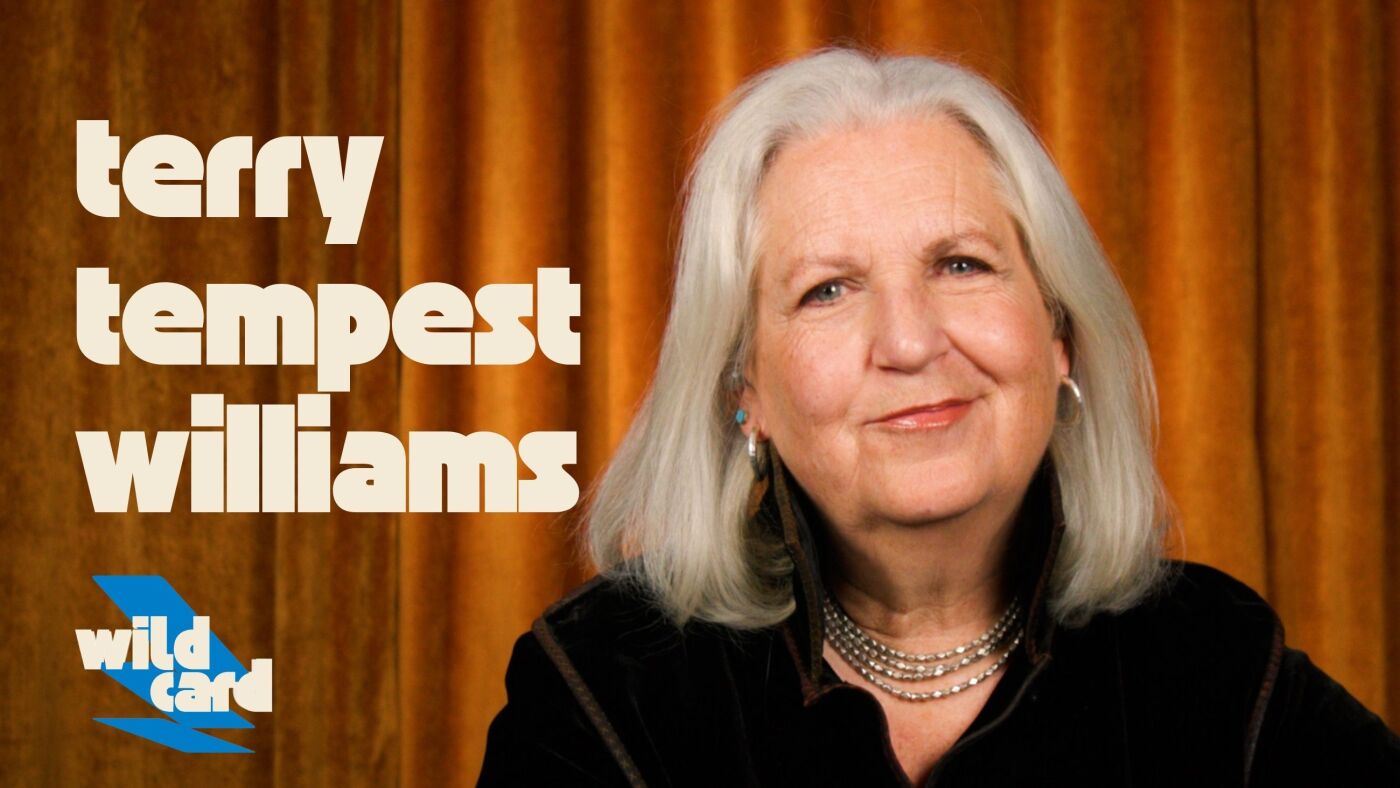
A note from Wild Card host Rachel Martin: I met Terry Tempest Williams about 25 years ago at a writer’s conference in Yosemite Valley. I was a young reporter who was there to do a story about how literature was addressing climate change and she made such a huge impression on me. I had never heard someone talk about the natural world the way Terry did and she had a spiritual depth I hadn’t encountered in my life at that point.
To this day, Terry’s writing always reorients me towards what is good, what is beautiful, and what is true. Her newest book is called “The Glorians.”

For its upcoming Los Angeles venue, experiential art firm Meow Wolf will focus on the art of storytelling, with a specific eye toward skewering our city’s moviemaking magic. To help bring that vision to life, Meow Wolf has entered into a creative partnership with Titmouse, one of L.A.’s most renowned independent animation houses.
The Hollywood-based studio behind popular series such as “Big Mouth” and “Star Trek: Lower Decks” will create animation that will be shown throughout the West L.A. venue, which is on target for a late 2026 opening at the Howard Hughes entertainment complex.
It’s a move that represents a shift for Santa Fe, N.M.-based Meow Wolf. Over the last decade-plus, the art collective has grown beyond its anything-goes, punk-meets-psychedelic roots into an organization with full-scale, maximalist installations in its hometown, Denver, Las Vegas, Houston and the Dallas suburbs. In the past, Meow Wolf kept most of its media in-house.
As part of its larger-than-life participatory art installations, Meow Wolf L.A. will feature a mix of live action and animation, the former filmed by Meow Wolf in its Santa Fe studio. Meow Wolf’s James Stephenson, a senior VP with the company and its creative director of emerging media, said the degree to which the L.A. exhibition will lean into various animation styles necessitated an outside partner. Titmouse’s work, in development by a number of directors with contrasting tones, will be shown on a variety of formats, ranging from cinema screens to full-room projections.
“I really believe in animation as an art form, and I know the Titmouse folks do too,” Stephenson says. “Animation is made by artists. It’s made by artists with their own hands. It’s something that is still very rooted in craft.”
Meow Wolf’s L.A. space is set in a former cinema complex, and will champion its location, taking guests on a journey through a converted movie house and beyond, into a sci-fi-inspired fantasyland with sentient spaceships and a 30-foot-tall mushroom tower. Meow Wolf creatives have spoken of the fantastical movie theater as one that will feature animated, self-aware candy before attendees enter the main exhibition space, making Titmouse’s work some of the first art guests will encounter. Titmouse co-founder Chris Prynoski has said the studio has lined up at least six directors for the exhibit.
An in-progress art installation destined for Meow Wolf L.A. at the art collective’s Santa Fe, N.M., headquarters. The L.A. exhibition will feature animation from Titmouse.
(Gabriela Campos / For The Times)
Titmouse, says Stephenson, is the right partner because “they’re known less for a house style, and more for a house vibe.” Over the years, Titmouse has been behind such diverse shows as “Scavengers Reign,” owning a Jean Giraud influence rooted in French and Spanish surrealism, the lively “Jentry Chau vs. the Underworld,” with an unique color palette that took inspiration from anime and Chinese mythology, the exaggerated comic book feel of Adult Swim’s “Metalocalypse,” and the approachable yet expressive tone of “Star Trek: Lower Decks.”
“Meow Wolf’s vibe is similar to Titmouse’s vibe,” Stephenson says. “It’s artist-first, artist-driven, independent and kinda edgy. They are always trying to find the edge of what’s possible. They try to see how far they can go, and it’s done for fun and in the spirit of taking risks.”
Prynoski says working with Meow Wolf will give Titmouse a sense of artistic freedom it doesn’t always have when delivering content for more traditional Hollywood partners. He says the multi-director approach is a callback to the early days of Warner Bros. Animation, when individual creators put their own stamp on Looney Tunes material.
“I use Bugs Bunny as an example,” Prynoski says. “You’ve got a Friz Freleng Bugs Bunny short. You’ve got a Chuck Jones Bugs Bunny short. You’ve got a Tex Avery Bugs Bunny short. They’re all different versions of Bugs Bunny, and people who are really paying attention can tell which director directed each one. Even though to the layman, these are all Bugs Bunny, but if you lined them up, they are drawing in different styles, sensibilities and techniques.”
Prynoski says that was a centerpiece of his pitch to Meow Wolf, noting that characters will reappear in multiple installations, each handled by a different artist. Meow Wolf L.A., in fact, will be the firm’s most character-driven exhibition, as guests will follow the storylines of three main protagonists throughout the space.
In announcing the partnership, Meow Wolf and Titmouse released an image from an animated work directed by Luca Vitale. It features a key character having a moment with a hummingbird and it’s done in an elegant, slightly anime-influenced style. It’s an image full of movement, reflecting a character in transition with inviting pastels and bold dashes.
“I like that image because I think it captures some of the sense of wonder that we want people to feel,” Stephenson says. “The character is having an encounter with the elusive nature of creativity and reality in a way that makes them have a different perspective of what’s possible.”
Other contributing animation directors to Meow Wolf L.A. include Space Dawg, Felix Colgrave, Alexander Vanderplank and Phimémon Martin, and Jun Ioneda.
Titmouse’s partnership with Meow Wolf will extend beyond the L.A. exhibition. The two will be working on the development of Meow Wolf New York, which is slated to open some time after Los Angeles, and are collaborating on a planned animated series, which Prynoski is spearheading.
Meow Wolf exhibits are the result of sometimes hundreds of disparate artists coming together in a shared space. Distilling that into a signature, singular style for a series could be a challenge. Stephenson pinpoints some guiding principles.
“You really need to feel the hand of the artist,” he says. “You need to feel a DIY aesthetic. You need to feel the materiality. Those are very specific to what we are.”

The Kennedy Center on June 28, with its facade signage still covered by a tarp and scaffolding.
Alex Wroblewski/AFP via Getty Images
hide caption
toggle caption
Alex Wroblewski/AFP via Getty Images
On Wednesday, a federal appeals court denied President Trump’s request to stop the removal of his name from Washington, D.C.’s Kennedy Center. The signage on the building has been covered with tarp and scaffolding since June 13, but in a court filing last month, the center’s current executive director said that Trump’s name has been removed.
In their decision, three judges from the U.S. District Court of Appeals for the District of Columbia Circuit said that the president had failed to prove that the arts center would be “irreparably injured” without Trump’s name attached to it.

NPR requested comment from the Kennedy Center, but did not receive an immediate reply.
This latest round of court decisions is part of the ongoing litigation filed by Rep. Joyce Beatty, D-Ohio, against President Trump and the board of the Kennedy Center. In a statement emailed Wednesday to NPR, Beatty said: “Today’s ruling again affirms that this administration’s efforts to rename the Kennedy Center were unlawful. His name no longer desecrates this sacred memorial, which belongs to the American people. Now it is time for the Trump administration to accept this, comply with the law, and take the tarps down.”
In previous court filings, Trump’s legal team had asserted that removing the president’s name from the arts complex, both on the physical building and in its digital materials, would inflict irreparable harm in both time and money already spent. In the denial, the three judges — Patricia Millett, Robert Wilkins and Gregory Katsas — wrote that since Trump’s name has already been removed, “a stay would not avert those harms.”
Furthermore, Trump had claimed that without his name attached, future fundraising would be threatened “and [will] contribute to the financial decline of the Center.” In response, the appeals judges wrote: “Appellants, however, have failed to support this assertion with any specific facts or evidence. They offer only the conclusory assertions of the Kennedy Center’s Executive Director that were made in a factually unsupported declaration.” The center’s current executive director, Matt Floca, specializes in physical plant management.

The presiding judge in the case, Christopher R. Cooper, has ordered that the center provide him a status report on the center’s operation and programming before the end of this month. As of Wednesday, the center’s calendar lists a small roster of programs, including outdoor free movie screenings, workshops for children, and five free live performances in July on its Millennium Stage. In the past, the Kennedy Center presented over 2,000 arts and education events each year, including free daily Millennium Stage performances.

-

 Texas3 minutes ago
Ted Cruz warns Talarico has ‘real chance’ to flip Texas’ U.S. Senate seat
-

 Utah10 minutes ago
Man suspected in 2006 Utah murder left suicide note in Las Vegas jail cell: police
-
 Vermont13 minutes ago
OUTDOOR ACCESS FOR DISABLED IN VERMONT
-
 Virginia18 minutes ago
4 indicted in Virginia double homicide; second victim ID’d as grandmother of 6
-

 Washington25 minutes ago
Washington Commanders are retiring Hall of Famer John Riggins’ No. 44
-

 Wisconsin28 minutes ago
Wisconsin State Patrol rides with truck and bus drivers to spot violations in five areas
-

 West Virginia33 minutes ago
West Virginia town fires entire police force after chief resigns, sergeant alleges evidence room break-in
-

 Wyoming40 minutes ago
WHP: July 5 single-vehicle rollover north of Riverton resulted in one death, one injury

