Lifestyle
Open-air ‘mall parks’ are on the rise in SoCal — and exhausted parents are loving it


As the sun peeked out from behind the clouds at 9:30 a.m. on the day after a rainy Saturday, the strollers at Runway Playa Vista rolled in. Giggles echoed in a nearby play area where children twisted knobs and spun a wheel in a car-like play structure. Toddlers whizzed by on scooters as parents chatted about the struggles of parenting during a rare L.A. storm.
Their solution to kids with pent-up energy wasn’t to head to any park — it was to come to a mall park. Or rather, the turf fairway and play structures that sit just outside storefronts at this southwest Los Angeles “shopping center.”
“My older daughter does dance right here, so this is a Sunday routine for us,” said Daniel LaBare, who sat with his Whole Foods shopping bags by the play car with his younger daughter, 2-year-old Ellie. “She goes to dance, and we hang out and play.”
With the rise of e-commerce, it’s no secret that retail developers have had to get creative to keep attracting customers. One method that seems to be working? Catering to families by making green turf and other kid-friendly spaces a mall centerpiece.
Some of these areas are just patches of turf with Adirondack chairs — popular with exploration-minded toddlers, or kids with a ball. But there are also shopping centers with more elaborate play structures, such as Rancho Cucamonga’s Victoria Gardens “Orchard Play Area” (“near Shake Shack and Silverlake Ramen,” according to the website). The lawns often serve as activity centers where malls hold kid concerts, adult exercise classes and Christmas tree lighting events.
A child plays on playground equipment, conveniently located near Shake Shack, at Victoria Gardens in Rancho Cucamonga.
(Brookfield Properties)
“More and more centers are moving away from just transactional spaces, and they’re moving towards community destinations,” said Paul Chase, president of JLL Lifestyle Property Management, a commercial real estate developer and investment firm that owns shopping centers across the globe. In November, it refocused Chase’s division from “retail” to “lifestyle” — a semantic change that reflects a shifting focus. The division now manages retail spaces as a place to spend time, not just shop, whereas it previously focused on the latter. Chase said the industry name for the landscaped places where kids play and families gather is “entertainment zones.”
One JLL Property, Manhattan Village in inland Manhattan Beach, underwent a renovation in 2021 that transformed a flat parking lot into an “entertainment zone” featuring a turf lawn with benches, fountains and short rolling hills. On any given weekend, toddlers can be seen summiting the “hills” to stick their fingers in the water features while parents sip coffee from the cafe that sits at the west end of the green space.
Just across Rosecrans from Manhattan Village in El Segundo, families flock to the Point, the South Bay’s first mall- turned-park development, which opened in 2002. Fresh from soccer games, kids kick a ball on the same patch of turf where babies crawl and families picnic — with food purchased from the mall’s restaurants, including Mendocino Farms and Cava. Conceived as “the South Bay’s living room,” the Point’s “anchor tenant” would not be a department store, explained Jeff Kreshek, a senior vice president and western region president and chief operating officer of the Point’s parent company, Federal Realty. It would be 45,000 square feet of open space.
“If you look at traditional malls, there’s a commerce aspect, and they threw in some places for you to sit down,” Kreshek said. “So it was kind of reverse engineering what shopping centers had been for decades.”

Charlotte Nguyen, center, and her friends do craft activities on the lawn during a Lunar New Year celebration at the Point in El Segundo, on Sunday, February 22, 2025.
(Stella Kalinina/For The Times)
There are plenty of parks in these neighborhoods, and parents say they bring their children to public playgrounds, too. But they come to Runway, the Point or Manhattan Village because of the convenience of having nearby food, beverage and shopping options as their children play.
Convenience has yielded community. Daniel LaBare’s daughter goes to preschool nearby, and they frequently run into classmates’ families at Runway.
“She’ll see at least one or two people who she knows here today,” LaBare said. “This is our community as far as I’m concerned.”
Tori Kjer, executive director of parks management and advocacy organization LA Neighborhood Land Trust, is all for it.
“We are 100% supportive of gathering spaces of all shapes and forms because we believe those are the critical places where community members have a chance to come together and meet and celebrate,” Kjer said.
The combination of shopping and green space is by no means a new phenomenon. Catherine Nagel, executive director of parks equity organization City Parks Alliance, points out that where parks go, shopping often follows. It’s a symbiotic relationship where parks attract families, and then families can get the provisions or fulfill the errands they need to further enjoy the park. That’s a recipe for a healthy community.


Twin sisters Emma and Ella Sandoval, left, greet the character Mei Mei at the Point during a Lunar New Year celebration. Kids and parents participate in craft activities at the celebration on Sunday, February 22, 2025. (Stella Kalinina/For The Times)
Parks — like retailers — have also begun to offer more activities in recent years, said Nagel. So retailers and the stewards of public lands (whether that’s the city or the nonprofits that often manage parks) are learning from each other.
“There’s a lot of attention now to activating these [public] spaces in a way that will bring people to them,” Nagel said, referencing activities like salsa dancing in Bryant Park in New York that use park land for structured public gatherings. “Because if you don’t activate them, they can quite often become places where unhealthy, unproductive activity takes place.”
At the same time, a mall park’s green space is not truly public.
“It’s totally fine and great if private property owners want to create gathering spaces in their malls, but there’s no replacement for a robust city park system that has green spaces with trees and lawns and play structures and just places for people to gather,” Kjer says. “The beautiful thing about parks is they are open to everyone. They are intended to be safe spaces for people to protest, to celebrate, to go about their daily lives, without any stigma or worry about being asked to leave.”
At a park, visitors are citizens or patrons. At the shopping center entertainment zone, they’re customers.
“It comes down to dwell time,” Chase said. “The longer that people stay in a center, of course the more money they’re going to spend.”
But families say the mall aspect doesn’t bother them. After all, this generation of parents are the millennials and Gen X-ers who grew up socializing at the mall a la Cher Horowitz in “Clueless.” Now, as parents, the convenience, manicured turf and camaraderie offers something valuable for them in this season of their lives.
“You can let them run, and do your shopping, so everyone wins,” said Charlotte Ahles, who was playing at Runway with 2-year-old daughter Chloe. She pulled at her mom’s pants, towards the Micro Kickboard store directly across from the play area.
“Scooter, scooter,” Chloe said.
“The scooter store isn’t open yet, honey,” said Ahles.



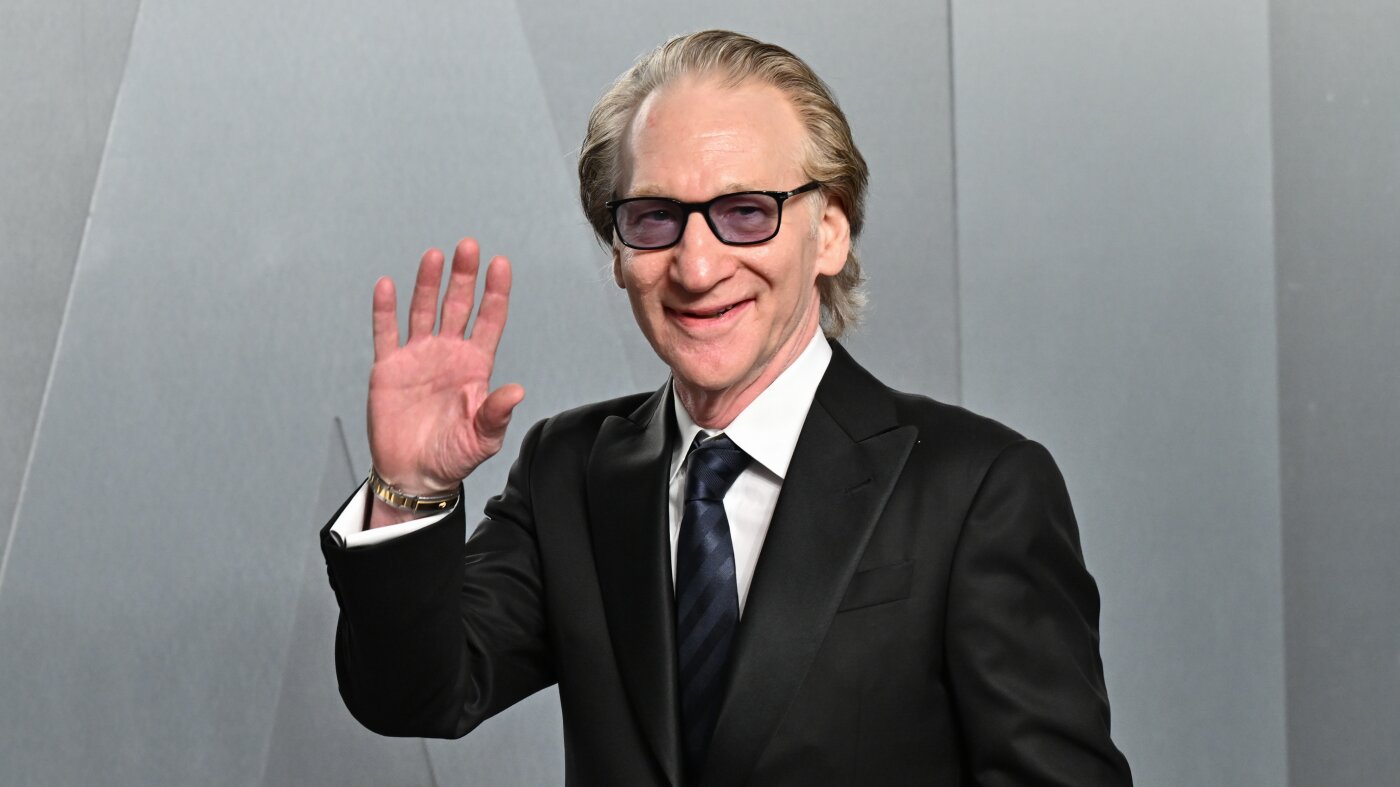
Satirist Bill Maher is this year’s recipient of the Mark Twain Prize for American Humor. Maher will receive the award at the Kennedy Center on June 28th. The show will stream on Netflix at a later date.
Evan Agostini/Invision/AP
hide caption
toggle caption
Evan Agostini/Invision/AP
Bill Maher will be receiving the Mark Twain Prize for American Humor after all.
There’s been some confusion about whether the comedian and longtime host of HBO’s Real Time with Bill Maher would, indeed, be getting the top humor award. After The Atlantic cited anonymous sources saying he was, White House press secretary Karoline Leavitt called it “fake news.” But today the Kennedy Center made it official.
“For nearly three decades, the Mark Twain Prize has celebrated some of the greatest minds in comedy,” said Roma Daravi, the Kennedy Center’s vice president of public relations in a statement. “For even longer, Bill has been influencing American discourse – one politically incorrect joke at a time.”
Is President Trump, chair of the Kennedy Center’s board, in on the joke?
Maher once visited Trump at the White House and he tends to be more conservative than many of his comedian peers but after their dinner Trump soured on Maher, calling him a “highly overrated LIGHTWEIGHT” on social media.
Maher’s acerbic wit has targeted both political parties and he’s been particularly hard on Trump recently, criticizing his decisions to wage a war with Iran and his personnel choices.
“Trump said, ‘when oil prices go up, we make a lot of money.’ Um, who’s ‘we?,’” Maher said in a recent monologue.
Past recipients of the Mark Twain Prize include Conan O’Brien, Dave Chappelle, Jon Stewart, Julia Louis-Dreyfus, Tina Fey, Eddie Murphy and Carol Burnett.
In a statement released through the Kennedy Center, Maher said, “It is indeed humbling to get anything named for a man who’s been thrown out of as many school libraries as Mark Twain.”
Maher will receive the Mark Twain Prize at the Kennedy Center on June 28. The show will stream on Netflix at a later date.


Workers react to the media after updating signage outside the Kennedy Center on Dec. 19, 2025, in Washington, D.C.
Jim Watson/AFP via Getty Images
hide caption
toggle caption
Jim Watson/AFP via Getty Images
Rep. Joyce Beatty of Ohio is asking a federal court in Washington, D.C., to force President Trump and the board and staff of the Kennedy Center to revert to calling the arts complex The John F. Kennedy Center for the Performing Arts.
The motion, which Beatty filed on Wednesday, asks a federal circuit court judge to reverse the Trump administration and the center’s current board and staff’s decision to call the complex “The Trump-Kennedy Center.”
In the filing, Beatty’s attorneys wrote: “Can the Board of the Kennedy Center — in direct contradiction of the governing statutes — rename this sacred memorial to John F. Kennedy after President Donald J. Trump? The answer is, unequivocally, ‘no.’ By renaming the Center — in violation of the law — Defendants have breached the terms of the trust and their most basic fiduciary obligations as trustees. Shortly after President John F. Kennedy’s assassination, Congress designated the Kennedy Center as the ‘sole national memorial to the late’ President in the nation’s capital.”

In a statement emailed to NPR Thursday, Roma Daravi, the vice president of public relations for the Kennedy Center, wrote: “We’re confident the court will uphold the board’s decision on the name change and the desperately needed renovations which will continue as scheduled.” NPR also reached out to the White House for comment, but did not receive a reply.
In December, White House press secretary Karoline Leavitt announced that the complex would heretofore be called “The Trump-Kennedy Center.” Although the new moniker was never approved by Congress, the Center’s website and publicity materials were immediately updated to reflect the administration’s chosen name, and the same day as Leavitt’s announcement, Trump’s name went up on the signage of the complex’s exterior, over that of the slain President Kennedy.
Later that month, Rep. Beatty who serves as an ex-officio member of the Kennedy Center’s board of trustees, sued Trump, members of the Kennedy Center board appointed by Trump, and some ex-officio members, arguing that the complex’s name had been legislated by Congress in 1964. Wednesday’s motion is part of that lawsuit.

In a press release sent to NPR on Wednesday, Rep. Beatty said: “Donald Trump’s attempt to rename the Kennedy Center after himself is not just an act of ego. It is an attempt to subvert our Constitution and the rule of law. Congress established the Kennedy Center by law, and only Congress can change its name.”
For many patrons, artists and benefactors of the Kennedy Center, the name change was the last straw in politicizing the performing arts hub. Following the White House announcement of the new name, many prominent artists withdrew planned performances there, including the composer Philip Glass (a Kennedy Center Honors award recipient, who received his prize during the first Trump administration), the famed Broadway composer and lyricist Stephen Schwartz and the 18-time Grammy-winning banjo master Béla Fleck.
The Washington National Opera (WNO), which had been in residence at the Kennedy Center since 1971, also severed its ties in January after ticket sales dropped precipitously. Earlier this month, WNO artistic director Francesca Zambello told NPR, “We did try as best as we could to encourage [the patrons] that we are a bipartisan organization, but people really voted with their feet and with their pocketbooks. And so we realized that there was really no choice for us.”

On Monday, a coalition of eight architecture and cultural groups also sued Trump and the Kennedy Center board in federal court over the complex’s scheduled closing in July for unspecified renovations. Their suit seeks to have the White House and board members comply with existing historic preservation laws, and to secure Congressional approval before moving ahead with the renovation plans.

Trump floats sending federal agents to San Francisco to tackle crime

Dallas ISD will offer free pre-K starting next school year

Norwegian Cruise Line offers a first look at Luna, new cruise ship setting sail from PortMiami – WSVN 7News | Miami News, Weather, Sports | Fort Lauderdale

Boston ‘No Kings’ rally expected to draw 100,000; others planned across Mass.

Jazz List 8 Players on Injury Report vs. Nuggets

Florida High School Football Rankings: Top 25 teams – Oct. 21

How old is Bo Nix? What to know about Oregon quarterback ahead of 2024 NFL Draft

Cleary's 21 help Le Moyne down Central Connecticut State 69-64 in OT

99th annual Pony Swim held in Virginia

Indiana Members Credit Union announced as new anchor tenant at Bottleworks District

Video: Will ICE Change Under Its New Leader?

DHS shutdown breakthrough comes at cost for Republicans as funding fights nears end

Rubio joins crucial G7 talks as Iran war set to dominate second day

A surprise resignation could open the door for an independent to win a Montana Senate seat

Video: Savannah Guthrie Says She Believes Her Mother Was Taken for Ransom
-

 Detroit, MI1 week ago
Drummer Brian Pastoria, longtime Detroit music advocate, dies at 68
-

 Science1 week ago
How a Melting Glacier in Antarctica Could Affect Tens of Millions Around the Globe
-
 Science1 week ago
I had to man up and get a mammogram
-

 Movie Reviews1 week ago
‘Youth’ Twitter review: Ken Karunaas impresses audiences; Suraj Venjaramoodu adds charm; music wins praise | – The Times of India
-

 Sports6 days ago
IOC addresses execution of 19-year-old Iranian wrestler Saleh Mohammadi
-

 New Mexico5 days ago
Clovis shooting leaves one dead, four injured
-
 Business1 week ago
Disney’s new CEO says his focus is on storytelling and creativity
-

 Technology5 days ago
YouTube job scam text: How to spot it fast