Lifestyle
Lucas & Arthur Jussen release 'little diamonds' EP of lesser-known piano duets


Lucas and Arthur Jussen perform with the Chicago Symphony Orchestra under the baton of Christoph Eschenbach in October 2024.
Todd Rosenberg/Chicago Symphony Orchestra Association
hide caption
toggle caption
Todd Rosenberg/Chicago Symphony Orchestra Association
They finish each other sentences, in conversation and in music.
Brothers Lucas and Arthur Jussen have played music together as far back as they can remember. They performed for the Dutch queen as young boys. As a piano duo, they’ve taken that symbiotic connection to some of the world’s greatest concert halls.
“The strange thing is that with Arthur, I never notice when our hands touch or our heads or whatever, it’s just a very natural thing,” Lucas told NPR’s A Martínez. “I could never imagine doing that with someone else or or not doing that with Arthur.”
This month, they are releasing recordings of a set of what they call “tiny diamonds” — short waltzes and lullabies influenced by, and in some cases rejecting, French Impressionism from the late 19th century and early 20th century. There’s Debussy’s “En bateau” (“By Boat”) from his Petite Suite, alongside lesser known works by Benjamin Godard, Reynaldo Hahn, Charles Koechlin and Germaine Tailleferre.
YouTube
It’s the first volume in a trilogy of releases. The second EP, Cantus, is due out in May and will feature works by Bach, Brahms and Estonia’s Arvo Pärt (b. 1935). A final release in November 2025 will include both of Edvard Grieg’s suites of incidental music narrating the story of Norwegian peasant anti-hero Peer Gynt.
The set begins with “Les décrets indolents du hasard” (“Indolent Decrees of Chance”), the first in a series of waltzes by Venezuelan-born Hahn known as Le ruban dénoué (The Unspooled Ribbon).
Binary and ternary meters alternate between the two pianists to evoke the indolence of the title, with an echo-like effect.
Hahn, the one-time lover of French novelist Marcel Proust, primarily composed lyrical music. Even for his piano works, “you have to play them also as if you are singing,” said Lucas, 31. That’s a major challenge at the piano, which, unlike the voice or string instruments, can’t sustain a note at length, let alone indefinitely.

Dutch brothers Lucas, left, and Arthur, right, Jussen have performed together as a piano duet since they were young children.
Jesaja Hizkia/Universal Music
hide caption
toggle caption
Jesaja Hizkia/Universal Music
The constant switching of leads that takes place here is central to the Dutch brothers’ broader approach to the piano duo repertoire, which they have sought to expand by shedding light on lesser known pieces such as these or by commissioning new works by contemporary composers, including concertos by Joey Roukens and Fazil Say.
“I am lucky as the younger brother that I never had an older brother who really wanted to be the older brother and wanted to be the boss in music as well as in normal life,” said Arthur, 28. “When you play together, I think the most important thing is that there is no ego that wants to be the biggest ego.”
Arthur says he tries to adapt to Lucas “almost each millisecond.” When they both achieve that level of synchronicity at the keyboard, “you can can reach a state of playing where you both almost start feeling the same and the blood starts flowing the same way,” he added.

Lucas (left) and Arthur Jussen bow with conductor Christoph Eschenbach after performing Mozart’s Concerto for Two Pianos with the Chicago Symphony Orchestra in October 2024.
Todd Rosenberg/Photo provided courtesy of the Chicago Symphony Orchestra Association
hide caption
toggle caption
Todd Rosenberg/Photo provided courtesy of the Chicago Symphony Orchestra Association
Tailleferre was the only woman in Les Six, the avant-garde group of composers formed more than a century ago in Paris. Their musical aesthetic generally rejected German romanticism and the lush style of Impressionists like Debussy.
Tailleferre’s “Valse lente” (“Slow Waltz”) has moments of subtle but confounding dissonance, “which makes you feel all the time, ‘Where is it going?’” said Lucas. “And then in the end, it resolves into this kind of beautiful, dreamy atmosphere.”
The Jussens praised the increased presence of women composers and conductors in classical music programming, a transition and reckoning that has been slow in coming.

“We would be very happy and we would feel we succeeded if people after listening to the album will say, ‘OK, that piece right there, that’s my favorite piece, just because I love the music so much,’ and that they will not say ‘I love it so much’ because she is the only woman on the record,” said Lucas.
Koechlin, who taught Tailleferre and Poulenc from Les Six, was a polymath whose interests ran the gamut from astronomy, car racing and cinema to mountaineering and mythology. Arthur expressed admiration for Koechlin’s many talents. “We can only play piano — for the rest, we’re absolutely useless,” he quipped.
Their career is one that comes with constant stress and pressure to perform, but the brothers say they remind themselves of what inspired them to play in the first place. “We try to always remember now 20 years after we started that we like it so much because if you forget that and it’s just about playing the concerts well and performing each day, then sometimes you lose the sparkle of what music can do and the magic that it has,” Arthur said.
The digital version of this story was produced by Janaya Williams. The digital version was edited by Obed Manuel.

For Iris van Herpen, couture is a laboratory as much as a runway. Our chief fashion critic, Vanessa Friedman, takes us inside this Dutch designer’s latest Paris show — from sci-fi-inspired gowns to an audacious attempt at a dress made of charged plasma.
Lifestyle
The BoF Podcast | Decoding Paris Haute Couture: Wonder, Restraint and the Call of the Void


-

 Detroit, MI2 minutes ago
Metro Detroit weather forecast, July 10, 2026 — 11 p.m. Update
-

 San Francisco, CA12 minutes ago
Classical music series helps reconnect downtown San Francisco community
-

 Dallas, TX17 minutes ago
Dallas police officers, paramedics recall saving woman stuck in a ravine for days;
-

 Boston, MA27 minutes ago
Red Sox win 7th straight game just hours after landing in New York
-
 Denver, CO32 minutes ago
One tree at a time: Denver nonprofit works to close shade gap as heat dome threatens neighborhoods
-

 Seattle, WA39 minutes ago
VIDEO: West Seattle Summer Fest 2026 day 1, evening report
-

 San Diego, CA42 minutes ago
The World’s Number One Wellness Retreat is Right in Our Backyard
-
 Milwaukee, WI47 minutes ago
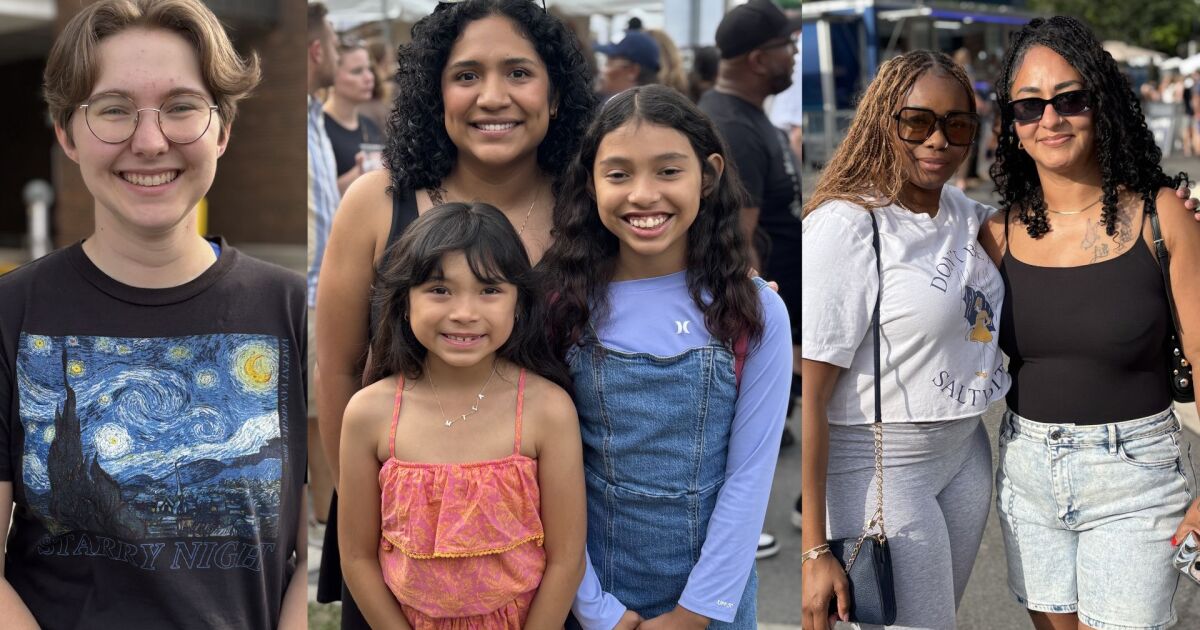
Festivalgoers say Milwaukee’s summer events fill a gap in downtown entertainment

