Lifestyle
Looking for L.A.'s art cool kids? They're hosting exhibits in laundry rooms and garages

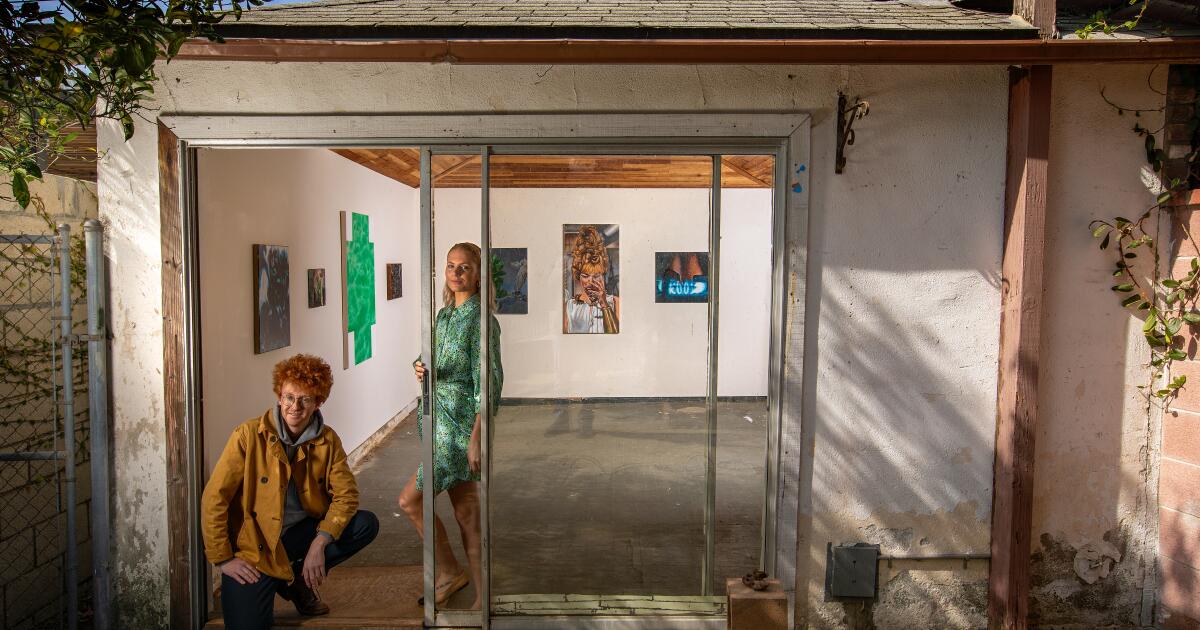
For some Los Angeles galleries, home is where the art is — or it’s in the laundry room, also known as Quarters Gallery, inside Nina Muccia’s two-bedroom Los Feliz duplex. The 32-square-foot space marked its first anniversary in March with a group show, “Hoarders,” of 50-plus works on clothespins, the breaker box and shelves usually reserved for dryer sheets and Tide Pods. At the next exhibit in June, artist Sam Dybeck diffused Fabuloso from a vintage fabric steamer and installed work inside the stacked washer and dryer.
“There are obvious built-in themes and parameters for artists to respond to,” Muccia said of Quarters, its name a sly nod to both coin-operated laundry and the gallery’s quarterly schedule. Exhibits, usually advertised on Instagram, typically last one weekend since she shares the unit with a roommate who, at one opening, was visibly annoyed while wearing a robe and stomping through the party in a huff with her hamper. “A performance piece, of course,” Muccia said of her actor roomie.
Quarters, an unassuming hidden art gallery housed within a laundry room in Nina Muccia’s home in Los Feliz.
(Wally Skalij / Los Angeles Times)
Quarters belongs to a new guard experimenting in the L.A. art scene by bringing exhibits in-house. Residences range from a Tudor mansion and a chateau-esque apartment to a five-car garage and a backyard cabin modeled after the Unabomber’s hideout. They’re a new spin on a nearly century-long L.A. tradition of domestic galleries that rely on word-of-mouth, neighborly trust and consummate hosts.
“When you have these residential spaces, a lot of times it’s because you want to keep the concept high and rents low,” said Danny Bowman, who started his gallery, Bozo Mag, in the revamped garage behind his rented Highland Park house. Openings tend to spill out into the patio or the emptied pool. “Instead of coming for 20 minutes, they stay for three hours,” he said.
“The Weight, the Wait,” an oil on canvas by artist Molly Bounds, is part of the “Nouveau Bozeaux” exhibit at Bozo Mag.
(Mel Melcon / Los Angeles Times)
The emptied pool outside of Danny Bowman’s garage-turned-art gallery at his Highland home.
(Mel Melcon / Los Angeles Times)
High rents and the pandemic were an unexpected boon to the city’s DIY art and literary scene — from roguish takeovers at IKEA to guerrilla readings in parking lots — meshing cultural events that fall somewhere between a kegger and a 21st century salon. Angelenos in the art industry have been a sort of anchor to it all, with a new school intersecting the Venn diagram of curators and patrons, artist-run commercial spaces and art-fair cool kids. Residential galleries also are defined by what they’re not: design showrooms, permanent exhibits, private collections or endowed artist shrines. Still, they’re hard to track — either because they pop up like Whac-a-Mole or remain underground for practical reasons.
Like most residential projects today, Sea View Gallery “takes its appointment system pretty seriously,” said founder Sara Lee Hantman, treating its corner of the Mt. Washington hilltop “as something sacred.” Luckily the street is an artists’ enclave, with some opening their homes for Hantman’s dinner receptions — one in January served gumbo family-style two doors down at a local artist’s Midcentury Modern house. “So much business can be done in these types of spaces without the feeling of business being done,” she said.
It also helps that the house structure itself is a talking point. In the late ’90s, L.A. artist Jorge Pardo got MOCA to help fund his “social sculpture” on Sea View Avenue as an off-site exhibition that became the artist’s home studio. Spatial restrictions notwithstanding, “Pardo designed the space to not have any 90-degree angles,” said Hantman, who leases from the artist’s family month-to-month.
In L.A., where most residences are zoned “single family,” home-based businesses like these technically have a limit on visitors (one per hour) and operating hours (8 a.m. to 8 p.m.). “It’s a decidedly gray area in terms of zoning,” said Sam Parker on his namesake gallery in a rented five-bedroom Storybook home in Los Feliz. Since 2017, Parker’s openings have posed a parking dilemma for his neighbors on the winding hillside. “There comes a very real anxiety with how long we can we keep this up and get away with this until it’s a larger problem,” Parker said.
A fig vine grows around a side entrance to Bozo Mag. (Mel Melcon / Los Angeles Times)
The entrance to art gallery the Bunker, located on the grounds of Danny First’s home in Los Angeles. (Mel Melcon / Los Angeles Times)
Danny First, with his dog Diego, a 3-year-old Mexican hairless, stands next to his other art gallery, the Cabin L.A., on the grounds of his home in Los Angeles. In the background is a painting titled “Dressage,” an acrylic on canvas by artist Nick Modrzewski that is part of the current exhibition, “Modern Handshake,” running through March 31.
(Mel Melcon / Los Angeles Times)
His house’s domestic routine has changed too, to include his wife and 2-year-old son. (“He knows what not to touch,” Parker said.) In a bid for more legitimacy in the art world, Parker is trading the next-door model for foot traffic and will move the gallery to a storefront at 6700 Melrose Ave. in Hancock Park later this year. “First and foremost, we’re in service to our artists who are ready to have a more public-facing gallery,” he said.
The concept of the domestic museum in L.A. began at the 1920s home of voracious art collectors Louise and Walter Arensberg, according to Mark Nelson, who co-authored “Hollywood Arensberg: Avant-Garde Collecting in Midcentury L.A.” The Arensbergs kept an open-door policy for artists and art lovers to bask in nearly 1,000 works from pre-Columbian objects and Modern artists like Henri Matisse, Pablo Picasso, Salvador Dalí and their favorite, Marcel Duchamp. “Even the bathroom had several Paul Klees hanging from the towel rack,” Nelson said.
Their jam-packed Hollywood home at 7065 Hillside Ave. influenced artist-dealer William Copley and his short-lived but seminal Copley Galleries. For the last four years, Nelson has been rebuilding in his Beverly Hills bungalow Copley’s Surrealist gallery, which ran from 1948 to 1949. “There were probably as many or more Max Ernst paintings shoved into this domestic bungalow than there were in his entire Metropolitan Museum of Art retrospective,” Nelson estimated.
After the Arensbergs died in the 1950s, their art dealer who lived next door, Earl Stendahl, bought the property and opened the third iteration of his gallery that started inside the Ambassador Hotel. Ron Dammann, Stendahl’s grandson, and his wife, April, moved in around 1970 to help continue the business and raise their two kids.
“There were toddler birthday parties downstairs with all the breakable pre-Colombian art,” April Dammann remembered. “They played pin the tail on the donkey, and one missed dart could cost us $10,000.” In 2017, the Dammanns closed the gallery that had been operating in some capacity since 1921 and moved out of the historic Arensberg-Stendahl Home — complete with a sunroom by Richard Neutra and a carport by John Lautner.
Be it sprawl or architecture, light or climate, L.A. plays a lead role in hosting experimental spaces beyond the white-cube model. These DIY concepts, from pools to the L.A. River, are “crucial to the art scene in Los Angeles” that began in the 1970s, said Christine Messineo, director of Frieze L.A. and Frieze New York. The influx of moneyed and blue-chip galleries over the last decade has the city competing with top art hubs like New York, Berlin and London.
Art on display at Jay Ezra Nayssan’s home in Santa Monica, where an exhibition preview party/dinner for Frieze L.A. was held in 2022. (Jason Armond / Los Angeles Times)
Art lovers view select art pieces at an exhibition preview party/dinner for Frieze L.A. held in Jay Ezra Nayssan’s Santa Monica home in 2022.
(Jason Armond / Los Angeles Times)
In response, or perhaps opposition, to the gallery boom, curator Jay Ezra Nayssan started Del Vaz Projects out of his West L.A. apartment in 2014. “Everybody eats, everybody drinks, everybody’s invited,” said Nayssan, who now runs Del Vaz as a nonprofit in his Santa Monica home with his partner, Max Goldstein. “We don’t operate in this realm of exclusivity and scarcity, which is inherent in the commercial art world today.”
Joseph Geagan, a painter from the New York and Berlin art worlds, doesn’t think his buzzy penthouse gallery in Koreatown’s landmark Gaylord Apartments would have worked elsewhere. “There’s still a Wild West element for experimentation here,” he said of his “spooky, ‘Shining’-esque” building, which turns 100 this year. It’s a mythos that Geagan didn’t bother competing with; the apartment building and gallery share the same name. (Exhibit spectators usually end up at the HMS Bounty dive bar downstairs after a show.) He’s run Gaylord Apartments since 2021 with his boyfriend, John Tuite, in their living room with glittering views of Koreatown — windows framing the Hollywood sign and Griffith Observatory are in the next room. It’s more a social spot than a moneymaker, and Geagan makes a habit of showing early or midcareer artist friends from outside of L.A., making shipments and travel the bulk of the expenses. “And rent, of course,” he said.
The lower barrier for entry inspired Harley Wertheimer to open Castle Gallery in his dining room two years ago. He’s since quit his gig as vice president of A&R at Columbia Records and expanded the showroom into an empty unit downstairs, where weekend morning receptions come with a latte cart and bagels in the courtyard. Named for its historic 1920s chateau-esque building, Castle is a treasure box of prewar charm: lattice windows, crown molding, wainscoting, Art Deco tile.
Wertheimer views residential and commercial galleries like the so-called California double — surfing in the ocean and snowboarding in the mountains on the same day — one just as fun (and valid) as the other. Democratizing the business doesn’t have to mean watering it down, and art sold in a home isn’t mere decoration. “There’s definitely a desire from me and my peers to be treated as any other gallery,” he said.



Mara is a single mother of two in Minnesota. She and her family have depended on SNAP benefits to make ends meet.
Caroline Yang for NPR
hide caption
toggle caption
Caroline Yang for NPR
Although Mara is unemployed, she is busier than ever.
When she is not taking care of her two children, Mara is at her desk applying for jobs. She is surveying her belongings to see what she can pawn off to buy toiletries. Or she is sifting through bills, calculating which ones can wait and which need to be paid right away.
Soon, Mara, a single mom in Minnesota, may have another task on her busy schedule: figuring out how to afford food for her and her family.
That’s because of new work requirements for people receiving aid from the Supplemental Nutrition Assistance Program, also known as SNAP or food stamps.

“It would be so beyond hard” to lose SNAP benefits, Mara said. “Without SNAP, there’s no funds for food.” Mara asked for her last name to be withheld given the stigma tied to receiving government assistance. She is also worried that speaking publicly will affect her chances of getting a job.
Previously, SNAP recipients with children under 18 were exempt from work requirements mandating that recipients work, volunteer or participate in job training at least 80 hours a month. But now, under President Trump’s One Big Beautiful Bill Act, that exemption only applies to those with children under 14 — which is how old Mara’s youngest child turned in December.

“It would be so beyond hard” to lose SNAP benefits, Mara said.
Caroline Yang for NPR
hide caption
toggle caption
Caroline Yang for NPR
The Trump administration has argued that the mission of the nation’s largest anti-hunger program has failed.
“SNAP was intended to be temporary help for those who encounter tough times. Now, it’s become so bloated that it is leaving fewer resources for those who truly need help,” the White House said in a statement in June.
But policy experts say the SNAP changes do not fully take into account the unique challenges faced by single parents like Mara or the sluggish job market in many parts of the country. They argue that losing food assistance will only create more barriers for recipients struggling to find work.
The timeline for implementing the new SNAP policy varies based on state and county. In Mara’s home state of Minnesota, recipients who don’t qualify for an exemption or meet work requirements will be at risk of losing assistance as early as April 1. Others may have more months depending on when they next need to certify they are eligible for benefits.
Over 100 job applications
Mara imagined she would have a job by now.
It was August when she was let go from her part-time administrative assistant role due to her workplace restructuring. Since then, Mara estimates that she has applied for over 100 positions. She has also attended job fairs and taken free workshops on resume writing.
She has been working since high school, she said, but “ I’ve never been out of work for more than one month, so it’s very difficult.”

Mara spends time working at the computer at CareerForce, a resource for job seekers in Minnesota, on March 4.
Caroline Yang for NPR
hide caption
toggle caption
Caroline Yang for NPR
Although she misses her old job, Mara said it didn’t pay enough to support her and her kids, so she relied on SNAP benefits.
Many recipients are part of the low-wage labor market, where job security is often unpredictable and turnover tends to be high, according to Lauren Bauer, a researcher at the Brookings Institution who has studied SNAP extensively.
“SNAP is supposed to be there to help people smooth that and not let the bottom fall out when they experience job loss,” she said. “And this policy doesn’t account for that at all.”
Mara’s lowest point came in November when the government shutdown led to disruptions in SNAP benefits. Not only was she searching for a new job, but she was constantly figuring out where to get her family’s next meal.
“I might be looking for food stuff during the day when I should have been looking for a job,” she said. “Then, I’m trying to make up that time in the evening after my kids go to bed.”
During the pause, Mara turned to food banks, which revealed other challenges. First, food pantries do not always provide enough for an adult and two growing teenagers, she said. Second, they often lack gluten-free foods, which is essential for her daughter who has celiac disease, an autoimmune disorder that causes digestive problems if gluten is consumed. Gluten-free products tend to be more expensive.
If Mara loses access to SNAP again because of the new work requirements, she fears another stretch of long days spent looking for the right food and enough to feed her family.
“I would be so reliant on looking for food shelves or food banks,” she said. “There would not be time to even live.”
“We’re going to see increases in poverty. We’re going to see increases in food insecurity”
The Congressional Budget Office estimates that roughly 2.4 million people will lose food benefits in a typical month over the next decade as a result of the new SNAP requirements — including 300,000 parents like Mara with children 14 or older.
Gina Plata-Nino, the SNAP director at the nonprofit Food Research & Action Center, says many of the affected recipients will be single mothers who make up a majority of single parent households in the U.S. She added that the changes target a group that often lacks or struggles to afford a support system to help care for their children.
“How can they have a full-time job when they need to pick up their children [for] various activities?” she said. “And they are working — just not enough hours because they need to be there present for their children.”

Mara shops for groceries at a local discount grocery store.
Caroline Yang for NPR
hide caption
toggle caption
Caroline Yang for NPR
The new law also imposes work requirements on veterans, homeless people, young adults aging out of foster care, and able-bodied adults without dependents from ages 55 to 64.
It also toughened the criteria for waiving work requirements for recipients in areas with high unemployment. Previously, there were multiple ways to determine a weak labor market and secure a waiver. Now, it only applies to places with an unemployment rate above 10%. (Alaska and Hawaii have a different measure.)
For those who fail to meet the work requirement, SNAP provides assistance for up to three months within a three-year span. But Bauer from the Brookings Institution argues that it is not enough and the impact of SNAP changes will be widespread.
“We’re going to see increases in poverty. We’re going to see increases in food insecurity. We’re going to see increasing strain on the charitable food sector,” she said.
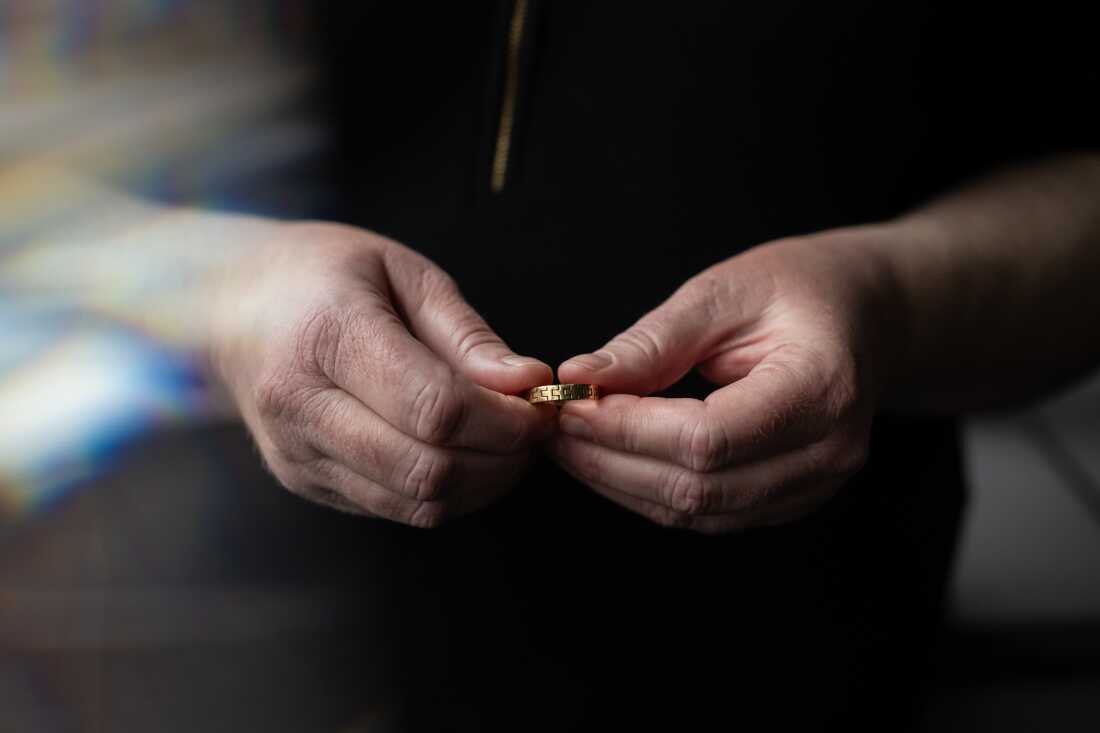
Mara holds her favorite anchor ring, which carries the inscription, “God for me provide thee.”
Caroline Yang for NPR
hide caption
toggle caption
Caroline Yang for NPR
As anxiety hangs over her head, Mara tries to put on a brave face for her children. She does not want them to worry, explaining that her recent struggles have reminded her how tough life can get as an adult.
“I remind them it’s not their responsibility and they’re not accountable for me or for what’s happening,” she said. “I say, just know you get to be a kid.”

Dylan Dreyer
Savannah Will Likely Come Back … Just Not Sure When
Published
TMZ.com
Dylan Dreyer is giving a small update on her embattled “Today” co-host, Savannah Guthrie, as the search continues for Savannah’s mom, Nancy — telling TMZ she does believe she’ll likely return to the show at some point.
We caught Dylan leaving NBC Tuesday afternoon, and she said while she thinks Savannah will come back, the timing is totally unclear — adding everyone at the show is simply giving her the space she needs because they care about her so much.

TMZ.com
Dylan also reflected on Savannah’s emotional visit to the “TODAY” studio last Thursday, saying the hug they shared was something they both really needed in that moment.
Catch the full clip — Dylan says the visit was incredibly emotional, adding Savannah clearly wants to get back to some sense of normal life … she just doesn’t quite know how yet.
Still, Savannah managed a few smiles during the brief stop by the studio, doing her best to keep moving forward during an incredibly tough time.
TMZ.com
As we reported, Nancy was taken from her Tucson home in the middle of the night on February 1. She was last seen entering the house just before 10 PM on January 31 after dinner with her daughter Annie and Annie’s husband, Tommaso Cioni.

Kevin Kline plays actor Richard Bean, and Laura Linney is his sister-in-law Kristen, in American Classic.
David Giesbrecht/MGM+
hide caption
toggle caption
David Giesbrecht/MGM+
American Classic is a hidden gem, in more ways than one. It’s hidden because it’s on MGM+, a stand-alone streaming service that, let’s face it, most people don’t have. But MGM+ is available without subscription for a seven-day free trial, on its website or through Prime Video and Roku. And you should find and watch American Classic, because it’s an absolutely charming and wonderful TV jewel.
Charming, in the way it brings small towns and ordinary people to life, as in Northern Exposure. Wonderful, in the way it reflects the joys of local theater productions, as in Slings & Arrows, and the American Playhouse production of Kurt Vonnegut’s Who Am I This Time?
The creators of American Classic are Michael Hoffman and Bob Martin. Martin co-wrote and co-created Slings & Arrows, so that comparison comes easily. And back in the early 1980s, Who Am I This Time? was about people who transformed onstage from ordinary citizens into extraordinary performers. It’s a conceit that works only if you have brilliant actors to bring it to life convincingly. That American Playhouse production had two young actors — Christopher Walken and Susan Sarandon — so yes, it worked. And American Classic, with its mix of veteran and young actors, does, too.

American Classic begins with Kevin Kline, as Shakespearean actor Richard Bean, confronting a New York Times drama critic about his negative opening-night review of Richard’s King Lear. The next day, Richard’s agent, played by Tony Shalhoub, calls Richard in to tell him his tantrum was captured by cellphone and went viral, and that he has to lay low for a while.
Richard returns home to the small town of Millersburg, Pa., where his parents ran a local theater. Almost everyone we meet is a treasure. His father, who has bouts of dementia, is played by Len Cariou, who starred on Broadway in Sweeney Todd. Richard’s brother, Jon, is played by Jon Tenney of The Closer, and his wife, Kristen, is played by the great Laura Linney, from Ozark and John Adams.
Things get even more complicated because the old theater is now a dinner theater, filling its schedule with performances by touring regional companies. Its survival is at risk, so Richard decides to save the theater by mounting a new production of Thornton Wilder’s Our Town, casting the local small-town residents to play … local small-town residents.
Miranda, Richard’s college-bound niece, continues the family theatrical tradition — and Nell Verlaque, the young actress who plays her, has a breakout role here. She’s terrific — funny, touching, totally natural. And when she takes the stage as Emily in Our Town, she’s heart-wrenching. Playwright Wilder is served magnificently here — and so is William Shakespeare, whose works and words Kline tackles in more than one inspirational scene in this series.
I don’t want to reveal too much about the conflicts, and surprises, in American Classic, but please trust me: The more episodes you watch, the better it gets. The characters evolve, and go in unexpected directions and pairings. Kline’s Richard starts out thinking about only himself, but ends up just the opposite. And if, as Shakespeare wrote, the play’s the thing, the thing here is, the plays we see, and the soliloquies we hear, are spellbinding.
And there’s plenty of fun to be had outside the classics in American Classic. The table reads are the most delightful since the ones in Only Murders in the Building. The dinner-table arguments are the most explosive since the ones in The Bear. Some scenes are take-your-breath-away dramatic. Others are infectiously silly, as when Richard works with a cast member forced upon him by the angel of this new Our Town production.
Take the effort to find, and watch, American Classic. It’ll remind you why, when it’s this good, it’s easy to love the theater. And television.


Hail, rain, snow move into eastern Nebraska, western Iowa

Smith’s employees pack 5,000 meal kits for Clark County students

Cher’s son heads to court over allegations he broke into a New Hampshire home

Heavy police presence prompts concern in South Jersey neighborhood

Federal court orders New Mexico prison officials to allow magazine’s delivery

Florida High School Football Rankings: Top 25 teams – Oct. 21

Cleary's 21 help Le Moyne down Central Connecticut State 69-64 in OT

How old is Bo Nix? What to know about Oregon quarterback ahead of 2024 NFL Draft

99th annual Pony Swim held in Virginia

Indiana Members Credit Union announced as new anchor tenant at Bottleworks District

EXCLUSIVE: ICE says El Paso detention facility will stay open under new contractor after $1.2B deal scrapped

Von der Leyen ‘acting outside of competence,’ Araud tells Euronews

Wheelchair curler Steve Emt’s path from drunk driver to three-time Paralympian

Map: 2.3-Magnitude Earthquake Reported North of New York City

Trump stirs GOP primary drama with visit to Massie’s Kentucky home turf
-

 Wisconsin1 week ago
Setting sail on iceboats across a frozen lake in Wisconsin
-

 Massachusetts1 week ago
Massachusetts man awaits word from family in Iran after attacks
-

 Pennsylvania6 days ago
Pa. man found guilty of raping teen girl who he took to Mexico
-

 Detroit, MI5 days ago
U.S. Postal Service could run out of money within a year
-

 Miami, FL6 days ago
City of Miami celebrates reopening of Flagler Street as part of beautification project
-

 Sports6 days ago
Keith Olbermann under fire for calling Lou Holtz a ‘scumbag’ after legendary coach’s death
-

 Virginia7 days ago
Giants will hold 2026 training camp in West Virginia
-

 Culture1 week ago
Try This Quiz on the Real Locations in These Magical and Mysterious Novels