Lifestyle
Long before Dr. Becky, this L.A. woman changed parenting for good


USC professor Andrew Ogilvie was standing outside Canyon Coffee in Echo Park last May, his youngest daughter dangling from his chest in a baby carrier, when a gray-haired woman with a New Zealand accent approached him, placing a gentle hand on the baby’s back.
“When she’s having a tough time two years from now, remember this warmth,” she said, smiling.
Ogilvie, who had seen the woman’s photo on missives from the local elementary school, smiled back, honored to be in the presence of an L.A. legend. “Oh, Ruth,” he said. “You don’t know who I am, but I know who you are.”
Like thousands of L.A. parents before him, Ogilivie had just had his first lesson with parent educator and child rights activist Ruth Beaglehole, who devoted her life to countering “childism” — the misuse of power over children — and taught generations of Angelenos to parent their children with empathy and kindness rather than spanking, threats and manipulation.
What Ruth brought was really a paradigm shift in terms of how we thought about parenting.
— Patricia Lakatos, who studied with Ruth Beaglehole
For more than 50 years, Beaglehole, who died April 21 at the age of 81, was a tireless advocate of what she called parenting with nonviolence, disseminating her philosophy in celebrity living rooms, domestic violence centers, schools, jails, social service agencies and occasional one-on-ones with strangers outside coffee shops.
Though she never was an author of a bestselling parenting book like Dr. Benjamin Spock or became a social media influencer like Dr. Becky Kennedy, Beaglehole’s many colleagues and mentees say her teachings rippled across L.A. and the world, helping families break longstanding cycles of violence and oppression toward children.
“What Ruth brought was really a paradigm shift in terms of how we thought about parenting,” said Patricia Lakatos, lead trainer for child-parent psychotherapy at Children’s Hospital Los Angeles who studied with Beaglehole. “It was not about learning techniques to help get your children to behave, but really about thinking of children as human beings who in their own right need to be heard.”
Beaglehole moved from her childhood home in New Zealand to the United States in the late 1960s, eventually settling in Echo Park, where she became part of a community of social justice activists. Over the decades she founded several L.A. institutions including the cooperative daycare Echo Park Silverlake People’s Child Care Center that was immortalized in the Emmy-winning short documentary “Power to the Playgroup” and the Teen and Parent Child Care Program at the Los Angeles Technology Center.
In 1999 she opened the Center for Nonviolent Education and Parenting, where she and her staff, many recruited from the teen group, taught weekly parenting classes in Spanish and English and gave parenting workshops throughout Southern California.
“What Ruth figured out is that whether you’re in a teen program or you’re a more affluent parent who has more access or resources, the reality is that the things parents face cross culture and wealth,” said Glenda Linares, who worked as a parent educator at the center for 13 years after meeting Beaglehole as a young mother, age 15, in 1998. “Parenting is hard.”
A broad cross section of Angelenos attended Beaglehole’s classes, but she was able to create a sense of community and common ground, said Rabbi Susan Goldberg, Beaglehole’s daughter and founder of the eastside Jewish community Nefesh.
“There was this feeling that we are all dealing with the same things and acting the same ways,” Goldberg said. “It was very humbling, and also there was a sense that we were all in this together. We’re all trying.”
Beaglehole also taught overseas, doing workshops in the Congo, Japan, India and a comprehensive multiyear project with the Māori community in Aotearoa, (the Māori name for New Zealand). She also continued to hold classes at Elysian Heights Elementary Arts Magnet, Nefesh and the Center for Pacific Asian Family, preaching the gospel of child-centric, empathetic parenting up until the moment of her death.
In addition to Goldberg, she is survived by her children David Goldberg and Maxie Goldberg, children-in-law Karla Alvarado Goldberg, Brian Joseph and Munira Virji, and eight grandchildren. She remained connected over many years to the father of her children, Art Goldberg, and his wife, Susan Philips.
Beaglehole often started her classes with an open-ended question: “So, tell me what’s going on.” One by one, the parents arranged in a circle would share their struggles, frustrations and occasionally their wins to remain empathetic to their kids in the midst of difficult circumstances.
The situations didn’t need to be dramatic to be significant. Someone might talk about the challenge of getting a kid to brush their teeth in the morning, another might mention the endless battles at bedtime, a third the humiliation of a meltdown in the grocery store. Gently but firmly, Beaglehole would encourage them to consider what their child was trying to communicate, what the behavior was stirring up inside the parent and how to approach the situation with more kindness, empathy and respect.
“She always said that all behaviors are an attempt to get our needs met,” said Mel McGraw, who was in Beaglehole’s recent parenting group at Elysian Heights Elementary Arts Magnet. “And in the midst of being triggered, can you remember that this isn’t my child misbehaving, they are struggling with something. And my job as a parent is to help them, and support them, and identify it. And if I can’t identify it, to love them through it.”
Beaglehole didn’t provide straightforward, Instagram-friendly solutions. “I don’t have an easy one, two, three,” she said in a 2022 YouTube video. “It’s a commitment. It’s an intention that we need to set every day.”
McGraw remembers turning to this philosophy after a particularly difficult morning with her kid a few years ago. Her wife was out of town, work deadlines were piling up and there was her daughter, lying on her back in the hallway, screaming that she didn’t want to go to school. McGraw lost her temper and found herself yelling at her daughter and frightening her. They drove to school in silence, tears streaming down both their faces.
After the dropoff, McGraw imagined how Beaglehole would frame the situation. She thought about how her child was probably missing her wife. She remembered that her daughter was having trouble with a friend at school who was being mean to her. And she thought about the pressures she herself was under too, parenting alone for several weeks with little time for work or rest. The blowup was a result of both of them failing to get their needs met, and yet, only one of them was an adult. As the day wore on, she couldn’t wait to pick up her daughter from school to tell her she was sorry for yelling and to repair the relationship.
“It’s those microcosm moments,” McGraw said. “And the kernel of Ruth’s work was that as much as we’re doing it for our kids, we’re also doing it to reparent ourselves.”
Beaglehole’s many students say her work is poised to continue. Her book “Principles and Practices of Parenting With Nonviolence: A Compassionate Guide to Caring for Younger Human Beings” will soon be available on her website, free of charge. Videos on YouTube articulate her philosophy and detail her strategies. The more than 300 parent educators whom she trained now work as therapists, educators, community organizers, social workers and in other fields. And then there are parents who sat in her classes over the years modeling her teachings for their own children. They number in the thousands.
A few years ago Linares created a curriculum based on Beaglehole’s parenting philosophy for migrant parents living in a temporary shelter in Tijuana. When officials at UNICEF saw that work, they asked her to design a similar curriculum for a mobile school bus that could bring Beaglehole’s teachings on parenting to other shelters in the region.
“I was taking the learning I did when I was 19 and thinking, how do I bring this approach to parents who are in extremely difficult circumstances?” said Linares. “They might not know if they are going to cross the border tomorrow, but they do have some agency around the relationship they get to have with their child.”
It’s what Beaglehole taught her whole life: Parenting is always difficult, and it is always — always — worth the effort to do it well.



Natalie Cole and music producer Nolan Williams, Jr. with the Let Freedom Ring Celebration Choir at the Kennedy Center in January 2015.
Lisa Helfert/Georgetown University
hide caption
toggle caption
Lisa Helfert/Georgetown University
Let Freedom Ring, an annual concert in Washington, D.C., celebrating the life of Martin Luther King Jr., has been a signature event at the John F. Kennedy Center for the Performing Arts for more than 20 years. Aretha Franklin, Gladys Knight and Chaka Khan have performed, backed by a choir made up of singers from D.C. area churches and from Georgetown University, which produces the event.
But this year’s event, headlined by actor and rapper Common, will not be held at the Kennedy Center.
Georgetown University says it is moving Let Freedom Ring to D.C.’s historic Howard Theatre in order to save money.
For Marc Bamuthi, it wouldn’t make sense to hold it at the Kennedy Center this year.

Until March 2025, Bamuthi was the Kennedy Center’s artistic director for social impact, a division that created programs for underserved communities in the D.C. region. He regularly spoke at the MLK Day event. “I would much rather that we all be spared the hypocrisy of celebrating a man who not only fought for justice, but who articulated the case for equity maybe better than anyone in American history … when the official position of this administration is an anti-equity position,” he said.
President Trump has criticized past programming at the Kennedy Center as “woke” and issued executive orders calling for an end to diversity in cultural programming.
In February 2025, Trump took over the Kennedy Center and appointed new leadership. Shortly thereafter the social media division was dissolved. Bamuthi and his team were laid off.
Composer Nolan Williams Jr., Let Freedom Ring‘s music producer since 2003, also says he has no regrets that the event is moving.

“You celebrate the time that was and the impact that has been and can never be erased. And then you move forward to the next thing,” said Williams.
This year, Williams wrote a piece for the event called “Just Like Selma,” inspired by one of King’s most famous quotes, “The arc of the moral universe is long, but it bends towards justice.”
Williams says sometimes the quote is “interpreted in a passive way.”
“The arc doesn’t just happen to move. We have to be agents of change. We have to be active arc movers, arc benders,” said Williams. “And so throughout the song you hear these action words like ‘protest,’ ‘resist,’ ‘endure,’ ‘agitate,’ ‘fight hate.’ And those are all the action words that remind us of the responsibility that we have to be arc benders.”
YouTube
The Kennedy Center announced Tuesday that its celebration of Martin Luther King Jr. next week will feature the Missionary Kings of Harmony of The United House of Prayer for All People’s Anacostia congregation.
The audio and digital versions of this story were edited by Jennifer Vanasco.

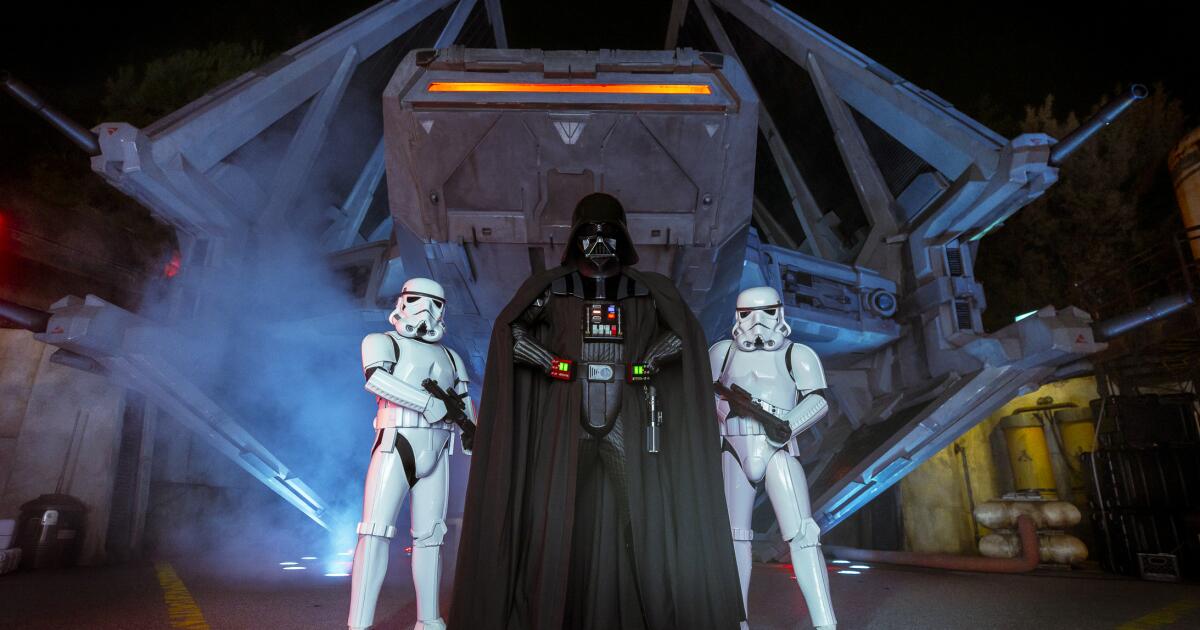
Disneyland’s Star Wars: Galaxy’s Edge is turning back the clock.
In a shift from its original ambitions, the land will no longer be primarily set in the time period of the recent “Star Wars” sequels. That means modern villain Kylo Ren will be out, at least as a walk-around character, while so-called “classic” characters such as Darth Vader, Luke Skywalker, Han Solo and Princess Leia Organa will make their way into the fictional galactic town of Black Spire Outpost.
The changes, for now, are specific to Disneyland and are not currently planned to come to Walt Disney World’s version of the land, according to Disney. They also mark a significant tweak from the intent of the land, which was designed as an active, play-focused area that broke free from traditional theme park trappings — character meet and greets, passive rides and Mickey-shaped balloons. Instead of music, guests heard radio broadcasts and chatter, as the goal was to make Black Spire Outpost feel rugged and lived-in.
-
Share via
It was to be a place of living theater, where events unfolded in real time. That tone will now shift, as while the in-land radio station won’t go away, Disneyland will soon broadcast composer John Williams’ “Star Wars” orchestrations throughout the area. The changes are set to fully take effect April 29, although Disney has stated some tweaks may roll out earlier.
The character of Rey, introduced in “Star Wars: The Force Awakens,” will still appear in the land, although she’ll now be relegated to the forest-like area near the attraction Star Wars: Rise of the Resistance. While the latter is due for refurbishment beginning Jan. 20, park representatives said it’s routine maintenance and no changes are planned for the land’s showcase ride, which will still feature Kylo Ren and the First Order.
Guests will also soon be able to find the Kylo Ren character at a meet and greet in Tomorrowland. Other personalities previously introduced to Galaxy’s Edge, including Chewbacca, Ahsoka Tano, the Mandolorian, Grogu and droid R2-D2, will still be featured in the land.
Taken as a whole, the moves turn Galaxy’s Edge into something more akin to a “Star Wars” greatest hits land. When the area opened in 2019, the hope was guests would feel as if they were protagonists able to choose their own adventure. Galaxy’s Edge came with its own vernacular, and an elaborate game in the Play Disney mobile app that was designed to track a guest’s reputation and be used in the land. It was once said, for instance, that Disney’s cast members — staff, in park parlance — would be able to recognize if someone’s personality leaned resistance, First Order or rogue. Such aspirations never materialized.

When Galaxy’s Edge opened in 2019, it was designed to feel rugged and lived-in.
(Allen J. Schaben / Los Angeles Times)
Galaxy’s Edge was a theme park experiment, asking how deeply guests would want to engage in physical spaces. But it came with challenges, namely that as these lands evolve to feel more like locations where action is unfolding in real time, the level of activity needed to maintain the illusion increases. And Galaxy’s Edge forever lacked some of its teased and hyped elements — there were no smugglers, for instance, tapping you on the shoulder in the cantina. When a land is designed to speak to us, we notice when it’s quiet.
Theme parks are also evolving spaces, responding to shifts in creative direction as well as guest feedback. In an online press conference announcing the move, Disney didn’t allow for deep questioning, but a reworking of the land to incorporate the franchise’s classic (and arguably more popular) characters feels in some part an acknowledgment that theme park visitors likely crave familiarity over ongoing narratives designed to play make-believe. Or at least that such a direction is easier to maintain.
“Since the very inception of Star Wars: Galaxy’s Edge, we really always imagined it as a platform for storytelling,” said Asa Kalama, a creative executive with Walt Disney Imagineering, the company’s arm devoted to theme park experiences, at the media briefing. “That’s part of the reason we designed this neutral Wild West space town because it allowed it to be a framework in which we could project different stories.”

Galaxy’s Edge on April 29 is dropping its fixed timeline and will soon incorporate more characters, including Darth Vader.
(Christian Thompson / Disneyland Resort)
Kalama pointed to next year being the 50th anniversary of the initial “Star Wars” movie and this May’s theatrical film, “The Mandalorian & Grogu,” as to why this was the opportune time to shift the direction of the land. To coincide with the release of the latter, the attraction Millennium Falcon: Smugglers Run will receive a new mission May 22, which will also mean the land’s two rides will soon be set in different “Star Wars” time frames.
The ride makeover will feature three new locations from the “Star Wars” films — planets such as the urban Coruscant or gas realm of Bespin, as well as the wreckage of the second Death Star near Endor. Each flight crew will determine the destination. Additionally, those seated in the ride’s “engineer” positions will be able to communicate with Grogu, colloquially referred to as “baby Yoda.”
Star Wars: Galaxy’s Edge was meticulously designed to be set between episodes eight and nine of the core saga, with its ships modeled after the most recent films. When guests encountered characters, for instance, they would speak to them as if they were visitors on the fictional planet, often trying to suss out someone’s allegiance. It was indicated by Michael Serna, executive creative director with Disney Live Entertainment, that such a level of playfulness would continue.
Darth Vader, for instance, is said to be on the planet of Batuu seeking to hunt Luke Skywalker. Luke, for his part, is described as roaming the land looking for Force artifacts, while Leia and Han will be spotted in areas near the Millennium Falcon and Oga’s Cantina, the latter tempting Han while Leia will serve the role of a recruiter. Timelines for the land’s bar and shops will also be dialed back to better reflect the the classic characters, although “Star Wars” die-hards maybe shouldn’t think too hard about it as an animatronic figure such as Oga’s robotic DJ “Rex” is best known for a different role during that era.

The character of Rey, introduced in “Star Wars: The Force Awakens,” will still meet with guests in Galaxy’s Edge, although she will be stationed near the ride Star Rise: Rise of the Resistance.
(Allen J. Schaben / Los Angeles Times)
Galaxy’s Edge had been moving in a more populist direction for some time. The reframing of the ride Smugglers Run was the first major indication that Disney would pivot from the land’s initial design intent. Luke, meanwhile, was introduced to the land for limited appearances in 2025, and that character followed the arrival of the Mandalorian and Grogu. And the lack of Williams’ score in the land has long been a common guest complaint. The film’s “Main Title,” as well as “Han Solo and the Princess,” “The Desert and the Robot Auction,” “The Emperor” and other Williams selections will now be heard in the land.
While the vibe and tenor of Galaxy’s Edge will shift, Serna stressed it’s still designed as a place for guest participation. “It’s still an active, living land, if you will,” he said.
And if Galaxy’s Edge is now a mesh of timelines and characters, that simply makes it more in-line with what already exists at the resort. To put it another way: No one has been confused that New Orleans Square has ghosts and pirates next to a cozy place for beignets. Likewise, we don’t wonder why “Cars” character Doc Hudson is dead in the current timeline of the films but alive on the ride — and then memorialized via an ofrenda during the land’s Halloween makeover.
Theme parks remain a place where imagination reigns.

The Ides of January are already upon us. Which means that by now, most of the sweetly misguided pollyannas who made New Year’s resolutions have already given up on that nonsense. Don’t beat yourself up about it! Travel and exercise would only have hogged your precious reading time anyway.
And boy, is there a lot of good stuff to read already. This week alone, a reader with an active imagination may pay visits to Norway and Chile, China and Pakistan. Later this month brings new releases from big names on either side of the Atlantic Ocean.
(By the way, this year the Book Ahead is transitioning from weekly posts to monthly, for a broader lens on the publishing calendar.)
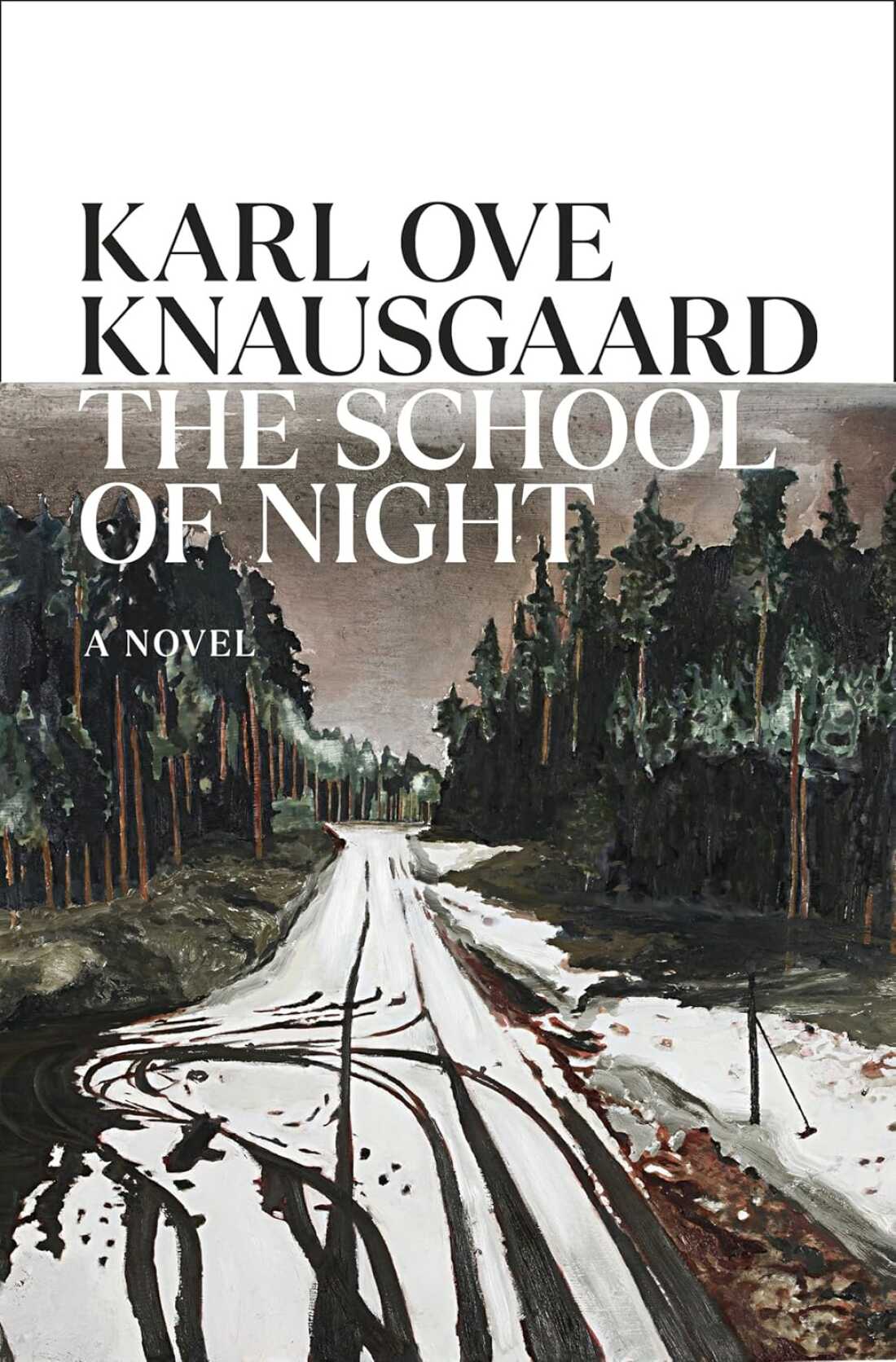
The School of Night, by Karl Ove Knausgaard, translated by Martin Aitken (Jan. 13)
Knausgaard is an alchemist. The prolific Norwegian consistently crafts page-turners out of the daily drudgery you’d usually find sedative rather than thrilling. The same inexplicable magic permeates his latest series, which began with The Morning Star and here gets its fourth installment. Only, unlike projects such as his autofictional My Struggle, Knausgaard here weaves his interlinked plots with actual magic – or supernatural horror, at least, as a vaguely apocalyptic event loosens the tenacious grip of his characters’ daily cares. The School of Night features Kristian Hadeland, an eerie figure in previous books, whose faustian bargain promises to illuminate this mystery’s darkest corners.

This Is Where the Serpent Lives, by Daniyal Mueenuddin (Jan. 13)
The setting in Mueenuddin’s debut novel — a modern Pakistan rife with corruption, feudalism and resilience — thrums with such vitality, it can feel like a character in its own right. But the home of this sweeping saga of class, violence and romance can also be seen as a “distorting mirror,” says Mueenuddin, whose short stories have earned him nods for the Pulitzer Prize and National Book Award. “Without a doubt,” he told NPR’s Weekend Edition, “I’ll have failed miserably if readers don’t see in this a great deal of themselves and of their communities.”

Pedro the Vast, by Simón López Trujillo, translated by Robin Myers (Jan. 13)
It won’t take long to finish this hallucinatory vision of ecological disaster. Getting over Trujillo’s disquieting novella, however, is another matter. The eponymous Pedro is a eucalyptus farmer who has worked the dangerous, degrading job all his life, so it’s to be expected when he’s among the workers who pick up a bad cough from a deadly fungus lurking in the grove. Less expected is the fact that, unlike his colleagues, Pedro does not die but wakes up changed, in ways both startling and difficult to comprehend. This is the Chilean author’s first book to be translated into English.

Fly, Wild Swans: My Mother, Myself and China, by Jung Chang (Jan. 13)
Chang began this story more than 34 years ago, with Wild Swans, a memoir that viewed 20th century Chinese history through the prism of three generations of women — and remains banned in China still. Now, Jung picks up the story where she left off, in the late 1970s when Chang’s departure set her family’s story on heartbreakingly separate paths — her own, unfolding in the West, and that of the family she left behind in China. Jung applies a characteristically wide lens, with half an eye on how the past half-century of geopolitical tumult has upturned her own intimate relationships.

Crux, by Gabriel Tallent (Jan. 20)
It’s been the better part of a decade since Tallent published his debut novel, My Absolute Darling, a portrait of a barbed father-daughter relationship that NPR’s reviewer described as “devastating and powerful.“ In his follow-up, Tallent returns to that adolescent minefield we euphemistically call “coming of age,” this time focusing on a complicated bond between a pair of friends living in the rugged Mojave Desert. It’s an unlikely friendship, as sustaining as it is strained by their unforgiving circumstances, as the pair teeter precariously on the cusp of adulthood.

Departure(s), by Julian Barnes (Jan. 20)
The winner of the 2011 Booker Prize (and finalist for several more) returns with a slim book that’s a bit tough to label. You’ll find it on the fiction shelf, sure, but also, it’s narrated by an aging British writer named Julian who is coping with a blood cancer diagnosis. The lines aren’t easy to find or pin down in this hybrid reflection on love, memory and mortality, which is as playful in its form as its themes are weighty.

Half His Age, by Jennette McCurdy (Jan. 20)
“If I could have shown myself where I am now, I would not have believed it when I was little,” McCurdy told WBUR in 2023. The former child star certainly has undergone a dramatic transformation in recent years — from noted Nickelodeon alum to a writer whose best-selling memoir, I’m Glad My Mom Died, made a pretty compelling case why kid actors “should not be allowed to go anywhere near Hollywood.” Now she’s stepping into fiction, with a debut novel that features a provocative, at times puzzling, courtship and the same black humor that shot through her previous work.

Vigil, by George Saunders (Jan. 27)
One of America’s most inventive stylists returns with his first novel since the Booker Prize-winning Lincoln in the Bardo. It’s hard not to hear some echoes of A Christmas Carol in this one, which also finds a mean old magnate in need of some supernatural bedside attitude therapy. But don’t expect a smooth show from narrator Jill “Doll” Blaine, the comforting spirit assigned to dying oil baron K.J. Boone. For one thing, the unrepentant fossil fuel monger can expect more than just three visitors in this darkly funny portrait of a life ill-lived.

Women’s Basketball vs Louisiana – Thursday, January 15 – Gameday

Above-ground sensors help Maine Turnpike Authority plan, respond to winter storms

High stakes for Gov. Moore as Maryland General Assembly starts legislative session – WTOP News

Michigan rules on killing coyotes change after months of pressure from hunters

How did Damon, Affleck, Fallon handle Cape Cod town names trying to recite all 351 in MA?

Florida High School Football Rankings: Top 25 teams – Oct. 21

Cleary's 21 help Le Moyne down Central Connecticut State 69-64 in OT

How old is Bo Nix? What to know about Oregon quarterback ahead of 2024 NFL Draft

99th annual Pony Swim held in Virginia

Video: ‘It Didn’t Have to Happen This Way:’ U.Va. Faculty Call for Review of Police Response to Protests

Republicans light cigars, cigarettes on burning photos of Khamenei to show support for Iranian protesters

EU Parliament questions defence loan’s ‘€17 billion gift’ to Hungary

Trump administration sends letter wiping out addiction, mental health grants

Video: Clashes With Federal Agents in Minneapolis Escalate

Venezuela releases multiple American citizens from prison following military operation
-

 Montana4 days ago
Service door of Crans-Montana bar where 40 died in fire was locked from inside, owner says
-

 Technology1 week ago
Power bank feature creep is out of control
-

 Delaware6 days ago
MERR responds to dead humpback whale washed up near Bethany Beach
-

 Dallas, TX6 days ago
Anti-ICE protest outside Dallas City Hall follows deadly shooting in Minneapolis
-

 Dallas, TX1 week ago
Defensive coordinator candidates who could improve Cowboys’ brutal secondary in 2026
-

 Virginia4 days ago
Virginia Tech gains commitment from ACC transfer QB
-

 Education1 week ago
Video: This Organizer Reclaims Counter Space
-

 Iowa1 week ago
Pat McAfee praises Audi Crooks, plays hype song for Iowa State star