Lifestyle
'Little Women Ballet' leaps into a historic L.A. site — and you're part of the story


As contemporary Angelenos, seeing the immersive “Little Women Ballet” might be as close as we’ll ever get to stepping into a time machine.
The series of dance works about Louisa May Alcott’s beloved 19th century novel are staged inside the stately Victorian homes of Northeast L.A.’s Heritage Square Museum. Dancers and actors are dressed in period-inspired costumes, from cap-sleeve pioneer dresses to Steampunk-style fashions. Before each performance, the scene is set by a narrator who speaks in a prim, puritanical accent reminiscent of a bygone era. And the production demands the audience’s full participation: as guests, we’re invited to do everything from visit the homes of the novel’s March sisters to step in to play roles to advance the plot.
We begin by splitting off into small groups and following along as a character — in my group’s case, the girls’ wealthy Aunt March — leads us into the various houses where the ballet will be staged. The show is intimate — dancers are not even two feet away from audience members, who are granted limited seating and space to stand in the small rooms. They’re so close that you can hear the muffled sounds of their ballet shoes on the carpet and can make eye contact, which feels both intimate and mildly discomfiting.
Directed and choreographed by Emma Andres, the experience kicked off in May with a spring iteration before bowing its autumn production last month. In late November, the series will conclude with a winter immersive before staging a full-length version of the story at the Wilshire Ebell Theatre in December.
The trilogy emerged organically. “We wanted to take this project in steps to see how it was going to grow and be received by audiences,” Andres said. “When I originally created the spring immersive, I did not know that I would be creating autumn and winter as well.”
Andres created the work with the intention of making space in ballet for more stories focusing on women. “The story of ‘Little Women’ is complicated, but I felt that it would be great for narrative ballet,” she said. “I see myself in all four of the sisters and I felt that they were a group of young ladies who could be inspiring for young audiences to watch and take influence from. Even though they come from a time that’s 100 or so years before our own, they still have very relatable traits to us in 2024.”
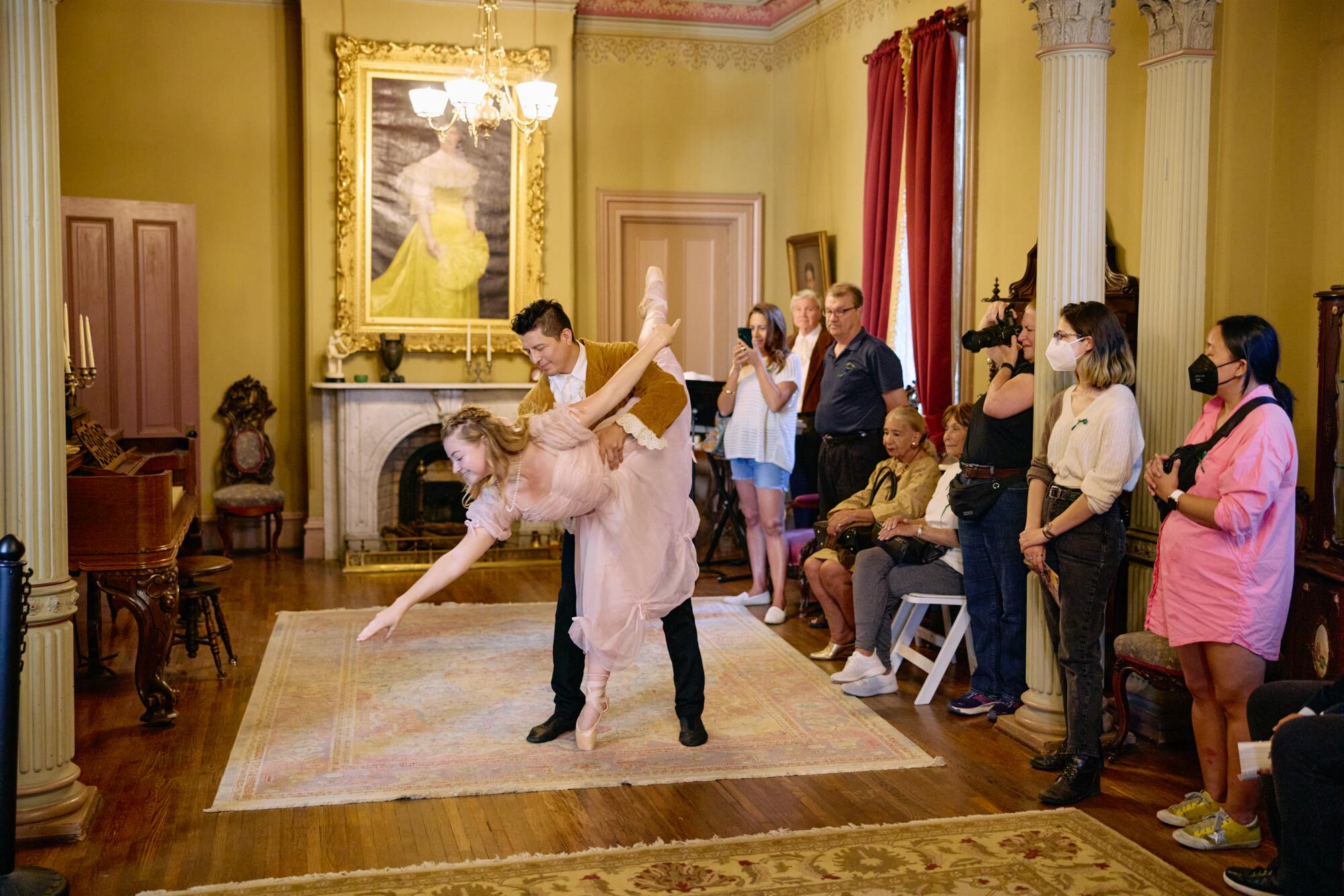
Ellen Relac and Alberto Hernandez, as Meg March and John Brooke, perform in a room of the L.A. Heritage Museum.
Constructed during the Victorian era, the Heritage Square Museum is in many ways the perfect backdrop for this production.
“We don’t have the privilege of being in Concord, Mass., where Louisa May Alcott grew up, but I feel like Heritage Square really shows where we developed our performance, which was California,” Andres said.
Dancing in the antique homes required careful planning. Luckily, it turned out that pointe shoes moved easily across the carpet-covered floors. “[The carpet] kind of acts like rosin so it provides this friction that’s actually really nice and never slippery,” Andres explained.
However, there were other design challenges, particularly the low-hanging chandeliers. To prevent a catastrophe, the team measured all of the rooms and taped down the dimensions in their home studio of Pasadena Civic Ballet. The dancers also walked the space and noted every piece of furniture and potential pitfall during a dress rehearsal.
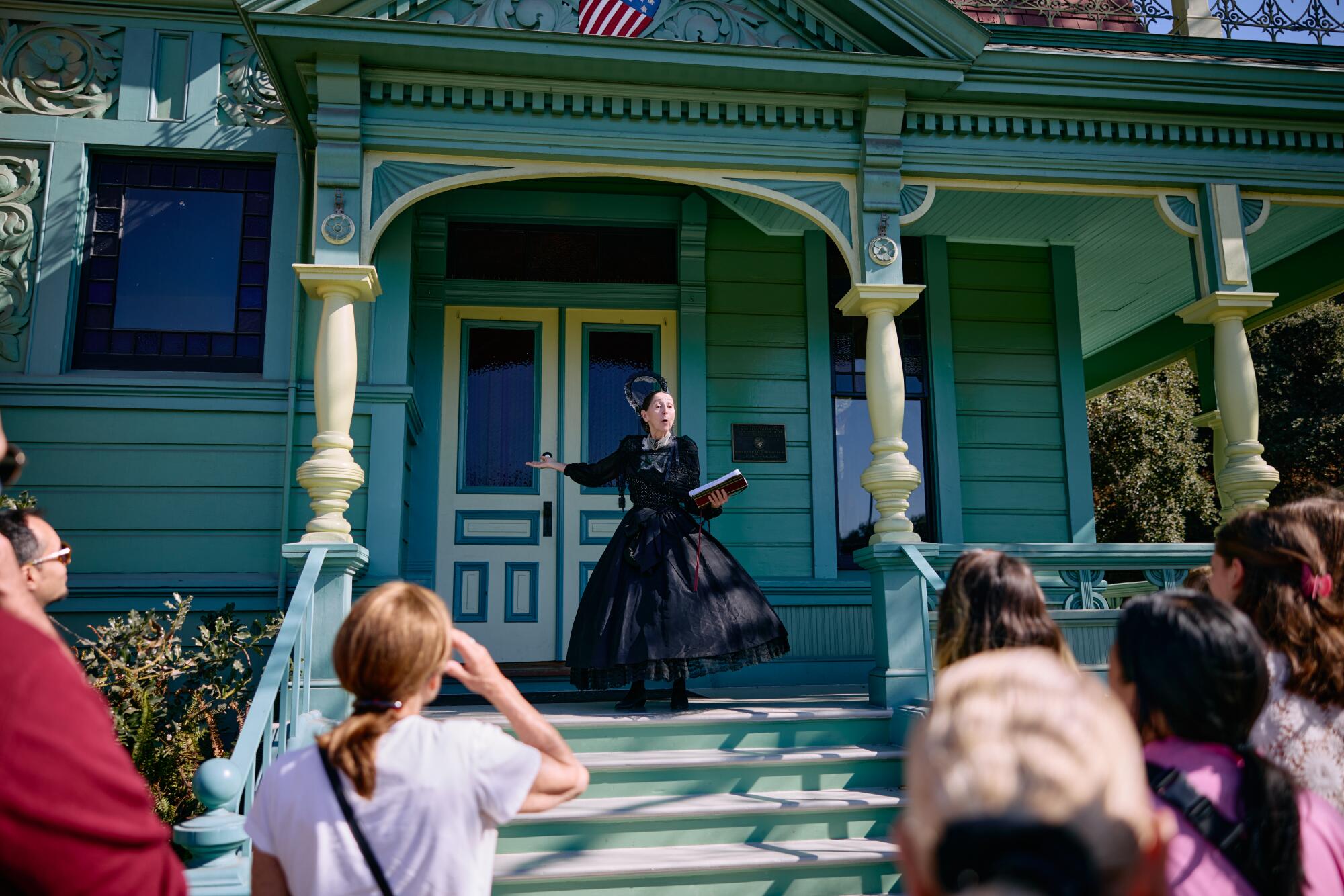
Denise Moses as Aunt March introduces a scene before a group of guests.
Andres grew up dancing with the Pasadena Civic Ballet, which she attended from the age of 4 through 18. “It’s a very unique studio, because they create all their own ballets,” she said, including interpretations of Disney titles like “Peter Pan,” “The Little Mermaid,” “Snow White” and “Alice in Wonderland.”
The company has been directed by Diane De Franco Browne, Tania Grafos and Zoe Vidalakis since 2000. Browne served as production advisor on this project. “I watched these three really creative women come together and create a very inspiring and creative environment growing up,” Andres said. “I think that a lot of my passion for the arts came from watching them as I grew up.”
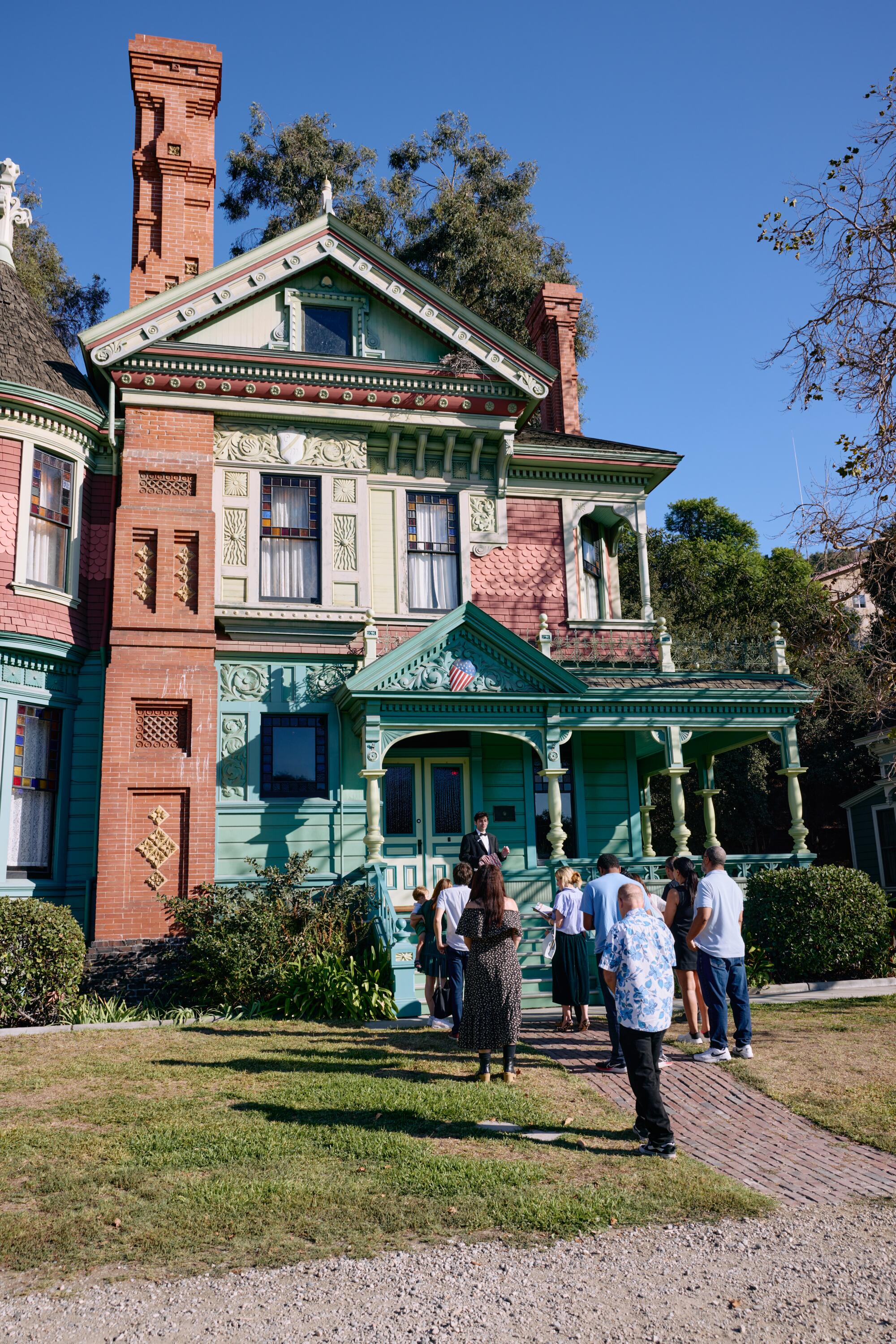
Guests congregate outside of one of the Victorian buildings that comprise L.A.’s Heritage Square Museum.
The Pasadena native graduated from UC Irvine in 2020 with a BFA bachelor of fine arts degree in choreography and a minor in literary journalism. After the pandemic hit, Andres moved back to Pasadena and became manager of Pasadena Civic Ballet, helping it build several outdoor dance studios to keep dance going live. “Even though I was really happy to be coming back, it was very difficult having all of our students on Zoom. But luckily we transitioned back to live pretty quickly,” said Andres.
It was during that time that she first conceived of the idea for a “Little Women”-themed ballet. Cooped up inside, she watched Greta Gerwig’s 2019 take on the classic work and soon after screened all three previous feature-length film adaptations (from 1933, 1949 and 1994) and read the book.
“I’m glad I [first] read it when I was older because I feel like I related to it way more than I would have as a child,” Andres said. “I feel like translating it into a ballet is a way that younger audiences can really relate to it and the emotions of the characters and their personalities.”
She began by crafting a six-minute summation of the book for Pasadena Civic Ballet in 2021, featuring students at the school. “I tried to target key points in their lives,” she said. “I went directly into Jo meeting Laurie and then directly from there, the relationship between John and Meg. Because when Meg starts to fall in love, that’s the first time that Jo really sees that their family could come apart when people start growing up.”
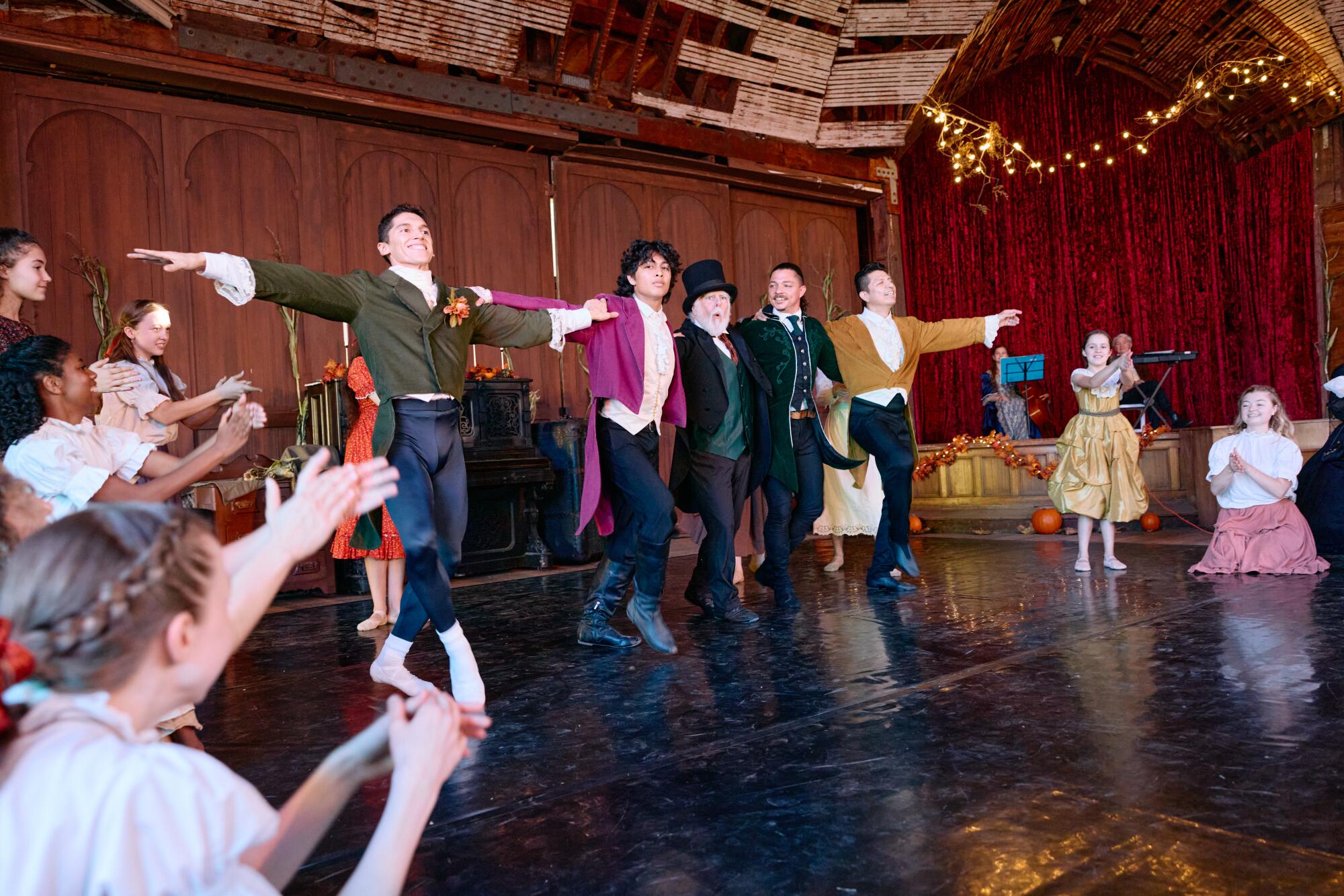
From left, Chris Flores, Evan Hernandez, Ross Clark, Jacob Robleto and Alberto Hernandez perform in the immersive “Little Women Ballet.”
She established each character’s personality visually by creating recognizable dance motifs for each of the sisters, which live on in the current production. “Each of the sisters has a pose that they do that symbolizes their interests and personality,” Andres said. “Jo holds her hands up like she’s reading a book, Amy like she’s painting a canvas with a paintbrush, Beth’s on a piano and then Meg’s are up by her face to symbolize an acting mask.”
Dance sequences were created to illustrate scenes in the girls’ lives including Amy and Laurie’s courtship in Paris, Beth’s final days with Jo and Jo’s romance with professor Fredrick Bhaer.
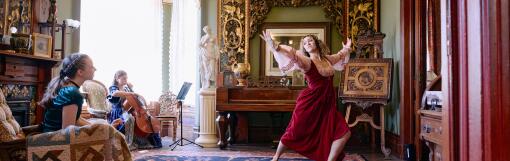
‘Little Women Ballet’ returns for two performances this winter
The winter immersive runs Nov. 22-24 at Heritage Square Museum. Tickets are $60. The full-length ballet will be held Dec. 7 at Wilshire Ebell Theatre. Tickets start at $28. For more information, visit littlewomenballet.com
Andres made a deliberate choice for all the sisters to dance on pointe — except for Jo, a character who is unconventional in her tomboyishness. Jo dances with flexed feet.
“Some of our dancers are not pointe dancers, but they are excellent ballet dancers,” she said. “If I feel that someone will play the character really well, that is more important to me than them doing pointe. But my hope for the full-length is that it will just be Jo not wearing them, to emphasize the idea that she’s not only breaking societal norms as a woman of the time, but she’s also breaking ballet norms.”
The show itself is doing the same.
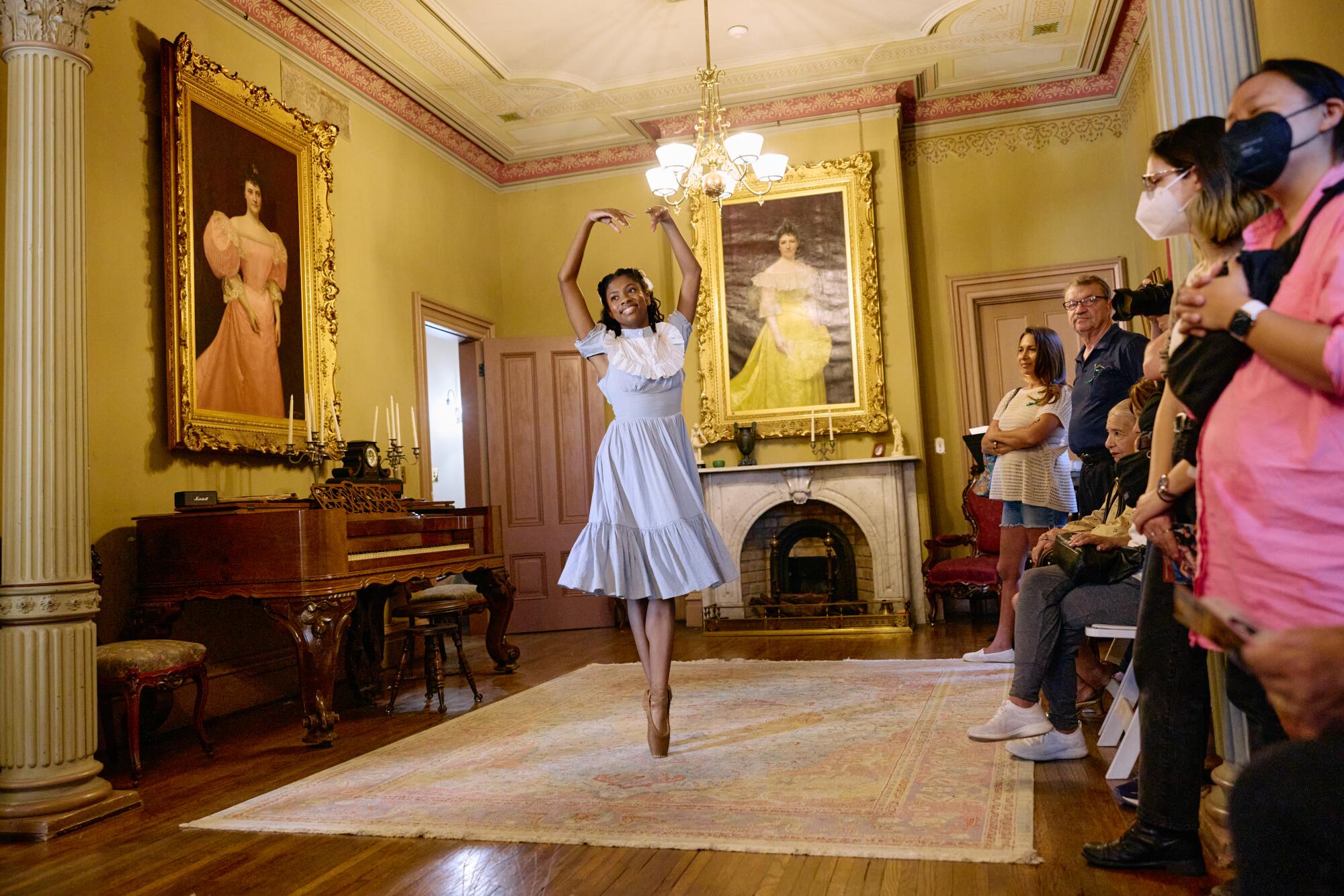
Madison Marsh performs as Amy March. Dance sequences were created to illustrate scenes in the sisters’ lives.



Kevin Kline plays actor Richard Bean, and Laura Linney is his sister-in-law Kristen, in American Classic.
David Giesbrecht/MGM+
hide caption
toggle caption
David Giesbrecht/MGM+
American Classic is a hidden gem, in more ways than one. It’s hidden because it’s on MGM+, a stand-alone streaming service that, let’s face it, most people don’t have. But MGM+ is available without subscription for a seven-day free trial, on its website or through Prime Video and Roku. And you should find and watch American Classic, because it’s an absolutely charming and wonderful TV jewel.
Charming, in the way it brings small towns and ordinary people to life, as in Northern Exposure. Wonderful, in the way it reflects the joys of local theater productions, as in Slings & Arrows, and the American Playhouse production of Kurt Vonnegut’s Who Am I This Time?
The creators of American Classic are Michael Hoffman and Bob Martin. Martin co-wrote and co-created Slings & Arrows, so that comparison comes easily. And back in the early 1980s, Who Am I This Time? was about people who transformed onstage from ordinary citizens into extraordinary performers. It’s a conceit that works only if you have brilliant actors to bring it to life convincingly. That American Playhouse production had two young actors — Christopher Walken and Susan Sarandon — so yes, it worked. And American Classic, with its mix of veteran and young actors, does, too.

American Classic begins with Kevin Kline, as Shakespearean actor Richard Bean, confronting a New York Times drama critic about his negative opening-night review of Richard’s King Lear. The next day, Richard’s agent, played by Tony Shalhoub, calls Richard in to tell him his tantrum was captured by cellphone and went viral, and that he has to lay low for a while.
Richard returns home to the small town of Millersburg, Pa., where his parents ran a local theater. Almost everyone we meet is a treasure. His father, who has bouts of dementia, is played by Len Cariou, who starred on Broadway in Sweeney Todd. Richard’s brother, Jon, is played by Jon Tenney of The Closer, and his wife, Kristen, is played by the great Laura Linney, from Ozark and John Adams.
Things get even more complicated because the old theater is now a dinner theater, filling its schedule with performances by touring regional companies. Its survival is at risk, so Richard decides to save the theater by mounting a new production of Thornton Wilder’s Our Town, casting the local small-town residents to play … local small-town residents.
Miranda, Richard’s college-bound niece, continues the family theatrical tradition — and Nell Verlaque, the young actress who plays her, has a breakout role here. She’s terrific — funny, touching, totally natural. And when she takes the stage as Emily in Our Town, she’s heart-wrenching. Playwright Wilder is served magnificently here — and so is William Shakespeare, whose works and words Kline tackles in more than one inspirational scene in this series.
I don’t want to reveal too much about the conflicts, and surprises, in American Classic, but please trust me: The more episodes you watch, the better it gets. The characters evolve, and go in unexpected directions and pairings. Kline’s Richard starts out thinking about only himself, but ends up just the opposite. And if, as Shakespeare wrote, the play’s the thing, the thing here is, the plays we see, and the soliloquies we hear, are spellbinding.
And there’s plenty of fun to be had outside the classics in American Classic. The table reads are the most delightful since the ones in Only Murders in the Building. The dinner-table arguments are the most explosive since the ones in The Bear. Some scenes are take-your-breath-away dramatic. Others are infectiously silly, as when Richard works with a cast member forced upon him by the angel of this new Our Town production.
Take the effort to find, and watch, American Classic. It’ll remind you why, when it’s this good, it’s easy to love the theater. And television.


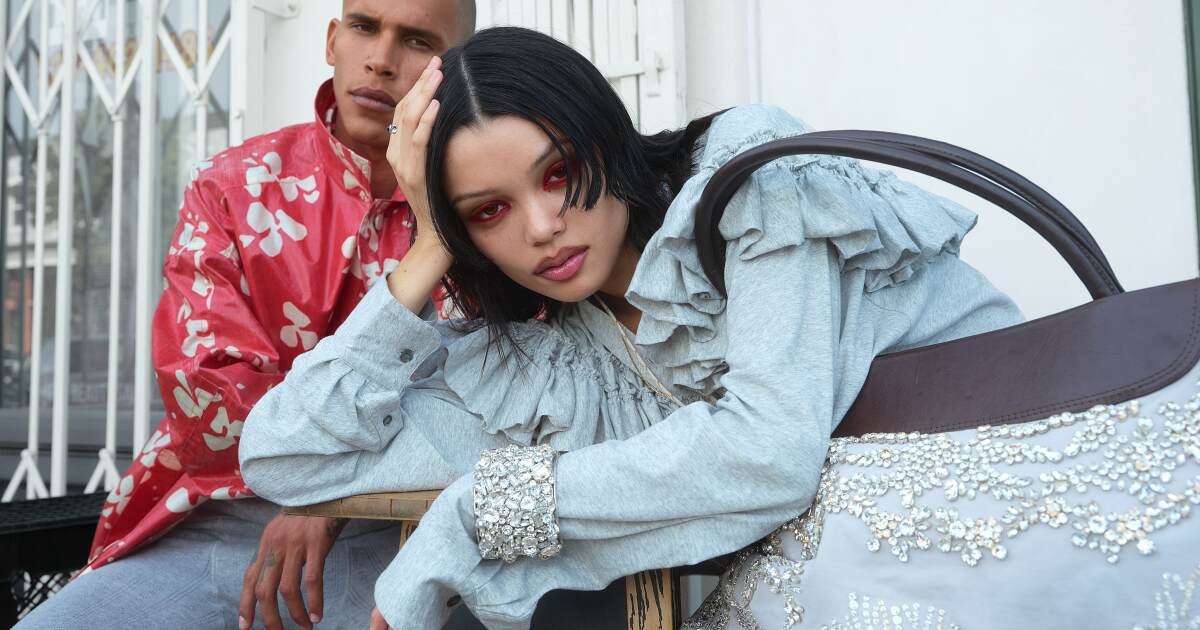
The ritual of meeting up and hanging out at a coffee shop in L.A. is a showcase of style filled with a subtle site-specific tension. Don’t you see it? Comfort battles formality fighting to break free. Hiding out chafes against being perceived. In the end, we make ourselves at home at all costs — and pull a look while doing it.
It’s the morning after a night out. Two friends meet up at Chainsaw in Melrose Hill, the cafe with the flan lattes, crispy arepas and sorbet-colored wall everybody and their mom has been talking about.
Miraculously, the line of people that usually snakes down Melrose yearning for a slice of chef Karla Subero Pittol’s passion lime fruit icebox pie is nonexistent today. Thank God, because the party was sick last night — the DJ mixed Nelly Furtado’s “Promiscuous” into Peaches’ “F— the Pain Away” and the walls were sweating — so making it to the cafe’s front door alone is like wading through viscous, knee-high water. Senses dull and blunt in that special way where it feels like your brain is wearing a weighted vest. The sun, an oppressor. Caffeine needed via IV drip.
The mood: “Don’t look at me,” as they look around furtively, still waking up. “But wait, do. I’m wearing the new Dries Van Noten from head to toe.”

Daniel, left, wears Dries Van Noten mac, henley, pants, oxford shoes, necklace and socks. Sirena wears Dries Van Noten blouse, micro shorts, sneakers, shell charm necklace, cuff and bag and Los Angeles Apparel socks.


If a fit is fire and no one is around to see it, does it make a sound? A certain kind of L.A. coffee shop is (blessedly) one of the few everyday runways we have, followed up by the Los Feliz post office and the Alvarado Car Wash in Echo Park. We come to a coffee shop like Chainsaw for strawberry matchas the color of emeralds and rubies and crackling papas fritas that come with a tamarind barbecue sauce so good it may as well be categorized as a Schedule 1. But we stay for something else.
There is a game we play at the L.A. coffee shop. We’re all in on it — the deniers especially. It can best be summed up by that mood: “Don’t look at me. But wait, do.” Do. Do. Do. Do. We go to a coffee shop to see each other, to be seen. And we pretend we’re not doing it. How cute. Yes, I’m peering at you from behind my hoodie and my sunglasses but the hoodie is a niche L.A. brand and the glasses are vintage designer. I wore them just for you. One time I was sitting at what is to me amazing and to some an insufferable coffee shop in the Arts District where a regular was wearing a headpiece made entirely of plastic sunglasses that covered every inch of his face — at least a foot long in all directions — jangling with every movement he made. Respect, I thought.
Dries Van Noten’s spring/summer 2026 collection feels so right in a place like this. The women’s show, titled “Wavelength,” is about “balancing hard and soft, stiff and fluid, casual and refined, simple and complex,” writes designer Julian Klausner in the show notes. While for the men’s show, titled “A Perfect Day,” Klausner contextualizes: “A man in love, on a stroll at the beach at dawn, after a party. Shirt unbuttoned, sleeves rolled up, the silhouette takes on a new life. I asked myself: What is formal? What is casual? How do these feel?” What is formal or casual? How do you balance hard and soft? The L.A. coffee shop is a container for this spectrum. A dynamic that works because of the tension. A master class in this beautiful dance. There is no more fitting place to wear the SS26 Dries beige tuxedo jacket with heather gray capri sweats and pink satin boxing boots, no better audience for the floor-length striped sheer gown worn with satin sneakers — because even though no one will bat an eye, you trust that your contribution has been clocked and appreciated.

Daniel wears Dries Van Noten coat, shorts, sneakers and socks. Sirena wears Dries Van Noten jacket, micro shorts and sneakers.


Back at Chainsaw the friends drink their iced lattes, they eat their beautiful chocolate milk tres leches in a coupe. They’re revived — buzzing, even; at the glorious point in the caffeinated beverage where everything is beautiful, nothing hurts and at least one of them feels like a creative genius. The longer they stay, the more their style reveals itself. Before they were flexing in a secret way. Now they’re just flexing. Looking back at you looking at them, the contract understood. Doing it for the show. Wait, when did they change? How long have they been here? It doesn’t matter. They have all day. Time ceases to exist in a place like this.


Daniel wears Dries Van Noten tuxedo coat, pants, scarf, sneakers and necklace and Hanes tank top. Sirena wears Dries Van Noten jacket, micro shorts, sneakers and socks.


Creative direction Julissa James
Photography and video direction Alejandra Washington
Styling Keyla Marquez
Hair and makeup Jaime Diaz
Cinematographer Joshua D. Pankiw
1st AC Ruben Plascencia
Gaffer Luis Angel Herrera
Production Mere Studios
Styling assistant Ronben
Production assistant Benjamin Turner
Models Sirena Warren, Daniel Aguilera
Location Chainsaw
Special thanks Kevin Silva and Miguel Maldonado from Next Management
Lifestyle
Nature needs a little help in the inventive Pixar movie ‘Hoppers’ : Pop Culture Happy Hour

Piper Curda as Mabel in Hoppers.
Disney
hide caption
toggle caption
Disney
In Disney and Pixar’s delightful new film Hoppers, a young woman (Piper Curda) learns a beloved glade is under threat from the town’s slimy mayor (Jon Hamm). But luckily, she discovers that her college professor has developed technology that can let her live as one of the critters she loves – by allowing her mind to “hop” into an animatronic beaver. And it just might just allow her to help save the glade from serious risk of destruction.
Follow Pop Culture Happy Hour on Letterboxd at letterboxd.com/nprpopculture
Subscribe to Pop Culture Happy Hour Plus at plus.npr.org/happyhour

Senate panel endorses reporting exemption for players on New Hampshire Fisher Cats

Chemistry Class | DEVILS NOW | New Jersey Devils

Tanya Tucker to perform at New Mexico State Fair

These 4 Western NC towns are among WorldAtlas favorites for 2026

Four area players land on North Dakota Division A all-state team

Florida High School Football Rankings: Top 25 teams – Oct. 21

How old is Bo Nix? What to know about Oregon quarterback ahead of 2024 NFL Draft

Cleary's 21 help Le Moyne down Central Connecticut State 69-64 in OT

99th annual Pony Swim held in Virginia

Indiana Members Credit Union announced as new anchor tenant at Bottleworks District

Map: 2.3-Magnitude Earthquake Reported North of New York City

Trump stirs GOP primary drama with visit to Massie’s Kentucky home turf

Israeli air strike targets building in south Lebanon

Ed Martin, outspoken Justice Department lawyer, is formally accused of ethical violations | CNN Politics

Trump reveals top issues GOP should focus on to secure midterms victory: ‘I’ve never been more confident’
-

 Wisconsin1 week ago
Setting sail on iceboats across a frozen lake in Wisconsin
-

 Massachusetts1 week ago
Massachusetts man awaits word from family in Iran after attacks
-

 Maryland1 week ago
AM showers Sunday in Maryland
-

 Pennsylvania5 days ago
Pa. man found guilty of raping teen girl who he took to Mexico
-

 Florida1 week ago
Florida man rescued after being stuck in shoulder-deep mud for days
-

 Sports6 days ago
Keith Olbermann under fire for calling Lou Holtz a ‘scumbag’ after legendary coach’s death
-

 Miami, FL6 days ago
City of Miami celebrates reopening of Flagler Street as part of beautification project
-

 Detroit, MI4 days ago
U.S. Postal Service could run out of money within a year