Lifestyle
L.A. Affairs: Should I believe my partner or an anonymous tipster on Facebook?


Our meet was not cute; he wrote psychological thrillers, not rom-coms. I appeared in his suggested profiles on Instagram. He followed, and I, a wannabe actor who shrewdly noted the CAA tag in his bio, followed back. No matter how much this city jades you, that hope of getting “discovered” is stubborn. I ignored all the other starving female actors he followed. I ignored the absence of tagged posts and friends in his photos.
On our first date, I was 10 months sober in AA and I had been celibate for a year and a half. I had sworn that the next time I had sex would be antithetical to all the sex I’d had before: sober, consensual and with genuine trust and care for each other.
He took this oath seriously, and I was grateful. After two months of hand stuff and dry humping, Malibu hiking, making out at Yamashiro and dressing up for Cinespia at Hollywood Forever Cemetery, I finally let him put the P into the V in an Airbnb in Joshua Tree. We had sex under the late October stars, and in the morning, we went at it again on top of a rock in the middle of the park.
He bought me vegan Van Leeuwen on the drive back, and from then on, we were sufficiently hooked.
He spoke of his past infrequently, but would answer when asked. He was born in Virginia, he told me, where I am also from. But shortly thereafter, he moved to Beachwood Canyon with his parents and younger brother. He promised to one day show me the house he grew up in. He went to UCLA and had been living in Hollywood with his brother ever since they graduated. He mentioned a few friends, but I never saw them.
I reasoned that he was in his 30s, and he worked in a lonely, every-man-for-himself kind of industry. And he had his brother, with whom he was supremely close, though I had yet to meet him either.
By Christmas, I was getting antsy.
He told me he loved me just as the ball dropped on New Year’s Eve. A week later, the January wildfires came. We escaped together, and my worried father on the East Coast paid for a hotel room further south. We made romance out of tragedy and took our time on the way back when the Sunset fire evacuation orders were lifted. Driving up PCH, he flipped a U to pull into a shake shop.
“We used to go here all the time as kids,” he said. Then he grabbed his credit card and instructed me to order us two shakes. I figured this nostalgia must have distracted him from the fact that my weak stomach could not handle dairy in such large quantities.
Still, I ordered one — I didn’t want to put a dimmer on his inner child indulgence. Later, I threw up, but it was worth it; I was grateful to be included in such a joyous memory of his.
The initial chaos of the fires subsided, and I had still yet to meet anyone in his life. We were nearing six months. I never felt suspicious though. Just restless.
He took my impatience in stride and spoke of plans for me to meet his younger brother soon. Later, he reasoned that he was waiting until after my birthday — he didn’t want to ruin my celebratory state with the truth.
An anonymous woman online struck first, just one week before. It was in one of those Facebook groups. You know the one: Are We Dating the Same Guy? Los Angeles LA.
He was in my bathroom when I got the alert. He didn’t grow up in L.A., the woman wrote. He lived with his twin. He didn’t go to UCLA. He’ll never commit to you.
When he returned, all I could do was hand him my phone. He didn’t pull away from the screen in shock. He simply sat on the bed, took a deep breath and repeated the same monologue he’d delivered to all of the young female actors before me.
It was true. His brother wasn’t two years younger, but two minutes. They were twins. He didn’t grow up in L.A., but in Virginia and then all over the U.S. He didn’t go to UCLA, but to a university in Virginia.
He said he and his twin were in cahoots on this bizarre lie. They had been telling it to women for years. He said the industry would take him more seriously if he were from here. He said people had prejudices against male twins. (Huh? I thought.) He looked at me with his sad baby blues and shared how he told these innocuous falsities, ultimately, out of deep-seeded self-hatred.
My pity outweighed my pride, and we stayed together another month and a half. I fought for us. I wanted to fix him, to give him the love he claimed to never have gotten. I too had done horrible things to quench my self-loathing. But look at me now!
Being a positive influence became a new addiction. I gave him bell hooks’ “All About Love,” which emphasizes the necessity for honesty in all partnerships. I gently suggested therapy. We distracted ourselves by maximizing my AMC Stubs to see all the Oscar-nominated movies.
But questions kept coming, and my trust was crumbling. It wasn’t the content of the lies, but the ease and frequency with which they were told.
“What about that shake place?” I asked one day abruptly. “It was just a random shake place.” He smirked. I’d like to say that was the end — the realization that he let me make myself physically sick for his lies — but it wasn’t.
That same month, I moved to Silver Lake, and he helped immensely. He went on tours with me, built my bed and schlepped all my clothes over from Hollywood. And that’s what’s so frustrating: As much as it was sick, it was also sweet. As much as he may have appeared psychotic, he was also romantic. Just like this city.
Eventually, my suspicions outgrew my compassion. I finally called him out for all the Instagram baddies he followed, and he blew up, accusing me of self-sabotaging. The sad part is I believed it. It took a long call with my sponsor to understand my misgivings were valid and that I deserved someone who would put in the work to regain my trust when they’d broken it. He wasn’t capable of that.
We went no contact for a week and then met for take-out Thai food in Silver Lake Meadow. He had finally read “All About Love” (allegedly) and claimed he’d made a therapy appointment. I told him maybe in some time he could call me. It was bittersweet and strangely cinematic. We kissed and then walked off in opposite directions.
I cried for a week and I had hope for about a month. But just like with substances, the situation looked increasingly strange and seedy the further I got from it. We did meet up again in the summer. He had quit therapy and started smoking, and I caught him stumbling in some random lies again. I ended it for good over text.
Early on, he joked that “the worst thing you can call someone in L.A. is a poser.” I wish I’d noted that line as foreshadowing, but just like any good mystery, the clues are only evident in hindsight.
The author works as a freelance production assistant and at the front desk of a local yoga studio. She lives in Silver Lake. She’s on Instagram: @margaretkeanee.
L.A. Affairs chronicles the search for romantic love in all its glorious expressions in the L.A. area, and we want to hear your true story. We pay $400 for a published essay. Email LAAffairs@latimes.com. You can find submission guidelines here. You can find past columns here.



A jury sided with apper Afroman, whose legal name is Joseph Foreman, in a defamation lawsuit brought by Ohio police who raided his home.
USA TODAY Network via Reuters Connect
hide caption
toggle caption
USA TODAY Network via Reuters Connect
Afroman was just trying to turn lemons into “Lemon Pound Cake” when he started making music videos and social media posts mocking the law enforcement officers who conducted a heavy-handed raid on his Ohio home.
Home surveillance video of the August 2022 raid shows half a dozen gun-wielding law-enforcement officers from the Adams County Sheriff’s Office deputies kicking down his door, combing through his CD collection, going through his suit pockets, flipping through a wad of cash and, in one case, briefly getting distracted by a cake dish on the kitchen counter.

The search, on suspicion of drug trafficking and kidnapping, didn’t yield any evidence or charges against the rapper, whose legal name is Joseph Foreman. But he says officers broke his gate and security surveillance wiring, took $400 in cash and frightened his family. He wasn’t home at the time, but his wife and kids, then 10 and 12, were present.
“I asked myself, as a powerless Black man in America, what can I do to the cops that kicked my door in, tried to kill me in front of my kids, stole my money and disconnected my cameras?” Afroman told NPR in 2023. “And the only thing I could come up with was make a funny rap song about them … use the money to pay for the damages they did and move on.”
The rapper, best known for early aughts hits like “Because I Got High” and “Crazy Rap (Colt 45 and 2 Zig-Zags),” made waves again with the 2023 release of Lemon Pound Cake. Its 14 songs have titles like “The Police Raid,” “Why You Disconnecting My Video Camera” and “Will You Help Me Repair My Door,” featuring home surveillance footage in the music videos.
He also posted memes and sold merchandise satirizing the incident and the people involved. Common themes range from poking fun at the deputies’ appearances (comparing them to Family Guy’s Peter Griffin and Quasimodo from The Hunchback of Notre Dame) to more serious allegations of extramarital affairs and pedophilia amongst department members.

Afroman called his approach “the smartest, most peaceful solution.” But the sheriff’s deputies disagreed. The seven law enforcement officers sued him in 2023 for defamation and invasion of privacy, saying his unauthorized use of their likenesses hurt their reputations and made it harder to do their jobs. They sought the content’s removal and $3.9 million in damages.
That didn’t stop Afroman from releasing increasingly personal songs about the deputies involved, including one ahead of his trial this week called “The Batteram Hymn of the Police Whistleblower.”
“They vandalize my property, my money came up short / they disconnect my cameras because they are a poor sport,” he sings while marching solemnly in an American flag suit. “They’re the predators and the victims and they’re suing me in court / my proof’s on the Internet.”
The three-day trial focused on heavy topics like policing and free speech, though there was no shortage of viral, sitcom-esque exchanges. On Wednesday, after less than a day of deliberations, the jury sided squarely with the rapper.

“I didn’t win, America won,” Afroman, 51, told reporters outside the court, dressed in his American flag-patterned suit, tie and aviators, topped with a white fur coat. “America still has freedom of speech. It’s still for the people, by the people.”
NPR has reached out to both the Adams County Sheriff’s Office and its lawyer, but did not hear back in time for publication.
A quick recap of a quick trial
Both sides clearly felt wronged by the other, but the primary question before the jury was whether Afroman’s response to the raid counted as protected free speech. He and his lawyer argued it did.
“I got the right to kick a can in my backyard, use my freedom of speech, turn my bad times into a good time,” the rapper said from the stand. “Yes, I do, and I think I’m a sport for doing so, because I don’t go to their house, kick down their doors, flip them off on their surveillance cameras, then try to play the victim and sue them.”

He also said none of this would have happened if they hadn’t raided his house: “This whole thing is their fault, and they’re suing me for their mistake.”
But Robert Klingler, representing the deputies, framed it to the jury this way: “A search warrant execution that you think was unfair … doesn’t justify telling intentional lies designed to hurt people.” He said a verdict in their favor would “make up in some way for what they’ve been through.”
Several of the law enforcement officers testified about how Afroman’s actions affected their personal and professional lives.
Shawn Cooley — the now-retired deputy who was caught on camera checking out the cake — said he’s received “hundreds of poundcakes at work from different people” and was even recognized by cops while working cases in other jurisdictions, in addition to his own community members.
“I had one guy come out of a bedroom after me, call me a thief and want to know why I stole Afroman’s money,” Cooley said. “It just went from being a nice, quiet community, a job you felt safe in, to a place where you had to look over your shoulder every second.”
Another, Brian Newland, said he was forced to quit his “dream job” with the sheriff’s office due to Afroman’s claims of him being a pedophile, which he denies. Deputy Lisa Phillips cried on the stand about one of Afroman’s more explicit songs that questioned her gender and sexuality.

When asked if he saw that, Afroman acknowledged that Phillips was upset by the online trolling, “just like I was upset when she was standing in front of my kids with an AR-15 in her hand around the trigger.”
“But I’m not a person, she is,” Afroman added. “So, I’m sorry for being a victim, let’s talk about the predators.”
In addition to traumatizing his family and damaging his property, Afroman maintained that the deputies stole money from him. They seized thousands of dollars in cash from his home, which Afroman said was payment for a gig, but returned it $400 short. The sheriff’s office has explained the discrepancy by saying deputies originally miscounted the money, which Newland took responsibility for on the stand.
The defense only called one witness: Rhonda Grooms, a teacher and the ex-wife of sheriff’s deputy Cooley. She was asked whether she and her students were familiar with the Cardi B song “WAP,” which stirred controversy with its overtly sexual lyrics in 2020, and testified that none of them took the words literally.
Afroman’s lawyer, David Osborne, pointed to other explicit rap songs to argue that artists tend to exaggerate for the sake of entertainment (at one point he argued that no one listens to Lil Wayne’s song “P***y Monster” and says “there’s a monster in that song”).

He said that’s what Afroman was doing in his songs, and that many of the terms that deputies found offensive were not facts but matters of opinion — like one that calls Sgt. Randy Walters a “son of a b***h,” which Osborne said there was no definitive way to prove or disprove.
“She’s been dead for years,” Walters replied matter-of-factly, prompting a chuckle and condolences from the defense lawyer.
In his closing statements, Osborne pointed to rap as an established form of social commentary, saying police and public officials are called names online all the time, whether or not they like it. And he rephrased the plaintiff’s question about what a liable verdict would mean.
“What does this message send if we find that music and social commentary, while maybe not the most tasteful thing in the world, is silenced because a public official [was] hurt by it?” Osborne asked.
Viral moments put the case in the public eye
Some of the most fever-dream-like moments of the trial took off in social media clips: Afroman defiant in his American-flag suit, deputies soberly discussing lemon pound cake, the defense lawyer’s garbling of Cardi B’s name.
Many of the commenters remarked that by bringing the case to court, the deputies brought it to the public’s attention. Several highlighted the irony of an invasion of privacy case going viral online, calling it an example of the “Streisand effect” (named after Barbra Streisand’s 2003 lawsuit to remove a photo of her home from the web that only brought more eyes to it).
The”Lemon Pound Cake” music video has 3.8 million views on YouTube as of Thursday — and the top comments are all about the trial.
“Shout out to the cops for making sure I saw this absolute bop!” reads one with over 8,000 likes.
Afroman, who said on the stand that he did an estimated 250 shows last year, acknowledged that the attention had boosted his follower count, which is almost 600,000 on Instagram alone.
“All the publicity from the officers’ lawsuit on me is running up my numbers,” he said.
Lifestyle
Anyone can write better. Anne Lamott shows us how again, this time with her ‘current husband’

On the Shelf
Good Writing: 36 Ways to Improve Your Sentences
By Neal Allen and Anne Lamott
Avery: 208 pages, $27
If you buy books linked on our site, The Times may earn a commission from Bookshop.org, whose fees support independent bookstores.
They’re so darn cute together, these two. Neal Allen, father of four, newspaper reporter turned corporate executive turned spiritual coach turned author of two spiritual guidebooks, stands a full head of hair taller than his dread-headed wife, who calls him her “current husband.” He calls her his “remarkable and beautiful partner” and himself “Mr. Anne Lamott.”
And no wonder. Author Anne Lamott has published 21 books, with worldwide sales in the millions. “Bird by Bird,” her 1994 writing handbook, which has sold more than 1 million copies and continues to sell approximately 40,000 copies each year, became a meme before there were memes. Thirty-two years later, the titular phrase has made appearances everywhere from “Ted Lasso” (Coach Beard: “I hate losing.” Coach Lasso: “Bird by bird, Coach.”) to a Gloria Steinem interview in Cosmopolitan (“Every writer, truth-seeker, parent, and activist I know is in love with one or more books by Anne Lamott”).
Ask a famous writer how they do what they do, and “Bird by Bird” will likely get honorable mention. Harlan Coben, whose 35 novels have sold roughly 90 million copies, calls “Bird by Bird” his “favorite writing manual.” “I use it like a coach’s halftime speech to get me fired up to write.”
In a 2007 interview, “Eat Pray Love” author Elizabeth Gilbert called herself Lamott’s “literary offspring.” Paula McLain, who wrote the 2011 blockbuster “The Paris Wife,” told me: “I return to ‘Bird by Bird’ again and again because Anne Lamott tells the truth about how hard this work is — and then somehow makes you laugh about it.”
I reached out to best-selling memoirist and novelist Dani Shapiro to ask if she had her own experience with the book. “A writer is always a beginner,” she said. “And there is no better companion than ‘Bird by Bird.’”
Lamott and Allen partnered to write “Good Writing.”
(Christie Hemm Klok / For The Times)
Lamott, 71, and Allen, 69, met in 2016 on the 50-plus dating site OurTime.com. Nine months later, they bought a woodsy Marin County home with room for Lamott’s son and grandson. Sam, when he was 1 year old, was the subject of his mom’s first bestseller, the 1993 memoir “Operating Instructions.” His son Jax was the subject, at age 1, of his grandmother’s 2012 memoir, “Some Assembly Required.”
“We were watching U.S. Open tennis one night and Neal said, ‘Can I ask you something?’” Lamott told me via email. “I barely looked away from the TV, and he asked me to marry him. I said, ‘Yes, if we can get a cat.’”
After a decade of marriage, Lamott and Allen have undertaken a professional collaboration whose outcome, like their union, is greater than the sum of its parts. “Good Writing: 36 Ways to Improve Your Sentences” is as sharply specific as “Bird by Bird” is wanderingly wonderful: as winning a companion piece as two winning companions could create. The table of contents is itself a mini-manual of writerly tips: “Use Strong Verbs.” “Sound Natural.” “Keep it Active.” “Stick with Said.” “Don’t Show Off.”

Lamott and Allen.
(Christie Hemm Klok / For The Times)
I spoke to the late-life lovebirds about their process of marital manuscript-making: the good, the not so good and the blackmailing.
Meredith Maran: How did writing “Bird by Bird” compare to co-authoring “Good Writing”?
Anne Lamott: “Bird by Bird” was literally everything I knew about writing, everything I had been teaching my students for years. It was definitely my book. “Good Writing” was definitely Neal’s book. I just foisted my attention on him and threatened to undermine the marriage if he did not let me contribute.
MM: Neal, what on earth convinced you that you could add something to one of the world’s most popular writing books —written by your wife, no less?
Neal Allen: Oh, I’m not adding anything to “Bird by Bird,” which is a complete classic. It’s everything you need to know about becoming a writer. “Good Writing” is about what comes next: a second draft. And while it’s not fair to call “Bird by Bird” a craft book — it’s much more — it’s fine to define “Good Writing” that way.

“Helping each other with our work is one of the richest aspects of our life as a married couple,” Lamott said.
(Christie Hemm Klok / For The Times)
MM: In producing this joint project, how did you two negotiate the differences between your writing styles and personalities?
AL: We didn’t need to negotiate. Neal somehow manages to be both elegant and welcoming, whereas I think I am more like the class den mother, with a plate of cupcakes, exhorting people not to give up, trying to convince them that they can only share their truth in their own voice, that their voice is plenty good, and that when they get stuck, as we all do, I know some tricks that will help them get back to work.
NA: I once asked AI to describe the difference between my writing and Annie’s. AI answered that I explain things to readers; Annie helps readers reach catharsis. I think that’s absolutely right.
MM: How did you come up with the book’s fab format, whereby each of you writes your own introduction, and then each chapter starts with Neal’s thoughts about one of the 36 rules and ends with Annie’s?
NA: Annie first asked if she could annotate what I had written. That scared the bejesus out of me. When she started writing her own essays in her own voice, I was quite relieved. One of the format’s surprising strengths is that Annie always gets the last word. I explain the rule; then she helps the reader find their way and resolve their issues with the rule. There’s a downside: I don’t get to respond when she tells the reader to ignore me.

“I’m not adding anything to ‘Bird by Bird,’” Allen said. “It’s everything you need to know about becoming a writer. ‘Good Writing’ is about what comes next: a second draft.”
(Christie Hemm Klok / For The Times)
MM: In your intro, Anne, you recall Neal telling you he was working on a writing book. “Well. Hmmmph,” you replied. “I had written a book on writing once …” How did professional jealousy, competitiveness, possessiveness, or, on the brighter side, tenderness, collaborative spirit and generosity play out as you wrote a writing book together?
AL: We have no competitiveness or jealousy when it comes to each other’s writing. We just want the other person to write the most beautiful work they can. We are each other’s first reader, and editor, and while of course I feel attacked if Neal suggests even the tiniest change to my deathless prose, I have come to understand that his suggested cuts and additions save me from myself. Helping each other with our work is one of the richest aspects of our life as a married couple.
NA: There’s no way around “Bird by Bird,” and I just have to deal with that. My worry was whether Annie really wanted to be associated with my little book. I’m envious of Annie’s brilliance, of course, but we speak the same writing language and we love it equally.
MM: What are each of you proudest of, “Good Writing”-wise?
AL: We just recorded the audio version, and I was surprised by how much practical help the book offers. Also, I love the tone, which is so conversational and sometimes, I hope, pretty funny.
NA: I had the opposite reaction to recording the audio version. I saw all the opportunities for readers to mock me. In the 18 months between writing a final draft and the book showing up in stores, we’ve both flipped from believing it reflects well on us to thinking it’s a disaster. Luckily, both of us haven’t ever thought it sucks at the same time.
MM: That is fortunate. Also, Neal, I’m not sure you answered my question.
NA: What am I proudest of? That the book exists. I carried around these rules for improving sentences for years. I think a lot of writers do a book because they notice it’s not out there, and why isn’t it? And then they shrug, ‘Well, I guess it’s up to me.’ That’s how I came into all three of my books.
AL: May I just add that I’m proud to introduce my seriously charming and breathtakingly wise husband to a wider audience.
Festival of Books
“Written by Hand: Lexicons, Storytelling, and Protecting Human Language in an Age of Artificial Everything” (featuring Anne Lamott and Neal Allen)
The Los Angeles Times Festival of Books, USC Town and Gown, Sunday, April 19, 10:30 – 11:30 a.m.
Admission is free. Ticket required.
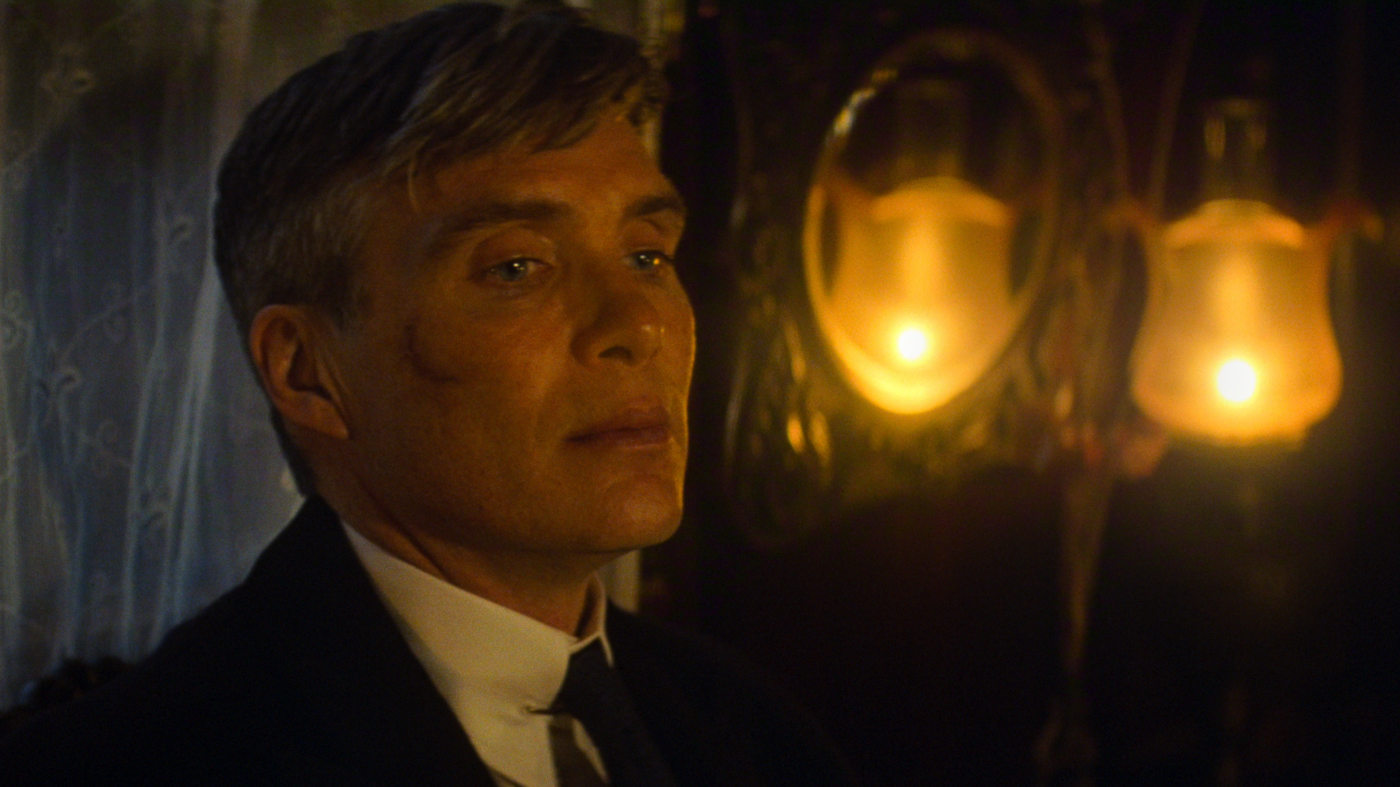
Cillian Murphy returns as gangster Tommy Shelby in Peaky Blinders: The Immortal Man.
Robert Viglasky Photography/Netflix
hide caption
toggle caption
Robert Viglasky Photography/Netflix
During his decade on the BBC period drama Peaky Blinders, Cillian Murphy matured visibly as a man, and also as an actor. Steven Knight wrote such a challenging and nuanced role for him, as gangster Tommy Shelby, that it wasn’t surprising at all that, when the series concluded, Murphy was tapped to star as J. Robert Oppenheimer by Christopher Nolan.
It also wasn’t surprising, if you’d devoured all six seasons of Peaky Blinders, that Murphy would be not only willing, but eager, to revisit the character of Tommy in a movie-length sequel. Especially when the script is written by series creator Steven Knight, and brings the story to a dramatic conclusion.
The drama in Peaky Blinders: The Immortal Man is provided by both personal and historical challenges. We last saw Tommy, in the final episode of Peaky Blinders, in the 1930s. Prohibition had been repealed in the U.S., the Nazi Party was rising in Germany, and Tommy’s volatile brother, Arthur, was about to die.

The movie jumps ahead to November 1940, when England already is at war with Germany. A munitions factory staffed by women in Birmingham, Tommy’s hometown, is bombed by aerial strikes from the Nazis, and claims more than 100 victims.
Tommy has long since secluded himself far away, isolated in a remote farmhouse, haunted by wartime memories and what he fears are family ghosts. But the bombing brings a visit from his sister Ada (Sophie Rundle). She informs him not only of the devastation to Birmingham, but the fact that his estranged son has taken control of his old gang, the Peaky Blinders, and is making new and dangerous moves and alliances.
Tommy would prefer to stay distant, and uninvolved. But the recklessness of his son Duke (Barry Keoghan) leaves him little choice. Duke meets with Beckett (Tim Roth), a British Nazi sympathizer who finds in Duke an important and agreeable collaborator.
Soon Tommy finds himself having to take sides and do battle — either defending or betraying his own country, and either saving or opposing his own son. The stakes couldn’t be much higher — or, in writer Knight’s hands, more unpredictable or gripping.
Knight always populates his dramas with terrific actors and vibrant characters, and in The Immortal Man we get delightful return visits from, among others, Peaky Blinders series players Rebecca Ferguson, Stephen Graham and Packy Lee.
And most of all, we get Knight’s brilliant approach to his period dramas, the way he folds the fictional and the factual. He’s done it so well, so many times, for so many outstanding TV series, and I’ve given rave reviews to most of them, including A Thousand Blows, The Veil, House of Guinness and All the Light We Cannot See.
Some of Knight’s shows eluded me at the time, but I’ve since caught up with and been delighted by them. Like Taboo, from 2017, which featured great early performances by both Tom Hardy and Jessie Buckley, who just won a best actress Oscar for Hamnet.
You can watch The Immortal Man all by itself, but if you’re uninitiated in what’s come before, you shouldn’t. All six seasons of Peaky Blinders are available on Netflix, and there are only six episodes per season — so even if you start from the beginning, you’ll get to this new movie sequel before you know it. Like any good Knight drama — and they’re all good — Peaky Blinders is addictive, easy to consume, and impossible to forget.

WholeHogSports Daily: Joe Healy of D1Baseball talks Arkansas-South Carolina series | Whole Hog Sports

Louisville prevails, will face winner of Michigan State vs. South Dakota State

How Jim Knowles, Tennessee football hope to fix tackling with unflattering film

North Texas Humane Society takes in about 40 dogs from Caps property

One more bad day and the Prop. 4 repeal misses the ballot

Florida High School Football Rankings: Top 25 teams – Oct. 21

How old is Bo Nix? What to know about Oregon quarterback ahead of 2024 NFL Draft

Cleary's 21 help Le Moyne down Central Connecticut State 69-64 in OT

99th annual Pony Swim held in Virginia

Indiana Members Credit Union announced as new anchor tenant at Bottleworks District

4 House Dems vote against Women’s History Museum bill over biological women-only amendment, Republican claims

Iran attacks cut 17% of Qatar’s LNG capacity for up to 5 years: QatarEnergy

Cursive is back. But should students be learning the skill?

State Department to ask for bonds of up to $15,000 for visa applications from a dozen more countries

Russian tanker drifting in the Mediterranean Sea may explode
-

 Oklahoma5 days ago
Family rallies around Oklahoma father after head-on crash
-

 Michigan1 week ago
Operation BBQ Relief helping with Southwest Michigan tornado recovery
-

 Nebraska6 days ago
Wildfire forces immediate evacuation order for Farnam residents
-

 Southeast1 week ago
‘90 Day Fiancé’ alum’s boyfriend on trial for attempted murder over wild ‘Boca Bash’ accusations
-

 Detroit, MI19 hours ago
Drummer Brian Pastoria, longtime Detroit music advocate, dies at 68
-

 Georgia3 days ago
How ICE plans for a detention warehouse pushed a Georgia town to fight back | CNN Politics
-

 Connecticut1 week ago
Exclusive | Ex-CBS anchor Josh Elliott back on Connecticut dating scene after ugly Liz Cho split
-

 Massachusetts1 week ago
Massachusetts community colleges to launch apprenticeship degree programs – The Boston Globe