Lifestyle
L.A. Affairs: Our passion began in a mosque. Could our forbidden love last?

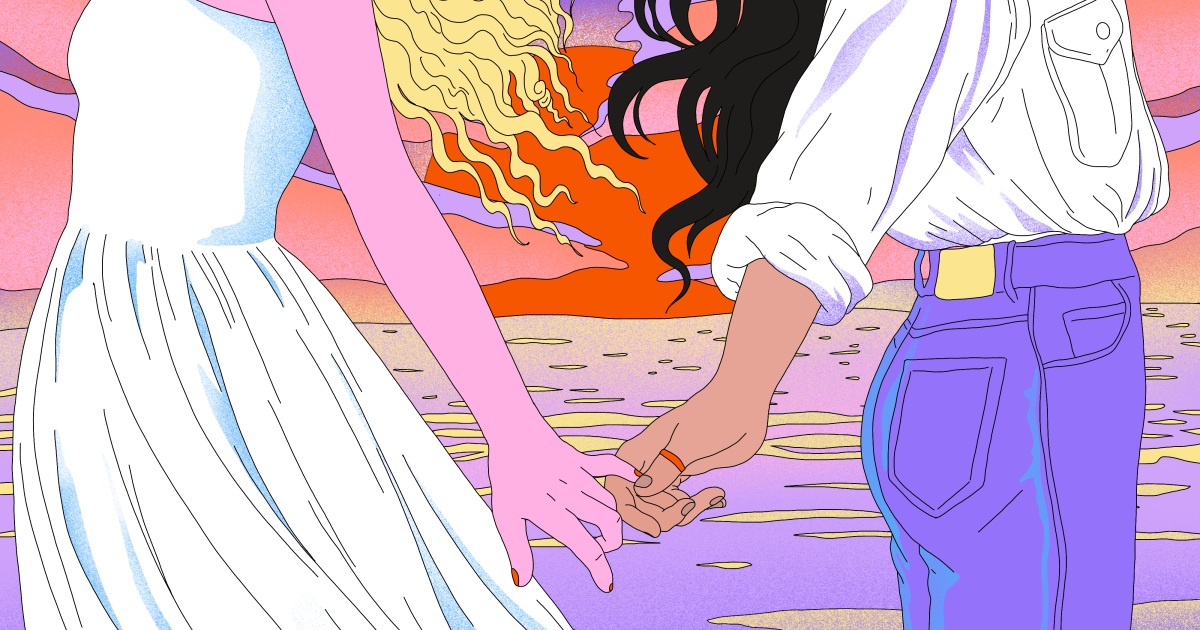
“Wait, you dated her? She’s basically royalty,” said an old schoolmate of my first love when we realized our mutual connection. It was nearly a year after the breakup, but even hearing her name made my heart beat in staccato.
I was in my sophomore year at Scripps College in Claremont when our paths crossed for the first time. Trump’s inauguration and an air of accompanying pessimism hung in the air, so I combated my own doom through volunteering for our college consortium’s refugee advocacy network. During my first tutoring assignment, I couldn’t have looked more out of place. I’d never met a Muslim person before coming to college, and here I was, walking into the mosque in my skinny jeans with a tiny silver cross hanging around my neck.
It didn’t take long to notice one of the other volunteers, with her dark curly hair and tie-dye. She looked so at ease, and she was, cracking jokes with the moms in her native language and letting the kids strum on her guitar.
I was so anxious that day as I approached her, emboldened by her direct eye contact and easy smile. I was too shy and inexperienced to really make my interest known (plus, we were in a mosque after all). Still, we struck up a conversation about psychology, the subject in which we were both majoring. She saw past my nervousness (and my silver cross) and asked me if I wanted to get lunch together sometime.
What started as a casual invitation turned into a month of text-flirting during winter break across the ocean (me in my hometown on the East Coast, her on the other side of the world). When we returned to California, the mutual crush was in full force. We fell into quick love, the kind that led to us spending all of our spare time together. In a matter of a few weeks, plenty of my clothes were in her closet, and she was teaching me how to ride her longboard. She told me: “I know that I really like you because sometimes I forget how to speak English around you.”
That spring semester was one of all of my important firsts. First love, first relationship, first time exploring Southern California as an adult. Every so often, we would brave the traffic from the Inland Empire to West Hollywood in her Porsche SUV. It was with her that I first saw the sparkling lights of downtown Los Angeles from her family home in the Bird Streets neighborhood. Who wouldn’t be smitten?
Recreational weed had just been legalized, so we’d get takeout ramen and hotbox her room after she turned off all the cameras within the house (security that she assured me was to protect her and her family but that put me at unease nonetheless).
Adding to the thrill of first love was the fact that it was a somewhat hidden relationship. But secrets are only sexy until they’re not. Her family’s prominence in her home country, the illegality of her sexuality there, my own closeted status — they created invisible walls around and between us. I remember the night she pulled me behind her car on the way into a sushi restaurant, her face pale with fear at the sight of men who might know her father.
Despite the obstacles, we were still in love by the end of the academic year. She graduated, and we drove out to Los Angeles for our last few days together before she flew back home with her parents. We strolled along Venice Beach in the morning and ate lunch on the Santa Monica Pier. The Pacific stretched out before us, vast and indifferent. I wonder if it knew it was witnessing our penultimate act. When it was time for me to finally depart, she dropped me off at Los Angeles International Airport, and as I watched her disappear into the traffic, I felt part of myself disappearing too.
The end, when it came, was both catastrophic and achingly mundane. Stuck back in her home country with no way to return once her student visa had expired, she decided that long distance just wouldn’t work. For months, I cried so hard that I had strangers approach me to tell me that they would pray for me.
Eventually our planets crossed into each other’s orbit again — two years later. She was in L.A. for work, and I had just graduated. Time had passed but little had changed. We hiked Runyon Canyon, and our flirty conversation felt as easy as breathing. Ex-lover, lover — the labels blurred and shifted — and I felt like I hadn’t grown at all, still that same girl standing at the airport, watching her drive away. I knew then that this was no way to live, forever chasing after the same first spark.
During the years after our breakup, I had refused to really move on, which was precisely why I had to. It was time to cut the strings holding us together. I texted her: “i guess i kind of realized that i was still using you as a source of validation because i’m still insecure about a lot of things and until i can stop doing that i don’t think it’s healthy to keep you in my life.” A few lines on a screen, inadequate to express the complexity of what I was feeling, but true nonetheless.
I’ve fallen in love and experienced heartbreak several times since then. But nothing compares to the innocence of first love, that raw, unguarded vulnerability that comes before you learn how to protect yourself. There’s something beautiful about it, almost mythic in nature. Long after the love is over, its echoes remain, a reminder of who we once were and how far we’ve come.
The author is a writer and journalist based in Paris (though her heart is still in L.A.). She’s on Instagram @alien_angelbaby and Substack @postcardsfromdreamland.
L.A. Affairs chronicles the search for romantic love in all its glorious expressions in the L.A. area, and we want to hear your true story. We pay $400 for a published essay. Email LAAffairs@latimes.com. You can find submission guidelines here. Editor’s note: L.A. Affairs won’t be published Dec. 13. You can find past columns here.

For Iris van Herpen, couture is a laboratory as much as a runway. Our chief fashion critic, Vanessa Friedman, takes us inside this Dutch designer’s latest Paris show — from sci-fi-inspired gowns to an audacious attempt at a dress made of charged plasma.
Lifestyle
The BoF Podcast | Decoding Paris Haute Couture: Wonder, Restraint and the Call of the Void


-

 San Francisco, CA5 minutes ago
Classical music series helps reconnect downtown San Francisco community
-

 Dallas, TX10 minutes ago
Dallas police officers, paramedics recall saving woman stuck in a ravine for days;
-

 Boston, MA20 minutes ago
Red Sox win 7th straight game just hours after landing in New York
-
 Denver, CO25 minutes ago
One tree at a time: Denver nonprofit works to close shade gap as heat dome threatens neighborhoods
-

 Seattle, WA32 minutes ago
VIDEO: West Seattle Summer Fest 2026 day 1, evening report
-

 San Diego, CA35 minutes ago
The World’s Number One Wellness Retreat is Right in Our Backyard
-
 Milwaukee, WI40 minutes ago
Festivalgoers say Milwaukee’s summer events fill a gap in downtown entertainment
-

 Atlanta, GA47 minutes ago
Atlanta mentoring program brings ‘Save Our Sons Tour’ to Jacksonville’s Duval Day

