Lifestyle
L.A. Affairs: I swore off cats. Then I met my dream guy who had one


In a Burbank writers’ room, over deli sandwiches from down the street, someone asked, “What’s your one dating deal-breaker?” I didn’t hesitate. “He can’t have a cat.” A few eyebrows lifted. That’s the hill? I doubled down. I hate them. I’m scared of them. Instant swipe left.
Two years later, I met my Bumble date at a North Hollywood bar shaped like a whiskey barrel, and my heart dropped the moment I saw him. He was even more handsome than his profile suggested. Disarmingly real-life handsome. I scanned the room to make sure it wasn’t a prank, which had actually happened to a coworker, but the coast seemed clear.
We sipped Moscow mules and traded stories like we had known each other for longer than an hour. When a surprising burlesque performance erupted beside us, he didn’t so much as glance away. His eyes stayed on mine. The night felt magical.
I don’t usually romanticize first dates. Most of them make it easy. A quick drink, polite conversation, a mutual understanding that we tried. It’s simpler than confronting the parts of myself I’ve hidden for years, fearing no one would accept me. I perfected the art of staying just far enough away to never fully be seen.
Until now. This one felt different.
As I headed home, the hum of Lankershim and the neon blur of bars couldn’t drown out the quiet, unmistakable voice inside me whispering, “I think I just met my future husband.”
My phone buzzed.
“Have I mentioned I have a little black void named Aneksi?”
A black cat with enormous green eyes stared back at me. Oh no … no, no, no! How could my dream guy, my supposed future husband, have my biggest deal-breaker?
This couldn’t be happening.
Despite my cat trepidation, I saw him again, just to make sure my first-date magic wasn’t a fluke. But the second date was even better. Shoot.
Over the next few days, I did what any rational woman falling for a man with a cat she despised would do. I Googled how long cats live. Fifteen years. Sometimes 20. Could I outlast it? Could I ask my dream guy to give up his rescue cat, his pandemic buddy? No. That would be cruel. Or would it?
Cats weren’t something I could easily get used to. My whole life, they had been vilified by my mom’s side of the family. We half-joked that our family had a curse with cats. Maybe this alleged “curse” is why I fear cats, or maybe it’s because when I was 4 years old I was attacked by one.
It happened at a sleepover. My friend’s cat hid under the bed and wanted us to play with it, so I leaned over and uttered three words I’ll never, ever, say again: “Here, kitty kitty.”
The cat lunged, claws digging into my arms. I ran for the door. Jammed. I tried barricading myself in the closet. The feisty cat was faster. My screams finally drew my friend’s mom to intervene. I limped home looking like a scene out of “Carrie.” The family curse was alive and well.
Now I was standing at the intersection of fear and desire. And I couldn’t stop liking him.
For most of our early relationship, Aneksi hid. I rarely stayed the night, secretly loving the eight-minute buffer between his Valley Village place and mine in Sherman Oaks. The perfect distance physically … and emotionally.
I hadn’t been in love in more than a decade. I carried shame about parts of my body that I preferred no one examine too closely. I had an MBA in becoming invisible. And yet, despite the moat around my heart, I couldn’t deny I wanted love again.
Aneksi, it turned out, had his own trust issues. Once he realized I wasn’t leaving, he cautiously emerged from his hiding spot, keeping an arm’s length between us. Fine by me. My dream guy occasionally nudged me to pet him or offer a treat. I did, briefly, because it mattered to him. What unsettled me more than the cat was this man’s patience. His steadiness. The way he cared without asking for anything back.
And then he left town.
He asked if I could watch Aneksi. The first day, the cat stayed hidden. I fed him, cleaned the litter box and left. By day three, curiosity won. He poked his head out. I placed a treat on the cat tower. He accepted. I pet him for approximately 2½ seconds. He seemed to enjoy it. I seemed to enjoy it. Huh? By the end of the week, I was sending photo updates like a proud babysitter, documenting every cautious inch of progress.
Over the next year, Aneksi no longer bolted when I entered the room. Sometimes, though, I still wanted to. That was when my dream guy, known as Sergio, brought up living together. Every cell in my body screamed yes, but my mind spiraled. The litter box. The tuna. The early mornings. No more eight-minute buffer to retreat to.
Plus, the idea of one of us giving up our rent-controlled apartment felt like throwing a pot of gold into the Pacific. What if it didn’t work out? And yet, my growing love for him tipped the balance. OK, I thought, let’s give this a real try.
Cohabitation wasn’t seamless. The litter box was still disgusting. The tuna still smelled. We coexisted more than we bonded. I loved Sergio. I tolerated the cat.
Then I hurt my knee at a dance audition in Pasadena I had no business attending.
When I started limping, Aneksi exuded a sympathy limp. The vet confirmed nothing was wrong with him. As I lay on the living room floor in pain, he flopped beside me and blinked slowly. I instinctively blinked back as happy tears streamed down my cheek. For the first time, his presence didn’t heighten my nervous system. He steadied it.
Something shifted after that. The safer he felt, the more open I became.
Sergio knew about my insecurities. What he didn’t always see was how carefully I managed myself around them. Like the angles I chose in photos, the way I shrunk myself to go unnoticed, the relief of a closed door. Living together made hiding harder.
One night, with Aneksi wedged between us on the couch, I let him see the parts of me that still wanted to hide. He didn’t flinch. He stayed.
For someone who spent years outrunning love, I was surprised to learn that when I stopped spiraling in my mind, I could finally trust what my body already knew.
I’m now married to Sergio. The spare rent-controlled apartment is gone. The litter box remains. And Aneksi rarely leaves my side. I now have two loves of my life and I couldn’t imagine it any other way. Maybe the family curse was never about cats. Maybe it was about fear. And maybe, finally, it’s broken.
The author is a screenwriter whose upcoming Hallmark movie “A Season to Blossom” premieres April 4. Find her on Instagram: @itsjenwolf.
L.A. Affairs chronicles the search for romantic love in all its glorious expressions in the L.A. area, and we want to hear your true story. We pay $400 for a published essay. Email LAAffairs@latimes.com. You can find submission guidelines here. You can find past columns here.
Editor’s note: On April 3, L.A. Affairs Live, our new storytelling competition show, will feature real dating stories from people living in the Greater Los Angeles area. Tickets for our first event are on sale now at the Next Fun Thing.


Sydney (Ayo Edebiri) and Carmy (Jeremy Allen White).
FX
hide caption
toggle caption
FX
There has always been a metaphorical parallel between The Bear, the television show, and The Bear, the fictional restaurant on the television show. Even as Carmy (Jeremy Allen White) and Sydney (Ayo Edebiri) transformed the Italian beef joint into the fancy restaurant of their dreams and wished for a Michelin star, there were undoubtedly locals who thought, “This is great and all, and I’m sure the food is good, but … I liked the beef sandwiches.” There’s still a window at The Bear to get them, but the focus is certainly elsewhere.
When it started, The Bear was mostly about the work that took place in the kitchen. The stresses of too many orders, territoriality from Richie (Ebon Moss-Bachrach), the arrival of Sydney, and the tightly wound but undeniably talented Carmy, making everybody both extremely stressed and significantly better. Over time, it shifted and grew, putting together beloved departure episodes like “Fishes” in Season 2, which introduced a boatload of guest stars for a flashback story of a disastrous family dinner before Mikey (Jon Bernthal) died. It spent time with Sydney’s family, it explored the way Tina (Liza Colón-Zayas) and Mikey originally met, it followed Marcus (Lionel Boyce) to Copenhagen, and it went with Richie to work for Andrea (Olivia Colman). All these episodes were excellent. And there was still a kitchen. But the focus seemed to be elsewhere.

At times, the show seemed to have disappeared up its own nose, to the point where you weren’t watching the show The Bear as much as you were watching the phenomenon The Bear. There were too many real-life chef cameos, until it seemed like those chefs were checking a box on a list of “things all the cool kids do.” There were too many other cameos, culminating in a rare miss from the reliably charismatic John Cena. The show placed a lot of narrative weight on Carmy’s love interest, Claire (Molly Gordon) — weight that the underwritten character couldn’t support. But even if every experiment and every diversion had worked, viewers couldn’t be blamed for missing the close focus on the kitchen and the camaraderie — for thinking, “This is all really special, but I do miss the beef sandwiches.”
The fifth and final season dispenses with the departure episodes, and it mostly dispenses with cameos. It all takes place on one day, just after Carmy tells Richie and Sydney that he wants to step back from the restaurant and give it to them and Sugar (Abby Elliott) to run, and it mostly takes place right there at The Bear. Now that the clock set by Jimmy (Oliver Platt) has run out, his money has run out as well, and a series of cascading disasters puts Sydney, Carmy and Richie behind the 8-ball from very early in the day, not least because of the tension hanging over all three of them as they prepare to tell the staff about Carmy’s decision to leave.

Tina (Liza Colón-Zayas).
FX
hide caption
toggle caption
FX
We spend this day mostly with the people we know best: our three leads, along with Sugar, Tina, Marcus, and the rest of the staff — including Luca (Will Poulter), who has stayed around to keep working with Marcus. Jimmy is running around with Computer (Brian Koppelman) and a young apprentice of his named Cheese (Elsie Fisher of Eighth Grade), trying to figure out what to do about his finances since it is Jimmy, and not just the restaurant, who’s out of money.
This day takes a while to get cooking, so to speak. The first three episodes of the season are slow, the first two in particular. It’s pouring rain outside, the lighting is dim, and the score maintains the same contemplative melancholy for a long, long time. For about two and a half episodes, it feels like one extended, low-energy scene.
But after that, there’s a shift in tone as the staff looks to get through service, and through seven episodes (FX did not make the finale available in advance for critics), the rest of the season is terrific. What you see is the core story of The Bear, which is people trying to serve food and overcome problems, but through the lens of everything that has happened over the show’s run: Carmy’s retreat from his obsessiveness, Richie’s expansive (and inspiring) discovery of his gift for hospitality; Sydney’s stepping forward from second-in-command to leader; Tina’s complex relationship with the restaurant and her grief over Mikey; Sugar and Carmy’s relationship with Donna (Jamie Lee Curtis); the arrival of Marcus as a high-end pastry chef.
The question the show asks over the last four episodes is: Given all those digressions and flashbacks, given all those visits with families and others, given everything we know about where all these people have been and what they’ve experienced, how does a high-pressure service — of the same kind we used to see in that first season — look now? How do they behave differently, and how does their behavior read differently? How are they the same people we have always known, but at a different juncture, in a different context? How do their wins mean more to them, and to the audience?
On the one hand, making a season this way, there are fewer surprising grace notes, like “Napkins,” the Tina/Mikey flashback episode in Season 3, or “Worms,” the episode in Season 4 where Sydney hung out with her cousin (Danielle Deadwyler) and her cousin’s kid. The Bear feels less daring and more conventional.
But oh, when they have victories under pressure? Victories, large or small? It is immensely, richly satisfying. There’s also more comedy other than just the goofy Faks family than we’ve had in a few seasons; Richie is perhaps the MVP of the season, and that’s partly because of how often he gets to be really funny. Ayo Edebiri continues to be the show’s best reactor, showing Syd eternally a little bit surprised (dismayed?) that she’s chosen to throw in her lot with these people.
There are a couple of questions yet to answer in the finale, both little plot items and broader character resolutions. Over these seven episodes, though, there is much to cheer.


Lifestyle
John Cena wanted to step away from the WWE ring before he became ‘too slow for the show’ : Wild Card with Rachel Martin

A note from Wild Card host Rachel Martin: First a confession: I have never watched a WWE match in its entirety. Don’t get me wrong, I appreciate the athleticism and the performance, it’s just not my thing. But there is something about John Cena I’ve never been able to shake.
Yes, he is a wrestling legend, but he has built a career as an entertainer that transcends the ring. The first time I saw him lead a cast was the 2019 family movie “Playing with Fire” and his rapport with kids in that film didn’t seem like acting at all. The man contains multitudes!
He co-stars with Eric Andre in his newest film, “Little Brother.”
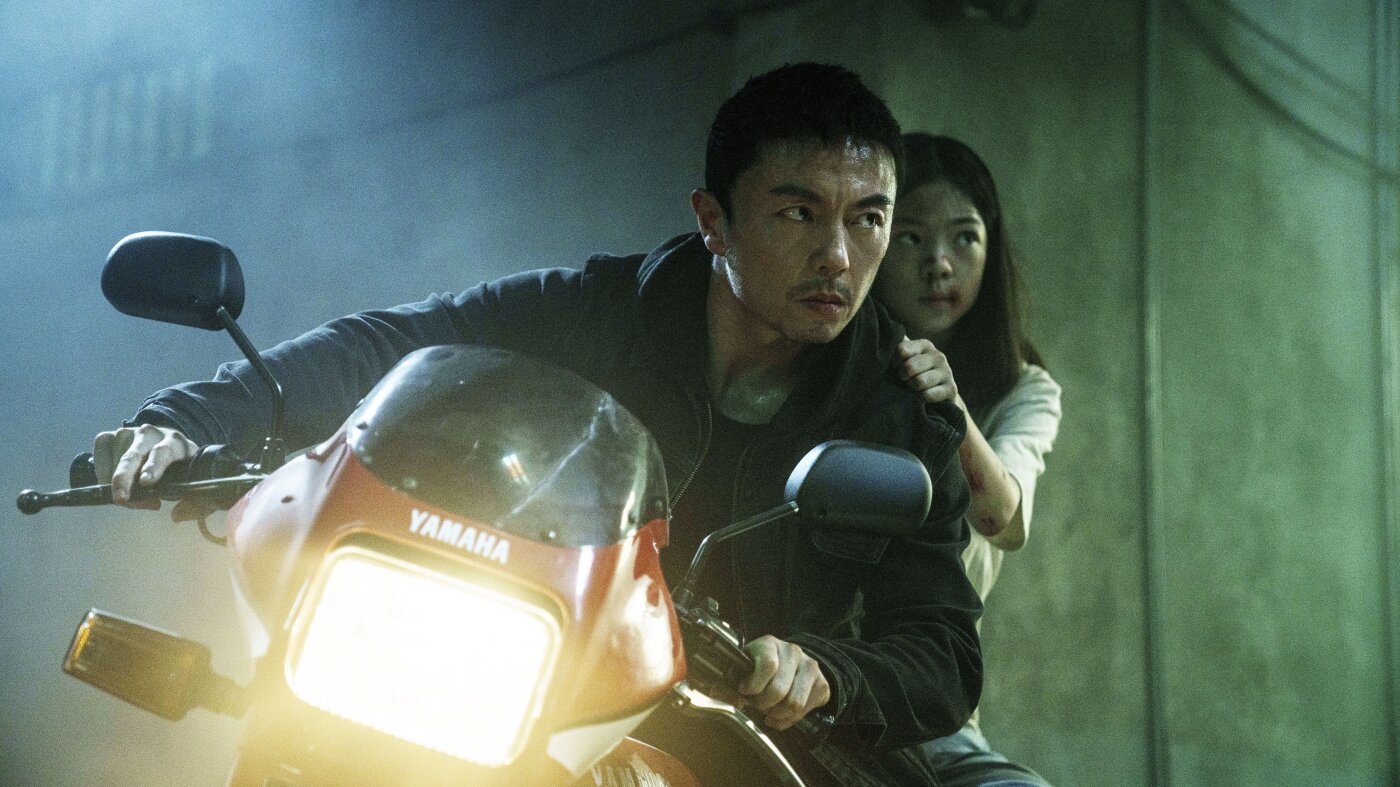
Xie Miao and Yang Enyou in The Furious.
Norachai Kajchapanont/Lionsgate
hide caption
toggle caption
Norachai Kajchapanont/Lionsgate
There have been some fantastic movies released this year, and we know you can’t see them all. So we’re recommending four recent movies we missed that you should add to your watchlist: The Furious, Tuner, She’s The He, and Heresy.
If you need a few more fun film recommendations, check out these episodes:
Fun movies you may have missed
Our favorite movies on Tubi
We debate the best movies to watch on an airplane
Connect with Pop Culture Happy Hour:
Letterboxd / Facebook
Our weekly newsletter
Support Pop Culture Happy Hour+
-

 Delaware4 minutes ago
After changing Delaware’s library system forever, she’s stepping away
-

 Florida11 minutes ago
Florida tattoo shop refuses service to military and veterans for being ‘war criminals’
-

 Georgia14 minutes ago
What would it take for Missouri football to stun Georgia in 2026?
-

 Hawaii19 minutes ago
Scientists say major earthquakes feel frequent, but activity is on track
-
 Idaho26 minutes ago
Eagle Road’s long-awaited variable speed signs one step closer to operation
-

 Illinois29 minutes ago
Illinois Lt. Gov. candidates focus on affordability in pitch to Rockford voters
-

 Indiana34 minutes ago
Indiana Fever President Addresses Player Safety After Alyssa Thomas' Suspension
-

 Iowa41 minutes ago
Iowa City Regina baseball finds winning formula under new leadership

