Lifestyle
L.A. Affairs: How did our date begin? He removed his saliva-drenched teeth aligners

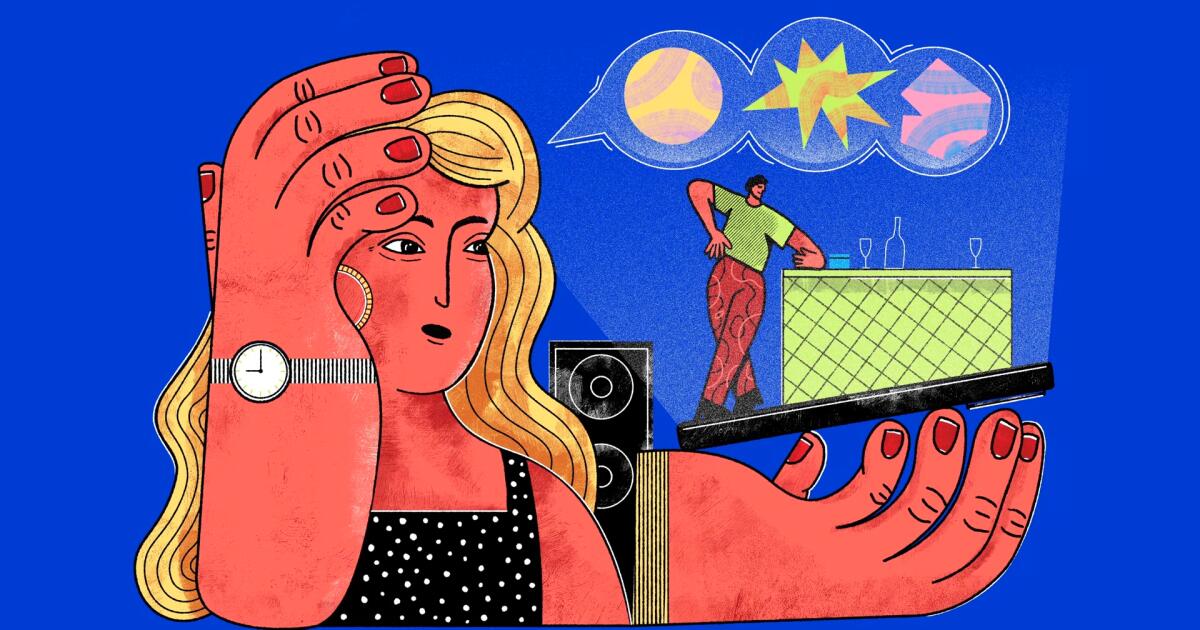
His Bumble bio and photos were appealing. He traveled frequently and loved to dance. Over the phone, he came across as dorky to me. But when he suggested that we go salsa dancing for our first date, I decided dorky was doable. I love dancing too. There was a lesson at 9 p.m. followed by live music from a band.
Despite my challenges with dating in L.A., I responded enthusiastically: “Sounds nice! I’m looking forward to it.”
“Great,” he said. “Let’s meet at 8:30. We can have a drink and then you can join the lesson.”
He emphasized the word “you.” With a playfulness in my voice, I countered: “Well, we will both do the lesson.”
The nerd suddenly morphed into a snob. “I’m an expert salsa dancer. I don’t need the lesson.”
I remained bubbly. “But this is a date. We will do the lesson together since it’s fun. Plus, there are never enough men. You’ll have to join.”
His attitude surfaced again. “As I said, I’m an expert salsa dancer. I don’t need the lesson. That’s for you as a novice.”
Firmly I said, “You are doing the lesson with me. See you Friday.”
I had been hesitant and fearful when I jumped into the online dating world a year-and-a-half after my longtime partner’s suicide. I had wanted to take it slowly. I wasn’t at all ready to find Mr. Right and was intimidated by the prospect of even finding Mr. Right Now. I was also full of dating questions, like “How do I talk about my most recent relationship?” or “Is it better to meet for coffee or dinner?”
In putting myself out there since my boyfriend’s death, I’ve found mind-boggling material that I’ve shared with my friends who are eager to support my dating adventures. Sometimes they’ve even picked up dating insights based on my bizarre encounters, which have turned out to be plentiful.
After all, there was the guy who asked on our first outing if I was “taken care of down there,” waving his hands toward my nether region. There was the bed-breaker. There was the guy who barked orders at hotel staff. (He insisted we eat in a conference room that was reserved for a corporate luncheon.)
My hope was that things might go better with Mr. Salsa.
At 8:30 p.m. on date night, I walked into the Warehouse Restaurant bar in Marina del Rey. It was empty except for my date.
When his beer arrived, he opened his mouth widely to brutishly remove his aligners. I watched as he stuck both fists in his face to remove the saliva-drenched hardware, which he then placed in a little blue box.
He wiped his hands on his jeans, smiled broadly and pointed to his teeth. “I wear Invisalign on the top and bottom.”
An entire conversation about aligners ensued as another dialogue was happening in my head. I thought to myself, Seriously, Mr. Salsa? Did you really just remove your hardware within five minutes of meeting me? Why are you taking them out at the bar? Why not in the car before you got here? Why do you have to take them out at all? You’re just drinking a beer! Why are we engaging in a long conversation about how to lessen the cost by getting three sets made at once?
I wanted to go home but would feel bad about bailing. I am always too nice.
The salsa lesson was about to start, and sure enough, my date refused to join. I happily participated and was relieved I didn’t have to interact with him. Eventually the teacher dragged him onto the dance floor. As I had predicted, the women-to-men ratio was not close to being even.
After the lesson, I danced with Mr. Salsa. I’ll admit it: He was a good partner and a fantastic lead. But he was impossible to tolerate. He uttered, “You aren’t too terrible. I can probably work with this.”
He led me back to the bar. Just as I was about to thank him and wish him a nice rest of the evening, he looked me up and down, pointed toward the dance floor and bluntly said: “I’m going back out there. But you’re pretty. I’m sure someone will ask you to dance.”
I watched in bewilderment as he walked onto the floor to introduce himself to a beautiful brunette in a red dress.
That was my cue to head for the door. As I turned to go, a new dance partner grabbed my elbow. His shirt was unbuttoned to his belly button. Gold chains adorned his chest. In my heels at 5-foot-3, I towered over him.
After our quick dance, I bumped into the original Mr. Salsa. Ever so politely, I tried the gentle letdown. “This was fun, but I better head home.”
He said, “Amazing night. I’ll give you a ride.”
This time I was more forceful. “Oh. No. Really, you stay. Enjoy yourself. But thank you.”
He texted the next morning about a second date, but I held firm. There would be no second date.
Mr. Salsa was added to my list of bad dates.
As for me, I had assumed my baggage would be too heavy to bring on dates after all the turmoil with my boyfriend, his mental illness and eventual suicide and my subsequent grief, trauma and devastation. For so long, there have been questions surrounding my boyfriend’s death. I will never have all the answers, and I’m OK with that. But in terms of the dating scene, I’ve realized that despite everything I’ve been through, I’m in a far better state than most of the potential suitors I keep meeting in L.A.
Because on the other side of my years-long, to-hell-and-back healing process, which is best described as daunting, challenging and uncomfortable, has been recovery and growth. I also have continued to trust that despite my often disastrous and discouraging dating stories, an excellent partner awaits.
In the words of Mr. Salsa, I’m going back out there.
The author is an L.A. native and nonprofit executive. She is working to publish her memoir about life and lessons after suicide, including tales from the L.A. dating scene. She’s on Instagram: @nicole_lise
L.A. Affairs chronicles the search for romantic love in all its glorious expressions in the L.A. area, and we want to hear your true story. We pay $400 for a published essay. Email LAAffairs@latimes.com. You can find submission guidelines here. You can find past columns here.



Online prediction market platforms allow people to place bets on wide-ranging subjects such as sports, finance, politics and currents events.
Photo Illustration by Scott Olson/Getty Images
hide caption
toggle caption
Photo Illustration by Scott Olson/Getty Images
The rise of prediction markets means you can now bet on just about anything, right from your phone. Apps like Kalshi and Polymarket have grown exponentially in President Trump’s second term, as his administration has rolled back regulations designed to keep the industry in check. Billions of dollars have flooded in, and users are placing bets on everything from whether it will rain in Seattle today to whether the US will take over control of Greenland. Who’s winning big on these apps? And who is losing? NPR correspondent Bobby Allyn joins The Sunday Story to explain how these markets came to be and where they are going.
This episode was produced by Andrew Mambo. It was edited by Liana Simstrom and Brett Neely. Fact-checking by Barclay Walsh and Susie Cummings. It was engineered by Robert Rodriguez.
We’d love to hear from you. Send us an email at TheSundayStory@npr.org.
Listen to Up First on Apple Podcasts and Spotify.

Now you can pair your big show with dinner and a more intimate listening experience. The Hollywood Palladium, an Art Deco music venue graced by performers like Frank Sinatra, Richard Pryor, Jimi Hendrix, Lady Gaga and Jay-Z since 1940, has debuted a swanky lounge known as Vinyl Room.
Inspired by 1970s Japanese high-fidelity (hi-fi for short) listening rooms and operated by entertainment company Live Nation, it’s a space where concertgoers can have dinner, grab drinks and catch a vinyl DJ set before, during or after their ticketed event in the same venue.
With a name like Vinyl Room, you can expect to see vinyl records everywhere.
“You’re in [for] a whole night of music,” says Geni Lincoln, president of the California region for Live Nation, adding that her team put “so much thought” into the sound and design of the space, which was in development for more than two years.
“I’ve been coming to the Palladium since I was a teenager, so it’s really special to see,” she says.
Entering Vinyl Room feels like you’re stepping into a secret speakeasy for music lovers, one with iconic music memorabilia, a thoughtful food menu and premium sound quality. Want to check it out? Here are five things to know.

Everything inside of Vinyl Room is inspired by the sounds and the musicians who’ve played at the Hollywood Palladium since 1940.
1. Vinyl Room is exclusively open to members and concertgoers with an upgraded ticket
Vinyl Room is open only on Hollywood Palladium show nights, starting 90 minutes before doors open, and remains open one hour after the concert. Admission is limited to concertgoers who purchase a ticket upgrade, which starts at $35. Early reservations are recommended.
Vinyl Room also offers annual membership packages, which start at $2,000 and come with various benefits such as complimentary guest passes to Vinyl Room, access to an exclusive menu, valet parking, table reservations inside the lounge, a dedicated private entry, complimentary coat check and concert ticket credits.

Tip Dunn, also known as DJ tenSpeed, played records during opening night at Vinyl Room at the Hollywood Palladium.
2. Hi-fi is having a moment in Los Angeles — and Vinyl Room delivers on sound quality
From Common Wave Hi-Fi in Boyle Heights to Slow Jamz Gallery in the Arts District and Gold Line bar in Highland Park, hi-fi — a 1950s term used to describe the high-quality reproduction of sound — venues and experiences have been slowly popping up around L.A. over the last few years. Vinyl Room joins a short list of places where audiophiles can go to listen to music on hi-fi equipment, which many argue is the best way to experience it.
Much like the Hollywood Palladium, which is known for its top-tier sound, Vinyl Room also makes sound a priority. The lounge utilizes hi-fi sound equipment including Master Sounds Clarity-M speakers to ensure that the records sound as crisp as possible. Live DJs spin records on a set of turntables, which helps to create a richer and more analog sound that is closer to the original track than compressed versions such as MP3s.

Ruthie Embry, vice president of architecture and design at Live Nation, says the records and other memorabilia inside the space “connects you directly to the venue’s history the second you walk in the door.”
3. All of the decor ties back to music and the Hollywood Palladium’s rich history
With a name like Vinyl Room, you can expect to see vinyls everywhere. Records line most of the walls and shelves, drinks are served on vinyl-shaped coasters and tables and light fixtures are designed to the theme. There’s even vinyl wallpaper in the photo booth. In one corner of the lounge, you can dig through records under a neon sign that reads, “But have you heard it on vinyl?”
Ruthie Embry, vice president of architecture and design at Live Nation, says the records and other memorabilia inside the space “connects you directly to the venue’s history the second you walk in the door.”
Some standout items include a Red Hot Chili Peppers show flier, a Hollywood Palladium postcard signed by late musician and host Lawrence Welk and a photo of late singers Bonnie Baker and Orrin Tucker at the venue. Even the bathroom creates a memorable photo moment: The stalls are filled with photos of musicians and an “on air” studio sign lights up when a stall is occupied.

Vinyl Room’s menu, created by Chef Ryan DeRieux, is inspired by Asian flavors and includes items like the “Vinyl Roll,” which is made with spicy tuna.
4. Don’t worry about dinner plans before or after the show. Vinyl Room has got you covered
Eliminating the need to find a pre- or post-show restaurant, Vinyl Room has a full Asian-inspired menu created by Chef Ryan DeRieux.
Think sushi tots (like crispy tuna but with tater tots instead of rice), tuna poke nachos, chili crunch chicken wings and shiitake tempura burgers. There’s also a mouth-watering 10-ounce American wagyu skirt steak served with shishito peppers, pickles and charred carrots. For dessert, try the taiyaki, a popular fish-shaped Japanese street food, which is served with a delicious passion fruit cream that I wanted to take to go because I liked it so much.

Signature cocktails at Vinyl Room, inspired by popular songs, include the Superfly, Escape (if you like piña coladas) and Smoke on the Water.
5. The craft cocktails aren’t just delicious — they each have a story

Vinyl Room’s old-fashioned is made with Nikka Yoichi whisky, which is made in Japan.
The cocktail program, developed by third-generation bartender Sean Kenyon, is inspired by the songs created by musicians who’ve graced the Hollywood Palladium stage. A nod to the 1970s, the Superfly is a fizzy, citrus-forward play on Curtis Mayfield’s 1972 track and is made with Roku Gin and yuzu and sencha syrup. Other signature drinks include the rum-based Escape (if you like piña coladas) with coconut oolong syrup, pineapple juice and miso, and the tart yet sweet Smoke on the Water, which is reminiscent of Deep Purple’s 1972 song. The bar also offers an espresso martini (called the MT Joy), a signature old-fashioned (made with Nikka Yoichi whisky) and a Japanese whiskey highball (made with Hibiki Harmony whisky). The bar offers a number of non-alcoholic options as well.

A screenshot from George Mélière’s Gugusse et l’Automate. The pioneering French filmmaker’s 1897 short, which likely features the first known depiction of a robot on film, was thought lost until it was found among a box of old reels that had belonged to a family in Michigan and restored by the Library of Congress.
The Frisbee Collection/Library of Congress
hide caption
toggle caption
The Frisbee Collection/Library of Congress
The Library of Congress has found and restored a long-lost silent film by Georges Méliès.
The famed 19th century French filmmaker is best known for his groundbreaking 1902 science fiction adventure masterpiece Le Voyage dans la Lune (A Trip to the Moon).
The 45-second-long, one-reel short Gugusse et l’Automate – Gugusse and the Automaton – was made nearly 130 years ago. But the subject matter still feels timely. The film, which can be viewed on the Library of Congress’ website, depicts a child-sized robot clown who grows to the size of an adult and then attacks a human clown with a stick. The human then decimates the machine with a hammer.
In an Instagram post, Library of Congress moving image curator Jason Evans Groth said the film represents, “probably the first instance of a robot ever captured in a moving image.” (The word “robot” didn’t appear until 1921, when Czech dramatist Karel Čapek coined it in his science fiction play R.U.R..)
“Today, many of us are worried about AI and robots,” said archivist and filmmaker Rick Prelinger, in an email to NPR. “Well, people were thinking about robots in 1897. Very little is new.”
A long journey
Groth said the film arrived in a box last September from a donor in Michigan, Bill McFarland. “Bill’s great grandfather, William Frisbee, was a person who loved technology,” Groth said. “And in the late 19th century, must have bought a projector and a bunch of films and decided to drive them around in his buggy to share them with folks in Pennsylvania, Ohio, New York.”
McFarland didn’t know what was on the 10 rusty reels he dropped off at the Library of Congress’ National Audio-Visual Conservation Center in Culpeper, Va. A Library article about the discovery describes the battered, pre-World War I artifacts as having been, “shuttled around from basements to barns to garages,” and that they, “could no longer be safely run through a projector,” owing to their delicate condition. “The nitrate film stock had crumbled to bits on some; other strips were stuck together,” the article said. It was a lab technician in Michigan who suggested McFarland contact the Library of Congress.
“The moment we set our eyes on this box of film, we knew it was something special,” said George Willeman, who heads up the Library’s nitrate film vault, in the article.
Willeman’s team carefully inspected the trove of footage, which also contained another well-known Méliès film, Nouvelles Luttes extravagantes (The Fat and Lean Wrestling Match) and parts of The Burning Stable, an early Thomas Edison work. With the help of an external expert, they identified the reel as having been created by Méliès because it features a star painted on a pedestal in the center of the screen – the logo for Méliès Star Film Company.
A pioneering filmmaker
Méliès was one of the great pioneers of cinema. The scene in which a rocket lands playfully in the eye of Méliès’ anthropomorphic moon in Le Voyage dans la Lune is one of the most famous moments in cinematic history. And he helped to popularize such special effects as multiple exposures and time-lapse photography.

This moment from George Méliès’ Le Voyage dans la Lune (A Trip to the Moon) is considered to be one of the most famous in cinematic history.
George Méliès/Public Domain
hide caption
toggle caption
George Méliès/Public Domain
Presumed lost until the Library of Congress’s discovery, Gugusse et L’Automate loomed large in the imaginations of science fiction and early cinema buffs for more than a century. In their 1977 book Things to Come: An Illustrated History of the Science Fiction Film, authors Douglas Menville and R. Reginald described Gugusse as possibly being, “the first true SF [science fiction] film.”
“While it may seem that no more discoveries remain to be made, that’s not the case,” said Prelinger of the work’s reappearance. “Here’s a genuine discovery from the early days of film that no one anticipated.”

Video: What the Texas Primary Battle Means for the Midterms

Video: Trump’s War of Choice With Iran
Bet on Anything, Everywhere, All at Once : Up First from NPR

Soundcore new Space 2 promise improved ANC and sound

3 US service members killed, 5 seriously wounded in Iran operation

Florida High School Football Rankings: Top 25 teams – Oct. 21

Cleary's 21 help Le Moyne down Central Connecticut State 69-64 in OT

How old is Bo Nix? What to know about Oregon quarterback ahead of 2024 NFL Draft

99th annual Pony Swim held in Virginia

Indiana Members Credit Union announced as new anchor tenant at Bottleworks District
Video: What the Texas Primary Battle Means for the Midterms

Dems’ potential 2028 hopefuls come out against US strikes on Iran

At least nine killed after Iranian strike on Israel’s Beit Shemesh

Mass shooting at Austin, Texas bar leaves at least 3 dead, 14 wounded, authorities say

Mamdani’s response to Trump’s Iran strike sparks conservative backlash: ‘Rooting for the ayatollah’
-

 World4 days ago
Exclusive: DeepSeek withholds latest AI model from US chipmakers including Nvidia, sources say
-

 Massachusetts4 days ago
Mother and daughter injured in Taunton house explosion
-

 Montana1 week ago
2026 MHSA Montana Wrestling State Championship Brackets And Results – FloWrestling
-

 Denver, CO4 days ago
10 acres charred, 5 injured in Thornton grass fire, evacuation orders lifted
-

 Louisiana6 days ago
Wildfire near Gum Swamp Road in Livingston Parish now under control; more than 200 acres burned
-

 Technology1 week ago
YouTube TV billing scam emails are hitting inboxes
-

 Technology1 week ago
Stellantis is in a crisis of its own making
-

 Politics1 week ago
OpenAI didn’t contact police despite employees flagging mass shooter’s concerning chatbot interactions: REPORT