Lifestyle
L.A. Affairs: He was a perfect gentleman. Homeowner. Father. Film producer … and ex-con?

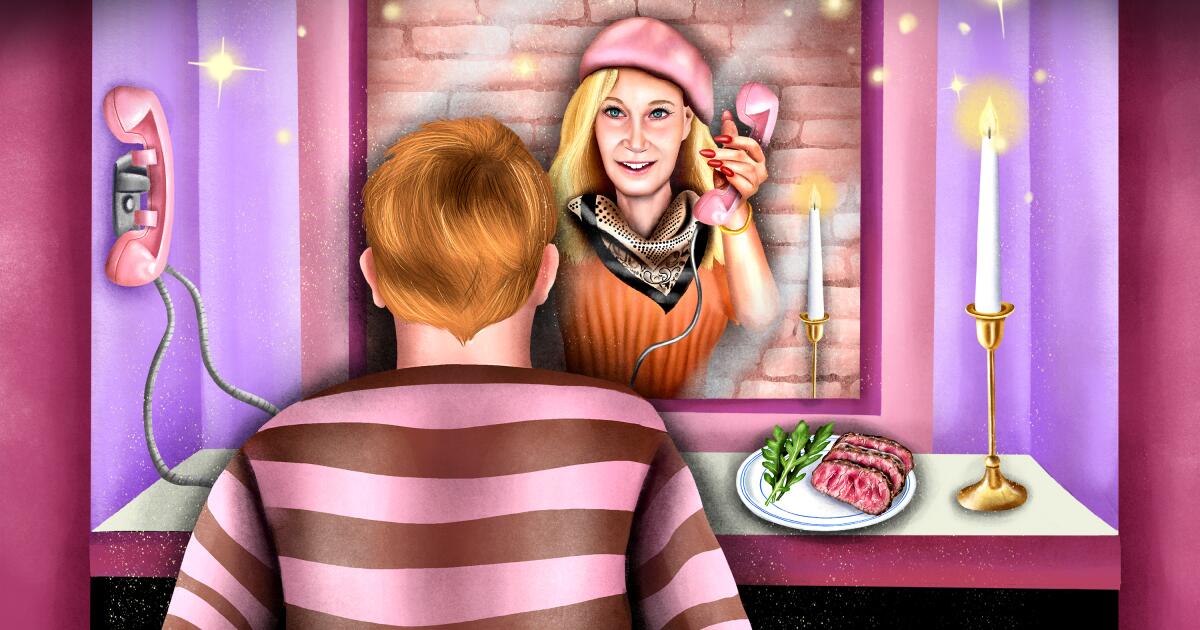
If you had asked me to go on a date with someone who was barely out of prison, my answer would be an immediate no. I am not someone with Bonnie and Clyde syndrome, and I have never initiated anything with a known ex-con. My dad used to make fun of me for being someone who sticks to rules — almost to a fault. I hated when he double parked or ignored posted signs.
Then I met Mr. Hollywood on a dating app.
As I get older, using dating apps puts me in a smaller and smaller mating pool. Most men my age or younger date younger or are married and looking for something on the side. I’m a health food-eating meditator who is rather arty. I have not made a fortune yet, and I want to find a partner, not a paramour.
I’m not everyone’s style. Men no longer look at me as a woman to mold. They just see that I don’t drink, don’t smoke and have aged out of being a pinup.
I was intrigued by Mr. Hollywood. He was cute. He had a nice profile that depicted a clean-cut, slightly geeky guy. He was more computer tech than Miami drug dealer. His profile showed that he relished the outdoors, was a fit runner, enjoyed films and had homes in two states. His kids liked him, and he looked kind.
When he sent a rose my way, I thought, why not meet him? We texted, then talked, so I was fairly sure he was not catfishing me — that’s so common now on dating apps. He immediately asked me to dinner. That was different. Almost no one did that. Coffee, sure. A walk, maybe. Committing to an early evening out felt good. It had been a long time since anyone had asked. I said yes.
Then he sent me something to read.
“See if you still want to meet me after you read this,” he said. I was a tad reticent to click a link. Potential scammers on LinkedIn have sent me private messages with URLs to jobs that may or may not have been real. (I generally delete them instead of finding out.) So why would I trust a link from a random guy I’d interacted with only on my phone?
Instead, I searched his name and the headline of the article and easily found what I was looking for. He had been in prison for selling drugs. He had been in prison for selling drugs. The article definitely sided with Mr. Hollywood and his business partner. It said, in so many words, they had been wrongly accused of being “kingpins” and did not deserve their 20-year sentences. Well, I thought, this won’t be a boring dinner. I’d like to hear his story.
He set the date for the first night he’d be back in L.A., and I gave him a few restaurant ideas. He picked one close to me in Santa Monica. That was nice. I could walk there.
I learned that he found out he was autistic in middle age but always thought he was neurodivergent, even if that term was not yet in the zeitgeist. I found him to be charming. He pulled my chair out for me and was the right amount of interested. He was the perfect gentleman, along with having a Hollywood producer cool. Producing movies was his passion; selling drugs allegedly made him a lot of money to pursue it.
He loved his dinner. The conversation flowed. He sneaked in “I’m not a good person” so innocuously that the old me would have overlooked it. Current me heard it like a Rebound ringtone.
Prior to dinner, I would have thought that sentence was his wounded self, which needed love and attention to heal. I was raised by a sweet henpecked father, who would have said something disparaging about himself to get me to help him with his computer or read tiny print. I used to rush in, taking on the helper role because it offered warmth and a modicum of love. That pattern never worked in relationships and was exactly what I wasn’t looking for.
But the sentence went by fast, and he seemed genuinely interested in perhaps working together. He even said during dinner something like, “I’m feeling like we’ve got a collaborating-on-work vibe more than romance going here.”
I agreed. But then, he said that he was feeling a lot of attraction for me. It was nice to hear. The flattery was quickly flattened. He divulged that he could be going back to prison soon. He had another court date coming up.
As the date ended, he made sure I would be OK getting home on my own and asked me to send him a specific script I’d written, which doubled as the “Yes, I did get home safely” text. I later looked up more information to see what I might have missed about him. Other than a couple of giant red flags, our dinner was a fun date — something I haven’t had in far too long. Instead of being disappointed, I felt more hopeful about dating in general.
I sent him the script, and he responded he’d read it soon. I followed up a couple of weeks later, and he said he was woefully behind. Unlike men I had gone out with, the ones who strung me along knowing we were not couple material, he simply never contacted me again.
I didn’t feel rejected. I felt like he gently slipped away after a nice dinner. His approach wasn’t criminal. It was closer to heroic. I hope he finds a Bonnie to his Clyde and lives a long and happy life.
The author has written live-action scripts and animation. She lives in Los Angeles.
L.A. Affairs chronicles the search for romantic love in all its glorious expressions in the L.A. area, and we want to hear your true story. We pay $400 for a published essay. Email LAAffairs@latimes.com. You can find submission guidelines here. You can find past columns here.

For Iris van Herpen, couture is a laboratory as much as a runway. Our chief fashion critic, Vanessa Friedman, takes us inside this Dutch designer’s latest Paris show — from sci-fi-inspired gowns to an audacious attempt at a dress made of charged plasma.
Lifestyle
The BoF Podcast | Decoding Paris Haute Couture: Wonder, Restraint and the Call of the Void


-
 News27 minutes ago
With the white nationalist group Patriot Front, what you see is not what you get
-

 New York2 hours ago
How ‘The Wire’ Star Jamie Hector Spends a Hot Day in Brooklyn
-

 Los Angeles, Ca2 hours ago
Burglars ransack Sherman Oaks condo building during fumigation
-

 Detroit, MI2 hours ago
Metro Detroit weather forecast, July 10, 2026 — 11 p.m. Update
-

 San Francisco, CA2 hours ago
Classical music series helps reconnect downtown San Francisco community
-

 Dallas, TX2 hours ago
Dallas police officers, paramedics recall saving woman stuck in a ravine for days;
-

 Boston, MA2 hours ago
Red Sox win 7th straight game just hours after landing in New York
-
 Denver, CO3 hours ago
One tree at a time: Denver nonprofit works to close shade gap as heat dome threatens neighborhoods

