Lifestyle
Imposters stole thousands of pounds of posh cheddar, rattling the U.K. cheese world


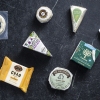
London-based distributor Neal’s Yard Dairy announced on Instagram that it was “the victim of a sophisticated fraud” involving high-value cheddar cheese. They are working with law enforcement to track down the culprit, and asking fellow cheesemongers to report any suspicious deals on clothbound cheddars with the tags detached.
Neal’s Yard Dairy/Instagram
hide caption
toggle caption
Neal’s Yard Dairy/Instagram
The British artisanal cheese community is reeling from what it’s calling the great — or grate — cheese heist of 2024 after imposters stole tens of thousands of pounds of high-value cheddar from a major distributor.
London-based retailer and cheesemaker Neal’s Yard Dairy announced last week that it had been the “victim of a sophisticated fraud resulting in the loss of over £300,000 worth of clothbound Cheddar” — the equivalent of more than $389,000.
“The theft involved a fraudulent buyer posing as a legitimate wholesale distributor for a major French retailer, with the cheese delivered before the discovery of the fraudulent identity,” the company said.
The thieves made off with 950 wheels — over 22 metric tons, or roughly 48,500 pounds — of Hafod, Westcombe and Pitchfork cheddar, it added. The wheels came from three different artisan suppliers across England and Wales.
“Between them, these cheeses have won numerous awards and are amongst the most sought-after artisan cheeses in the U.K.,” Neal’s Yard Dairy said. “The high monetary value of these cheeses likely made them a particular target for the thieves.”
The crime cuts deep: Cheddar, which originated in a village by the same name in Somerset, England, is the best-selling cheese in the U.K. and a big source of national pride.
British celebrity chef Jamie Oliver explained in an Instagram video that there is “only a small handful of real cheddar cheese makers in the world,” and that’s where the stolen cheese came from. He called it a “real shame.”
“This will slow Neal’s Yard being able to support all of their cheesemakers over the next five years, I would imagine,” Oliver said.
Neal’s Yard Dairy is shouldering the cost of the crime, having already paid the artisan cheesemakers in full. The company says it is now taking steps to ensure its own financial stability and the “continued development of the British artisan cheese sector.”
It is also working with local law enforcement and international authorities to try to track down the culprits.
“While the cheese may never be recovered, our priority is to share openly what has happened and to prevent it from happening to other businesses,” it says.
But some in the community are hoping it’s not too late to find some of the cheese — if vigilante cheddar-heads are willing to look.
How cheese lovers can help
The identity of the cheese thieves is still unknown.
Tom Calver with the cheesemaker Westcombe says they were led to believe they were sending their products to France via Neal’s Yard Dairy.
“These guys … basically impersonated a wholesaler-slash-customer, quite a large retailer over in France,” he said in an Instagram video, showing a row of empty shelves and noting he had posted excitedly about the 10-ton order just weeks earlier. “It was a hoax, it was theft, it was fraud. I mean, it’s nuts.”
Patrick Holden, whose Hafod Welsh cheddar was taken, told the BBC that the robbers asked Neal’s Yard to dispatch the cheese to a London warehouse, then collected it and disappeared. He believes they may be trying to sell it in the Middle East or Russia, “because people won’t ask questions there.”
“I think if they tried to sell it closer to home they’d find it difficult,” he said, naming North America and Australia as examples. “Because the international artisan community is very connected.”
The cheesemakers have all issued statements thanking Neal’s Yard Dairy for honoring the sale and praising the company’s response as an example of the trust and integrity that exists in the small industry.

To that end, Neal’s Yard Dairy is asking its “esteemed community of cheesemongers around the world” to keep an eye out for the cheese and contact them if they are offered or receive any suspicious deals — especially clothbound cheddars of certain weights (10 kg and 24 kg) with the tags detached.
Calver amplified that request in his Instagram video.
“If you do see or know of anybody over in Europe or around the world that there’s some clothbound raw milk cheddar that’s going cheap, then just can you let us know?” he said. “Because we can potentially trace it back — hopefully, maybe, I don’t know — and we can hopefully work with the police to try to find out who the culprits are and in some way help Neal’s Yard in this quest of finding the cheese.”
Oliver told his more than 10 million Instagram followers that “if anyone hears anything about posh cheese going for cheap, it’s probably some wrong ’uns.”
“Remember, if the deal seems too gouda to be true, it probably is!” he wrote in the caption.
Oliver also wondered aloud what the thieves could possibly be planning to do with their high-profile loot.
“Are they gonna, like, unpeel the cloth and then cut the skins off and grate it and get rid of it in the fast food industry, in the commercial industry?” he asked.
In a social media update posted on Sunday, Neal’s Yard Dairy said it has received an “overwhelming number” of calls, messages and visits from supporters since announcing the theft.
And it offered an answer to the many everyday cheese lovers who have been asking how they can help.
“Continue to support British and Irish cheese,” it wrote. “Hafod, Pitchfork and Westcombe are special examples of farmhouse Cheddar. Eat them. Celebrate them.”

For Iris van Herpen, couture is a laboratory as much as a runway. Our chief fashion critic, Vanessa Friedman, takes us inside this Dutch designer’s latest Paris show — from sci-fi-inspired gowns to an audacious attempt at a dress made of charged plasma.
Lifestyle
The BoF Podcast | Decoding Paris Haute Couture: Wonder, Restraint and the Call of the Void


-
 Politics6 minutes ago
Trump administration clears path for controversial Mojave Desert water pipeline
-
 Sports14 minutes ago
World Cup fans flock to In-N-Out, Erewhon and Trader Joe’s for a taste of California
-

 World24 minutes ago
Hundreds of thousands evacuated as Typhoon Bavi barrels towards China
-
 News51 minutes ago
With the white nationalist group Patriot Front, what you see is not what you get
-

 New York2 hours ago
How ‘The Wire’ Star Jamie Hector Spends a Hot Day in Brooklyn
-

 Los Angeles, Ca2 hours ago
Burglars ransack Sherman Oaks condo building during fumigation
-

 Detroit, MI2 hours ago
Metro Detroit weather forecast, July 10, 2026 — 11 p.m. Update
-

 San Francisco, CA3 hours ago
Classical music series helps reconnect downtown San Francisco community

