Lifestyle
'I think of my body as a teacher,' says Marine who struggled with disordered eating


Bailey Williams is a storyteller and yoga teacher in Alaska.
Abrams Books
hide caption
toggle caption
Abrams Books
Bailey Williams was 18 when signed up for the Marine Corps, in part, she says, to escape her strict Mormon upbringing. During her three years as a military linguist, she pushed her body to extremes to prove her strength. She began running four hours a day, starving herself and binging and purging. Later she learned that eating disorders are more prevalent in the Marine Corps than they are in any other branch of the military.
“There’s a significant overlap in values that you’ll see in someone who’s committed to an eating disorder and someone who’s committed to being a good Marine: a level of competition, a level of bodily self-denial, and the belief that self-mastery comes in the form of physical prowess,” Williams says. “Those values make really good Marines and pretty solid chances of developing an eating disorder as well.”

Williams’ new memoir, Hollow, offers a vivid and, at times, brutal account of being a woman in the Marine Corps while struggling with disordered eating. She says that one of the things that drew her to the military was the “promise of meritocracy that I would be judged on my character and my effort — what I could control — and not my gender.” But, in fact, the opposite was true.
“My gender was so aggressively [judged],” she says. “I was sexualized from the first day, and that never really ended until the last day I left the Marine Corps.”
After being honorably discharged from the Marines in 2011, Williams spent most of her 20s backpacking and writing, which helped her change her relationship with her body and overcome her disordered eating.
“The story in Hollow [is] I feel within my own body that I am inherently weak,” she says. “And over the years of writing it, I was actively working on cultivating this new story of my body, which is actually I’m really strong and I’m very much capable of holding this younger self that … didn’t have that sense of value and self-worth and strength.”
Interview highlights

On going from the Mormon community to the Marines
I really struggled with some components of Mormon culture that I experienced as a reprimand to be smaller, to be quieter, to be a follower and not a leader. I knew that I didn’t want that. But I still had the imprint of that incredibly patriarchal upbringing that made it very hard for me to even understand that there was another way to live. I assumed somebody needed to be in charge of me. I needed some structure, some leadership, some degree of something I could plug into, some organization where I could feel like I was a participant. And the Marine Corps, it was another religion for me.
On her eating disorder
An eating disorder weakens you, but you don’t see it that way when you’re in it. I knew that what I was doing was harming me. I could feel it, especially in the end when I was very sick. Like, I could feel these warning lights dimly going off in my body, like something is very wrong internally. And yet I always found this mental acrobatics to justify my eating disorder as the only thing that would fix it. …
Bingeing and purging, that felt awful. It was just a horrible experience. So obviously the answer was I needed to just not eat, like that’s going to fix it — which is not at all true. It was so inconceivable to me that to feed myself would actually strengthen me. I think this really speaks to how inherently unsustainable an eating disorder is, because effectively you are crippling your energetic force. Right? Like you’re taking your life force and you’re trying to constrict it and say, “I can live on less,” and then, “I can live on even less than that.”
On her concern for women in the military during the Trump administration

Since the recent election, I kind of have felt this really familiar fire under my skin. Trump’s nominee for defense secretary, Pete Hegseth, is saying that women are incompetent and that their presence in the military causes love triangles and drama. And the conversation about women in combat is a really charged one. And it distracts from the fact that ostensible leaders saying that kind of dismissive, reductionistic language is going to seep down through the ranks and it is going to affect women like me who are nowhere near combat, but are still going to be hearing this language of inherently: Your value within the Marine Corps, your value within the military is less than a man’s because you are not as mission critical. … And that kind of “othering” dismissed the heck out of the contributions of women who have been leaders in the military and have been smashing all these barriers as long as they’ve been in.
On the normalizing of inappropriate behavior and the silence around sexual assault
I was conditioned to understand that basically anything I heard that was inappropriate, the thing to do that would best convey that I wanted to be on this team was silence. So it starts there. And then there’s the casual touching, like the man who would just find an excuse to stand behind me and put their hands around my waist, or who would move me physically with their hands. …

And then you learn to not believe other women that you know. The first platoon I was in, there were women who had had a sexual violation, I don’t know the details fully, but I do know that the perpetrators were back in our platoon. [There had been] some slap on the wrist, some degree of being removed. And then they were back. … I learned to question when women said, “This thing happened to me,” because I was hearing, “Well, what were you wearing? Had you been drinking? Were you supposed to be there? What did you expect?”
On being sexually assaulted and deciding not to report it
I, at no point, seriously considered reporting that assault, in part because I lacked the language to name it, and secondly, because I knew it wouldn’t be taken seriously. Or, at least, I felt that it would not be taken seriously. I saw and heard for years how we spoke about women who did report sexual assault, and I knew that it would somehow be my fault. I was there, I hadn’t been drinking, but I was there. …
I just so absolutely anticipated that the response would be, But did he really? … It was violating and painful and sad and it was like, I don’t want to expose this to scrutiny and to doubt. … I knew it wouldn’t be taken seriously. And if it was taken seriously, it was going to be my life that got harder and not his.
On how she feels in her body now as a civilian and a yoga teacher

The years since leaving the Marine Corps have been so beautiful. I have been outrageously blessed and just have had a really great last decade or so. Yoga was very transformative. I’ve practiced and taught for almost a decade and just learned different perspectives of feeling like my body is an ally and not something to subjugate. I think of my body as a teacher and like a very good teacher and a profoundly wise and intuitive teacher. I know this book is quite dark. I know I worked with some really dark elements within it, but I also would name that I feel so much joy within my physical being and within my relationships and within my family. And I know in my heart that some of that joy I would not feel in quite the same way had I not known the alternative. So, yes, I feel great joy in my body and a gratitude that comes from recovery and knowing that there was a different way to live in my body that is no longer my story.
To find out more, or get help in dealing with an eating disorder, contact the National Eating Disorder Association or text “HOME” to 741741.
Sam Briger and Thea Chaloner produced and edited this interview for broadcast. Bridget Bentz, Molly Seavy-Nesper and Beth Novey adapted it for the web.



Mara is a single mother of two in Minnesota. She and her family have depended on SNAP benefits to make ends meet.
Caroline Yang for NPR
hide caption
toggle caption
Caroline Yang for NPR
Although Mara is unemployed, she is busier than ever.
When she is not taking care of her two children, Mara is at her desk applying for jobs. She is surveying her belongings to see what she can pawn off to buy toiletries. Or she is sifting through bills, calculating which ones can wait and which need to be paid right away.
Soon, Mara, a single mom in Minnesota, may have another task on her busy schedule: figuring out how to afford food for her and her family.
That’s because of new work requirements for people receiving aid from the Supplemental Nutrition Assistance Program, also known as SNAP or food stamps.

“It would be so beyond hard” to lose SNAP benefits, Mara said. “Without SNAP, there’s no funds for food.” Mara asked for her last name to be withheld given the stigma tied to receiving government assistance. She is also worried that speaking publicly will affect her chances of getting a job.
Previously, SNAP recipients with children under 18 were exempt from work requirements mandating that recipients work, volunteer or participate in job training at least 80 hours a month. But now, under President Trump’s One Big Beautiful Bill Act, that exemption only applies to those with children under 14 — which is how old Mara’s youngest child turned in December.

“It would be so beyond hard” to lose SNAP benefits, Mara said.
Caroline Yang for NPR
hide caption
toggle caption
Caroline Yang for NPR
The Trump administration has argued that the mission of the nation’s largest anti-hunger program has failed.
“SNAP was intended to be temporary help for those who encounter tough times. Now, it’s become so bloated that it is leaving fewer resources for those who truly need help,” the White House said in a statement in June.
But policy experts say the SNAP changes do not fully take into account the unique challenges faced by single parents like Mara or the sluggish job market in many parts of the country. They argue that losing food assistance will only create more barriers for recipients struggling to find work.
The timeline for implementing the new SNAP policy varies based on state and county. In Mara’s home state of Minnesota, recipients who don’t qualify for an exemption or meet work requirements will be at risk of losing assistance as early as April 1. Others may have more months depending on when they next need to certify they are eligible for benefits.
Over 100 job applications
Mara imagined she would have a job by now.
It was August when she was let go from her part-time administrative assistant role due to her workplace restructuring. Since then, Mara estimates that she has applied for over 100 positions. She has also attended job fairs and taken free workshops on resume writing.
She has been working since high school, she said, but “ I’ve never been out of work for more than one month, so it’s very difficult.”

Mara spends time working at the computer at CareerForce, a resource for job seekers in Minnesota, on March 4.
Caroline Yang for NPR
hide caption
toggle caption
Caroline Yang for NPR
Although she misses her old job, Mara said it didn’t pay enough to support her and her kids, so she relied on SNAP benefits.

Many recipients are part of the low-wage labor market, where job security is often unpredictable and turnover tends to be high, according to Lauren Bauer, a researcher at the Brookings Institution who has studied SNAP extensively.
“SNAP is supposed to be there to help people smooth that and not let the bottom fall out when they experience job loss,” she said. “And this policy doesn’t account for that at all.”
Mara’s lowest point came in November when the government shutdown led to disruptions in SNAP benefits. Not only was she searching for a new job, but she was constantly figuring out where to get her family’s next meal.
“I might be looking for food stuff during the day when I should have been looking for a job,” she said. “Then, I’m trying to make up that time in the evening after my kids go to bed.”
During the pause, Mara turned to food banks, which revealed other challenges. First, food pantries do not always provide enough for an adult and two growing teenagers, she said. Second, they often lack gluten-free foods, which is essential for her daughter who has celiac disease, an autoimmune disorder that causes digestive problems if gluten is consumed. Gluten-free products tend to be more expensive.
If Mara loses access to SNAP again because of the new work requirements, she fears another stretch of long days spent looking for the right food and enough to feed her family.
“I would be so reliant on looking for food shelves or food banks,” she said. “There would not be time to even live.”
“We’re going to see increases in poverty. We’re going to see increases in food insecurity”
The Congressional Budget Office estimates that roughly 2.4 million people will lose food benefits in a typical month over the next decade as a result of the new SNAP requirements — including 300,000 parents like Mara with children 14 or older.
Gina Plata-Nino, the SNAP director at the nonprofit Food Research & Action Center, says many of the affected recipients will be single mothers who make up a majority of single parent households in the U.S. She added that the changes target a group that often lacks or struggles to afford a support system to help care for their children.
“How can they have a full-time job when they need to pick up their children [for] various activities?” she said. “And they are working — just not enough hours because they need to be there present for their children.”

Mara shops for groceries at a local discount grocery store.
Caroline Yang for NPR
hide caption
toggle caption
Caroline Yang for NPR
The new law also imposes work requirements on veterans, homeless people, young adults aging out of foster care, and able-bodied adults without dependents from ages 55 to 64.
It also toughened the criteria for waiving work requirements for recipients in areas with high unemployment. Previously, there were multiple ways to determine a weak labor market and secure a waiver. Now, it only applies to places with an unemployment rate above 10%. (Alaska and Hawaii have a different measure.)
For those who fail to meet the work requirement, SNAP provides assistance for up to three months within a three-year span. But Bauer from the Brookings Institution argues that it is not enough and the impact of SNAP changes will be widespread.
“We’re going to see increases in poverty. We’re going to see increases in food insecurity. We’re going to see increasing strain on the charitable food sector,” she said.
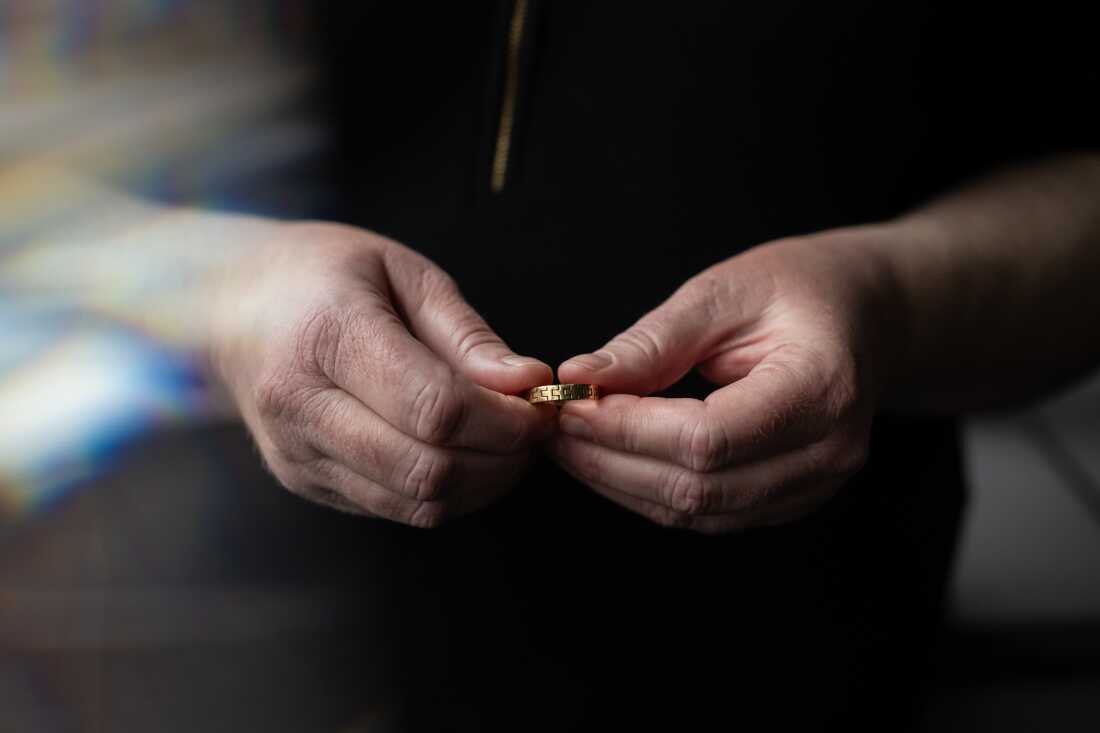
Mara holds her favorite anchor ring, which carries the inscription, “God for me provide thee.”
Caroline Yang for NPR
hide caption
toggle caption
Caroline Yang for NPR
As anxiety hangs over her head, Mara tries to put on a brave face for her children. She does not want them to worry, explaining that her recent struggles have reminded her how tough life can get as an adult.
“I remind them it’s not their responsibility and they’re not accountable for me or for what’s happening,” she said. “I say, just know you get to be a kid.”

Dylan Dreyer
Savannah Will Likely Come Back … Just Not Sure When
Published
TMZ.com
Dylan Dreyer is giving a small update on her embattled “Today” co-host, Savannah Guthrie, as the search continues for Savannah’s mom, Nancy — telling TMZ she does believe she’ll likely return to the show at some point.
We caught Dylan leaving NBC Tuesday afternoon, and she said while she thinks Savannah will come back, the timing is totally unclear — adding everyone at the show is simply giving her the space she needs because they care about her so much.

TMZ.com
Dylan also reflected on Savannah’s emotional visit to the “TODAY” studio last Thursday, saying the hug they shared was something they both really needed in that moment.
Catch the full clip — Dylan says the visit was incredibly emotional, adding Savannah clearly wants to get back to some sense of normal life … she just doesn’t quite know how yet.
Still, Savannah managed a few smiles during the brief stop by the studio, doing her best to keep moving forward during an incredibly tough time.
TMZ.com
As we reported, Nancy was taken from her Tucson home in the middle of the night on February 1. She was last seen entering the house just before 10 PM on January 31 after dinner with her daughter Annie and Annie’s husband, Tommaso Cioni.

Kevin Kline plays actor Richard Bean, and Laura Linney is his sister-in-law Kristen, in American Classic.
David Giesbrecht/MGM+
hide caption
toggle caption
David Giesbrecht/MGM+
American Classic is a hidden gem, in more ways than one. It’s hidden because it’s on MGM+, a stand-alone streaming service that, let’s face it, most people don’t have. But MGM+ is available without subscription for a seven-day free trial, on its website or through Prime Video and Roku. And you should find and watch American Classic, because it’s an absolutely charming and wonderful TV jewel.
Charming, in the way it brings small towns and ordinary people to life, as in Northern Exposure. Wonderful, in the way it reflects the joys of local theater productions, as in Slings & Arrows, and the American Playhouse production of Kurt Vonnegut’s Who Am I This Time?
The creators of American Classic are Michael Hoffman and Bob Martin. Martin co-wrote and co-created Slings & Arrows, so that comparison comes easily. And back in the early 1980s, Who Am I This Time? was about people who transformed onstage from ordinary citizens into extraordinary performers. It’s a conceit that works only if you have brilliant actors to bring it to life convincingly. That American Playhouse production had two young actors — Christopher Walken and Susan Sarandon — so yes, it worked. And American Classic, with its mix of veteran and young actors, does, too.

American Classic begins with Kevin Kline, as Shakespearean actor Richard Bean, confronting a New York Times drama critic about his negative opening-night review of Richard’s King Lear. The next day, Richard’s agent, played by Tony Shalhoub, calls Richard in to tell him his tantrum was captured by cellphone and went viral, and that he has to lay low for a while.
Richard returns home to the small town of Millersburg, Pa., where his parents ran a local theater. Almost everyone we meet is a treasure. His father, who has bouts of dementia, is played by Len Cariou, who starred on Broadway in Sweeney Todd. Richard’s brother, Jon, is played by Jon Tenney of The Closer, and his wife, Kristen, is played by the great Laura Linney, from Ozark and John Adams.
Things get even more complicated because the old theater is now a dinner theater, filling its schedule with performances by touring regional companies. Its survival is at risk, so Richard decides to save the theater by mounting a new production of Thornton Wilder’s Our Town, casting the local small-town residents to play … local small-town residents.
Miranda, Richard’s college-bound niece, continues the family theatrical tradition — and Nell Verlaque, the young actress who plays her, has a breakout role here. She’s terrific — funny, touching, totally natural. And when she takes the stage as Emily in Our Town, she’s heart-wrenching. Playwright Wilder is served magnificently here — and so is William Shakespeare, whose works and words Kline tackles in more than one inspirational scene in this series.
I don’t want to reveal too much about the conflicts, and surprises, in American Classic, but please trust me: The more episodes you watch, the better it gets. The characters evolve, and go in unexpected directions and pairings. Kline’s Richard starts out thinking about only himself, but ends up just the opposite. And if, as Shakespeare wrote, the play’s the thing, the thing here is, the plays we see, and the soliloquies we hear, are spellbinding.
And there’s plenty of fun to be had outside the classics in American Classic. The table reads are the most delightful since the ones in Only Murders in the Building. The dinner-table arguments are the most explosive since the ones in The Bear. Some scenes are take-your-breath-away dramatic. Others are infectiously silly, as when Richard works with a cast member forced upon him by the angel of this new Our Town production.
Take the effort to find, and watch, American Classic. It’ll remind you why, when it’s this good, it’s easy to love the theater. And television.


Hail, rain, snow move into eastern Nebraska, western Iowa

Smith’s employees pack 5,000 meal kits for Clark County students

Cher’s son heads to court over allegations he broke into a New Hampshire home

Heavy police presence prompts concern in South Jersey neighborhood

Federal court orders New Mexico prison officials to allow magazine’s delivery

Florida High School Football Rankings: Top 25 teams – Oct. 21

Cleary's 21 help Le Moyne down Central Connecticut State 69-64 in OT

How old is Bo Nix? What to know about Oregon quarterback ahead of 2024 NFL Draft

99th annual Pony Swim held in Virginia

Indiana Members Credit Union announced as new anchor tenant at Bottleworks District

EXCLUSIVE: ICE says El Paso detention facility will stay open under new contractor after $1.2B deal scrapped

Von der Leyen ‘acting outside of competence,’ Araud tells Euronews

Wheelchair curler Steve Emt’s path from drunk driver to three-time Paralympian

Map: 2.3-Magnitude Earthquake Reported North of New York City

Trump stirs GOP primary drama with visit to Massie’s Kentucky home turf
-

 Wisconsin1 week ago
Setting sail on iceboats across a frozen lake in Wisconsin
-

 Massachusetts1 week ago
Massachusetts man awaits word from family in Iran after attacks
-

 Pennsylvania6 days ago
Pa. man found guilty of raping teen girl who he took to Mexico
-

 Detroit, MI5 days ago
U.S. Postal Service could run out of money within a year
-

 Miami, FL6 days ago
City of Miami celebrates reopening of Flagler Street as part of beautification project
-

 Sports6 days ago
Keith Olbermann under fire for calling Lou Holtz a ‘scumbag’ after legendary coach’s death
-

 Virginia7 days ago
Giants will hold 2026 training camp in West Virginia
-

 Culture1 week ago
Try This Quiz on the Real Locations in These Magical and Mysterious Novels