Lifestyle
Fandom rules social media's cultural landscape in 2024


Fans transformed Kenrick Lamar and Drake’s already very public spat into an even bigger social media phenomenon.
Chris Pizzello/Invision/AP
hide caption
toggle caption
Chris Pizzello/Invision/AP
The biggest trend in culture on social media in 2024 can be summed up with one word: Fans.
Major broadcasting networks and mainstream media, and in more recent years streaming companies, have had near-total control over entertainment habits. But now it’s the fans who are making an outsize impact on what Americans listen to, play, read and watch — through social media.
The new end-of-year reports released by social media companies including YouTube, TikTok and Spotify point to this overarching trend — Instagram did not produce a trends report this year.
“When I look at these reports, I am struck by how much fan activity and fan-ish consumption and engagement is at the core of social media,” said Abigail De Kosnik, an associate professor at the University of California, Berkeley who studies social media and fandoms. “All of these platforms are basically touting how much they were able to host creatives that could attract and inspire large fandoms, and how proud they were that so many fans are participating in liking, commenting, sharing and buying from these creative influencers.”
Making big cultural moments even bigger
One way in which fans exerted an outsized influence on culture in 2024 was through their “participation” in the ongoing controversy between Kendrick Lamar and Drake.
The hip-hop stars’ mutual accusations of domestic abuse, fathering illegitimate children etc. existed independently of social media, largely through the exchanging of diss tracks — attacking each other through songs.
But the spat was hugely amplified by fans dissecting every beat of it on Spotify podcasts and TikTok and YouTube videos, and through making their own related content.
In one animated short from May, for instance, a cartoon Kendrick Lamar confronts a cartoon Drake about hiding a child he fathered. The Japanese-language video racked up nearly 2.5 million views on YouTube, and 3 million on X. All of this fan-created content seems to have increased the fan bases of both Kendrick Lamar and Drake.
“The moment turned into this global phenomenon because of the many ways that fans engaged with it,” said Gina Shalavi, a senior marketing manager at YouTube who leads the company’s culture and trends team. “They were creating content in the form of animations and reactions. And it actually got to a point where the artists were not only uploading their music directly to YouTube, but Kendrick Lamar even allowed reactors to monetize their content.”
From social media to full-fledged franchises
Fans also helped to transform native web content into full-fledged media franchises.
In the case of The Amazing Digital Circus, a satirical indie animated web series for adults about a bunch of humans trapped in a virtual world, fans not only caused the show to become a social media hit in the space of just a few weeks, but also responded to each episode with a deluge of fan-created content including tribute videos, online commentary, new storylines and art. And then Netflix picked the series up for streaming.
“The fandom around the thing is just as important, if not maybe even more important, as the thing itself,” said Shalavi. “We saw 25 billion views of videos related to The Amazing Digital Circus. And this is not including viewership of the actual episodes themselves.”
The dark side of social media fandom
Not all of this “sideshow” content is positive.
The social media landscape also includes obscene videos related to the animated series The Amazing Digital Circus and bootleg merchandise on e-commerce sites such as Amazon.com such as unauthorized toys based on its characters.
UC Berkeley’s De Kosnik said the social media companies’ end-of-year trend reports completely failed to address the more questionable trends within fandom — whether that’s offensive content or political disinformation.
“The reports are really sort of like, ‘there’s nothing wrong with social media and it’s all great, because it’s all about fostering love and admiration and affection and laughter,” said De Kosnik, noting that even the reports’ design schemes convey this unmitigated positivity through bright colors and chunky graphics. “It would be ethical for these companies to reckon with the challenges that everybody knows are happening through social media.”

For Iris van Herpen, couture is a laboratory as much as a runway. Our chief fashion critic, Vanessa Friedman, takes us inside this Dutch designer’s latest Paris show — from sci-fi-inspired gowns to an audacious attempt at a dress made of charged plasma.
Lifestyle
The BoF Podcast | Decoding Paris Haute Couture: Wonder, Restraint and the Call of the Void


-

 Detroit, MI3 minutes ago
Metro Detroit weather forecast, July 10, 2026 — 11 p.m. Update
-

 San Francisco, CA13 minutes ago
Classical music series helps reconnect downtown San Francisco community
-

 Dallas, TX17 minutes ago
Dallas police officers, paramedics recall saving woman stuck in a ravine for days;
-

 Boston, MA27 minutes ago
Red Sox win 7th straight game just hours after landing in New York
-
 Denver, CO33 minutes ago
One tree at a time: Denver nonprofit works to close shade gap as heat dome threatens neighborhoods
-

 Seattle, WA39 minutes ago
VIDEO: West Seattle Summer Fest 2026 day 1, evening report
-

 San Diego, CA43 minutes ago
The World’s Number One Wellness Retreat is Right in Our Backyard
-
 Milwaukee, WI48 minutes ago
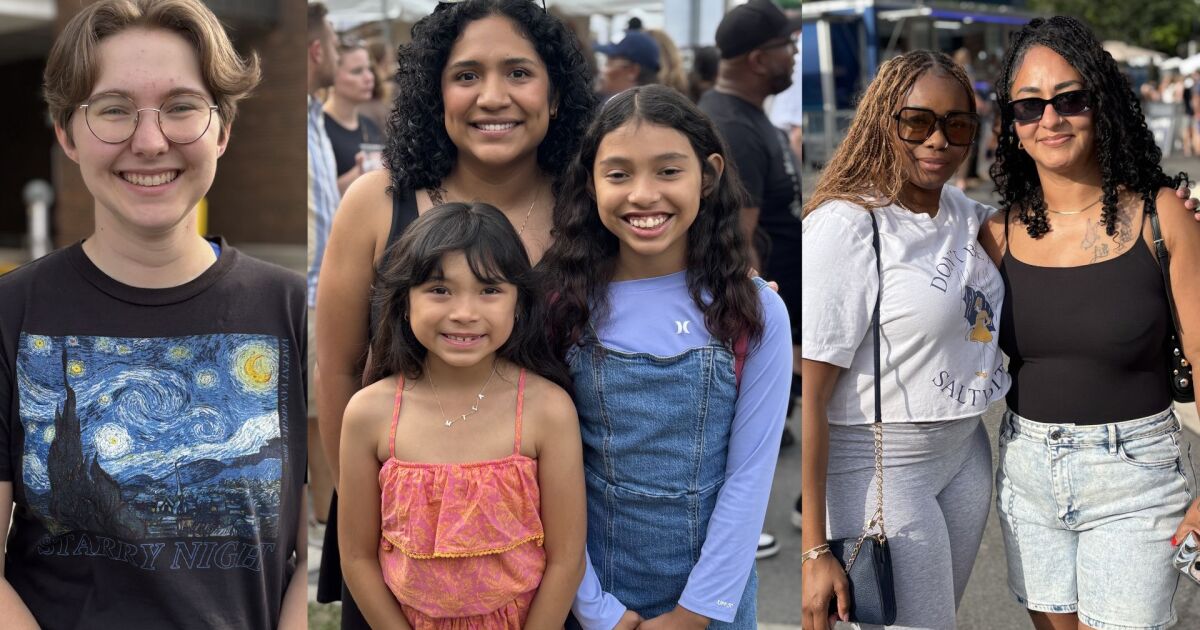
Festivalgoers say Milwaukee’s summer events fill a gap in downtown entertainment

