Lifestyle
‘Beef’ is less rare in Season 2, but still well done

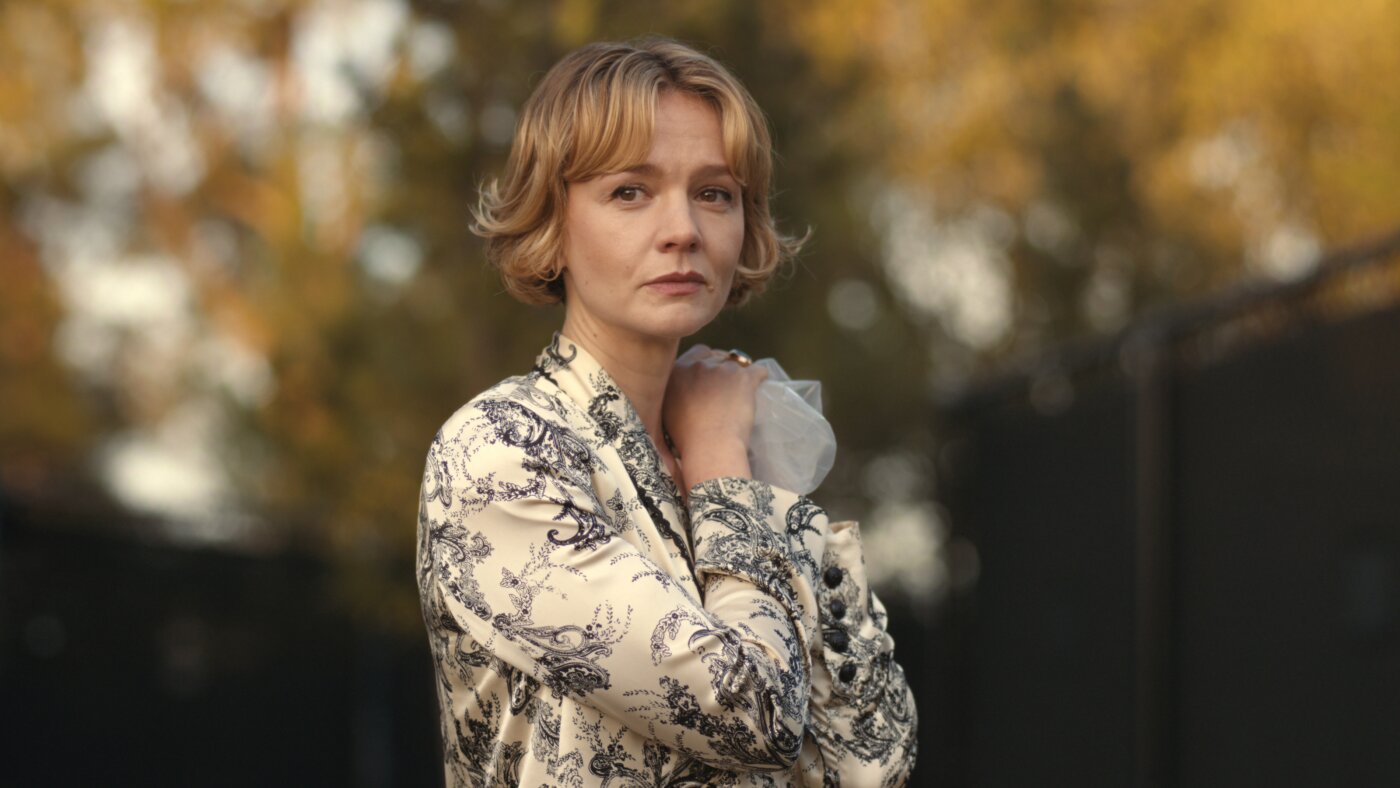
Carey Mulligan as Lindsay.
Netflix
hide caption
toggle caption
Netflix
There was something special about Lee Sung Jin’s Beef when it premiered on Netflix in 2023. The sometimes surreal but always emotionally grounded dramedy was premised upon how one minor, negative interaction between strangers — in that case, a road rage incident involving a struggling contractor (Steven Yeun) and a well-to-do business owner (Ali Wong) – can open the floodgates for misdirected anger and surface long unexamined disappointments and unrelated resentments. It tapped into something both mundane and potent, cleverly dramatizing a general sense of societal chaos via two richly-rendered Asian American leads.
Three years later, and Season 2 finds Lee swapping in an entirely new cast while pivoting the locus of ire. At its center are two couples: Josh (Oscar Isaac) and Lindsay (Carey Mulligan), the married general manager and interior designer of a Montecito, Calif. country club, and fiancés Ashley (Cailee Spaeny) and Austin (Charles Melton), low-level staff members at the club. In the opening episode, the latter couple accidentally happen upon Josh and Lindsay having a nasty drag-out fight that, from outside looking in, appears on the verge of turning violent.

As Beef reiterates many times in various ways, Austin and Ashley are Gen Z — so, naturally they capture the argument on video. The video’s existence is the first small cut of beef, which quickly ripples out to meatier and more consequential beefs, entanglements and manipulations. The younger pair, dissatisfied with their low wages and lack of health benefits, sees an opportunity to leverage what they’ve documented, and they do. But Josh and Lindsay have a lot more drama going on besides a sexless, unhappy marriage; despite their proximity to wealth and seemingly cushy lifestyle, they’re drowning in debt, and Josh’s employment at the club is in limbo as his contract nears its end. Predictably, both couples turn to extreme (and extremely illegal) measures to meet their wants and needs.
Season 1 was equally, if not more so, interested in the knotty personal lives of Yeun’s Danny and Wong’s Amy, apart from their beef with one another. Season 2 benefits from taking this same approach, though with far more primary characters to flesh out and intertwining storylines to serve, it can become unwieldy. To get across a heavily underlined message that “capitalism is soul-sucking,” an entirely separate and somewhat uninspired international plot dovetails with the quartet’s mess. Still, it’s fun to see Youn Yuh-jung leans into her role as Chairwoman Park, the shrewd and menacing billionaire owner of the club whose own dirty laundry drives much of the high-octane action in the back half of the season. (Ditto the great Song Kang-ho as Dr. Kim, the chairwoman’s much younger husband who has a poignant moment in a late episode.)
The digs at capitalism probably feel overdone because of how the media landscape looks now. It seems as if nearly every show or movie in recent memory throws in a corrupt wealthy person (or several) to comment on the disparities between the haves and have nots (The White Lotus, Triangle of Sadness, The Girlfriend) or presents middle-aged married couples wading through malaise and regret (DTF St. Louis, Fleishman Is In Trouble, plenty of Nicole Kidman projects). But it also seems like this iteration of Beef struggles with narrative substance on its own; while the exact details of how its story shakes out aren’t easily predictable, some of the emotional novelty has worn off by the time we arrive at any twists. (This is also true of some of its wry observations on cultural identity, which come off rote and obvious — a running gag is that Isaac’s Josh and Melton’s Austin are frequently perceived as ethnically ambiguous to white people. Isaac is Cuban and Guatemalan; Melton is white and Korean.)

Charles Melton as Austin, Cailee Spaeny as Ashley.
Netflix
hide caption
toggle caption
Netflix
Season 2 is compelling enough largely because its stars gamely tap into the spirit of the show’s M.O.; at any given moment, each character may reveal the worst of themselves, which looks different for everyone. Josh, for one, is an avoidant personality whose contempt simmers ominously for the demanding one percenter clientele he serves at the club, yet when he does explode, the limber and expressive Oscar Isaac lets him rip. In contrast, Carey Mulligan’s Lindsay is clearly exhausted from putting on airs as if everything between them is fine, and resentful of the sacrifices she feels she’s made for her increasingly distant husband at the expense of the dreams they once shared.
Lee Sung Jin and his writing team have added nice touches when it comes to Ashley and Austin, too – their relative youth reveals that media literacy and basic life skills are seriously lacking, all of which makes for silly comedic bits that Spaeny and Melton carry through handily. But even better is when the cracks in their “perfect,” non-confrontational relationship widen into a gaping abyss, reflecting and refracting that of their older counterparts.
“Couples fight. It’s normal,” Lindsay insists to Josh in the first episode, right after they realize Austin and Ashley were in the audience for their domestic row. Neither couple is as stable as they’ve convinced themselves they are. In its best moments, the show leans into this: depicting people who are actively avoiding reality until they’re forced to confront it by the skin of their teeth.



NEW YORK, NEW YORK – APRIL 21: Laverne Cox attends the “Animal Farm” New York Premiere at Regal Theater on April 21, 2026 in New York City.
Jamie McCarthy/Getty Images
hide caption
toggle caption
Jamie McCarthy/Getty Images
In 2013, when the Netflix series Orange Is the New Black came out, the world met the character Sophia Burset — a Black trans woman serving as the resident hairstylist in prison.
For much of the audience, it was also the first time they met actress Laverne Cox — who landed the role of Sophia at the age 40, just when she was thinking of quitting acting altogether.
In her new memoir Transcendent, Cox talks about the challenges she faced long before Netflix came knocking: a mother who withheld love, a father who was never around and the brutal denigration she encountered growing up Black and trans in the deep South.
To unlock this and other bonus content — and listen to every episode sponsor-free — sign up for NPR+ at plus.npr.org. Regular episodes haven’t changed and remain available every weekday.
Email us at considerthis@npr.org.

Scott Simon talks with author Judy Blume at the Santa Fe International Literary Festival in May.
Tira Howard Photography./Courtesy Santa Fe International Literary Festival
hide caption
toggle caption
Tira Howard Photography./Courtesy Santa Fe International Literary Festival
Judy Blume is the legendary writer of books for young adults including Are You There God It’s Me Margaret, Deenie, Tiger Eyes, Tales of a Fourth Grade Nothing and Blubber.
Her last book, 2015’s In The Unlikely Event, was published more than a decade ago. Blume now spends her time reading children’s books behind the counter at her bookstore in Key West, Florida. Though she says she is done writing, her books remain beloved; her readers numerous and devoted.
Judy Blume spoke with NPR’s Scott Simon at the Santa Fe International Literary Festival in May. Here are excerpts from that conversation, edited in parts for clarity and length.
Scott Simon: How did you begin to write? What do you think made you a writer?
Judy Blume: I was a reader. And, you know, I meet so many kids and they say, “I want to be a writer when I grow up, but I don’t like to read.” And I say, “You know what? Forget being a writer.” Because I think every writer — that I know anyway — grew up a reader. And certainly that was true for me.
Simon: What was the spark that set it in motion from reading to writing, do you think?
Blume: I was married young. I had two kids young. And I was desperate for a creative outlet. I loved taking care of babies, but I needed something else and it could have been anything.
Simon: I have read that at one point in your life you made felt art pieces?

Scott Simon with Judy Blume in Santa Fe in May.
Tira Howard Photography/Courtesy Santa Fe International Literary Festival
hide caption
toggle caption
Tira Howard Photography/Courtesy Santa Fe International Literary Festival
Blume: Oh God, my first career. You know, I stopped because the Elmer’s glue — I’m an allergic person — started to give me funny things on the tips of my fingers. I made $300 selling those. And I bought myself a small electric typewriter. And the rest is history.
But I always had stories inside my head — when I was 9 years old. I bounced a rubber ball against the side of my house for hours. But really what was going on were stories. Fabulous stories, very melodramatic. I never told anybody. I never asked a friend, “Hey, do you have stories inside your head all the time?” Because I thought they’d think I was weird, which I might have been. So the stories were always there.
Simon: When you were writing, what was the process like for you?
Blume: Well, I kept a notebook for each book and I scribbled everything in it. Everything, everything, everything for a long time. For months.
And then on the day that I feel ready to start, well, that’s either the scariest part of writing or the best. Because, you know, when you have a good day — I mean, I had kids, and I would sit down at the dinner table and I would say, like, “You will never believe what Tony did today.” Because they’re real. They’re real to you. And you’re living with them for months, sometimes years. And you’re locked up in a little room all day with them. That’s why 50 years is enough. I was ready to come out into the world.
But I have found another career that I love dearly. I have a bookstore and I love that.

Tira Howard Photography/Courtesy Santa Fe International Literary Festival
Simon: I get the idea that you, at least for the moment, don’t miss writing right now.
Blume: I don’t miss writing but I’m very glad that I wrote. I mean, writing changed my life. But it was time to let it go. Could I have come up with more ideas and written more books? Yes. But I’m really happy that I found something else that I love to do.
Simon: Do characters ever come calling on you?
Blume: No. They know better. They’re quiet.
You know how many letters I get? “We need Judy to write a book — Margaret In Menopause.”
Margaret is always going to be 12. She’s not knocking, saying, “Let me out. I’m in menopause!”
They are what they are. They stay in the book. They stay in the book. They live for me in the book. And then I have to let them go.

Director James Burrows attends the “Will & Grace” start of production kick off event and ribbon cutting ceremony at Universal City Plaza on August 2, 2017 in Universal City, California.
Jason LaVeris/Getty Images
hide caption
toggle caption
Jason LaVeris/Getty Images
LOS ANGELES — James Burrows, who helped create volumes of laughter as director of more than a thousand episodes of such classic television comedies as “Cheers,” “Taxi,” “Friends” and “Will and Grace,” died Friday. He was 85.
His family confirmed his death in a statement to People, saying he “passed away peacefully today surrounded by his family.” No location or cause of death was provided.
Burrows spent his career behind the camera specializing in situation comedies. Few viewers recognized him or knew his name, other than to see it flash quickly on the screen in the opening credits. But they knew his work.
Burrows got his start in television relatively late at age 35 in 1974, directing episodes of “The Mary Tyler Moore Show,” “The Bob Newhart Show,” and “Laverne & Shirley.”
He co-created “Cheers,” directing 243 of the 273 episodes, as well as all 246 episodes of “Will and Grace.”
He also helmed multiple episodes of such hits as “Frasier,” “Friends” and “Mike & Molly,” and the pilots of “Two and a Half Men” and “The Big Bang Theory.”
“When I direct a television show, I try to reach that sweet spot where the best script meets the best performance and the best chemistry between performers,” Burrows wrote in his 2022 memoir “Directed by James Burrows.” “Hitting that exact moment, where these factors land in combination, results in the sweetest and most enduring laugh.”
His family said, “Burrows understood that great comedy was never simply about laughter. It was about humanity, connection, and truth. That understanding became the foundation of a career that forever changed television.
“But beyond his remarkable achievements, Burrows will be remembered for something even greater: his kindness, generosity, and unwavering belief in the people around him. He possessed a rare ability to make everyone better and was known for remembering every person he met by name, making colleagues at every level feel seen, valued, and appreciated,” the family statement said.
Born James Edward Burrows on Dec. 30, 1940, in Los Angeles, he moved to New York when he was 5 years old. He spent five years in the Metropolitan Opera Children’s Chorus until his voice started to change. He attended LaGuardia High School of Music & Art.
His father was writer, director and producer Abe Burrows, whose Broadway hits included “Guys and Dolls” and “Can-Can.” The elder Burrows also mentored Larry Gelbart, future creator and producer of the TV show “M(asterisk)A(asterisk)S(asterisk)H.”
The younger Burrows spent hours of his youth in theaters and studios watching his father work, dining with him at such famed New York haunts as Sardi’s and Gallagher’s and meeting celebrities who attended his father’s New Year’s Eve parties.
After earning a bachelor’s degree from Oberlin College, Burrows attended the graduate program of the Yale School of Drama, where his classmates included actor-comedian Robert Klein, playwright John Guare and film director John Badham.
At Yale, he was required to take directing classes and he got hooked.
Burrows’ first sitcom experience was as Burl Ives’ dialogue coach on “O.K. Crackerby!” which was directed by his father and ran for one season on ABC in 1965.
From there, he was an assistant on “The Patty Duke Show.” He moved back to New York and worked for Broadway producers Lee Guber, Frank Ford and Shelly Gross. He first met actor Moore while working on the Broadway production of “Holly Golightly,” an adaptation of “Breakfast at Tiffany’s” that was directed by his father.
Burrows eventually worked as a stage manager for various road productions, where he met such actors as Hugh O’Brien, Zsa Zsa Gabor and Julie Harris.
By 1974, after working in dinner theater and summer stock, he turned on his television and saw Moore’s eponymous TV show. He wrote her a letter asking if there was any opening “small or smaller” at her production company that he could fill, according to his memoir.
Moore’s husband and business partner, Grant Tinker, invited Burrows to Los Angeles to direct an episode of the comedy. He apprenticed for MTM Enterprises, which had four sitcoms on the air at the same time.
Burrows cited his theater background for learning how to give actors direction and block out scenes. He’s credited for being one of the first sitcom directors to increase the typical multi-camera television shoot from three to four cameras.
The common thread between Burrows’ shows were the bonds between friends and unrelated families, whether it was the motley crew of regulars meeting at the bar in “Cheers” or the drivers working toward a better life in “Taxi” or the 20-somethings sharing the same apartment building in “Friends.”
“The best sitcoms transcend the screen and reach out and grab the audience by the throat and by the heart,” Burrows wrote in his memoir.
He relished discovering new acting talent while directing more than 75 pilots that were picked up as series.
“Having directed over a thousand shows means that almost any night you can turn on your television or go online and find a show that I directed. I’m very proud of that,” he wrote in his memoir.
In 2019, Burrows was an executive producer on live productions of “All in the Family” and “The Jeffersons” with famous actors re-creating episodes of those 1970s comedies.
Burrows was married in 1997 to Debbie Easton, whom he met when she worked as a hairstylist on “Frasier.” Daughters Kat Schatzow, Ellie Gluck and Maggie Burrows, who followed her father into directing, are from his first marriage to Linda Solomon, who died in 2004. His stepdaughter Paris is from his wife’s previous marriage. He has a sister, Laurie Burrows Grad, and seven grandchildren.
-

 New Hampshire2 minutes ago
1 dead, 5 injured in head-on crash in NH – Boston News, Weather, Sports | WHDH 7News
-

 New Jersey4 minutes ago
Did anyone win Powerball? Winning numbers for June 20, 2026
-

 New Mexico9 minutes ago
Video: Roswell police respond to fatal crash involving teens
-
North Carolina17 minutes ago
Oklahoma a win away from national title after roughing up North Carolina ace in Game 1 of CWS finals
-

 North Dakota19 minutes ago
In ‘last chapter,’ North Dakota son who made ultimate sacrifice in World War II comes home
-

 Ohio24 minutes ago
Geauga County plane crash kills 3: Report
-

 Oklahoma32 minutes ago
Crews respond after fireworks stand catches fire in Broken Arrow, no injuries reported
-

 Oregon34 minutes ago
11 Best Small Towns In Oregon For A Crowd-Free Summer

