Lifestyle
Bad Bunny Blasted by PETA For Riding Horse During Show


Bad Bunny‘s got animal rights activists up in arms for a stunt during his new show … and PETA’s not horsin’ around in their response.
ICYMI … singer-songwriter kicked off his “Most Wanted” tour in Salt Lake City Wednesday night, and at one point he trotted out in style — on the back of a horse.

Check out the video … BB’s in an all-denim ‘fit on the back of a chestnut-colored horse heading out to the spotlight with tons of fans screaming for him.
PETA wasn’t cheering Bad Bunny on though, posting the video to TikTok with a sharp condemnation attached in white lettering.
Their main point … horses are skittish animals who have no business being near the loud noise and bright lights of a concert setting, and adding the horse, the crowd or even Bad Bunny himself coulda been hurt.
If all this feels vaguely familiar … it’s ’cause PETA’s called out other artists for this exact same thing before. Notably, CeeLo Green, who fell off a horse last year.
Courtesy of Willie Ross
Remember … Green wanted to make an impact with his entrance to Shawty Lo‘s birthday party last April. The horse was clearly nervous at the time, jolted forward then slipped on the tile floor, spilling CeeLo from its back.
PETA told us at the time the fall was essentially inevitable … for all the same reasons they think BB shouldn’t have been on a horse. Loud noises and flashing lights and horses just don’t mix.
TMZ Studios
Unclear if this horse stunt was a one-off … but, PETA’s not likely to back off if this cowboy keeps mosying out centerstage.



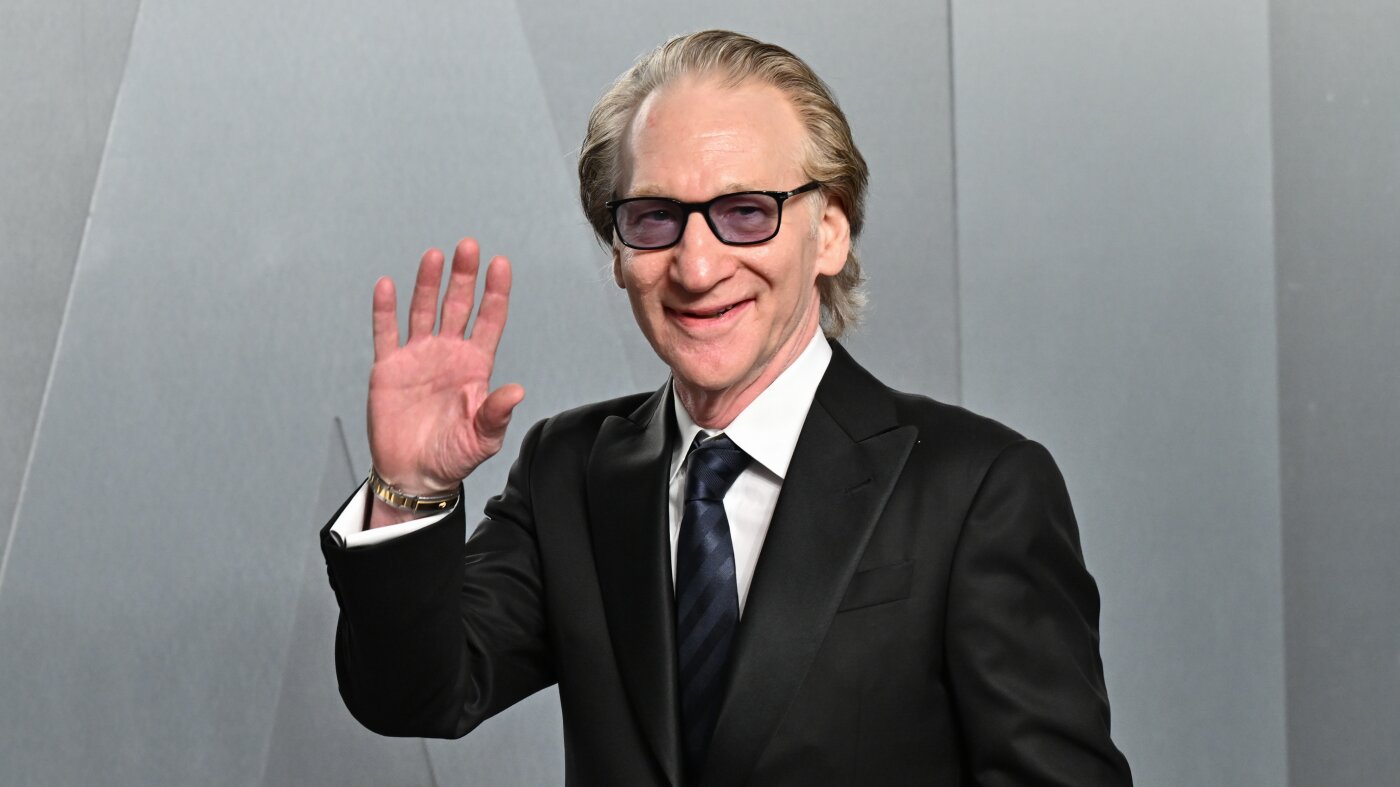
Satirist Bill Maher is this year’s recipient of the Mark Twain Prize for American Humor. Maher will receive the award at the Kennedy Center on June 28th. The show will stream on Netflix at a later date.
Evan Agostini/Invision/AP
hide caption
toggle caption
Evan Agostini/Invision/AP
Bill Maher will be receiving the Mark Twain Prize for American Humor after all.
There’s been some confusion about whether the comedian and longtime host of HBO’s Real Time with Bill Maher would, indeed, be getting the top humor award. After The Atlantic cited anonymous sources saying he was, White House press secretary Karoline Leavitt called it “fake news.” But today the Kennedy Center made it official.
“For nearly three decades, the Mark Twain Prize has celebrated some of the greatest minds in comedy,” said Roma Daravi, the Kennedy Center’s vice president of public relations in a statement. “For even longer, Bill has been influencing American discourse – one politically incorrect joke at a time.”
Is President Trump, chair of the Kennedy Center’s board, in on the joke?
Maher once visited Trump at the White House and he tends to be more conservative than many of his comedian peers but after their dinner Trump soured on Maher, calling him a “highly overrated LIGHTWEIGHT” on social media.
Maher’s acerbic wit has targeted both political parties and he’s been particularly hard on Trump recently, criticizing his decisions to wage a war with Iran and his personnel choices.
“Trump said, ‘when oil prices go up, we make a lot of money.’ Um, who’s ‘we?,’” Maher said in a recent monologue.
Past recipients of the Mark Twain Prize include Conan O’Brien, Dave Chappelle, Jon Stewart, Julia Louis-Dreyfus, Tina Fey, Eddie Murphy and Carol Burnett.
In a statement released through the Kennedy Center, Maher said, “It is indeed humbling to get anything named for a man who’s been thrown out of as many school libraries as Mark Twain.”
Maher will receive the Mark Twain Prize at the Kennedy Center on June 28. The show will stream on Netflix at a later date.


Workers react to the media after updating signage outside the Kennedy Center on Dec. 19, 2025, in Washington, D.C.
Jim Watson/AFP via Getty Images
hide caption
toggle caption
Jim Watson/AFP via Getty Images
Rep. Joyce Beatty of Ohio is asking a federal court in Washington, D.C., to force President Trump and the board and staff of the Kennedy Center to revert to calling the arts complex The John F. Kennedy Center for the Performing Arts.
The motion, which Beatty filed on Wednesday, asks a federal circuit court judge to reverse the Trump administration and the center’s current board and staff’s decision to call the complex “The Trump-Kennedy Center.”
In the filing, Beatty’s attorneys wrote: “Can the Board of the Kennedy Center — in direct contradiction of the governing statutes — rename this sacred memorial to John F. Kennedy after President Donald J. Trump? The answer is, unequivocally, ‘no.’ By renaming the Center — in violation of the law — Defendants have breached the terms of the trust and their most basic fiduciary obligations as trustees. Shortly after President John F. Kennedy’s assassination, Congress designated the Kennedy Center as the ‘sole national memorial to the late’ President in the nation’s capital.”

In a statement emailed to NPR Thursday, Roma Daravi, the vice president of public relations for the Kennedy Center, wrote: “We’re confident the court will uphold the board’s decision on the name change and the desperately needed renovations which will continue as scheduled.” NPR also reached out to the White House for comment, but did not receive a reply.
In December, White House press secretary Karoline Leavitt announced that the complex would heretofore be called “The Trump-Kennedy Center.” Although the new moniker was never approved by Congress, the Center’s website and publicity materials were immediately updated to reflect the administration’s chosen name, and the same day as Leavitt’s announcement, Trump’s name went up on the signage of the complex’s exterior, over that of the slain President Kennedy.
Later that month, Rep. Beatty who serves as an ex-officio member of the Kennedy Center’s board of trustees, sued Trump, members of the Kennedy Center board appointed by Trump, and some ex-officio members, arguing that the complex’s name had been legislated by Congress in 1964. Wednesday’s motion is part of that lawsuit.

In a press release sent to NPR on Wednesday, Rep. Beatty said: “Donald Trump’s attempt to rename the Kennedy Center after himself is not just an act of ego. It is an attempt to subvert our Constitution and the rule of law. Congress established the Kennedy Center by law, and only Congress can change its name.”
For many patrons, artists and benefactors of the Kennedy Center, the name change was the last straw in politicizing the performing arts hub. Following the White House announcement of the new name, many prominent artists withdrew planned performances there, including the composer Philip Glass (a Kennedy Center Honors award recipient, who received his prize during the first Trump administration), the famed Broadway composer and lyricist Stephen Schwartz and the 18-time Grammy-winning banjo master Béla Fleck.
The Washington National Opera (WNO), which had been in residence at the Kennedy Center since 1971, also severed its ties in January after ticket sales dropped precipitously. Earlier this month, WNO artistic director Francesca Zambello told NPR, “We did try as best as we could to encourage [the patrons] that we are a bipartisan organization, but people really voted with their feet and with their pocketbooks. And so we realized that there was really no choice for us.”

On Monday, a coalition of eight architecture and cultural groups also sued Trump and the Kennedy Center board in federal court over the complex’s scheduled closing in July for unspecified renovations. Their suit seeks to have the White House and board members comply with existing historic preservation laws, and to secure Congressional approval before moving ahead with the renovation plans.

Utah Falls in Emotional, Physical Game Against Capitals | Utah Mammoth

46 anti-Trump No Kings protests planned in Vermont. How to go

Virginia bill targets vape shops that sell to underage buyers – WTOP News

These Wisconsin Rapids restaurants are offering Easter specials

West Virginia Agencies Shielding Details on $1.44B DOE Coal Bail-out Loan from Public – CleanTechnica

Florida High School Football Rankings: Top 25 teams – Oct. 21

How old is Bo Nix? What to know about Oregon quarterback ahead of 2024 NFL Draft

Cleary's 21 help Le Moyne down Central Connecticut State 69-64 in OT

99th annual Pony Swim held in Virginia

Indiana Members Credit Union announced as new anchor tenant at Bottleworks District

Video: Will ICE Change Under Its New Leader?

DHS shutdown breakthrough comes at cost for Republicans as funding fights nears end

Rubio joins crucial G7 talks as Iran war set to dominate second day

A surprise resignation could open the door for an independent to win a Montana Senate seat

Video: Savannah Guthrie Says She Believes Her Mother Was Taken for Ransom
-

 Detroit, MI1 week ago
Drummer Brian Pastoria, longtime Detroit music advocate, dies at 68
-

 Science1 week ago
How a Melting Glacier in Antarctica Could Affect Tens of Millions Around the Globe
-

 Movie Reviews1 week ago
‘Youth’ Twitter review: Ken Karunaas impresses audiences; Suraj Venjaramoodu adds charm; music wins praise | – The Times of India
-
 Science1 week ago
I had to man up and get a mammogram
-

 Sports6 days ago
IOC addresses execution of 19-year-old Iranian wrestler Saleh Mohammadi
-

 New Mexico4 days ago
Clovis shooting leaves one dead, four injured
-
 Business1 week ago
Disney’s new CEO says his focus is on storytelling and creativity
-

 Texas1 week ago
How to buy Houston vs. Texas A&M 2026 March Madness tickets