Lifestyle
After years of documenting Jewish food traditions, Joan Nathan focuses on her family's


After decades creating and publishing recipes, cookbook author Joan Nathan has released what she said is likely her final book, a cookbook and memoir called “My Life in Recipes.”
Michael Zamora/NPR
hide caption
toggle caption
Michael Zamora/NPR

After decades creating and publishing recipes, cookbook author Joan Nathan has released what she said is likely her final book, a cookbook and memoir called “My Life in Recipes.”
Michael Zamora/NPR
Joan Nathan has spent her life exploring in the kitchen, trying new dishes and recipes all year. But every spring, for the Passover Seder, she sticks with a menu that follows her own family’s traditions. The holiday starts tonight.
“I think Passover tells us who we are, and it tells us, this is my family sharing with other families. I get chills every year at Passover, because I realized that it started in ancient Israel. I mean, it’s in the Bible!”
Joan Nathan chops up fresh herbs for her soup and rolls matzo balls in her kitchen in Washington, D.C.
Michael Zamora/NPR
hide caption
toggle caption
Michael Zamora/NPR
Joan Nathan chops up fresh herbs for her soup and rolls matzo balls in her kitchen in Washington, D.C.
Michael Zamora/NPR
Nathan has written a dozen cookbooks, documenting how food traditions evolved as Jews wandered all over the world through the centuries. Now in her 80s, her new book is her most personal work yet, excavating her own culinary history in a combination memoir and cookbook called My Life in Recipes.
“I’ve been more nervous about this book than any book… It’s sort of going into my life, you know?”
Cookbook author Joan Nathan looks through old family recipe books.
Michael Zamora/NPR
hide caption
toggle caption
Michael Zamora/NPR
Cookbook author Joan Nathan looks through old family recipe books.
Michael Zamora/NPR
Nathan spoke with All Things Considered in her Washington, D.C. kitchen on a late March day, while she prepped a version of a dish she’s been eating since childhood: chicken matzo ball soup. And, like many Jewish mothers and grandmothers before her, that afternoon, she fretted over whether the matzo balls would turn out the way she wanted them to. Every family has their own recipe, whether they’re light, fluffy, hard, dense.
“So my mother’s, hers were al dente,” Nathan said. “And my mother-in-law’s were very light. You know, she was straight from Poland.”
As with every immigration story, these family recipes evolved as people relocated, fleeing wars or seeking a better life for their kids. One example is a special combination Nathan adds to her own matzo balls.
Nathan prepares matzo ball soup in her kitchen.
Michael Zamora/NPR
hide caption
toggle caption
Michael Zamora/NPR
Nathan prepares matzo ball soup in her kitchen.
Michael Zamora/NPR
“I’d added ginger [and] nutmeg, which I knew was what my father’s family would have used in Germany,” she explained. “Ginger nutmeg was a very common condiment combination in the 19th and early 20th century.”
For Nathan, cooking matzo ball soup for Passover, or any Jewish holiday, just feels comfortable – like home.
“It’s the smell,” she said. “You just know that smell. Like my mother’s brisket, I know; like challah, I know. I love those smells. It knows that you’re at home, that there are people that care.”
Nathan pulls two loaves of challah out of the oven at her home in Washington, D.C.
Michael Zamora/NPR
hide caption
toggle caption
Michael Zamora/NPR
Nathan pulls two loaves of challah out of the oven at her home in Washington, D.C.
Michael Zamora/NPR
While the soup simmers, Joan walks over to the living room where boxes of letters and books are laid out. They’re some of the artifacts that she’s uncovered from her family, including handwritten recipe books in German. One from her great-grandmother dates back to 1927, written in purple ink full of recipes for desserts like kuchen and caramel pudding. Nathan’s new book is full of her letters, diary entries and parts of these family artifacts.
Nathan looks through old family recipe books including one that dates back to 1927.
Michael Zamora/NPR
hide caption
toggle caption
Michael Zamora/NPR
Nathan looks through old family recipe books including one that dates back to 1927.
Michael Zamora/NPR
This book is also a love story. Joan Nathan writes about her courtship and marriage of 45 years to her late husband, Allan Gerson. He died just before the pandemic. She says writing this book felt almost like a form of therapy.
“It was my savior. I would just write. And I would include him in my life, you know? So it was a way of really making him part of my life. And I think it was really helpful to me. It really gave me strength.”
A photo of her family hangs in the living rooms as cookbook author Joan Nathan prepares matzo ball soup in the kitchen of her home in Washington, D.C.
Michael Zamora/NPR
hide caption
toggle caption
Michael Zamora/NPR
A photo of her family hangs in the living rooms as cookbook author Joan Nathan prepares matzo ball soup in the kitchen of her home in Washington, D.C.
Michael Zamora/NPR
My Life in Recipes also includes anecdotes from Nathan’s prolific career, her world travels and stories of her collaborations with food luminaries that include Julia Child.
“Julia – I had her 90th birthday in this – she was sitting right here on this couch. I had a party for her. She’s somebody who just kept living,” Nathan remembered.
“And she said to me, at 90, why should I quit if I’m doing what I like to do? And she made me realize a few things: Have people that are younger around you as you get older, be positive, don’t talk about being uncomfortable or whatever. And also, to write thank-you notes to everybody.”



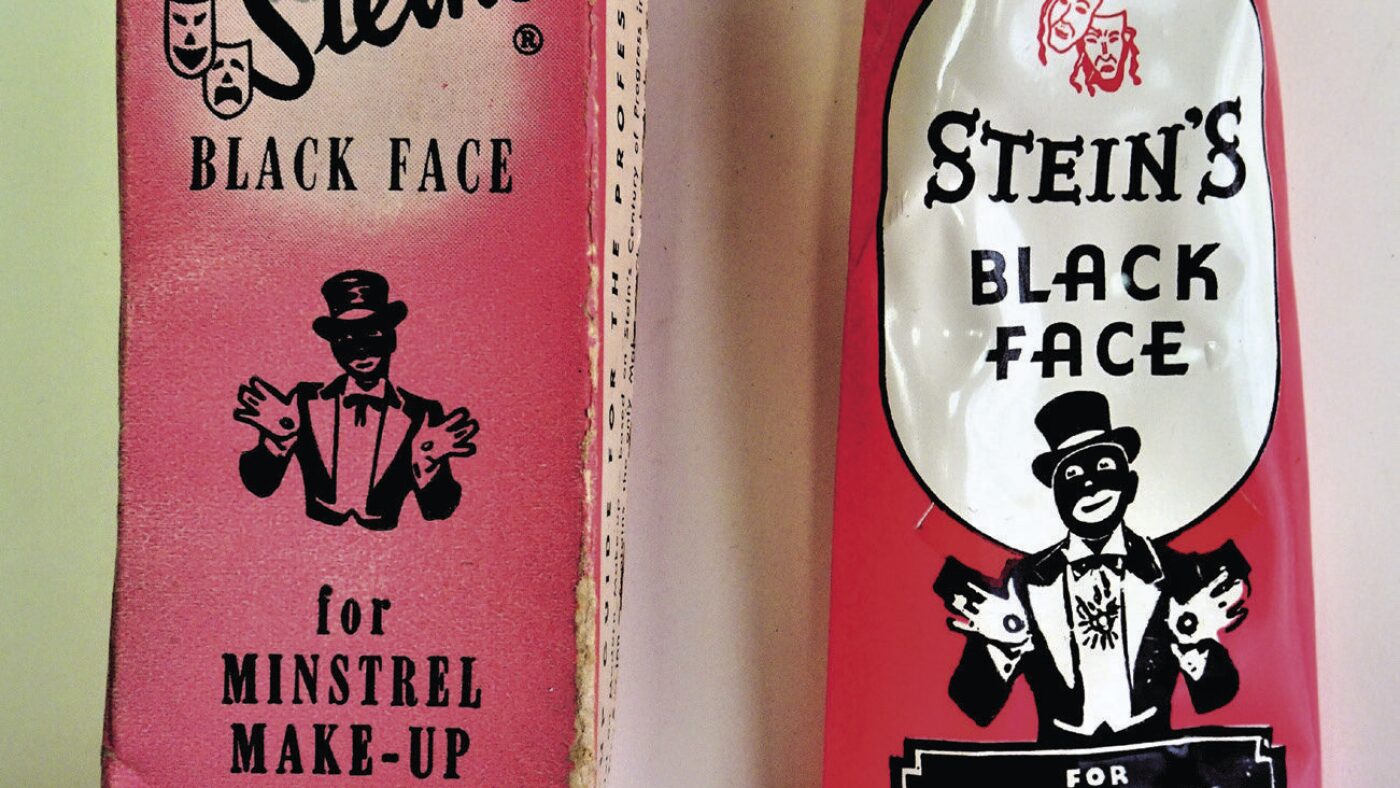
In 2013, historian Rhae Lynn Barnes was researching blackface in America when she encountered a stumbling block at the Library of Congress: Various primary sources on the subject were listed as “missing on shelf.”
Barnes spoke to one of the librarians, and explained that she was writing a history of minstrel shows and white supremacy. Barnes says the librarian admitted that, in 1987, she had personally hidden some of these books because she feared the material would be used by the Ku Klux Klan.
“Once [the librarian] understood the research I was doing … a few hours later, she came up with a cart packed to the brim with all of the material that I had been hoping to see,” Barnes says.
In her new book Darkology: Blackface and the American Way of Entertainment, Barnes traces the origin of minstrel shows, performances in which an actor portrays an exaggerated and racist depiction of Black, often formerly enslaved, people.
Barnes says minstrel became so popular in the 1800s that the stars began publishing “step-by-step guides” explaining how amateurs could create their own shows. By the end of the century, amateur minstrel performances became one of the most popular forms of entertainment in the U.S. Many groups, including fraternal orders, PTAs, police and firemen’s associations and soldiers on military bases, put on their own shows.

During the Great Depression, Barnes notes that President Franklin D. Roosevelt’s Works Progress Administration sought to “preserve American heritage” by promoting blackface. As part of the effort, she says, the government distributed lists of “top minstrel plays that they recommended to schools, to local charities, to colleges.” Roosevelt was such a fan of minstrel shows that he co-wrote a script, to be performed by children with polio.
Barnes credits the civil rights era and especially mothers with helping de-popularize blackface in the 1970s, first in schools and then in the larger culture. “They successfully get the shows out of school curriculum piece by piece. And by 1970, most of these publishing houses are going under because of the incredible work of Black and white mothers who worked with them,” she says.
Interview highlights
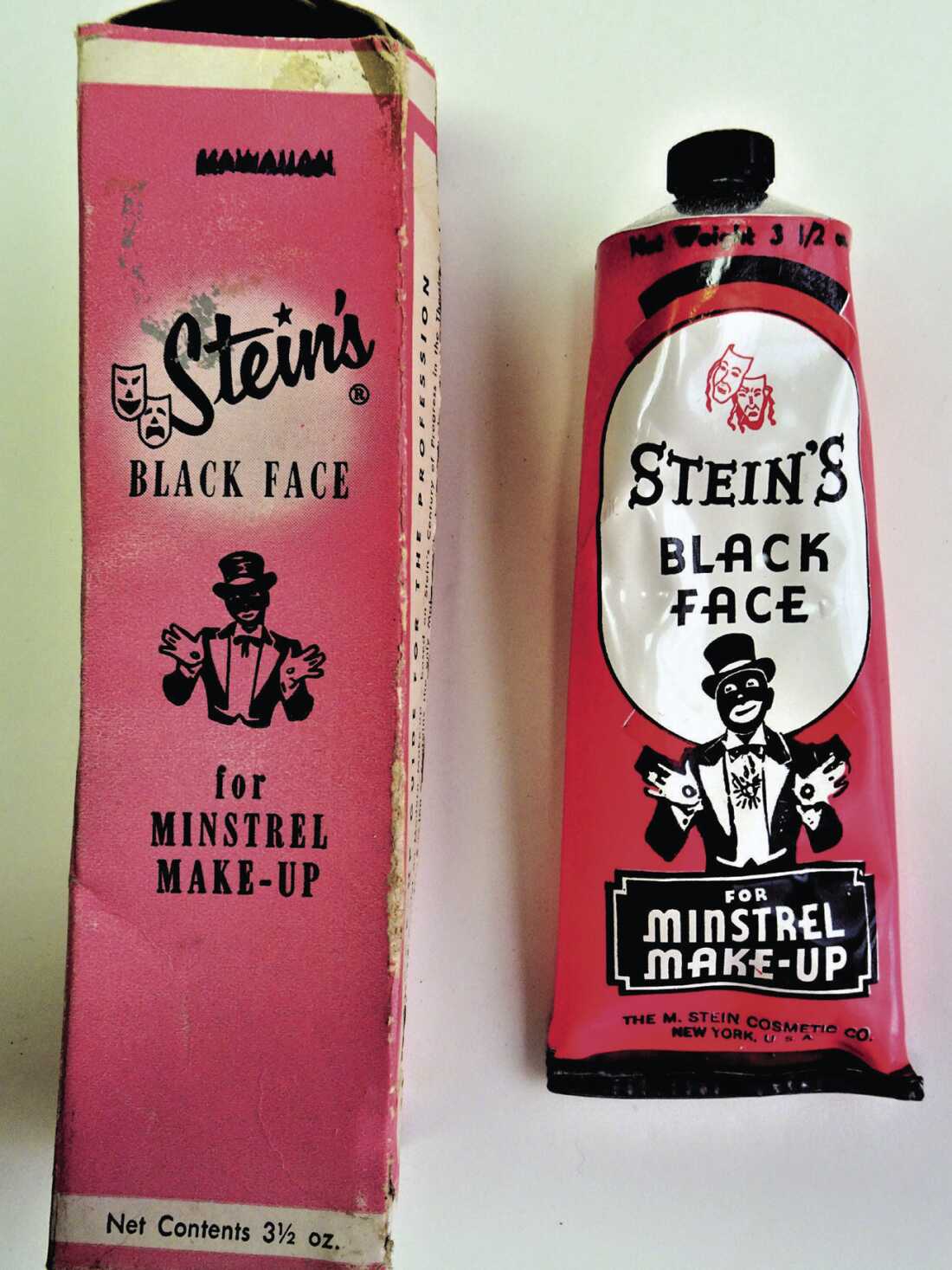
Stein’s makeup company created multiple shades of blackface for performers in amateur minstrel shows.
WW Norton
hide caption
toggle caption
WW Norton
On commercial blackface makeup that replaced shoe polish and burnt cork
It’s an entire commercial empire. So Stein’s makeup was one of the largest. They were a theatrical makeup company. And you’ll actually find today when you go into Halloween stores that a lot of these blackface makeup companies still exist today for Halloween costume makeup and also for clown makeup. …
Burnt cork was incredibly difficult to get off of your face. You’re essentially taking fire ash and then mixing it with shoe polish or some sort of shiny ingredients, and so it was incredibly hard to get it off. So when Stein and these other cosmetic companies begin to create the tubes … that did come in 29 colors and you could pick which bizarre racial calculus you wanted to represent, they would come off with cold cream or makeup remover and that was one of their selling points — now it’s easy to take off.
On Stephen Foster‘s songs for minstrel shows, like “Oh Susannah!”

What’s interesting about those songs is they are romanticizing the relationship between an enslaved person and their enslaver. And so when we have commentary, even from the president now, who recently said slavery wasn’t so bad, well, slavery was horrific, but if you were raised on a diet of Stephen Foster music, and going to minstrel shows, you can somewhat understand how somebody at the time could easily be led to believe that slavery was a grand old party because that’s what it was supposed to be telling you. It’s pro-slavery propaganda.
On the slogan “Make America Great Again” originating from early 20th-century minstrel shows
“Make America Great Again” or “This Is Our Country” or “Take Back Our Country” are all slogans and songs that were very common in minstrel shows. And so a lot of minstrel shows reinterpreted slavery in a fantastical way, that the Civil War ended and that in these minstrel shows there was Black rule and that everything America held dear was desecrated. And so this [blackface] “Zip” character … sometimes he’s named “Rastus” — he has different names that he goes by — runs for office, political office, becomes president, and he’s the first Black president and the first thing he does is he takes away America’s guns. Sound familiar? And so a lot of these terms that you could perhaps say [are] dog whistles in white of supremacy are taken line for line from these minstrel shows.
On not censoring this history
Historians right now are in somewhat of a culture war in that it is our patriotic duty as American citizens and as patriots to help make sure that the American public has access to our history in all of its complexity. And the truth is that you can’t understand the victories and the triumphs without understanding how far Americans had to push. And I think that’s especially true of blackface. When we didn’t adequately understand how long blackface was a mainstay in American culture. Because many historians believe that it had died out by 1900, when in fact it only accelerates and increases up through the 1970s. And so if you just say, “Oh, it just died out. It was no longer in fashion,” then what you’re losing is the incredible, dangerous, and brave work of thousands of Black and white mothers across the United States in the 1950s and the 1960s, of students who stood up during Jim Crow America and said, “This is not OK. We are humans. We deserve dignity. And we want you to understand our history.” …
I think these are the hard conversations Americans actually want to have. And I think America is completely ready for those hard conversations and moving forward.
Anna Bauman and Susan Nyakundi produced and edited this interview for broadcast. Bridget Bentz, Molly Seavy-Nesper and Meghan Sullivan adapted it for the web.
Lifestyle
L.A. Times Concierge: ‘Our anniversary trip to Paris fell through! Help us plan an L.A. escapade that feels special’
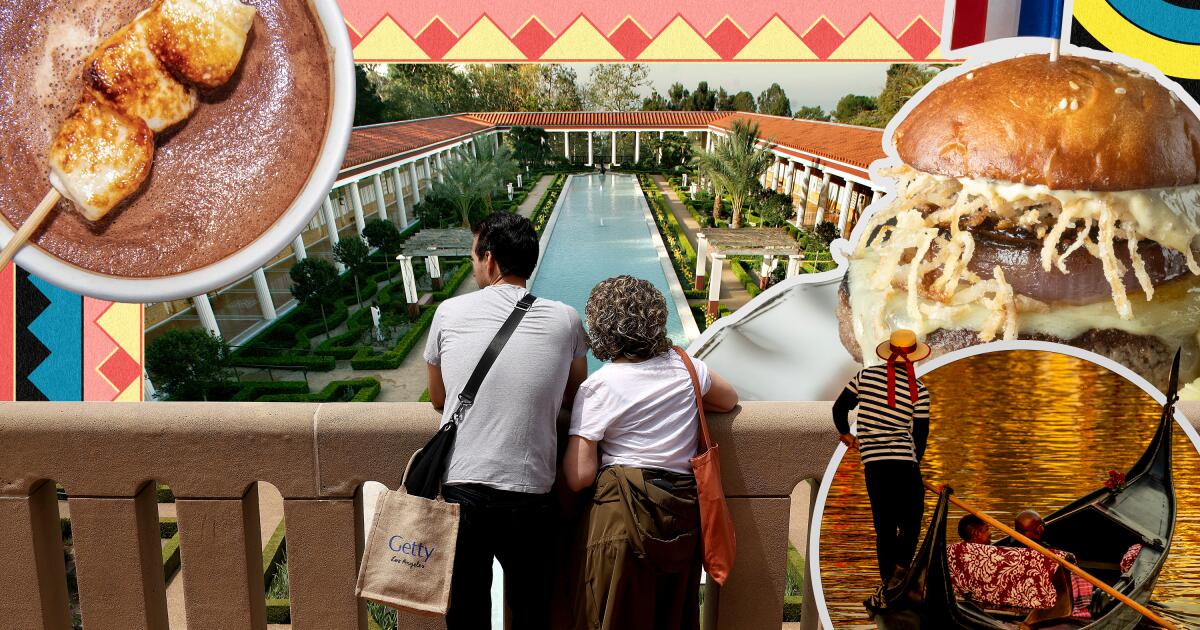
My husband and I celebrate our 40th wedding anniversary in April! Years ago we planned to go to Paris (as we did on our 25th), but now our 17-year-old dog can’t be left alone with a dog sitter for that long. And look, our cat is 15! Any recommendations for a special dinner (we live in the Pasadena/Highland Park area) and maybe a little escapade where we would only be gone for shorter bursts? Hints: We love theater, movies, the beach, laughing and food that is divine, but not so rich you can’t stand up after. I also can’t eat dairy. — Diane Kelber
Looking for things to do in L.A.? Ask us your questions and our expert guides will share highly specific recommendations.
Here’s what we suggest:
First and foremost, congratulations on 40 years of marriage! That’s a milestone definitely worth celebrating. Also, I hear you on not wanting to leave your dog for an extended period of time. Although you won’t be able to make it to Paris this time, hopefully we can bring glimpses of the romantic city to you here in L.A. I’ve compiled a list of spots for you to create your own adventure.
If you look closely enough, you can find slices of Europe in L.A. Or as my colleague Christopher Reynolds once put it, places that aim to “feed travel dreams or remind someone of home.” A prime example of this are the many French restaurants in the city where you can indulge in as many macarons, steak frites and beef bourguignon as you’d like. Two standout spots are Camélia and Pasjoli, both featured on the L.A. Times list of 101 Best Restaurants. Located in the downtown Arts District, Camélia merges French and Japanese cuisines. On the menu is uni pasta, hanger steak au poivre and a dry-aged burger with fries, which restaurant critic Bill Addison says doesn’t require any twists because “it’s simply a fantastic burger.”
Restaurant critic Jenn Harris says the Santa Monica-based Pasjoli “straddles the line between destination dining and the kind of neighborhood restaurant everybody wants to have down the street.” The eatery is best known for its tableside pressed duck, which the chef prepares in a theatrical fashion during dinner service. But if you’re not into duck, there are several other popular dishes on the menu, including French onion soup, steak frites, sole meuniere and what Harris calls “the best grilled cheese sandwich in the known universe” (though this might be a better option for your husband).
If you prefer a more laid-back vibe that makes you feel like you’ve been teleported to Saint-Germain-des-Prés in Paris, check out Figaro Bistrot in Los Feliz. As I wrote in a guide about neighborhood, the restaurant embodies the Parisian way of dining: guests linger over wine and good conversation.
Another L.A. spot that is reminiscent of Europe is the the Getty Center in Brentwood. Designed by architect Richard Meier, the sprawling hilltop complex is gleaming with manicured gardens, breathtaking city views and a museum, making it the perfect backdrop for a romantic date. Bring a blanket, your favorite snacks and have a picnic on the lawn near the central garden. The best part is that it’s free to visit (though reservations are required and parking rates vary depending on the time of day). For a more intimate experience, check out the Getty Villa in Malibu, modeled after the Villa dei Papiri in Herculaneum, Italy.
For a picturesque date that feels like you’ve been plopped onto a movie set, consider the Gondola Getaway in Long Beach. Here, a gondolier takes you on a loop around an enchanting residential Naples Island. Years ago, I went on a date there and I’ve been wanting to go back ever since.
Now for some rapid fire recommendations: Since you’re into theater, my colleague Lisa Boone suggests the Pasadena Playhouse, a Tony Award-winning theater, which is close to home for you. Times outdoors reporter Jaclyn Cosgrove also recommends drinks and dinner on the charming balcony at Checker Hall in Highland Park. Afterward, you can check out a live show next door at the Lodge Room. And because you love laughing, consider checking out Hollywood Improv, which hosts multiple events throughout the week.
Now, I know that these experiences aren’t Paris, but I hope they might help bring you and your husband a bit of what travelers feel when they’re there: excitement, adventure, passion and most importantly love. And when you’re with that special someone, I think you can capture those emotions no matter where you are. Happy anniversary!
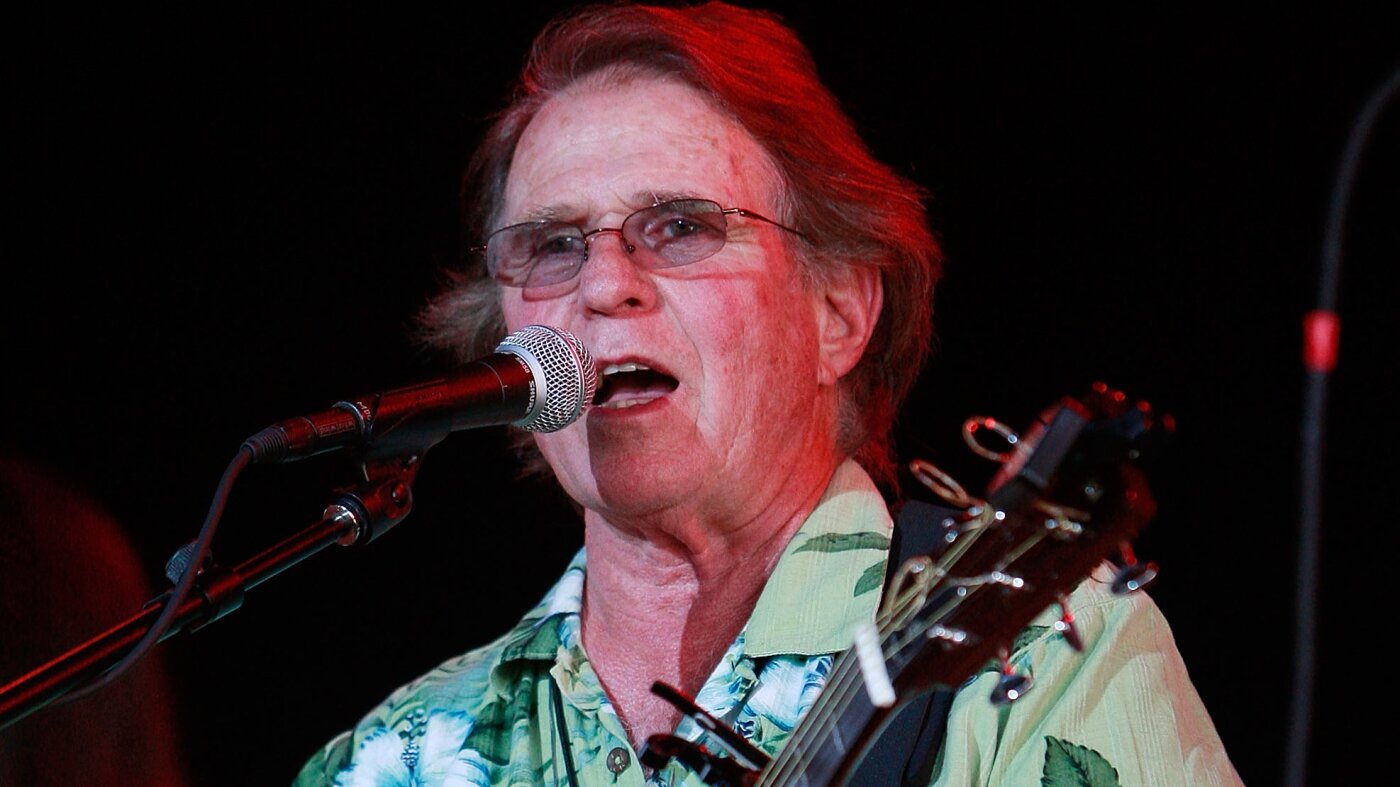
Singer Joe McDonald sings during the concert marking the 40th anniversary of the Woodstock music festival on Aug. 15, 2009 in Bethel, New York. McDonald has died at age 84.
Mario Tama/Getty Images
hide caption
toggle caption
Mario Tama/Getty Images
Country Joe McDonald, the singer-songwriter whose Vietnam War protest song became a signature anthem of the 1960s counterculture, has died at 84.
McDonald died on Saturday in Berkeley, Calif., according to a statement released by a publicist. His health had recently declined due to Parkinson’s disease.
Born in 1942, in Washington, D.C., he grew up in El Monte, Calif., outside Los Angeles, according to a biography on his website. As a young man he served in the U.S. Navy before turning to writing and music during the early 1960s, eventually becoming involved in the political and cultural ferment of the Bay Area.
In 1965 he helped form the band Country Joe and the Fish in Berkeley. The group became part of the emerging San Francisco psychedelic music scene, blending folk traditions with electric rock and pointed political commentary.
The band’s best-known song, “I-Feel-Like-I’m-Fixin’-to-Die Rag,” captured the growing anti-war sentiment of the Vietnam era. With its ragtime-influenced rhythm and sharply satirical lyrics about war and political leadership, the song quickly became associated with protests against the conflict.

McDonald delivered the song to some half a million people at the 1969 Woodstock festival in upstate New York. Performing solo, he led the crowd in a form of call-and-response before launching into the anti-war anthem, turning the performance into one of the defining scenes of the festival.
Country Joe and the Fish released several recordings during the late 1960s and toured widely, becoming closely identified with that era’s West Coast rock and protest movements.
McDonald later continued performing and recording as a solo artist, recording numerous albums across a career that spanned more than half a century. His work drew variously from folk, rock and blues traditions and often reflected his long-standing interest in political and social issues.
Although he became widely known for his opposition to the Vietnam War, McDonald frequently emphasized respect for those who served in the U.S. military. After his own service in the Navy, he remained engaged with veterans’ issues and occasionally performed at events connected to veterans and their experiences, according to his website biography.

How Many of These Epic 1,000-Page Novels Do You Know?
This historian dug up the hidden history of ‘amateur’ blackface in America

Google’s latest Pixel Watches have fallen to their lowest prices ever

Hegseth warns ‘more casualties’ expected in Operation Epic Fury against Iran

China-linked birth tourism under scrutiny as GOP lawmakers press Trump admin for answers

Florida High School Football Rankings: Top 25 teams – Oct. 21

Cleary's 21 help Le Moyne down Central Connecticut State 69-64 in OT

How old is Bo Nix? What to know about Oregon quarterback ahead of 2024 NFL Draft

99th annual Pony Swim held in Virginia

Indiana Members Credit Union announced as new anchor tenant at Bottleworks District
China-linked birth tourism under scrutiny as GOP lawmakers press Trump admin for answers

What defence support could Ukraine offer Middle East states amid Iran war?

Warrants served in New Jersey, Pennsylvania as feds look into possible NYC terrorism

Video: Airports Struggle to Staff T.S.A. During Partial Government Shutdown

Before-and-after satellite imagery offers a rare look at damage inside Iran
-

 Wisconsin1 week ago
Setting sail on iceboats across a frozen lake in Wisconsin
-

 Massachusetts6 days ago
Massachusetts man awaits word from family in Iran after attacks
-

 Maryland1 week ago
AM showers Sunday in Maryland
-

 Florida1 week ago
Florida man rescued after being stuck in shoulder-deep mud for days
-

 Pennsylvania4 days ago
Pa. man found guilty of raping teen girl who he took to Mexico
-

 News1 week ago
2 Survivors Describe the Terror and Tragedy of the Tahoe Avalanche
-

 Sports5 days ago
Keith Olbermann under fire for calling Lou Holtz a ‘scumbag’ after legendary coach’s death
-

 Virginia5 days ago
Giants will hold 2026 training camp in West Virginia