Lifestyle
A secret shelf of banned books thrives in a Texas school, under the nose of censors


In the far, far suburbs of Houston, Texas, three teenagers are talking at a coffee shop about a clandestine bookshelf in their public school classroom. It’s filled with books that have been challenged or banned.
“Some of the books that I’ve read are books like Hood Feminism, The Poet X, Gabi, A Girl in Pieces,” says one of the girls. She’s a 17-year-old senior with round glasses and long braids. The books, she says, sparked her feminist consciousness. “I just see, especially in my community, a lot of women being talked down upon and those books [were] really nice to read.”
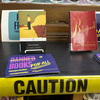
These students live in a state that has banned more books than nearly any other, according to PEN America. The Texas State Board of Education passed a policy in late 2023 prohibiting what it calls “sexually explicit, pervasively vulgar or educationally unsuitable books in public schools.” Over the past two years, Texas teachers have lost jobs or been pressured to resign after making challenged books available to students.
The teacher who created this bookshelf could become a target for far right-wing groups. That’s why NPR is not naming her, nor her students.

“We don’t want to jeopardize our teacher in any way, or the bookshelf,” another teenager explains. Until recently, he says, was not naturally inclined towards reading. But the secret bookshelf opened a world of characters and situations he immediately related to. “Just to see Latinos, like LGBTQ,” he says. “That’s not something you really see in our community, or it’s not very well represented at all.”
The secret bookshelf began in late 2021, when then-state representative Matt Krause sent public schools a list of 850 books he wanted banned from schools. They might, he said, “make students feel discomfort, guilt, anguish, or any other form of psychological distress because of their race or sex.”
That made this teacher furious. “The books that make you uncomfortable are the books that make you think,” she told NPR. “Isn’t that what school is supposed to do? It’s supposed to make you think?”
She swung into action, calling friends to support a bookshelf that would include all of the books Krause wanted banned. Then she enlisted a student to put it together.
“I went through the list and found the ones that I thought were cool,” he recalled to NPR over a London Fog latte. “And then she gave me her [credit] card and I bought them. It was a lot of gay books, I remember that.”
That same student came out as trans to his family while in high school. “I wouldn’t call them supportive, so I had to do a lot of sneaking around,” he said quietly. Now nineteen, he’s graduated and works as a host in a restaurant while deciding on his next move.
“Having these books, having these stories out there meant a lot to me, because I felt seen,” he said. Especially meaningful, he added, during a fraught time when Texas lawmakers banned transition-related care for teenagers. “Because of the way the laws are going for trans people especially,” he said, “it could be assumed that [my teacher is] grooming kids. And that would be terrible because that’s not what she’s doing at all.”

NPR repeatedly reached out to former Texas lawmaker Matt Kraus for comment and got no response. He is currently running for county commissioner in the Fort Worth area. The chief of communications for the public school district thanked for NPR for “highlighting this very important topic but we’re going to pass on this opportunity,” when asked to comment on how administrators are implementing policies around books that have been challenged.
“We’ve been seeing a climate of fear — and a variety of self censorship — going on by school leaders or librarians who do not understand the implications of the law or are fearful for their jobs,” said Carolyn Foote. She’s a retired English teacher and librarian who co-created the activist group Texas FReadom Fighters.
Kasey Meehan, of the free speech advocacy group PEN America, says she’s watched things in Texas escalate. She points to a teacher fired last year for sharing a graphic novel about Anne Frank to her students that showed Anne having a romantic daydream about another girl. Another teacher featured on an NBC podcast left her job under pressure after making literature available to students featuring a positive transgender character.
“Parents are taking books from schools and bringing them to police or sheriff offices and accusing librarians and educators of providing sexually explicit material to students,” Meehan says.
“It does make me nervous.” admitted the Houston teacher with the secret bookshelf. “I mean, this is absolutely silly that I am not free to talk about books without giving my name and worrying about repercussions.”
At some point, she hopes, it will no longer have to be a secret. Earlier this month, the U.S. Court of Appeals blocked part of a recently-passed state bill, known as HB 900, that would have required booksellers and publishers to rate any books sold to schools for sexual content. This was seen as a victory for freedom-to-read activists, but some of them noted to NPR that HB 900 still contains dangerously vague language about material prohibited in school, and no clear guidelines about enforcement.
“I do believe that book banning is going to go away,” the teacher says, firmly. But for now she adds, “I intend for this library to just keep growing.”




Lifestyle
Vintage-obsessed millennial parents are driving L.A.’s booming kids’ clothing resale market

Kids’ vintage clothing sales are experiencing a remarkable boom at in-person markets and online, where prices for clothes for little ones have shot up on websites including Depop and Poshmark. Millennial parents are looking to outfit their kids in the clothes and TV and film characters they loved (or coveted) when they were kids.
The result? There’s a new generation of kiddos hitting the playground looking incredibly cool. Take Amari Case, a SoCal toddler who spent a Sunday afternoon this spring ambling around a vintage market in a West Hollywood warehouse clad in baggy jeans and a ’90s-era tee emblazoned with the “Dragon Ball Z” character Son Goku.
When she wasn’t scribbling on a Lorax coloring sheet, she’d been cruising around the market with her dad, Aaron Munoz Case, snapping up new pieces destined to make her the flyest kid at the preschool playground.
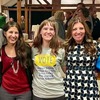
Neil Wright, from left, Kristine Nite Scalzo and Brandon Rosenblatt, co-founders of Elemeno Kids Vintage Market.
Showing off Amari’s new vintage satin L.A. Raiders jacket and tiny teal Grant Hill Detroit Pistons jersey, Munoz Case, who was also impeccably dressed, noted that while Amari went through a phase at about 18 months where she wanted to dress herself, eventually she gave up and went back to letting her dripped-out dad dictate her wardrobe.
Munoz Case found Amari’s first vintage piece at the Rose Bowl Flea Market and got the bug, going back every month to pick up something to add to his little’s wardrobe.
Trendspotters and researchers say Munoz Case isn’t alone in his quest. The market for kids’ vintage clothing has heated up precipitously over the last few years, perhaps hitting a boiling point in January when an Eeyore romper from the ’90s sold for over $3,000 on EBay. (It was new with tags, but one without tags still went for almost a grand about a month later.)
The thirst for tiny throwbacks is so popular that first-ever, all-kids market Elemeno — named after the “L-M-N-O” bit of “The Alphabet Song” and where Amari was toddling and shopping — drew 17 vendors and over 2,000 attendees over a single weekend in March. (There are plans for another Elemeno Kids Vintage Market pop-up later this year in New York, as well as plans to bring the event back to L.A. sometime next year.)

2

1. Cameron Scalzo, wearing a vintage McDonald’s T-shirt from the ‘90s, and mom Kristine Nite Scalzo. 2. Cameron Scalzo rocks an Avirex jacket from the ‘90s.
Eye Speak Vintage’s Kristine Nite Scalzo, who co-organized the event and is opening an all-kids vintage store in Pasadena this month, says she fell under the kids vintage spell in 2020 when she was pregnant with her son. She’d always been a vintage shopper for herself, so she knew she wanted to pass the passion down to the next generation. She started filling up her son’s closet, and soon enough, she found herself selling her other finds out of a bodega in her garage.
She has a by-appointment space in Pasadena now, where she draws everyone from Rihanna’s stylist to out-of-town moms who make a point to stop by on their way to Disneyland. “The community around kids vintage has really skyrocketed on Instagram over the past six years,” Scalzo says. “We want to know who we’re buying from. We want to know that we’re doing good with buying secondhand. And it’s a hobby for people that can turn into a possible business on the side. Because knowing there’s a big group that’s interested in vintage kids clothes, you can always pass an item [your kid outgrows] to someone else or resell it.”
Scalzo says some parents are out digging through bins at the Goodwill Outlet looking for the perfect piece, while others are content to pay up for, say, a ’90s Simpsons T-shirt or a mini-size Harley-Davidson jacket. Scouring the racks at the Elemeno market, most pieces cost $15 to $40, though there were special pieces pulled to the side in some booths with price tags that could make a parent’s eyes pop. (Think $275 for a set of well-worn Spider-Man overalls from the ’00s or $150 for a pair of Cross Colours denim shorts from the ’90s.)
In kids and adult vintage alike, mint condition is highly valued. No matter the era in which they were raised, kids tend to be messy. They get strawberry juice on their shirts or scuff up the knees on their Bugle Boy jeans. Vintage kids clothes that look pristine are more expensive, and while plain kids clothes do sell, items with characters on them or cool prints tend to draw more attention and dollars.
Brandon Rosenblatt, another of the Elemeno organizers, says he’s had his eye on a specific kids “Back to the Future” shirt for some time, but notes that it typically sells for about $1,000. He’s partial to McKids clothes for his daughter, from McDonald’s short-lived kids clothing brand, noting that he’s even snagged her a vintage official McDonald’s-themed aloha shirt from Hawaii, something he says he’s never seen anywhere else.
1

2

1. Siblings Amora and Milo Castilo wear vintage cowboy hats, jackets and chaps. 2. Thalia Castilo and her kids Amora and Milo.
Other collectors, he says, might be a little less obscure, leaning into mainstream characters such as Strawberry Shortcake or from ’80s and ’90s properties including “The Land Before Time” and “Rugrats.”
“A lot of millennials are having kids — like everyone who’s in their 30s and 40s — and they all want to put their kids in the same IP they grew up in,” Rosenblatt says.
“It’s the thrill of the hunt that gets everyone so excited,” Scalzo says. “Once you find that perfect nostalgic piece, you’re like ‘Holy s—,’ and you just want to chase that feeling again and again.”
Mia De La Rosa, a reseller who was at the Elemeno market, says that like Scalzo, she started buying kids vintage clothes when she was pregnant with her daughter, Liv, who’s 6 now, very into everything on PBS Kids and has a closet full of thrifted vintage garb covered in characters such as D.W., the annoying little sister from the ’90s show “Arthur.”
Everything Liv wears is “completely her style,” De La Rosa says. “She dresses herself every day and she gets compliments on what she’s wearing at school all the time.”
Other vintage-wearing kids — and in particular younger ones — might simply be sporting what their parents like or might just like the look of the shirt even if they don’t know what it’s advertising. (An 8-year-old boy at the Elemeno market, for instance, chose to wear a pristine T-shirt highlighting the ’90s Jim Carrey movie “The Mask” because it featured his favorite color: green.)
Derrick Broaster, a vintage enthusiast turned full-time reseller, says that while he chooses to put himself in clothes from the ’60s and ’70s, he outfits his two sons in clothes from the 2000s. (“How Bow Wow used to dress when he was a kid,” he says.)
Although his younger son tends to rebel against Broaster’s vintage picks, opting for whatever Spider-Man shoes happen to be in his eyeline, his older son has leaned in, letting his dad advise him on what vintage pieces could work and what would be the most stylish.
1

2

1. Julian, left, and Javier Gutierrez show off their vintage clothing. Javier says his mom always tells him to keep his vintage outfits clean. 2. Mom Priscilla Guzman, clockwise, Dad Javier Gutierrez and sons Julian and Javier Gutierrez enjoy the vibe of vintage clothing. Guzman says she’s been buying and selling kids’ vintage since her oldest son was born eight years ago.
Rosenblatt says a good portion of what vintage finds he sees in the market now has returned to the U.S. from places in Central America and South America or Asia where those pieces were likely sent decades ago after they were donated or given away.
“There’s a real underbelly of this vintage game with rag houses getting access to bulk product overseas and letting people sort through it,” he says. “There are companies now that rip through 20, 30 or 40,000 pieces of vintage clothing a week. It’s a really interesting ecosystem.”
For many kids vintage sellers, finding their stock is just as fun and interesting as getting it back into consumers’ hands. “Anywhere we can find clothes, we’re there,” says Matthew Carlos, owner of Long Gone Youth. He started selling vintage clothes 11 years ago, when he was 15, switched to kids vintage at 20 and has spent the last six years scouring flea markets, websites and swap meets.
“The kids market is definitely growing,” he says, “but I still feel like we haven’t even gotten close to where we can go. It’s just getting popular now, but the more events [like Elemeno] we can do, the more it’ll go mainstream.” Even now, some major brands like Gap and OshKosh B’gosh have recognized the interest in some of their styles from the ’80s and ’90s, moving to re-release the looks in limited runs.

Jackie and Frank Oropeza with daughter Rumi Mae shop at Elemeno Kids Vintage Market.
Kids resale is also leaning into streetwear culture. Rosenblatt, who worked in the streetwear industry, says that he’s noticed that a good portion of those interested in kids vintage — particularly, male shoppers — tend to be fans of streetwear brands like Supreme, Fear of God Essentials and Bape. At Elemeno, for instance, a good portion of the parents we saw pushing strollers were well-dressed dads seemingly on solo missions, something you don’t always see at kid-centric events.
“I just want my son to feel like I did as a kid,” said Justin Nguyen, while watching his toddler, Jayden, play with bubbles. “I want him to be happy, carefree and joyful, and I want to be able to spend time with him. My mom and dad were always working, even on the weekends. Now that I’m a dad, taking my son out on weekends to do stuff like this just seems like a blessing.”

Author Julia Elliott won for her short story collection Hellions.
Forrest Clonts/Tin House
hide caption
toggle caption
Forrest Clonts/Tin House
Writer Julia Elliott has won this year’s Carol Shields Prize for Fiction for her short story collection Hellions. The award honors work by women and nonbinary authors in the U.S. and Canada.
Elliott, who also authored the novel The New and Improved Romie Futch and the short story collection The Wilds, is known for blending elements of Southern gothic horror, surrealism and fairy tale. Hellions, published in 2025, includes stories set against backdrops like a plague-stricken medieval convent, a feminist art colony, and small Southern towns.
“This eerie, eclectic, genre-leaping collection takes no half-measures; every sentence of Hellions crackles or crawls,” wrote the prize jury in a statement. “Here, human folly moves against a backdrop of horror and magic … But for all its wildness, there is tremendous control.”
The prize, named after a Pulitzer Prize-winning novelist, awards $150,000 to one winner each year. Novels, short story collections, and graphic novels by women and nonbinary authors are eligible.
This year’s finalists included Quiara Alegría Hudes (The White Hot), Lee Lai (Cannon), Megha Majumdar (A Guardian and a Thief), and Sonya Walger (Lion). They will each receive $12,500.
The Carol Shields Prize went to writer Canisia Lubrin in 2025.
You can listen to actor Donna Lynne Champlin read Elliott’s story “Hellion” on the Death, Sex & Money podcast here.

new video loaded: The Fashion References in ‘Cats: The Jellicle Ball’

By Helen Shaw, Vanessa Friedman, Léo Hamelin, Laura Salaberry and Sutton Raphael
June 2, 2026
-

 World6 minutes ago
US ally Kuwait condemns ‘brutal and ongoing Iranian attacks’ after airport was hit
-

 Politics9 minutes ago
Spencer Pratt surges to runoff in LA mayor’s race after angry voters send message to Karen Bass
-

 Health14 minutes ago
One extra serving of processed meat a day linked to higher cancer risk
-

 Sports21 minutes ago
AJ Brown trade outcome: Dianna Russini paid a heavy price while Mike Vrabel emerged unscathed
-

 Technology24 minutes ago
Could your Samsung phone replace your passport?
-
 Business29 minutes ago
Rent-hike ban to protect fire victims ends despite gouging concerns
-
 Entertainment36 minutes ago
Two of music’s most powerful executives maxed out donations to Spencer Pratt
-
Lifestyle39 minutes ago
Vintage-obsessed millennial parents are driving L.A.’s booming kids’ clothing resale market

