Lifestyle
A former stunt performer walks away (mostly) unscathed from fist fights, flipped cars

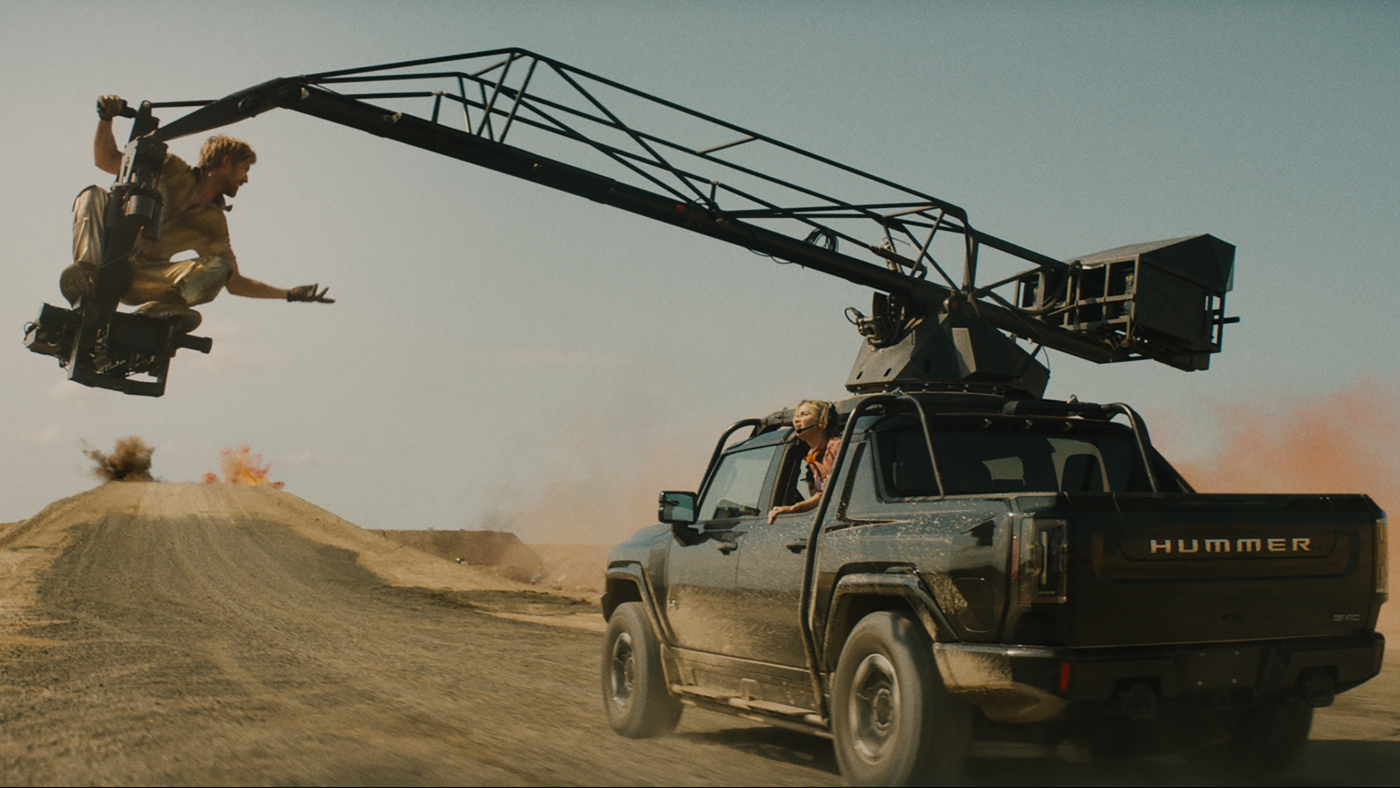
Ryan Gosling plays a stuntman in the action movie The Fall Guy.
Universal Studios
hide caption
toggle caption
Universal Studios
Two concussions. A broken ankle and wrist. A torn meniscus (… actually make that two). A lost front tooth. Former Hollywood stunt performer David Leitch is no stranger to on-the-job injury. He says pain tolerance and being “a little bit tough” can come in handy when you get thrown out of windows for a living.
Leitch has since shifted into filmmaking. His latest, The Fall Guy, starring Ryan Gosling, is a tribute to stunt performers and the often unrecognized risks they take.
The film begins with a montage of action sequences: A man tumbles down a rocky cliff, rides a motorcycle over the roofs of several cars, gets thrown through a bus window and runs through a battlefield surrounded by explosions. Leitch says coordinating the stunts from behind the camera was actually more harrowing than executing them himself.

“It’s harder because you have your friends that are doing the stunts and you’re designing them and you are responsible for their safety,” he explains. “Your heart goes through your chest.”
As a stunt performer, Leitch doubled for Brad Pitt in Fight Club, Mr. & Mrs. Smith and Ocean’s Eleven, and for Matt Damon in The Bourne Ultimatum. His directorial credits include Bullet Train,Fast & Furious Presents: Hobbs & Shaw, Deadpool 2 and Atomic Blonde.
“You have to evolve,” Leitch says of his transition from stunts to directing. “Being the physical double that’s getting ratcheted back from explosions or falling down the stairs or taking the big hits — I’m so grateful I was able to transition out of it, because you don’t want to be doing that at a certain age.”
Interview highlights
On not wanting to reveal too many industry secrets in The Fall Guy

It is a little bit like magic. I think we’re always reinterpreting the classic gags and the classic tricks. And so that’s what we did with Fall Guy. We sort of reimagined the big car jump. We reimagined the high fall from the helicopter. And there is a little secrecy. … Because it was such a business where it was passed down. It’s apprenticeships, it’s passed down from family — usually to kids — and it’s hard to crack in and find someone to teach you because they didn’t want to share the knowledge so much.
I think in Fall Guy, we tried to pull the veil back just enough and not, give too much away. You see those fire stunts? We didn’t really give the science behind that away. That’s what’s really amazing about stunts. I think people think it’s a bunch of daredevils, and there’s a little bit of that sensibility in stunt performers, but really, there’s a lot of physics and math and legacy tricks that get you through the day.
On what goes through his mind right before a stunt
Ultimately a lot of stunt work is trusting your team. … You’re hooked up to this machine and you’re trusting the physics of it, and you’ve rehearsed it and you’ve seen the weight bags go down and up, but again, you’re stepping off the ledge and you have to have this ability to calm your nerves, [to] trust in the process, [to] have the confidence that, you know, we’ve tested this over and over and it’s going to go great. And so it’s not unlike an athlete at the starting line: You really have to focus on the first step and then your body takes over. And you wait, you hear that cue “action” and you go.
On how his stunt work on the Matrix changed Hollywood
I was a fan of a lot of different Asian cinema, Korean and Chinese and Japanese cinema that had martial arts in the lead characters. Everyone just knew how to fight, and they could fight with a martial art style. Whether it was a police drama or a heightened sci-fi thing, every character knew how to fight. And it wasn’t until the Matrix movies where the Wachowskis [directors Lana Wachowski and Lilly Wachowski] had sort of said, “Hey, we want to have that same vibe in Western cinema.” And I think after that first Matrix film hit the ground where you saw Keanu and Laurence Fishburne fight in this dojo, and there were the actors doing the fighting, I mean, that had not happened to that level in Western cinema before that, really. So it was like a light went off for myself and a core group of us who were sort of training together at the time. …

We started to take that opportunity with a lot of different films, and we were of up-and-coming stunt coordinators and we were really specializing in fight choreography. And we did something that we learned from that Hong Kong team on the Matrix films: We would shoot and edit our own fight scenes to present to the directors and the producers, and through that we built a name for ourselves, and we also learned how to tell stories. And we also learned how to technically direct. We were shooting and editing these sequences and presenting them as sort of finished ideas like moving storyboards. And now it’s something that is like, standard.
On enduring the physical pain of stunts
The car stunts and cars and fire and things like that, they actually hurt less sometimes, I think, because you’ve built in all these protocols to protect the performer and there’s a lot of science involved, but the meat and potatoes of stunt performing is just physical performance. And sometimes [it’s] getting thrown down a set of stairs [for] multiple takes and how to protect yourself. And you know you’re not going to break anything, but you’re going to get a lot of bumps and bruises and twisted ankles and crooked necks, but that’s just something that you accept.

Ryan Gosling, David Leitch and stunt performer Logan Holladay on the set of The Fall Guy. “Your heart goes through your chest,” Leitch says, of coordinating stunts for others.
Universal Studios
hide caption
toggle caption
Universal Studios
On being asked to do more takes when you’re in pain
You hate it, but you’re stoic about it. … The unwritten contract that you sign, like if you can get up, you should be going again. And the stunt coordinator expects you to do that too, because he’s hired you and he doesn’t want you to not make him look good in front of the director.
On not showing your face as a stunt performer so the audience believes it’s the actor

It was definitely part of the old-school mentality. You learned how to hit a mini trampoline and jump in the air and keep your head away from camera. … Like, I always try to give [the director] the back of your head. And you just got good at it. … It’s kind of changed in the last decade or so, because the use of face replacement allows you to just let the stunt performer perform and then if it’s a few frames where we see a face, we can use a digital still and wrap it around their face and with motion blur and simple visual effects, you can mask the stunt performer’s profile or face or whatever. And it allows the performers more freedom in doing the action and not trying to contort their body to hide their face.
On whether visual effects will replace stunt performers
I know that that’s where the world is heading, and I think that that’s OK. For me, as someone who enjoys action films, I feel the difference in the stakes of what’s happening on the screen with the characters when I feel that it’s real. And so I think there’ll always be the want for that. I hope especially for action film lovers, but actually just really good storytelling. The visual effects and the CGI can’t deliver the reality of really feeling the stakes behind it all, then it’s always going to fall flat.
Heidi Saman and Joel Wolfram produced and edited this interview for broadcast. Bridget Bentz, Molly Seavy-Nesper and Beth Novey adapted it for the web.

Lifestyle
Terry Tempest Williams on why women with big ideas get labeled ‘crazy’ : Wild Card with Rachel Martin
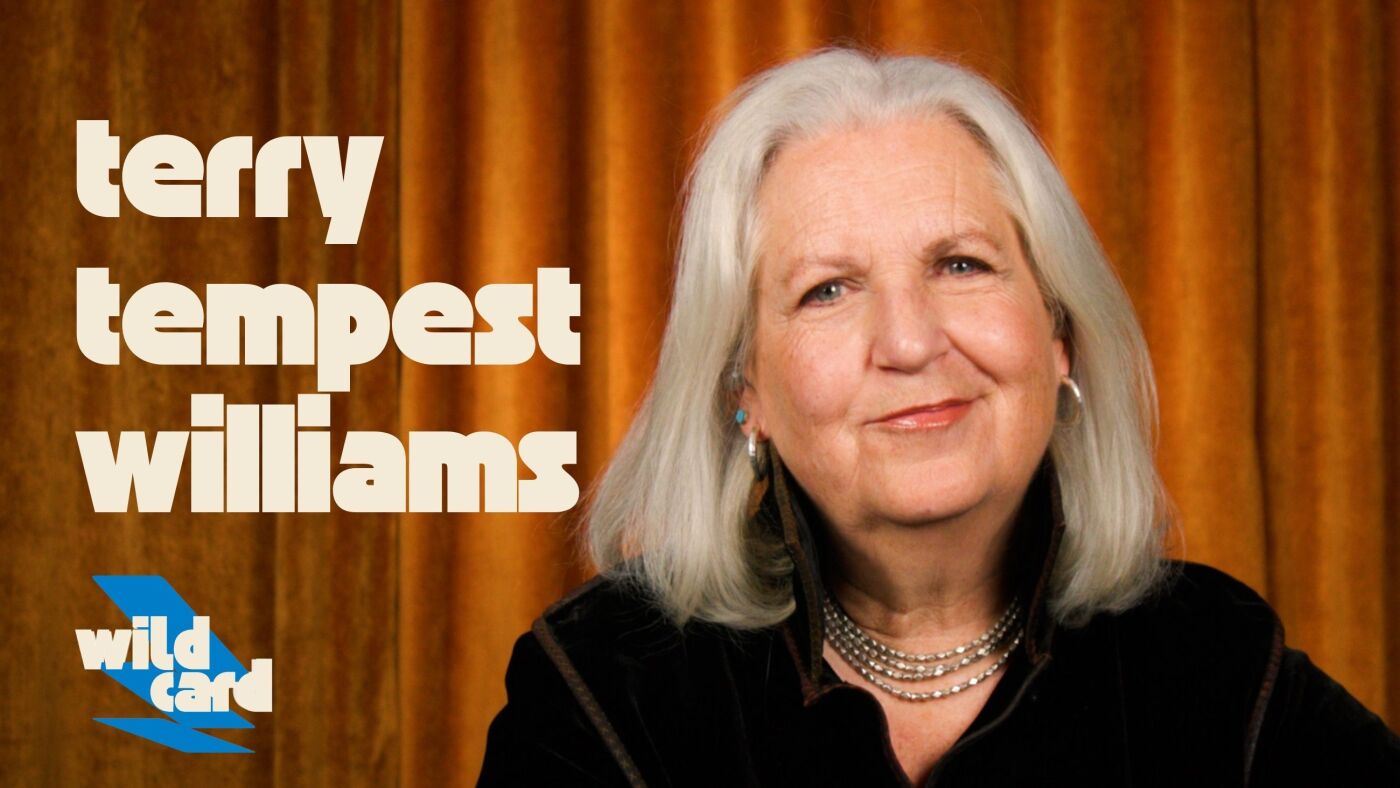
A note from Wild Card host Rachel Martin: I met Terry Tempest Williams about 25 years ago at a writer’s conference in Yosemite Valley. I was a young reporter who was there to do a story about how literature was addressing climate change and she made such a huge impression on me. I had never heard someone talk about the natural world the way Terry did and she had a spiritual depth I hadn’t encountered in my life at that point.
To this day, Terry’s writing always reorients me towards what is good, what is beautiful, and what is true. Her newest book is called “The Glorians.”

For its upcoming Los Angeles venue, experiential art firm Meow Wolf will focus on the art of storytelling, with a specific eye toward skewering our city’s moviemaking magic. To help bring that vision to life, Meow Wolf has entered into a creative partnership with Titmouse, one of L.A.’s most renowned independent animation houses.
The Hollywood-based studio behind popular series such as “Big Mouth” and “Star Trek: Lower Decks” will create animation that will be shown throughout the West L.A. venue, which is on target for a late 2026 opening at the Howard Hughes entertainment complex.
It’s a move that represents a shift for Santa Fe, N.M.-based Meow Wolf. Over the last decade-plus, the art collective has grown beyond its anything-goes, punk-meets-psychedelic roots into an organization with full-scale, maximalist installations in its hometown, Denver, Las Vegas, Houston and the Dallas suburbs. In the past, Meow Wolf kept most of its media in-house.
As part of its larger-than-life participatory art installations, Meow Wolf L.A. will feature a mix of live action and animation, the former filmed by Meow Wolf in its Santa Fe studio. Meow Wolf’s James Stephenson, a senior VP with the company and its creative director of emerging media, said the degree to which the L.A. exhibition will lean into various animation styles necessitated an outside partner. Titmouse’s work, in development by a number of directors with contrasting tones, will be shown on a variety of formats, ranging from cinema screens to full-room projections.
“I really believe in animation as an art form, and I know the Titmouse folks do too,” Stephenson says. “Animation is made by artists. It’s made by artists with their own hands. It’s something that is still very rooted in craft.”
Meow Wolf’s L.A. space is set in a former cinema complex, and will champion its location, taking guests on a journey through a converted movie house and beyond, into a sci-fi-inspired fantasyland with sentient spaceships and a 30-foot-tall mushroom tower. Meow Wolf creatives have spoken of the fantastical movie theater as one that will feature animated, self-aware candy before attendees enter the main exhibition space, making Titmouse’s work some of the first art guests will encounter. Titmouse co-founder Chris Prynoski has said the studio has lined up at least six directors for the exhibit.
An in-progress art installation destined for Meow Wolf L.A. at the art collective’s Santa Fe, N.M., headquarters. The L.A. exhibition will feature animation from Titmouse.
(Gabriela Campos / For The Times)
Titmouse, says Stephenson, is the right partner because “they’re known less for a house style, and more for a house vibe.” Over the years, Titmouse has been behind such diverse shows as “Scavengers Reign,” owning a Jean Giraud influence rooted in French and Spanish surrealism, the lively “Jentry Chau vs. the Underworld,” with an unique color palette that took inspiration from anime and Chinese mythology, the exaggerated comic book feel of Adult Swim’s “Metalocalypse,” and the approachable yet expressive tone of “Star Trek: Lower Decks.”
“Meow Wolf’s vibe is similar to Titmouse’s vibe,” Stephenson says. “It’s artist-first, artist-driven, independent and kinda edgy. They are always trying to find the edge of what’s possible. They try to see how far they can go, and it’s done for fun and in the spirit of taking risks.”
Prynoski says working with Meow Wolf will give Titmouse a sense of artistic freedom it doesn’t always have when delivering content for more traditional Hollywood partners. He says the multi-director approach is a callback to the early days of Warner Bros. Animation, when individual creators put their own stamp on Looney Tunes material.
“I use Bugs Bunny as an example,” Prynoski says. “You’ve got a Friz Freleng Bugs Bunny short. You’ve got a Chuck Jones Bugs Bunny short. You’ve got a Tex Avery Bugs Bunny short. They’re all different versions of Bugs Bunny, and people who are really paying attention can tell which director directed each one. Even though to the layman, these are all Bugs Bunny, but if you lined them up, they are drawing in different styles, sensibilities and techniques.”
Prynoski says that was a centerpiece of his pitch to Meow Wolf, noting that characters will reappear in multiple installations, each handled by a different artist. Meow Wolf L.A., in fact, will be the firm’s most character-driven exhibition, as guests will follow the storylines of three main protagonists throughout the space.
In announcing the partnership, Meow Wolf and Titmouse released an image from an animated work directed by Luca Vitale. It features a key character having a moment with a hummingbird and it’s done in an elegant, slightly anime-influenced style. It’s an image full of movement, reflecting a character in transition with inviting pastels and bold dashes.
“I like that image because I think it captures some of the sense of wonder that we want people to feel,” Stephenson says. “The character is having an encounter with the elusive nature of creativity and reality in a way that makes them have a different perspective of what’s possible.”
Other contributing animation directors to Meow Wolf L.A. include Space Dawg, Felix Colgrave, Alexander Vanderplank and Phimémon Martin, and Jun Ioneda.
Titmouse’s partnership with Meow Wolf will extend beyond the L.A. exhibition. The two will be working on the development of Meow Wolf New York, which is slated to open some time after Los Angeles, and are collaborating on a planned animated series, which Prynoski is spearheading.
Meow Wolf exhibits are the result of sometimes hundreds of disparate artists coming together in a shared space. Distilling that into a signature, singular style for a series could be a challenge. Stephenson pinpoints some guiding principles.
“You really need to feel the hand of the artist,” he says. “You need to feel a DIY aesthetic. You need to feel the materiality. Those are very specific to what we are.”

The Kennedy Center on June 28, with its facade signage still covered by a tarp and scaffolding.
Alex Wroblewski/AFP via Getty Images
hide caption
toggle caption
Alex Wroblewski/AFP via Getty Images
On Wednesday, a federal appeals court denied President Trump’s request to stop the removal of his name from Washington, D.C.’s Kennedy Center. The signage on the building has been covered with tarp and scaffolding since June 13, but in a court filing last month, the center’s current executive director said that Trump’s name has been removed.
In their decision, three judges from the U.S. District Court of Appeals for the District of Columbia Circuit said that the president had failed to prove that the arts center would be “irreparably injured” without Trump’s name attached to it.

NPR requested comment from the Kennedy Center, but did not receive an immediate reply.
This latest round of court decisions is part of the ongoing litigation filed by Rep. Joyce Beatty, D-Ohio, against President Trump and the board of the Kennedy Center. In a statement emailed Wednesday to NPR, Beatty said: “Today’s ruling again affirms that this administration’s efforts to rename the Kennedy Center were unlawful. His name no longer desecrates this sacred memorial, which belongs to the American people. Now it is time for the Trump administration to accept this, comply with the law, and take the tarps down.”
In previous court filings, Trump’s legal team had asserted that removing the president’s name from the arts complex, both on the physical building and in its digital materials, would inflict irreparable harm in both time and money already spent. In the denial, the three judges — Patricia Millett, Robert Wilkins and Gregory Katsas — wrote that since Trump’s name has already been removed, “a stay would not avert those harms.”
Furthermore, Trump had claimed that without his name attached, future fundraising would be threatened “and [will] contribute to the financial decline of the Center.” In response, the appeals judges wrote: “Appellants, however, have failed to support this assertion with any specific facts or evidence. They offer only the conclusory assertions of the Kennedy Center’s Executive Director that were made in a factually unsupported declaration.” The center’s current executive director, Matt Floca, specializes in physical plant management.

The presiding judge in the case, Christopher R. Cooper, has ordered that the center provide him a status report on the center’s operation and programming before the end of this month. As of Wednesday, the center’s calendar lists a small roster of programs, including outdoor free movie screenings, workshops for children, and five free live performances in July on its Millennium Stage. In the past, the Kennedy Center presented over 2,000 arts and education events each year, including free daily Millennium Stage performances.

-

 Augusta, GA1 minute ago
Augusta domestic violence shelter faces shortfall after Georgia funding veto
-

 Washington, D.C8 minutes ago
Why Gov. Kim Reynolds turned down previous request to send National Guard to D.C.
-

 Cleveland, OH11 minutes ago
LGBTQ+ Ohio Nonprofit Guide
-

 Austin, TX16 minutes ago
Think tank says state education reforms have set up future of the ‘Texas Miracle’
-

 Alabama23 minutes ago
New Alabama women’s basketball coach Pauline Love credits late mentor for coaching career
-

 Alaska26 minutes ago
Fatal crash closes Glenn Highway southbound lanes near Eagle River
-

 Arizona31 minutes ago
Arizona Cardinals’ Jordan Burch takes lessons from rookie year
-

 Arkansas38 minutes ago
Dino Fest brings interactive experiences, lifelike dinosaurs and reptiles to Arkansas July

