Lifestyle
A costume designer on the art of building characters for film and TV

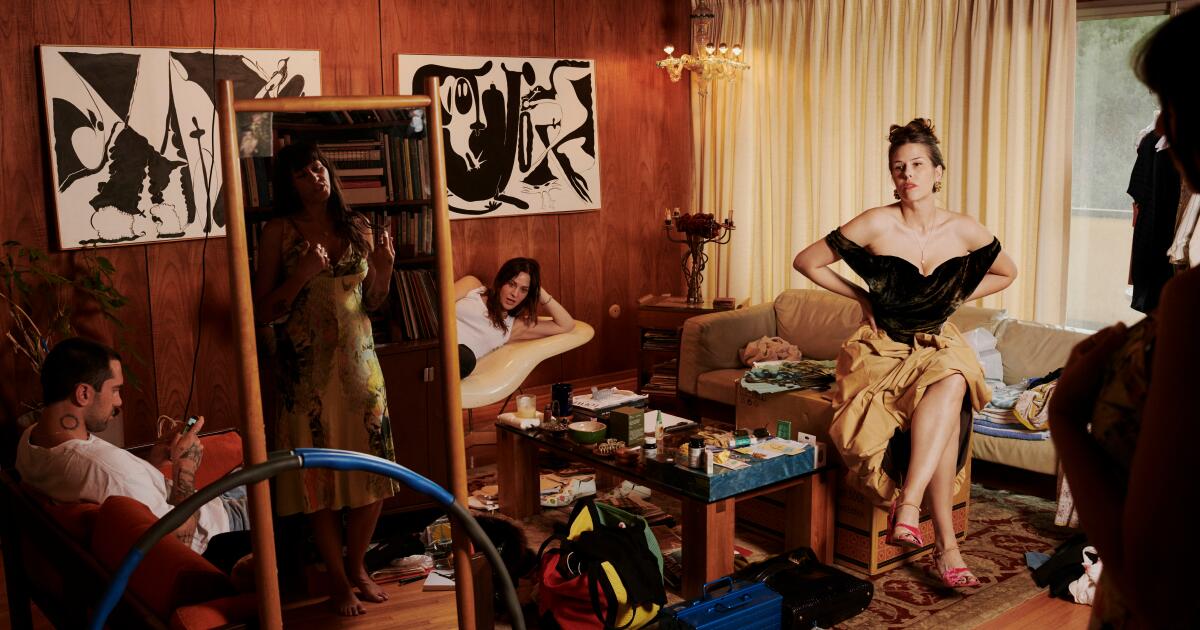
How do you know how to dress someone when that person technically doesn’t exist? This inane yet genuine question burned in my mind when I sat down to interview Natasha Newman-Thomas, an award-winning costume designer. Newman-Thomas is the sartorial mastermind behind TV shows including HBO’s “The Idol” and Childish Gambino’s iconic “This Is America” music video (which garnered her a Costume Designers Guild award). Known for her character-driven approach and highly distinctive, vintage-inflected eye, Newman-Thomas explains to me that costume design requires not only a deep understanding, passion, and technical proficiency for clothing design and fashion styling: it also requires an ability to conjure and then investigate a fictionalized character’s psychological makeup. The answer to my question, in short, is that you have to believe in an illusion in order to make it a believable reality.
When you see an actor or musician in a costume designed by Newman-Thomas, the outfit looks authentic in a way that is almost unnoticeable — and this is the point. The selection and styling of the clothes appear so natural and unique to the character that it seems as though they showed up to set wearing it. Her latest subjects are Keanu Reeves and Cameron Diaz in the upcoming film “Outcome,” directed by Jonah Hill. While Newman-Thomas couldn’t get into the details of those characters yet, she shared the peculiar and fascinating details of her art with me and made the case for why flying helicopters is more interesting than sitting through a group critique in art school.
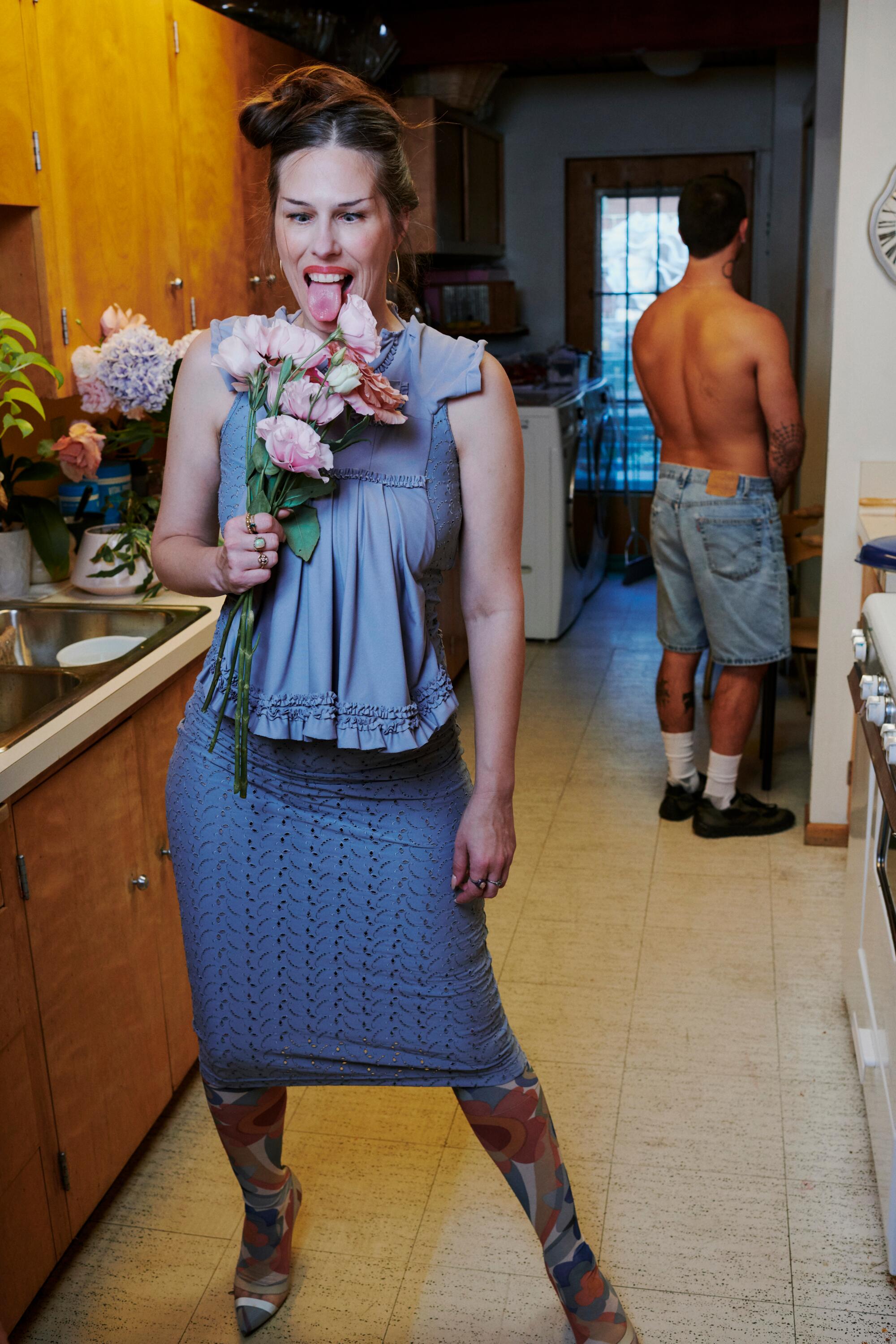
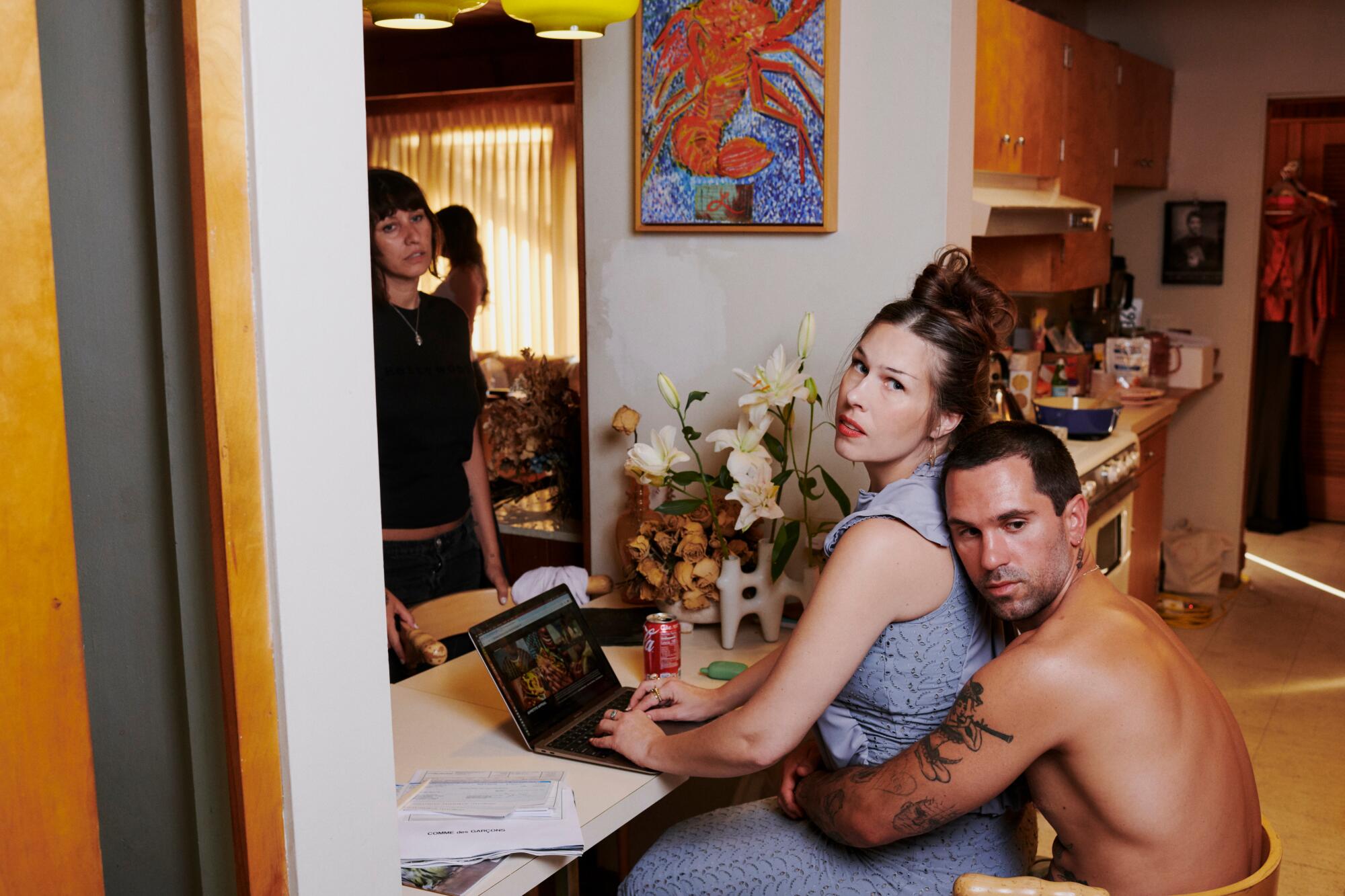
Natasha wears Comme des Garçons Autumn/Winter 2007 dress courtesy of Aralda Vintage, Fendi boots, Gabriella Kiss earrings.
Costumes are the first place where you get to begin storytelling without actually knowing someone.
— Natasha Newman-Thomas
Eugenie Dalland: My Gen-Z cousin had never seen “The Matrix” before, so I recently watched it with her. I realized how crucial all those latex and black leather costumes were to the tone of the film. Why are costumes so important?
Natasha Newman-Thomas: Costumes are the first place where you get to begin storytelling without actually knowing someone. It’s crucial on screen because you want to know as much about a character as you can, instantly, in order to get the viewer involved and on board. If you’re in a dystopian future like “The Matrix,” the costumes pull you in and make you believe in that world and in the story on a surface level.
ED: I’m curious about the nuts and bolts of creating these characters, what you’ve called the “sociological exploration” involved in building them. Who is involved in this process?
NNT: It depends on the project. Sometimes I have one initial conversation with the director, and then they turn the whole thing over to me and let me do my thing. Other times, the director is super involved and we get into the nitty-gritty about every character. And then I’ve been on projects where I do that with the actors, which I like doing because it’s part of the character development for them. It’s super informative for both of us to have those conversations and figure out why a character behaves a certain way, the things that inform who they are, their pathologies.
ED: Shopping is a big part of costume design. What kind of mindset are you in when you’re buying clothes for a character? I imagine it’s sort of meditative.
NNT: It’s definitely meditative! I’m almost trying to put myself in their mental state, and then imagine how they would acquire clothing. Where would they shop? Or would their character only wear hand-me-downs? If so, where would those come from? Someone from their church, a sibling?
ED: I feel like this psychological approach is why your costumes always feel so personalized and unique. It makes the characters more believable as actual individuals. You’re not throwing them into whatever is trendy.
NNT: There’s totally something to be said for capturing a moment in history with [trendy costumes], but typically I strive to make something timeless. I try to make things as unique to the characters as possible.
ED: I’ve always wanted to ask you about the outfit Childish Gambino wears for the “This Is America” music video, which you costumed. It’s very minimal — vintage pants, no shirt, gold chains — but he looks so f—ing cool and moreover, totally natural, authentic. I almost wondered if he showed up to set wearing that look.
NNT: It’s funny you say he looks really natural and embodies the outfit well, because up until 20 minutes before the shoot, Donald [Glover] and I were going back and forth about it. He was like, “I’m not comfortable in that, it inhibits my performance, I just want to wear sweats.” I was like, “no way, sweats are a completely different message, it’s really crucial that these are the pants you wear. If it’s inhibiting your movement, I’ll sew in a gusset.” I was literally sewing a gusset into those pants up until 30 seconds before we shot! I just did another project with Donald a few months ago and he was like, “by the way, you were right about the pants.”
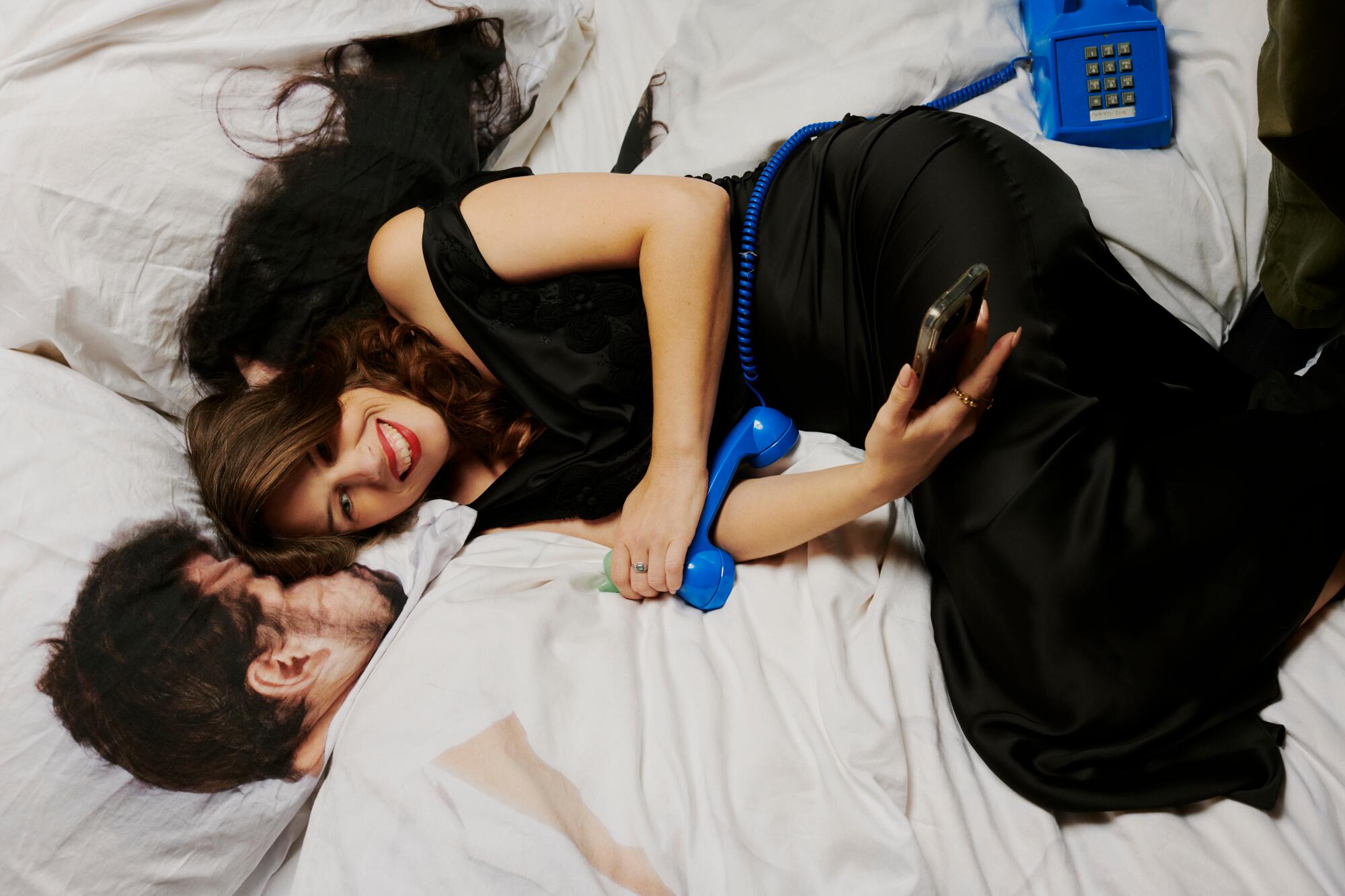
Natasha wears vintage John Galliano 2008 runway dress courtesy of Aralda Vintage. Opposite page: Natasha wears Christian Lacroix jacket, Wolford tights, KNWLS shoes Vivienne Westwood necklace, Gabriella Kiss earrings.
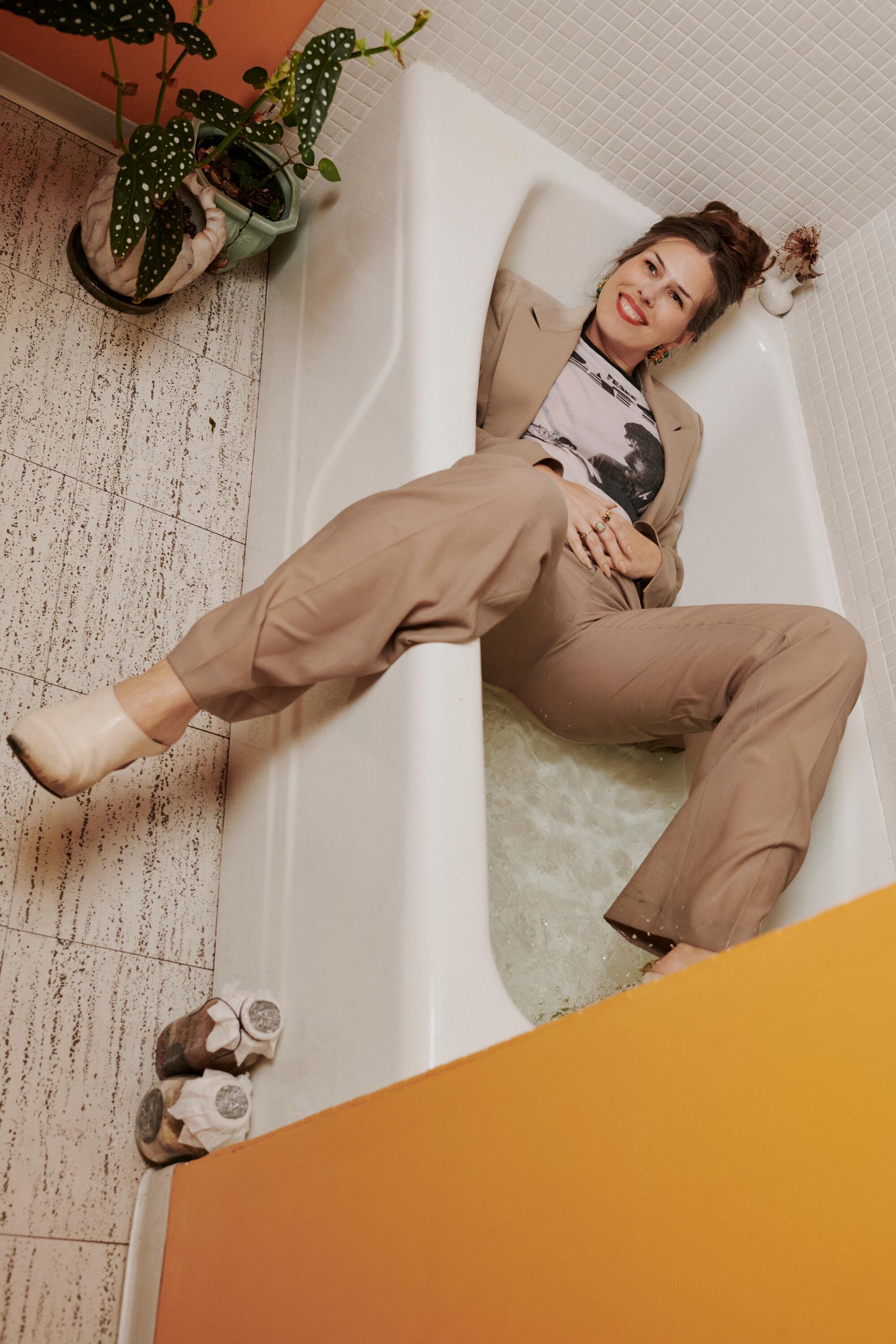
Natasha wears Helmut Lang suit, vintage Frank Zappa shirt from Zappa’s personal collection, Rejina Pyo shoes, Bottega Veneta earrings, Mondo Mondo ring.
ED: What were you aiming for with his costume?
NNT: We referenced some Fela Kuti images, but also the idea of someone who acquires clothes and then really makes them their own. Someone who finds a pair of pants and makes them look sick by styling them in a specific way. That was so important because we didn’t want it to look or feel new, typical, or trendy.
ED: How did you get into costume design?
NNT: I went to the School of the Art Institute of Chicago because they didn’t make you choose between fashion and fine art, you could do both, which is what I wanted. But eventually I had the rude awakening that you really couldn’t do both. I took every fashion class I could without committing to being in the fashion design program there. A few years in, I realized I didn’t want to sit through a critique and hear people bulls— about “juxtaposition” ever again. I decided to drop out and move back to L.A. and go to helicopter school to be a pilot.
ED: Wait, what?
NNT: There’s a nonprofit program at the Compton Airport. It’s amazing. I’d love to go back and finish my flight hours and get my license. Anyway, while I was there, an old professor friend of mine from the Art Institute called and said, “I’m moving to L.A. to do costumes on this show, I’d love for you to try assisting me.” My first day on set I was like, “this is literally made for me, it combines all my interests.” The pacing, the creative problem solving, the clothes, the character development, all of it. That was it. Day One. I feel very blessed that I found a job where I can make money and do what I love.
ED: What are some movies that made a strong impression on you in terms of costume design?
NNT: There’s so many. I actually just did a symposium about [Jean Paul] Gaultier’s costumes for “The Fifth Element.” I also love his work on “The Cook, the Thief, His Wife & Her Lover.” The costume design really blends with the production design, it’s so artful.
ED: What’s an unexpected shopping tip you tell people?
NNT: This is so cheesy: Be clothes minded, not closed minded. [laughter] I love to go into a shopping experience with the idea that you can really style anything to make it interesting. A game I’ll play with my best friend is we’ll send each other pictures of things and ask, “how would you make this cool?” Like “how would you make a pair of Toms cool?” I love a good challenge.
ED: How do you make a pair of Toms cool?
NNT: The way I would do it is to cast a Toms shoe in a block of resin, and then put another Toms shoe on top of it. So it’s a platform shoe with the Toms inside the platform and then the other one on top.
ED: Please make this shoe.
NNT: Our first question when we start anything is what’s not cool right now, what is no one doing, and how can we use that to our advantage? We did an Yves Tumor music video and I was like, “no one is doing indie sleaze right now, I’m going to cover a pair of jeans in the Strokes patches, that’ll be so weird!” Two years later, the Strokes were playing the Celine show. It’s fun to try to get ahead of the cycle. It’s getting harder to do because with the internet, everything moves so much faster now, people just gobble up trends. But it’s creating an interesting position for designers to be forced to come up with new things that no one’s seen before, that aren’t referential. I think it could be really exciting. Fingers crossed.
Hair & Makeup Paige Wishart
Lighting Director David Lopez
Styling Assistants Margaux Solano, Tommy Petroni
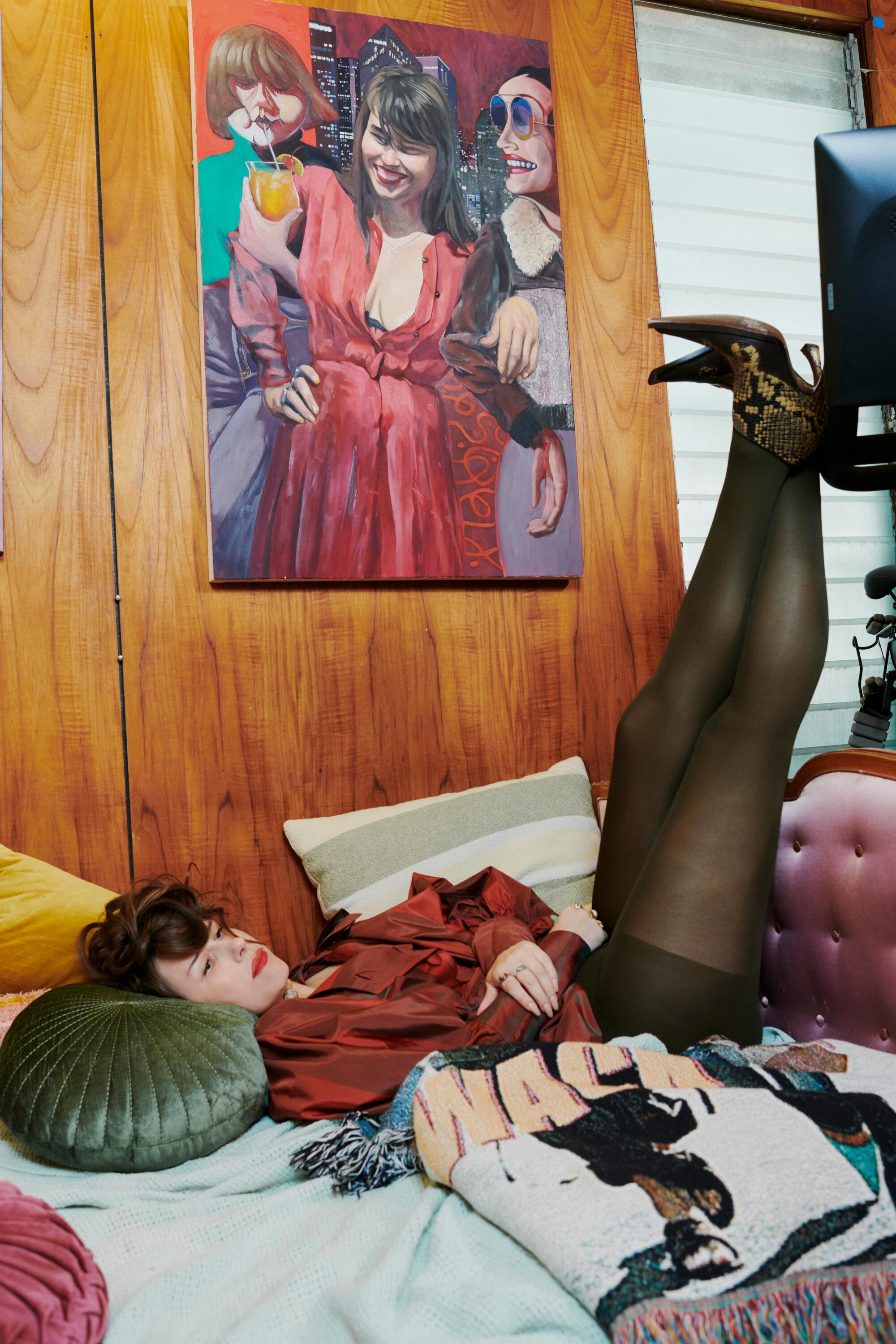
Natasha wears Christian Lacroix jacket, Wolford tights, KNWLS shoes Vivienne Westwood necklace, Gabriella Kiss earrings.
Eugenie Dalland is a writer based in New York. Her essays, profiles and reviews have appeared in the Los Angeles Review of Books, Hyperallergic, BOMB, Cultured Magazine, the Brooklyn Rail and elsewhere. She publishes the arts and culture magazine Riot of Perfume.




Rebecca Gayheart-Dane speaks onstage at the 16th Annual Chrysalis Butterfly Ball on June 3, 2017 in Los Angeles, California.
Alberto E. Rodriguez / Getty Images for Chrysalis Butterfly Ball
hide caption
toggle caption
Alberto E. Rodriguez / Getty Images for Chrysalis Butterfly Ball
The actor Eric Dane, who played Dr. Mark Sloan on the medical drama Grey’s Anatomy, died last month. Dane was 53, and announced he had been diagnosed with ALS last April.
The disease affects nerves in the brain and spinal cord, robbing a person of their ability to walk, breathe and often speak.
Dane’s widow, Rebecca Gayheart Dane, told NPR it was devastating to see his voice slip away.

“He was witty, acerbic, full of humor, and he always had a great story,” Gayheart Dane said. “So, as speaking became harder for him, I watched and witnessed some of his joy fade, and it was really hard and very heartbreaking.”
She is now working with ElevenLabs, an artificial intelligence company that makes synthetic voice software. The company developed a program that helps people with permanent voice loss replicate their voices, including Eric Dane’s.
Gayheart Dane spoke with All Things Considered host Juana Summers about her role as a caregiver and her complex feelings about artificial intelligence.
Listen to the full interview by clicking on the blue play button above.


Over the course of three Sundays, Image contributing photographer Jennelle Fong captured stylish visitors with their bounty at the venerated Hollywood Farmers Market. “It didn’t have to be a Sunday morning, it could’ve been a Saturday evening,” says Fong. Walking up and down the cross of the four corridors of the farmers market felt like a runway: sweat pants mixed with Hermès, coordinated ERL looks, a Converse heel and an actual Balenciaga x Erewhon bag. Even the rolling carts served as extensions of people’s accessories. The energy was radiant, easygoing, alert and nothing short of magical.


Cameron Crotty wears Liberty London sweater, Adidas skirt and Converse Chuck 70 De Luxe Heel High Top sneakers.

Audrea Wah wears thrifted dress and top, customized by herself, pants from Santee Alley and Fumsup Silver necklace.


Paige McGowan wears a Hiroko Hata skirt, vintage shirt and vintage tote.

Detail of Paige McGowan’s vintage tote.

Samantha Klein with Variety Hour petal bag and Miu Miu loafers.

Samantha Klein in vintage and Variety Hour petal bag, and Aaron Klein, right, in vintage and Big Bud Press stripe bag.

Quincy Vadan wears his personal jewelry designs, under the brand Vadan.


At left, Austin Bachlor wears a Bellagio souvenir hat, and polo top, shorts and sneakers from ERL. At right, Carlos Bachlor wears vintage top from The Dig, shorts and boots from ERL and Balenciaga x Erewhon bag.


Pups Oliver and Koko wear a sunny yellow bucket hat.

Steven Pardo carries an Enorme bag.

Anastasiia Yermak in mirrored sunglasses.


“I’m happy to be the age I am, and have no impulse to hide it,” says Harrison Ford. He’s shown above accepting the Screen Actors Guild Life Achievement Award in Los Angeles on March 1.
Valerie Macon/AFP via Getty Images
hide caption
toggle caption
Valerie Macon/AFP via Getty Images
After playing some of the most recognizable and beloved characters in cinematic history, Harrison Ford is not interested in retiring. “Without my work, I really wouldn’t know what to do with myself,” the 83-year-old actor says. “I really do love the work. … It constantly changes, and the people change, and the mission and the opportunity change, and it just makes for an interesting way to live your life.”
Ford initially struggled to find his footing in Hollywood. He worked on-and-off as a carpenter for years before landing the breakthrough role of Han Solo in the original Star Wars film. He went on to star in the Star Wars sequels, as well as the Indiana Jones movies and Blade Runner — all the while frequently performing his own action scenes.

“I don’t want to have to hide the face of the character because it’s a stunt guy,” he says. “I want [the audience] to feel the blow. I want them to see the anxiety. I want them to be there when the decision is made or when the decision is missed. I just want them to be there.”
In the current Apple TV series, Shrinking, Ford plays a therapist named Paul who’s been diagnosed with Parkinson’s disease. Thus far, he says, the show’s writers haven’t shared with him the progression of Paul’s disease. Instead, he says, “Like a true Parkinson’s patient, I don’t really know what’s coming. … I’m sort of living with the symptoms I have been last described as having.”

Recently, Ford teared up while accepting a recognition for lifetime achievement at the Actor Awards. “That speech that I wrote was not crafted to be emotional; it just happened to me,” he says. “I feel slightly embarrassed by it, because I have enough experience with these things to want to be able to manage not to be overcome.”
Interview highlights
On being asked to help in Star Wars auditions while on a carpentry job at Francis Ford Coppola‘s office
I was there sweeping up. I was just finishing the job when George Lucas walked in [who Ford knew from appearing in Lucas’ last film, American Graffiti] … and I’m standing there in my carpenter’s work belt, sweeping up the floor. It turned out to be a fortuitous occasion, because weeks later I would end up being asked if I would do them a favor and read with the other actors who were being considered for the parts. … I never was told that I was ever to be considered, and then at the end of the process, I guess they ended up with two groups of three people that were in final consideration. I’ve always been amused that in the second group, the character of Han Solo would have been played by Chris Walken. I would have loved to see that.
On his most famous ad-lib in a film

[It’s] the line in Star Wars where Princess Leia tells me that she loves me and I say, “I know,” instead of saying “I love you too,” which is the scripted line. Simply the impulse was to be more in character. And George Lucas, who had written the line, was not so happy that I didn’t give him the original version. But I really felt strongly about it. So he made me sit next to him when he previewed the film in a public movie theater in San Francisco and it got … a good laugh. And so he accepted it and left it in.
On seeing Star Wars for the first time on screen

I was blown away. I mean, I was really shocked by the power of the film. We shot in England and our English crew were not used to something like Star Wars, and so they were pretty sure that it was going to be a disaster. And we weren’t far from that opinion, ourselves, the actors.
On performing an emergency landing while flying solo in a vintage World War II airplane
Let’s just start by saying that it was a mechanical failure. … It was a 74-year-old airplane, and I was 74 years old at the time. .. Four hundred feet in the air above the airport, the engine quit. And it’s my home airport, and I was familiar with the surrounding terrain, which is cluttered with houses, wires and cars, and people. So I turned to a golf course that was there. …

In my ear was the very clear voice of one of my aviation mentors who always, when talking about mechanical failures or other kinds of failures, the advice was to “fly the airplane as far into the crash as possible.” You think about this thing when you’re a pilot, you think about the potential, the possibility of it happening, and of course you train. So when it happened, it was not really a surprise, and I thought I knew what I had to do to handle it, so I just started doing the things that needed to be done. … I don’t remember actually being scared. [My injuries] were more than described in the newspaper, but I’m over them all, thank you. I got my license back and continue to fly. … I am not a thrill seeker. I am a very conservative pilot. It’s not that I do crazy stuff for the fun of it.
On objecting to the Vietnam War draft
I was facing being drafted and I hired a lawyer to represent me to the draft board. I had to explain why I might qualify as a conscientious objector. I explained that I did not have a history of religious affiliation. My mother was Jewish, my father Catholic. … I was raised Democrat. I’m quite happy to accept other people’s versions of God, but I found in a Protestant theologian named Paul Tillich, a sentence that said: If you have trouble with the word God, take whatever is central and most meaningful to your life and call that God.
And to me that was life itself, the complexity, the biodiversity, the incredible integration and complexity of nature, to me seemed to be the same thing as God. And so I prepared an explanation that was probably so unusual that it found the edge of a desk and had a lot of things piled on top of it because it didn’t fit a niche. They never got back to me, basically. The draft board never got back to me.
Lauren Krenzel and Nico Gonzalez Wisler produced and edited this interview for broadcast. Bridget Bentz, Molly Seavy-Nesper and Beth Novey adapted it for the web.

Rebecca Gayheart Dane on caring for her late husband, Eric Dane, and synthetic voices

One of Grammarly’s ‘experts’ is suing the company over its identity-stealing AI feature

Spain permanently pulls ambassador from Israel amid Iran war

Dr Oz helps older woman who collapsed during Trump’s speech at Kentucky event

Nearly half of seniors improve with age — and researchers think they know why

Florida High School Football Rankings: Top 25 teams – Oct. 21

Cleary's 21 help Le Moyne down Central Connecticut State 69-64 in OT

How old is Bo Nix? What to know about Oregon quarterback ahead of 2024 NFL Draft

99th annual Pony Swim held in Virginia

Indiana Members Credit Union announced as new anchor tenant at Bottleworks District
Dr Oz helps older woman who collapsed during Trump’s speech at Kentucky event

The Ring: Is the EU a spectator or player as war grips Middle East?

The government is investigating new claims that DOGE misused Social Security data

Reporter’s Notebook: Trump’s SAVE Act ultimatum runs into Senate reality

Not ‘a litre of oil’ to pass Strait of Hormuz, expect $200 price tag: Iran
-

 Massachusetts1 week ago
Massachusetts man awaits word from family in Iran after attacks
-

 Detroit, MI6 days ago
U.S. Postal Service could run out of money within a year
-

 Miami, FL1 week ago
City of Miami celebrates reopening of Flagler Street as part of beautification project
-

 Pennsylvania6 days ago
Pa. man found guilty of raping teen girl who he took to Mexico
-

 Sports1 week ago
Keith Olbermann under fire for calling Lou Holtz a ‘scumbag’ after legendary coach’s death
-

 Michigan2 days ago
Operation BBQ Relief helping with Southwest Michigan tornado recovery
-

 Culture1 week ago
Try This Quiz on the Real Locations in These Magical and Mysterious Novels
-

 Virginia1 week ago
Giants will hold 2026 training camp in West Virginia