Health
Top 5 states with the highest number of safe hospitals, according to new report


NEWYou can now listen to Fox News articles!
Hundreds of hospitals across the country are being recognized for keeping patients safe, and a handful of states stand out for having the highest number of top performers.
Healthgrades, a platform for finding doctors, health care providers and hospitals, released its 2026 Patient Safety Excellence Awards this month, naming 438 hospitals in 40 states that rank among the top 10% nationwide for patient safety.
The analysis highlights centers that excel at preventing serious, avoidable complications during hospital stays based on 13 patient safety indicators.
PATIENT IN CANADA WAITS OVER 12 HOURS IN HOSPITAL EMERGENCY ROOM: ‘I’D RATHER PAY’
Among all states, five had the highest number of hospitals earning the distinction: Texas, Florida, California, Ohio and Pennsylvania.
Hundreds of hospitals across the U.S. were recognized for top patient safety performance in a new report. (iStock)
These states led the nation in total award recipients, with counts ranging from 21 to as many as 62 hospitals, according to Healthgrades data cited by MedPage Today. The concentration of high-performing hospitals in these states may be partly driven by size, the outlet noted.
“The prevalence of recipients in a particular state could be related to something as simple as that state having a large number of hospitals,” a Healthgrades spokesperson told MedPage Today.
Nonetheless, the findings point to strong safety performance across several of the nation’s most populated regions, particularly major metro areas such as Los Angeles, Dallas-Fort Worth and New York City.
CLICK HERE TO SIGN UP FOR OUR HEALTH NEWSLETTER
Patients treated at these hospitals saw significantly lower risks for some of the most common and serious safety events that account for the majority of in-hospital complications, according to a news release.
The rankings are based on data measuring 13 patient safety indicators, including infections and complications. (iStock)
Compared to other hospitals, patients at award-winning facilities were 52.4% less likely to experience an in-hospital fall resulting in fracture; 57.5% less likely to suffer a collapsed lung related to procedures; 67.8% less likely to develop catheter-related bloodstream infections; and 71.9% less likely to develop pressure sores.
Those four indicators alone make up about 78% of all patient safety events, according to Healthgrades, and if all hospitals performed at the same level as this year’s recipients, more than 100,000 patient safety events could have been avoided between 2022 and 2024.
CLICK HERE FOR MORE HEALTH STORIES
“The data behind this year’s Patient Safety Excellence Award highlights how measurable improvements in safety can prevent thousands of complications,” Dr. Alana Biggers, a medical advisor at Healthgrades, said in a statement.
Hospitals were required to report zero cases of serious errors, such as leaving a foreign object behind during a procedure. (iStock)
“Hospitals that prioritize evidence-based safety practices not only achieve better clinical outcomes but also cultivate a culture where patients come first,” Biggers added. “These insights give individuals and families the information they need to make confident and better informed healthcare decisions.”
The award is based on an analysis of Medicare inpatient data, evaluating outcomes such as complications, mortality and preventable safety events. To qualify, hospitals must meet strict clinical thresholds and report zero cases of certain serious errors, such as leaving a foreign object behind during a procedure.
TEST YOURSELF WITH OUR LATEST LIFESTYLE QUIZ
Overall, 250 hospitals ranked in the top 5% nationwide for safety, including facilities affiliated with major systems such as Mayo Clinic, Cleveland Clinic and HCA Healthcare.
Ten states had no hospitals on the list: Alabama, Alaska, Delaware, Iowa, Maine, North Dakota, Vermont, Washington, West Virginia, Wyoming and the District of Columbia.
Some states had no hospitals on the list, highlighting gaps in access to high-quality care. (iStock)
Experts say factors including rural hospital shortages and “care deserts” may contribute to those gaps because patients in underserved areas often face longer travel times and arrive with more advanced conditions.
CLICK HERE TO DOWNLOAD THE FOX NEWS APP
Nearly one-third of this year’s recognized hospitals were new to the list, according to Healthgrades, reflecting continued shifts in hospital performance and safety practices across the country.
The full list of hospitals that received the Patient Safety Excellence Award can be found here.
Fox News Digital has reached out to Healthgrades for additional comment.



Use left and right arrow keys to navigate between menu items.
Use escape to exit the menu.
Sign Up
Create a free account to access exclusive content, play games, solve puzzles, test your pop-culture knowledge and receive special offers.
Already have an account? Login

NEWYou can now listen to Fox News articles!
Yoga is known to boost relaxation, strength and flexibility – and now a new study has found the practice could improve cancer survivors’ quality of life.
A randomized trial led by the University of Rochester Medical Center found that a four-week yoga program significantly reduced insomnia, fatigue, anxiety and mood disturbances after cancer treatment.
The findings were presented last week at the 2026 American Society of Clinical Oncology (ASCO) Annual Meeting in Chicago.
CANCER SURVIVORS MAY SEE SURPRISING BENEFITS FROM ONE SPECIFIC EXERCISE, STUDY SAYS
The study was conducted across multiple U.S. community cancer care sites, including 410 adult cancer survivors averaging 54 years of age. Around 75% were breast cancer survivors, and none of them had practiced yoga regularly within the prior three months.
A randomized trial led by the University of Rochester Medical Center found that a four-week yoga program significantly reduced insomnia, fatigue, anxiety and mood disturbances in cancer survivors. (iStock)
The participants were randomly assigned to two groups. Half of them received only standard survivorship care without the yoga, while the other half received standard care and were also enrolled in the Yoga for Cancer Survivors (YOCAS) program.
As part of the YOCAS program, the survivors completed two instructor-led 75-minute yoga sessions each week, including 18 Gentle Hatha yoga and Restorative yoga poses, breathing exercises and mindfulness training.
EATING MORE FRUITS AND VEGETABLES LINKED TO SURPRISING EFFECT ON SLEEP
Based on questionnaires completed by the patients, the survivors in the yoga group experienced “moderate-to-large” reductions in overall mood disturbance, “small-to-medium” reductions in anxiety and “medium-to-large” reductions in fatigue, the study found.
The improvements in mood and fatigue appeared to be linked to yoga’s beneficial effect on sleep quality, according to the researchers.
As part of the YOCAS program, the survivors completed two instructor-led 75-minute yoga sessions each week, including 18 Gentle Hatha yoga and Restorative yoga poses, breathing exercises and mindfulness training. (iStock)
“This indicates that cancer survivors have an option to alleviate these cancer-related side effects at the same time, without adding another drug,” lead investigator Yuri Choi, PhD, of the Wilmot Cancer Institute, University of Rochester Medical Center, in Rochester, New York, told Fox News Digital.
The study did not reveal any major safety concerns or serious adverse events related to the yoga practice.
“This indicates that cancer survivors have an option to alleviate these cancer-related side effects at the same time, without adding another drug.”
The study did have some limitations, chiefly that the findings are preliminary and have not yet been peer-reviewed for a medical publication.
CLICK HERE FOR MORE HEALTH STORIES
“The sample in our clinical trial was relatively homogeneous, with most participants being women (96%), breast cancer patients (75%), Caucasian (93%), and having some college or higher education (82%),” noted Choi.
“We are adapting our intervention to reach all cancer patients and survivors, including the creation of a mobile app to reach people in rural communities.”
CLICK HERE TO SIGN UP FOR OUR HEALTH NEWSLETTER
The research also excluded patients with metastatic cancer (whose disease had spread to other parts of the body).
The total study was only four weeks, so more research is needed to determine long-term benefits.
If the findings are confirmed by peer-reviewed publications, this could lead to recommendations for structured yoga programs as a non-drug supportive therapy for cancer survivors, the researchers noted. (iStock)
If the findings are confirmed by peer-reviewed publications, this could lead to recommendations for structured yoga programs as a non-drug supportive therapy for cancer survivors, the researchers noted.
Some yoga studios may use different names for Gentle Hatha and Restorative yoga, such as Foundations Yoga or Healing Yoga, Choi noted.
CLICK HERE TO DOWNLOAD THE FOX NEWS APP
“Survivors should also look for certified yoga instructors who have experience working with cancer patients/survivors or individuals with other challenging health conditions,” the researcher advised. “They should not be afraid to ask their oncology team for referrals to qualified instructors in their community.”
TEST YOURSELF WITH OUR LATEST LIFESTYLE QUIZ
Choi also noted that the research did not reveal whether other types of yoga, such as heated-room or rigorous-flow yoga, are safe or beneficial for cancer survivors.
The study was funded by the National Cancer Institute.

Use left and right arrow keys to navigate between menu items.
Use escape to exit the menu.
Sign Up
Create a free account to access exclusive content, play games, solve puzzles, test your pop-culture knowledge and receive special offers.
Already have an account? Login
-
 Entertainment6 minutes ago
Two of music’s most powerful executives maxed out donations to Spencer Pratt
-
 Lifestyle8 minutes ago
Vintage-obsessed millennial parents are driving L.A.’s booming kids’ clothing resale market
-
 Politics14 minutes ago
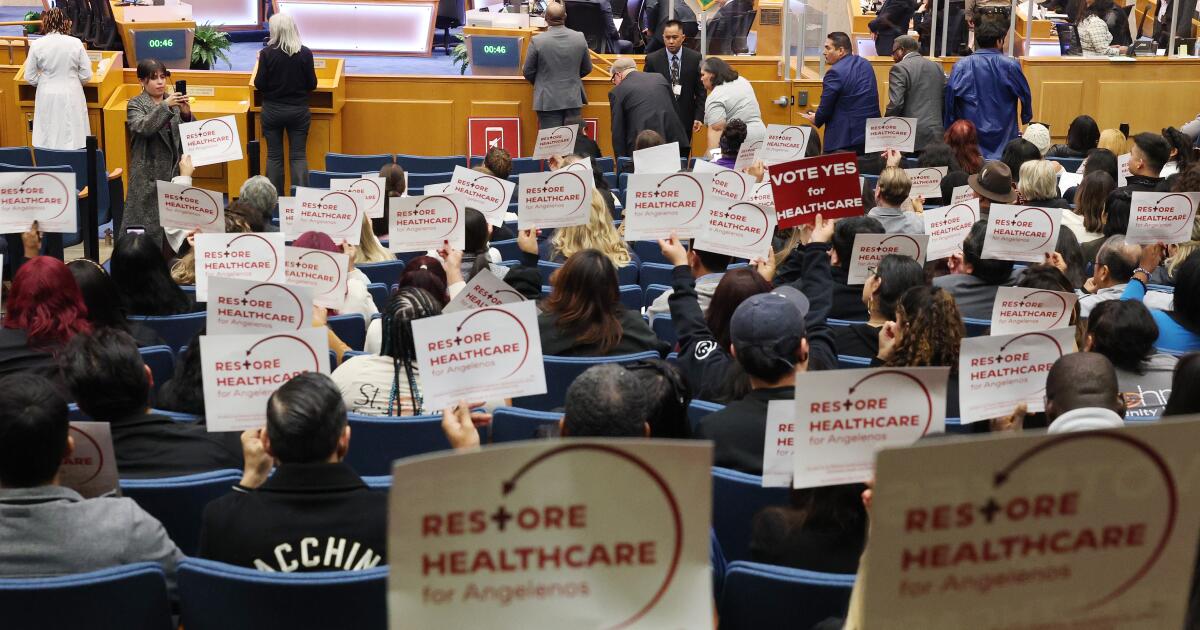
Early returns indicate L.A. County voters have doubts about healthcare sales tax measure
-
 Sports23 minutes ago
Nelly Korda, Michelle Wie West and more: Who to watch at U.S. Women’s Open
-

 World36 minutes ago
EU launches major tech push to break US and China dependence
-
 News58 minutes ago
California’s primary for governor is undecided as candidates vie to be in the top two
-

 Los Angeles, Ca2 hours ago
California primary election results: governor and L.A. mayor races
-

 Detroit, MI3 hours ago
Another bribery scandal hits Detroit. It involves the People Mover

