Health
‘COVID paralyzed my diaphragm’: Marathon runner shares how the infection took his breath away


Someone with COVID-19 might expect to experience fatigue, cold and flu symptoms, and loss of taste and smell — but a paralyzed diaphragm would likely not be on the radar.
It was certainly a surprise to Gerald Branim, 55, a runner from Tennessee. His life took a drastic turn when COVID-19 damaged his lungs and diaphragm to the extent that he was unable to run or walk for a year.
Branim and his doctor, Matthew Kaufman of the Institute of Advanced Reconstruction in New Jersey, joined Fox News Digital in an interview to discuss Branim’s ordeal and recovery.
LARGEST-EVER COVID VACCINE STUDY LINKS SHOT TO SMALL INCREASE IN HEART AND BRAIN CONDITIONS
When Branim got COVID in Feb. 2021, he was a fit, healthy 52-year-old who ran marathons.
In spite of that, the infection caused significant lung damage. He spent two weeks in the hospital and three months out of work.
Gerald Branim, 55, was a marathon runner when he got COVID, which led to a paralyzed diaphragm that stopped him in his tracks. (Institute for Advanced Reconstruction)
For two months after leaving the hospital, Branim used a walker as he continued struggling with lung complications.
“For someone who had run marathons, it was quite humbling to have to walk with a walker for three months,” he said.
After rounds of high-dose steroids and lots of antibiotics, Branim’s chest X-rays finally showed that his lungs had cleared — but he was still having trouble functioning.
LONG COVID IS HIGHEST IN THESE STATES, SAYS NEW CDC REPORT
“I still couldn’t go upstairs without my oxygen dropping severely,” he recalled. “I couldn’t run 100 yards without my oxygen dropping into dangerous levels. I was severely out of breath.”
“That’s when they started saying something else was going on — that this shouldn’t be happening.”
“I couldn’t run 100 yards without my oxygen dropping into dangerous levels. I was severely out of breath.”
After 10 months of not being able to walk or run, Branim’s condition was finally diagnosed via a “sniff test,” which is also called a chest fluoroscopy or a video chest X-ray, where the patient is asked to breathe in and out.
Any paralysis will show up on the scan, as the diaphragm won’t move upon breathing.
What to know about diaphragm paralysis
Diaphragm paralysis — which is a “pretty rare condition,” according to Kaufman, Branim’s doctor — is paralysis of the diaphragm muscle, which is the primary breathing muscle.
Previous studies have estimated that the condition affects only about 1.31% of the population. In about 95% of cases, only one side is paralyzed, the doctor noted.
“We have two diaphragms, one on the right, one on the left,” he said.
Branim, far right, is pictured with his doctor, Matthew Kaufman, center, and another patient at the half-marathon they ran together after Branim’s surgery. (Institute for Advanced Reconstruction)
In cases where both sides are paralyzed, symptoms will be much more severe, usually requiring the patient to be put on oxygen.
“It’s become sort of a phenomenon,” Kaufman told Fox News Digital. “The phrenic nerve, which is the nerve that controls the diaphragm, seems to be an area where the COVID virus can have an impact.”
In some ways, he said, the condition can be considered part of long COVID, which is when symptoms of the virus linger for weeks, months or even years after infection.
SHOULD THE CDC DROP ITS 5-DAY COVID ISOLATION GUIDELINES? DOCTORS WEIGH IN
Most people with diaphragm paralysis won’t have difficulty breathing while sitting. Symptoms will typically emerge with exertion, such as walking or exercising, or when changing positions, such as lying flat in bed or bending over to tie their shoes, Kaufman said.
Some people are more susceptible than others, the doctor noted.
“We know that viruses tend to attack nerves in the body, as we’ve seen in Bell’s palsy,” he said. “And now we’re seeing it with COVID causing injury to the phrenic nerve.”
Branim set a goal of running a half-marathon within a year of his surgery date, which he achieved alongside his doctor in April 2023. (Institute for Advanced Reconstruction)
Because the condition is rare to begin with, he said, it’s not something that’s universally known.
“And then you take a condition like COVID, which causes respiratory symptoms from inflammation in the airways and lungs, and then you tie in what we consider to be a neuromuscular problem,” Kaufman said.
“A lot of times, the physician or patient will attribute it to airway inflammation, when in fact it’s a problem related to nerves and muscles that are part of the respiratory system.”
ASK A DOC: ‘WHEN IS A COUGH SOMETHING TO WORRY ABOUT?’
In some cases, patients will recover on their own, Kaufman said.
“We usually recommend a period of about six to 12 months of physical therapy, breathing exercises and cardiovascular fitness to try to see if this will come back on its own,” he said.
If improvement is not noticed in that time frame, surgical intervention becomes a possibility.
Branim emphasized the importance of patients serving as their own advocates. “Doctors are human — they don’t know everything,” he said. “So you have to advocate for yourself.” (Institute for Advanced Reconstruction)
In 2020 and 2021, Kaufman said he saw an uptick of patients who experienced diaphragm paralysis after having COVID. Although he is still seeing some cases, they are starting to trail off a bit.
“That could be because the classic COVID is not as virulent or severe,” he said. “Or maybe it’s because more people are immunized.”
Although the condition is generally not life-threatening, it can be more severe in patients who have existing respiratory conditions.
Racing toward recovery
After Branim’s diagnosis, his lung doctor advised him to continue to give it time to heal.
“But it wasn’t getting any better,” he said. “And I just wasn’t satisfied with that being my new quality of life.”
‘WELLNESS SHOTS’ AT HOME CAN HELP YOU BEAT THE COLD THAT’S HAMPERING YOU: TRY THE RECIPE
That’s when Branim turned to Google to research surgical options. He came across an article by Kaufman, a plastic and reconstructive surgeon who specializes in an area called peripheral nerve microsurgery.
Kaufman specializes in conditions that cause either pain or paralysis due to nerve damage of the peripheral nervous system.
After meeting with Kaufman in a telehealth visit, Branim was identified as a prime candidate for the surgery, which is called phrenic nerve reconstruction.
“It wasn’t getting any better — and I just wasn’t satisfied with that being my new quality of life.”
If he had waited much longer, he said, his diaphragm muscle would have atrophied and the surgery would no longer have been possible.
After a lot of back and forth with the insurance company, Branim finally got the green light to travel from Nashville to New Jersey for the procedure.
The surgery went smoothly, although Branim was told that it wouldn’t be an immediate improvement. Once the nerve is fixed, the muscle still needs time to strengthen and rehabilitate.
Studies have estimated that the condition affects only about 1.31% of the population. In about 95% of cases, only one side is paralyzed. (Institute for Advanced Reconstruction)
“Dr. Kaufman told me that it would probably take a year or two to recover fully, and was preaching patience — but I’m not a patient man in the slightest sense of the word,” Branim laughed.
He set a goal of running a half-marathon within a year of his surgery date.
After four weeks, Branim slowly began exercising again. After six months, he decided to lace up his running shoes and give it a try.
“My very first run after the surgery, I ran five miles,” he said. “I literally cried. At that point, it was like a light switch had been flipped.”
MASK MANDATES RETURN TO HOSPITALS IN NYC, SEVERAL OTHER STATES AMID RISE IN COVID, FLU CASES
Within six months, Branim had not only regained his ability to run, but exceeded his original goals, culminating in a half-marathon in April 2023.
In a triumphant twist, Kaufman, who is also a runner, joined his patient in completing the race in Asbury Park, New Jersey.
Now, Branim aims to raise awareness about diaphragm paralysis, an often-overlooked condition that is not on most doctors’ or patients’ radars.
Previous studies have estimated that the condition affects only about 1.31% of the population. In about 95% of cases, only one side is paralyzed. (iStock)
“None of my doctors had even heard of this surgery,” he said. “Had I not found the article about Dr. Kaufman and another runner online, I would have never been able to have the surgery — and I would absolutely not be running today.”
Branim emphasized the importance of patients serving as their own advocates.
CLICK HERE TO SIGN UP FOR OUR HEALTH NEWSLETTER
“Doctors are human — they don’t know everything,” he said. “So you have to advocate for yourself.”
For patients who are experiencing shortness of breath with exertion that persists for several months, Kaufman recommends visiting a primary care physician or pulmonary physician to get the necessary testing.
“While most tests will find more common ailments, it definitely makes sense to keep a paralyzed diaphragm on the list of things to rule out.”
For more Health articles, visit www.foxnews/health.


Use left and right arrow keys to navigate between menu items.
Use escape to exit the menu.
Sign Up
Create a free account to access exclusive content, play games, solve puzzles, test your pop-culture knowledge and receive special offers.
Already have an account? Login

NEWYou can now listen to Fox News articles!
Yoga is known to boost relaxation, strength and flexibility – and now a new study has found the practice could improve cancer survivors’ quality of life.
A randomized trial led by the University of Rochester Medical Center found that a four-week yoga program significantly reduced insomnia, fatigue, anxiety and mood disturbances after cancer treatment.
The findings were presented last week at the 2026 American Society of Clinical Oncology (ASCO) Annual Meeting in Chicago.
CANCER SURVIVORS MAY SEE SURPRISING BENEFITS FROM ONE SPECIFIC EXERCISE, STUDY SAYS
The study was conducted across multiple U.S. community cancer care sites, including 410 adult cancer survivors averaging 54 years of age. Around 75% were breast cancer survivors, and none of them had practiced yoga regularly within the prior three months.
A randomized trial led by the University of Rochester Medical Center found that a four-week yoga program significantly reduced insomnia, fatigue, anxiety and mood disturbances in cancer survivors. (iStock)
The participants were randomly assigned to two groups. Half of them received only standard survivorship care without the yoga, while the other half received standard care and were also enrolled in the Yoga for Cancer Survivors (YOCAS) program.
As part of the YOCAS program, the survivors completed two instructor-led 75-minute yoga sessions each week, including 18 Gentle Hatha yoga and Restorative yoga poses, breathing exercises and mindfulness training.
EATING MORE FRUITS AND VEGETABLES LINKED TO SURPRISING EFFECT ON SLEEP
Based on questionnaires completed by the patients, the survivors in the yoga group experienced “moderate-to-large” reductions in overall mood disturbance, “small-to-medium” reductions in anxiety and “medium-to-large” reductions in fatigue, the study found.
The improvements in mood and fatigue appeared to be linked to yoga’s beneficial effect on sleep quality, according to the researchers.
As part of the YOCAS program, the survivors completed two instructor-led 75-minute yoga sessions each week, including 18 Gentle Hatha yoga and Restorative yoga poses, breathing exercises and mindfulness training. (iStock)
“This indicates that cancer survivors have an option to alleviate these cancer-related side effects at the same time, without adding another drug,” lead investigator Yuri Choi, PhD, of the Wilmot Cancer Institute, University of Rochester Medical Center, in Rochester, New York, told Fox News Digital.
The study did not reveal any major safety concerns or serious adverse events related to the yoga practice.
“This indicates that cancer survivors have an option to alleviate these cancer-related side effects at the same time, without adding another drug.”
The study did have some limitations, chiefly that the findings are preliminary and have not yet been peer-reviewed for a medical publication.
CLICK HERE FOR MORE HEALTH STORIES
“The sample in our clinical trial was relatively homogeneous, with most participants being women (96%), breast cancer patients (75%), Caucasian (93%), and having some college or higher education (82%),” noted Choi.
“We are adapting our intervention to reach all cancer patients and survivors, including the creation of a mobile app to reach people in rural communities.”
CLICK HERE TO SIGN UP FOR OUR HEALTH NEWSLETTER
The research also excluded patients with metastatic cancer (whose disease had spread to other parts of the body).
The total study was only four weeks, so more research is needed to determine long-term benefits.
If the findings are confirmed by peer-reviewed publications, this could lead to recommendations for structured yoga programs as a non-drug supportive therapy for cancer survivors, the researchers noted. (iStock)
If the findings are confirmed by peer-reviewed publications, this could lead to recommendations for structured yoga programs as a non-drug supportive therapy for cancer survivors, the researchers noted.
Some yoga studios may use different names for Gentle Hatha and Restorative yoga, such as Foundations Yoga or Healing Yoga, Choi noted.
CLICK HERE TO DOWNLOAD THE FOX NEWS APP
“Survivors should also look for certified yoga instructors who have experience working with cancer patients/survivors or individuals with other challenging health conditions,” the researcher advised. “They should not be afraid to ask their oncology team for referrals to qualified instructors in their community.”
TEST YOURSELF WITH OUR LATEST LIFESTYLE QUIZ
Choi also noted that the research did not reveal whether other types of yoga, such as heated-room or rigorous-flow yoga, are safe or beneficial for cancer survivors.
The study was funded by the National Cancer Institute.

Use left and right arrow keys to navigate between menu items.
Use escape to exit the menu.
Sign Up
Create a free account to access exclusive content, play games, solve puzzles, test your pop-culture knowledge and receive special offers.
Already have an account? Login
-
 Entertainment6 minutes ago
Two of music’s most powerful executives maxed out donations to Spencer Pratt
-
 Lifestyle9 minutes ago
Vintage-obsessed millennial parents are driving L.A.’s booming kids’ clothing resale market
-
 Politics14 minutes ago
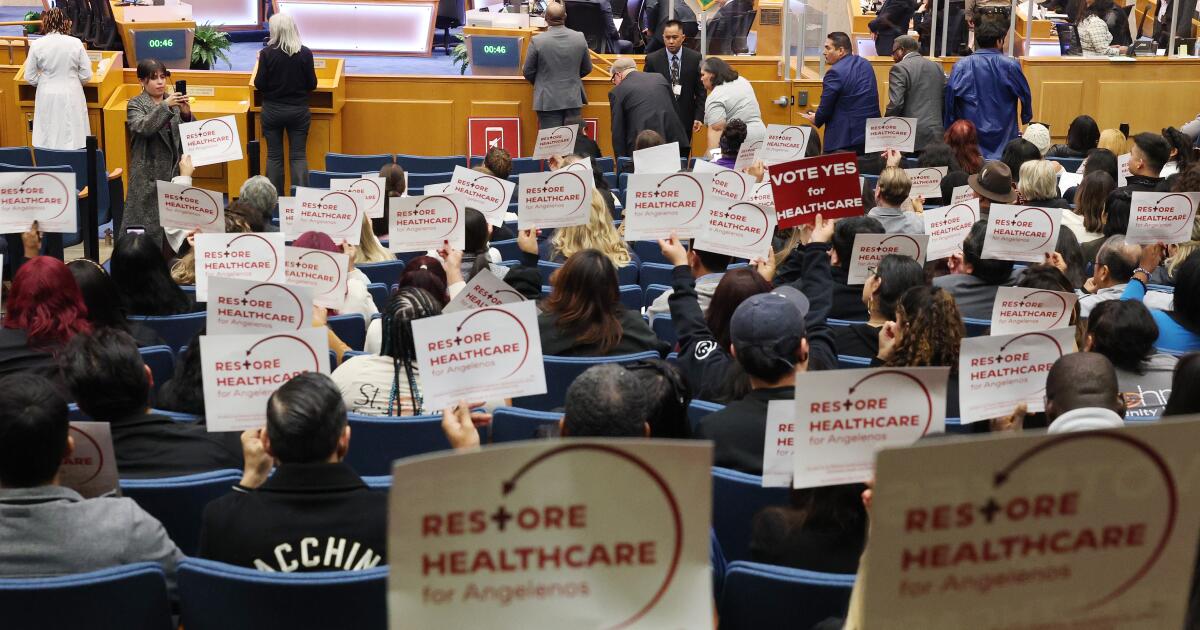
Early returns indicate L.A. County voters have doubts about healthcare sales tax measure
-
 Sports24 minutes ago
Nelly Korda, Michelle Wie West and more: Who to watch at U.S. Women’s Open
-

 World36 minutes ago
EU launches major tech push to break US and China dependence
-
 News59 minutes ago
California’s primary for governor is undecided as candidates vie to be in the top two
-

 Los Angeles, Ca2 hours ago
California primary election results: governor and L.A. mayor races
-

 Detroit, MI3 hours ago
Another bribery scandal hits Detroit. It involves the People Mover

