Fitness
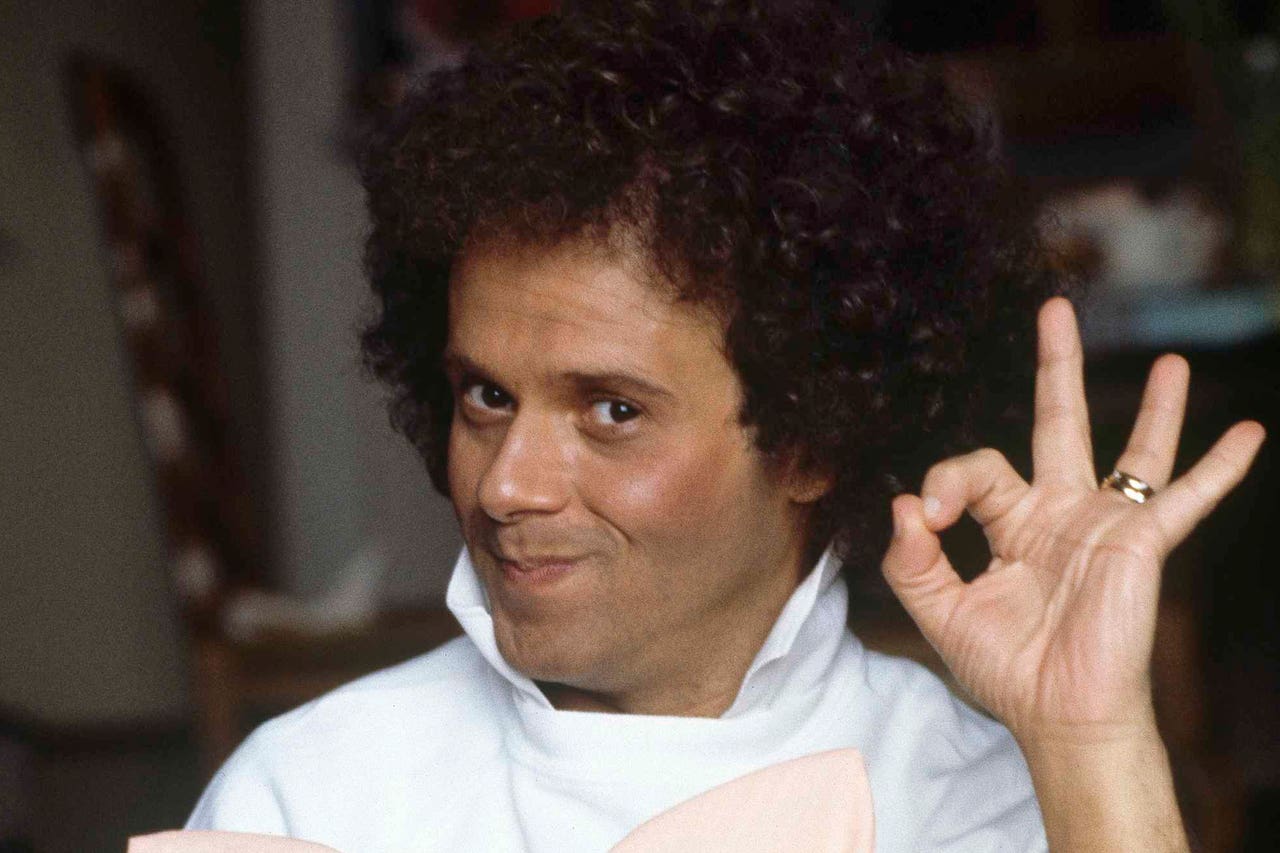
US fitness guru Richard Simmons dies aged 76


US TV fitness guru Richard Simmons has died a day after his 76th birthday.
Famously hyperactive, he built a mini-empire in trademark tank tops and short shorts by urging the overweight to exercise and eat better.
Simmons died at his home in Los Angeles on Saturday, his publicist, Tom Estey, said in an email to the Associated Press. He gave no further details.
Los Angeles police and fire departments said they responded to a house where a man was declared dead from natural causes.
Simmons, who revealed in March that he had been diagnosed with skin cancer, had recently dropped out of sight, sparking speculation about his health and wellbeing. His death was first reported by TMZ.
As a teenager, Simmons weighed more than 19 stone but went on to become a master of many media forms, sharing his hard-won weight-loss tips as host of the Emmy-winning daytime Richard Simmons Show and author of best-selling books and the diet plan Deal-A-Meal.
He also opened exercise studios and starred in exercise videos, including the hugely successful Sweatin’ To The Oldies” line, which became a cultural phenomenon.
“My food plan and diet are just two words – common sense. With a dash of good humour,” he told the Associated Press in 1982. “I want to help people and make the world a healthier, happy place.”

Simmons embraced mass communication to get his message out, despite becoming the butt of jokes for his outfits and flamboyant flair.
He was a sought-after guest on TV shows led by Merv Griffin, Mike Douglas and Phil Donahue. But David Letterman would prank him and Howard Stern would tease him until he cried.
He was mocked in Neil Simon’s The Goodbye Girl on Broadway in 1993, and Eddie Murphy put on white make-up and dressed like him in The Nutty Professor”, screaming “I’m a pony!”
Asked if he thought he could motivate people by being silly, Simmons said: “I think there’s a time to be serious and a time to be silly. It’s knowing when to do it.
“I try to have a nice combination. Being silly cures depression. It catches people off guard and makes them think. But in between that silliness is a lot of seriousness that makes sense. It’s a different kind of training.”

Simmons’ daytime show was seen on 200 TV stations in America, as well as in Australia, New Zealand, the Philippines, Japan and South America. His first book, Never Say Diet, was a best-seller.
He was known to counsel the severely obese, including Rosalie Bradford, who held records for being the world’s heaviest woman, and Michael Hebranko, who credited Simmons for helping him lose 700lb (50 stone).
Simmons put real people – chubby, balding or non-telegenic – in his exercise videos to make the fitness goals seem reachable.
Throughout his career, Simmons was a reliable critic of fad diets, always emphasizing healthy eating and exercise plans.
“There’ll always be some weird thing about eating four grapes before you go to bed, or drinking a special tea, or buying this little bean from El Salvador,” he told the AP in 2005 as the Atkins diet craze swept the country.
“If you watch your portions and you have a good attitude and you work out every day you’ll live longer, feel better and look terrific.”
Simmons was a native of New Orleans, a chubby boy named Milton by his parents. He renamed himself “Richard” around the age of 10 to improve his self-image.
He would tell people he ate to excess because he believed his parents liked his older brother more. He was teased by schoolmates and ballooned to around 14 stone (200lb).
Simmons told the AP his mother watched exercise guru Jack LaLanne’s TV show religiously when he was growing up, but he was not keen on the fitness fanatic.
“I hated him,” he said. “I wasn’t ready for his message because he was fit and he was healthy and he had such a positive attitude, and I was none of those things.”
Simmons went to Italy as a foreign exchange student and ended up doing peanut butter adverts and bacchanalian eating scenes for director Federico Fellini in his film Fellini Satyricon.
He told the AP: “I was fat, had curly hair. The Italians thought I was hysterical. I was the life of the party.”
His life changed after receiving an anonymous letter.
“One dark, rainy day I went to my car and found a note. It said ‘Dear Richard, you’re very funny, but fat people die young. Please don’t die’.
He said he was so stunned that he went on a starvation diet that left him thin but very ill.

After the crash diet, he regained four-and-a-half stone (65lb), but eventually, he was able to devise a sensible plan to take off the pounds and keep them off.
“I went into the business because I couldn’t find anything I liked,” he said.
When Simmons had not been seen in public for several years, some news outlets speculated that he was being held hostage in his own house.
In telephone interviews with Entertainment Tonight and the Today show, Simmons refuted the claims and told his fans he was enjoying the time by himself.
Film-maker/writer Dan Taberski, one of his regular students, launched a podcast in 2017 called Missing Richard Simmons.
In 2022, Simmons broke his six-year silence, with his spokesman telling the New York Post that the beloved fitness star was “living the life he has chosen”.
One of the online tributes after Simmons’ death was from actor-comedian Pauly Shore, who previously developed an unauthorised biopic of Simmons, which Simmons objected to at the time.
“I just got word like everyone else that the beautiful Richard Simmons has passed,” he said in an Instagram post.
“I hope you’re at peace and twinkling up in the heavens … You’re one of a kind, Richard. An amazing life. An amazing story.”



Walking and running share a number of benefits — but what about that sweet middle ground between the two?
Advertisement
Cleveland Clinic is a non-profit academic medical center. Advertising on our site helps support our mission. We do not endorse non-Cleveland Clinic products or services. Policy
“Jogging is about creating a steady pace,” says sports and exercise medicine specialist Leonardo Oliveira, MD. “Instead of focusing on speed, you’re focused more on endurance with good, quality steps.”
Before your next jaunt, Dr. Oliveira shares the many benefits of jogging and how it can help improve your overall health and wellness.
9 benefits of jogging
Unlike running, where you’re focused on targeting different heart rate zones, jogging involves keeping a more stable and persistent pace. If you’re jogging at a moderate intensity, for example, your target heart rate will usually fall into zone 2, at 60% to 70% of your max heart rate.
“When you’re jogging, you should be able to carry on a conversation as you breathe through your nose,” says Dr. Oliveira. “If you’re doing just 15 minutes of jogging three times a week, you’re already going to notice the benefits.”
Here’s how you can benefit from jogging.
1. Reduces stress
Jogging, like other exercises, can help decrease your stress levels. As an aerobic exercise, it helps release endorphins, which can boost your mood and create feelings of euphoria or satisfaction. Not only does it provide an outlet for pent-up energy, but jogging outside also allows you to spend more time in nature, which provides even more mental health benefits.
“Research shows exercise can be as effective as medication when treating depression because of its wide-ranging benefits,” says Dr. Oliveira.
2. Burns calories
Jogging is a full-body exercise that offers a higher calorie burn than some other aerobic exercises. According to the widely used Compendium of Physical Activities, jogging burns about 7.5 calories per kilogram of body weight each hour. That means you can burn about:
- 8 times as many calories as sitting quietly
- 4 times as many calories as walking
- 2.6 times as many calories as stationary cycling
“Jogging will burn more calories in a shorter period of time than cycling, especially if you’re not used to exercising,” reports Dr. Oliveira.
3. Improves insulin resistance and boosts metabolism
Insulin resistance is one of the biggest barriers to having a healthy metabolism. Insulin helps your body break down glucose for energy. But if your body can’t do that, your metabolism slows down, leading to:
- Lower energy levels
- Weight gain
- An inability to burn fat
“Exercising at higher intensities helps increase metabolism and insulin resistance,” says Dr. Oliveira. “But researchers have also found that even lower-intensity exercises, like jogging, for longer periods of time can have the same effect.”
4. Strengthens your heart
Jogging also has positive impacts on your heart and its ability to pump blood to the rest of your body. That’s because it contributes to hypertrophy, or the strengthening of your heart’s muscle tissues.
“As you develop endurance, the amount of blood in one pump increases,” explains Dr. Oliveira. “When your heart gets stronger, it contracts more efficiently, which decreases your resting heart rate.”
5. Improves lung expansion and gas exchange
The more you work on building endurance and stamina, the more likely it is that you’ll improve your overall ability to breathe — both at rest and while jogging.
“Consistent aerobic exercise helps your lungs get stronger and more efficient,” says Dr. Oliveira. “Over time, you won’t need to breathe as often because each breath brings in more oxygen than before.”
6. Activates muscles
Jogging activates major muscle groups, including your:
- Quads
- Hamstrings
- Glutes
- Core
- Back
“Strength training is a good complement to jogging because it can help strengthen all the areas of your body,” says Dr. Oliveira. “This can help you handle longer distances.”
7. Reduces stiffness
“Jogging is one of those activities where once you get going, you start to feel better,” notes Dr. Oliveira. “It’s an exercise that helps warm up your muscles and lubricate your joints, which can help with the overall sense of stiffness that comes with age.”
That said, jogging is still a high-impact exercise because it forces you to bear down weight as your feet hit the pavement. Consider working with a physical therapist or athletic trainer to reduce the risk of further injury if you:
- Have arthritis
- Have an active injury
- Had previous sprains or fractures in your lower body
8. Improves endurance
“The more you jog, the more you’ll increase your functional aerobic capacity,” says Dr. Oliveira. “Someone who jogs regularly will have better physical fitness that will help them last longer on a bike or a walk than someone who’s just getting started.”
Your ability to breathe and move also extends to other daily activities that demand cardiovascular strength and endurance, like climbing stairs.
9. Provides better quality of life and other mental health benefits
Research shows that any amount of jogging — even just once a week — can improve your quality of life and lower your risk of dying from cancer and cardiovascular-related issues.
“Jogging is a great form of exercise, but it’s not the only one,” notes Dr. Oliveira. “The most important thing is to work on being healthy and strong. And for a lot of people, if you’re looking to advance your physical fitness, jogging is a good place to start.”
Fitness
Michelle Yeoh, 63, uses ‘exercise snacking’ to stay fit – here’s why mini workouts have big benefits

As an increasing number of scientific studies are published citing the benefits of ‘exercise snacking’ – short bouts of physical activity sprinkled throughout the day – one celeb has sworn by the practise for several years already. The woman in question? Acting great Michelle Yeoh. Below, we look at the power of mini workouts and why the Oscar-winner’s go-to move is so effective.
Stretching
Michelle revealed to Vogue that she incorporates fitness into her morning routine in a way that’s incredibly time-efficient. ‘Remember, you can do your kicks, you can do your stretches, while you are also waking up,’ she said. Indeed, research has shown that regular stretching can improve flexibility, reduce muscle stiffness and improve blood circulation – all crucial elements of healthy ageing.
And you don’t have to stretch for very long, either. One study found that while static stretching improves flexibility in adults, there was no additional benefit observed beyond four minutes per session or 10 minutes per week. So, it seems that a short stretching sesh (you don’t even have to get out of bed to do it) like Michelle’s is a very worthwhile habit to adopt.
Squats
In her Vogue interview, Michelle also shared that she performs squats most days while doing her skincare routine. Virtually every expert and trainer we speak to here at Women’s Health lists squats as one of the most important moves for women to do as they age. A compound exercise (when multiple muscle groups are used), squats also mirror the vital movement pattern of sitting down and getting back up again.
Numerous studies have highlighted the benefits of this simple exercise for posture, strength and power, and one paper even found that intermittent squat exercises performed during prolonged periods of sitting may boost brain power. Whether you’re squatting mid-moisturise like Michelle or while you’re waiting for the kettle to boil, the science suggests sprinkling squats into your day can be really quite powerful.
The power of habit stacking
As Michelle’s routine shows, adopting a sustainable exercise routine often relies on habit stacking – adding a movement to something you already do every day, like doing your skincare or brushing your teeth.
BRB, we’re just off to do our daily squats.
After years living with endometriosis and undergoing seven rounds of IVF, Radio 4 presenter Emma Barnett turned to training with PT Frankie Holah to rebuild strength and a more positive relationship with her body. Download the Women’s Health UK app to access Frankie’s full training plan.
Get the app

Hannah Bradfield is a Senior Health and Fitness Writer for Women’s Health UK. An NCTJ-accredited journalist, Hannah graduated from Loughborough University with a BA in English and Sport Science and an MA in Media and Cultural Analysis. She has been covering sports, health and fitness for the last five years and has created content for outlets including BBC Sport, BBC Sounds, Runner’s World and Stylist. She especially enjoys interviewing those working within the community to improve access to sport, exercise and wellness. Hannah is a 2024 John Schofield Trust Fellow and was also named a 2022 Rising Star in Journalism by The Printing Charity. A keen runner, Hannah was firmly a sprinter growing up (also dabbling in long jump) but has since transitioned to longer-distance running. While 10K is her favoured race distance, she loves running or volunteering at parkrun every Saturday, followed, of course, by pastries. She’s always looking for fun new runs and races to do and brunch spots to try.
Fitness
I Have a Master’s in Exercise Science. These Are the Only 6 Strength Moves You Need To Build Muscle

Strength training doesn’t have to be complicated. Fitness content on social media may leave you thinking that you should only work out at specific times, use certain weights and incorporate an ever-rotating assortment of moves — but to reap the full benefits of building muscle, you can actually keep things surprisingly simple.
The Physical Activity Guidelines for Americans recommends at least two days of resistance training, aka strength training, for adults each week as part of their workout routines. And those two days need only include six moves, Adrian Chavez, Ph.D., nutrition and health coach, tells TODAY.com.
It’s often the most advanced fitness routines that generate the most buzz online. And while having lots of different strength moves in your arsenal can stave off boredom at the gym, it’s not usually necessary, Chavez explains. Sticking to the basics and staying consistent will give you the most bang for your buck, he adds.
The Most Efficient Strength-Training Moves
The six moves Chavez says are most efficient for improving health and body composition are:
“Those movements cover all of the (major) muscle groups of the body,” Chavez says. “I wouldn’t necessarily say these are the only six movements that you need, but those are the ones that are going to work the largest amount of muscle in each movement.”
Building muscle through strength training can boost longevity, a mood, bone density and more.
It’s also a key factor to improving metabolic health, Chavez points out. Muscle burns calories, even while you’re at rest. So, the more muscle you have, the more calories you’ll burn.
If you’re after efficient results, focusing on these six movements that target the body’s largest muscle groups will get you there since these muscles require the most energy to function.
Which Muscles Does Each Move Target?
The overhead press primarily targets the shoulders, says Chavez. It also works the triceps, the trapezius muscles in your upper back and the core.
Perform a chest press when you’re looking to strengthen your pectoralis muscles, the two largest in the chest. These muscles are responsible for lifting, rotating and pushing.
By including a back row in your strength training routine, you’ll be working your upper back and biceps, says Chavez.
The overhead pull-down or pull-up will strengthen your latissimus dorsi muscles (lats), which extend from the lower back to the armpit. Chavez says you’ll be engaging your biceps, too.
Squats work the quadricep muscles (quads) in the thighs, hamstrings and glutes, says Chavez. They’ll also engage your core, since squats require stability.
Include deadlifts in your routine to challenge your quad muscles in the thigh, hamstrings, glutes and lower back, says Chavez. You can choose between the regular deadlift and the Romanian deadlift, or incorporate both into your workout.
Benefits of a Consistent Strength Training Routine
Studies show that consistency when strength training, rather than the complexity of your workout plan, is what makes the biggest difference for health. Any kind of resistance training compared to none at all improve sstrength, muscle function and endurance regardless of intensity, equipment type and variation, research shows.
These six moves are not the only effective workouts for improving strength and altering body composition, but if you were to stick only to these six, you’d be in great shape, he explains.
Regular strength training will not only improve your physique but also your quality of life. “When you do a deadlift, that’s like picking up your kid,” Chavez says, comparing pull-ups to playing with them on the monkey bars.
“Carrying groceries, moving furniture, all of those things become a lot easier when you build some strength. And … these six movements cover all of the major muscle groups, so that will translate into really changing the way that you experience life,” he adds.
How to Add Variation
Once you’ve committed to a training plan you’ll use again and again, you may also want to mix things up, Chavez says.
To avoid boredom or to add an additional challenge, most of the six moves have variations.
For example, narrow-stance squats isolate the quads. Or you can change the grip during bicep curls to also target the forearms. “Learning slight variations to these primary movements is how you really build out a good routine,” he says.
An ideal workout program includes strength training at least two times a week and additional sessions with a type of cardio you enjoy. Chavez plays basketball, runs and rides his bike in between strength training sessions. He also suggests walking, swimming or rowing.

WATCH: Senate hearing goes silent after Angel Father confronts top Dem over daughter’s death

Another state bans ‘gas station heroin’ as officials warn of deadly risks

Tiger Woods involved in rollover crash in Florida less than 2 weeks before Masters: reports

Fox News AI Newsletter: Family turns down $26M from AI giant to keep farmland

Commentary: How a custody fight over an old dog showed why lawyers should never trust AI to tell the truth

Florida High School Football Rankings: Top 25 teams – Oct. 21

How old is Bo Nix? What to know about Oregon quarterback ahead of 2024 NFL Draft

Cleary's 21 help Le Moyne down Central Connecticut State 69-64 in OT

99th annual Pony Swim held in Virginia

Indiana Members Credit Union announced as new anchor tenant at Bottleworks District
WATCH: Senate hearing goes silent after Angel Father confronts top Dem over daughter’s death

US diplomat Marco Rubio denounces settler violence, tolls in Hormuz strait

Iran-linked hackers have breached FBI Director Kash Patel’s personal emails | CNN Politics

Live: CPAC 2026 Day 2

Video: Will ICE Change Under Its New Leader?
-

 Detroit, MI1 week ago
Drummer Brian Pastoria, longtime Detroit music advocate, dies at 68
-

 Movie Reviews1 week ago
‘Youth’ Twitter review: Ken Karunaas impresses audiences; Suraj Venjaramoodu adds charm; music wins praise | – The Times of India
-

 Sports6 days ago
IOC addresses execution of 19-year-old Iranian wrestler Saleh Mohammadi
-

 New Mexico5 days ago
Clovis shooting leaves one dead, four injured
-
 Business1 week ago
Disney’s new CEO says his focus is on storytelling and creativity
-

 Technology5 days ago
YouTube job scam text: How to spot it fast
-

 Tennessee4 days ago
Tennessee Police Investigating Alleged Assault Involving ‘Reacher’ Star Alan Ritchson
-

 Texas1 week ago
How to buy Houston vs. Texas A&M 2026 March Madness tickets