Fitness
A Bunch of Top-Tier Home Gym Equipment Is up to 52% Off for Prime Day


JUST IN TIME for holiday shopping season and building out your winter workout cave, Amazon is hosting a massive fall savings event as a follow-up to July Prime Day. The retailer’s October Prime Day, dubbed Prime Big Deal Days, is on October 8 and 9—and we’ve spotted steep savings on everything from top tech (Apple included) to mattresses.
Perhaps most notably, you can save up to 52 percent on home fitness equipment right now. These are long-lasting investments selling for hundreds of dollars less than they normally do, so we recommend snagging them while you can. We’re currently seeing deep discounts on some of our favorite rowing machines and adjustable dumbbells—and you’ll want to add these deals to your cart before they sell out or return to full price. Prices can change drastically, and quickly, throughout Amazon’s Prime Day events, so act fast to lock in items you’ve been eyeing.
SHOP ALL AMAZON PRIME DAY DEALS
The Best October Prime Day Fitness Deals

Merach Exercise Bike
Now 20% Off


Flybird Adjustable Weight Bench
Now 27% Off

Bowflex SelectTech 552 Dumbbells
Now 22% Off

Sperax Under Desk Walking Pad
Now 45% Off

Fit Simplify Resistance Exercise Bands
Now 52% Off

ProsourceFit Interlocking Floor Mat Set
Now 13% Off

Aduro Sport Weighted Vest
Now 32% Off

Wolf Tactical Quick-Release Weighted Vest
Now 19% Off

Merach Rowing Machine
Now 35% Off

Toloco Massage Gun
Now 17% Off
Why These Are Our Picks
Of note are the Sperax under-desk treadmill and Merach stationary bike that are currently $200 or less. Both are easy additions to your home gym that help you get your exercise in, whether it’s under your standing desk or in front of your living room TV. If you don’t have a quality piece of cardio at your disposal, your missing out on a huge part of your training. If you’re low on space, opt for a discounted weighted vest, which our team love for its ability to gradually amp up the intensity of body-weight workouts.
You can also score editor-tested adjustable dumbbells from BowFlex for 22 percent off. They range from 10 to 90 pounds, which means you can do a wide range of movements to target different muscle groups. Pair them with a steeply discounted weight bench that can be adjusted based on your workout of choice.
And if you’re really trying to set up a proper home gym, don’t overlook the importance of floor mats, which can provide cushioning for your joints and prevent your floors from getting scuffed up from equipment and weights. On top of that, it just makes the room look cool. No matter what you add to your cart, we recommend acting quickly—and checking back here for the latest deals. After all, Prime Day is, in fact, a sprint…not a marathon.
When Is October Prime Day This Year?
The second Prime Day of the year will take place October 8 and October 9, 2024, but you can expect to see sales before and after those dates. If you spot a great deal, go ahead and snag it, because popular products tend to sell out. If you don’t have time to shop on the actual Prime Day dates, there are still deals to be had, as Amazon has kept the sales going on certain products for as long as they have inventory in the past.
We will be updating this list as new deals hit the site.
Do I Need to Be a Prime Member to Shop Prime Day?
Yes, you must have an Amazon Prime membership to get these discounts, but becoming a member is easy and costs $14.99 a month (or $139 a year). You can also sign up for a 30-day free trial that aligns with the sale. Pro tip: There are two less expensive options worth looking into—a student membership or the Prime Access program.
Shop The Best Prime Day Deals
More Deal Shopping
Prime Day Deals | Prime Day Tech Deals | Prime Day Mattress Deals | Prime Day Grooming Deals | Prime Day Rowing Machine Deals | Prime Day Home Fitness Sales | Prime Day Smartwatch Deals | Prime Day Cole Haan Deals
Charles Thorp is the Fitness and Commerce Editor at Men’s Health, where he shares the best product recommendations in gym equipment, recovery tools, supplements, and more. Following an early life in athletics, Charles became a NASM-certified trainer and began writing programs alongside the most respected coaches in the world.
Since entering the world of fitness content, Charles has had the opportunity to learn from and train alongside high performance individuals from the NFL, UFC, NBA, Formula 1, CrossFit, US Olympics, and Navy SEALs. When he’s not writing about training programs or gear, he can be seen at the gym or in the wild, putting them to the test.



HFA urges targeted trade policies to protect the fitness industry.
This week, HFA submitted comments to the Office of the US Trade Representative (USTR) on two important trade policy dockets that could have significant implications for exercise equipment manufacturers, suppliers, and fitness facility operators.
Section 301 Tariff Proceeding
USTR sought comment on proposed tariffs from its Section 301 forced labor investigation, including possible product exclusions based on domestic availability and economic impact.
HFA submitted comments that advocated excluding exercise/rehabilitation equipment and critical components, citing irreplaceable global supply chains and the industry’s role in public health, chronic disease prevention, and military readiness.
US- China Board of Trade
USTR proposed a new Board to identify non-sensitive products for reciprocal tariff reductions with China.
In comments submitted to USTR, HFA recommended designating exercise equipment as “non-sensitive” and eligible for negotiation, prioritizing products that boost US manufacturing and affordability, and setting criteria recognizing public health, productivity, and military readiness benefits.
The HFA thanks member operators, manufacturers, and suppliers whose data strengthened these submissions. Your efforts are helping HFA advocate for trade policy that supports the fitness industry.


Athletes need to think about stamina and endurance all the time. Whether you’re a runner, a basketball player or a swimmer, your ability to push hard and keep going often determines who wins and who comes out on top.
Advertisement
Cleveland Clinic is a non-profit academic medical center. Advertising on our site helps support our mission. We do not endorse non-Cleveland Clinic products or services. Policy
But endurance and stamina aren’t just important for athletes. They can also affect how easily you tackle everyday activities, like yardwork or helping a friend move.
Exercise physiologist Christopher Travers, MS, explains what sets stamina and endurance apart and how to build up both with a variety of workouts.
How stamina and endurance work together
Stamina and endurance often go hand in hand — but they’re different.
Think of stamina as how hard you can push yourself, and endurance as how long you can maintain that effort.
In car terms, stamina reflects how hard you push on the gas pedal for a quick jump in speed. Endurance reflects how far you can go before running out of fuel.
Together, they help you reach your destination and achieve milestones in your physical performance.
Let’s dig a little bit more into what makes each unique.
What is stamina?
Stamina describes your mental and physical ability to sustain high-intensity effort over a shorter period of time. It’s that quick burst at the starting line, the second-wind sprint you get during the last push of a marathon and the fast acceleration that carries you uphill.
“With stamina, you’re trying to push through at a higher heart rate,” says Travers. “It’s your power, your speed and your repeated burst of effort.”
What is endurance?
Endurance describes your body’s ability to sustain low-to-moderate-intensity activity over very long periods of time. It’s the ability to endure a marathon, miles of cycling and long workout sessions without stopping or decreasing intensity.
“With endurance, you’re learning how to maintain a certain level of intensity for the longest period of time,” says Travers. “You’re focused on your breathing, keeping a steady pace and sticking to correct form so you can go longer without running out of energy.”
How to increase endurance and stamina
Building stamina and endurance involves different approaches to physical fitness. Stamina relies on quick bouts of high-intensity exercises, while endurance is less intense but for longer periods of time.
Working on both simultaneously can improve your performance and make a significant impact on your overall health. Let’s now focus on each one individually.
How to increase stamina
Circuit training is a great way to build stamina because it combines strength and cardio exercises with limited rest. A circuit involves moving through a series of exercises that target different muscle groups with little-to-no break between each one. After completing a circuit, you take a longer recovery before repeating the entire circuit.
“The big thing with stamina workouts is your recovery,” notes Travers. “When you finish an entire circuit made up of several quick exercises, you want a longer recovery so you can come back and do the entire circuit over again at the same high intensity.”
High-intensity interval training (HIIT) can also improve stamina. HIIT alternates short bursts of intense exercise with brief recovery periods, training your body to:
- Work hard even when you’re fatigued
- Recover quickly between exercises
- Tolerate higher levels of exertion
- Use oxygen more efficiently
A stamina workout might combine these approaches by using a circuit of high-intensity exercises followed by a longer recovery period before repeating the circuit.
Exercises commonly used in stamina workouts include:
- Hill sprints
- Box jumps
- Stair climbs
- Mountain climbers
- Jump squats
- Burpees
How to build endurance
To build endurance, you’ll need to learn how to maintain a certain level of intensity for longer stretches of time.
“With endurance, we’re going for that longer, steady state and gradually increasing our time and our distances,” explains Travers. “Endurance requires consistency over weeks and even months.”
It helps to focus on workouts that keep your body moving for extended periods. Cardiovascular exercises are especially effective at building endurance. But strength training can be adapted to improve muscular endurance, training your muscles to work longer before they become fatigued.
When working on endurance, you want to increase the amount of time, distance or reps as you progress through your training.
Common exercises for endurance include:
- Cycling
- Running
- Hiking
- Swimming
- Rowing
- Planks
Final note for the miles ahead
Whether your goal is to move faster, exercise longer or simply keep up with the demands of daily life, stamina and endurance can help you get there. Building both takes consistency and practice. But over time, those efforts can pay off in improved performance, better fitness and greater confidence in what your body can do.
“If you train consistently and you’re seeing progress, both your stamina and endurance are improving,” encourages Travers. “It doesn’t happen overnight. It takes time, practice and attention to your overall health.”
-

 World5 minutes ago
Inside Israel’s mission to train civilians to stop the next Oct 7-like terror attack
-

 Politics11 minutes ago
Trump reveals who he’s eyeing to replace Lindsey Graham
-

 Health17 minutes ago
Notable figures who died from the same heart condition linked to Lindsey Graham’s death
-

 Sports23 minutes ago
Folarin Balogun admits that red-card reversal affected USA World Cup teammates: ‘A lot of outside noise’
-

 Technology29 minutes ago
Humanoid robots perform live surgery in world first
-
 Business35 minutes ago
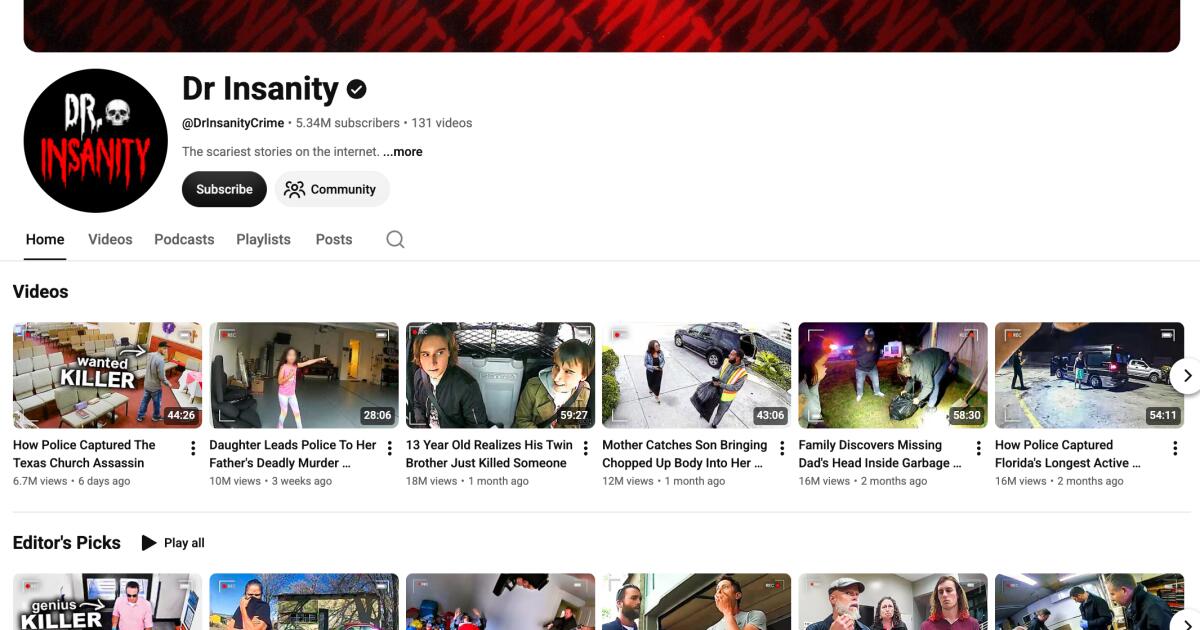
A ‘next generation studio’ for YouTube creators
-
 Entertainment41 minutes ago
Finn Wolfhard is taking ‘control of the narrative’
-
 Lifestyle47 minutes ago
What are your most cherished memories of the 2026 World Cup in L.A.?

