Finance
Pets make for the best financial advisers and motivators. They force you to be more mindful about your spending, study shows


Pets really are becoming the major alternative to having children. In fact, more than half of pet owners not only consider their pets to be a part of their family, but they say they are just as much a part of their family as a human member, according to Pew Research Center.
Pets show affection and can give life more meaning—but they undoubtedly become a major line item in a budget, considering the cost of insurance, vet care, food, shelter, and of course, the trendiest bandanas and leashes. Still, having a pet is considerably more affordable than having a child. Parents can expect to pay between $16,000 to $18,000 per year, according to USDA estimates. Pets, on the other hand, cost their owners a little more than $1,300 per year, according to Empower, a financial services company offering planning, investing, and advice.
While having a pet is more affordable than having a child, these lovable furry friends actually serve as a great catalyst for financial health. Indeed, nearly 40% of people say having a pet inspires them to be more financially responsible, and another 36% says they motivate them to reach their financial goals, according to Empower’s survey of 1,000 pet owners in the U.S.
This is particularly true for Julio Bedolla, a wealth manager with LourdMurray. He and his wife have six dogs, which “significantly impact our spending,” he tells Fortune.
“Regular expenses for food, health care, grooming, and other consistent costs teach owners the importance of budgeting, planning for future expenses, and building emergency funds for unexpected vet trips or paying for vet insurance,” Bedolla says. “Because we plan accordingly, we are able to make it work.”
Pets can be a primer for having kids
While they’re not ready to have kids, Bedolla says caring for pets gives them “an eye-opening sense of responsibility,” and prepares them for making ongoing financial investments. However, he acknowledges that the cost of having a child is still much greater than caring for a pet, especially when you factor in childcare and education.
But pet parents still have to take into consideration their pets when making other major financial decisions, like buying or renting a home. Not all homes are suitable for pets—or even allow them there. This similarly plays into other major costs such as planning and saving for travel.
“You need to factor in pet costs, whether it’s boarding them or taking them with you,” Bedolla says.
Good money habits—and ‘not-so-good’ money habits
Owning three cats—and planning to add a puppy to her household in the next month—has inspired millennial public relations specialist Kristi Hedrick to adopt some good money habits as well as some “not-so-good” money habits, she tells Fortune.
The good money habits include always having money stored away in case an emergency were to happen with one of her pets. Plus, her cats are on a special diet, so she has to incorporate the cost of their food into her monthly budget.
However, “the not-so-good money habits tend to come from wanting to spoil my pets and get them new toys or treats,” Hedrick says. “My animals have plenty of toys, so that’s not always the best way to spend some extra cash that I may have.”
Still, Hedrick and other professionals say it’s “incredibly important” for pet owners to really understand how much it costs to raise a pet. Ali Smith, CEO and founder of dog training company Rebarkable, encourages aspiring pet parents to do their research about the average costs for their breed, as well as any health issues and temperament issues that come with owning that type of animal.
“If you choose to rescue, be aware that with unknown health and temperament issues, you could be facing large health bills and training bills in order to achieve a happy, harmonious home,” Smith says. “Budget for those.”
Pet parents spend the most on golden retrievers, beagles, german shepherds, labrador retrievers, and dachshunds, according to Empower.
Other costs of pet ownership stem from lifestyle choices and employment. The Empower survey shows, however, that pet parents are willing to make major life changes with their pets in mind. Nearly 60% of respondents said they switched jobs for more pet-friendly benefits while the pay was the same. And more than a quarter said they would take a pay cut with flexible hours in order to spend more time with their pet.
“Think critically about your lifestyle,” Smith says. “Do you need support from a doggy daycare? Or a dog walker? All of that costs money. Making that commitment is potentially 14 years of financial commitment. Sure, there’s no college or cars to buy, but [pets] can be a costly luxury in our lives.”



FARGO, N.D. – North Dakota State University’s College of Business has launched the Center for Banking and Finance, a new academic and industry‑engaged hub designed to prepare students for careers in banking and finance while supporting the evolving workforce needs of the region’s financial industry, a release states.
Announced during a press conference at NDSU’s Louise Auditorium at Barry Hall, the center brings together students, faculty and industry partners to expand experiential learning opportunities, strengthen connections to employers, and address emerging trends shaping the financial services industry. The center is housed within NDSU’s College of Business and builds on growing student interest in finance‑related programs.
“The Center for Banking and Finance reflects NDSU’s responsibility as a student‑focused, land‑grant, research university to respond to workforce and economic needs across our state and region,” said Interim President Rick Berg. “By connecting education, industry, and community, this center helps ensure our graduates are prepared to contribute on day one and throughout their careers.”
The center will support undergraduate and graduate students through hands‑on learning experiences, exposure to financial tools and technologies, and direct engagement with financial institutions, regulators and business leaders. It will also serve professionals already working in banking and finance through workshops, training and research‑informed programming aligned with business needs, according to the release.
“The Center for Banking and Finance is about momentum — students who are eager to learn, faculty who are pushing applied scholarship forward, and industry partners who want to shape the future workforce,” said Kathryn Birkeland, Ronald and Kaye Olson dean of the NDSU College of Business. “When education and industry move together, everyone benefits.”
The launch of the Center for Banking and Finance coincides with a series of regional events focused on finance, fintech and economic outlook, including programming with the Bank of North Dakota, the Federal Reserve Bank of Minneapolis and regional business leaders. Together, these events underscore the Fargo‑Moorhead area’s role as a hub for financial dialogue, talent development and economic collaboration.
The center’s foundational banking partners include Dacotah Bank, Gate City Bank, Bell Bank and Western State Bank, who attended the launch and are helping shape early student experiences and industry-informed programming.
The center is led by Mark Jensen, a career banker and longtime adjunct instructor who joined NDSU full-time in 2026 as director of the Center for Banking and Finance.
“The Center for Banking and Finance is designed as a bridge,” Jensen said. “It brings industry into the learning experience in meaningful ways, and it gives students clearer pathways into a wide range of banking and finance careers.”
For students, the center represents a more direct bridge between academic study and professional opportunity.
“As a finance student, experiences outside the classroom make a real difference,” said Tavian Nelson, a senior at NDSU majoring in finance. “Going into college, I knew I wanted to be involved in the finance program but was unsure of what that would look like once I graduated. The school has truly shaped my desired career outcomes with many hands-on experiences, professional leaders, and connections throughout my time here. This center will truly strengthen these experiences for students.”
Initially, the center will focus on experiential learning opportunities, business partnerships and workforce‑aligned programming, with plans to expand offerings as partnerships and resources grow. The center is supported through external funding and business engagement.

FRANKFURT, March 26 (Reuters) – Euro zone banks have limited direct exposure to the war in the Middle East, but the conflict could still generate systemic stress given interconnected vulnerabilities, European Central Bank Vice President Luis de Guindos said on Thursday.
Financial markets have come under stress in recent weeks from the impact of the U.S. and Israeli war on Iran, but the selloff outside the Middle East has been limited, even as some assets remain overvalued.
“Spillovers to the euro area financial sector have so far remained contained,” de Guindos said in a speech. “Direct bank exposures to the region are limited, and the banking system is well positioned with strong profitability and robust capital and liquidity buffers.”
De Guindos argued that even market infrastructure operators, like central counterparties whose services include energy markets, have managed margin requirements effectively, despite the volatility.
Still, there was a broader risk, given interconnections in the financial system, said de Guindos, whose roles at the ECB include monitoring financial stability.
“Amid already elevated global uncertainty, this conflict could trigger the unravelling of interconnected vulnerabilities and cause systemic stress,” he said.
The conflict threatens to derail market sentiment at a time when asset valuations are high, potentially leading to a sharp repricing of risk for leveraged borrowers and sovereigns while amplifying stress in the non-bank financial sector, he said.
On the ECB’s core mandate of ensuring low inflation, de Guindos repeated the bank’s warning that inflation could rise and growth slow on the conflict but argued more time was needed to understand the full impact.
“We are unwavering in our commitment to ensuring that inflation stabilises at our 2% target in the medium term,” he said.
(Reporting by Balazs Koranyi; Editing by Toby Chopra)

TORONTO — Ontario should be prepared for “tougher times” amid global economic disruption, but the government won’t slash public sector jobs to buttress the budget amid uncertainty, the finance minister is signalling ahead of Thursday’s fiscal update.
Other provinces have recently braced against the economic headwinds by forecasting record deficits, raising taxes and cutting front-line jobs, but that will not be Ontario’s approach, Peter Bethlenfalvy says.
“The world has changed — and Ontario must be ready for what change may bring, even if that means being prepared for tougher times,” he said in a pre-budget speech earlier this month.
“As a government, we cannot eliminate uncertainty, but we can mitigate risks with a responsible, balanced fiscal approach that supports public services and infrastructure while maintaining flexibility.”
In that speech, he twice mentioned delivering government programs “efficiently and sustainably,” words that are sometimes used by politicians to signal belt tightening.
“I think it reflects the fact that we’ve got to make sure that the money, the significant investments we’re making in social services, health care, education, gets to the workers who are providing, whether it’s a social worker or a health-care worker or a teacher, and making sure all the money just doesn’t flow to administration,” he said Wednesday in an interview.
Ontario has already tasked hospitals with coming up with a three-year plan to balance their budgets, in a bid to get a handle on growing deficits in the sector, using an assumption of getting two per cent annual funding increases. That is half of the increase they received the previous year.
Some hospitals have already started making some “lower risk” cuts under that plan, the Ontario Hospital Association has said. The province would need to add about $2.7 billion to meet the full operating needs of the hospital sector, the association has said.
The province’s deficit, in the most recent fiscal update earlier this year, stood at $13.4 billion. Bethlenfalvy has been silent on whether the path to balance remains the same as his plan in last year’s budget to get into the black in 2027-28.
Balance, however, has been a moving target. The 2027-28 goal is a year later than Bethlenfalvy projected in the 2024 budget, which itself was a year later than he projected in the 2023 budget.
Ontario’s books are in a relatively good position to be able to stay on the province’s path to balance and lower the net-debt-to-GDP ratio, as long as it doesn’t use fiscal breathing room to announce new spending commitments, according to a budget preview from Desjardins.

Indiana coach Cignetti sends message to star transfer with pre-practice dress code lesson

Drone food delivery launches in New Jersey

FKA twigs sues ex-boyfriend Shia LaBeouf over ‘unlawful’ NDA
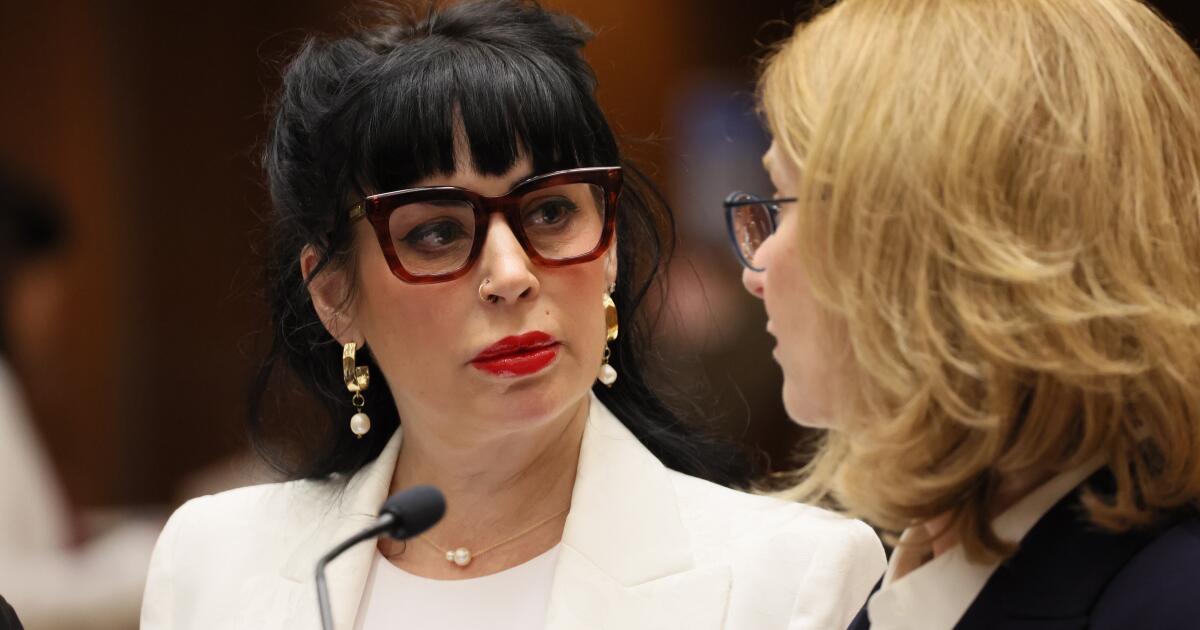
LAPD chief backed cops who shot at author, Weezer bassist’s ex; commission overruled him

What European Luxury Can Learn From American Fashion

Florida High School Football Rankings: Top 25 teams – Oct. 21

How old is Bo Nix? What to know about Oregon quarterback ahead of 2024 NFL Draft

Cleary's 21 help Le Moyne down Central Connecticut State 69-64 in OT

99th annual Pony Swim held in Virginia

Indiana Members Credit Union announced as new anchor tenant at Bottleworks District

Rubio joins crucial G7 talks as Iran war set to dominate second day

A surprise resignation could open the door for an independent to win a Montana Senate seat

Video: Savannah Guthrie Says She Believes Her Mother Was Taken for Ransom

Stefanik grills University of Michigan leader on lack of audit after string of Chinese national arrests

Photos: More than one million displaced by Israel’s evacuations in Lebanon
-

 Detroit, MI1 week ago
Drummer Brian Pastoria, longtime Detroit music advocate, dies at 68
-

 Science1 week ago
How a Melting Glacier in Antarctica Could Affect Tens of Millions Around the Globe
-

 Movie Reviews1 week ago
‘Youth’ Twitter review: Ken Karunaas impresses audiences; Suraj Venjaramoodu adds charm; music wins praise | – The Times of India
-
 Science1 week ago
I had to man up and get a mammogram
-

 Sports6 days ago
IOC addresses execution of 19-year-old Iranian wrestler Saleh Mohammadi
-

 New Mexico4 days ago
Clovis shooting leaves one dead, four injured
-

 Texas7 days ago
How to buy Houston vs. Texas A&M 2026 March Madness tickets
-

 Tennessee3 days ago
Tennessee Police Investigating Alleged Assault Involving ‘Reacher’ Star Alan Ritchson