Finance
Ethics Commission launches interim site for local campaign finance reporting


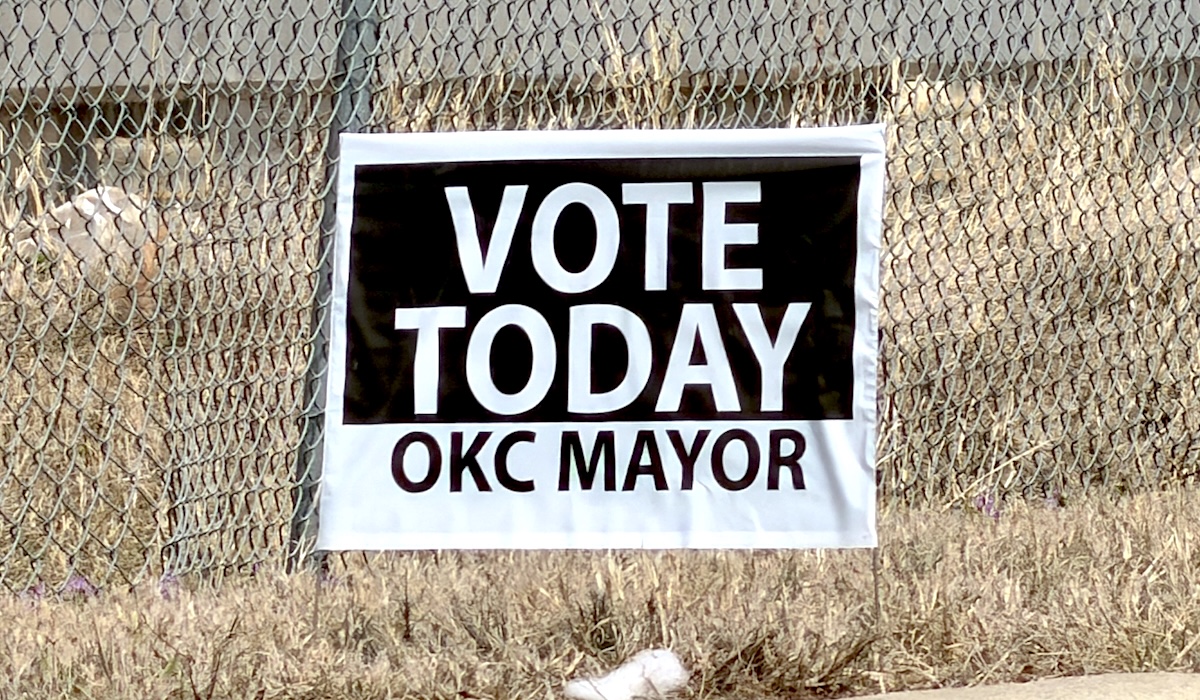

The Oklahoma Ethics Commission has launched an interim local campaign reporting portal amid growing concern that a state law change and an aborted Guardian System upgrade left the public without access to municipal, county and school board candidate finances.
Late last year, the Ethics Commission restored its legacy Guardian System for state candidate committees and lobbyists to file their financial disclosures. The commission had been attempting to upgrade to a system known as Guardian 2.0, but the switch floundered and ultimately fell apart, forcing the agency to change providers and revert to its original system.
In anticipation of Guardian 2.0, the Oklahoma Legislature passed a new law last year requiring local candidates for office to file their campaign reports with the Ethics Commission instead of city and county officials. But the legacy Guardian System to which the agency reverted does not accomodate filing information or data for candidates in county and municipal races.
Tuesday’s launch of the interim site covers some of those gaps, but data is still being uploaded to it. As of Friday, March 6, filings from only about a dozen candidates are listed for public review.
“Oklahoma voters deserve transparency at every level of government,” Ethics Commission executive director Lee Anne Bruce Boone said in a statement. “This interim portal ensures the disclosure continues without delay while full electronic integration is finalized.”
Search filings:
LocalCampaignFilings.ok.gov
The commission’s new responsibilities over local elections have come as a result of SB 890, which took effect Nov. 1. It requires candidates for county and municipal offices to file their campaign finance reports and personal financial information at the state level. In years past, those filings were typically handled by county election boards or city clerk offices.
At a meeting in February, Bruce Boone said it could take up to 15 weeks for Civix, the software company that developed the original Guardian System, to update the current platform.
That has left some local candidates with questions about how to file reports and how the public can see them. Some candidates have been pressed to post their own reports on social media ahead of the April 7 election, while others interested in the information have had to make individual requests by email or phone to the Ethics Commission, which has then requested reports from candidates. More than 3,000 municipal and county filings are expected to be uploaded on the Guardian System eventually.
Aaron Wilder, who manages local campaigns in Oklahoma, said the interim system is a step in the right direction.
“I’m glad that they have provided some kind of option,” Wilder said. “I really thought that the kind of excuse that they were giving — that there was nothing they could do in the interim because of their staff capacity and technology needs — was lacking, and so that was true, because they were able to quickly set this up in the last month.”
Questions remain about filings
According to Bruce Boone’s press release, local candidates can submit finance reports through the interim portal while full system integration remains ongoing. Still, Wilder has concerns.
RELATED
‘This is a problem’: Local election campaign finance reports in limbo by Andrea Hancock
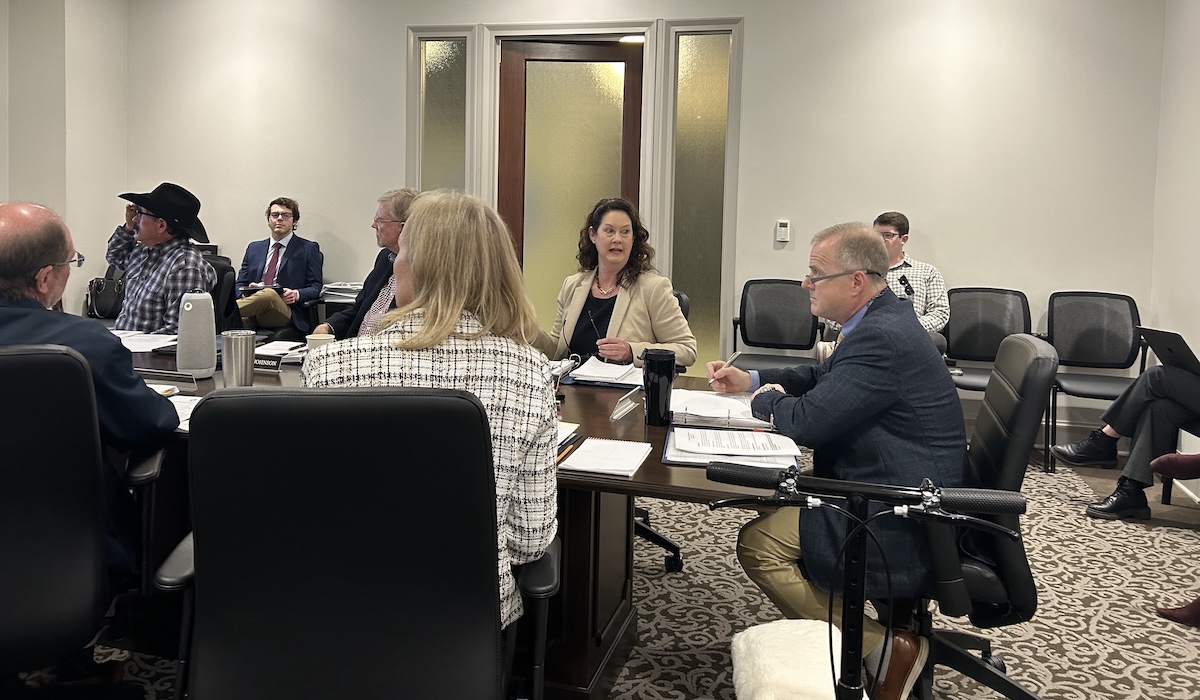
“What is missing right now is just clear guidance and communication from the Ethics Commission on what local campaigns should be doing at the moment,” he said. “The only reason I would know that this is now available and something that local campaigns can use, is because I’m subscribed to the Ethics Commission email (list). So I got a notice from their email system that, ‘Hey, this is available.’ And so then going back to that, I mean, I have not seen any kind of effort from them to really communicate about this beyond just pushing out to their email list. And nothing here is required, as far as my reading of it. It’s kind of like, ‘Comply if you would like to.’”
Oklahoma County District 2 Commissioner Brian Maughan is not up for reelection this year, but he is still required to file regular Ethics Commission fundraising reports. He said that who donates to candidates and how much money they raise is of interest to the public. Indeed, some citizens expressed concern leading up to and after February’s municipal elections that they were unable to see candidates’ full financial disclosures.
“It’s not often that we get major press coverage for these local races,” Maughan said. “That’s why I think it’s been important for the citizens to be able to go down there and retrieve our records, because a lot of the time, if the public is going to find out, it’s usually from their own effort to go and review the records. Over the years, I’ve been really surprised at the number of people who go out and do that. Because it’s important to them to know who’s supporting not only the incumbents, but the challengers.”
Maughan said he was told by the Ethics Commission to retain data on fundraising and give it to citizens who ask him for it.
“What they told me was that, for the time being, you file it with yourself, but we have to produce it upon any citizen requests for it,” he said. “I don’t keep those records at the courthouse, but theoretically, anyone should be able to make it available within one business day. It’s relatively similar to how it was when you would show up at the (county) election board or Ethics Commission and ask for it. You would typically get same-day service. ‘We should still be able to provide that to citizens,’ is the instruction that I received. And we were like, ‘Aren’t you sure that we [shouldn’t] let somebody else just have them on file?’ And they said, ‘No, not for now.’ They said they will get back with us and we will have time to upload it to the new system, but for now, if somebody asks you, you’re still supposed to provide it.”




Regions Financial Corp. has completed its acquisition of Montgomery-based investment banking firm The Frazer Lanier Company, expanding its municipal finance and corporate investment banking services.
The Birmingham-based financial company announced Thursday that the acquisition has officially closed. Founded in 1976, Frazer Lanier provides investment banking services specializing in municipal and corporate securities and has served corporations, cities, counties and local boards throughout its history.
According to Regions, the acquisition is intended to strengthen the bank’s capital markets capabilities while enhancing services for public sector and institutional clients across its multi-state footprint.
Frazer Lanier has built its business by serving as an underwriter or placement agent for tax-exempt and taxable bonds, helping public entities and organizations access financing.
“Two of our top priorities at Regions Bank are strategically expanding our services and investing in top-tier banking talent,” John Turner, chairman, president and CEO of Regions Financial Corp., said in a news release. “By welcoming experienced bankers from Frazer Lanier to the Regions family, we are connecting Regions’ clients with even greater capabilities while advancing our long-term strategy for growth.”
As part of the acquisition, Frazer Lanier will be integrated into Regions Bank’s Capital Markets division within the company’s Corporate Banking group.
Brian Willman, head of Corporate Banking for Regions, said the two organizations share a similar approach to serving clients.
“Frazer Lanier has built trust by staying close to clients and helping them navigate important decisions,” Willman said. “Together, we can expand that model by bringing more ideas, more capabilities and more connectivity to clients across our markets.”
Regions said the acquisition will expand its municipal finance and investment banking capabilities, strengthen its services for cities, counties and other public entities, and provide clients with broader access to financing and capital markets solutions.
Financial terms of the acquisition were not disclosed.

MOBILE, Ala. (WALA) – A Mobile County grand jury has indicted the former finance director for the city of Semmes on ethics and theft charges.
Heather Renee Davis, who also previously served as city clerk for the city of Satsuma, faces a 12-count indictment. Ten of the counts are ethics violations.
Allegations
Prosecutors allege Davis improperly used her public positions in Semmes and Satsuma for personal gain, including misappropriating public money and resources.
Two counts accuse her of first-degree theft by deception involving amounts over $2,500. One count is tied to the city of Semmes and one to the city of Satsuma.
Arrest and bond
Jail records show Davis was arrested and later released after posting a $60,000 bond.
Copyright 2026 WALA. All rights reserved.
-

 Arkansas5 minutes ago
August special primary set for vacant southeast Arkansas state Senate seat | Arkansas Democrat Gazette
-
 California8 minutes ago
California returns stretch of coast to Indigenous tribes. ‘This is beyond huge’
-

 Colorado13 minutes ago
Douglas County, Colorado, celebrates Independence Day without fireworks
-

 Connecticut20 minutes ago
Connecticut 250, 251, 252, 253 . . . – New Haven Independent
-

 Delaware23 minutes ago
Wilmington fire displaces 20, damages 6 homes on Clayton Road; cause under investigation
-

 Florida28 minutes ago
USF Health brings emergency pregnancy training to rural Florida without maternal care
-

 Georgia35 minutes ago
Middle Georgia looks to see a scorcher for the Fourth of July
-

 Hawaii38 minutes ago
Car drives into Sunshine Market in Honolulu

