Entertainment
TV executive Jamie Kellner, who helped create Fox and the WB, dies at 77

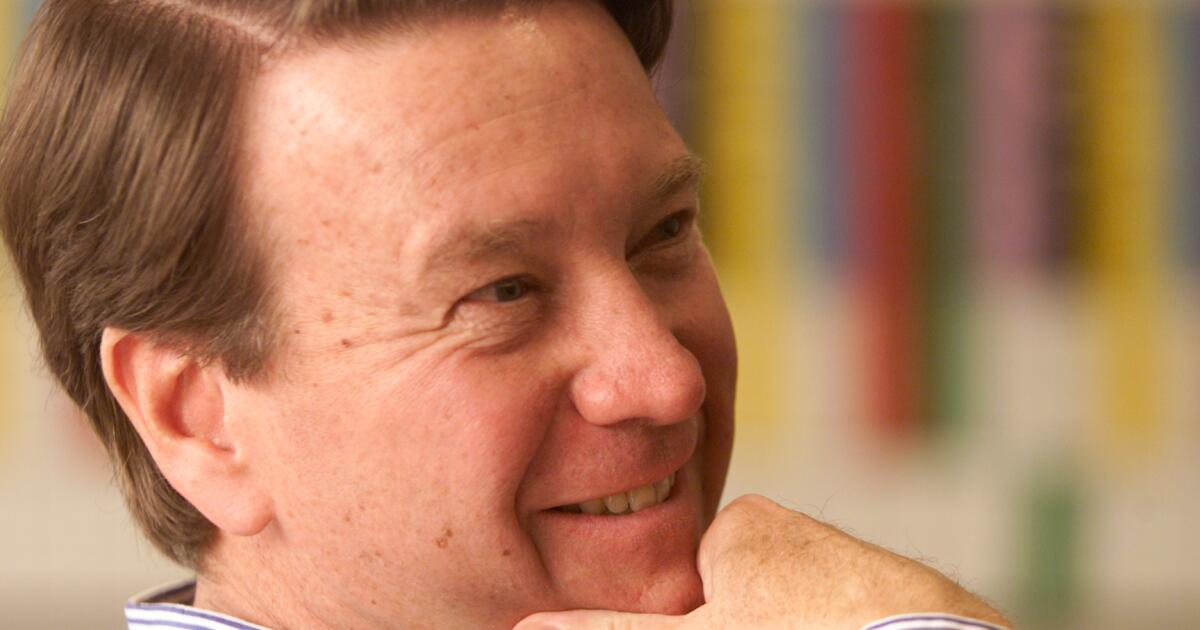
Jamie Kellner, a pioneering media executive who helped expand the world of broadcast television by creating Fox and the WB networks, died Friday. He was 77.
Kellner also oversaw CNN, TNT and TBS as chairman and chief executive of Turner Broadcasting System.
He died at his home in Montecito after a long battle with cancer, according to a spokesperson for the family.
Born in Brooklyn and raised on Long Island, Kellner first made a name for himself at Orion Entertainment Group, where he spearheaded an effort with Lorne Michaels to buy the rights to original episodes of “Saturday Night Live,” which were cut into 30-minute episodes and sold in syndication.
The lucrative partnership caught the attention of Rupert Murdoch and Barry Diller, who in the mid-’80s were plotting to launch an upstart broadcast network to rival the long-established “Big Three”: ABC, NBC and CBS. Kellner became the first president and chief operating officer of the Fox Broadcasting Co.
Launched in 1986, Fox was the first new network on American broadcast television since ABC in 1948.
Kellner poached a young NBC executive named Garth Ancier to run programming.
In a phone call Sunday, Ancier recalled Kellner as a formidable executive who “understood not just TV audiences, he also understood the entire way the TV system in the United States worked,” from affiliates to advertisers. Ancier, who also worked with Kellner at the WB, recalled flying to affiliates across the country, attempting to woo them to Fox.
At the time, few industry insiders thought Fox would have much staying power.
“My bosses — [NBC chief executive] Grant Tinker in particular — believed there would never be a fourth network,” Ancier said. “And they said, ‘On top of that, most of those stations they’re putting together are UHF,’ as if it was like the plague. It just meant we had to be different from the other networks.”
Kellner helped shape the network’s brand identity and make it a destination for edgier content, like the bawdy family sitcom “Married…With Children” — a show that initially attracted controversy but became a long-running hit.
“One of the first tests we apply is: Would one of the three networks do this? And quite often, if the answer is ‘yes,’ then we disqualify it. There is no reason for us to exist if we are going to do what they have already done,” Kellner told the New York Times in 1986.
Fox attracted younger viewers with shows that bucked long-held industry convention, like “In Living Color,” the irreverent sketch comedy show featuring a predominantly Black cast; and “Beverly Hills, 90120,” a high school soap opera that became one of the defining shows of the 1990s.
“The whole reason we did ‘The Simpsons’ was because no one had done animation in prime time since ABC in the ‘60s with ‘The Flintstones’ and ‘The Jetsons.’”
“The most important lessons we learned were to be different, to speak in a different voice than what was available to viewers already, and to get as young as you can get,” Kellner told The Times in 1997.
He left Fox in 1993, just as the network was expanding into a seventh night of programming and had numerous buzzy hits like the “90210” spinoff “Melrose Place.” In just seven years, Kellner had turned a “rickety string of UHF affiliates into a significant competitor,” as The Times then put it.
He soon began shopping around an idea for a fifth broadcast network. In 1995, he launched the WB, which initially made its mark with Black sitcoms including “The Wayans Bros.,” “The Jamie Foxx Show” and “Sister, Sister,” but faced stiff competition from another would-be contender, UPN. “We wouldn’t be doing this if I didn’t believe this would be as successful, or more successful, than the Fox network,” he said early in the WB’s reign.
One of the network’s first hits was the squeaky clean family drama “7th Heaven.” Throughout the late ‘90s, the network leaned into teen-centered dramas and ushered in a Golden Age for young adult programming that could be both sentimental and self-aware, with shows such as “Dawson’s Creek,” “Felicity” “Gilmore Girls” and “Buffy the Vampire Slayer.” By 2002, the network, in which he had ownership stake, was valued at $1 billion.
“I think the magic of that place came so much from his form of leadership, which was about taking bets on people,” said Greg Berlanti, who was tapped at age 28 to become showrunner on “Dawson’s Creek” and created two other shows at the WB, “Everwood” and “Jack & Bobby.” He recalled Kellner as an executive who supported creative talent and gave shows time to grow, but could also tell you “what five cities your show was most popular in.”
“I’m so glad I met that kind of leader at that age, someone who led with curiosity and compassion and was clear-headed and honest. He imbued people around him with a sense of faith in themselves.” Berlanti believes Kellner-era WB was “the most successful YA network in the history of television,” in part because Kellner “didn’t see it as a lesser audience.”
While still at the WB, he was tapped to succeed Ted Turner as chairman and chief executive of Turner Broadcasting System, where he oversaw TBS, TNT and CNN. He angered wrestling fans in 2001 by canceling World Championship Wrestling programming on TNT and TBS. He presided over CNN during a period of seismic shifts in the news business, with increased competition from Fox News and MSNBC and the cataclysmic attacks of 9/11.
Kellner was known for fostering loyalty among his top executives, several of whom moved with him from network to network. “He gave you tremendous latitude as a boss and mentor, always empowering you to make bold, decisive decisions and never settling for what’s always been done,” said Brad Turell, who was head of corporate communications at Fox, the WB and Turner Broadcasting under Kellner.
Kellner retired from the business in 2004, when he was just 57.
“I found it hard to believe because he was so competitive, in the best sense of the word, and so vigorous. But when he was done, he was really done,” said Ancier.
He remained busy pursuing passions like sailing and gold. He also opened a winery, Cent’Anni, in the Santa Ynez Valley, and was known for hosting Italian meals at his home.
He is survived by his wife, Julie Smith, daughter Melissa, son Christopher, and three grandchildren, Jake, Scarlett and Oliver.



By ABBIE BERNSTEIN / Staff Writer
Posted: July 11th, 2026 / 10:07 PM
EVIL DEAD BURN movie poster | ©2026 New Line Cinemas / Screen Gems
Rating: R
Stars: Soheila Yacoub, Tandi Wright, Hunter Doohan, Luciane Buchanan, Errol Shand, Maude Davey, George Pullar, Greta van den Brink
Writers: Sébastien Vaniček & Florent Bernard, based on characters created by Sam Raimi
Director: Sébastien Vaniček
Distributor: New Line Cinema/Screen Gems
Release Date: July 12, 2026
The first THE EVIL DEAD was released in 1982, launching the careers of (among others) filmmaker Sam Raimi and actor Bruce Campbell. The film had two direct sequels, 1987’s EVIL DEAD II and 1992’s ARMY OF DARKNESS, both also directed by Raimi and starring Campbell. A three-season TV series, ASH VS EVIL DEAD (2015-2018), executive-produced by Raimi and again starring Campbell, continued the narrative.
The franchise was resurrected for the big screen with a quasi-remake, 2013’s EVIL DEAD, followed by 2023’s EVIL DEAD RISE, and now EVIL DEAD BURN. The latter three have Raimi and Campbell among the producers, but not as immediate creative participants.
The Raimi-directed EVIL DEAD movies centered on Campbell’s Ash, who found himself battling relentless Deadites (think chatty, sadistic rotting undead) summoned by the (fictional) forbidden text THE NECRONOMICON (originally invented by writer H.P. Lovecraft in the 1920s for his Cthulhu Mythos). The Deadites delight in transforming luckless humans into, well, the evil dead.
The first three films and the TV series were splat-stick comedy, with jokes cheek and jowl with the gore.
The subsequent films have flashes of humor, but they are much more focused on straight horror, as well as family drama.
This is absolutely the case with EVIL DEAD BURN, written by Sébastien Vaniček & Florent Bernard and directed by Vaniček.
Here, the family at the center of events is on the verge of imploding, even without demonic intervention.
EVIL DEAD BURN is tangentially related to EVIL DEAD RISE, insofar as the earlier film’s wraparound deposited Deadite Jessica (Anna-Maree Thomas) in a lake. At the start of BURN, two unfortunate fishermen snag a Deadite played by Greta van den Brink, who was Thomas’s stunt double on RISE, so this may be the same character.
Meanwhile, Joseph (Hunter Doohan) is in a dusty upstairs room, curiously perusing clippings, writings, reel-to-reel tape recordings and more amassed by his grandfather. We’ll learn that Grandpa is considered the family flake because he declined to spend time with his wife and daughters in favor of traveling the world investigating the occult.
A recording Joseph’s grandfather left behind conveniently provides us with what we (and Joseph) need in terms of exposition. This includes a bit about the Kandarian dagger, which the Deadites want to obtain and destroy, as it’s the only item that can permanently kill them. Grandad has left it somewhere on the premises.
It’s Joseph’s birthday, and there’s a celebration for him at the party club owned by his older brother Will (George Pullar) and Will’s French wife Alice (Soheila Yacoub). Joseph’s supportive girlfriend Thya (Luciane Buchanan) tries to mediate as Will first condescends to his little brother, then gets into an aggressive fight with Alice.
The argument spills into the club parking lot, where we see further evidence of Will’s controlling, contemptuous and violent personality before he gets into his car and drives away at top speed.
Meanwhile, our lake Deadite has taken to the road, where she easily causes Will to crash. The car erupts in flames.
At the sparse funeral held at a crematorium, Alice is wearing running shoes, to the great displeasure of her grieving in-laws Susan (Tandi Wright) and Edgar (Errol Shand). Susan’s elderly mother Polly (Maude Davey) is in a wheelchair and keeps confusing Susan with Susan’s deceased sibling Bonnie.
Susan and Edgar generally resent Alice and blame her for Will’s death. They also disapprove of Joseph, who they view as a slacker. He hasn’t done a good job of maintaining the isolated two-story family home he’s been given by his parents, and Susan takes a very dim view of Joseph’s investigation into his grandfather’s interests.
So, this is a toxic setup even before Edgar decides he must take one last look at Will in his coffin before the cremation. Then everybody heads back – Edgar is infected, but not “showing” yet – to the house.
From here, EVIL DEAD BURN goes pretty much where we anticipate, and where the subgenre demands, with almost nonstop violence, excellent practical effects, lots of gore, and admirable acting of that encompasses unhappiness, terror, and taunting Deadite glee.
Director Vaniček makes sure to incorporate some of the EVIL DEAD touchstones, including the racing low-to-the-ground shots (using one for a nice in-joke), chainsaws, and some catchphrases. At the same time, there are plenty of new set pieces and types of physical altercations.
With no forcing at all, EVIL DEAD BURN serves as a solid metaphor for both spousal abuse and what happens when parents turn a willful blind eye to the nature of a favored child, to the detriment of everyone and everything in the vicinity.
For those who care about these things (does this really even count as a spoiler?), the dog dies, albeit there’s at least a plot logistics reason here.
There are a couple inconsistencies, like why some people become infected so fast while others take much more time and still others seem immune. Mostly, though, EVIL DEAD BURN does what it’s supposed to do as a horror movie overall and as part of its specific lineage.
Related: Movie Review: CORPORATE RETREAT
Related: Movie Review: TIME OF DEATH
Related: Movie Review: CHAPTER 51
Related: Movie Review: MINIONS & MONSTERS
Related: Movie Review: LOCKBOX
Related: Movie Review: SUPERGIRL
Related: Movie Review: THE GET OUT
Related: Movie Review: CAMP
Related: Movie Review: LEVITICUS
Related: Movie Review: DISCLOSURE DAY
Related: Movie Review: KRAKEN
Related: Movie Review: FIND YOUR FRIENDS
Related: Movie Review: CHUM
Related: Movie Review: CAROLINA CAROLINE
Related: Movie Review: THE SUMMONING
Related: Movie Review: BACKROOMS
Related: Movie Review: SPEED DEMON
Related: Movie Review: PRESSURE
Related: Movie Review: PASSENGER
Related: Movie Review: I LOVE BOOSTERS
Related: TV Review: GREAT PERFORMANCES: STAGEBOUND
Related: Movie Review: OBSESSION
Related: Movie Review: LIFEHACK
Related: Movie Review: IS GOD IS
Related: Movie Review: AFFECTION
Related: Movie Review: ITCH!
Related: Movie Review: HOKUM
Related: Movie Review: ANIMAL FARM
Related: Movie Review: OVER YOUR DEAD BODY
Related: Movie Review: LEE CRONIN’S THE MUMMY
Related: Movie Review: HAPPY HALLOWEEN
Related: Movie Review: NORMAL
Related: Movie Review: FACES OF DEATH
Related: Movie Review: EXIT 8
Related: Movie Review: READY OR NOT 2: HERE I COME
Follow us on Twitter at ASSIGNMENT X
Like us on Facebook at ASSIGNMENT X
Article Source: Assignment X
Article: Movie Review: EVIL DEAD BURN
Related
Related Posts:

The actor and musician Jason Schwartzman pulled a cassette tape from his pocket on stage at the L.A. Phil’s tribute to Wes Anderson. Schwartzman was just a teenager when he was cast as the obliviously ambitious Max Fischer in Anderson’s 1998 film “Rushmore,” and on Friday, he recalled the night Anderson played him the film’s entire soundtrack in his car.
“He said, ‘This is the soundtrack to the movie. This is the order it’s going to be in,’ and he walked me through the entire film narrating it,” Schwartzman said, still agog at the completeness of Anderson’s vision before a frame was shot.
More recently, Schwartzman said, “I was at my mom’s house tying my shoe, and I see a cassette tape on the ground titled “Rushmore songs.” He then chucked the tape into the audience, a piece of film history that hopefully someone caught unscathed.
Anderson’s use of far-flung needle drops and lovely original score work is, like everything in his film universe, planned down to exacting detail. But this opener of a three-night stand — sporting an all-star roster of guest vocalists, an exceptional backing band, and a light touch from the Phil — was more in the spirit of how fans revisit Anderson’s films: as old friends that pop back into your life, affection only deepened with time, right when you need them.
Guided by the genial riffing of the night’s MC, Bill Murray (an Anderson regular from “Rushmore” onward), the program made its case that Anderson’s savvy with soundtrack curation and delicate, evocative scores are the heart of his films, right along with his meticulous visual style and arch, melancholy tone.
The director, recently freed from a malfunctioning elevator in a pithily Andersonian incident, made a brief appearance onstage with Murray. But the focus was the music itself on Friday, and the ragtag roster of artists that fully conjured it.
To start, huge credit is due to the show’s musical director Justin Meldal-Johnsen and the session-killer band of Roger Joseph Manning Jr., Jason Falkner, Joey Waronker and Gus Seyffert. The sheer amount of music to arrange and assemble for this was vast and demanding, and they got to all of it from 1996’s “Bottle Rocket” to the present.
Beck performs Friday at L.A Phil’s Music of Wes Anderson show at the Hollywood Bowl in Los Angeles.
(Ariana Drehsler / For The Times)
The Phil took a more modest role, performing poignant, rigorous slivers of scores from Anderson’s go-to composers Alexandre Desplat (“Canto at Gabelmeister’s Peak” from “The Grand Budapest Hotel” and “Mr. Fox in The Fields,” from “The Fantastic Mr. Fox”) or his frequent collaborator, Devo’s Mark Mothersbaugh (the propulsive “Ping Island” from “The Life Aquatic with Steve Zissou.”)
Pianist Jean-Yves Thibaudet took a lively solo crack at “Moses Rosenthaler” off “The French Dispatch;” Rajib Karmakar and Aakash Pujara played aching sitar and flute drones from “The Darjeeling Limited,” and taiko drummer Kaoru Watanabe nearly blew out the Bowl’s speakers on “Shinto Shrine” from “Isle of Dogs.”
The surprises came from the rock acts brought in to reimagine the most evocative needle drops from Anderson’s ouvre.
Jackson Browne, in an unbelievable career first, finally got around to performing “Fairest of the Seasons” and “These Days,” tracks he wrote as a teenager, eventually covered by German art-rock chanteuse Nico, mournfully used on “The Royal Tenenbaums.”
Beck took a pass at the late Elliott Smith’s ghostly “Needle in The Hay,” used to harrowing effect in the same film, and later Love’s “Alone Again, Or.” Karen Elson beautifully covered Françoise Hardy’s “Les Temps De L’amour” from “Moonrise Kingdom” while the Yeah Yeah Yeahs’ Karen O simmered through the Rolling Stones’ “Play With Fire” off “Darjeeling.”

Actor and host Billy Murray speaks at L.A. Phil’s Music of Wes Anderson show Friday at the Hollywood Bowl in Los Angeles.
(Ariana Drehsler / For The Times)
Yet the delighted gang’s-all-here element that ties Anderson’s regular cast together was embodied by an endearingly shaggy run through “Zorro Is Back” with Jenny Lewis and Rogê. Toward the end of the night, just before a closer with the Faces’ “Ooh La La,” Murray brought out a one-of-a-kind instrument for a big flourish. A $9 desk bell, seemingly purchased at Staples hours before showtime, requested specifically by Anderson.
“Front of house, make sure Bill’s bell is ripping,” Beck implored the sound techs at the Bowl. Indeed, as the band, including Jim James of My Morning Jacket, Lewis and Schwartzman, performed the Bobby Fuller Four’s single “Let Her Dance,” Murray indeed whacked the hell out of that thing.

Unanswered//Butterfly is far from the first anime to be released as a video game extra—in this case the Echoes of Aincrad Ultimate Edition. However, rather than an extra episode or OVA, Unanswered//Butterfly is a full on feature film that clocks in at just under two hours in length.
At its core, Unanswered//Butterfly has a fantastic hook. The heretical-seeming idea of series hero Kirito massacring people in the early days of Sword Art Online is more than enough to get any fan invested. Moreover, the idea of having the story be told not from the viewpoint of Kirito but of two new characters—a pair out for revenge on the Black Swordsman—is likewise compelling. Unfortunately, the application of these ideas is a mixed bag at best.
On the positive side of things, Rex, the first of our characters out to kill Kirito, is an interesting character from top to bottom. Due to an error with how the NerveGear interacts with his brain, he is unable to attack—leaving him only able to use a shield for defence. This weakness weighs upon him—as does having to rely on Emirun, a 14-year-old that he tutored in the real world. He is serious and goal oriented—which clashes with Emirun’s immature and flighty personality. He also has more than a few layers of hidden depths that completely change how we view his character over the course of the film—making him the movie’s stand-out character.
Emirun, on the other hand, is completely unsuited for her role in the plot—i.e., as a young woman driven to get revenge on a man by killing him. Her flighty and impulsive nature are taken to insane extremes. In the span of just a few minutes, she goes from depressed and angry at the murder of her friends during their funeral, to throwing a childish tantrum in response to another players provocations. This is followed immediately by her enjoyably chowing down on food and fangirling out at a concert. Over the course of the film, her constantly jumping from one emotional extreme to another is exhausting at best, annoying at worst. And while her bouncing back easily is a main facet of her character—and one acknowledged by the plot—she is so rarely focused on revenge that it makes her main goal seem secondary.
Her personality also gives the film an uneven tone. While fun and silly things do happen in Sword Art Online, at this point in the story, things are relatively dire. The survivors are still figuring out the best way to clear floors, people continue to die in sizable numbers, and PKers have begun their murder sprees. But Emirun often treats Sword Art Online like the game it was supposed to be rather than the life-or-death struggle it actually is. The film itself plays along with this—with the music and direction emphasizing the fun to the point that I can’t help but wonder if this aspect of the movie is supposed to be a kind of commercial for the attached game.
As for the main pair of Sword Art Online heroes, Asuna plays the role of Emirun and Rex’s mentor—training them in the more advanced aspects of the game. However, little does she know that the person they are out to kill is Kirito. And, at the same time, she herself is hunting Kirito, trying to understand why the person she has gotten to know more than any other has become a murderer.
Meanwhile, the Kirito we catch glimpses of is not himself. He is always on edge, eyes wildly looking at those he meets as the orange criminal icon hovers above his head. It serves as a scarlet letter of sorts, leaving him isolated from society as other players flee from him while the system itself prevents him from entering towns. Viewing him from the outside, he’s legitimately intimidating and the mystery of his sudden fall keeps the film engaging throughout.
The other issue with the film is a visual one. Now, to be clear, this is not a dig at the animation team. While it’s odd at first glance that this film was done by Polygon Pictures rather than Sword Art Online‘s usual studio A-1 Pictures, the 3DCG animation fits this VR world well and the fight scenes range from adequate to absolutely awesome.
The actual problem comes in the form of the characters. Emirun’s character design (along with the Echoes of Aincrad characters) clashes with those of the returning and background characters. The two tone nature of her hair, the flower accessories she wears, and even the colors of her armor do not match the established visual aesthetic for the early days of Sword Art Online. It breaks the immersion of the world in an odd way as she clearly doesn’t seem to belong there.
On the music side of things, the general soundtrack is passable and the insert song, “Reach for the Rainbow” by Iori (Kato LEIA) and LaLa (Rina), is good enough to sell the idol characters as such.
All in all, I like what Unanswered//Butterfly i trying to do more than what it actually does. Emirun is so out of place both visually and in personality that it undercuts the story the film is attempting to tell. On the other hand, Rex is an interesting character to add into the chaos of Sword Art Online and the entire mystery surrounding Kirito’s murderous turn keeps viewer investment in the plot high—especially if you’re a long time fan.
And while I feel this film is certainly worth watching to anyone who loves Sword Art Online, the fact that the bar to entry is $110—a full $40 above buying the Echoes of Aincrad game on its own—feels ludicrous. If you have the money to burn—and you’re super interested in both the game and this film—then by all means, go for it. If not… well, maybe Crunchyroll or some other streaming service will get the rights to it sometime in the future.
-

 Los Angeles, Ca30 minutes ago
Rosemead High School student identified as teen stabbed to death in El Monte
-

 Detroit, MI52 minutes ago
Three dead in Metro Detroit mall shootings in eight days: What we know
-
San Francisco, CA60 minutes ago
I’m a writer who left LA for an AI startup in San Francisco. It was like stepping into a whole new world.
-

 Dallas, TX1 hour ago
Dallas weather: Widespread thunderstorms bring flash flood risks and brief heat relief
-

 Miami, FL1 hour ago
Why I’m Not Worried About Giannis in Miami
-

 Boston, MA1 hour ago
Gallery: Tall ships display their splendor at Sail Boston
-

 Seattle, WA1 hour ago
Seattle Weather: Cooler Sunday to close out weekend
-

 Denver, CO1 hour ago
Colorado Court of Appeals reverses sanction against Denver DA for pattern of discovery violations

