Movie Reviews
Unstoppable movie review: Jennifer Lopez and Jharrel Jerome shine in crowd-pleasing wrestling drama


There’s nothing quite like the impact of a good sports biopic drama. A classic underdog story where the protagonist rises up against all odds and wins. But to a degree, sports biopics have reached a saturation point in the last few years. One can smell the next plot point a mile away, can predict the next dramatic meltdown right from the way the camera pauses for a close-up shot. Sadly, these are some of the cases that plague the new Prime Video entry Unstoppable, based on the extraordinary real-life journey of wrestler Anthony Robles, who was born with one leg. (Also read: Jennifer Lopez fans left shocked with interview question on her age, here’s how she replied)
The premise
Make no mistake. Unstoppable is very likeable and ultimately packs an emotional wallop. It has all the ingredients to make an amazing genre entry, but it stays so expectedly overwrought in its own formula that the story rarely takes shape. Marking the directorial debut of Oscar-winning Argo editor William Goldenberg, and produced by Ben Affleck, Unstoppable features a fierce central performance from Jharrel Jerome as Anthony, and an equally impressive supporting turn from Jennifer Lopez as his mother Judy. However, the film feels too caught up trying to impress, too one-note to add any texture to these characters to make them feel more than what they are offered on screen.
Unstoppable starts off with Anthony’s final years in high school, where he impresses with his agile moves in the match. His mother roots for him to excel, and his coach (Michael Peña) supports his dreams. But back home, he has to deal with his abusive stepfather (Bobby Cannavale), which amounts to his anxieties about his next steps. Should he take the offer of a full college scholarship at Drexel or pursue at Iowa, where he believes the best wrestlers go? During his search, his way will lead to coach Shawn Charles (Don Cheadle), whose push will keep Anthony striving for more.
What works
The tone and texture of Unstoppable are unabashedly formulaic and one-note, which feels like the film is deliberately trying to tell such an uplifting story in a Wikipedia-ish fashion. Scenes set in Anthony’s home are tough, so we get a montage scene next, and then we return to the house for more revelations through a short flashback. This tried-and-tested trick fails to add any support to the material.
Still, the film moves ahead and works in several parts thanks to the committed performances of its cast. Jharrel’s central turn is intense and physical, but his bond with his mother forms the core of this film. Lopez tries hard to salvage her scenes with roughly overdone dialogues and succeeds largely. If 2019’s Hustlers was not enough proof, Unstoppable is yet another reminder that Lopez can very well bring in the acting chops when required: she just needs to experiment with better scripts.
Final thoughts
Even though the end is predictable, Unstoppable does manage to get there with some saving grace and emotion. The wrestling scenes are well choreographed and shot, even as the overtly melodramatic score comes in the way at several points. Unstoppable is loud and unsubtle, often undone in its all-knowing attitude. Because the subject itself is so revelatory and poignant, the film ultimately wins you over with its truth. It manages to be quite effective and moving. What it required was a little more consideration, a slight pause to stand beside this human being and watch him tackle so many obstacles. Just watching is, in many ways, akin to empathy.
Unstoppable is now available to stream on Prime Video.



The Times of India
Apr 07, 2026, 3:24 PM IST
3.0
Super Duperr is a riot in all senses of the word. A wild ride filled with laughter and emotion it presents an unusual matchup of traditional and modern values.Rohit (Lalit Prabhakar) and Isha (Vidula Chougule) are a young couple trying to make their mark in the entertainment industry. They take their relationship to the next level and purchase a flat in Mumbai with their savings. It is here that they realise that they have fallen for a scam when the same house is sold to and currently occupied by a rural family. What follows is a series of clashes and learning moments that test the morality of both parties. The story is a fun take on a series of real world scams and as such has a very interesting premise. The Sameer Asha Patil film however chooses to take a detour in favour of certain stretched out gags and slow motion shots. What could have been a deep exploration of the two worlds colliding, ends up being a formulaic checklist of a wedding song, an action sequence and a few slapstick gags. These are passable of course, but the ho-hum nature of the story’s progression feels under utilized. Super Duperr does offer impactful emotional sequences, notably the equation between the parents (Shashank Shende and Nirmiti Sawant) and his eldest son (Hrishikesh Joshi). The music and cinematography are well executed and add abundantly to the viewing experience. Super Duperr set a rich tapestry only to ultimately doodle in a corner. While it could have benefitted from adding more inter-family interactions, it remains a good watch for this weekend.

The verdict is in, and critics have widely panned The Super Mario Galaxy Movie while audiences have universally praised the family-friendly sequel. This follow-up to the fan-favorite The Super Mario Bros. Movie has been in theaters for about a week since its debut on April 1, and it has already had the best box office opening in 2026, earning more than $190 million over its 5-day domestic weekend. Worldwide, it has amassed $372 million, making it the fifth largest global opening ever for an animated film. Despite the movie being a massive box office hit, however, the review scores are terribly low for the video game adaptation, and there are several reasons why.
Fans vs. critics on The Super Mario Galaxy Movie
As of April 6, The Super Mario Galaxy Movie has a mediocre 42% Tomatometer score from a total of 175 reviews on Rotten Tomatoes while holding a fantastic 89% Popcornmeter score from over 5,000 verified user ratings. That’s a stark 47-point difference between critics and users.
A similarly wide disparity can be found on Metacritic as well, where the sequel has a “generally unfavorable” Metascore of a 37 based on 45 reviews, despite it earning a “generally favorable” user score of a 7.9 (basically, a 42-point difference).
This gulf between professional reviews and user reviews for this sequel likely isn’t too surprising by fans of the original 2023 Super Mario Bros. movie. That film earned a 59% Tomatometer but a 95% Popcornmeter on Rotten Tomatoes, and it has “mixed or average” 46 Metascore but a “universal acclaim” user score of 8.1.
To be fair, the range of critic scores for the film is vast on Metacritic, with about seven reviews above a 60 and fifteen reviews below a 40. ComingSoon’s Jonathan Sim give it a “Good” 7 out of 10 rating, noting that “it doesn’t necessarily deepen the emotional or narrative complexity of the franchise, but it refines what worked before amplifies it on a grander scale.” However, many other reviews are far less kind, particularly the 0 out of 5 rating from The Times that calls the film “ugly, overbranded, lifeless digital marketing vomit” and a review from Vulture that says it’s like being “asphyxiated in a ball pit filled with candy.”
Meanwhile, multiple user reviews on Metacritic are shocked at the reviews. One called the low Metascore “absolutely ridiculous,” while another asked readers to ignore the critics altogether. A different user wrote, “It’s wild to see professional critics giving this a zero. It feels like they’ve never actually picked up a controller.” And to that person’s credit, we did find that a few critics who gave low scores admitting that the film wasn’t meant for them or that they had never played a Mario game before. Indeed, the movie is chock full of Nintendo references and easter eggs, something that Mario fans will appreciate far more than anyone who doesn’t know or care about the difference between a Super Mushroom and a Fire Flower.
More broadly speaking, The Super Mario Galaxy Movie has more than several traits that critics tend to dislike but that audiences enjoy. The first is that it’s a quick-paced, action-packed film, which features a handful of battles with Mario, Luigi, Yoshi, Princess Peach, Toad, Fox McCloud, Bowser, Bowser Jr., and Wart. Another is that it’s a comedic adventure with cartoonish gags that are age-appropriate for kids and humorous to Mario fans who are in on the joke. On top of that, the film is a family-friendly video game adaptation, a genre that doesn’t usually score well from critics. A Minecraft Movie, another box office smash that earned $960 million worldwide (and also starred Jack Black), was equally slammed by critics with a 47% Tomatometer but lauded by audiences with an 84% Popcornmeter.
Taken altogether, the movie was almost made in a lab for reviewers to despise and for audiences to praise as a nostalgic love letter to Nintendo. Regardless, despite how critics feel, they’ll need to brace themselves for more, since the Nintendo Cinematic Universe is looking like it will come sooner than later.

Watch I Know Exactly How I Die on VOD
The director of I Know Exactly How I Die is Alexandra Spieth, who ensures a tight pace and some gorgeous shots. She previously directed Stag and created and starred in the web-series [Blank] My Life. The screenplay comes from Mike Corey, and I do really like the plot and evolution of this story.
As already mentioned, the star Rushabh Patel is the executive producer. As a result, this movie is billed as “Rushabh Patel’s I Know Exactly How I Die“, which I am not a fan of. Unless Rushabh Patel is famous in ways I am not familiar with – nor is IMDb, as this is his first and so far only credit there.
This is like people wondering if Something Very Bad Is Going to Happen is connected to Stranger Things, because the media keeps referring to it as a new show from The Duffer Brothers. Sure, they produced it, but Haley Z. Boston created the original story and wrote the screenplay. And she’s not even a newcomer.
Okay, rant over, but I just don’t understand the marketing and press decisions of it all.
Anyway, as already mentioned, the practical effects in I Know Exactly How I Die are gorgeous. Any slasher fan should enjoy the concept of the plot as well as those amazing practical effects. And yet, you will have to endure a little terrible CGI, but this is an indie production, so budget restraints come into play. Of course, so does choosing the best talent, and that did not happen for CGI here!
I Know Exactly How You Die is out on VOD from April 7, 2026. You can rent it on Digital HD from your preferred platform, including Prime Video and Fandango at Home. The film will also be available on DVD.

Below freezing temperatures to return Wednesday morning, ahead of 80-degree weather this weekend

Is the World Cup in DC? Here’s where you can watch games

1973 Indians Home Opener Holds Special Memory for NE Ohio Couple – Cleveland Today

UT Austin College of Pharmacy Leads Texas in New U.S. News Rankings

Alabama Football Spring Practice Report before A-Day Scrimmage

Florida High School Football Rankings: Top 25 teams – Oct. 21

How old is Bo Nix? What to know about Oregon quarterback ahead of 2024 NFL Draft

Cleary's 21 help Le Moyne down Central Connecticut State 69-64 in OT

99th annual Pony Swim held in Virginia

Indiana Members Credit Union announced as new anchor tenant at Bottleworks District

Ilhan Omar calls Trump an ‘unhinged lunatic,’ urges booting him out of office
Between Budapest and Brussels: Péter Magyar’s political tightrope
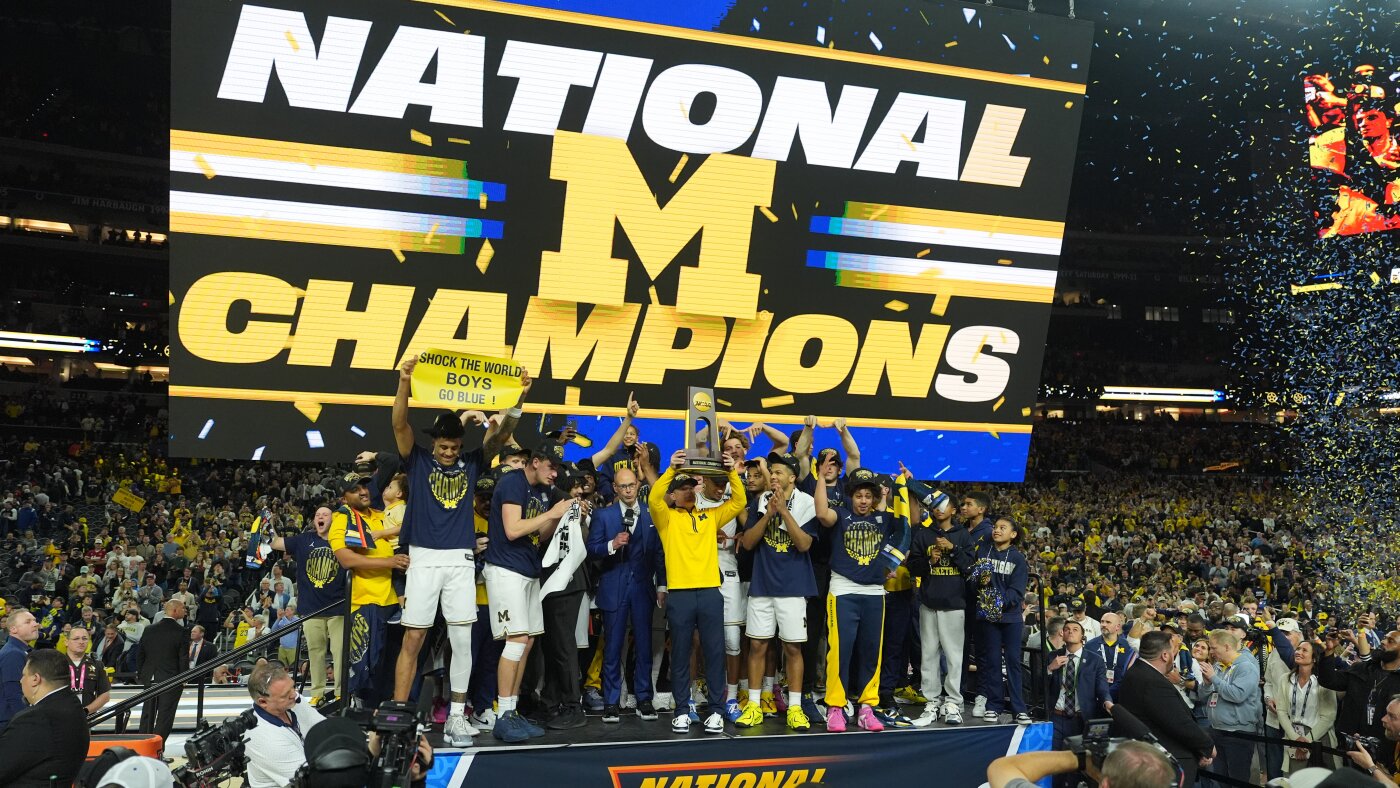
Michigan muscles its way to program’s 2nd NCAA basketball title, beating UConn

Map: Minor Earthquake Strikes Near San Diego

Trump claims he’d win as the president of Venezuela — just needs to ‘quickly’ learn Spanish
-

 Atlanta, GA3 days ago
1 teenage girl killed, another injured in shooting at Piedmont Park, police say
-

 South-Carolina1 week ago
South Carolina vs TCU predictions for Elite Eight game in March Madness
-

 Movie Reviews5 days ago
Vaazha 2 first half review: Hashir anchors a lively, chaos-filled teen tale
-

 Vermont1 week ago
Skier dies after fall at Sugarbush Resort
-

 Politics1 week ago
Trump’s Ballroom Design Has Barely Been Scrutinized
-

 Politics1 week ago
JD Vance says he was ‘obsessed’ with UFOs, believes aliens are actually ‘demons’
-

 Politics1 week ago
Jeffries declines to break with indicted Democrat after ethics panel’s guilty verdict
-
 Entertainment5 days ago
Inside Ye’s first comeback show at SoFi Stadium