Movie Reviews
The Heart Within “The Phoenician Scheme”: A Film Review – The Montpelier Bridge


The title of Wes Anderson’s latest film offers a hint about the main flaw of this mostly delightful movie. The eponymous scheme is a convoluted business deal that never has a chance of making sense to most viewers. This deal amounts to nothing more than a diversion — and it’s often a distraction from what makes the film so charming. If you like neat, satisfying plots, skip this movie. But if you’re a fan of Anderson or perfectly executed deadpan performances, seek out this film at once.
Although the plot has as many wrinkles as the protagonist after one of his long baths, it can be boiled down simply enough: In 1950, ruthless, globetrotting tycoon Anatole “Zsa Zsa” Korda (Benicio Del Toro) pursues a career-capping business deal while attempting to reconnect with his devout, strong-willed daughter, Liesl (Mia Threapleton), and make her his sole heir.
Del Toro and Threapleton are a marvelous comedy duo, their verbal jousts a wonder to behold. Liesl faces daunting challenges striving to compel her father to conduct business with some regard for morality, and Korda exhibits unflagging elan in resisting Liesl’s civilizing influence, staying one step ahead of his rivals, and evading would-be assassins. Liesl’s refrain, “on a trial basis,” and Korda’s signature phrase, “Myself, I feel very safe,” are deliciously ironic.
The conflicts between this pair over contracts, tactics, and, most significantly, the sad fate of Liesl’s mother reveal their need for each other, and herein lies the film’s substance. While the first half of the narrative tends to keep that substance front and center, most of the second half becomes entrenched in the big scheme and other contrivances, and the whole artistic enterprise suffers as a result. In particular, a goofy disaster sequence involving quicksand and a climactic fight scene left this viewer cold. Finally, though, Anderson’s denouement brings us back to the film’s core concerns in richly satisfying fashion.
Beyond the subtle brilliance of Del Toro and Threapleton, Michael Cera, Riz Ahmed, and Hope Davis all perform nimble Andersonian supporting work. Unfortunately, his script shortchanges the estimable Jeffrey Wright and Scarlett Johansson, whose characters are poorly developed, and Anderson uses several other great actors to slight effect in forgettable fantasy sequences. Of course, the movie has impeccable production design and is a visual feast that rewards close attention to detail. For example, the opening credits are displayed on an immaculate overhead shot of Korda’s enormous bathroom, and among many subtle touches here, Anderson and his team slip in a clever joke with their placement of a bottle of wine. Later, Korda’s reading material on his lavish but minimalist private planes is also a source of humor and subtext; one of his books is titled “Questionable Authenticity.” Another captivating element of the movie is the score music by Alexander Desplat, whom I regard as one of this century’s best composers for film.
Returning to the title, I might have noticed a pattern with the names Anderson gives his creations. The titles of his best movies refer to settings (“Moonrise Kingdom” and “The Grand Budapest Hotel”) or people (“The Royal Tenenbaums”). While “The Phoenician Scheme” has both intriguing settings and endearing characters, the title refers to a very prominent element of the film that is also its most disposable: the plot. It’s as if Anderson is trying to keep his viewers at arm’s length, but he shouldn’t be afraid to draw us in closer. I’d rather he called the movie “Liesl and Zsa Zsa” or “Chez Zsa Zsa” (a section title from the movie), though I doubt he would ever risk using such earnest-sounding names.
In terms of character depth and emotional impact, which are often question marks in this director’s work, “The Phoenician Scheme” is several notches above 2021’s “The French Dispatch” but falls short of “Asteroid City,” his 2023 film. Still, unlike some critics, I resist the urge to turn sour on Anderson, even though his halcyon days may be behind him. He has a sophisticated, quasi-European sensibility that we could use more of in contemporary American cinema. To borrow a key line from “Asteroid City,” he should “keep telling the story.” Perhaps, however, he should take a brief sabbatical and return when he’s ready to tell a more focused, authentic tale.
“The Phoenician Scheme” plays at the Savoy through June 19.


Wasteman, 2025.
Directed by Cal McMau.
Starring David Jonsson, Tom Blyth, Alex Hassell, Neil Linpow, Paul Hilton, Corin Silva, Layton Blake, Jack Barker, Fred Muthui, Lunga Skosana, Robert Rhodes, Keaton Ancona-Francis, and Cole Martin.
SYNOPSIS:
Follows parolee Taylor whose fresh start hopes are jeopardized by cellmate Dee’s arrival. As Dee takes Taylor under his wing, a vicious attack tests their bond, forcing Taylor to choose between protecting Dee and his own parole chances.

Backing up its intentions and messaging with real spliced-in cell phone footage of rowdy, uncontrollable prison behavior in an understaffed British penitentiary, director Cal McMau’s narrative debut feature Wasteman (from a screenplay by Eoin Doran and Hunter Andrews) is often purposely, effectively disorienting. That’s not merely limited to be incorporated leaked footage (this is a prison that, in some respects, is more of a recreational facility than one for rehabilitation, since the guards are in such low quantity, all while the incarcerated are rather easily smuggling drugs through drone technology while typically unbothered in their jail cells playing video games in between hard partying or fighting one another), but the brutality as well, with claustrophobic, tilted camera angles and a shakiness that lends a visceral grime to that physicality.
The exception to this disorder seems to be rising star David Jonsson’s Taylor, still using drugs but also consistently avoiding any such drama. He is quiet and timid to the point where he not only comes across empathetic, but one wonders how he became locked up alongside an otherwise degenerate bunch. It turns out that due to a new law going into effect, some prisoners will be released on good behavior, which, in Taylor’s case, means that he is far from a problem here despite abusing drugs. Nevertheless, he is nervously excited about the possibility of reconnecting with his teenage son, even if a phone call with his separated ex-partner makes it clear that she is firmly against such a reunion.

There also wouldn’t be a film here without a wrench being thrown into that impending release back into society, which is where the introduction of new cellmate Dee (a manipulative and psychotic Tom Blyth) enters as an inmate more concerned with taking over the in-house drug dealing hierarchy rather than fronting anything remotely close to good behavior. By extension, this jeopardizes Taylor’s chances of being released. That’s also not to say Dee doesn’t have his friendly moments, such as letting Taylor use his phone to reconnect with his son on social media.
Where Wasteman makes up for in familiar plotting is its sense of authenticity, which comes through not only in the previously mentioned cuts to rowdy cell phone footage but also in the decision to work with a charity and round out the rest of the ensemble with formerly incarcerated individuals who are now reformed. One gets a full sense of the microcosmic incarceration society, the pecking order, and just how low on the rung Taylor is, since he isn’t like most of the others. There is also a full-blown riot at one point that parallels and mirrors the clips of authentic footage. It’s scripted, somehow almost feeling as dangerous.

When Wasteman inevitably comes down to a bond tested between Taylor and Dee, that too is less about thrills and more to do with capturing rawness; part of a brawl here contains one character vomiting on another, driving home just how dirty, literally and figuratively, the film gets in its unflinching depictions of life on the inside for this particular penitentiary. It’s fiction with a dash of documentary, each with bracing importance. It’s enough to ensure the film doesn’t go to waste for its minor shortcomings.
Flickering Myth Rating – Film: ★ ★ ★ / Movie: ★ ★ ★
Robert Kojder
https://www.youtube.com/watch?v=embed/playlist

Ryan Gosling in Sony Pictures’ ‘Project Hail Mary’
Now in Theaters
“Project Hail Mary”
(Amazon – MGM Pictures)
Rated PG-13
“I put the ‘Not’ in ‘astronaut!’
When was the last time you walked out of movie theater feeling not only better about humanity but also our future?
Based on the revered 2021 Andy Weir novel of the same name, and adapted for the screen by Drew Goddard (“Buffy the Vampire Slayer,” “Daredevil” and “The Martian”), “Project Hail Mary” is an ingeniously crafted and perfectly paced sci-fi drama about a biologist and school teacher who wakes up from a coma aboard a spacecraft that’s on a mission to save all life on Earth. As both the star and co-producer, it took Ryan Gosling seven years to bring this vastly entertaining instant classic to the big screen, and it was so worth the wait.
Admittedly, I wasn’t thrilled with the trailers or even the tone that seemed to give ABC afterschool-special vibes. But after seeing it in its entirety, everything about it blew me away.
Who Are We?
Bursting with fascinating and enthralling moral quandaries, it makes viewers question themselves and our species. And refreshingly, “Project Hail Mary” is a magnificent “grand idea” kind of story that seamlessly weaves themes of self-preservation, obligation, the intrinsic meaning of humanity and most powerfully (and surprisingly) friendship. You will come away with fresh personal revelations and deep, self-examinations that you probably never intended to ponder, which is the beauty of epic sci-fi tales like this. They force us to muse about the kinds of societies we want to live in.
And with the wondrous inclusion of Gosling’s all too real co-star Rocky, I became so emotionally gripped, that I was close to tears a few times. I just love it when a film not only challenges but surpasses whatever preconceived notions you may have held about it beforehand.
Intensely moving, meticulously thoughtful, endlessly nuanced and massively entertaining, it’s easy to see why “Project Hail Mary” is already considered one of the best films of the year.
-@TheAndreKelley
.

ONLY IN THEATERS
“You, Me & Tuscany”
(Will Packer Productions)
Rated PG-13
“You pretended to be the White Italian man’s fiancé?
But ended up catching feelings for the Black Italian cousin-brother?”
As expected, “You, Me & Tuscany” is really, really cute. Halle Bailey (“The Little Mermaid,” “Grown-ish”) and Rege-Jean Page (“Black Bag,” “Bridgerton”) are initially combative, though there’s little doubt as to where the two are headed in this charming and delightfully executed story. Writer-producer Will Packer (“Think Like A Man,” “Girls Trip”) outdid himself in this colorful, feel-good, family-friendly, classic comedy of errors.
Glorious Tuscan Countryside
And while making excellent use of the lush and intoxicating Tuscan countryside, what I found curiously effective was that the dynamic of the ensemble became as big a part of the film as the romance itself. Surprisingly, I was completely caught off-guard as those familial aspects developed. And though Rege-Jean Page is not my cup of tea (too skinny, too pretty) as a lead, I now see why women react to him the way they do. He’s a very good dramatic actor, he holds attention quite easily on the big screen and of course, that face-card would never be declined.
Also, with Black women now becoming the most educated, economically-empowered and increasingly, well-traveled demographic of society, Packer smartly captures that zeitgeist with this well-produced and topically focused vacation vehicle.
Notably, his critically-acclaimed and commercially successful “Girls Trip” was domestically based whereas Tuscany makes faithful and fantastic use of the kinds of village locales and gorgeous countrysides we’d all like to visit. So what better way to explore and find parts of ourselves while also falling in love than abroad?
A Welcome Genre Update
And finally, be it his television shows or movies, I sincerely love Will Packer’s upscale treatment and desperately needed update of the romantic-comedy genre. Typically, the majority are White and situation-based, whereas this one was Black-centered and in an international setting. So, those aspects alone I genuinely enjoyed.
I’m a sucker for thoughtful production with Black folks looking great, being well-lit and shot properly. We don’t often get passport-driven international fare with a wonderful balance of warmth, humor and heart like this, so don’t wait to stream it. “You, Me & Tuscany” is well worth the trip.
@YOUMETUSCANY
#YOUMETUSCANY
.

NOW IN THEATERS
“Hoppers”
(Pixar) Rated PG
“Let’s squish the humans!”
Impressively, within mere minutes of its opening we get a solidly hilarious understanding of Mabel Tanaka’s deeply feisty affinity for animals, and her incessant, almost uncontrollable desire to help them.
Voiced delightfully by Piper Curda (Disney Channel’s “A.N.T. Farm”) as the willful and resourceful protagonist, she makes quick use of new technology that allows her to infiltrate and talk to the animal kingdom.
John Hamm (“Bridesmaids,” “Mad Men”) is fantastic as her arch nemesis, the town’s preening and vainglorious, Gavin Newsom-esque Mayor Jerry, who’s behind the ominous threat to the very habitat that Mabel and her friends are fighting to defend.
State-of-the-art Animation
And true to the magnificent legacy of Pixar’s usual flawless execution (“Hoppers” is their 30th film) the state-of-the-art animation is absolutely gorgeous and intriguing to look at. Much of it, especially with regard to the larger animals, is unlike anything I’ve ever seen. You almost want to reach out and touch them. The hair and body textures are next-level fascinating and so lifelike, it’s as if you’re watching plush animals come to life in this brilliantly spooled sci-fi comedy.
And don’t get it twisted nor let the animation aspects of talking animals fool you. There are some very clear (as well as oblique) nods to our current reality that make this more than what it appears on the surface. Ingeniously, it imparts universal themes of cooperation, community and inclusion, as well as a plethora of life-lessons we want all young people exposed to.
Stay for the Credits
Unfortunately, there’s no usual Pixar short at the beginning of the movie and like any Marvel film, I strongly urge you to stay for the end credits. Witty, warm and a bit whimsical, “Hoppers” is brimming with hilarious and heartfelt laughs and lessons.
And with everything that’s currently happening in our world, there’s never been a better time to enjoy what’s going on in someone else’s.
Good news, grown-ups, even though most of the screens at your local theater are probably still devoted to “The Super Mario Galaxy Movie,” there’s a decent option for adults in one of the other houses. I’m convinced that “The Drama” has stayed in the top three at the domestic box office for the past two weekends by reeling in parents who don’t want to watch Mario with their kids, but don’t want to leave the theater. Or it could be good advertising, good word-of-mouth, good reviews, or other non-cynical reasons.
The film follows Charlie (Robert Pattinson) and Emma (Zendaya), a nauseatingly-cute Boston-area couple a week away from their wedding. He’s a bit of a creep and she doesn’t talk much about her military-family upbringing, but they’re sure they can learn to live with each other’s foibles, after all, they’re in love. Hopefully it’s not much of a spoiler to say that their love will be tested over the course of the film as they deal with, well, drama.
That drama first rears its head at a couples’ dinner with friends Mike (Mamoudou Athie) and Rachel (Alana Haim). Rachel has the bright idea to have everyone at the table reveal the worst thing they’ve ever done. I’m not sure what the “best” case scenario is for a game like this, but it certainly ends in one of the worst. Emma makes the grave miscalculation of thinking that she has the forum to be honest, and reveals a secret that ruins everybody’s night.
I joked about spoilers earlier, but when it comes to Emma’s secret, things are more difficult. Unlike traditional spoilers, this one comes early in the movie, when she and Charlie are still in their “honeymoon phase,” so to speak. Not revealing the secret makes it hard to look at the rest of the movie, but it’s in the movie’s best interest that the audience is taken off-guard so they don’t have time to form opinions about the controversial subject matter in advance.
What I can say is that once Emma’s secret is revealed, Charlie can’t look at her the same way again. He tries to put it out of his mind, but… if you’re told not to think of a red umbrella, you think of a red umbrella, and Emma’s secret might have involved some red umbrellas if people were carrying umbrellas. It is worth noting that Emma’s secret does not involve tangible victims or require tangible consequences. All it can do is affect how people think of her, which is invariably some form of “worse.”
Emma’s secret drives Charlie to madness in his relationship with his friends, his assistant (Hailey Gates), and especially Emma. Eventually his insecurities drive her crazy, and by the time of the wedding, they’re quite the dysfunctional couple. They’re talking about spending the rest of their lives together, but can the relationship even survive the reception? Let’s just say that there will probably be a lot fewer fantasies about getting married to Robert Pattinson after this movie.
“The Drama” really clicked with me, even though its appeal lies in a dark, awkward, cringey comedy that I don’t normally like. Probably the highlight of the film for me was a scene from the trailers, where Charlie and Emma try to pose for wedding photos like everything is okay when it definitely isn’t. It’s not hard to tell from the trailers that “something” is off, but the added context made it funnier than it ever was when being cryptic (though being cryptic was the right tone for the trailers). I recommend this film, but try to wear a beat-up shirt that you won’t mind stretching out from tugging at your collar.
Grade: B
“The Drama” is rated R for sexual content, some violent/bloody images, language throughout, and brief drug use. Its running time is 105 minutes.
Contact Bob Garver at rrg251@nyu.edu.

INDOT says Clear Path 465 nears major milestone with final bridge beams

Soaring Pirates Closing in on Top 10 in MLB Power Rankings

Sergio Garcia apologizes for his Masters tantrum, saying the way he acted ‘has no place in our game’

2026 USU Summer Meeting – APLU

Corps of Engineers Awards Contract to Dredge Cleveland Harbor in 2026

Florida High School Football Rankings: Top 25 teams – Oct. 21

How old is Bo Nix? What to know about Oregon quarterback ahead of 2024 NFL Draft

Cleary's 21 help Le Moyne down Central Connecticut State 69-64 in OT

99th annual Pony Swim held in Virginia

Indiana Members Credit Union announced as new anchor tenant at Bottleworks District

Video: How Stephen Miller Is Adjusting Trump’s Immigration Agenda

Biden DOJ weaponized FACE Act against pro-life Americans, 882-report alleges

Mass drone warfare is Europe’s rising security threat
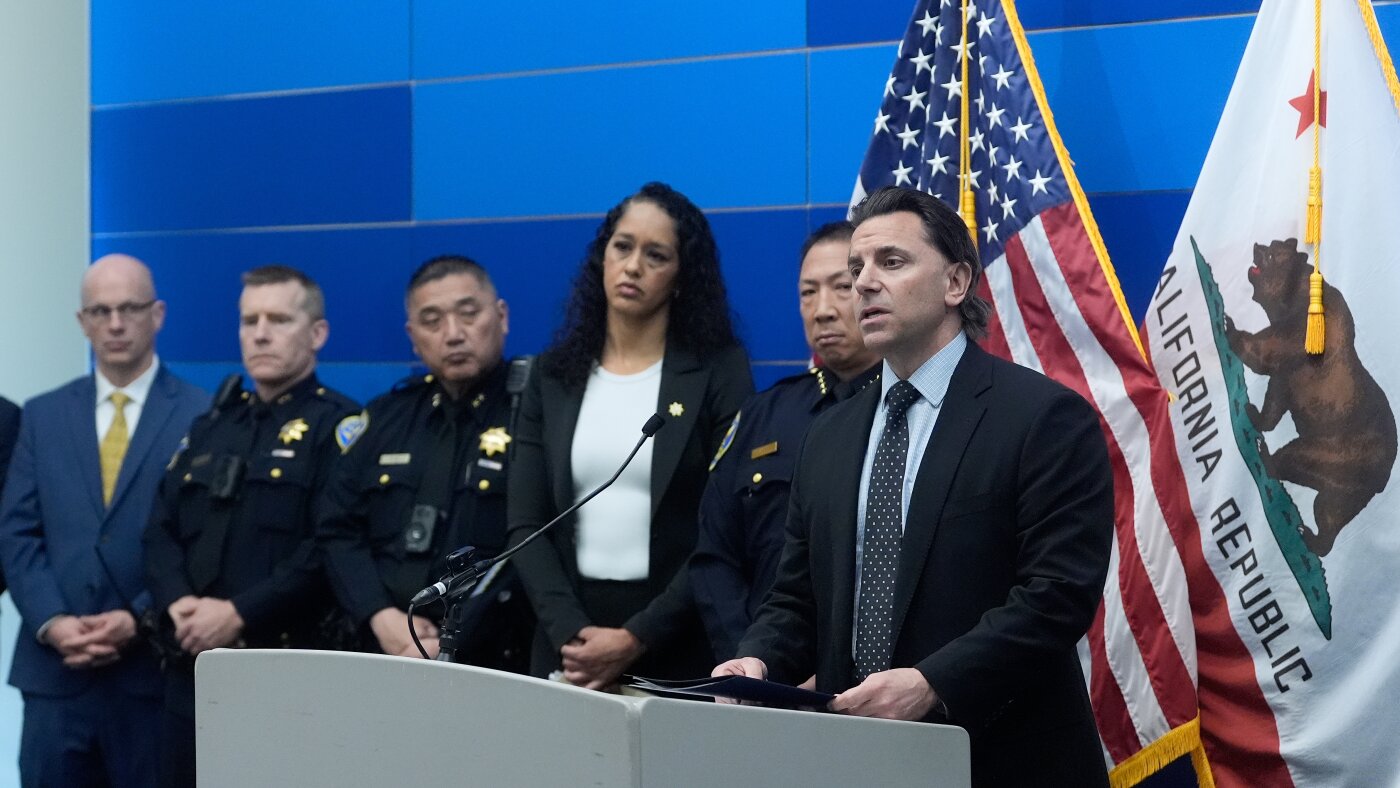
Man accused in Molotov cocktail attack of OpenAI CEO’s home charged with attempted murder

Embattled Rep Tony Gonzales announces plans to resign amid sexual misconduct allegations
-

 Atlanta, GA1 week ago
1 teenage girl killed, another injured in shooting at Piedmont Park, police say
-

 Georgia1 week ago
Georgia House Special Runoff Election 2026 Live Results
-

 Arkansas4 days ago
Arkansas TV meteorologist Melinda Mayo retires after nearly four decades on air
-

 Pennsylvania1 week ago
Parents charged after toddler injured by wolf at Pennsylvania zoo
-
 Milwaukee, WI1 week ago
Potawatomi Casino Hotel evacuated after fire breaks out in rooftop HVAC system
-

 Austin, TX7 days ago
ABC Kite Fest Returns to Austin for Annual Celebration – Austin Today
-

 World1 week ago
Zelenskyy warns US-Iran war could divert critical aid from Ukraine
-

 World1 week ago
Indonesia receives bodies of peacekeepers killed in southern Lebanon