Movie Reviews
Movie Review: UNDERTONE – Assignment X


By ABBIE BERNSTEIN / Staff Writer
Posted: March 17th, 2026 / 10:20 PM
UNDERTONE movie poster | ©2026 A24
Rating: R
Stars: Nina Kiri, Adam DiMarco, Michèle Duquet, Keana Lyn Basidas, Jeff Yung
Writer: Ian Tuason
Director: Ian Tuason
Distributor: A24
Release Date: March 13, 2026
Viewers may not want to play classic lullabies backwards – or maybe even forwards – after watching UNDERTONE. This low-budget indie uses sound and suggestion, along with disturbing subtext, to create a cumulatively unnerving experience.
Evie (Nina Kiri) is the caretaker for her extremely religious, bedridden and dying mother (Michèle Duquet). By the look of it, Evie is doing a good job, in that her mother is clean and comfortable. Evie stays home, seldom leaving their two-story house that is adorned everywhere with Catholic statues and imagery.
But Mother hasn’t eaten or spoken in the past two days as UNDERTONE opens, and Evie is preparing for the end. One of Evie’s few pleasures is the exploring-odd-phenomena podcast “Undertone” she does with her friend Justin (Adam DiMarco). The two haven’t seen each other in years and he lives in another country now, but they have an easy rapport with each other.
For the “Undertone” podcast, Evie plays the skeptic and Justin the believer, exaggerations of their real-life stances. When Justin receives ten audio files from an unknown sender, Evie’s first reaction is that he should delete them, as they probably contain viruses. This may well be the case, although the virus isn’t the kind that wrecks computers.
The files present to us a couple, Jessa (Keana Lyn Basidas) and Mike (Jeff Yung). Mike has taken to recording Jessa to prove to her that she is not just talking but in fact singing children’s songs in her sleep. By what seems to be coincidence, Evie has been singing “Baa, Baa, Black Sheep” around the house.
Research enthusiast Justin gets to the roots of these lullabies and others. The results are alarming. They’re worse when played in reverse. Sometimes all of us – that’s Evie, Justin, and the audience – can hear the words; sometimes it’s a mixture of who can and who can’t.
Writer/director Ian Tuason demonstrates great comprehension of the alarming power of sounds and sights that we can’t fully grasp. It’s like walking downstairs and missing a step by an inch. We’re straining to make sense of input that we’re still processing when some other eerie development surfaces.
Tuason bases his horror in ancient folklore. We don’t need to be religious ourselves to understand why this is happening in this household. Even some of Mom’s little knick-knacks are illustrative of what we’re being told.
There’s also a carefully-threaded theme running through UNDERTONE about certain unspoken terrors that almost everyone has to face, albeit usually not so quite drastically as in this film.
Evie has her secrets, but she’s not an unreliable narrator. As the audience sees things that she does not, we aren’t dependent on her perspective. It’s more that she’s so run down by circumstances when we meet her that we fear she doesn’t have the strength to fight for herself.
Kiri has a charismatic presence that makes her an unassuming but natural focal point. DiMarco supplies ready comradely cheer.
Such is the immersive quality of UNDERTONE that only when it’s done do we step back and appreciate the skill (and financial/temporal restraint) with which it has been made. It leaves us agitated and jumpy, which is a hallmark of well-crafted horror.
Related: Movie Review: BANK OF DAVE: THE LOAN RANGER
Related: Movie Review: SCARED TO DEATH
Related: Movie Review: BODYCAM
Related: Movie Review: “THE BRIDE!”
Related: Movie Review: NFT: CURSED IMAGESRelated: Movie Review: SCREAM 7
Related: Movie Review: OPERATION TACO GARY’S
Related: Movie Review: ANACORETA
Related: Movie Review: THIS IS NOT A TEST
Related: Movie Review: GHOST TRAIN
Related: Movie Review: COLD STORAGE
Related: Movie Review: THE HAUNTED FOREST
Related: Movie Review: “WUTHERING HEIGHTS”
Related: Movie Review: THE MORTUARY ASSISTANT
Related: Movie Review: THE STRANGERS: CHAPTER 3
Related: Movie Review: PILLION
Related: Movie Review: JIMPA
Related: Movie Review: ISLANDS
Related: Movie Review: WORLDBREAKER
Related: Movie Review: MOTHER OF FLIES
Related: Movie Review: 28 YEARS LATER: THE BONE TEMPLE
Related: Movie Review: NIGHT PATROL
Related: Movie Review: THE CONFESSION (2026)
Related: Movie Review: WE BURY THE DEAD
Related: Movie Review: ANACONDA
Related: Movie Review: AVATAR: FIRE AND ICE
Related: Movie Review: IS THIS THING ON?
Related: Movie Review: MANOR OF DARKNESS
Related: Movie Review: DUST BUNNY
Follow us on Twitter at ASSIGNMENT X
Like us on Facebook at ASSIGNMENT X
Article Source: Assignment X
Article: Movie Review: UNDERTONE
Related
Related Posts:


In the Hand of Dante, 2025.
Directed by Julian Schnabel.
Starring Oscar Isaac, Gal Gadot, Gerard Butler, John Malkovich, Louis Cancelmi, Sabrina Impacciatore, Benjamin Clementine, Martin Scorsese, Al Pacino, Franco Nero, Jason Momoa.
SYNOPSIS:
A handwritten manuscript of Dante Alighieri’s poem “The Divine Comedy” makes its way from a priest to a mob boss in New York City, where it is taken by Nick Tosches after he’s asked to verify its authenticity.

Outrageously ambitious with an absurd narrative that veers between slick scuzzy fun and philosophically snoozy, the key issue with co-writer/director Julian Schnabel’s excessively long In the Hand of Dante is that it’s more engaging as a dopey early 2000s crime thriller about mobsters employing the services of novelist Nick Tosches (also the writer of the novel the film is based on, inserting himself into it as a fictional character, here played by Oscar Isaac in the adaptation by Schnabel and Louise Kugelberg) and Dante Alighieri specialist to steal the recently unearthed original manuscript of his 14th-century masterwork The Divine Comedy from Italian priests than it does as its other side to that coin, a flashback story about the creation of that story complete with actors portraying secondary characters to eventually get at some points about reincarnation.
This means that the film mostly begins with Oscar Isaac entangled in a web of crime alongside slur-slinging, trigger-finger-happy Louie (in what might be the best performance of Gerard Butler’s career, despite the steep drop in quality in the second half), John Malkovich as a mob boss seeing nothing but dollar signs if they can get a hold of the original manuscript, authenticate it, and sell it on the black market, and even Al Pacino popping up for a scene and stealing it set during Nick’s childhood following a violent incident that is so bonkers readers might not believe it even if I typed it out here, to something close enough to a mess culminating in a confrontation between the excellent Oscar Isaac and the shudderingly bad Gal Gadot and Jason Momoa in important roles, the former a lover placed in danger to the mob by her proximity to Nick, and the latter a greedy killer in a relationship with literary historian Dr. Susanna Pulice (Sabrina Impacciatore).

Martin Scorsese also appears in the 14th-century section (for someone who loves to assert what real cinema is vs cinematic theme park rides, he has now appeared in 3 mediocre-to-terrible movies this year), offering sage-like advice to Dante (also Oscar Isaac) in a hilariously over-the-top beard piece. Much of this is a mental journey, but also has something to do with Pope Boniface VIII (also Gerard Butler) placing the Mark of Cain on Dante following a falling out, the writer’s inability to find inspiration in his current lover Gemma Donati (also Gal Gadot) compared to his first love Beatrice, executed in stark contrast from the much more accessible and palatable modern day crime story. A blunter way to put it is that any time the film shifts to these flashbacks, it’s quite boring and never finds a sense of rhythm, drive, or purpose.
Unquestionably, some of this is by design and baked into other elements of the presentation, which includes flashbacks only receiving color as a means of implying that they were more enriching days for artistic freedom and integrity, compared to the black-and-white 2000s material that further homes in on greed and only financial gain for a manuscript no one even knows how to price if it turns out to be authenticated. Expanding on that thought, there are certainly no qualms to be had with the striking cinematography from Roman Vasyanov.

The other encroaching thought here is that, for as carefully considered as the film looks and as captivating as about half the performances are (we truly do not need to talk anymore about Gal Gadot and Jason Momoa, neither of whom can deliver convincing accents without eliciting laughs), it’s not going anywhere interesting, especially once the mobsters exit the narrative. Technically, they are replaced by a hitman, although a lengthy amount of time is spent watching Nick fly around the world for different aspects of the identification process, sometimes involving technology that even he doesn’t understand and tunes out of. In the novel, there appears to be a greater emphasis on Nick’s inner thoughts about the current state of the art world and on finding flaws in classic works or restrictive prose, which is alluded to here but not interrogated enough to emerge as a compelling element. It’s enough to make one wonder what else was lost in translation from the book.
The filmmakers seem to think the romantic subplot will sustain intrigue for the second half, but it’s devoid of emotion and comes across as aimless in the 14th-century portion. At a certain point, one simply longs for a more focused movie about mobsters stealing recently discovered historic manuscripts for profit; it’s far more fun and amusing than the rest of the sluggish, artfully tedious In the Hand of Dante. No one here seems to realize that this should be a comedic crime caper, and it works that way until it takes itself far too seriously, with flashbacks that bore rather than provide insight or meaningful context.
Flickering Myth Rating – Film: ★ ★ / Movie: ★ ★ ★
Robert Kojder
https://www.youtube.com/watch?v=embed/playlist

Film Reviews
Soy Frankelda
Director: Arturo Ambriz, Roy Ambriz
Cinema Fantasma, Netflix
Streaming on Netflix: 06.12.2026
People have given their diatribes and waxed poetic about the dread of AI in creative fields. The ever-increasing push to implement it into our lives is disheartening to say the least, but even more so, it kills a piece of our soul by encouraging us to replace imagination and artistry with prompts.Why go through all the time and effort of bringing your vision to life when a program can do it in less than a fraction of a second? It disconnects us from the aspects that enrich our inner worlds. Still, people are fighting back by showcasing their creativity. Soy Frankelda is one such ode to human capability and imagination.
The film takes place between our world in 1866 Montevideo, México, and the parallel dream world of Topus Terrenus, where fantastical creatures reside and feed upon our fears. Francisca Imelda, aka Frankelda (Mireya Mendoza), is an aspiring horror writer. Unbeknownst to her, her writing exists and affects Topus Terrenus. However, the parallel dimension is deteriorating due to a lack of fear in the human world. Enamoured by her writing, Prince Herneval (Arturo Mercado Jr.) invites Frankelda to his world in the hopes that she can become the new nightmare-teller and reinvigorate fear in humans through hert stories. This does not go well with the current nightmare-teller, Procustes (Luis Leonardo Suarez), who plots to overthrow the royal family and establish himself as the new ruler of Topus Terrenus by stealing Frankelda’s work and passing it off as his own. What ensues is a dazzling musical journey of stop -motion charm and spooks.
To be honest, I am very biased when it comes to talking about this movie. Animation, to me, has always been one of the most versatile and passion-driven mediums for storytelling, so of course I hold it in such high regard. However, Mexican animation has never truly taken the main stage. Sure, there are American-based animated projects that center Mexican narratives like Coco and The Book of Life, but it wouldn’t be a stretch to say that Mexico’s animation industry has been precariously held up by the Huevos franchise and the Leyendas series. While both these series have their merits (I love to rewatch many of the Leyenda movies around Halloween), neither captures a sense of grandeur or is as engaging as Soy Frankelda. Furthermore, I can’t help but feel a sense of pride in knowing that this is the very first stop -motion project produced entirely in Mexico.
To say Soy Frankelda is a work of art would be an understatement. The character models are incredibly detailed and unique, and the settings which they inhabit are ornate and depict a grand sense of scale. The film also isn’t afraid to dip into mixed media. In moments where the characters’ emotions are heightened, other mediums like oil painting or charcoal are used. The film is also acutely aware of its limitations and finds creative workarounds. These little decisions give the film a sense of earnestness and not only bring liveliness to the world, but also tangibility. Guillermo Del Toro was the directors’ mentor during the production of this film and his fingerprints can be seen throughout. The level of craftsmanship is akin to the work he does with all his creature designs. Still, it’s obvious that the stop -motion in this film hasn’t reached the same level of smoothness as a Laika production, but the roughness and jerkiness of the movements remind you that human hands worked on it and there is a charm to that.
The film’s worldbuilding is also noteworthy, blending fantastical and macabre elements to create a landscape that is equal parts whimsical and spooky. It feels like a true successor to the art style of The Nightmare Before Christmas, just with more color and a variety of textures. The lore is also presented intentionally and connects to the theme of fiction being as real as reality. It all hinges on the sentiment that our ideas have life and that as long as we keep creating, the world will continue to be filled with inspiration and therefore beget more creation. Soy Frankelda encourages the act of creating, the idea that we live to create and to create is to live.
While I have a deep appreciation for this film, it is far from perfect. Namely, the narrative is lacking at some points, especially when it comes to the interpersonal conflict at the climax of the story hinged on a miscommunication. It’s disappointing, to say the least, that a story with this much thought and effort in the presentation of the film would falter when it comes to the script. This also bleeds into the film feeling rather melodramatic at some points. I liken it to watching an animated fantasy telenovela. Frankelda’s extreme emotional shifts are testament to that. Also, while the story does conclude, it still feels unfinished by the end. Obviously this is because Soy Frankelda is actually a prequel movie to Frankelda’s Book of Spooks, an animated anthology series that explores Frankelda’s stories. Nevertheless, the movie still leaves you wanting more.
Soy Frankelda is a landmark film for Mexican animation. In a time when pillars of the industry are encouraging the use of generative AI, it is refreshing to see a film that so succinctly makes a case for human originality and celebrates the art of creating one’s own stories and worlds. —Angela Garcia
Read more film reviews from Angela Garcia below:
Film Review: I Love Boosters
Film Review: You, Me & Tuscany
To help SLUG continue covering upcoming films, consider becoming one of our donors!

Mr. Reset and The Society of Turnbuckle and Bone is a gripping sci fi horror/comedy featuring Vinny Pacifico, who is an ex-Ring of Honor Wrestler. What’s it about? What did we think about it? Read on for our spoiler free review!
But first? Take a look at the trailer!
Synopsis
Former Ring of Honor talent Vinny Pacifico stars as a rising indie wrestler lured by the promise of fame and fortune into a dark world of intense trials and sacrifice.
Rob Ryzin (ex-AEW), Bobby Fish (ex-NXT), Nick “Percy Watson” McNeil (ex-NXT), and Nick “Jamie Stanley” Stuible also star alongside writer-director Jedi Koszewski.
From The Press Release
The spectacle of professional wrestling grapples with psychological dread in Mr. Reset and The Society of Turnbuckle & Bone.
Full of gauzy, gorgeous imagery, a kaleidoscope palette, and themes that blend science fiction, body horror, and dark comedy, the surreal horror film explores a secret society that manipulates the wrestling industry from behind the scenes under the enigmatic Mr. Reset’s watchful eye.
Produced by Audacity Complex Studios, the film strips away the glitz of sports entertainment to reveal its psychological toll, while never shying away from the darkly comic moments that lurk in the industry’s shadows.
“This project holds special meaning for me because it brings together two of my greatest passions: horror and professional wrestling,” Pacifico commented. “Through this story, I’ve had the privilege of exploring authentic experiences within a fictional framework and shedding light on growing up in the entertainment industry.”
Here’s a look at the poster art!
My Thoughts
If you like movies that have a horror/conspiracy feel to them with a hint of creepy, this is the movie for you. The cast did a phenomenal job, and the storytelling was spot on. It also had a touch of breaking the 4th wall in there. This is a great film with a lot of drama, horror, and bad decisions. I will give a PSA to anyone who is sensitive to lights as it switches back and forth a lot. I like the news element to the movie and how it goes from 1st person to 4th person.
Final Thoughts
I wouldn’t recommend this movie to anyone under 13 because of the nature of the film and the tricks it can play on your mind. Also, it has body horror which younger viewers might not be able to handle. The gore and the trauma in the movie play on your mind and is not for the faint of heart. Excellent storytelling and the director did a phenomenal job. I highly recommend this B-list movie with a 9/10 for me based on the bizarreness of it and the great storytelling. Sometimes you need a reset.
Mr. Reset and The Society of Turnbuckle and Bone on VOD now!
-

 Health13 minutes ago
Does Metformin Help With Weight Loss? How To Maximize Your Results
-
 Lifestyle28 minutes ago
A judge says the Kennedy Center must update him on its plans — and address that tarp
-

 Technology38 minutes ago
A new paper argues Microsoft exaggerated its quantum claims a year ago
-

 World43 minutes ago
Colombia’s ‘El Tigre’ secures presidency as leftist rival finally concedes defeat
-

 Politics50 minutes ago
Comer probes alleged Biden collusion with gun control activists in Glock lawsuit
-

 Sports58 minutes ago
2026 World Cup Third-Place Standings: Who’s In, Who’s On The Bubble
-

 Technology1 hour ago
FCC phone ID plan could end burner phones
-
 Business1 hour ago
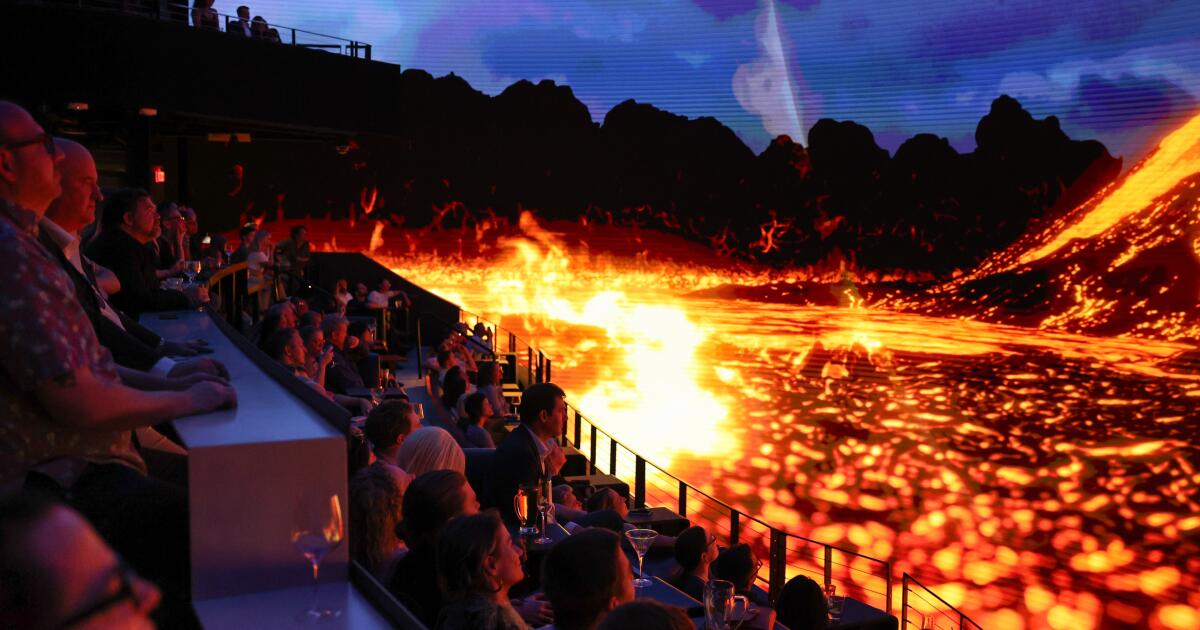
Sony Pictures invests $100 million in virtual reality venue Cosm

