Movie Reviews
Film Review: I Used To Be Funny offsets its humorously-adjacent title with a dark, heartbreaking temperament. – The AU Review


After showcasing her stellar comedic delivery across 2022’s Bodies Bodies Bodies and last year’s Bottoms, Rachel Sennott continues her dominance as one of the industry’s most exciting talents with a more dramatic flex in Ally Pankiw‘s I Used To Be Funny, which offsets its lead’s comedic capabilities and humorously-adjacent title with a dark, heartbreaking temperament.
Flipping between the past and the present – which, admittedly, takes a bit of time to garner which time period is which – Pankiw’s narrative bases itself around Sam (Sennott), a stand-up comedian, who was once a promising and rising talent in the Canadian comedy scene. An event has taken place in her life, however, that has drastically altered her outlook, and we first meet her in the “after” phase, where she is shrouded in a sea of depression.
She barely eats, she’s hesitant to leave the house, and when she does she’s unable to move ahead with the plans she half-heartedly commits to; we know her emotional and psychological situation is dire when her friend (Sabrina Jalees), and roommate, applauds her for simply taking a shower.
Over the course of its 105 minutes, Pankiw’s script slowly clues us in as to what exactly took place in Sam’s life, and our first nugget of information comes from a news report that tells of a young girl, Brooke (Olga Petsa), and how she’s gone missing. Brooke’s disappearance and who she is in relation to Sam is dropped in fragments over time, and I Used To Be Funny balances its whodunnit-like mentality with a coming-of-age tale that, initially, builds quite a masterful sense of tension.
What the film ultimately reveals regarding Sam may be triggering to some, and though I Used To Be Funny maintains a mostly sombre personality, Sennott’s default remains in a comedic, yet reflective, space. By no means does she make light of the material by staying “on” as a comedian – which very much suits her at-times sarcastic character – and her chops as a dramatic performer shouldn’t be undervalued, with the film’s most important scene garnering an effectiveness that speaks to her ability to organically sell her character’s pain.
With Sennott as the headliner, some may be caught off-guard that I Used To Be Funny seldom delights in humorous moments. Whilst there’s a peppering of genuine wit throughout, Pankiw keeps this as grounded as possible, with any levity coming from her character’s natural instincts and observations. The seriousness of its narrative keeps this from ever being a pleasant experience, but the pain one can hold onto, and the consuming crippling aftermath, means this drama garners an unfortunate relatability.

THREE AND A HALF STARS (OUT OF FIVE)
I Used To Be Funny is screening in select New York locations from June 7th, 2024, followed by Los Angeles on June 14th and on Digital June 18th. An Australian release is yet to be determined.



Olivia Wilde, Seth Rogen, Edward Norton and Penélope Cruz star in The Invite.
A24
hide caption
toggle caption
A24
The new comedy film The Invite centers on an unhappy married couple who host another couple — they live upstairs — for an uncomfortable, and revelatory, evening of dinner and charcuterie. The film’s screenwriters, Rashida Jones and Will McCormack, are actors who are also longtime writing and producing partners.
Jones and McCormack met decades ago, when McCormack’s sister (actor Mary McCormack) set them up on a date. It didn’t work out as a romantic pairing. Instead, it was the start of a long-running creative partnership.

“We’re really like brother and sister who dated briefly, which is not weird,” McCormack jokes. “I think we both knew right from the very beginning that we were connected and that we had to be in each other’s lives. And it took us a minute to sit down to write, but finally we did, and I’m so glad we did.”
Jones says she and McCormack share a voice: “The two of us have the same clip, the same rhythm, and we’re so different in so many ways, but we just kind of like fit like puzzle pieces conversationally very quickly, which is a wonderful thing to have with a writing partner.”
Inspired by the 2020 Spanish film The People Upstairs, The Invite takes place over the course of one night in a chicly appointed apartment in San Francisco. Two couples gather for dinner, and as the evening unfolds, the stories they’ve been telling themselves about their relationships and about themselves fall apart.
McCormack describes the film as a sex comedy that’s not really about sex. “It’s about wanting to be seen and heard and valued,” he says. “You live with someone for so long and it’s really hard.”
Jones says it’s no accident that their work tends to focus on relationships and middle age: “Selfishly, it’s great that we can channel the thing we’re most interested in, which is relationships, living with other people, being parents, losing parents, being alive, getting older, being middle-aged, looking straight down the barrel of the back half of life. All these things we got to bring to this script.”
Interview highlights

Will McCormack and Rashida Jones attend the Los Angeles premiere of The Invite on June 23, 2026.
Valerie Macon/AFP via Getty Images
hide caption
toggle caption
Valerie Macon/AFP via Getty Images
On their working relationship
Jones: We write separately. We write together. We’re in an open relationship as writers, a very healthy, open relationship. But when we come together, there’s a thing that happens.
McCormack: I think we always found the same things funny. … And I think also the same things sort of broke our hearts, and I think that we wanted to try to say something together. There were movies that appealed to us both, and there was a voice that we shared from the beginning. There was just an easy rapport.
On acting out the dialogue together as they’re writing it
Jones: Well, we act while we’re writing, but that’s our discovery process of dialogue because we’re lucky, we both started as actors and can do a good job with that. So often we act out the scenes and if it’s not working, it doesn’t feel right … that’s easy to fix.
On why they’re drawn to stories about heartache

McCormack: Life is really just a series of losses. It’s one loss and one heartbreak after another. When your little summer ends and you don’t want it to end, and then you get your heart broken, and then you have kids, and they’re gonna break your heart, and then your parents die and then [you] start to lose bone density. …
Those moments can actually be the funniest because they’re so raw. And it’s when we feel connected, right? Like, heartbreak is the thing that binds us. Like, no matter who you are or no matter where you are or no amount of how old you are, like you’re gonna go through heartache. … And to be able to dig into some of those moments with Rashida has just been such a gift, and I don’t take that for granted to be able to do that for a living.
On Quincy, her documentary about her dad, Quincy Jones, and experiencing anticipatory grief
Jones: I filmed for six years, and the second to last year of filming, he went into a diabetic coma, and we stopped filming, and luckily my brother filmed a little bit in the hospital because we were going to kind of show him what he had been through if and when he came out and we were so lucky he did come out at 82. … But having that moment where he was that close to death, and then deciding to put that in the film and show him overcoming that, I think was my way of sort of preparing for the inevitable, you know? And I was so lucky to have him for another nine years after that, but ultimately, I knew what was coming, and it was really a love letter to my dad, but also a way to hopefully reach out to other people and say, listen, we’re all going to go through this and we want to be honest about what it’s like for our family to come to the other side of this.

My dad is obviously an icon and a culture shifter, and he had been documented a lot before. And what I felt like people missed, because he’s so successful at what he did, was they missed his personality. They missed the personal side of him, which is a very important part to why he was successful. It’s not just his talent and his hard work, but he had this gift with people. And he had a way of relating and being honest and getting to the heart and the honesty of something and the intimacy of something so fast with a stranger, with his kids, with the people who loved him, the people didn’t know him. And I really wanted that to be on screen.
On what they bring out in each other
Jones: Will is like my closest chosen family in a way. … I don’t wanna get emotional, but I feel like Will, and I see the child versions of ourselves and can really take care of that little kid in each other, because we’re both very hard on ourselves. … We sort of like, very kind of gently, love and respect each other and give each other the benefit of the doubt that we might not give ourselves. And then, I think, born of that is this sort of thing that lives in the intersection between pain and humor, and maybe hopefully something divine, like hopefully we leave some room, as my dad always said, “for God to walk in the door,” because that’s really our job ultimately is to channel. And so hopefully there’s something about us coming together that allows that to happen.
McCormack: I don’t want to get emotional either, but what she said.
Ann Marie Baldonado and Susan Nyakundi produced and edited this interview for broadcast. Bridget Bentz, Molly Seavy-Nesper and Meghan Sullivan adapted it for the web.

Way back in 2017 I reviewed a film called Demon Hunter (which was recently rereleased as Taryn Barker Demon Hunter), a moody character driven horror action hybrid that I enjoyed very much. After a very long wait, a sequel, Demon Hunter: Time 2 Kill, has finally been released in the world.
Read on for my thoughts on the film
Synopsis
Taryn Barker is just your average everyday monster slaying, wise-cracking, demon hunter on the hunt for two pieces of an ancient artifact, The Necrox. Standing in her way is Elysia Cronika, the CEO of Illumini Industries and a member of the Satanic sect The Stygian.
Cronika plans to obtain the Necrox to unleash Hell on Earth. The problem is Taryn is hard to kill and with every demon sent to eliminate the demon hunter getting wiped out, she gets closer to saving the day.
As a last resort, Cronika sends Taryn through time alongside a band of innocent teenagers to the year 1987 and now Taryn needs to protect the group from a notorious summer camp slasher Lucien Krull, whilst finding the Necrox and a way back home to the present
Demon Hunter: Time 2 Kill was written and directed by Zoe Kavanagh. The film stars Niamh Hogan, Lisa Wilcox, Angel Nichole Bradford, Kevin O’Malley, Anthony Cespedes, CJ Dorsey, Valeria Arango Gomez, Jada Krueger and Desiree Xu.
After all these years, it was nice to see Taryn Barker return. She’s a little less moody and more grown up and she has a stronger sense of humor. One thing that hasn’t changed is that she’s an absolute badass. I was really impressed with the increased action, fight scenes and stunt work. Niamh Hogan does a great job as Taryn. She kills it at the fight scenes, she’s got great comedic timing and she’s just genuinely fun to watch.
I was really happy to see Kevin O’Malley return as Ethan, as I felt he was one of the strongest characters in the first film and I really enjoyed his chemistry with Taryn. He’s given a lot more to do here and that was exciting. The cast includes a lot of new additions and there was definitely some highlights.

Angel Nichole Bradford (one of my absolute favorite indie actresses) plays Deborah, a character who shares a sisterly energy with Taryn. I loved the way they looked out for each other and always had each other’s back. Enea Pagni’s Jay and Jacob Rainer’s Lawrence were 2 characters I was able to root for. I loved their friendship. Last but not least is Desiree Xu’s Azumi, a demonology expert who is also a ninja. She was definitely a badass and I loved seeing her work together with Ethan.
The story here is much different than the first film, including time travel and a strong slasher element, which I really enjoyed. It gave Demon Hunter: Time 2 Kill a unique feel and set it apart from the first film. Given the slasher elements, it’s much gorier than the original film, which is sure to please those who enjoy that sort of thing. I loved how the film ended and am curious to potentially see where the series could go from here.

Final Thoughts
Demon Hunter: Time 2 Kill is an excellent sequel that increases the action, has some well executed fight scenes and ups the body count. Demon Hunter: Time 2 Kill is supernatural slasher/action film that is well worth a checking out. Highly recommended.

Earnest, preachy and melodramatic to a fault, “Mississippi Scholar” is exactly the sort of movie that the independent cinema was born to create.
Director and co-writer Marcus Bleecker’s film may traffic in tropes and cliches. But it has a vivid sense of place and a clear notion of the message it wants to send, and that message’s relevence.
Set in an unnamed small Mississippi city — it was filmed in Baldwyn, Saltillo and Fulton — the film is “a mind is a terrible thing to waste” in cinematic form. Our “Scholar” was born into a world of substance abuse, the racist legal traps of the country’s remaining marijuana laws and has a baby-mama-in-waiting and a drunken parent whom our teen hero is responsible for as his burdens.
But he has a world of promise that one dedicated teacher, his dead father (whom he still converses with) and even he himself can see if he can just “stay focused” and keep his eyes on this very personal prize — college and a better life beyond Ole Miss.
Shannon Brown is James, a kid with great grades and an ill-tempered mother (Gisla Stringer) who crawled into the bottle a long time ago and has no interest in crawling out.
But he’s got an ad hoc support system helping him through his senior year. His aunt (GiGi Marie Gaines) feeds him and keeps him advised of his mother’s latest tumbles. His dead dad (co-writer Obba Babatundé) passes on wisdom about his mother in fortune cookie-sized bites when father and son chat — at the cemetary or elsewhere.
“Hurt people hurt people.”
His English teacher, Mr. Keating (Sonny Marinelli) has high hopes for him, hopes he’s willing to nag the kid to achieve — “It takes only five seconds to get in trouble, and 25 years to get out of it!”
His school principal (Lance E. Nichols) expects greatness, but has learned to never get his hopes up over any Black boy at his integrated high school.
Even Ray-Ray (Jeremy Isaiah Earl), the ex-con drug dealer, takes a brotherly interest in the kid who is his “best distributor.” That money is what keeps a roof over James’ and his mother’s heads, and pays for his Jordans.
His white boy bestie (Dominic Arvielo) may act “Black,” but will he have James’ back when things get real?
And girlfriend Tammy (Aysa Branch) may be far and away the prettiest girl in school. But she’s taking the easy route, relying on her looks to achieve the limited goals the script sketches out for her.
“We’re gonna have ourselves a baby as soon as we graduate!”
Bleecker’s film covers all of the bases, all of the tropes and most of the cliches as James faces Big Choices with perils to his plan at every turn. Maybe taking him to visit the football-mad University of Mississippi isn’t the deal-maker his teacher hopes it is, as James doesn’t “see anybody who looks like me.”
Only a real civil rights hero (Dr. Donald Cole) can set him straight, relating the story of what James Meredith and generations before him did to give James this chance. Or can he?
“Mississippi Scholar” is well-crafted and an easy film to like, with relatable if “stock” characters and decent performances from all but the most amateurish (James’ classmates) cast members. But it’s entirely too predictable to surprise and too pre-digested to have an edge.
Worthy subject and novel setting aside, we’ve seen this story on the big screen and the small one too many times to count, seen this kid’s hand played out in every variation the cards have to offer.
But it makes a fine calling card for its cinematographer turned director, and let’s hope we see Bleecker’s name and hear his voice in another Deep South indie film, and soon.
Rating: TV-14, violence, profanity
Cast: Shannon Brown, Gisla Stringer, Sonny Marinelli, Jeremy Isiaah Earl, Aysa Branch and
Obba Babatundé
Credits: Directed by Marcus Bleecker, scripted by
Obba Babatundé, Marcus Bleecker and P.J. Leonard. A Narrative Distribution release on Amazon Prime.
Running time: 1:24

-
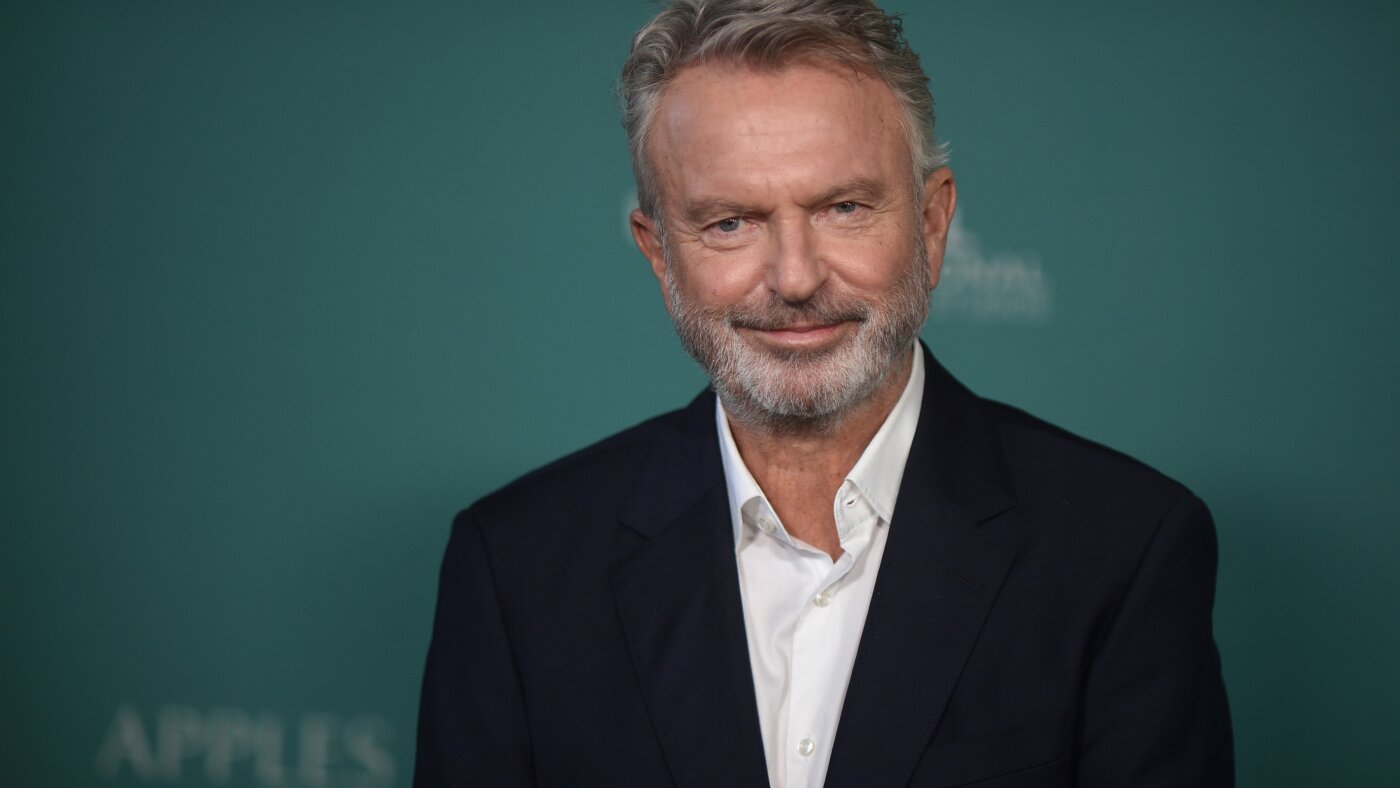 Lifestyle1 minute ago
Sam Neill, known for ‘Jurassic Park’ and ‘The Piano,’ dies at 78, his family says
-

 Technology13 minutes ago
Microsoft tests Windows Search without all the ads and fluff
-

 World19 minutes ago
Iran-backed terror proxy Houthis threaten fresh attacks after Yemen airport strike
-

 Politics25 minutes ago
Hegseth announces joint task force with DOJ to prosecute leaks to journalists ‘with the full force of the law’
-

 Health31 minutes ago
Microwaved squishy toy explodes onto boy’s face and chest amid viral trend, causing horrific burns
-

 Sports37 minutes ago
FBI, Atlanta police target unauthorized drones flying near World Cup venues
-

 Technology43 minutes ago
Why careful people still end up on data broker sites
-
 Business49 minutes ago
Netflix to add videos from digital publishers to its homepage

