Movie Reviews
'Afire' movie review: The flame of love


Express News Service
It is likely that a lot of writers would see their own reflection, however unflattering, in Leon (Thomas Schubert), the protagonist of Christian Petzold’s Afire. I did. At times, I can be like him—living inside one’s own head, shunning human company, preoccupied with thoughts, agonizing for not being able to put them on paper, being self-obsessed yet wound up about one’s own creativity and creation.
Equally real is the oft-held perception by people around us, something that the film also shows, that writing is not “work”, as though it emerges magically, without an effort, from thin air.
However, despite there being a lot to empathise with Leon, he ends up inviting our scorn. On a visit to his friend Felix’s (Langston Uibel) holiday home by the Baltic Sea, he is in search of some peace, quiet, and isolation to dive deep into work and wrap up his second book. While fussing about it, he gets distracted by another occupier of the house, Nadja (Paula Beer), and her nightly dalliances with her lovers. Dissatisfied at his lack of productivity and mindful of his growing attraction for her, he is abrasive and annoying to others for their holiday fun and cheer, something he can’t afford. Meanwhile, the oppressive heat, lack of rain, and forest fires ensure that nature is also in an agitated state, like him.
Afire is as French as a German film can get. It is an eloquent reflection on relationships, friendships, and love navigated, formed and unformed amid creative enterprise with Wallners’ hypnotic and melodious assertion of freedom, the song “In My Mind”, playing oftentimes in the background. The film won the Silver Bear Grand Jury Prize at Berlinale last year and was recently showcased at the Singapore International Film Festival.
In Afire, Petzold turns the typical holiday narrative (he wrote the film when down with COVID and watching Eric Rohmer movies) into an amusing and caustic character study of Leon—egotistical, self-absorbed, and self-centred, resentful, and jealous—with Schubert in great form, living the role from within. Beer is luminous as Nadja, and extremely likeable, unlike Schubert’s annoying Leon. Uibel is charming as Felix, working on his art portfolio on photos of people staring at the sea and, in the process, getting more than friendly with Nadja’s lifeguard lover Devid (Enno Trebbs). The film pivots on and moves along the interactions of the foursome. It is as much about the irritants that define Leon, as the reactions they elicit from the three.
As the forest fires get more intense, so does the mood of the film and of Leon as well. The turning point comes with his disparagement of Nadja (without quite realising who she is for real) for working at an ice cream cart, later allowing her to read his manuscript and then getting upset at her dismissal of it. It gets worse with his publisher Helmut (Matthias Brandt) rejecting it as well.
Petzold gradually replaces the fluid tone with a more uneven narrative, driving the funny towards the steadily darker, unsettling, and harrowing. A bear burnt to death, an emergency visit to the hospital, and tragic loss, is what it takes for Leon to start looking at, acknowledging, and understanding the world around him and find true creativity beyond the confines of his selfish persona. Too heavy a price to pay, perhaps, to get a life amid mortality, appreciate the bioluminescence at the sea in the throes of darkness, learn to smile in melancholy, and embrace life when a lot of time has regrettably slipped by. It’s eventually about Leon rising, metaphorically, from the ashes falling from the sky.
What was my takeaway from Afire? WH Davies’ poem Leisure: “What is this life, if full of care; We have no time to stand and stare.” A good film to end or begin a year with, one that reminds us to hit the pause button every now and then between the play modes and never say no to anything because “work won’t allow it”.
Cinema Without Borders
In this weekly column, the writer introduces you to powerful cinema from across the world
Film: Afire
Follow The New Indian Express channel on WhatsApp


The Times of India
Apr 07, 2026, 3:24 PM IST
3.0
Super Duperr is a riot in all senses of the word. A wild ride filled with laughter and emotion it presents an unusual matchup of traditional and modern values.Rohit (Lalit Prabhakar) and Isha (Vidula Chougule) are a young couple trying to make their mark in the entertainment industry. They take their relationship to the next level and purchase a flat in Mumbai with their savings. It is here that they realise that they have fallen for a scam when the same house is sold to and currently occupied by a rural family. What follows is a series of clashes and learning moments that test the morality of both parties. The story is a fun take on a series of real world scams and as such has a very interesting premise. The Sameer Asha Patil film however chooses to take a detour in favour of certain stretched out gags and slow motion shots. What could have been a deep exploration of the two worlds colliding, ends up being a formulaic checklist of a wedding song, an action sequence and a few slapstick gags. These are passable of course, but the ho-hum nature of the story’s progression feels under utilized. Super Duperr does offer impactful emotional sequences, notably the equation between the parents (Shashank Shende and Nirmiti Sawant) and his eldest son (Hrishikesh Joshi). The music and cinematography are well executed and add abundantly to the viewing experience. Super Duperr set a rich tapestry only to ultimately doodle in a corner. While it could have benefitted from adding more inter-family interactions, it remains a good watch for this weekend.

The verdict is in, and critics have widely panned The Super Mario Galaxy Movie while audiences have universally praised the family-friendly sequel. This follow-up to the fan-favorite The Super Mario Bros. Movie has been in theaters for about a week since its debut on April 1, and it has already had the best box office opening in 2026, earning more than $190 million over its 5-day domestic weekend. Worldwide, it has amassed $372 million, making it the fifth largest global opening ever for an animated film. Despite the movie being a massive box office hit, however, the review scores are terribly low for the video game adaptation, and there are several reasons why.
Fans vs. critics on The Super Mario Galaxy Movie
As of April 6, The Super Mario Galaxy Movie has a mediocre 42% Tomatometer score from a total of 175 reviews on Rotten Tomatoes while holding a fantastic 89% Popcornmeter score from over 5,000 verified user ratings. That’s a stark 47-point difference between critics and users.
A similarly wide disparity can be found on Metacritic as well, where the sequel has a “generally unfavorable” Metascore of a 37 based on 45 reviews, despite it earning a “generally favorable” user score of a 7.9 (basically, a 42-point difference).
This gulf between professional reviews and user reviews for this sequel likely isn’t too surprising by fans of the original 2023 Super Mario Bros. movie. That film earned a 59% Tomatometer but a 95% Popcornmeter on Rotten Tomatoes, and it has “mixed or average” 46 Metascore but a “universal acclaim” user score of 8.1.
To be fair, the range of critic scores for the film is vast on Metacritic, with about seven reviews above a 60 and fifteen reviews below a 40. ComingSoon’s Jonathan Sim give it a “Good” 7 out of 10 rating, noting that “it doesn’t necessarily deepen the emotional or narrative complexity of the franchise, but it refines what worked before amplifies it on a grander scale.” However, many other reviews are far less kind, particularly the 0 out of 5 rating from The Times that calls the film “ugly, overbranded, lifeless digital marketing vomit” and a review from Vulture that says it’s like being “asphyxiated in a ball pit filled with candy.”
Meanwhile, multiple user reviews on Metacritic are shocked at the reviews. One called the low Metascore “absolutely ridiculous,” while another asked readers to ignore the critics altogether. A different user wrote, “It’s wild to see professional critics giving this a zero. It feels like they’ve never actually picked up a controller.” And to that person’s credit, we did find that a few critics who gave low scores admitting that the film wasn’t meant for them or that they had never played a Mario game before. Indeed, the movie is chock full of Nintendo references and easter eggs, something that Mario fans will appreciate far more than anyone who doesn’t know or care about the difference between a Super Mushroom and a Fire Flower.
More broadly speaking, The Super Mario Galaxy Movie has more than several traits that critics tend to dislike but that audiences enjoy. The first is that it’s a quick-paced, action-packed film, which features a handful of battles with Mario, Luigi, Yoshi, Princess Peach, Toad, Fox McCloud, Bowser, Bowser Jr., and Wart. Another is that it’s a comedic adventure with cartoonish gags that are age-appropriate for kids and humorous to Mario fans who are in on the joke. On top of that, the film is a family-friendly video game adaptation, a genre that doesn’t usually score well from critics. A Minecraft Movie, another box office smash that earned $960 million worldwide (and also starred Jack Black), was equally slammed by critics with a 47% Tomatometer but lauded by audiences with an 84% Popcornmeter.
Taken altogether, the movie was almost made in a lab for reviewers to despise and for audiences to praise as a nostalgic love letter to Nintendo. Regardless, despite how critics feel, they’ll need to brace themselves for more, since the Nintendo Cinematic Universe is looking like it will come sooner than later.

Watch I Know Exactly How I Die on VOD
The director of I Know Exactly How I Die is Alexandra Spieth, who ensures a tight pace and some gorgeous shots. She previously directed Stag and created and starred in the web-series [Blank] My Life. The screenplay comes from Mike Corey, and I do really like the plot and evolution of this story.
As already mentioned, the star Rushabh Patel is the executive producer. As a result, this movie is billed as “Rushabh Patel’s I Know Exactly How I Die“, which I am not a fan of. Unless Rushabh Patel is famous in ways I am not familiar with – nor is IMDb, as this is his first and so far only credit there.
This is like people wondering if Something Very Bad Is Going to Happen is connected to Stranger Things, because the media keeps referring to it as a new show from The Duffer Brothers. Sure, they produced it, but Haley Z. Boston created the original story and wrote the screenplay. And she’s not even a newcomer.
Okay, rant over, but I just don’t understand the marketing and press decisions of it all.
Anyway, as already mentioned, the practical effects in I Know Exactly How I Die are gorgeous. Any slasher fan should enjoy the concept of the plot as well as those amazing practical effects. And yet, you will have to endure a little terrible CGI, but this is an indie production, so budget restraints come into play. Of course, so does choosing the best talent, and that did not happen for CGI here!
I Know Exactly How You Die is out on VOD from April 7, 2026. You can rent it on Digital HD from your preferred platform, including Prime Video and Fandango at Home. The film will also be available on DVD.

Hypersonic aircraft company moves headquarters from Atlanta to El Segundo

Sony Pictures Entertainment to cut hundreds of film and TV jobs

On Highway 78, I watched the valleys awaken in vibrant blooms — a dramatic springtime show

Iran attempting cyberattacks against U.S. critical infrastructure, officials say

Chicago Bears Pro Bowler Steve McMichael diagnosed with CTE a year after ALS death

Florida High School Football Rankings: Top 25 teams – Oct. 21

How old is Bo Nix? What to know about Oregon quarterback ahead of 2024 NFL Draft

Cleary's 21 help Le Moyne down Central Connecticut State 69-64 in OT

99th annual Pony Swim held in Virginia

Indiana Members Credit Union announced as new anchor tenant at Bottleworks District

‘Policy of abuse’: Women march in Cuba against US energy blockade

Acting AG says ‘Nobody has any idea why’ Pam Bondi was fired except for Trump | CNN Politics

Ilhan Omar calls Trump an ‘unhinged lunatic,’ urges booting him out of office
Between Budapest and Brussels: Péter Magyar’s political tightrope
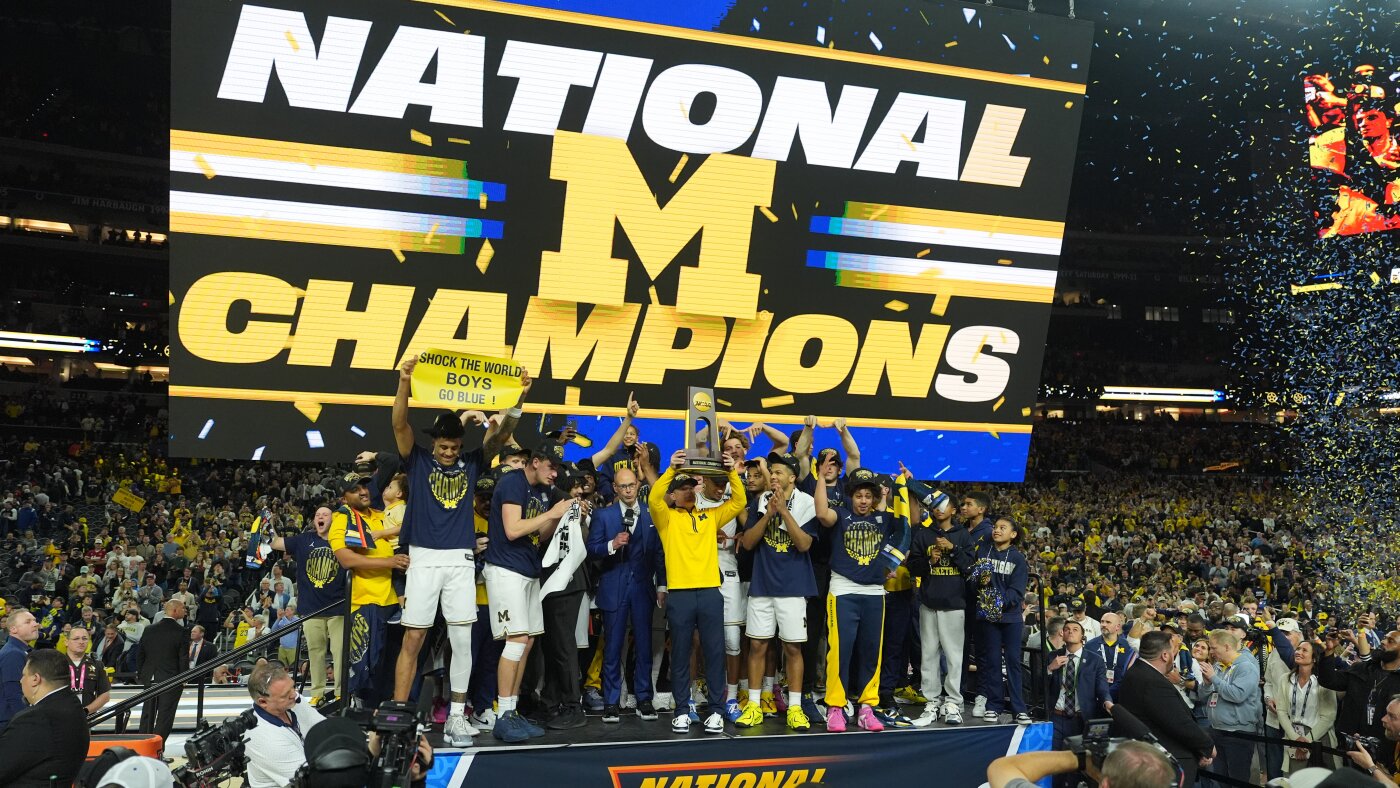
Michigan muscles its way to program’s 2nd NCAA basketball title, beating UConn
-

 Atlanta, GA3 days ago
1 teenage girl killed, another injured in shooting at Piedmont Park, police say
-

 South-Carolina1 week ago
South Carolina vs TCU predictions for Elite Eight game in March Madness
-

 Movie Reviews5 days ago
Vaazha 2 first half review: Hashir anchors a lively, chaos-filled teen tale
-

 Vermont1 week ago
Skier dies after fall at Sugarbush Resort
-

 Politics1 week ago
Trump’s Ballroom Design Has Barely Been Scrutinized
-

 Politics1 week ago
JD Vance says he was ‘obsessed’ with UFOs, believes aliens are actually ‘demons’
-

 Atlanta, GA1 week ago
Fetishist ‘No Kings’ protester in mask drags ‘Trump’ and ‘JD Vance’ behind her wheelchair
-
 Entertainment6 days ago
Inside Ye’s first comeback show at SoFi Stadium