Entertainment
Matt Rife is living his comedy dream. Now for the hard part — maintaining it

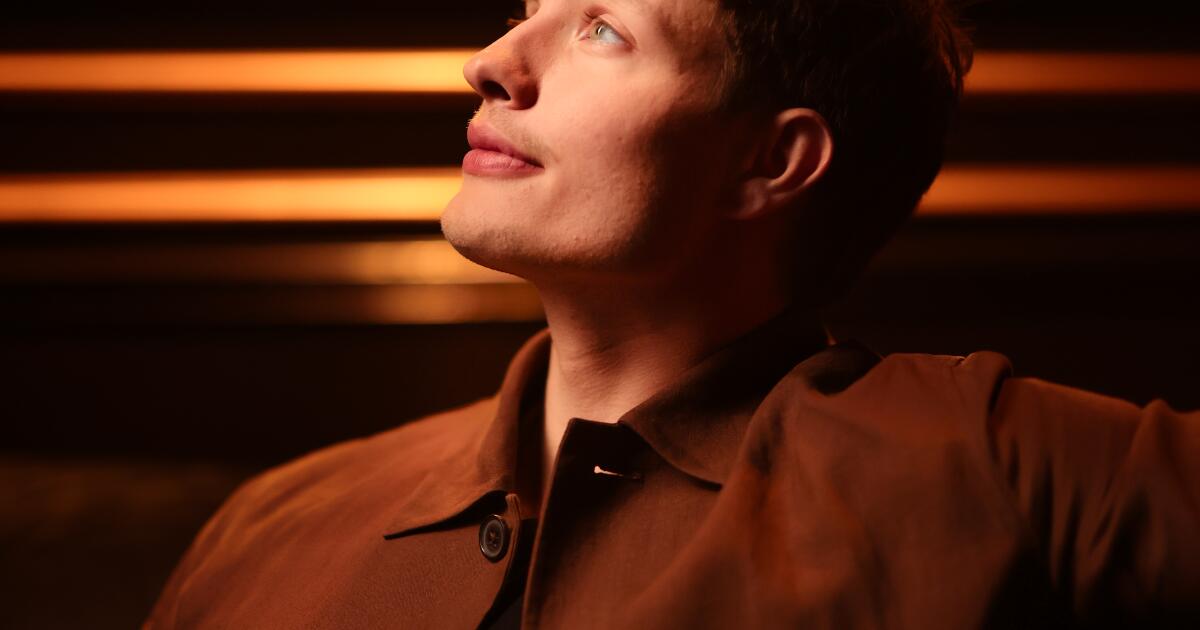
Comedian Matt Rife sits for a portrait at the Kookaburra Lounge.
(Dania Maxwell / Los Angeles Times)
Shortly after becoming the youngest stand-up comedian in history to sell out the Hollywood Bowl during the second installment of Netflix is a Joke in May, Matt Rife’s tireless pursuit of success finally caught up to him. His performance schedule clocking 40 to 50 shows a month led to a stretch of consecutive days without sleep as he stayed up prepping for shows, editing social videos and barreling from city to city. Though his body and mind were getting shaky on tour, he fought through it. Finally, just before a recent pair of shows in Indiana, he said he almost collapsed while leaving his hotel room and was forced to cancel the gigs just hours before showtime. Suffering blurred vision and painful ringing in his ears, he could barely walk or talk and had to be taken to the emergency room.
“I felt like I was legitimately dying,” Rife said during an interview at the Kookaburra Lounge in Hollywood. “It’s embarrassing, man, because everybody around me saw this coming.” His piercing blue eyes cast down briefly at the floor as he thought about the moment he almost pushed himself past his limits. “Everybody’s only response was, ‘Can’t believe this didn’t happen sooner.’”

Since that episode, Rife said he’s spent considerable time finding a balance that allows him to sleep and to pursue his dreams. His latest project, “Lucid: A Crowd Work Special,” premiering Tuesday on Netflix, is a new hour where he interacts directly with his fans, talking to them about their own dreams, fears and future aspirations. Though the goal of course is laughter, Rife said the special is about finding ways to relate to his fans through dialogue in a real, meaningful way and also remind himself to appreciate his own success.
“The concept of dreams in general was just something that was so special to me, because I am so lucky that I get to finally live my biggest dream, being this moment that I’m having right now,” he said. “And I know so many other people strive for that, not necessarily in comedy specifically, but everybody has something that they’re chasing.”
During the special he singles out members of the audience to talk about where they were in chasing their dream gigs or analyzing their goals— and yes, crack jokes and roast them a bit for our enjoyment. Though this isn’t his first crowd-work special (see 2023’s “Walking Red Flag”), it’s a definite budget upgrade from a single camera set-up. The new Netflix production shows Rife at the peak of his powers, sparking spontaneous humor out of the fans who packed into the Comedy Zone in Charlotte, N.C.
Rife is known for crowd work, and he thinks he does it at a higher level. “It’s something that’s just fun and exciting for me,” he said. “These are moments that are never going to be duplicated at any other show I ever do. … When you’re rehearsing your set, building the material on a show for an hourlong, material special, you can definitely get tired of telling your own jokes.”
For a comic who once struggled to sell tickets for weeknight shows at big-city comedy clubs, the rush of fame over the last couple of years feels surreal. “When I started doing comedy this was never even a dream of mine to be at this level. I was just like, if I could ever sell out a comedy club one time ever, that’s the epitome of what I think a comedian probably could be,” he said.
Humility aside, there’s no shortage of both love and hate on the internet for Rife. Since going viral on TikTok in 2022, he’s has become a fixture in pop culture, frequently making headlines for whom he’s dating, what house he’s buying or whatever backlash he’s stirred up for jokes that strike some as sexist and misogynistic. But negative feedback hasn’t had much of an effect on his tour numbers. To date, he and Taylor Swift are the only two artists who command enough of a feeding frenzy to break Ticketmaster when announcing a tour. The argument over whether his fame is a result of his movie-star looks or his talent is well worn at this point, yet few seem to factor in the breakneck pace at which Rife and his team operate to keep his momentum going.
Fellow comedian Erik Griffin, who directed “Lucid” as well as Rife’s previous specials including 2023’s “Matthew Steven Rife” and his Netflix debut, “Natural Selection,” has worked with the young star since Rife was just a teen who was hitting Griffin up online looking for a chance to open for the veteran comic onstage. “What I admire about him is his work ethic,” Griffin said. “Nothing was handed to him. He’s been working hard for 12 years now, the fan base has just caught up with it, and they’ve made him super famous.”
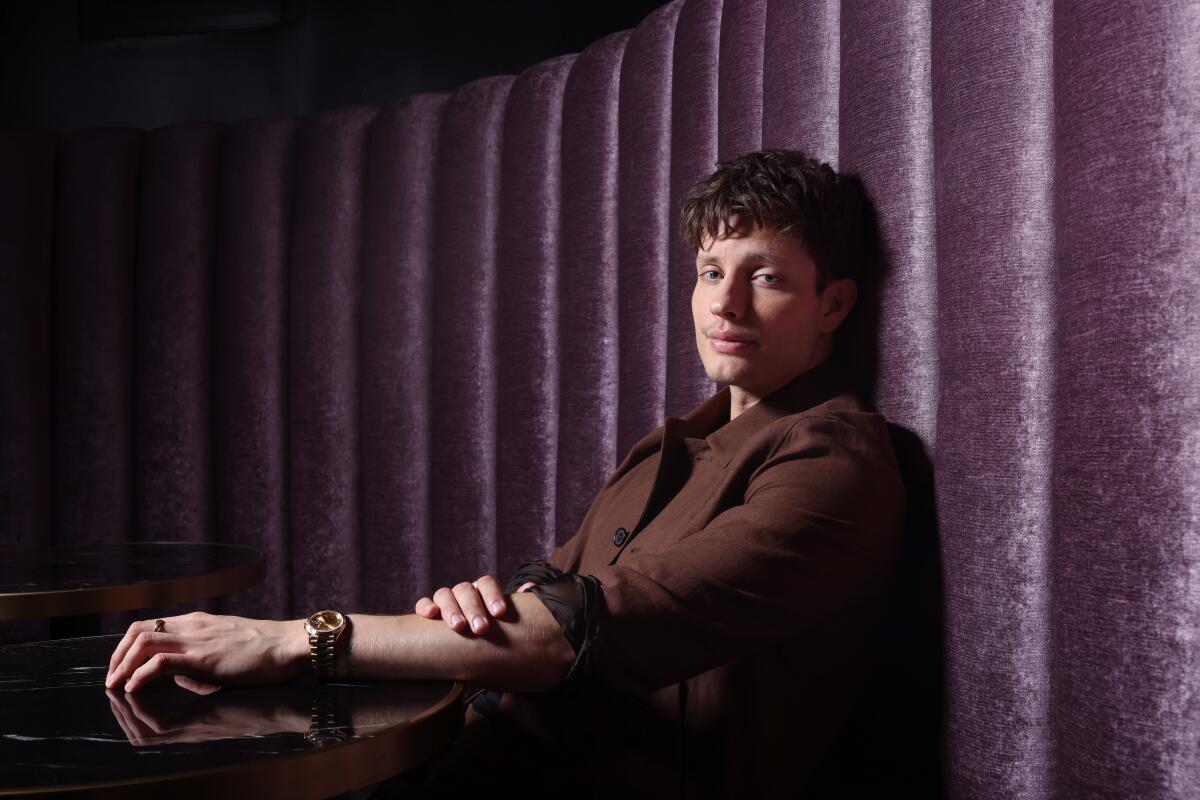
Comedian Matt Rife.
(Dania Maxwell / Los Angeles Times)
Rife started in comedy at age 15, having become obsessed when his grandma took him to a Dane Cook show. Too young to drive himself to clubs, Rife had his grandpa take him from North Lewisburg, Ohio, to open mics as well as “bringer shows,” a rite of passage in which comics have to sell a certain number of tickets to get onstage. None of Rife’s friends were old enough to get inside a comedy club, so his grandpa would buy tickets. For Rife, the excitement of performing was initially eclipsed by fear.
The first time Rife went onstage for an open mic, he said, he almost soiled his pants. “I had all my jokes memorized but I was so nervous. And the host goes onstage. ‘We have a first timer tonight, give it up for the uncomfortably young Matt Reef,’” Rife recalled, adding that he was so nervous he thought his bowels were “gonna drop out of my body.” It was then that Rife recognized the feeling of stage fright for the first time. It excited him as much as it scared him, he said.
The pursuit of a career in comedy led him to leave Ohio and hit the road by age 17, and he settled in L.A. to pursue acting while still crisscrossing the country for gigs. During a decade of grinding, he put his looks, quick wit and work ethic to use, landing stints as a co-host of MTV’s short-lived “TRL” reboot and as a cast member of the sketch show “Wild ’N Out.” He also popped up on an episode of “Brooklyn Nine-Nine.” In 2017 his name surfaced in People magazine when he was briefly romantically linked to Kate Beckinsale.
He amassed millions of views on TikTok sketch and crowd work videos along with more than 30 million views for his three YouTube specials prior to “Natural Selection” last year. The comedian’s ability to build a relationship with a largely female fan base stems from his crowd work skills.
“He draws people in because he listens,” Griffin said. “So when he’s doing this crowd work with people, he’s genuinely interested in what people are saying. Those are the type of clips that have gotten that have gone viral for him, and those are the things that resonate with people. It’s not just crowd work for the sake of crowd work.”
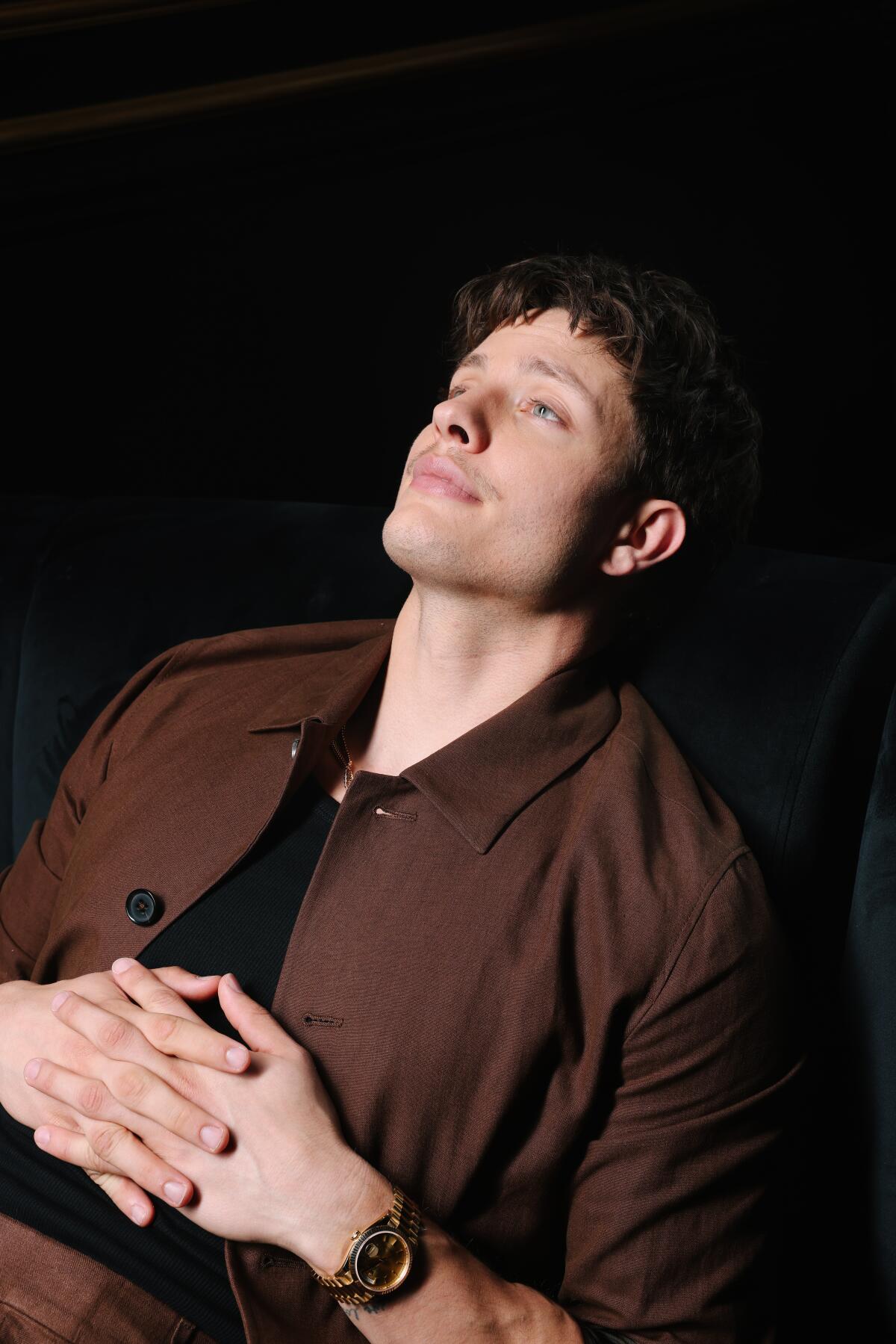
(Dania Maxwell / Los Angeles Times)
Usually Rife is able to turn awkward or strange interactions into comedy gold. It’s much harder when an audience member tries too hard to be funny. “Don’t do that,” he says bluntly. “Just be yourself. I’ll bring the comedy out of you. Don’t worry. We’ll find it, you know, we’re Jordan and Pippin in this. Don’t be selfish.”
Though it’s always been Rife’s dream to entertain at the highest level, building that fame in the TikTok era has come with internet criticism. Whether people don’t like his looks or his humor or just want to elicit a response in the comments of social media, Rife is used to being a target for backlash, though he said he’s gotten better at ignoring it. It’s no coincidence that his two favorite comedians are Dave Chappelle and Ricky Gervais, two of the most popular and criticized comedians to hold a microphone.
“It’s a lot to juggle,” he said. “In the beginning, you really mostly only hear the positive … and then a very select group of people go, ‘Oh, this person’s very well loved and respected, and I myself might lack that love and respect in my own personal life, so therefore I don’t want this person to have it.’ So then comes the influx of negativity. You just have to really appreciate the good, because the bad is going to come with it, guaranteed. Nobody is universally loved.”
Through friends and therapy, he’s learned not to give negativity any oxygen in his world.
“I used to avidly respond back to people. Nobody could be meaner than me if I really wanted to be,” he said. “But you can’t do that, because whether or not you feel like you won that interaction or you had the better roast, what this troll or hater said to you doesn’t matter. You gave them exactly what they want. All they want is attention.”
While the topic of fighting for a dream is the focus of Rife’s newest special, the act of sharing his journey is at the heart of his next creative output, the book “Your Mom’s Gonna Love Me,” slated for December. Rife talks about becoming a comedy heartthrob before age 30, navigating his sex appeal in the public eye, battling depression and enduring failure before finally hitting it big.
Part of recapturing the dream is also talking about the people in his life who helped him achieve it, including close friends, early mentors and his grandpa — his first advocate in comedy — who died in November 2022, just before his career really began to take off. “He never got to see me have any of this, and he’s the reason I have any of this,” Rife said. “I’ve been so happy to be so distracted and keep busy and keep my mind off that kind of stuff. But through therapy and this book, which has been a massive form of therapy, it’s forced me to take time and reflect on all the things that got me to this point right now.”
After taking enough time to process his past, Rife’s new focus is on keeping his dream alive.
“That’s the new anxiety, by the way,” he said. “Because that’s the hardest thing. How many viral sensations are there a year? 30? Anybody can have a hot year, a hot moment of their career. So many musicians, actors, comedians have them quite often. Hard part is maintaining.”



In 1977, a man named Tony Kiritsis fell behind on mortgage payments for an Indianapolis, Indiana, property that he hoped to develop into an affordable shopping center for independent merchants. He asked his mortgage broker for more time, but was denied. This enraged him because he suspected that the broker and his father, who owned the company, were conspiring to defraud him by letting the property go into foreclosure and acquire it for much less than market value. He showed up at the offices of the mortgage company, Meridian, for a scheduled appointment regarding the debt in the broker’s office, where he took the broker, Richard O. Hall, hostage, and demanded $130,000 to settle the debt, plus a public apology from the company. He carried a long cardboard box containing a shotgun with a so-called dead man’s wire, which he affixed to Hall as a precaution against police interference: if either of them were shot, tackled, or even caused to stumble, the wire would pull the trigger, blowing Hall’s head off.
That’s only the beginning of an astonishing story that has inspired many retellings, including a memoir by Hall, a 2018 documentary (whose producers were consultants on this movie) and a podcast drama starring Jon Hamm as Tony Kiritsis. And now it’s the best current movie you likely haven’t heard about—a drama from director Gus Van Sant (“Good Will Hunting”), starring Bill Skarsgård as Tony Kiritsis and Dacre Montgomery as Richard Hall. It’s unabashedly inspired by the best crime dramas from the 1970s, including “Dog Day Afternoon,” “The Sugarland Express,” “Network,” and “Badlands,” and can stand proudly alongside them.
From the opening sequence, which scores the high-strung Tony’s pre-crime prep with Deodato’s immortally groovy disco version of “Thus Spake Zarathustra” played on the radio by one of Tony’s local heroes, the philosophical DJ Fred Temple (Colman Domingo); through the expansive middle section, which establishes Tony as part of a thriving community that will see him as their representative in the one-sided struggle between labor and capital; through the ending and postscript, which leave you unsure how to feel about what you’ve seen but eager to discuss it with others, “Dead Man’s Wire” is a nostalgia trip of the best kind. Rather than superficially imitate the style of a specific type of ’70s drama, Van Sant and his collaborators connect with the essence of what made them powerful and memorable: their connection to issues that weighed on viewers’ minds fifty years ago and that have grown heavier since.
Tony is far from a criminal genius or a potential folk hero, but thinks he’s both. The shotgun box with a weird bulge, barely held together with packing tape, is a correlative of the mentality of the man who carries it. His home is filled with counterculture-adjacent books, but he’s a slob who loudly gripes during a brief car ride that his “shorts have been ridin’ up since Market Street,” and has a vanity license plate that reads “TOPLESS.” His eloquence runs the gamut from Everyman acuity to self-canceling nonsense slathered in profanity . He accurately sums up the mortgage company’s practices as “a private equity trap” (a phrase that looks ahead to the 2008 financial collapse, which was sparked by predatory lending on subprime mortgages) and hopes that his extreme actions will generate some “some goddamn catharsis” for himself and his fellow citizens, and “some genuine guilt” among Indianapolis’ lending class.
He’s also intoxicated by his sudden local fame. The hostage situation migrates from the mortgage company to Tony’s shabby apartment complex, which is quickly surrounded by beat cops, tactical officers, and reporters (including Myha’La as Linda Page, a twenty-something, Black local TV correspondent looking to move up. Tony also forces his way into the life of his idol Temple, who tapes a phone conversation with him, previews it for police, and grudgingly accepts their or-else request to continue the dialog and plays their regular talks on his morning show.
Despite these inroads, Tony is unable to prevent his inner petty schmuck from emerging and undermining his message, such as it is. He vacillates between treating Hall as a useless representative of the financial elite (when the elder Hall finally agrees to speak with Tony via phone from a tropical vacation, Tony sneers to Hall the younger, “Your daddy’s on the line—he wants to know when you’ll be home for supper!”) and connecting with him on a human level. When he’s not bombastic, he’s needy and fawning. “I like you!” he keeps telling people he just met, but Fred most of all—as if a Black man who’d built a comfortable life for himself and his wife in 1977 Indiana could say no when an overwhelmingly white police force asked him to become Tony’s fake-confidant; and as if it matters whether a hostage-taking gunman feels warmly towards him.
Ultimately, though, making perfect sense and effecting lasting change are no higher on Tony’s agenda than they were for the protagonists of “Dog Day Afternoon” and “Network.” Like them, these are unhinged audience surrogates whose media stardom turned them into human megaphones for anger at the miserable state of things, and the indifference of institutions that caused or worsened it. These include local law enforcement, which—to paraphrase hapless bank robber Sonny Wirtzik taunting cops in “Dog Day Afternoon”—wanna kill Tony so bad that they can taste it. The discussions between Indianapolis police and the FBI (represented by Neil Mulac’s Agent Patrick Mullaney, a straight-outta-Quantico robot) are all about how to set up and take the kill shot.
The aforementioned phone call leads to a gut-wrenching moment that echoes the then-recent kidnapping of John Paul Getty III, when hostage-takers called their victim’s wealthy grandfather to arrange ransom payment, and got nickel-and-dimed as if they were trying to sell him a used car. The elder Hall is played by “Dog Day Afternoon” star Al Pacino, inspired casting that not only officially connects Tony with Wirtzik but proves that, at 85, Pacino can still bring the heat. The character’s presence creeps into the rest of the story like a toxic fog, even when he’s not the subject of conversation.
With his frizzy grey toupee, self-satisfied Midwest twang, and punchable smirk, Pacino is skin-crawlingly perfect as an old man who built a fortune on being good at one thing, but thinks that makes him a fountain of wisdom on all things, including the conduct of Real Men in a land of women and sissies. After watching TV coverage of Tony getting emotional while keeping his shotgun on Richard, Jr., he beams with pride that Tony shed tears but his own son didn’t. (Kelly Lynch, who costarred in another classic Van Sant film about American losers, “Drugstore Cowboy,” plays Richard, Sr.’s trophy wife, who is appalled at being confronted with irrefutable evidence of her husband’s monstrousness, but still won’t say a word against him.)
Van Sant was 25 during the real-life incidents that inspired this movie. That may partly account for the physical realism of the production, which doesn’t feel created but merely observed, in the manner of ’70s movies whose authenticity was strengthened by letting the main characters’ dialogue overlap and compete with ambient sounds; shooting in existing locations when possible, and dressing the actors in clothes that looked as if they’d been hanging in regular folks’ closets for years. Peggy Schnitzer did the costumes, Stefan Dechant the production design, and Arnaud Poiter the cinematography, all of which figuratively wear bell-bottom pants and platform shoes; the soundscape was overseen by Leslie Schatz, who keeps the environments believably dense and filled with incidental sounds while making sure the important stuff can be understood. It should also be mentioned that the film’s blueprint is an original script by a first-timer, Adam Kolodny, with a bona-fide working class worldview; he wrote it while working as a custodian at the Los Angeles Zoo.
More impressive than the film’s behind-the-scenes pedigree is its vision of another time that unexpectedly comes to seem not too different from this one. It is both a lovingly constructed time machine highlighting details that now seem as antiquated as lithography and buckboard wagons (the film deserves a special Oscar just for its phones) and a wide-ranging consideration of indestructible realities of life in the United States, which are highlighted in such a way that you notice them without feeling as if the movie pointed at them.
For instance, consider Tony’s infatuation with Fred Temple, which peaks when Tony honors his hero by demonstrating his “soul dancing” for his hostage, is a pre-Internet version of what we would now call a “parasocial relationship.” An awareness of racial dynamics is baked into this, and into the film as a whole. Domingo’s performance as Temple captures the tightrope walk that Black celebrities have to pull off, reassuring their most excitable white fans that they understand and care about them without cosigning condescension or behavior that could escalate into harassment. Consider, too, the matter-of-fact presentation of how easy it is for violence-prone people to buddy up to law enforcement officers, especially when they inhabit the same spaces. When Indianapolis police detective Will Grable (Cary Elwes) approaches Tony on a public street soon after the kidnapping, Tony’s face brightens as he exclaims, “Hi Mike! Nice to see you!”
And then, of course, there’s the economic and political framework, which is built with a firm yet delicate hand, and compassion for the vibrant messiness of life. “Dead Man’s Wire” depicts an analog era in which crises like this one were treated as important local matters that involved local people, businesses, and government agents, rather than fuel for a global agitprop industry posing as a news media, and a parasitic army of self-proclaimed influencers reycling the work of other influencers for clout. Van Sant’s movie continually insists on the uniqueness and value of every life shown onscreen, however briefly glimpsed, from the many unnamed citizens who are shown silently watching news coverage of the crisis while working their day jobs, to Fred’s right hand at the radio station, an Asian-American stoner dude (Vinh Nguyen) with a closet-sized office who talent-scouts unknown bands while exhaling cumulus clouds of pot smoke.
All this is drawn together by Van Sant and editor Saar Klein in pop music-driven montages that show how every member of the community depicted in this story is connected, even if they don’t know it or refuse to admit it. As John Donne put it, “No man is an island/Entire of itself/Each is a piece of the continent/A part of the main.” The struggle of the individual is summed up in one of Fred’s hypnotic radio monologues: “Let’s remember to become the ocean, not disappear into it.”
Entertainment
‘Sinners,’ ‘One Battle After Another’ and ‘Hamnet’ among 2026 Producers Guild of America nominees

The Oscar race for best picture came into clearer focus as the Producers Guild of America announced its annual nominees for the Darryl F. Zanuck Award on Friday morning. The 10 nominees (full list below) represent established Oscar-season contenders like “Sinners,” “One Battle After Another,” “Hamnet” and “Marty Supreme,” as well as a handful of films whose awards footing is less certain, including “Weapons,” “F1” and “Bugonia.”
The Producers Guild Awards are considered one of the most reliable bellwethers in the Oscar race because their preferential ballot closely mirrors the academy’s best picture voting system. The PGA Awards have named the future best picture winner in 17 of the last 22 years. Last year, eight of the 10 PGA nominees went on to receive best picture Oscar nominations, including Sean Baker’s “Anora,” which ultimately won both prizes.
Winners will be announced at the PGA’s awards ceremony on Feb. 28 at the Fairmont Century Plaza in Century City.
See the full list of nominees below:
Darryl F. Zanuck Award for outstanding producer of theatrical motion pictures
“Bugonia”
“F1”
“Frankenstein”
“Hamnet”
“Marty Supreme”
“One Battle After Another”
“Sentimental Value”
“Sinners”
“Train Dreams”
“Weapons”
Award for outstanding producer of animated theatrical motion pictures
“The Bad Guys 2”
“Demon Slayer: Kimetsu no Yaiba Infinity Castle”
“Elio”
“KPop Demon Hunters”
“Zootopia 2”
Norman Felton Award for outstanding producer of episodic television — drama
“Andor”
“The Diplomat”
“The Pitt”
“Pluribus”
“Severance”
“The White Lotus”
Danny Thomas Award for outstanding producer of episodic television — comedy
“The Bear”
“Hacks”
“Only Murders in the Building”
“South Park”
“The Studio”
David L. Wolper Award for outstanding producer of limited or anthology series television
“Adolescence”
“The Beast in Me”
“Black Mirror”
“Black Rabbit”
“Dying for Sex”
Award for outstanding producer of televised or streamed motion pictures
“Bridget Jones: Mad About the Boy”
“The Gorge”
“John Candy: I Like Me”
“Mountainhead”
“Nonnas”
Award for outstanding producer of nonfiction television
“aka Charlie Sheen”
“Billy Joel: And So It Goes”
“Mr. Scorsese”
“Pee-wee as Himself”
“SNL50: Beyond Saturday Night”
Award for outstanding producer of live entertainment, variety, sketch, standup and talk television
“The Daily Show”
“Jimmy Kimmel Live!”
“Last Week Tonight with John Oliver”
“The Late Show with Stephen Colbert”
“SNL50: The Anniversary Special”
Award for outstanding producer of game and competition television
“The Amazing Race”
“Jeopardy!”
“RuPaul’s Drag Race”
“Top Chef”
“The Traitors”
Movie Reviews
Controversy Surrounds ‘The Raja Saab’ as Makers Allegedly Offer Money for Positive Reviews | – The Times of India

Prabhas-starrer ‘The Raja Saab’ is currently running in theaters; the much-awaited film was released today. The early reviews of the Maruthi-directed film have been receiving mixed to negative reviews on social media. However, a netizen has claimed that the makers of the film offered him money to delete his negative review.
Netizen alleges bribe by the makers
On Friday morning, an X user named @BS__unfiltered posted a screenshot online. He said he received a message from the official account of ‘The Raja Saab’ after posting his review. According to him, the film’s team offered him Rs 14,000. They reportedly asked him to post a positive review of the movie instead. Sharing the screenshot, the user wrote, “What the hell mannnnn!!!! They are offering me money to delete this!!! Nahi hoga delete #TheRajaSaab #Prabhas.” However, the screenshot shared by the user is in question for its authenticity and is not verified. At this time, it is not clear if the message was real or AI-generated. The claim is still unconfirmed.See More: The Raja Saab: Movie Review and Release Live Updates: Prabhas’ film to open big at the box office
Fans share their opinions online
Fans and netizens have been active on social media, sharing their opinions about the film. While some enjoyed it, many expressed disappointment. Another internet user wrote, “A horror-fantasy with a good idea but weak execution. Prabhas gives an energetic & comical performance, & the face-off with Sanjay Dutt is the main highlight. The palace setting is interesting at first, but the messy screenplay, dragged 2nd half, uneven VFX, & weak emotional payoff reduce the impact. @MusicThaman’s music & sounding are one of the positives. From the end of the first half, the story becomes slightly interesting. There are 3 songs featuring Prabhas & @AgerwalNidhhi. Nidhhi has performed well. Some scenes feel unintentionally funny, & the climax fails to impress. Overall, a one-time watch at best. This film gives a lead for The Raja Saab Circus—1935 (Part 2), where we may see Prabhas vs. Prabhas.”
About ‘The Raja Saab’
‘The Raja Saab’ is directed and written by Maruthi. The film stars Prabhas in the lead role. The cast also includes Malavika Mohanan, Nidhhi Agerwal, Riddhi Kumar, Sanjay Dutt, and Boman Irani.

Dept. of Agriculture and Natural Resources announces $48 million for statewide projects

Deputies perform ‘life-saving measures’ after 5-year-old falls into swimming pool in Tennessee

John Cornyn makes campaign stop at Texas-Mexico border

How to watch No. 9 BYU face rival Utah

Brattleboro Memorial Hospital reaches settlement with US Justice Department over ADA compliance

Florida High School Football Rankings: Top 25 teams – Oct. 21

Cleary's 21 help Le Moyne down Central Connecticut State 69-64 in OT

How old is Bo Nix? What to know about Oregon quarterback ahead of 2024 NFL Draft

99th annual Pony Swim held in Virginia

Video: ‘It Didn’t Have to Happen This Way:’ U.Va. Faculty Call for Review of Police Response to Protests

AOC accuses Vance of believing ‘American people should be assassinated in the street’
Mercosur: How Macron’s domestic weakness undercut his Brussels clout

National Park Service will void passes with stickers over Trump’s face

Trump plans to meet with Venezuela opposition leader Maria Corina Machado next week

Trump says meeting Iran’s ‘Crown Prince’ Pahlavi would not be appropriate
-

 Detroit, MI6 days ago
2 hospitalized after shooting on Lodge Freeway in Detroit
-

 Technology3 days ago
Power bank feature creep is out of control
-

 Dallas, TX4 days ago
Defensive coordinator candidates who could improve Cowboys’ brutal secondary in 2026
-

 Health5 days ago
Viral New Year reset routine is helping people adopt healthier habits
-

 Iowa3 days ago
Pat McAfee praises Audi Crooks, plays hype song for Iowa State star
-

 Nebraska2 days ago
Oregon State LB transfer Dexter Foster commits to Nebraska
-
 Nebraska3 days ago
Nebraska-based pizza chain Godfather’s Pizza is set to open a new location in Queen Creek
-
 Entertainment2 days ago
Spotify digs in on podcasts with new Hollywood studios