Entertainment
Kris Jenner’s mom, beloved matriarch Mary Jo ‘MJ’ Shannon, dies at 91


Kris Jenner’s mom, Mary Jo “MJ” Shannon, has died.
Jenner announced the news of Shannon’s death Thursday in an Instagram tribute. She was 91.
“Today, we said goodbye to my beautiful Mommy MJ. … There are no words that could ever capture what she has meant to me or the heartbreak of having to say goodbye. My mom was the heart of our family.”
Jenner wrote that her mother, the matriarch of the Jenner-Kardashian clan, taught her everything that “truly matters.”
“To love your family fiercely, to be kind, to show up for the people you love, and to never take a single moment together for granted,” she wrote alongside a glamour shot of Shannon. “She taught us that family is everything. She showed us how to love unconditionally and how to find joy in the little moments. She showed me how to face life’s challenges with resilience and faith.”
Jenner concluded the post with an open letter to MJ:
“Mom, thank you for every sacrifice you made, every piece of wisdom you shared, and every moment you loved us so completely. I will miss our daily talks, your smile, your laughter… Our hearts are broken, but we find comfort knowing that love like yours never truly leaves us. Your love will live on in our family, in our traditions, in every moment we are together, and in every life you touched. When I look at my kids and my grandkids, I will forever see pieces of you in all of us. There is not a part of me that isn’t shaped by you. And if I have done anything right in this world, it’s because I spent my life trying to live in a way that would make you proud. Every memory, every moment, every blessing, it was all because of you, and I will forever thank God every single day for making you my mommy. My heart is broken into a million pieces… thank you for giving me the greatest childhood and oh what a beautiful blessed life… I love you forever Mommy. Thank you for giving us everything.”
Born Mary Jo Campbell on July 26, 1934, MJ married her high school sweetheart, whom she divorced two months later. Then in 1954, she wed Jenner’s dad, Robert “Bob” True Houghton. She gave birth to Jenner the following year and Jenner’s late sister, Karen Houghton, in 1958. After seven years of marriage, MJ and Bob called it quits and she married Harry Shannon, a businessman who helped raise Jenner and her sister in San Diego, where MJ ran a children’s clothing store.
Harry Shannon died in 2003.
MJ was featured on the famous clan’s E! reality series “Keeping Up With the Kardashians” and the follow-up Hulu series “The Kardashians” numerous times over the years. In a clip from the show, granddaughter Kim Kardashian detailed that her grandmother had survived colon cancer and breast cancer and, in her sunset years, struggled with sickness resulting from the cancer treatments.
In one clip from the show, MJ said she didn’t have an appetite without taking her “medication” first. Then she persuaded her daughter, Jenner, to have marijuana gummies with her. Together they lit some incense and munched on muffins and chips and guacamole.
In another clip, Jenner interviews MJ about her life, and during the sit-down, Jenner asks MJ, “What’s your biggest fear?”
MJ replies, “I try not to fear,” and then follows up asking Jenner what her biggest fear is.
Jenner starts to cry and says, “I don’t want to say it. I can’t believe I’m crying. … Just, losing someone.”
On Thursday, Kim Kardashian caught flak online when a post featuring the Skims mogul and her sister Khloe Kardashian swigging tequila from a boat on a lake published shortly after Jenner announced the news of MJ’s death.
“This post was scheduled a few days ago before we lost MJ, so its timing came right alongside her passing,” Kim wrote in the comment section of the post. “I’ve been by my mom and grandma’s side this past week, and my heart is completely with my family right now. We love and miss her so deeply, and in the days ahead, we’ll be focusing on celebrating her beautiful life.”
Kim followed up with a post celebrating her grandmother, writing, “My sweet Grandma MJ, my best friend, my gossip buddy, my forever twin … You taught all of us the importance of family, and those values are something we’ll carry with us forever!!!!! You were the woman who showed me what it meant to be a hardworking businesswoman. You gave me my very first job at your store in San Diego and taught me lessons about work ethic, strength, and confidence that I’ve carried with me ever since.
“You always believed in me, championed me, and were my safe place. You truly were the matriarch of our family, and your love is woven into all of us. I know you’re at peace now. Give Papa Harry, Aunt Karen, and my dad a hug for me. You will always be a part of me, I love you soooooo much and I will miss you forever and ever. … YOU ARE THE BEST OF US!!!”
Two weeks ago, Jenner’s bodyguard, Mason Haynes, who also worked as a close protection guard for other members of the Kardashian-Jenner family, died in a traffic accident. He was 52.


Sail we must, on Homer’s “wine dark sea” from Ithaca to Asia Minor and many points in between for the greatest story of them all, the tale of “a face, a fleet…of a war with Troy, of a man and a ‘trick’” and “Zeus’s Law, defied at mankind’s peril.
For his latest feat, Christopher Nolan takes us on the epic quest that is the cornerstone of Western literature and Western civilization, Homer’s saga of Odysseus, “hero of the Trojan War,” a trickster ready to wield his brain and his brawn in a titanic struggle not just to win that war, but the many tests that stand between himself and “home.”
And in Nolan’s telling, what makes “The Odyssey” timeless is the remorse of civilization’s unraveling, of the violence and pitiless greed that brings great epochs and empires to an end. Odysseus, played with equal parts cunning and gravitas by Matt Damon, spends his years “coming home” from The Trojan War filled with regret at what he’s seen, what he’s done and what’ he’s caused to come to pass.
His men and even he see himself as “punished” by the gods for his acts, playing god himself as he is forced to choose who lives and who dies. He pay for his hubris with more tests, more violence and more second guessing than we’ve ever seen in in a film or mini-series about him, the original “classic” hero of Western literature.
Nolan’s ancient epic is more historical and slightly grander than Wolfgang Peterson’s mythic star vehicle “Troy,” more touching than the riveting and brutally heroic “300,” and more tactile than either. We’re seeing real seas, realistic reconstructions of ancient armor, cities, galleys of war and a real dog — Argus — waiting for his master to return from decades of fighting and traveling.
Note to “Supergirl” and “Superboy” filmmakers and anybody else thinking “Let’s just digitally animate the damned dog.” Nobody cries when a digital dog dies.
If I’m honest, Nolan’s version of an oft-told tale had me from the moment I saw “the horse,” the “trick” of the tale-teller’s account of “clever” Odysseus. Troy really existed, and if there really was a “Trojan Horse,” I’ll bet it looked a lot like this — half-buried in the surf, a “Planet of the Apes” post-apocalyptic monument and tribute to the gods that had to be hauled, sans wheels, from the sand to the city whose blasphemous undoing it held hidden in its belly.
Nolan’s narrative opens with that “trick,” and tells the tale from three temporal perspectives — the war, as remembered, events back home in the Ithaca with the queen (Anne Hathaway) and son (Tom Holland) that King Odysseus left behind to fight, and the epic quest to return from that war as recalled by Odysseus in the company of his most alluring captor, Calypso (Charlize Theron).
The central conflict isn’t the war, or the murderously ruthless “suitors” for Queen Penelope, foremost among them the handsome and venomous Antinous (Robert Pattinson). It is between Odysseus and his superstitious men as he struggles with hardened warriors (Himesh Patel plays his stoic but questioning second in command) convinced their commanding officer has offended and re-offended the gods, especially Troy’s patron, Poseidon.
“You can’t live by omens and sacrifices,” Odysseus scoffs. But in this “time of apparent magic,” even our Ur-hero is given pause by Cyclops, the Sirens, the enchantress Circe (Samantha Morton) and the gigantic armored man-eaters that confront them, the Laestrygonians.
And even Odysseus has his Mount Olympus spirit guide. Zendaya plays the goddess Athena, who warns him “Your cleverness will get you into trouble.”
As indeed it does.
Damon’s “brand” as an actor has long been the intelligence he conveys in all but the silliest roles. That’s put to great use here as we see him plotting and planning this escape or that ambush. “The gods help those who help themselves,” he preaches. But his Odysseus also lets us see him second-guessing himself, a wearying and ageing man weighed down by the heartbreaking burdens of leadership.
Hathaway, in the role of the dutiful wife weaving and unraveling her tapestry while bullying suitors impose themselves on her household, shows us her own burdens. She said “Promise me you’ll come back.” And all she’s left with, decades later, is rising anger at the plight her long-absent and presumed-dead husband has placed her in. She is queen, but their overmatched son (Tom Holland) is too unsophisticated and physically weak to take the throne in the presence of entitled, murderous brutes.
Jon Bernthal brings a rough bluntness to the gruff Menelaus of Sparta, a hardnosed ruler dragged into war when Helen (Lupita Nyong’o) ran away from his brother Agamemnon (Benny Safdie) to Troy.
And John Leguizamo nimbly plays the loyal blind swineherd who tries to help Penelope and son Telemachus (Holland) cling to power as long as possible against long odds that his master, Odysseus, might return. Horror icon Mia Goth plays Penelope’s treacherous handmaiden.
Nolan’s “all-star cast” makes something of a statement in terms or the film’s intentions and modern messaging. The first character we see is played by the transgender actor Page, with a Black Helen of Troy and Black and Asian characters giving this ancient world the cosmopolitan flavor it most certainly had.
A running theme through all this is the breakdown of an old order, “Zeus’s Law” about piety, square dealing and how to treat strangers and guests and the rest of the human race, Trojans included. Nolan is talking about the “Dark Ages” to come, and the “Dark Ages” which have revisited us whenever the people lose their way and the violent and rapacious are empowered over us, often at our own doing.
Take a gander at insensate monster Cyclops and who he seems to resemble. Imagine him in a diaper if you have trouble making the connection.
This “Odyssey” is almost exactly what we’d expect from Nolan, a very good film not on a par with the unnerving novelty of “Inception,” lacking the poetry and stunning suspense of “Dunkirk” — just an epic yarn given epic treatment/
This is a filmmaker who has something to say to modern audiences, and a pretty good idea of how to say it within the context of a 3000 year old tale of “a face” that “launched” a “fleet” of “a thousand ships,” of “clever” Odysseus” and the gods and all-too-human men who bedeviled him every step of his guilt-ridden and bloody journey “home.”
Rating: R, graphic violence, nudity, profanity
Cast: Matt Damon, Anne Hathaway, Tom Holland, Lupita Nyong’o, Himesh Patel, Zendaya, Robert Pattinson, Elliot Page, John Leguizamo, Samantha Morton, James Remar, Ryan Hurst, Mia Goth, Jon Bernthal and Charlize Theron
Credits: Scripted and directed by Christopher Nolan, based on “The Odyssey” by Homer. A Universal release.
Running time: 2:52

Heat Advisory
from THU 12:00 PM EDT until THU 8:00 PM EDT, Eastern Montgomery County, Lower Bucks County, Philadelphia County, Delaware County, Eastern Chester County, Gloucester County, Northwestern Burlington County, Camden County, Mercer County, New Castle County
Exploiting racism has been a profitable strategy in Hollywood since the dawn of filmmaking: 111 years ago, D.W. Griffith’s film “The Birth of a Nation” was incredibly popular and influential, while also being so racist that it was considered controversial even in its own day.
The industry saw immediately just how lucrative fear could be. More than a century later, there is always someone in the entertainment media willing to trade in racist tropes for money, as well as an audience ready to receive them.
Two new films, “Citizen Vigilante” and “Run, Fight, Hide: Infidels,” demonstrate that streaming platforms and social media no longer simply distribute controversial content but in fact thrive on content that provokes, polarizes and sustains attention, regardless of the social cost.
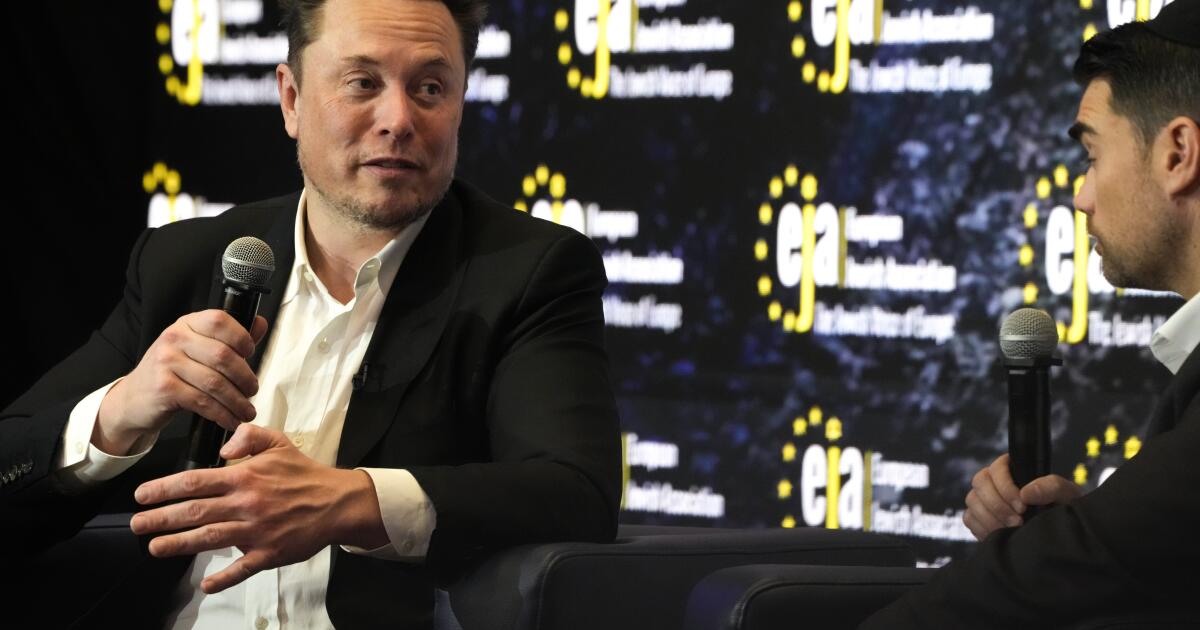
Both of these xenophobic and Islamophobic films are being pushed as “anti-woke” vehicles, deliberately engineered to bypass traditional critical reception and capitalize on a fractured media ecosystem. “Citizen Vigilante,” which features an American protagonist killing dark-skinned immigrants and Muslims in an unnamed European setting, was denied a rating certificate by the German government for inciting violence. Yet despite that determination, the film secured global reach through decentralized digital distribution and high-profile promotion from Elon Musk.
Similarly, “Run, Fight, Hide: Infidels” — a campus siege narrative evoking 1980s action film nostalgia that leans heavily into outdated, post-9/11 anxieties — relies on a built-in conservative media apparatus to guarantee financial returns. The film is produced by the conservative media figure Ben Shapiro and the Daily Wire, which he co-founded. It is a sequel to a 2020 film that was their film company’s premiere.
But while promoters of such films frame their work as a brave rebellion, the reality is much more sinister: rehashing 40-year-old tropes while invoking conspiracy theories of Muslims bringing sharia law to America, because outrage is cheap to produce and easy to monetize.
Stories matter. Stories shape how we see one another. They influence what we love, what we celebrate, whom we trust, whom we understand and whom we fear.
Since January, the Muslim Public Affairs Council has documented a sharp escalation in threats and attacks targeting Muslims and Islamic institutions across the United States, including vandalism, shootings, bomb threats, attempted assassinations and physical assaults. These are not isolated incidents. They reflect a broader climate in which dehumanizing representation increasingly manifests as real-world violence.
Entertainment and politics increasingly employ the same tactic as one another, recycling narratives of fear and “otherness” to mobilize audiences, voters and consumers. When political leaders encourage those narratives, as President Trump recently did by amplifying and commenting on a photo of young Muslim American students in hijab, they further normalize the same stereotypes that entertainment companies have learned to monetize.
Yet while the social costs continue to mount, the economic incentives remain firmly intact. “Citizen Vigilante” earned a 93% audience score on Rotten Tomatoes despite receiving just a 6% critics’ score. More tellingly, it quickly climbed to the top of Amazon’s and Apple TV’s paid video-on-demand charts.
And this isn’t just a Muslim and immigrant issue — and it’s not only about who is portrayed on screens, but also who is not. Representation has been backsliding, and audiences are left with fewer opportunities to see the reality and humanity of diverse communities, making them more vulnerable to fear-based narratives.
According to a 2026 report from the nonprofit Define American, which tracks representation across television and film, Latinos account for only 23% of immigrant characters represented on screen, even though they make up more than 40% of the immigrant population in the United States. In 2020, 50% of immigrants on screen were Latino.
The industry’s defense is that whitewashed and xenophobic films reflect audience demand. But the recent research by Define American challenges this assumption. Data show that nuanced, multidimensional storytelling, in which immigrants and minority characters are woven into the fabric of everyday narratives rather than tokenized or villainized, actually leads to greater audience engagement and deeper systemic understanding.
Entertainment doesn’t simply reflect culture; it teaches us who belongs within it. Studios, distributors, streaming platforms and filmmakers all have a responsibility to reject narratives that portray immigrants as enemies and instead embrace stories that reflect the diversity and complexity of our world. At the same time — as with voters — the power ultimately rests with consumers. The choice to demand storytelling that challenges prejudice rather than profits from it belongs to all of us.
Sue Obeidi is the senior vice president of the Muslim Public Affairs Council Hollywood Bureau. Jose Antonio Vargas is the founder of Define American.
-
 South Dakota2 minutes ago
South Dakota opera ‘Giants in the Earth’ finds new audience
-

 Tennessee8 minutes ago
State encouraging Paramount to come to Tennessee
-

 Texas14 minutes ago
Texas floods ravage through southwestern areas of state
-
 Utah20 minutes ago
Beaver County residents set up thousands of sandbags ahead of flashfloods
-
Vermont26 minutes ago
VT Lottery Gimme 5, Pick 3 results for July 16, 2026
-

 Virginia32 minutes ago
Did you know West Virginia has an official state gun?
-
Washington38 minutes ago
Israel must confront the collapse of its support in Washington | The Jerusalem Post
-

 Wisconsin44 minutes ago
Wisconsin Lottery Pick 3, Pick 4 results for July 16, 2026


