Entertainment
Kim Kardashian thanks D.A. for giving Menendez brothers 'a second chance at life'


Kim Kardashian is expressing her faith in the justice system — and in Ryan Murphy — after L.A. County Dist. Atty. George Gascón pushed the Menendez brothers one step closer to freedom.
Gascón on Thursday asked a judge to resentence Erik and Lyle Menendez, two brothers serving life terms for the 1989 murders of their parents, Kitty and Jose Menendez. The request could lead to their early release: If resentenced to 50 years to life with possibility of parole, as the D.A. advised, the brothers could be eligible for youthful-offender parole immediately, because they committed the crimes when they were younger than 26 and have already served nearly 35 years.
“The Menendez brothers were granted a second chance at life,” Kardashian said Thursday in an Instagram story praising the D.A.’s decision. “Thank you, George Gascón, for revisiting the Menendez brothers’ case and righting a significant wrong. Your commitment to truth and fairness is commendable.”
Gascón announced earlier this month that his office was reviewing the Menendez case after the brothers’ attorneys filed a habeas motion last year arguing that new evidence backed the brothers’ longstanding claim that they had been sexually abused by their father for years before the slayings. At the time of the high-profile 1995 trial, the presiding judge strongly restricted testimony that would have supported an “abuse excuse,” clearing the way for the brothers’ 1996 conviction and sentencing to life without parole.
The Skims founder went on in her post to tell the “millions who have been vocal supporters” of the case’s reexamination that their voices “were heard.
“The media’s focus, especially on the heels of Ryan Murphy’s TV show, helped expose the abuse and injustices in their case,” she wrote. “Society’s understanding of child abuse has evolved, and social media empowers us to question the systems in place.”
Netflix last month dropped Ryan Murphy’s “Monsters: The Lyle and Erik Menendez Story,” a dramatized take on the murders that Murphy called “the best thing that has happened to the Menendez brothers in 30 years because it’s getting people to talk about it, and it’s getting people to ask the questions that are important.” It was part of a slew of Menendez-inspired media.
The Menendez case “highlights the importance of challenging decisions and seeking truth, even when guilt is not in question,” Kardashian wrote.
“I believe in the justice system’s ability to evolve, and I am grateful for a society where we can challenge decisions and seek justice,” she wrote. “Never stop questioning.”
“The Kardashians” star earlier this month penned a personal essay in favor of the brothers’ life sentences being “reconsidered.”
In the piece, she argued that the brothers — whom she said the media turned into “monsters and sensationalized eye candy” — “had no chance of a fair trial” at the time of their criminal proceedings, when resources were scarce for victims of sexual abuse, especially those who were male. The public had little “empathy, let alone sympathy,” she said, for a pair of wealthy teens from Beverly Hills.
The Menendez brothers were treated more like “serial killers,” the criminal justice reform advocate and aspiring lawyer said, than “two individuals who endured years of sexual abuse by the very people they loved and trusted.”
“I don’t believe that spending their entire natural lives incarcerated was the right punishment for this complex case. Had this crime been committed and trialed today, I believe the outcome would have been dramatically different,” she said.
Gascón echoed Kardashian’s comments in a Tuesday interview with CNN, saying, “There was certainly implicit bias that took place at that time that perhaps may have had an impact in the way the case was perceived and presented to the jury.”
On top of that, the D.A. said Thursday that the brothers have been engaged for years in prison programs to help inmates deal with trauma and to assist those who have physical disabilities.
Kardashian, who last month visited the brothers in jail, also vouched for their “exemplary disciplinary records,” saying the pair have “earned multiple college degrees, worked as caregivers for elderly incarcerated individuals in hospice, and been mentors in college programs — committed to giving back to others.”
“The killings are not excusable,” she said. “But we should not deny who they are today in their 50s.”
Contrary to Kardashian’s suggestion in a subsequent Instagram story that the Menendez brothers were “immediately eligible for parole now that their sentence has been reduced to 50 years to life,” their new sentence remains undecided.
If Gascón’s recommendation is approved by a judge, the brothers’ fate would still rest with the parole board, which will decide whether to release them. Gov. Gavin Newsom could also veto the parole board’s decision.


Huey Lewis shared just how much his relationship to music has changed in a recent podcast interview.
“I’m basically deaf,” the former lead singer of Huey Lewis and the News said in an episode of the “Inside of You” podcast released Tuesday. “My life has changed immeasurably. I can’t hear music. Music is not part of my life anymore, which is a hard pill to swallow.”
Lewis explained that he uses a cochlear implant to help him hear and understand speech, but he is unable to distinguish pitch because of the way the device operates.
“My cochlear implant, it breaks everything down into digital bits so I can understand,” he said. “Speech is easier to listen to than music. Music occurs in all frequencies, with overtones and harmonics and everything. It comes at you in a lot of different frequencies, so it distorts for me … It makes pitch impossible to hear.”
”The Power of Love” singer explained that because of this, he can no longer enjoy music.
“When I cook or I have people over for dinner, I always used to play them music,” he said. “I have a great collection of old big band stuff and old New Orleans jazz and I don’t play it at all anymore. … It’s weird. I can hear the beat, I know what’s going on. But I can’t enjoy it.”
“Music used to be so much fun,” he added. But “it just ends up being frustrating for me when I can’t enjoy it. I can’t feel the warmth.”
Lewis previously discussed his struggles with hearing loss with The Times. The “Hip to Be Square” singer said his Meniere’s disease diagnosis in early 2018 was “brutal.”
“When it first happened, I thought I might as well kill myself,” Lewis said in the 2020 interview, which described him as being “surprisingly upbeat” for someone whose life was so deeply affected by the diagnosis. Meniere’s disease is a disorder of the inner ear that can cause severe dizziness, ringing in the ears, hearing loss and ears feeling congested, according to the NIH. Not much is known about its causes and there is not yet a cure.
While it’s clear that Lewis misses aspects of his musician life, he also appears to appreciate having time for his other passions since his life doesn’t revolve around being on the road performing 75 to 100 shows a year.
“I fish a lot,” Lewis said in the “Inside of You” podcast. “I love to fly fish and I love Mother Nature. I get out there by myself in a stream and I’m conducting nature with my fly rod and it’s just a wonderful thing. I love to do it, and hearing not required.”
Movie Reviews
‘Only Beautiful Things to Look At’ Review: A Handsome but Muffled Portrait of State-Sanctioned Cruelty

The fashions and furnishings of Czechoslovakia in the 1980s — the height of the state’s racist program of suppressing the Roma population through coerced sterilization — are painstakingly evoked in Slovakian filmmaker Ivan Ostrochovský’s “Only Beautiful Things to Look At.” But the film’s attractive yet oddly bloodless presentation gives the impression of a period drama set much farther back, as though we’re peering at the prettily mounted arrowheads and artifacts of a long-gone atrocity through museum glass. Alongside the decision to centralize the perspective of a white female doctor, this old-school, soft-focus approach robs an undeniably well-intentioned movie of a vital edge of urgency and discomfort, allowing viewers to consign the cruelties it outlines to some imaginary distant past, when in truth, the sterilization policy continued well into the 21st century in both the Czech and Slovak Republics.
The film begins with a montage of young Roma women, each shot as though for a studio portrait, impassively absorbing an offscreen voice lecturing them about family planning. “Sterilization,” the voice concludes disingenuously, “allows Gypsy women to improve their family’s quality of life.” The intention behind the portraiture is noble: to put faces to a crime more often recounted in impersonal statistics, when it is acknowledged at all. But although framed and lit with dignity by cinematographer Juraj Chlpík, none of these Roma women speak. The first words of argument or protest we hear are from Ingrid (Anna Geislerová), the film’s white protagonist, and she is not talking about reproductive rights at all. Instead, she is facing an all-male panel of her peers as she interviews for the role of head doctor at the hospital where she works. Ingrid knows the position will very likely go to one of her male colleagues, but that doesn’t stop her being angry and disappointed when it actually does.
Outside her work at the hospital, which in large part comprises assessing and performing the sterilizations in a procedure that leaves patients with a small scar beneath the navel nicknamed “the bow,” Ingrid has what can only be described as a beautiful life. With her music teacher husband Maros (Vlad Ivanov), she lives in a gorgeous house in the countryside, where her bedroom, glass-paned on two sides overlooking a lush forest, looks almost like a fairytale princess’ lair. In the warm-lit evenings she and Maros read and drink wine and listen to classical music; on her days off she goes for walks in the forest or, when it’s hot, visits the nearby river and looks on benignly as Roma children bob along playfully on tire tubes.
It is only through her burgeoning friendship with Agata (a radiant Simona Boledovičová), a sweet-natured orderly who is reticent about her Romani idenitity, that Ingrid eventually starts to become uncomfortable with the work she does helping the hospital meet its government-recommended quotas for sterilizations. Ostrochovský’s film, co-written with Marek Leščák, is not anything quite as crude as a white savior narrative, but it is certainly one that assumes the best conduit for a wide audience to understand the cruelty visited on Czechoslovakian Roma families, is the moral awakening of a white woman.
This faulty focus is particularly frustrating because Agata’s own story, and the manner in which she comes to reconcile herself with her Roma background, is by far the more intriguing narrative strand. As an orphan, Agata was separated from her sister Jula (an excellent Eva Mores), with each then going on to lead very different lives. Jula married within the Roma community, has had two children and is pregnant with an unwanted third. Agata, who at first barely acknowledges their connection, has been more independent, living with a roommate and working at the hospital, and recently getting serious with a boyfriend. “He’s white?” queries Jula in surprise when she hears that he’s a soldier. “Good for you.”
The tides of unspoken resentment and disapproval that flow between the sisters are fascinating, with Agata able to move between Jula’s world, in a cramped flat in a crumbling building where kids play in dirty stairwells, and Ingrid’s enviably refined domestic environment. Eventually, just like Chlpík’s limpid camera, Agata comes to see the beauty in both, when in the film’s most moving moment, the sisters tacitly reconcile while Jula’s kids splash about in the tub at bathtime. There would have been the opportunity here to probe the long-term consequences for the Roma women bearing “the bow,” many of whom had been conned into a procedure that was misrepresented to them, in a language they did not speak, or in documentation they could not read.
Instead, the film insistently returns us to Ingrid. As she’s kept awake by the first stirrings of her conscience, as she lazes in rumpled white bedsheets watching a beetle trundle across her pillow, as she’s depicted in macro close-ups that emphasize the blondeness of her hair, the fairness of her skin, the blueness of her eyes. Indeed, right up to a finale which resolves the remaining conflict with a rather glib miracle, the film’s loveliness practically becomes a liability, placing the real plight of the Roma several removes of perspective and aesthetic manipulation away, until you begin to wonder why we’re being given only beautiful things to look at, when there are so many ugly things that better warrant the attention.
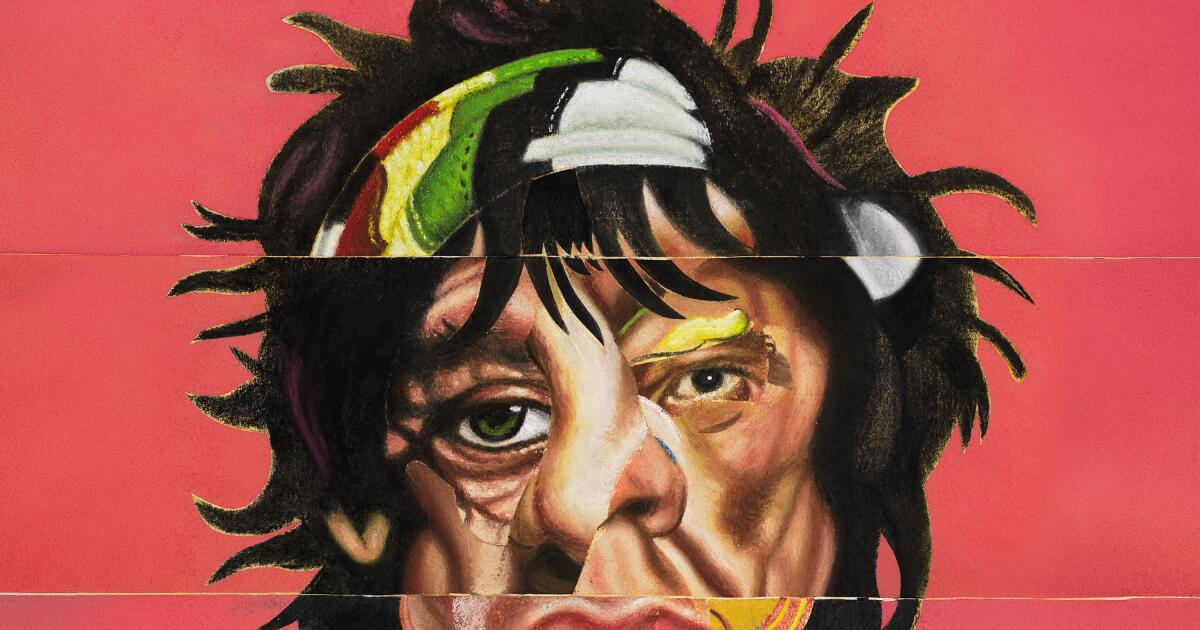
Here’s a terrible-seeming idea: The Rolling Stones should get started on their next album.
Like, now.
After taking nearly two decades to release 2023’s “Hackney Diamonds” — the band’s first set of original material since “A Bigger Bang” in 2005 — the Stones are back this week with a follow-up, “Foreign Tongues,” that took them less than 36 months to get out.
And it’s the better record in every way.
In the old days, of course, two and a half years was all they needed to make “Beggars Banquet,” “Let It Bleed” and “Sticky Fingers.” So let’s not get too carried away by the fact Mick Jagger, Keith Richards and Ronnie Wood are working as fast as they are in their late 70s and early 80s.
Yet to listen to the brisk and sportive “Foreign Tongues” is to hear a band clearly going on instinct rather than overthinking the music à la any number of veteran acts in legacy-maintenance mode. I don’t know if the result is the Stones’ best since 1978’s “Some Girls,” but it’s definitely the funniest, which is actually the more impressive achievement.
“Wake up in the morning and you wanna make me puke,” Jagger sneers in the punky “Hit Me in the Head” — exactly the kind of lyric you’d hope to hear from a band whose only possible reason for still being in the game is to have a gas-gas-gas.
Like “Hackney Diamonds” — and, for that matter, like Paul McCartney’s “The Boys of Dungeon Lane” (to name one recent overthinking-veteran LP) — “Foreign Tongues” was produced by 35-year-old Andrew Watt, who’s made a career of helping boomer icons put a little shine on their late-in-life efforts. And he’s helped the Stones convene an appealingly motley crew of collaborators here, including McCartney (who plays bass on “Covered in You”), the Cure’s Robert Smith (who contributes guitar to “Divine Intervention”), Steve Winwood (who plays piano and organ throughout the album) and Bruno Mars (who’s credited with, uh, cowbell in “Never Wanna Lose You”).
You also get a welcome appearance from the late Charlie Watts in a hard-thwacking performance recorded before his death in 2021. (Steve Jordan otherwise keeps time.)
But none of the stunt casting feels like the point of the album, which instead simply doles out a dozen tunes in the Stones’ various idioms — the bluesy stomp, the country-ish lope, the sleazy disco jam — plus a couple of covers in just over an hour. It’s frisky and lighthearted, even when Jagger is lamenting what he sees as the sorry state of his beloved America in “Ringing Hollow” and when Richards is croaking about love having put him on his knees in “Some of Us.”
And when they go goblin mode, they really lean in: “Mr. Charm” is a demented soul-rock rave-up about how boring money is — OK, Mick — in which Jagger drops a diss of the “mad mogul Mr. Musk” into a verse laying out the delights of staying home and doing anagrams.
In “Divine Intervention,” Jagger offers a colorful travelogue of trips through New York and Los Angeles — “I kept moving on to Silver Lake / To play guitar with a brand new friend of mine” — while Richards and Wood get their guitars slip-sliding all over the place. “Jealous Lover” is gorgeously trashy: a horny little strut that sounds like “Dirty Mind”-era Prince doing “Waiting on a Friend.” (Legitimately loony Mick vocal here.)
For God knows what reason, the Stones offer up a faithful rendition of Amy Winehouse’s “You Know I’m No Good” with Jagger on harmonica. And the album ends with a very ragged take on Chuck Berry’s “Beautiful Delilah,” obviously meant to remind you of how the two lifers at the core of the Stones came together more than half a century ago.
The memory is ancient; the thrill, somehow, is alive.
-
 Lifestyle23 minutes ago
Azar Nafisi on the movie adaptation of ‘Reading Lolita in Tehran’
-

 Technology35 minutes ago
After years of teasing, the viral Nopia synth is ‘basically finished’
-

 World38 minutes ago
Beloved musicians among victims in deadly Bahamas plane crash; aviation authority grounds flights
-

 Politics43 minutes ago
Trump-aligned House holdouts accused of holding ‘life-saving’ veterans bill ‘hostage’ over SAVE America Act
-

 Health50 minutes ago
Simple sitting change linked to lower risk of cancer death, study finds
-

 Sports52 minutes ago
Golf star records lowest round in LPGA major history with astounding performance at Evian Championship
-

 Technology58 minutes ago
Meta Verified scam threatens Facebook deletion
-
 Business1 hour ago
Meta discontinues Instagram feature on new AI image generation tool after Hollywood backlash

