Entertainment
For beloved conductor Michael Tilson Thomas, a final bow from the podium


San Francisco — San Francisco Mayor Daniel Lurie had declared it Michael Tilson Thomas Day. City Hall glowed MTT’s trademark blue. Davies Symphony Hall, where Tilson Thomas presided over the San Francisco Symphony for an influential quarter century, was festooned with giant blue balloons.
For Tilson Thomas, it all was the culmination of what he declared in February: “We all get to say the old show business expression, ‘It’s a wrap.’”
Despite starting treatment for an aggressive form of brain cancer in summer 2021, Tilson Thomas astonishingly continued to conduct throughout the U.S. and even in Europe for the next three and a half years. But in February he learned that the tumor had returned, and the conductor declared last Saturday night’s San Francisco Symphony gala, billed as an 80th tribute to this native Angeleno, would be his last public appearance.
He was led to the podium by his husband, Joshua Robison, who remained seated on stage, keeping a watchful eye. Tilson Thomas started with Benjamin Britten’s Variations and Fugue on a Theme by Purcell, better known as “The Young Person’s Guide to the Orchestra.” After various tributes and performances in his honor, MTT, ever the great showman, went out with a bang, leading a triumphant and mystical and stunningly glorious performance of Respighi’s splashy “Roman Festivals.”
A song from Leonard Bernstein’s “On the Town” — including the line “Where has the time all gone to?” — followed as an encore, sung by guest singers and the San Francisco Symphony Chorus, just before balloons joyfully fell from above.
For six decades, beginning with his undergraduate years at USC — where he attracted the attention of Igor Stravinsky, Aaron Copland, Jascha Heifetz, Gregor Piatigorsky and the odd rock ‘n’ roll musician about town — Tilson Thomas has been a joy-making key figure in American music.
To pin MTT down is an unreasonable task. He saw a bigger picture than any great American conductor before him — his mentor and champion, Bernstein, included. With a pioneering sense of eclecticism, he connected the dots between John Cage and James Brown, between Mahler and MTT’s famous grandfather, Boris Thomashefsky, a star of the New York Yiddish theater.
Tilson Thomas has nurtured generations of young musicians and given voice to outsiders greatly responsible for American music becoming what it is. He treated mavericks as icons — Meredith Monk and Lou Harrison among them.
The San Francisco concert could touch on little of this, but it did reveal something of what makes MTT tick. In “Young Person’s Guide,” for instance, Tilson Thomas demonstrated an undying love of every aspect of the orchestra as well as his lifelong devotion to education. As a 25-year-old Boston Symphony assistant conductor, he was speaking to audiences, sharing enthusiasm that not all uptight Bostonians were quite ready for.
Not long after, he succeeded Bernstein in the New York Philharmonic Young People’s Concerts. He made television and radio documentaries. In 1987, he founded the New World Symphony in Miami Beach, training orchestra musicians. Alumni are now busy reinventing American orchestral life. In L.A., former New World violinist Shalini Vijayan curates the imaginative Koreatown new music series Tuesdays @ Monk Space.
With the young conductor Teddy Abrams at his side turning pages, Tilson Thomas treated “Young Person’s Guide” more as a seasoned player’s guide to the orchestra. A hallmark of Tilson Thomas’ tenure in San Francisco had been to encourage a degree of free expression typically stifled in ensemble playing. Britten’s score is a riot of solos, and this time around they all seemed to be saying, in so many notes: “This is for you Michael.”
Michael Tilson Thomas conduct’s Britten’s ‘Variations and Fugue on a Theme of Purcell’ to open his gala concert with the San Francisco Symphony at Davies Symphony Hall.
(Stefan Cohen / San Francisco Symphony)
This is for you, Michael, as was all else that followed. While Tilson Thomas sat in a chair at the front of the stage looking at the orchestra, Abrams — music director of the Louisville Orchestra and a Berkeley native who began studying at age 9 with Tilson Thomas — led the rousing overture to Joseph Rumshinsky’s Yiddish theater comedy, “Khantshe in Amerike.” Bessie Thomashefsky, Tilson Thomas’ grandmother, was the original Khantshe in 1915.
Throughout his career Tilson Thomas has been an active composer, but only in recent years had he finally began more actively releasing his pensive and wistful songs that served as informal entrees in a private journal. Mezzo soprano Sasha Cooke led off with “Immer Wieder” to a poem by Rilke. Frederica von Stade, still vibrant-sounding at 79, joined her for “Not Everyone Thinks I’m Beautiful.”
The two songs tenor Ben Jones turned to, “Drift Off to Sleep” and “Answered Prayers,” were moving odes to melancholy. The Broadway singer Jessica Vosk — whose career in show business was launched when Tilson Thomas picked her out of the San Francisco Symphony Chorus to be a soloist in “West Side Story” — lifted spirits with “Take Back Your Mink” from “Guys and Dolls,” but then reminded us why we were all there with Tilson Thomas’ “Sentimental Again.”
Cooke sang “Grace,” which Tilson Thomas wrote for Bernstein’s 70th birthday but which here took on a brave new meaning in its final stanza: “Make us grateful whatever comes next / In this life on earth we’re sharing / For the truth is / Life is good.”
Edwin Outwater, who got his start as an assistant conductor to Tilson Thomas in San Francisco, led the inspirational finale of Bernstein’s “Chichester Psalms” before Tilson Thomas returned to raise the roof with “Roman Festivals.”
Respighi’s evocations of gladiators at the Circus Maximus, of early Christian pilgrims and other scenes of ancient Roman life, seem a surprisingly odd epilogue to an all-American conductor’s storied career. But Tilson Thomas has always been an arresting programmer, even in his 20s when he served as music director of the Ojai festival. “Roman Festivals” has long been a Tilson Thomas favorite. He recorded it with the L.A. Phil in 1978, relishing the details of ancient Rome in all its intricate and realistic complexity.
This last time, Tilson Thomas offered an epic, yet longing, look back. Trumpets blared with startlingly loud majesty. Pilgrims were lost in stunning meditative refinement. In the last of the four festivals, “The Epiphany,” grace and grandeur merged as one, with final, firm orchestral punctuation massively powerful. It was as if Tilson Thomas was saying to the audience, “This one is for you. And I’m still here saying it.”
Tilson Thomas has made a practice of musing about what happens when the music stops. What is left? How long does the music stay with us, somewhere inside? Can it change us? Does it matter?
From the instant Tilson Thomas became music director of the San Francisco Symphony in 1995, he treated the orchestra as an essential component of San Francisco life. His successor, Esa-Pekka Salonen, has taken that to heart with the kind of innovatory spirit that he had brought to the L.A. Phil. The orchestra’s management has not, however, provided needed support, and Salonen is leaving in June. Musicians stood outside Davies handing out fliers to the audience demanding that the orchestra pursue Tilson Thomas’ mission.
The San Francisco Symphony has reached a turning point. Respighi wrote of “The Epiphany” that he wanted frantic clamor and intoxicating noise, expressing the popular feeling “We are Romans, let us pass!” Tilson Thomas beat out those three emphatic staccato orchestral chords — Let! Us! Pass! — as though meant to ring and ring and ring, as lasting as centuries-old Roman monuments.



Entertainment
Celebrities express grief over death of Eric Dane, pride in his ‘heroic’ battle against ALS

News of Eric Dane’s death Thursday was met with an outpouring of grief by celebrities, who expressed their admiration for the TV star’s mischievous on-screen charisma and his advocacy efforts during his battle against ALS.
Dane is best known for his role as Dr. Mark Sloan, or “McSteamy,” on “Grey’s Anatomy” and recently portrayed the dark and secretive father Cal Jacobs in HBO’s “Euphoria.” He died at age 53, less than a year after publicly announcing his diagnosis with the neurodegenerative disease.
Alyssa Milano, who was Dane’s romantic co-star on “Charmed,” shared a heartfelt message on Instagram praising his cheeky, yet tender spirit and deep love for his daughters.
“I can’t stop seeing that spark in Eric’s eye right before he’d say something that would either make you spit out your drink or rethink your entire perspective,” said Milano. “He had a razor-sharp sense of humor. He loved the absurdity of things.”
HBO Max shared a statement on Instagram, lauding Dane’s talent and saying the network was “fortunate to have worked with him on three seasons of Euphoria.” The show’s creator, Sam Levinson, shared a statement with Variety saying he’s heartbroken by the loss of a dear friend.
“Working with him was an honor,” Levinson said. “Being his friend was a gift. Eric’s family is in our prayers. May his memory be for a blessing.”
Former “Grey’s Anatomy” showrunner Krista Vernoff shared an Instagram post fondly reminiscing about when Dane returned to the set in 2021 to film a dream sequence featuring his character, who died in Season 9. Although it was shot during the pandemic, he “broke the rules” and gave her a huge hug.
“The thing I will remember most about Eric Dane are his hugs,” Vernoff wrote. “The best hugs. Oh my friend. I wish you peace.”
Dane was preparing to publish his memoir, “Book of Days: A Memoir in Moments,” later this year with Maria Shriver’s publishing imprint, the Open Field.
Shriver said Dane was heroic in the way he handled his disease and used his platform to raise awareness about ALS.
“He told me he wanted his family to know how much he loved them, and he wanted to leave them a story they could be proud of,” she said in a statement on X. “My love goes out to his family, and to all those battling this cruel disease, as well as all those caring for someone battling it.”
In 2025, Dane drew on his personal experiences with the condition to portray a firefighter living with ALS on “Brilliant Minds” and advocated for legislation to provide funding for ALS research and give patients early access to treatments.
He worked closely with the nonprofit organization I Am ALS to raise money to research new treatments for the disease, which currently has no cure.
“Eric brought humility, humor, and visibility to ALS and reminded the world that progress is possible when we refuse to remain silent,” the organization said in a statement. “Eric was more than a supporter of our mission — he was part of our family.”
ALS, also known as Lou Gehrig’s disease, is a progressive disease that damages nerve cells controlling voluntary muscles, typically causing death two to five years after diagnosis.
Nina Dobrev, Dane’s co-star in the western romance movie “Redeeming Love,” wrote on her Instagram story that she was heartbroken by his death.
“He was warm, generous, prepared, and so passionate about what he did,” she said. “He led with kindness and made everyone on our set feel seen.”
Times staff writer Alexandra Del Rosario contributed to this report

2.5/5
02 Hrs 14 Mins | Comedy Drama | 20-02-2025
Cast – Suhas, V K Naresh, Shivani Nagaram, Vennela Kishore, Harsha Vardhan, Sudarshan, Sravanthi Chokarapu, Ajay Ghosh, Annapurnamma, Babu Mohan and others
Director – Gopi Atchara
Producer – B. Narendra Reddy
Banner – Trishul Visionary Studios
Music – Vivek Sagar
From April 2024 to the middle of 2025, at least six films were released with Suhas in the lead role but none of them gave him the expected positive result. He took a pause for about six months in releasing his films in theatres and came up with a comedy-drama film ‘Hey Balwanth’. The inform producers and the presenters, Vamsi Nandipati and Bunny Vasu, took the responsibility of releasing the film and generated enough curiosity among the audience with some interesting promotions. After getting its title changed from ‘Hey Bhagawan’ to ‘Hey Balwanth’, due to the censor board objections, the film was released in theatres today. Did Suhas, score a theatrical hit after tasting not-so-favourable results with his last few films in lead roles? Did the actress, Shivani Nagaram, continue her success streak? Did Vamsi Nandipati and Bunny Vasu, deliver yet another successful film? How did the director, Gopi Atchara, do? Did Vivek Sagar’s music help the film? Let’s figure it out with a detailed analysis.
What is it about?
Krishna(Suhas), grew up watching his father(Naresh) working day in and day out. He wants to take up his father’s business after he finishes his post-graduation in business management. But, Krishna’s father asks him to find a good job elsewhere. To prove his worth as a worthy successor to his father, he joins as a business consultant at an NGO which is being managed by Mithra(Shivani Nagaram) and eventually falls in love with her. When everything seems to be going well, Krishna’s father suffers a heart attack and the doctors ask him to take bed rest for a few months. Since his father has to take a rest, Krishna decides to run the family business. What happens when Krishna decides to run the business? What exactly is the profession of Krishna’s father? How did Mithra’s family get themselves involved with Krishna’s family business? Forms the rest of the story.
Performances:
Suhas did a good job with his performance in comedy episodes. His ability to appear so effortless while generating fun, worked well at many places in the film. He did a decent job during the emotional sequences. Shivani Nagaram, delivered a decent job with her performance. She too did well during the comedy portions. Especially, the way she delivered the dialogue ‘Maadi chala orthodox family’, multiple times in the film, generated good laughs.
Sudarshan’s comedy timing and dialogue delivery are the major plus points of the film. He generated a good amount of laughs in almost every sequence in which he appeared. V K Naresh, made his presence felt during the emotional sequences. However, the comedy portions for his character, would have been written and executed in a better way. Vennela Kishore generated good laughs, although a few people may find it uncomfortable, in one episode in the first half. Harsha Vardhan and Ajay Ghosh with their timing, generated a few laughs here and there. Senior actress, Annapurnamma and the veteran actor, Babu Mohan, in crucial roles made their presence felt.
Technicalities:
Vivek Sagar came up with two decent to good songs. And, his background score was alright. Overall, his work in the film is adequate. Cinematography by Mahi Reddy Pandugula, is decent. He delivered a standard output to suit the scale and theme of the film. Viplav Nysdam’s editing would have been a bit better in the second half. Production values by ‘Trishul Visionary Studios’, are adequate. Let’s discuss the work of director and writer, Gopi Atchara, in detail in the analysis section.
Positives:
1. Fun Portions
2. Sudarshan’s Comedy Timing
3. A Few Good Dialogues
Negatives:
1. Unexciting Drama
2. Clichéd Narration
3. Melodrama
Analysis:
The entire promotional campaign of the film revolved around the profession or the business of the lead character and his family. In a way, the makers succeeded in generating curiosity and setting the expectations right among the audience by stressing the word ‘business’ during the promotions. To stay away from spoilers, let us not disclose the details about the profession. The ‘business’ theme on which the story of a father and son is narrated, can be made into an out-and-out comedy drama or a serious social drama. But, the director chose to make it as a social dramedy. In doing so, he succeeded as long as the film stuck to comedy episodes, but the film lost track, the moment the director started to blend the film with drama and a message.
The film has at least five sequences that generated very good laughs. The fun quotient during the pre-interval, interval episodes and a majority of the episodes involving the actor, Sudarshan, worked in favour of the film. Considering the core plot of the film, the director deserves special appreciation for not choosing the ‘below the belt’ comedy. Barring one or two instances, the film largely had clean comedy. Apart from executing the comedy portions well, the writer and director, also came up with a few very effective and heart-touching dialogues. Especially the dialogue – ‘Mogudu, koduku, anna.. inka chala perlu petti thanani pilichina kani… Nanna ani thanani pilichinappude…mogadu…oka hero la feel avvutadu’, worked out so well in explaining the emotional turmoil of a father to his son.
When a director chooses a sensible socially relevant topic as the backdrop of the film and decides to justify a certain profession, it should be executed as a serious drama with subtle social satire to generate fun. It looks artificial and out of sync when a filmmaker generates fun using a profession and social awkwardness around it, during the first and second acts and suddenly, takes a turn during the third act of the film to ‘justify’ the profession. It is where the film lost its track. The sudden shift in tone from comedy portions to serious drama, worked against the film. Also, the drama portions are executed in a very bland manner with unexciting writing and beaten-to-death narration. The entire third act of the film appeared so out of place and bored the audience to a large extent.
Overall, Hey Balwanth, has its moments and it worked to an extent because of the comedy portions and a few well-written dialogues but the film would have been much better had better care been taken in writing and executing the drama portions, especially during the second half.
Final Verdict – Fun Worked. Drama Did Not.
Rating – 2.5/5
Related
Entertainment
Snoop Dogg sends Winter Olympics tickets to restaurant owners after his credit card was declined
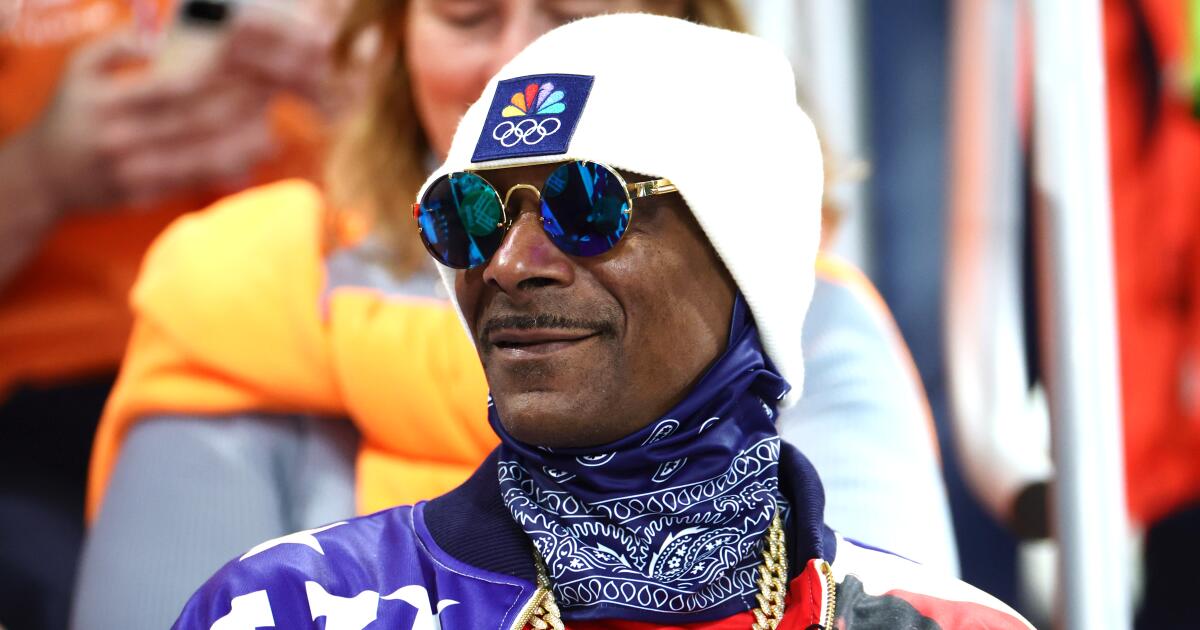
Snoop Dogg is dropping Olympics tickets like it’s hot.
The hip-hop icon has been busy at the Milan-Cortina Games as a special correspondent for NBC as well as an honorary coach for the U.S. team. According to recent reports by NBC and Reuters, he’s also been spreading the Olympics joy to the locals.
The rapper reportedly sent five tickets for the men’s snowboard halfpipe final to the owners of a local restaurant who covered his dinner after there were some troubles with the credit card payment. Sofia Valmadre, whose parents own Cronox in Livigno, Italy, said Snoop had placed an order for a cheeseburger, chicken wings, chicken nuggets and French fries at her family’s eatery. Unfortunately, the credit card the mogul’s staffer tried to use was declined for an unknown reason.
“My mother told him it was OK [to take the food] without paying,” Valmadre told Reuters. “[The next day] he sent us five tickets to see the final.”
The “Gin and Juice” rapper has become a familiar presence at the Olympics, especially since NBC made his involvement official starting with the 2024 Paris Summer Games. In addition to cheering on American athletes including curlers Cory Thiesse and Korey Dropkin, snowboarder Chloe Kim and speedskater Erin Jackson at their events — usually in custom apparel celebrating the sports stars — Snoop has been spending his time in Italy hanging out with bestie Martha Stewart, learning how to ski from Picabo Street and getting chummy with Olympians like “Quad God” Ilia Malinin.
For those curious about Snoop’s dining habits, Stewart recently described him as a “very fussy eater.” She even surprised him with a bowl of spaghetti with meatballs topped with cheddar cheese during a recent fine-dining outing.

What I learned watching every sport at the Winter Olympics

Nintendo turned its biggest flop into an expensive, uncomfortable novelty

Iran rebuilding nuclear program despite Trump talks, opposition figure claims

What America’s most powerful warship brings to the Middle East as Iran tensions surge

New study hints at a hidden Alzheimer’s risk factor affecting older Americans

Florida High School Football Rankings: Top 25 teams – Oct. 21

Cleary's 21 help Le Moyne down Central Connecticut State 69-64 in OT

How old is Bo Nix? What to know about Oregon quarterback ahead of 2024 NFL Draft

99th annual Pony Swim held in Virginia

Indiana Members Credit Union announced as new anchor tenant at Bottleworks District
What America’s most powerful warship brings to the Middle East as Iran tensions surge

Tucker Carlson says passport seized, staff interrogated at Israeli airport

Britain blocking use of air bases Trump says would be needed for strikes on Iran, UK media report | CNN

Buttigieg, Newsom, AOC top three in new 2028 poll in key presidential primary state
French far right asks European Parliament to mark death of activist Quentin Deranque
-

 Oklahoma2 days ago
Wildfires rage in Oklahoma as thousands urged to evacuate a small city
-
 Science1 week ago
A SoCal beetle that poses as an ant may have answered a key question about evolution
-

 Health1 week ago
James Van Der Beek shared colorectal cancer warning sign months before his death
-

 Technology1 week ago
HP ZBook Ultra G1a review: a business-class workstation that’s got game
-
![“Redux Redux”: A Mind-Blowing Multiverse Movie That Will Make You Believe in Cinema Again [Review]](https://i1.wp.com/www.thathashtagshow.com/wp-content/uploads/2026/02/Redux-Redux-Review.png?w=400&resize=400,240&ssl=1 "“Redux Redux”: A Mind-Blowing Multiverse Movie That Will Make You Believe in Cinema Again [Review]")
![“Redux Redux”: A Mind-Blowing Multiverse Movie That Will Make You Believe in Cinema Again [Review]](https://i1.wp.com/www.thathashtagshow.com/wp-content/uploads/2026/02/Redux-Redux-Review.png?w=80&resize=80,80&ssl=1 "“Redux Redux”: A Mind-Blowing Multiverse Movie That Will Make You Believe in Cinema Again [Review]") Movie Reviews1 week ago
Movie Reviews1 week ago“Redux Redux”: A Mind-Blowing Multiverse Movie That Will Make You Believe in Cinema Again [Review]
-
 Politics1 week ago
Culver City, a crime haven? Bondi’s jab falls flat with locals
-

 Politics1 week ago
Tim Walz demands federal government ‘pay for what they broke’ after Homan announces Minnesota drawdown
-

 Culture1 week ago
Romance Glossary: An A-Z Guide of Tropes and Themes to Find Your Next Book