Entertainment
Commentary: The new 'Mean Girls' isn't perfect. But it's justice for Janis

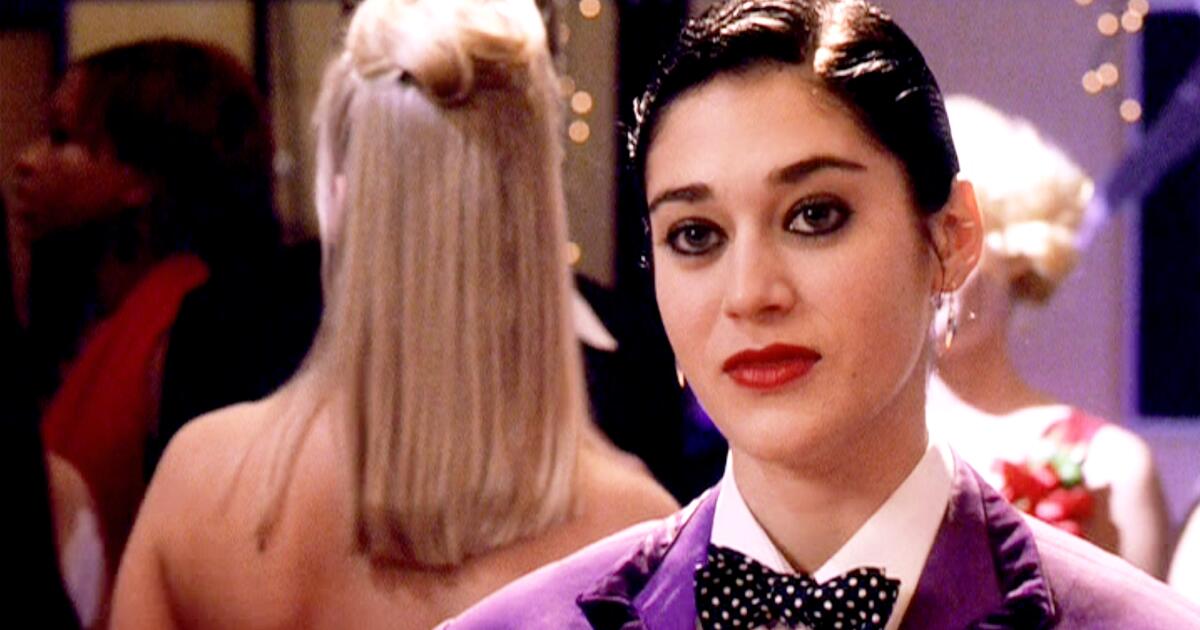
While the new “Mean Girls” movie includes many, many punchlines from the first film, recited verbatim, devout fans will clock plenty of changes. Bullying, once the province of three-way calling on landlines, now occurs on social media. Gone are the misguided Asian jokes, the sizeism slander, the ableist language and the whole pedophilia plot. And no, the cafeteria cliques aren’t categorized by racist stereotypes.
“Sometimes you write something and 20 years go by and you go, ‘Oh, I wish maybe we hadn’t said that,’” Tina Fey, who wrote both screenplays, said in a “Today” interview. “And what a gift to be able to open the hood and fix things up a bit.”
Whether updated for contemporary sensitivities or to acknowledge two decades have passed since the first movie’s release, most of these tweaks are as cosmetic as the millennial-to-Gen Z costume changes. But the one drastic alteration in the Paramount musical turns out to be its most meaningful, a model for future onscreen reimaginings of retrograde material: the overdue overhaul of Janis Ian.
In the 2004 version, Janis (Lizzy Caplan), wearing grunge outfits and thick black eyeliner, is introduced as an acerbic, art-loving rebel who has been socially ostracized by Regina George. The former best friends fell out after Regina started a rumor that Janis was a lesbian, accused her of being obsessively in love with her and refused to invite her to a pool party because there would be other girls there. In bathing suits.
Janis’ entry in the “Burn Book” her bullies use to tear apart their underlings on the social ladder simply labels her with a slur — one presented in the film as the most brutal comment imaginable about a female student. Newcomer Cady Heron, desperate to stay in the good graces of these popular “Plastics,” later betrays her erstwhile friend Janis by weaponizing the rumor: She too accuses Janis of being in love with her, and Regina reinforces it when she tells their fellow classmates Janis’ “dream come true” is “diving into a big pile of girls.”
Lindsay Lohan as Cady, left, Lizzy Caplan as Janis and Daniel Franzese as Damian in the 2004 movie “Mean Girls.”
(Michael Gibson / Paramount Pictures)
Fast-forward 20 years and Janis Ian has become Janis ‘Imi’ike, played by Auli’i Cravalho, and she is now actually queer — instead of being saddled with a last-minute heterosexual pairing with a male mathlete. And in a particularly satisfying twist, she’s also the new movie’s narrator, along with the other out queer character, her best friend Damian (Jaquel Spivey).
This time, Janis isn’t bullied because of her sexual orientation. In fact, Regina, to whom Janis had come out privately when they were still close, attempted to use it to her advantage, putting on “a show” with Janis during a game of Spin the Bottle to make a boy jealous — and then disclaiming her own interest by saying, “I knew she would let me. She’s, like, obsessed with me.”
In the fallout, we learn, Regina began describing Janis as an “obsessed lesbian” to their classmates — leading, ultimately, to a science-lab incident that got Janis kicked out of school and permanently labeled a weirdo, or worse. “Regina had been making fun of Janis this entire time and everyone but her knew it,” explains Damian. To the adults, he says, “Janis just seemed crazy.”
Jaquel Spivey plays Damian and Auli’i Cravalho plays Janis in “Mean Girls.”
(Jojo Whilden / Paramount Pictures)
Janis’ new characterization as an out queer woman of color — one whose sexual orientation, rumored or otherwise, isn’t weaponized against her by her classmates — is most effective in an iconic scene from the original: the apology exercise, in which math teacher Ms. Norbury (Fey) challenges female members of the student body to admit their part in perpetuating the “mean girl” behavior that has exploded on campus.
Though Regina tries to humiliate Janis ahead of her turn — it is “Mean Girls,” after all — it’s not for her queerness. The moment is a far cry from the first movie, in which Janis responds to Regina’s homophobic taunt by bitterly joking about her “big lesbian crush.”
Most importantly, the new film then turns this revised understanding of Janis into its defining musical number, one that underscores a new generation’s social ecosystem: Janis can be queer without letting it define her; her queerness might inflect her rejection by the Plastics but definitely no longer drives it.
In this version of the scene, she stares directly into the camera to sing “I’d Rather Be Me,” an anthemic showstopper by composer Jeff Richmond and lyricist Nell Benjamin in which Janis calls out the insidious, unspoken ways in which women deceive and undercut each other for their own gain, and unapologetically opts out of such mutually destructive efforts in the future:
We’re supposed to all be ladies and be nurturing and care
Is that really fair? Boys get to fight, we have to share
Here’s the way that that turns out: We always understand
How to slap someone down with our underhand
So here’s my right finger to how girls should behave
’Cause sometimes what’s meant to break you just makes you brave
So I will not act all innocent, I won’t fake apologize
Let’s just fight and then make up, not tell these lies
Let’s call our damage even, clean the slate ’til it’s like new
It’s a new life for me where I’d rather be me
I’d rather be me than be with you
It’s cinematic justice for a character previously maligned for the sake of a joke (the original Regina simply mistook “Lebanese” for “lesbian”). And in a remake so packed with cameos and callbacks to the first film, the overhaul of Janis is the only major update made to “Mean Girls” that seems especially attuned to today’s high schoolers — teens who are more accepting of diverse sexual orientations, racial/ethnic backgrounds and other forms of difference — than those of 2004.
So many adaptations of once-beloved stories fall flat with new viewers because they’re held down by outdated setups and cringe-worthy punchlines that previously played without protest. Sure, old-schoolers might say such choices are made to check politically correct boxes or lessen the likelihood of a widespread cancellation. (Although the cuts made from both the original and the stage show suggest there was some of that done too.) This “Mean Girls” is proof that such changes needn’t be about sanitizing a script so much as freshening it up, retaining the drama of familiar social dynamics while updating the social mores that change over time.
As Regina George actor Reneé Rapp sings in her end credits track — with Janis and her femme date shown dancing at the Spring Fling — “Can a gay girl get an amen?”
It only took 20 years, but finally, she can.
‘Mean Girls: The Musical’
Rating: PG-13, for sexual material, strong language and teen drinking
Running time: 1 hour, 52 minutes
Playing: In theaters nationwide


When I spend time around fellow writers, regardless of their achievements, conversation is much the same as in any other context. When I watch groups of fictional writers in films, they are continually striving to outdo one another, to show off their brilliant intellects. It’s a constant process of trying too hard, and it’s exhausting. To his credit, Dustin Hoffman, who plays established literary genius David in this torrid tale of family conflict, doesn’t come across this way, rising above the clumsy script thanks to his patient approach. The same cannot be said of the other actors, all of whom have proved their talent elsewhere yet seem seduced by the notion that this is how intelligent people behave.
The plot here is fairly simple, and not without potential. David’s son Jacob (Tom Sturridge) is a copywriter and successful creator of jingles, but after his wife Elise (Alison Brie) wins a major award, he starts getting insecure, wanting to prove that he can make it as a proper literary type. The obvious way to do this seems to be to write a biography of David, but David has no interest in engaging with this. He provides a number of reasonable justifications for this. Underlying them is the fact that we all tend to frame ourselves in different ways for different people. What one might be willing to say to the great anonymous public is not necessarily something one might feel able to say to one’s son.

This stalemate is broken by the arrival of John (André Holland, fresh from the similarly awkward – but smarter – The Dutchman), an old friend of Jacob whom David remembers fondly. At Elise’s instigation, a secret deal is made: John will look after the increasing fragile older man during the day and, in the process, extract his stories from him, giving them to Jacob for his book. John agrees to this because he needs the money Jacob offers him, and it seems like a sweet deal. It immediately sets up a power imbalance, however.
Complicating matters further are John’s past as a literary protégé who failed to fulfil his promise; the fact that he was once in a relationship with Elise, whose dissolution she regrets; and the pressure that she’s under to match her great success, from an agent who subscribes to the popular but rather tedious belief that inspiration is most easily found in bad behaviour.
Another way writers in films differ from those in the real world is that for them, critical success comes with money, so they don’t have to write very much. A good deal of this film is spent listening to them whine about how hard it is, as if under the misapprehension that it’s not really a form of work. Sturridge is particularly unfortunate; between this and Jacob’s whining about issues with his parents, he doesn’t get much else to do. Brie has a little more to work with as the film flirts with the idea that we’re caught up in Elise’s imaginary scenarios, but this doesn’t really convince. Holland manages to salvage something, but it’s only Hoffman who is really able to interject some energy into proceedings – ironic given that he spends a lot of his scenes in a haze of cannabis smoke.
It’s not terrible. Writer/director Alex Vlack frames scenes nicely enough and all the technical work is carried out to a good standard. There’s just little reason for viewers to invest. Like its characters, it’s intent on trying to communicate cleverly, but has very little to say.
Reviewed on: 04 Jul 2026

Comedy saved Teruko Nakajima’s life.
In 2016, Nakajima received psychiatric care at Cedars-Sinai Medical Center, diagnosed with depression, PTSD and suicidal ideation. Her doctors searched for ways to manage her stress by exposing her to various activities, including video games, serene Icelandic landscapes and an aerial silks performance. The last brought her anxiety down, revealing that the arts were the answer. Her doctor prescribed the arts, comedy specifically, so she went to the Upright Citizens Brigade for class.
She found a calling and a safe space in comedy.
“I didn’t know I was born a comedian,” Nakajima said. “Finally, I really felt I was accepted as a comedian, validated for who I am.”
Nakajima shares her healing journey to the stage in “Made in America,” which just had an encore performance at UCB on Tuesday after its award-winning run in 2022 (it is also available for streaming on UCB’s website through Tuesday). The one-woman show arrives in time for the United States’ 250th anniversary on Saturday, documenting Nakajima’s search for the American dream as a first-generation Japanese American woman. “Made in America” premiered in 2022 at the Hollywood Fringe Festival during Joe Biden’s presidency and following the Jan. 6 United States Capitol attack. In 2026, its musings on identity and belonging pierce through today’s political landscape shaped by Donald Trump’s second presidency.
“I wanted to let people know this is an American story,” she said.
“Made in America” is about Nakajima’s life. It begins in her mother’s womb. She felt so safe there, she yearned to return. Growing up, she experienced an emotionally and physically abusive life at home, recalling her father breaking furniture and her mother’s alcohol-induced belittling comments. But her name, Teruko, translates to a “shining child.” Thus, she proclaims in the show, “I’m a superstar!”
The beauty in “Made in America” is Nakajima’s ability to find the humor in her trauma. When the show transitions to her life in America, she talks about her life as a dominatrix in New York City and her struggles with romance in Los Angeles. Her comedic jabs at the American economy and humorous reflections juxtapose somber moments of stillness in the midst of her struggles. This balance puts her life into perspective, revealing a positive personality beneath a dark saga.
Nakajima performs “Made in America” at Upright Citizens Brigade Theater.
(Nick Rasmussen)
“I look very happy-go-lucky and cheerful, but actually, I am a very dark person because I have a dark history,” she said. “I always wanted to leave my story behind. I wanted to leave my mark in this world before I died, so I needed to make something.”
The first class Nakajima took at UCB was John Flynn’s storytelling course. There, she started building pieces of the show without realizing it. As they added up, the idea for a show surfaced. After class one day, she asked Flynn to direct it. Flynn, who has been teaching at UCB in New York and L.A. for about 20 years, agreed.
“She disarms people,” Flynn said. “There’s something about her that is just so unique and so delightful that you won’t forget her.”
Flynn first met her at his storytelling open mic. She walked in with her emotional support dog Titi (also known as Tiny Teruko), wearing her signature red heart-framed glasses, without lenses. Soon, these glasses would make him double over in laughter when she performed and cried, dabbing her eyes with tissue through the frame.
“When you start to learn her story and the experiences she’s had, it is amazing that she is so positive,” he said. “She’s such a sort of undeniable positive energy that she just radiates all the time, which is so compelling and why people are so drawn to her.”

Revived at UCB amid Trump’s second term and the nation’s 250th birthday, Nakajima’s show doubles as a defiant immigrant love letter to America — and a refuge for audiences feeling alone.
(Nick Rasmussen)
Nakajima puts all of herself into the show. Aside from comedy, she has been a cheerleader in Japan, a salsa dancer in New York and a sculptor on the side — she loves sculpting MLB players’ butts; Derek Jeter is her favorite. In the show, she folds these aspects of her life into a single story, dancing from section to section. Comedy is more than just laughs; it’s storytelling.
“I am so good at cheering people up, since I was very little,” she said. “I had no competition with others because I’m the one and only. Nobody looks like me.”
Together, Flynn and Teruko parsed through her life stories to give the show an arc. For Flynn, it’s like carving away at what is already there to create something fun and cohesive, like a sculpture. “What’s fun about directing one-person shows like this is that it’s usually just two people in a room putting something together,” Flynn said.
Bringing the show back this year, the work gets sharper and tighter, but the biggest shift is in its conclusion. Once optimistic about the future of life in America, the show now has a stronger desire to make change. There was a sense of hope in 2022 for women like Nakajima, an immigrant who sought safety in a new country and struggled with abuse from her family and strange men. Today, as Trump’s immigration policies lean on deportation and discrimination, she simply wants to be seen.
“America, thank you for not giving up on me,” Nakajima said toward the end of the show. She is proud to be American, not just because she gets to have the same nationality as her dog Titi, but primarily because of the new life it offered her. America promised happiness. Whether it actually comes is another story, but in this one, the promise itself gave her a sense of purpose.
“After the show, people come to me in person and through messages,” she said. “A lot of people said, ‘I felt like I am not alone.’ That gives me so much hope and unity. I feel safe and like I have something to look forward to because I’m not the only one.”
Flynn realized how much he took for granted while working on the show with Nakajima. “I think, even though these are scary times and things seem to be going in directions that aren’t the best, there are still great people, and there’s something that is still there and is not dying and is still fighting,” Flynn said.
When she began her acting journey, Nakajima thought she’d turn to drama, but there’s something more unguarded in comedy.

Nakajima holding up her dog Titi during a performance of “Made in America.”
(Nick Rasmussen)
“I’m very authentic and invincible through comedy,” she said.
By the end of “Made in America,” Nakajima is no longer trying to find her way back to her mother’s womb. She is confident in her place in the world. She remembers that she is a star. She brings out her dog Titi, who was hidden on stage throughout the entire performance, and shares that UCB gave her a new outlook on life. Comedy breaks away her stresses and allows viewers to be vulnerable with her.
“I always wanted to feel safe,” she said. “I never had that. Finally, I found a safe space, and then I realized that I’m actually important. I’m actually worthy. I’m so happy right now to be able to express myself through comedy because it’s the truth.”
Movie Reviews
1986 Movie Reviews – About Last Night, Big Trouble in Little China, The Great Mouse Detective, Howling II, Psycho III, Under the Cherry Moon | The Nerdy

Welcome to an exciting year-long project here at The Nerdy. 1986 was an exciting year for films giving us a lot of films that would go on to be beloved favorites and cult classics. It was also the start to a major shift in cultural and societal norms, and some of those still reverberate to this day.
We’re going to pick and choose which movies we hit, but right now the list stands at nearly four dozen.
Yes, we’re insane, but 1986 was that great of a year for film.
The articles will come out – in most cases – on the same day the films hit theaters in 1986 so that it is their true 40th anniversary. All films are also watched again for the purposes of these reviews and are not being done from memory. In some cases, it truly will be the first time we’ve seen them.
This time around, it’s July 4, 1986, and we’re off to seeAbout Last Night, Big Trouble in Little China, The Great Mouse Detective, Howling II, Psycho III, and Under the Cherry Moon.
About Last Night
St. Elmo’s Fire was awful. This feels like a make-good for two of the actors.
Danny Martin (Rob Lowe) meets Debbie Sullivan (Demi Moore) and their chemistry is electric and immediate. They waste no time becoming serious, and moving in together, despite neither of them having ever had a serious relationship. They quickly discover it’s not quite as easy as just sharing an apartment like you do with a roommate.
I didn’t love the movie (mainly due to Jim Belushi’s Bernie character), but I did enjoy it far more than I anticipated.Moore and Lowe’s on-screen chemistry really clicked far more than most on-screen couples.
It’s a good character study, and keeps you engaged. Is it essential viewing? That’s up to you.
Where to watch: Available to stream.
Big Trouble in Little China
If there was ever a poster child for a movie that found a second life in rentals and on cable, this is it.
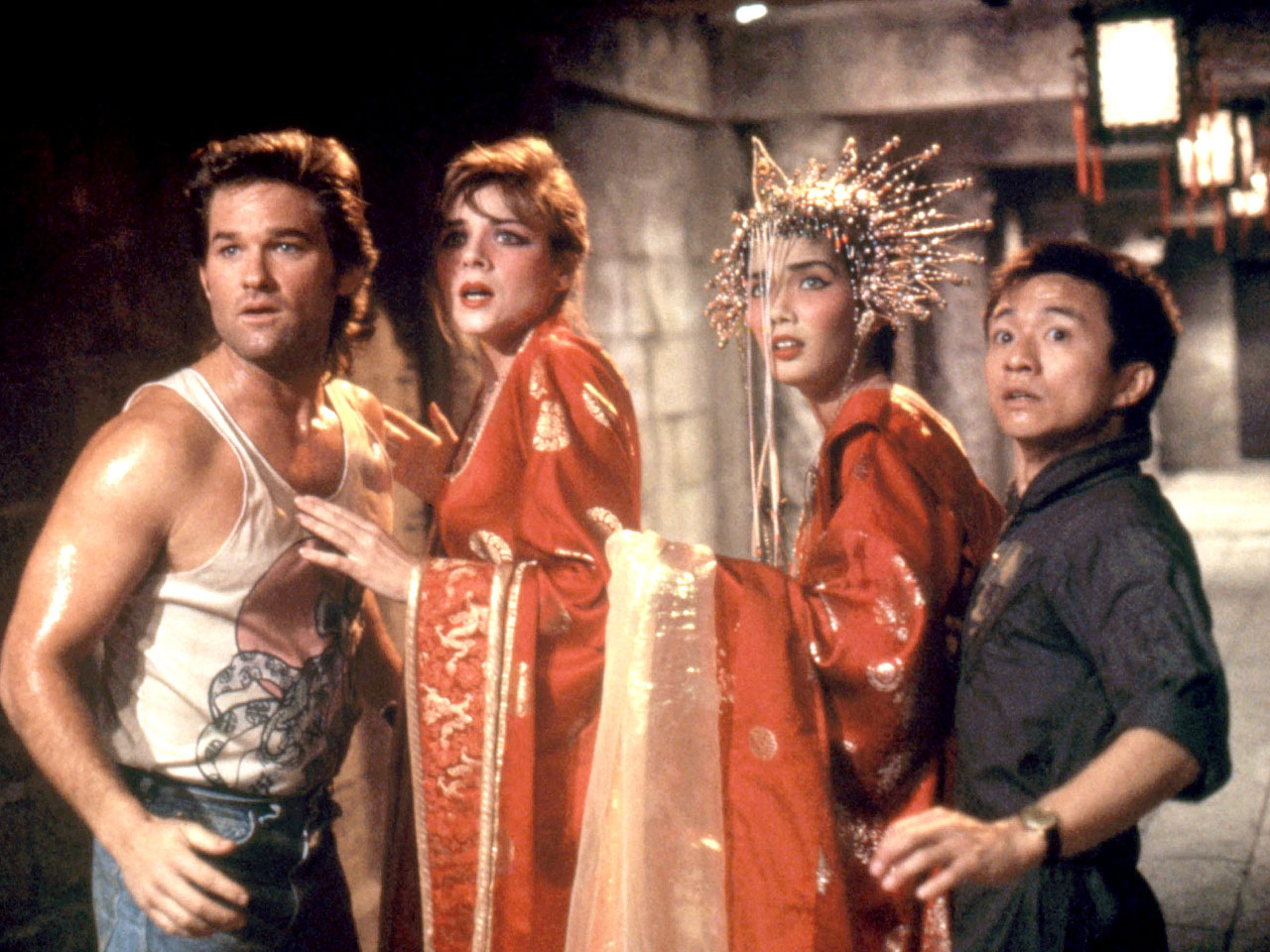
Jack Burton (Kurt Russell) is a over-the-road trucker with a lot of thoughts on life and how important reflexes are. While making a delivery in Chinatown, he gets sucked into a situation with an ancient Chinese evil trying to regain its humanity, and all Jack really wants is to get his truck back.
John Carpenter wasn’t quite a household name, but with films such as Halloween, The Thing and Escape From New York to his name, people were taking notice. Teaming with Russell for another outing seemed like it would be another win, but this one proved just a little too odd for mainstream audiences. Once it got into our homes, however, everyone fell in love with it.
As Jack Burton always says, it’s a must-see for any 80s journey.
Where to watch: Available to stream.

The Great Mouse Detective
I had never seen it, and as Disney films go, I would have been fine keeping it that way.
Set in Longon in 1897, a young mouse named Olivia Flaversham witnesses her toymaker father get kidnapped. She seeks out Basil of Baket Street, also known as the Great Mouse Detective. Along with David Q. Dawson, recently returned from serving in the military in Afghanistan, the three of them try to stop Professor Ratigan from replacing the Queen.
It’s just a Sherlock Holmes story, but with mice. I didn’t find anything that compelling about it. It was pretty enough to look at, but the story just left me fairly empty.
Where to watch: Available to stream.

Howling II
I… have a lot of thoughts.
Following up on the end of the The Howling, Ben White (Reb Brown) buries his sister Karen White, and quickly learns she was a werewolf. He teams up with werewolf hunter Stedan Crosscoe (Christopher Lee) to take down Stirba (Sybil Danning), the queen of the werewolves who is about to celebrate her 1,000th birthday, and stop the spread of the werewolf curse.
On paper it sounds fine, in execution it is just… horrible. Poorly lit, horrible acting, low-grade effects, and costuming that leaves you more confused than anything else.
Avoid at all costs.
Where to watch: Available to stream.

Psycho III
I have to admit, so far these sequels haven’t been horrible.
Following up shortly after the vents of Psycho II, Norman (Anthony Perkins) is still hiding the body of Emma Spool, and having issues again with seeing “Mother.” He hires drifter Duane Duke (Jeff Fahey) to run the motel. He also meets Maureen (Diana Scarwid), a nun on the run after she accidentally kills one of her sisters. With a new woman in his life, Mother has some thoughts on what Norman should be doing.
In general I actually enjoyed this new outing in the franchise, although it feels it missed some opportunities at the end of the story of Norman and Maureen working together. What if Maureen had actually been the one manipulating Norman this time? There was another movie lurking in the background that sadly never gets broached.
What we did end up with, however, was entertaining.
Where to watch: Available to stream.

Under the Cherry Moon
This film was unfairly maligned.
Christopher Tracy (Prince) and Tricky (Jerome Benton) as wooing women in France in hopes of getting enough money to head back to Miami one day. When Christopher hears about Mary Sharon (Kristin Scott Thomas) inherting a trust fund of $50 million for her 21st birthday, she becomes his next mark, but little does he know how it will end for him.
Following Purple Rain, Prince could do no wrong in Hollywood and was given a blank check for his next film. Audiences and critics did not warm to this film as it wasn’t Purple Rain 2 and it lived with a bad reputation for years.
I hadn’t seen it in 35 years or more when I watched it for this report, and… I really enjoyed it. It’s over-the-top, but in the right way. Prince was clearly paying homage to the silent movie romance films, and it works for what it is. Is he a great actor? No. Does it work for this film? Yes.
Honestly, this may be one of the most enjoyable films I’ve had in this project in several weeks. It’s worth a reassessment.
Where to watch: Available to stream.
1986 Movie Reviews will continue on July 11, 2026, with Club Paradise.
-

 Washington4 minutes ago
CDCR Seeking Incarcerated Person Who Walked Away from Washington Ridge Conservation Camp in Nevada County – News Releases
-

 Wisconsin7 minutes ago
Wisconsin Lottery Powerball, Pick 3 results for July 4, 2026
-

 West Virginia12 minutes ago
PHOTOS: West Virginia celebrates America’s 250th birthday throughout Charleston
-

 Wyoming19 minutes ago
Casper residents get festive at Independence Day 250 celebration at Ford Wyoming Center
-

 Crypto21 minutes ago
Hyperliquid Helps VALR Launch Over 200 Perpetual Markets as Decentralized Liquidity Gains Ground
-

 Finance27 minutes ago
Las Cruces finance director gets national honor for ‘exceptional contributions’
-

 Fitness34 minutes ago
10 minutes of swimming might not sound worth it – but I tried it for 2 weeks and found the benefits of a quick dip
-

 Movie Reviews42 minutes ago
The Revisionist – Film Review – Eye For Film

