Entertainment
Can arts festivals matter anymore? LA28 Olympics can prove they do, with Salzburg as inspiration


The well-run 1984 Olympics transformed Los Angeles. Not through the Games, which thrillingly came and went, but through the Olympic Arts Festival, which taught us to dream and inspired us to do. Forty year later, we have added Walt Disney Concert Hall, Los Angeles Opera, the Getty Center, the Soraya, the Geffen Playhouse, the Hammer Museum, the Wallis, the Nimoy, the Industry, L.A. Dance Project, Wild Up, the Broad museum and the Broad Stage. The Olympic Arts Festival turned us into an arts capital in a remarkably short period of time.
Now that Paris has symbolically handed the Olympic torch back to us, our Games in 2028 no longer seem so far away. By then, we will have added Frank Gehry’s new Colburn Center, a 1,000-seat concert hall with the potential of turning Grand Avenue into an avenue of the arts unlike any in the world. A short Metro ride away will be the Los Angeles County Museum of Art’s new Peter Zumthor-designed David Geffen Galleries.
This leaves the arts community excited and galvanized but also alarmed after Casey Wasserman, chairman of LA28, the private group putting on the L.A. Games, said following the closing ceremony in Paris: “We don’t have an Eiffel Tower. We do have a Hollywood sign.” Tom Cruise’s motorcycle tour from the boulevards of Paris to the Hollywood Hills in the ceremony’s tacky finale only increased concern. Meanwhile, the death on Sept. 30 of Robert Fitzpatrick, the force of nature behind the 1984 Olympic Arts Festival, has reminded us what he accomplished.
Obviously, in a changed city and a changed world, we hardly require a replay of the 1984 Olympic Arts Festival. But what? Should the ’28 model resemble the current PST Art festival of exhibitions related to science? Funded by the Getty, institutions throughout the region have come up with projects — and we get whatever the cat drags in. Or might the recently appointed chair of the LA28 Cultural Olympiad, Maria Anna Bell, a former Museum of Contemporary Art board chair, and her advisor, Nora Halpern, an art historian and curator based in Washington, D.C., the last two decades, find novel inspiration from Fitzpatrick’s brilliantly curated festival?
Tenor Sean Panikkar in Peter Sellars’ production of Prokofiev’s “The Gambler” at the 2024 Salzburg Festival.
(Ruth Walz / Salzburg Festival)
The Cultural Olympiad (can’t we go back to the friendlier Arts Festival?) is special. It is the only aspect of the Olympics that needn’t be politicized or commercialized. The budget for 1984 was $20 million. The Times set the festival rolling as the main sponsor with a $5-million donation. Around $6 million came from ticket sales. The Olympics supplied the rest. Fitzpatrick used all of it as he saw fit.
Two days after the closing ceremony in Paris in August, I flew to Austria, where I spent two weeks at the annual Salzburg Festival. Its 62-million euro budget ($67.8 million) puts Salzburg on a similar scale to the 1984 Olympic Arts Festival when adjusting for inflation. More important, grand and consequential Salzburg markedly demonstrates what makes festivals matter.
A festival in Mozart’s picturesque birthplace at the foot of the Austrian Alps, a city that attracts hordes of summer tourists along with well-heeled audiences in formal dress, may not exactly suit L.A. But L.A., in fact, serves as an inspiration for Salzburg.
This year, Peter Sellars’ new production of Prokofiev’s opera “The Gambler” and Gustavo Dudamel’s concert with the Vienna Philharmonic were among the highlights.
The festival itself needs no contrived theme. Instead, it becomes, as did our 1984 Arts Olympic Festival, an activist lens onto the world. In 1992, while Sellars was the director of the Los Angeles Festival (which grew out of the Olympic Arts one), he began staging opera in Salzburg, helping revolutionize what had become a stodgy music industry event. Indeed, Markus Hinterhäuser, the festival’s visionary artistic director, told me that Sellars is his most important artistic guide today.
On my first day in Salzburg, I headed for an 11 a.m. concert featuring Riccardo Muti conducting the Vienna Philharmonic in Bruckner’s monumental Eighth Symphony. The full Festspielhaus, the festival’s largest hall, had a worshipful air. We listened in rapt, reverential awe, cozied by Vienna’s velvet strings, velvet winds and velvet brass woven together in a perfect tapestry of lush sonic textures and instrumental colors.

Peter Sellars, photographed this year in Salzburg.
(Jan Friese / Salzburg Festival)
That evening, in an again packed Festspielhaus, Daniel Barenboim conducted the West-Eastern Divan Orchestra in another monumental Eighth Symphony, Schubert’s “Great,” (confusingly known as Schubert’s Ninth outside Austria and Germany). In place of velvet and luxuriant lushness, there was fixating intensity and raw power. The ensemble was so grounded that the feeling here was of everyone giving everything they had to hold the symphony — and symbolically the world — together.
Both Eighths were occasions for community. The Divan is a training orchestra founded 25 years ago by Barenboim and Palestinian American scholar Edward Said to bring together young musicians from Israel and Middle Eastern Arab countries. The orchestra’s current members had spent the last year during the war in Gaza studying at the Barenboim-Said Akademie in Berlin, learning to work through their profound differences for a common cause.
To witness them supporting one another musically and showing inspiring devotion to a frail Barenboim, suffering from a debilitating neurological disease, may be the only gleam of hope we have for peace. At the end of what the players clearly knew was a performance of a lifetime, they lingered onstage, hugging one another. Tying the day together, the Vienna Philharmonic concertmaster that morning was a 27-year-old Muslim violinist from Nazareth, Yamen Saadi, who who got his start at age 10 in the Divan.
This first day became an introduction to the way that knowing creation can bring together a wide range of sources that result in a brave and profound cultural diplomacy, which is a disastrous lost art. This was furthered in much of what I attended during the festival.
Three major opera productions in Salzburg threw needed light on Russia and Ukraine. Two were Russian operas based on Dostoevsky novels: Prokofiev’s little-known “The Gambler” and Mieczyslaw Weinberg’s all-but-unknown “The Idiot.” Presented as compelling theater, they brought in-depth insight into our often simplistic attempts to understand the Russian mind, with its complex aspirations, fears and insecurity that can lead to greatness, grandiosity or outright malevolence.
Sellars revealed “The Gambler” as the dazzlement of addictive behavior, a road map for losing one’s mind. In gripping, high-wire performances, American baritone Sean Panikkar as Alexei succumbs to roulette. Lithuanian star soprano Asmik Grigorian as Polina loses her mind to nihilism. Young Russian conductor Timur Zangiev barreled through Prokoviev’s restless score with compulsive and relentlessness virtuosity.
“The Idiot” is a nearly five-hour slog by a Polish-Russian contemporary of Shostakovich about another Dostoevsky outsider who succumbs to visions of grandeur. But Weinberg’s 1985 barely known gloomy opera is also a profound demonstration of how and why misplaced power can destroy society. And thanks to a terrific cast, led by sensational Ukrainian tenor Bogdan Volkov, and the vivid conducting of Mirga Grazinyte-Tyla’s sleekly modern production by Polish director Krzysztof Warlikowski, “The Idiot” turned out to be Salzburg’s hottest ticket.

A scene from Krzysztof Warlikowski’s production of Weinberg’s “The Idiot,” at the 2024 Salzburg Festival.
(Bernd Uhlig / Salzburg Festival)
Unfortunately, the night I attended, Grazinyte-Tyla had taken ill and had been replaced by her assistant, Oleg Ptashnikov. But video of the production with the colorful Grazinyte-Tyla can be streamed via stage-plus.com and, as can “The Gambler,” on medici.tv.
What made Salzburg special and a little shocking was its daring belief in cultural diplomacy. This included bringing back Teodor Currentzis to lead a revival of an avant-garde production of Mozart’s “Don Giovanni.” The controversial Russian-based Greek conductor has been banished from the majority of Western institutions. While never expressing support for the war in Ukraine, Currentzis is said to have received funding for his Russian ensemble from corporations with ties to Russian President Vladimir Putin.
But Currentzis is also controversial because he is, on one hand, an obsessive perfectionist and, on the other, a showy radical with highly original musical ideas. All of that shows up in the “Don Giovanni,” which came close to perfection and extreme reinvention.
The surreal, visually hypnotizing production by Italian director Romeo Castellucci made little effort to make narrative sense. What’s an upside-down car hanging from the ceiling got to do with anything? But somehow the imagery, mostly against a bare stage, focused attention on a performance in which every single note, sung or played, every movement, every physical object, seemed to have been thought through and was riveting.
This international cast, led by striking Italian baritone Davide Luciano as the Don, brought yet more Russians and Europeans together. The marvelous Utopia Orchestra in the pit was composed of leading players from top European ensembles.
There is much, much, much more to the Salzburg Festival. And months later it still influences how I view international relations and political chaos, how I contend with world leaders, how I vote.
Yes, we’ve got the Hollywood sign, a real-estate advertisement-turned-landmark. But Walt Disney Concert Hall is also a landmark.
There is no time to waste. Planning takes time. But Salzburg does it every year, and there should be no reason why we can’t make a festival and mean it.


YouTuber Jesse Ridgway and his wife, Ashley, shared that they terminated their pregnancy following a Down syndrome diagnosis. What happened online afterward has shocked the couple, but Jesse said he is hopeful that sharing their experience may help other couples feel less alone.
The YouTuber, who’s been a content creator for 20 years and has more than 4.3 million subscribers on his main channel, shared a video on his personal YouTube channel last week that featured he and his wife receiving the results of an amniocentesis — a test for certain genetic abnormalities, chromosomal conditions, and fetal infections — and the results were consistent with Trisomy 21, or Down syndrome.
After the couple read the results, Jesse said that they’d discussed beforehand whether they’d consider terminating the pregnancy. “I know this is traumatic for the whole community. Now that we have a definitive result, we’ll talk with the counselors, and we’re gonna have some hard conversations,” he said. Both Jesse and Ashley were emotionally distraught and crying throughout the video.
Jesse told The Times over a phone call on Thursday evening, with Ashley beside him as she recovered from her procedure, that sharing the diagnosis online happened accidentally. The couple was in the middle of a gender reveal video when they spotted the preliminary markers for Trisomy 21 on the same report.
“We were filming and ready to celebrate with our audience and we were blindsided,” he said. “What do we tell people? How do we navigate this? I reverted to being honest, and yes, that led us to the last 48 hours.”
On Wednesday, Jesse posted a lengthy statement that disclosed the couple’s decision to terminate the pregnancy. Ashley reposted the statement to her own Instagram.
“This week, my wife and I made the very difficult decision to terminate the pregnancy due to Trisomy 21,” the since-expired Instagram story read.
Jesse continued that the decision was “not made lightly” and said he appreciated the messages of support he and Ashley received. “I know some of you may be very disappointed to hear this news. We are devastated. This has been extremely traumatic for both of us, especially Ashley. She underwent the procedure earlier this week and is on the mend. Thankfully, everything went smoothly, but emotionally we are drained.”
The YouTuber continued the series of posts explaining: “When I first confronted this news, I was shocked but optimistic. … I signed on to be a parent, come what may … but I just didn’t fully understand what Down Syndrome entailed. Once we made it public, it became clear that MOST people don’t know what Down Syndrome entails (and no, it’s not the same as Autism).
“50% of babies with DS have heart defects. 75% will have hearing challenges. Over 50% will have vision problems. Impaired immune function, developmental disabilities, learning disabilities, delayed physical development, poor muscle tone, structural issues with face, decreased lifespan, etc. … Sadly, the list is long, feel free to look it up … Down Syndome isn’t a “blessing”, it is objectively sh— from a health perspective. I didn’t realize just how rough it is for the child, let alone the family.”
According to the National Institutes of Health, about 6,000 babies are born in the U.S. each year with the condition, affecting about 1 out of every 700 babies. “[W]ith appropriate support and treatment, many people with Down syndrome lead happy, productive lives,” the agency notes, but there are often significant lifelong health challenges and risks.”
Ashley had the abortion on Monday. Jesse said he spent the beginning of the week tending to her, and on Wednesday he crafted the post to explain what the couple had decided and why.
“I put it out there for my audience, and then it took on another life. Because it’s a contentious topic, I figured there would be some level of like flak or differing opinions, but to see what it’s become has been pretty shocking,” he said. “There are a million abortions every year, and I’m just shocked that one couple deciding to abort for Trisomy 21 is mainstream news. This is happening every day, and it’s just not talked about.”
Jesse said that his and Ashley’s DMs had been flooded not only with messages of support but also dozens of confessions from strangers who had been through the same experience. And while the supportive messages felt “validating,” Jesse said the couple had received a “tremendous amount of death threats. People saying we’re murderers.”
According to Healthline, nearly 100% of women in Iceland who receive a positive test for Down syndrome terminate their pregnancy. In Denmark, 98% are terminated, in France 77%, and in the United States it’s 67%.
When the Ridgways had finished filming the results of the amniocentesis, they debated whether they should share the video. They said they didn’t even want to watch the tape.
“But I kept coming back to, there are so many people out there like us dealing with these things, and nobody’s talking about it,” he said. “I think if we share this, it will have a net positive for other people, and they can feel more comfortable and less shame confronting these things. … I hope other people can see that, that there is some value in this, but I can’t push it any more than I have. People are going to cast their judgments.”
Movie Reviews
Bandar Movie Review: Bobby Deol roars in Anurag Kashyap’s unsettling legal thriller that refuses to spoon-feed

Name: Bandar
Director: Anurag Kashyap
Cast: Bobby Deol, Sanya Malhotra, Sapna Pabbi, Saba Azad, Jitendra Joshi, Raj B Shetty
Writer: Sudip Sharma, Abhishek Banerjee
Rating: 3.5/5
Plot:
Bandar follows Sameer Mehra’s character, essayed by Bobby Deol, a fading star who is desperately clinging to his past glory. Just as he attempts to rebuild his life and finds solace in a new relationship, his world comes crashing down. A former girlfriend files a heinous allegation against him, dragging him into a vicious, high-profile legal battle. Written by Sudip Sharma and Abhishek Banerjee, the film moves away from standard Bollywood courtroom setups. Instead, it dives straight into the murky waters of social media trials, public perception, and a sluggish judicial system where the truth gets buried under layers of gray.
What works:
Known for his chaotic energy, Anurag Kashyap takes a remarkably mature and controlled approach here. He avoids sensationalizing a highly sensitive topic, choosing instead to focus on the psychological claustrophobia of the protagonist. The prison sequences are exceptionally well-shot. They create a suffocating, raw atmosphere that makes you feel the weight of the character’s confinement. The script successfully avoids preachy, black-and-white monologues. It bravely forces the audience to confront their own biases regarding modern-day public trials and the digital judge-and-jury culture.
What doesn’t:
Clocking in at nearly two hours and twenty minutes, Bandar feels heavily weighed down in the second half. The narrative stretches thin, and a few subplots demand too much patience, making you wish for a tighter edit. The film stubbornly refuses to take a definitive moral stance or offer a neat resolution. While film enthusiasts might appreciate the complexity, mainstream viewers looking for a clear-cut ending or emotional payoff might walk away feeling detached and frustrated.
Performances:
- Bobby Deol is the beating heart of this film. Stripping away the massive macho swagger and menacing villainy of his recent hits, he delivers a deeply vulnerable, understated performance. He plays Samar with a mix of arrogance, confusion, and raw helplessness, proving his immense range.
- Sanya Malhotra anchors her screen time with her trademark reliability, turning in a grounded and impactful performance.
- Saba Azad and Sapna Pabbi excel in their respective roles, bringing genuine nuance to characters that could have easily been sidelined.
- Jitendra Joshi is an absolute scene-stealer, commanding your attention every single time he steps into the frame.
- Indrajith Sukumaran and Raj B Shetty are absolute show stealers with their raw acting.
Final Verdict:
Bandar is an unsettling, morally complex thriller that refuses to spoon-feed its audience. It isn’t a comfortable watch, nor does it try to be. While the sluggish pacing in the second half prevents it from being an absolute masterpiece, it is worth a watch for Bobby Deol’s spectacular acting reinvention and Anurag Kashyap’s gritty, thought-provoking storytelling.
Disclaimer: The views and opinions expressed in this article are solely those of the author and do not reflect the official policy or position of Pinkvilla. No statement in this article is intended to defame, harm, or malign any individual or entity.
ALSO READ: Maa Behen Movie Review: Madhuri Dixit, Triptii Dimri, and Dharna Durga save a slow-burning mystery
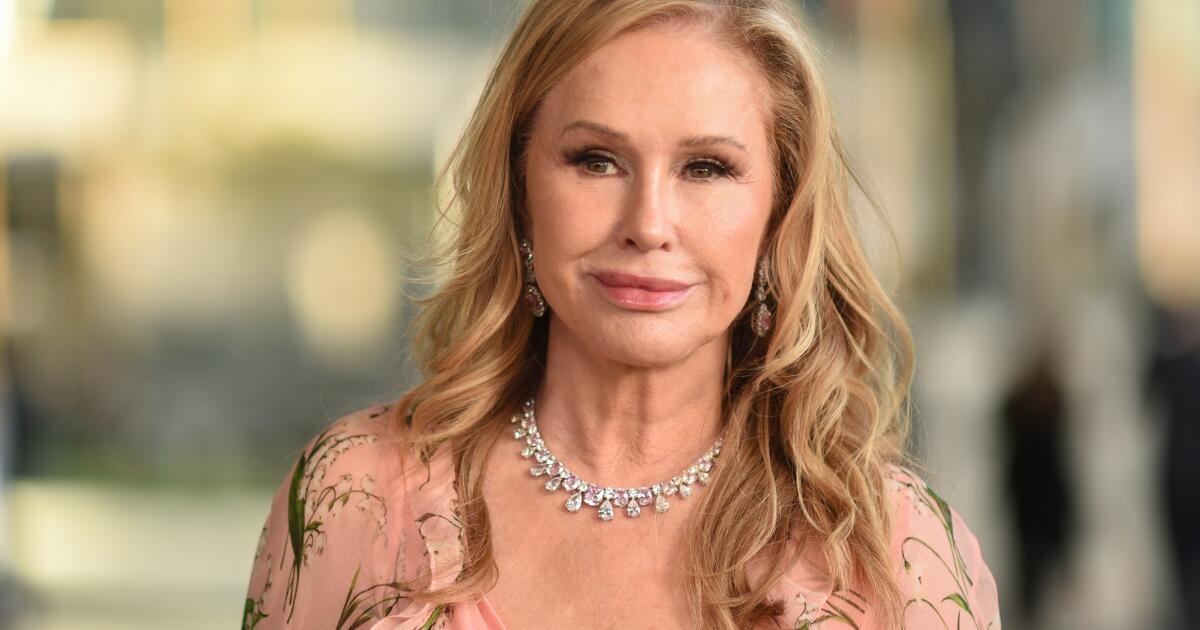
Kathy Hilton will no longer be the grand marshal of West Hollywood’s pride parade.
The city and WeHo Pride on Wednesday released a joint statement, announcing that “The Real Housewives of Beverly Hills” star would no longer serve as the Grand Marshal Icon for the 2026 WeHo Pride Parade. The event is scheduled for Sunday.
“After thoughtful discussions, the City of West Hollywood, the WeHo Pride production team, and Kathy Hilton have determined that the 2026 WeHo Pride Parade will not designate a Grand Marshal Icon honoree,” read the statement.
The decision comes less than a week after Hilton was announced. That May 28 announcement was met with swift backlash from the LGBTQ+ community and allies, who called out Hilton’s ties to President Trump and alleged MAGA-leaning politics. Critics also cited accusations that the socialite had used a homophobic slur while on a trip with other cast members of “The Real Housewives of Beverly Hills,” an action she has previously denied.
In their joint statement, West Hollywood and the WeHo Pride team expressed their appreciation for “the respectful and sincere dialogue” around both the event and the “role and significance” of Pride honorees.
“The City of West Hollywood has always believed that Pride belongs to the community,” the joint statement said. “Since its earliest days, Pride has served as both a celebration and a platform for activism, visibility, resilience, and the ongoing pursuit of equality, dignity, and justice for LGBTQ+ people. … These conversations reflect the passion people have for WeHo Pride and underscore the importance of ensuring that WeHo Pride continues to honor the history, values, and diverse voices of the LGBTQ+ community.”
In a statement, Hilton expressed gratitude for being considered for grand marshal and reaffirmed her commitment to the LGBTQ+ community and causes.
“My reason for wanting to be involved in this year’s WeHo Pride weekend was simple: to celebrate, support, and share in the joy of a community that means a great deal to so many people,” Hilton said. “Pride is, and always will be, about celebrating and uplifting LGBTQ+ voices, experiences, and achievements. … My support for the community and WeHo Pride is unwavering.”
She also mentioned several queer advocacy organizations and events she has supported over the years, including GLAAD, the Elton John AIDS Foundation, the Elizabeth Taylor AIDS Foundation, Dr. Mathilde Krim, God’s Love We Deliver and Project Angel Food.
The latest Pride-related dust-up follows the abrupt cancellation of the Long Beach Pride Festival in May. The city’s Pride Parade took place as planned.
Both snafus have occurred as conservative politicians and advocates continue to attack LGBTQ+ rights and visibility nationwide. Some Republican governors have even pushed for conservative alternatives to Pride month festivities. A recent Gallup poll has found that after years of steady gains, support for marriage equality and same-sex relationships has slipped, particularly among Republicans.
-
 Lifestyle5 minutes ago
A new ‘Cape Fear’ remake rolls out one surprise after another
-

 Technology17 minutes ago
Valve says it’s ready to launch the Steam Machine this summer
-

 World20 minutes ago
As Hezbollah rejects truce, families on Israel’s northern border describe life under fire
-

 Politics25 minutes ago
Rubio sanctions Cuban groups with ties to US nonprofit network funded by communist donor Neville Roy Singham
-

 Health32 minutes ago
People taking common sleep drug may not realize they’re too impaired to drive, study finds
-

 Sports35 minutes ago
Seth Jarvis scores overtime game-winner as Hurricanes storm back from 2-0 deficit to even Stanley Cup Final
-

 Technology40 minutes ago
Are humanoid robots now coming for retail jobs?
-
 Business47 minutes ago
Value of Huntington Beach defense tech startup balloons to $1.8 billion

