Entertainment
Billy Dee Williams approves actors using blackface for work: 'Why not? You should do it'

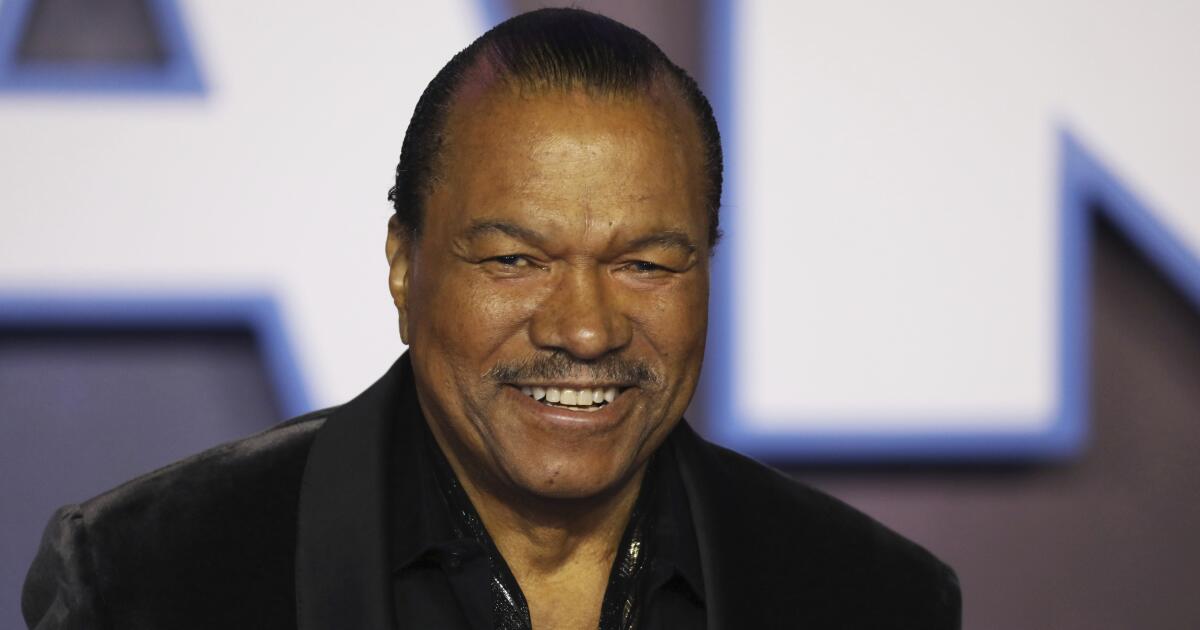
Billy Dee Williams gave fellow actors the green light to “do anything you want to do” for their work — including using blackface.
Williams, who is the first Black actor to be prominently featured in the sprawling “Star Wars” franchise, shared his opinions on non-Black actors playing Black characters on Sunday. An hour into an episode of Bill Maher’s “Club Random” podcast, the 87-year-old star reflected on British actor Laurence Olivier‘s controversial turn as “Othello” in 1965.
In the film adaptation of the Shakespeare classic, Olivier — who was white — used dark makeup to resemble the titular Moor of Venice. The practice of blackface traces back to racist minstrel shows in the early 19th century where non-Black actors darkened their skin with makeup to portray caricatures of Black people — who were widely shut out from mainstream entertainment spaces.
Williams revealed to Maher that Olivier’s inspiration for his take on “Othello” was the late singer Paul Robeson, who was Black. Olivier wanted to channel “Robeson’s stature and Robeson’s voice,” Williams said. The “Brian’s Song” actor also recalled Olivier’s physical performance for the role.
“When he did Othello, I fell out laughing. He stuck his a— out and walked around with his a—,” he added. “You know, because Black people are supposed to have big a—. I fell out laughing. I thought it was hysterical. I loved it.”
In response, Maher told Williams that blackface couldn’t be used in this generation of entertainment, not without backlash.
“Why? Why not? You should do it,” Williams said. “If you’re an actor, you should do anything you want to do.”
In recent years, Hollywood production companies and studios faced a racial reckoning — sparked by the murder of George Floyd and the Black Lives Matter movement — for the industry’s history of racist practices, including the use of blackface and portrayals of racist stereotypes. As a result, entertainment platforms including HBO, Hulu and Adult Swim pulled movies and TV show episodes that were deemed offensive from their services, though some have since returned.
Williams’ appearance on Maher’s podcast touched on the beginning of his career and how acting opportunities were scant because of his race (Williams is Black with Native American ancestry). Still, Williams said the use of blackface “doesn’t matter.”
“The point is that you don’t go through life feeling like I’m a victim,” he added, earning kudos from Maher. “I refuse to go through life saying to the world, ‘I’m pissed off.’ I’m not going to be pissed off 24 hours a day.”
Williams, who originated the role of Lando Calrissian in “Star Wars,” appeared on Maher’s far-ranging podcast months after the release of his latest memoir, “What Have We Here? Portraits of a Life.” The book, published by Knopf, hit shelves in February.


Heat Advisory
from THU 12:00 PM EDT until THU 8:00 PM EDT, Eastern Montgomery County, Lower Bucks County, Philadelphia County, Delaware County, Eastern Chester County, Gloucester County, Northwestern Burlington County, Camden County, Mercer County, New Castle County
Exploiting racism has been a profitable strategy in Hollywood since the dawn of filmmaking: 111 years ago, D.W. Griffith’s film “The Birth of a Nation” was incredibly popular and influential, while also being so racist that it was considered controversial even in its own day.
The industry saw immediately just how lucrative fear could be. More than a century later, there is always someone in the entertainment media willing to trade in racist tropes for money, as well as an audience ready to receive them.
Two new films, “Citizen Vigilante” and “Run, Fight, Hide: Infidels,” demonstrate that streaming platforms and social media no longer simply distribute controversial content but in fact thrive on content that provokes, polarizes and sustains attention, regardless of the social cost.
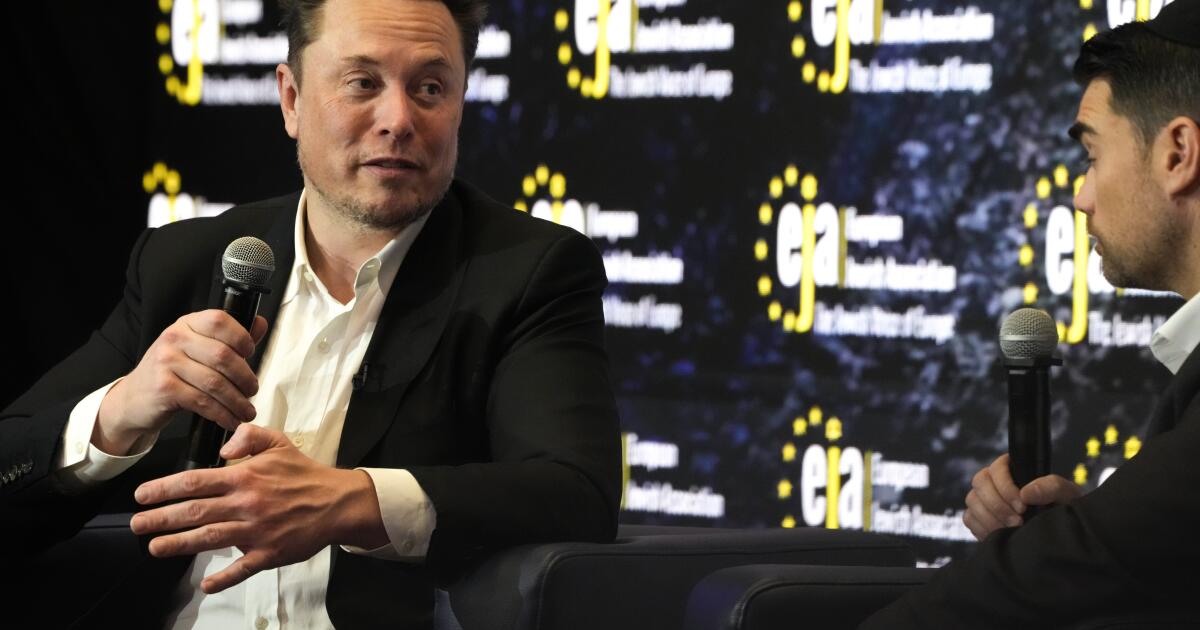
Both of these xenophobic and Islamophobic films are being pushed as “anti-woke” vehicles, deliberately engineered to bypass traditional critical reception and capitalize on a fractured media ecosystem. “Citizen Vigilante,” which features an American protagonist killing dark-skinned immigrants and Muslims in an unnamed European setting, was denied a rating certificate by the German government for inciting violence. Yet despite that determination, the film secured global reach through decentralized digital distribution and high-profile promotion from Elon Musk.
Similarly, “Run, Fight, Hide: Infidels” — a campus siege narrative evoking 1980s action film nostalgia that leans heavily into outdated, post-9/11 anxieties — relies on a built-in conservative media apparatus to guarantee financial returns. The film is produced by the conservative media figure Ben Shapiro and the Daily Wire, which he co-founded. It is a sequel to a 2020 film that was their film company’s premiere.
But while promoters of such films frame their work as a brave rebellion, the reality is much more sinister: rehashing 40-year-old tropes while invoking conspiracy theories of Muslims bringing sharia law to America, because outrage is cheap to produce and easy to monetize.
Stories matter. Stories shape how we see one another. They influence what we love, what we celebrate, whom we trust, whom we understand and whom we fear.
Since January, the Muslim Public Affairs Council has documented a sharp escalation in threats and attacks targeting Muslims and Islamic institutions across the United States, including vandalism, shootings, bomb threats, attempted assassinations and physical assaults. These are not isolated incidents. They reflect a broader climate in which dehumanizing representation increasingly manifests as real-world violence.
Entertainment and politics increasingly employ the same tactic as one another, recycling narratives of fear and “otherness” to mobilize audiences, voters and consumers. When political leaders encourage those narratives, as President Trump recently did by amplifying and commenting on a photo of young Muslim American students in hijab, they further normalize the same stereotypes that entertainment companies have learned to monetize.
Yet while the social costs continue to mount, the economic incentives remain firmly intact. “Citizen Vigilante” earned a 93% audience score on Rotten Tomatoes despite receiving just a 6% critics’ score. More tellingly, it quickly climbed to the top of Amazon’s and Apple TV’s paid video-on-demand charts.
And this isn’t just a Muslim and immigrant issue — and it’s not only about who is portrayed on screens, but also who is not. Representation has been backsliding, and audiences are left with fewer opportunities to see the reality and humanity of diverse communities, making them more vulnerable to fear-based narratives.
According to a 2026 report from the nonprofit Define American, which tracks representation across television and film, Latinos account for only 23% of immigrant characters represented on screen, even though they make up more than 40% of the immigrant population in the United States. In 2020, 50% of immigrants on screen were Latino.
The industry’s defense is that whitewashed and xenophobic films reflect audience demand. But the recent research by Define American challenges this assumption. Data show that nuanced, multidimensional storytelling, in which immigrants and minority characters are woven into the fabric of everyday narratives rather than tokenized or villainized, actually leads to greater audience engagement and deeper systemic understanding.
Entertainment doesn’t simply reflect culture; it teaches us who belongs within it. Studios, distributors, streaming platforms and filmmakers all have a responsibility to reject narratives that portray immigrants as enemies and instead embrace stories that reflect the diversity and complexity of our world. At the same time — as with voters — the power ultimately rests with consumers. The choice to demand storytelling that challenges prejudice rather than profits from it belongs to all of us.
Sue Obeidi is the senior vice president of the Muslim Public Affairs Council Hollywood Bureau. Jose Antonio Vargas is the founder of Define American.

By and large, the zombie subgenre has bitten off more than it can chew in modern times. Between George Romero survival films and camp comedies, the well has become pretty infected. But once in a while, along comes a movie like This Is Not A Test.
Let’s sink our teeth into this new release and see how it stacks up against the classics.
The tone and tenor of this film represent the classic survival movies like Night Of The Living Dead. But the thing that grabs the audience about This Is Not A Test is the trauma of the characters. Holt shines as a withdrawn survivor of an abusive home, trying to cut through the wreckage to reunite with her sister. Each of the main characters have standout traits, and they bathe in strongly acted moments as the stress of the situation changes who they are.
The gore in This Is Not A Test is pretty strong. The attacks spring quickly and when they do, the special effects team does a good job showcasing the battle scars. The camera work is also frenetic in a good way, because the chaos of the chase scenes puts the viewers in a first-person perspective. This film lets you feel like a part of the survivors, so their journeys are interactive.

Longtime fans may say that there’s nothing new in This Is Not A Test, and maybe they’re right. There’s no fresh take on the monsters here, no crazy origin, nothing that we haven’t seen in the past fifty-eight years. But the pacing nails a great balance between getting to know the characters and getting the zombie splatter fest. The mental meltdowns of the characters feel well earned, and the arc of Sloane and her sister brings a lot of heart and investment to the story. Even the most jaded zombie horror fans will find something to appreciate here, even as a background movie.
Adam MacDonald has made another intense hit here, and This Is Not A Test is currently available to stream on Shudder.
-

 Pittsburg, PA2 minutes ago
Pittsburgh-area family finds large void under garage of house built by Ryan Homes
-

 Augusta, GA8 minutes ago
Driver taken into custody after chase, rollover crash in Augusta
-

 Washington, D.C14 minutes ago
IndyCar announces start time for highly anticipated Freedom 250 Grand Prix on the streets of Washington, DC
-

 Cleveland, OH20 minutes ago
Dangerous air quality, wildfire smoke descends on Cleveland – The Land
-

 Austin, TX26 minutes ago
More dangerous Texas floods expected after at least 2 killed and hundreds of people rescued in high water, governor says – WTOP News
-

 Alabama32 minutes ago
Soccer officials needed in Alabama
-
Alaska38 minutes ago
Natural gas supplies ‘not looking good’ for Southcentral Alaska this winter, Enstar says
-

 Arizona44 minutes ago
Judge weighs whether Arizona anti-DEI measure can be on November ballot | Arizona Capitol Times


